
- Format Factory Review: Understand Format Factory's audio compressor capabilities, limitations, and suitability for your needs.
- Core Features: Discover Format Factory's extensive format support, adjustable quality, and batch processing for audio compression.
- Pros & Cons: Weigh the benefits of Format Factory's versatility and ease of use against its outdated UI and potential adware.
- Target Audience: Determine if Format Factory is ideal for quick, casual audio compression or if professional tools are required.
- Competitor Comparison: See how Format Factory stacks up against Audacity, HandBrake, and UniConverter in features and performance.
- Risks & Pitfalls: Be aware of Format Factory's potential for bundled software, limited controls, and lack of support.
- UniConverter Solution: Learn how UniConverter offers a superior, ad-free, and efficient alternative for all your compression needs.
- Decision Making: Choose the best audio compressor based on your specific requirements for quality, features, and user experience.
In this article
- Part 1: What is Format Factory?
- Part 2: Format Factory Audio Compressor: Core Features, Pros, and Cons
- Part 3: Format Factory Audio Compressor: Who is it For? Use Cases and Limitations
- Part 4: Format Factory Audio Compressor & Competitors: A Side-by-Side Comparison
- Part 5: Risks and Pitfalls to Consider
- Part 6: How to Use UniConverter to Compress Audio Efficiently
- Part 7: Conclusion
- Part 8: FAQs
When it comes to managing digital media, dealing with large audio files can be a real headache. Whether you're a content creator, a student, or just someone with a vast music library, the need for efficient audio compression is undeniable. This Format Factory Audio Compressor review delves into one of the most widely used free tools for this purpose, examining its capabilities, limitations, and how it stacks up against its competitors. I'll provide you with a comprehensive analysis to help you decide if Format Factory is the right solution for your audio compression needs, or if you should explore other alternatives for better results and a smoother experience.
Part 1: What is Format Factory?
Format Factory is a free, all-in-one multimedia converter that has been a staple for many users looking to convert and compress various file types, including audio, video, and images. Initially launched as a versatile tool for general media conversion, its audio compression capabilities have gained significant attention due to its broad format support and ease of use. This review aims to address a core question: Can Format Factory effectively meet your audio compression needs without compromising quality or introducing unnecessary complications?
The Growing Need for Efficient Audio Compression
* Storage Optimization: Large audio files consume significant disk space, making compression essential for managing extensive music libraries or project files.
* Faster Sharing and Uploads: Compressed audio files are quicker to upload, download, and share across various platforms, saving time and bandwidth.
* Device Compatibility: Many portable devices and online services have file size limitations, necessitating compression for seamless playback and integration.
* Improved Performance: Smaller audio files can lead to faster loading times in applications and websites, enhancing overall user experience.
Part 2: Format Factory Audio Compressor: Core Features, Pros, and Cons
Format Factory's audio compressor is designed to handle a wide array of audio formats, allowing you to convert and reduce file sizes with relative ease. Its core strength lies in its ability to process various audio codecs and bitrates, offering a degree of control over the output quality.
Core Capabilities:
* Extensive Format Support: Converts between MP3, WMA, APE, FLAC, AAC, M4A, WAV, OGG, and more.
* Adjustable Quality Settings: Allows you to customize bitrate, sample rate, and channels for desired file size and quality.
* Batch Processing: Compresses multiple audio files simultaneously, saving considerable time and effort.
* Basic Audio Trimming: Offers simple cutting functionalities for audio segments.
* Merge Audio Files: Combine several audio tracks into one single file.
Pros:
* Versatile Format Support for Diverse Audio Files: I've found it handles almost any audio format I throw at it, which is incredibly convenient.
* Batch Processing for Efficient Workflow: Compressing an entire album or a folder of voice recordings at once is a huge time-saver.
* User-Friendly Interface for Beginners: Even if you're not tech-savvy, you can quickly figure out how to use its basic functions.
Cons:
* Outdated UI Design and User Experience: The interface feels like a relic from the early 2000s, which can be a bit jarring in today's sleek software landscape.
* Potential for Adware/Bundled Software during Installation: I always have to be extra careful during installation to uncheck unwanted bundled programs.
Part 3: Format Factory Audio Compressor: Who is it For? Use Cases and Limitations
Format Factory Audio Compressor is a tool that caters to a specific segment of users, primarily those who prioritize simplicity and cost-effectiveness over advanced features and pristine audio quality.
Best Use Case: Quick and Dirty Audio Compression for Casual Users
If you're like me and just need to quickly shrink an audio file to email it, upload it to a basic website, or free up some space on your old MP3 player, Format Factory is perfectly adequate. It's great for converting a few WAV files to MP3s for a road trip playlist or compressing lecture recordings for easier storage. The "set it and forget it" nature of its batch processing is a real plus for these kinds of casual, non-critical tasks. I use it when I need something done fast and don't care too much about the nuances of audio fidelity.
Limited Use Case: Professional Audio Editing and High-Fidelity Output
However, if you're a musician, a podcaster, or anyone who works with audio professionally, Format Factory will quickly show its limitations. I wouldn't touch it for anything that requires precise control over audio parameters, lossless compression, or maintaining the highest possible sound quality. It lacks the advanced codecs, detailed settings, and analytical tools that professionals rely on. For critical projects, the potential for quality degradation and the absence of sophisticated editing features make it a non-starter. It's simply not built for high-fidelity output or complex audio manipulation.
Part 4: Format Factory Audio Compressor & Competitors: A Side-by-Side Comparison
When evaluating Format Factory Audio Compressor review, it's crucial to see how it stacks up against other popular tools in the market. Each has its strengths and weaknesses, catering to different user needs.
| Feature/Software | Format Factory | Audacity | HandBrake | UniConverter |
| Audio Compression | Yes | Yes | Limited | Yes |
| Video Conversion | Yes | No | Yes | Yes |
| Batch Processing | Yes | No | Yes | Yes |
| UI/UX | Basic | Functional | Modern | Modern |
| Adware Risk | Moderate | Low | Low | Low |
| Processing Speed | Standard | Standard | Fast | Very Fast |
| Output Quality | Good | Excellent | Good | Excellent |
| Customer Support | None | Community | Community | Dedicated |
| Security | Moderate | High | High | High |
Key Differentiators:
Format Factory's all-in-one approach is its main draw for general users, but it sacrifices depth for breadth. Audacity excels in audio editing and high-quality compression but lacks video capabilities and batch processing for conversion. HandBrake is a video conversion powerhouse with limited audio-only compression. UniConverter, on the other hand, offers a balanced solution with excellent audio/video compression, a modern UI, and robust features, making it a strong contender for those seeking a more comprehensive and reliable tool.
Part 5: Risks and Pitfalls to Consider
While Format Factory offers a free solution for audio compression, my experience has taught me that "free" often comes with hidden costs or inconveniences. It's important to be aware of these potential risks before committing to the software.
Potential for Adware or Unwanted Software Bundles
This is probably the biggest red flag for me. Every time I've installed Format Factory, I've had to be incredibly vigilant during the setup process. It frequently tries to bundle additional, often unwanted, software or change my browser's homepage. If you're not paying close attention, you could end up with adware or other bloatware on your system, which can be annoying to remove and potentially compromise your system's performance and security.
Limited Control Over Advanced Audio Parameters
For casual users, the basic compression options might be enough. However, if you're someone who needs precise control over bitrates, sample rates, channels, or specific audio codecs for professional projects, Format Factory falls short. I've found its settings to be quite rudimentary, often leading to a "good enough" rather than "optimal" result. This lack of granular control can be frustrating when you're trying to achieve a specific audio quality or file size.
Outdated Codecs and Potential Compatibility Issues
Given its age and freeware status, Format Factory might not always be updated with the latest audio codecs. This can lead to compatibility issues with newer audio formats or devices. I've encountered situations where files compressed with Format Factory didn't play correctly on certain modern players or software, forcing me to re-compress them with a different tool. It's not a deal-breaker for every file, but it's a recurring annoyance.
Lack of Dedicated Customer Support
As a free tool, Format Factory doesn't offer any official customer support. If you run into a bug, a compatibility issue, or simply have a question, you're pretty much on your own. You might find some community forums or old tutorials, but there's no guarantee of a timely or effective solution. This can be a significant drawback if you rely on the software for important tasks and need reliable assistance.
Part 6: How to Use UniConverter to Compress Audio Efficiently
A dependable media compressor makes a big difference once batch jobs become unreliable, output quality starts to vary, or free tools simply can’t keep results consistent. That’s why I often use UniConverter, which offers a cleaner, ad-free workflow for audio compression, video compression, and even image compression in one place. Its broad format compatibility and GPU acceleration help speed up processing, while features designed to compress videos without quality loss make it easier to reduce file size without sacrificing too much quality. Overall, it works well as a practical all-in-one solution for everyday media compression needs.
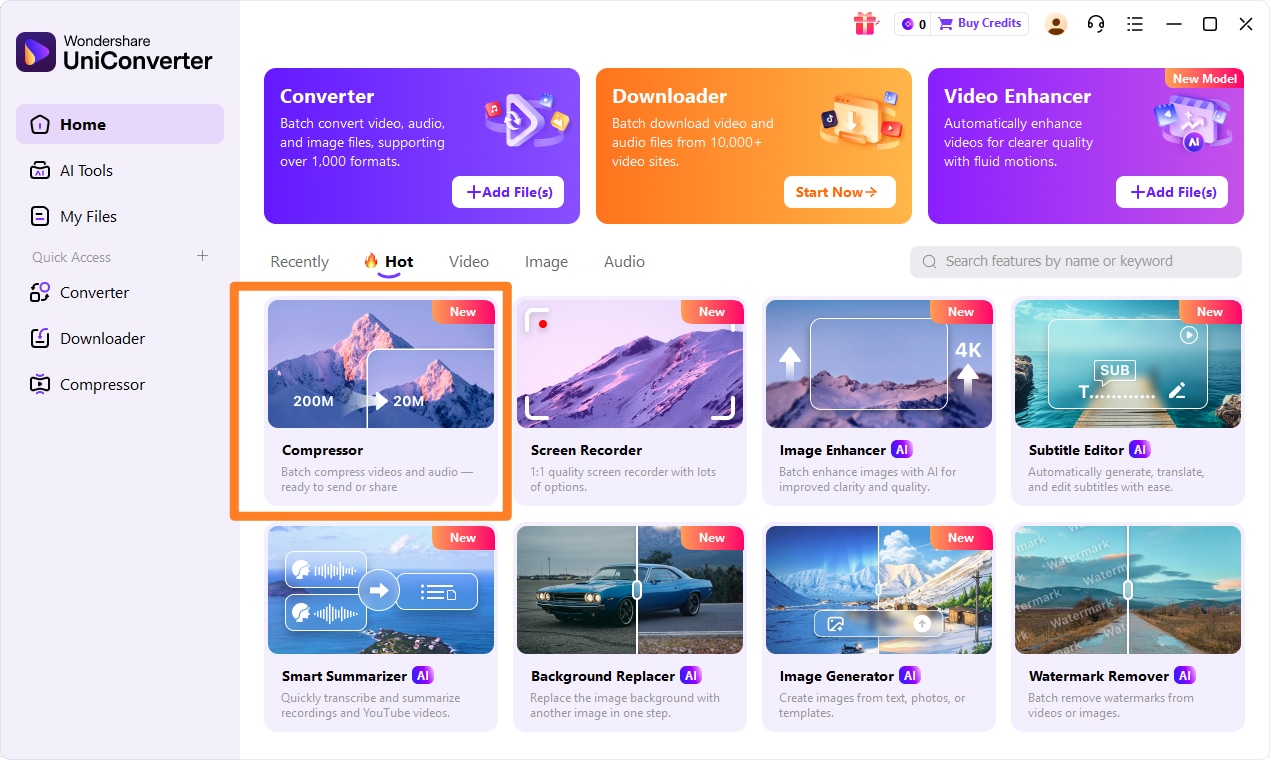
Step 1: Open UniConverter and Choose Compressor
Launch UniConverter on your computer. On the main interface, navigate to the "Compressor" tab.
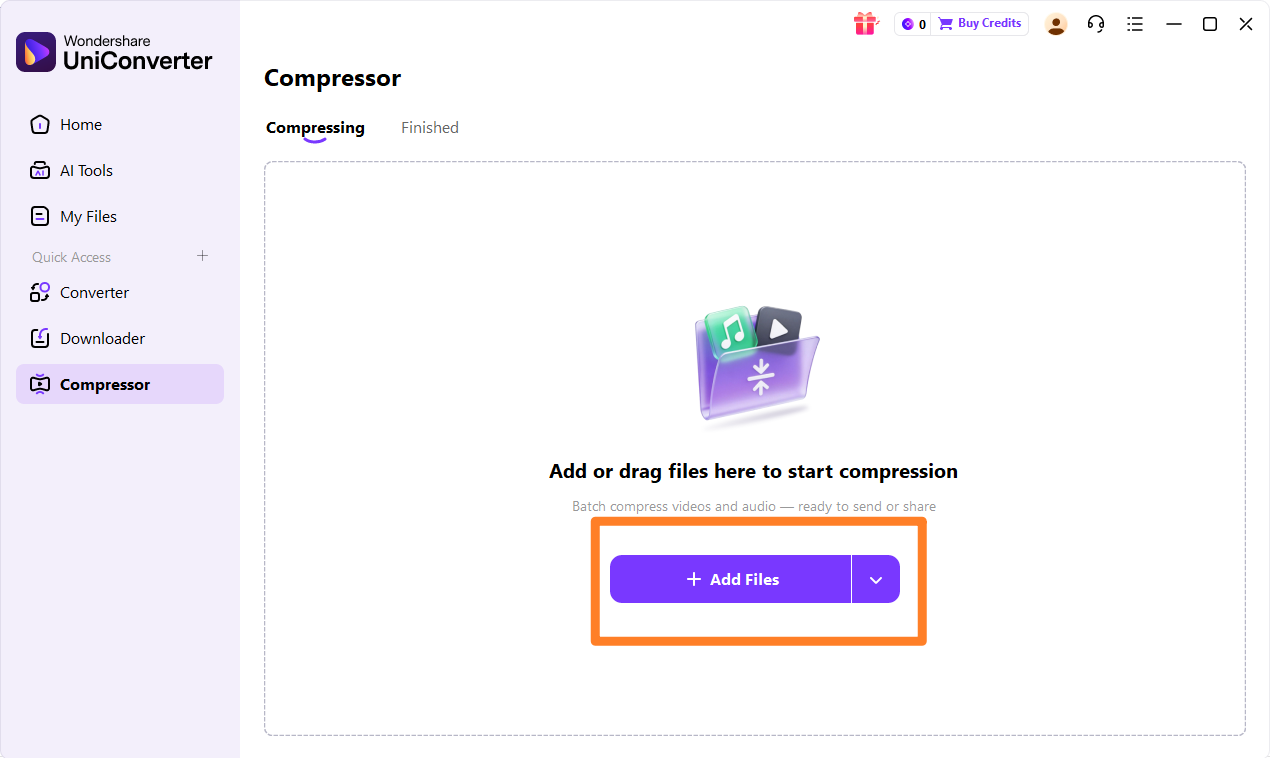
Step 2: Upload the Video, Audios or Images
Click on the "Add Files" button or simply drag and drop your audio files into the program window. You can add multiple files for batch compression.
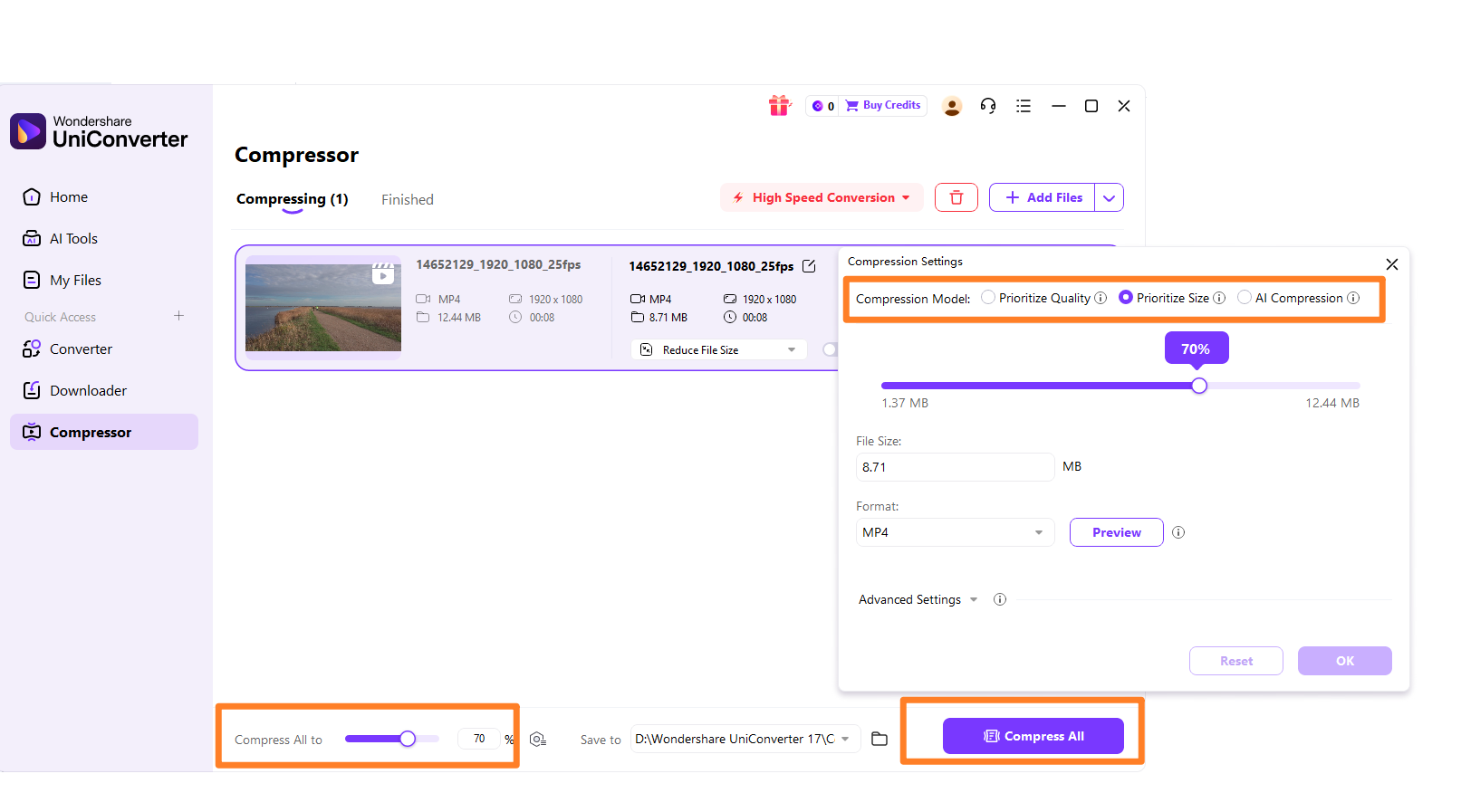
Step 3: Choose Required Parameters
After importing, you can adjust the compression settings. Select your desired output format, quality, and file size. UniConverter provides various presets and custom options. For instance, you can easily convert MP4 to HTML5 or convert MP4 to MP3 on Mac if needed.
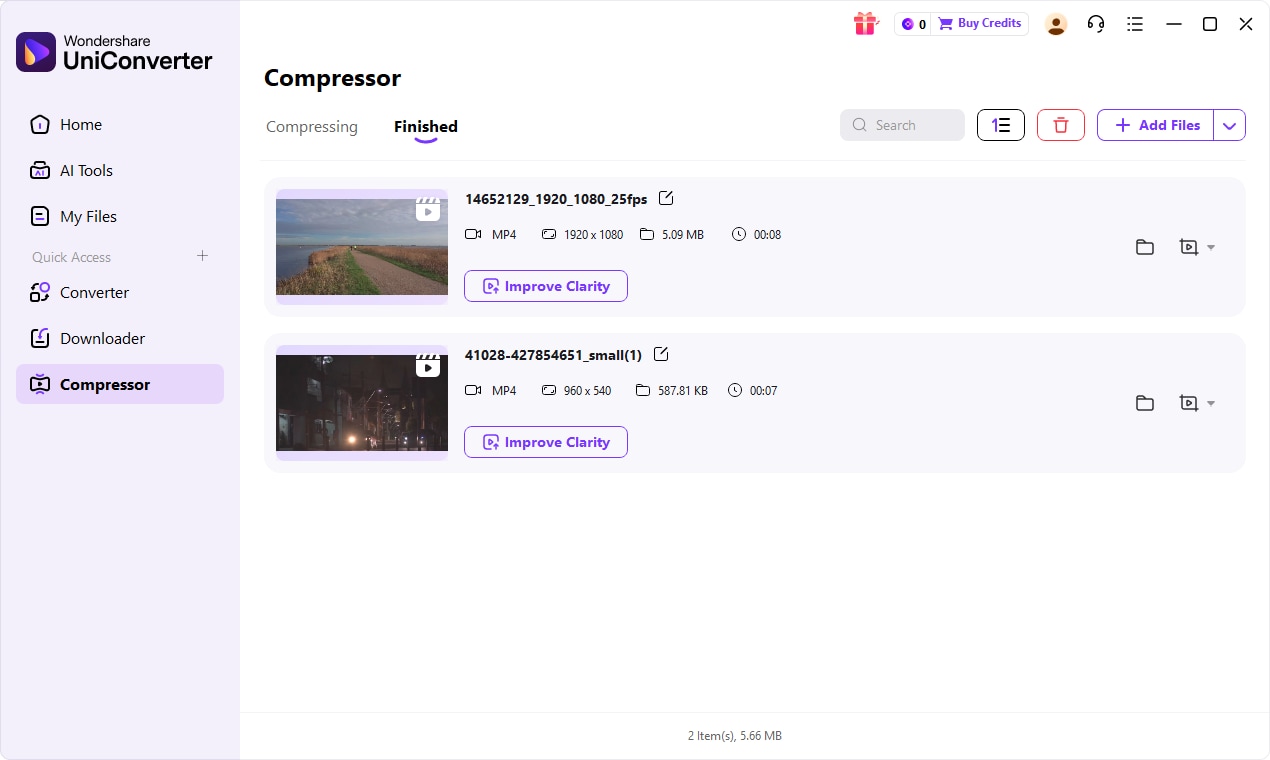
Step 4: Save the Compressed File
Once you're satisfied with the settings, click the "Compress" button. UniConverter will process your files quickly, and you can then save them to your desired location. You can also convert video to 360 VR or convert GIF to Live Photo after compression if you wish.

Seeking a Better Format Factory Audio Compressor Alternative?
Part 7: Conclusion
After a thorough Format Factory Audio Compressor review, it's clear that this tool serves a specific niche. For casual users who need a quick, free, and straightforward way to compress audio files for basic sharing or storage, Format Factory gets the job done. Its broad format support and batch processing are definite advantages for those who prioritize simplicity and cost. However, its outdated interface, potential for bundled adware, and limited advanced controls make it less suitable for anyone requiring high-fidelity output, precise adjustments, or a modern user experience. Professionals and users concerned about software bloat or security risks would be better served by more robust and dedicated solutions like UniConverter, which offers a cleaner interface, more advanced features, and a safer installation process. Ultimately, your choice should align with your specific needs, balancing convenience, quality, and security.
Part 8: FAQs
-
1. Is Format Factory Audio Compressor free to use?
Yes, Format Factory is freeware, but I always advise caution during installation to decline any bundled software.
-
2. Can Format Factory compress audio without losing quality?
Audio compression inherently involves some quality loss. Format Factory offers various settings, but for truly lossless compression or minimal degradation, I'd recommend exploring tools like Audacity or UniConverter that offer more advanced codec controls.
-
3. What are the best alternatives to Format Factory for audio compression?
For general use, Audacity (for editing and compression), HandBrake (if you also need video conversion), and UniConverter (for a comprehensive, user-friendly experience with excellent quality) are great alternatives that I often recommend.
-
4. Does Format Factory support batch audio compression?
Yes, Format Factory excels at batch processing, allowing you to compress multiple audio files simultaneously, which is one of its strongest features.
-
5. Is Format Factory safe to download and install?
While the core software is generally safe, I've found that users should be very vigilant during installation to decline any optional bundled software or adware that often comes with it. Always download from the official site and read each installation step carefully.
