
- Value: foobar2000 offers unparalleled audio compression control for audiophiles and power users.
- Comparison: It excels in customization and batch processing compared to simpler tools like Audacity.
- Decision: Choose foobar2000 for deep control, but consider UniConverter for ease of use and modern interface.
- Value: UniConverter provides a seamless, high-quality audio compression experience without foobar2000's complexity.
- Comparison: UniConverter offers a more intuitive GUI and broader platform support (Windows/macOS) than foobar2000.
- Decision: Opt for UniConverter if you prioritize speed, simplicity, and cross-platform compatibility over granular, complex settings.
In this article
- Part 1: What is foobar2000 Audio Compressor?
- Part 2: foobar2000 Audio Compressor: Core Features, Pros, and Cons
- Part 3: foobar2000 Audio Compressor: Target Audience and Use Cases
- Part 4: foobar2000 Audio Compressor vs. Competitors
- Part 5: Risks and Pitfalls to Consider
- Part 6: How to Use UniConverter for Seamless Audio Compression
- Part 7: Conclusion
- Part 8: FAQs
foobar2000 Audio Compressor: A Deep Dive into Audio Optimization
When it comes to managing vast digital music libraries, I've always found myself searching for tools that offer both power and flexibility. foobar2000 Audio Compressor review delves into one such tool, a long-standing favorite among audiophiles for its robust features and customizable nature. This review aims to provide a comprehensive look at foobar2000's capabilities, comparing it against other popular audio compression solutions to help you make an informed decision. We'll explore its core functionalities, target audience, and potential pitfalls, ultimately guiding you toward the best audio optimization strategy for your needs.
Part 1: What is foobar2000 Audio Compressor?
foobar2000 is a highly advanced and free audio player for Windows, renowned for its modular design, extensive customization options, and support for a wide array of audio formats. Beyond its primary function as a player, it integrates powerful audio processing capabilities, including a versatile audio compressor. This built-in or plugin-based compression functionality allows me to convert audio files between formats, reduce file sizes, and optimize audio quality according to my specific requirements. My goal with this review is to dissect its performance as an audio compressor, highlighting its strengths and weaknesses in a competitive landscape.
The Evolving Landscape of Audio Compression Tools
* Growing Need for Efficient Storage: With ever-expanding digital music collections, efficient audio compression is crucial for managing storage space without sacrificing too much quality.
* Diverse Playback Devices: I often need to optimize audio files for different devices, from high-fidelity home systems to portable players with limited storage.
* Balancing Quality and File Size: The eternal dilemma for any audiophile is finding the sweet spot between preserving audio fidelity and achieving manageable file sizes.
Part 2: foobar2000 Audio Compressor: Core Features, Pros, and Cons
As an audio enthusiast, I appreciate foobar2000's commitment to granular control over my audio. Its compression features are deeply integrated, allowing me to process files with remarkable precision.
* Customizable Encoding Presets: I can create and save my own encoding presets for various codecs like MP3, FLAC, and AAC.
* ReplayGain Support: It supports ReplayGain scanning and application, ensuring consistent playback volume across my library.
* Batch Processing: I can easily process multiple files or entire folders, which is a huge time-saver for large collections.
* Metadata Preservation: It does an excellent job of preserving or allowing me to edit metadata during compression.
* DSP (Digital Signal Processing) Integration: I can apply various DSP effects during the compression process, like resampling or downmixing.
- Pros:
- Highly customizable compression parameters for granular control.
- Lightweight and resource-efficient, ideal for older systems or batch processing.
- Extensive plugin ecosystem for expanded functionality and format support.
- Cons:
- Steep learning curve for beginners due to its advanced interface.
- Lack of a modern, intuitive GUI compared to contemporary alternatives.
Part 3: foobar2000 Audio Compressor: Target Audience and Use Cases
From my experience, foobar2000's audio compressor isn't for everyone, but for a specific group of users, it's indispensable. It caters to those who demand precision and are willing to invest time in mastering its capabilities.
- Optimal Scenario: Archiving Large Music Collections with Specific Quality Requirements
When I'm archiving my extensive music library, often converting lossless FLAC files to high-quality VBR MP3s or AAC for portable devices, foobar2000 is my go-to. I can meticulously control bitrates, quality settings, and even apply specific DSPs during the conversion. This ensures that I get the exact balance of file size and audio fidelity I desire for long-term storage and playback across various devices, from my audiophile-grade DAP to my car stereo. The ability to batch process thousands of files with consistent settings is a huge advantage here.
- Limited Scenario: Quick, One-Off Audio Compression for Casual Sharing
If I just need to quickly compress a single audio file, say a voice memo or a short recording, to email to a friend or upload to social media, foobar2000 feels like overkill. The process of setting up an encoder, configuring parameters, and navigating its interface for a simple task can be cumbersome. In these situations, I'd typically reach for a simpler, more intuitive tool that prioritizes ease of use and speed over fine-tuning, as the quality requirements for casual sharing are usually less stringent.
Part 4: foobar2000 Audio Compressor vs. Competitors
When I look at the audio compression landscape, foobar2000 stands out for its unique blend of power and flexibility, but it's not without strong competitors.
| Feature/Tool | foobar2000 Audio Compressor | Audacity | HandBrake | FFmpeg |
| Primary Focus | Advanced Audio Compression | Audio Editing & Basic Compression | Video Transcoding & Audio Compression | Command-Line Multimedia Processing |
| Ease of Use | Advanced | Moderate | Moderate | Expert |
| Customization | High | Moderate | Moderate | Very High |
| Batch Processing | Excellent | Limited | Good | Excellent |
| Plugin Ecosystem | Extensive | Moderate | Limited | N/A (built-in) |
foobar2000 excels in offering unparalleled customization for audio compression, making it ideal for users who want precise control over every aspect of their output. Audacity, while great for basic editing and some compression, doesn't offer the same depth of batch processing or codec control. HandBrake is primarily a video tool, with its audio compression features being secondary. FFmpeg, on the other hand, rivals foobar2000 in power and customization but operates purely via command line, making it accessible only to the most technically proficient users.
Part 5: Risks and Pitfalls to Consider
While I appreciate the power of foobar2000, I've learned that with great power comes great responsibility – especially when dealing with audio compression. There are several risks and pitfalls I've encountered or observed that you should be aware of.
Potential for Lossy Compression Artifacts if Settings are Incorrect
This is perhaps the biggest risk. If I'm not careful with my compression settings, especially with lossy formats like MP3 or AAC, I can easily introduce audible artifacts. Setting too low a bitrate or using an inefficient encoder can result in muffled sounds, "swishy" highs, or a general loss of clarity. It requires a good understanding of audio codecs and their parameters to achieve optimal results without degrading the sound quality significantly.
Compatibility Issues with Certain Niche Audio Formats
While foobar2000 has excellent format support, especially with plugins, I've occasionally run into issues with extremely niche or proprietary audio formats. Sometimes, a specific codec might not be readily available, or the plugin required for it might be outdated or unstable. This can be frustrating when I'm trying to process a diverse collection of files from various sources.
Dependence on User-Installed Plugins for Extended Functionality
Many of foobar2000's advanced features, including support for certain codecs or DSPs, rely on user-installed components or plugins. While this offers incredible flexibility, it also means that the functionality isn't always "out-of-the-box." I have to actively seek out, download, and install these components, which can be a barrier for less tech-savvy users and can sometimes lead to compatibility issues if plugins aren't updated.
Lack of Dedicated Customer Support for Troubleshooting
As a freeware application, foobar2000 doesn't offer dedicated customer support. If I encounter a bug, a crash, or a configuration issue, I'm largely reliant on community forums and online resources. While the community is generally helpful, it's not the same as having official support channels, which can make troubleshooting more time-consuming and challenging, especially for complex problems.
Part 6: How to Use UniConverter for Seamless Audio Compression
For a simpler all-in-one workflow, UniConverter is usually the tool I choose, especially when batch processing matters or other compressors produce unstable results and too much quality loss. It offers a cleaner experience for both audio compression and video compression, without the ads, watermarks, or overly complicated settings that often come with free alternatives. Its broad format support and GPU acceleration also make larger jobs much easier to handle. For video files, it can help compress videos without quality loss as much as possible, making it a practical option for reliable day-to-day media compression.
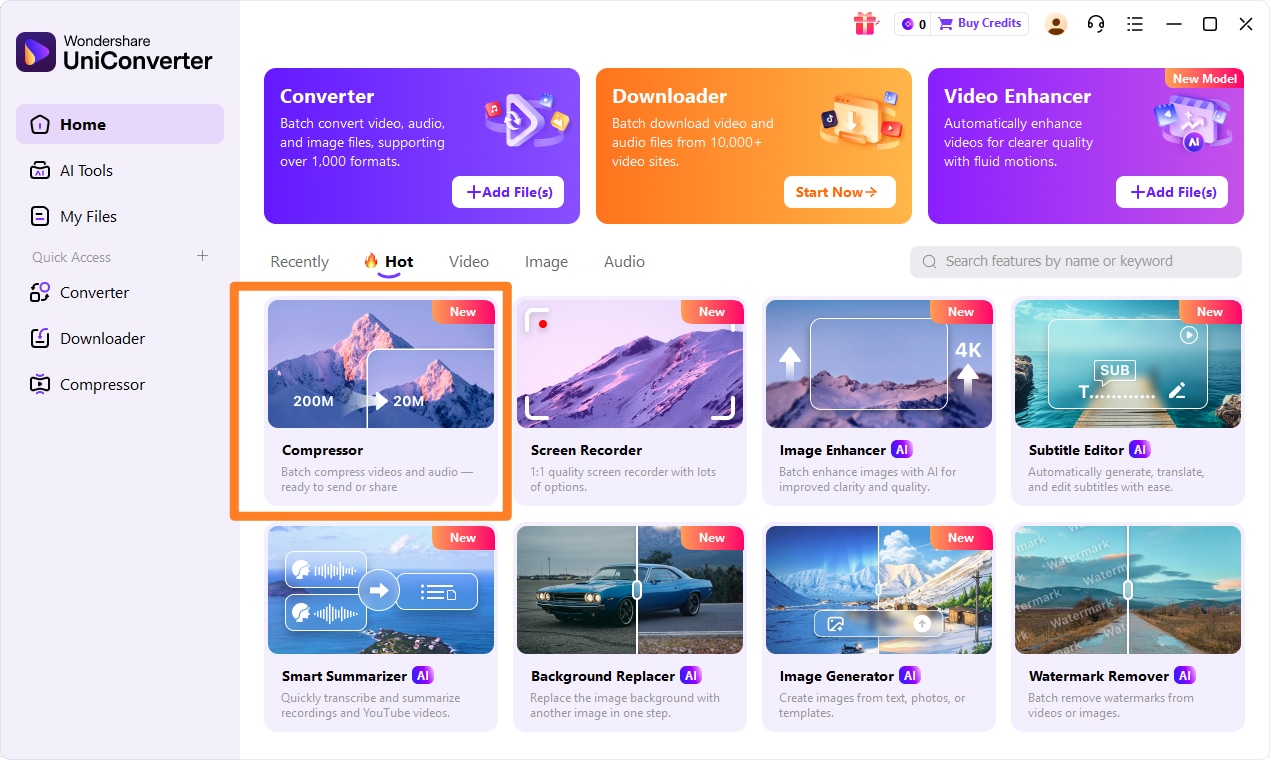
Step 1: Open UniConverter and Choose Compressor
I open UniConverter and navigate to the "Compressor" tool from the main interface.
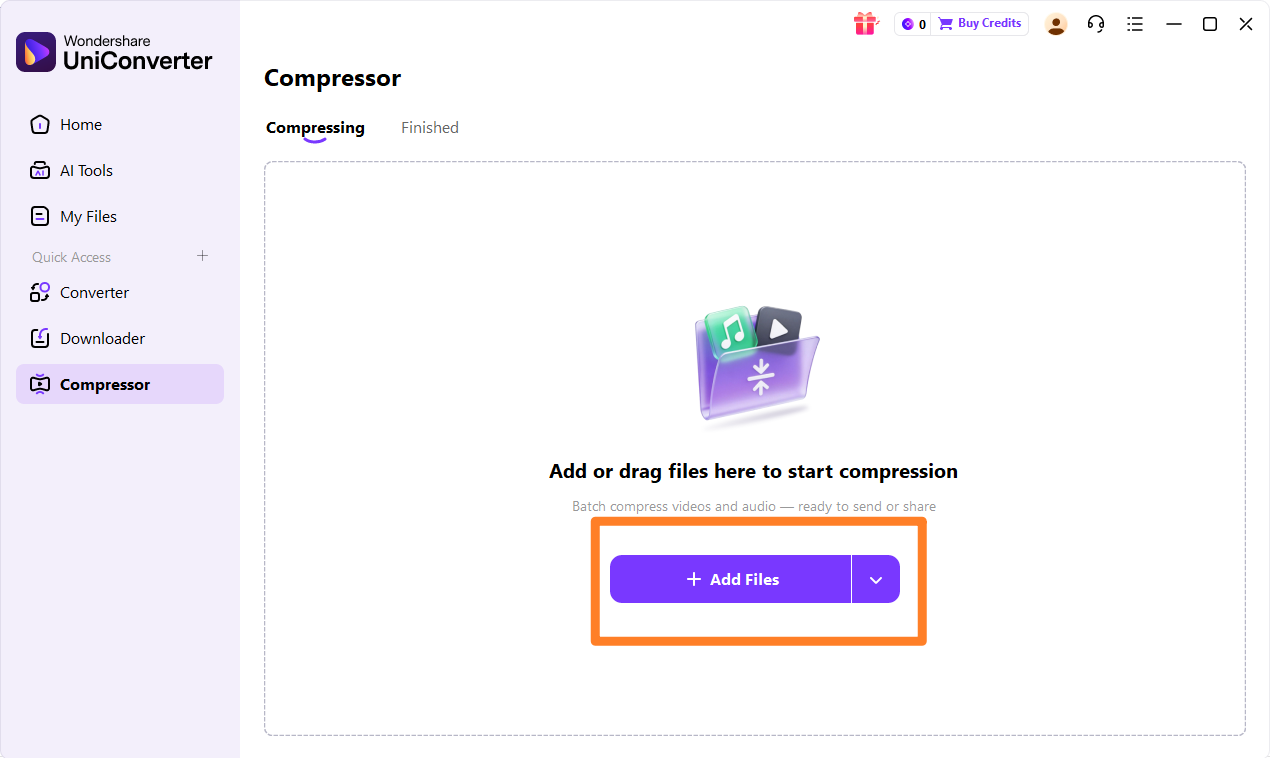
Step 2: Upload the Video, Audios or Images
I then drag and drop my audio files (or video/images) directly into the UniConverter window.
Step 3: Choose Required Parameters
I select my desired output format, adjust the compression ratio, bitrate, and quality settings. UniConverter provides clear visual feedback on the estimated file size.
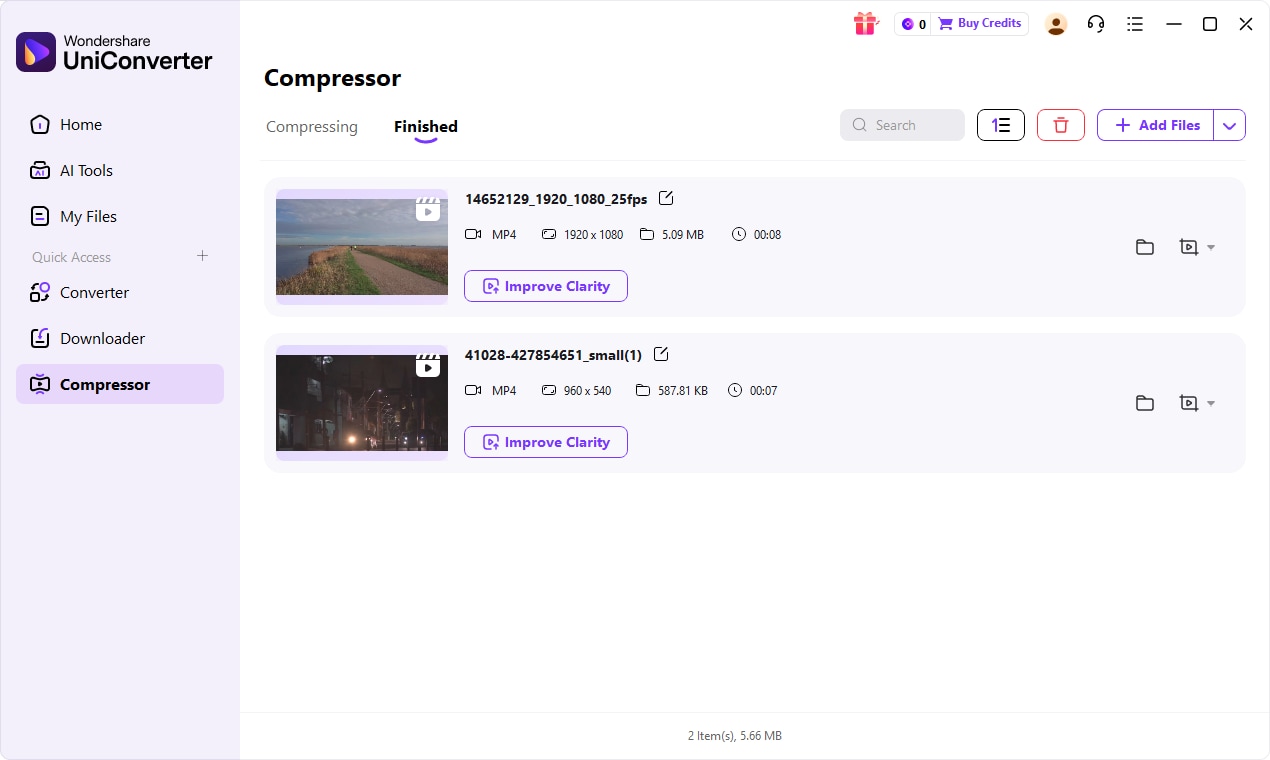
Step 4: Save the Compressed File
Finally, I choose my output folder and click "Compress" to start the process. The compressed files are ready in no time.

Need a Better Audio Compressor than foobar2000?
Part 7: Conclusion
After spending considerable time with foobar2000 Audio Compressor review, I can confidently say it remains a powerhouse for those who demand ultimate control over their audio. Its deep customization, extensive plugin support, and efficient batch processing capabilities make it an unparalleled choice for audiophiles and power users managing large, diverse music libraries. However, its steep learning curve and somewhat dated interface can be a significant barrier for casual users or beginners who simply need quick, straightforward compression. For these users, or when I prioritize ease of use and a modern interface, alternatives like UniConverter offer a more streamlined and equally effective solution, balancing quality and file size without the complexity. Ultimately, the best tool depends on your technical comfort level and the specific demands of your audio compression tasks.
Part 8: FAQs
-
1. Can foobar2000 Audio Compressor handle lossless compression?
Yes, foobar2000 supports various lossless audio codecs like FLAC, ALAC, and WAV, allowing for compression without any quality loss. I often use it to convert between different lossless formats or to compress WAV files into FLAC for storage.
-
2. Is foobar2000 Audio Compressor free to use?
Yes, foobar2000 is completely freeware. This makes it an incredibly attractive option for budget-conscious users who still want powerful audio processing capabilities without any cost.
-
3. How does foobar2000 compare to dedicated audio editing software for compression?
foobar2000 excels in batch processing and highly customizable compression parameters, making it ideal for library management and format conversion. Dedicated audio editing software, like Audacity or Adobe Audition, offers more comprehensive editing features such as multi-track editing, effects processing, and detailed waveform manipulation, which foobar2000 doesn't primarily focus on. If I need to do more than just compress, I'll use an editor.
-
4. What are the common audio formats supported by foobar2000 Audio Compressor?
foobar2000 supports a vast array of formats including MP3, FLAC, WAV, AAC, OGG, WMA, and many more. Its modular design means that support for even more niche formats can often be added through user-contributed plugins, making it one of the most versatile tools I've used.
-
5. Can I use foobar2000 Audio Compressor on macOS or Linux?
foobar2000 is primarily designed for Windows. While there isn't an official macOS or Linux version, some users have successfully run it on these operating systems using compatibility layers like Wine. However, for seamless cross-platform audio compression, I often recommend a tool like UniConverter, which offers native support for both Windows and macOS, providing a more consistent and reliable experience.
