
- FlexClip Overview: FlexClip is an online video compressor for quick, accessible file size reduction.
- Pros & Cons: FlexClip offers an intuitive interface and batch processing but lacks advanced controls and needs internet.
- Best Use Cases: Ideal for social media and email attachments; not suitable for professional production workflows.
- FlexClip vs. Competitors: FlexClip is easy for casual users; UniConverter offers balanced power for all users.
- Risks & Pitfalls: Be aware of data privacy, potential quality loss, hidden costs, and internet dependency.
- UniConverter Alternative: UniConverter provides stable, lossless, and batch-friendly desktop compression for superior control.
In this article
- Part 1: What is FlexClip Video Compressor?
- Part 2: FlexClip Video Compressor: Core Features, Pros, and Cons
- Part 3: FlexClip Video Compressor: Ideal Use Cases and Limitations
- Part 4: FlexClip Video Compressor vs. Competitors
- Part 5: Risks and Pitfalls to Consider
- Part 6: How to Use UniConverter to Compress Efficient Audio and Video
- Part 7: Final Verdict and Recommendations
- Part 8: FAQs
When I first started looking for a reliable online video compressor, I stumbled upon FlexClip Video Compressor review. In today's digital age, sharing high-quality videos is essential, but large file sizes often hinder this. This FlexClip Video Compressor review aims to provide a comprehensive look at its features, performance, and how it stacks up against its competitors. I'll share my personal experiences and insights to help you decide if it's the right tool for your video compression needs.
Part 1: What is FlexClip Video Compressor?
FlexClip Video Compressor is an online tool designed to reduce the file size of your video clips without significant loss of quality. It's part of the broader FlexClip suite of video editing tools, positioning itself as a quick and accessible solution for everyday video compression tasks. My primary goal in exploring this tool was to find an efficient way to make my videos more manageable for sharing and storage, especially given the increasing demand for high-resolution content.
The Growing Need for Efficient Video Compression
The digital landscape is constantly evolving, and with it, the need for efficient video compression has become more critical than ever.
* High-Quality Content Demands: Modern devices capture stunning 4K and even 8K video, leading to massive file sizes.
* Faster Sharing and Uploads: Large files are slow to upload and share, impacting productivity and user experience.
* Storage Limitations: Cloud storage and local drives can quickly fill up with uncompressed video, incurring costs or requiring frequent cleanup.
* Bandwidth Constraints: Streaming and downloading large video files consume significant bandwidth, which can be an issue for users with limited data plans or slower internet connections.
Part 2: FlexClip Video Compressor: Core Features, Pros, and Cons
From my experience, FlexClip Video Compressor offers a straightforward approach to video compression. Its core ability lies in its simplicity and accessibility, making it a go-to for quick tasks. The tool supports various video formats, allowing me to upload almost any video I have. It also provides basic compression settings, letting me choose output quality and resolution, which is handy for different sharing platforms.
Pros:
* Intuitive User Interface for Quick Compression: I found the interface incredibly easy to navigate. Uploading a video and initiating compression took me mere seconds.
* Cloud-Based Accessibility for On-The-Go Use: Being an online tool, I could access FlexClip from any device with an internet connection, which was a huge plus when I was away from my main workstation.
* Batch Processing Capability for Multiple Files: When I had several videos to compress, the batch processing feature saved me a lot of time, allowing me to queue them up and let the tool do its work.
Cons:
* Limited Advanced Customization Options: While simple is good, I sometimes wished for more granular control over bitrates or codecs, which FlexClip doesn't offer.
* Potential Dependency on Internet Connection Speed: As an online tool, a slow internet connection significantly hampered the upload and download times, making the process frustratingly long.
Part 3: FlexClip Video Compressor: Ideal Use Cases and Limitations
Based on my usage, FlexClip Video Compressor shines in specific scenarios, particularly when speed and convenience are paramount. It's a fantastic tool for everyday users who don't need highly technical controls.
Best Use Case: Quick Social Media Sharing and Email Attachments
I often use FlexClip when I need to quickly compress a video for Instagram, Facebook, or to attach to an email. The reduced file size makes uploads instantaneous and ensures my recipients can download them without hassle. For example, after a family event, I can quickly compress several short clips and share them with relatives without worrying about file size limits. It's perfect for those moments when I just need to get a video out there without fuss.
Limited Use Case: Professional Video Production Workflows
However, I wouldn't recommend FlexClip for professional video production. When I'm working on a client project that demands precise control over video quality, specific codecs, or lossless compression, FlexClip falls short. It doesn't offer the advanced settings needed to maintain broadcast-quality standards or integrate seamlessly into complex editing pipelines. For instance, if I need to compress a video for a high-definition presentation where every pixel counts, I would definitely look for a more robust desktop solution.
Part 4: FlexClip Video Compressor vs. Competitors
When I compare FlexClip Video Compressor to other tools I've used, its cloud-based nature and simplicity are its main selling points. However, for more demanding tasks, desktop applications often take the lead.
| Feature / Product | FlexClip Video Compressor | HandBrake | UniConverter | Online Video Compressor X |
| Platform | Cloud-based | Desktop | Desktop | Cloud-based |
| Processing Speed | Moderate (internet-dependent) | Fast (CPU/GPU dependent) | Very Fast (GPU acceleration) | Moderate (internet-dependent) |
| Output Quality | Good (basic settings) | Excellent (advanced settings) | Excellent (lossless options) | Good (basic settings) |
| Ease of Use | Very High | Moderate | High | High |
| Advanced Features | Limited | Extensive | Extensive | Limited |
| Batch Processing | Yes | Yes | Yes | Yes |
| Offline Capability | No | Yes | Yes | No |
| Target Audience | Casual users, social media | Enthusiasts, professionals | All users, professionals | Casual users |
FlexClip excels in ease of use and accessibility for casual users who prioritize quick online compression. HandBrake, on the other hand, is a powerhouse for those who need deep control over every aspect of compression, making it ideal for enthusiasts and professionals, though it has a steeper learning curve. UniConverter strikes a balance, offering a user-friendly interface with powerful features and excellent performance, appealing to a broad audience from casual users to professionals. Online Video Compressor X is similar to FlexClip, focusing on quick online compression but often with more ads or limitations.
Part 5: Risks and Pitfalls to Consider
While the convenience of online tools like FlexClip Video Compressor is undeniable, I've learned to be aware of several potential risks and pitfalls, especially when dealing with my personal or sensitive video content.
Data Privacy and Security Concerns
When I upload my videos to a cloud-based service, I'm essentially entrusting my data to a third party. I always worry about how my videos are stored, who has access to them, and whether they are truly deleted after processing. For sensitive content, this is a significant concern, and I always advise checking the service's privacy policy thoroughly.
Output Quality Degradation Potential
While FlexClip aims to maintain quality, any compression involves some level of data reduction. I've noticed that if I push the compression too far, especially with complex video scenes, the output can sometimes show noticeable artifacts or a general loss of sharpness. It's a trade-off I have to manage, and for critical projects, I prefer tools that offer more control over quality settings.
Hidden Costs or Subscription Models
Many "free" online tools, including some aspects of FlexClip, often come with limitations that encourage users to upgrade to a paid subscription. This might include watermarks on compressed videos, limits on file size or duration, or restricted access to batch processing. I always check for these hidden costs upfront to avoid surprises later.
Internet Dependency for Cloud-Based Operations
As I mentioned earlier, the biggest practical pitfall for me is the absolute reliance on a stable and fast internet connection. If my Wi-Fi is spotty or I'm in an area with poor signal, the entire process of uploading, compressing, and downloading becomes incredibly slow or even impossible. This makes it unsuitable for situations where I need to work offline or have unreliable internet access.
Part 6: How to Use UniConverter to Compress Efficient Audio and Video
Sometimes, online tools like FlexClip don’t fully meet my needs—especially when I’m working with large files, need better control over output quality, or want the flexibility of offline processing. In those situations, I usually switch to UniConverter as a more reliable desktop alternative. It works especially well as a dedicated video compressor, offering a smoother experience without many of the common drawbacks of browser-based tools, such as inconsistent results or limited batch processing. I also like that it can help compress videos without quality loss as much as possible, while GPU acceleration makes the process faster and more efficient. Since it also supports audio compression and image compression, it works well as a practical all-in-one solution for handling different types of media files.
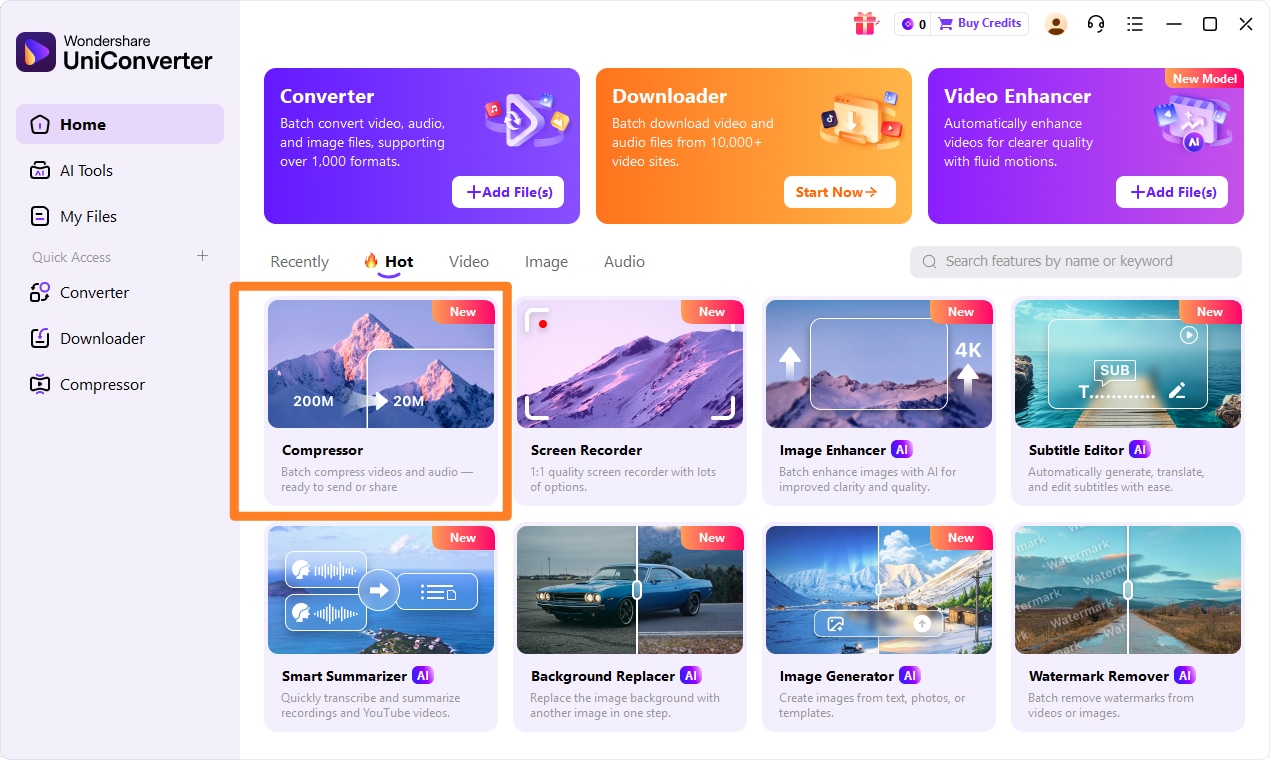
Step 1: Open UniConverter and Choose Compressor
Launch UniConverter on your computer. From the main interface, navigate to the "Compressor" tab on the left sidebar.
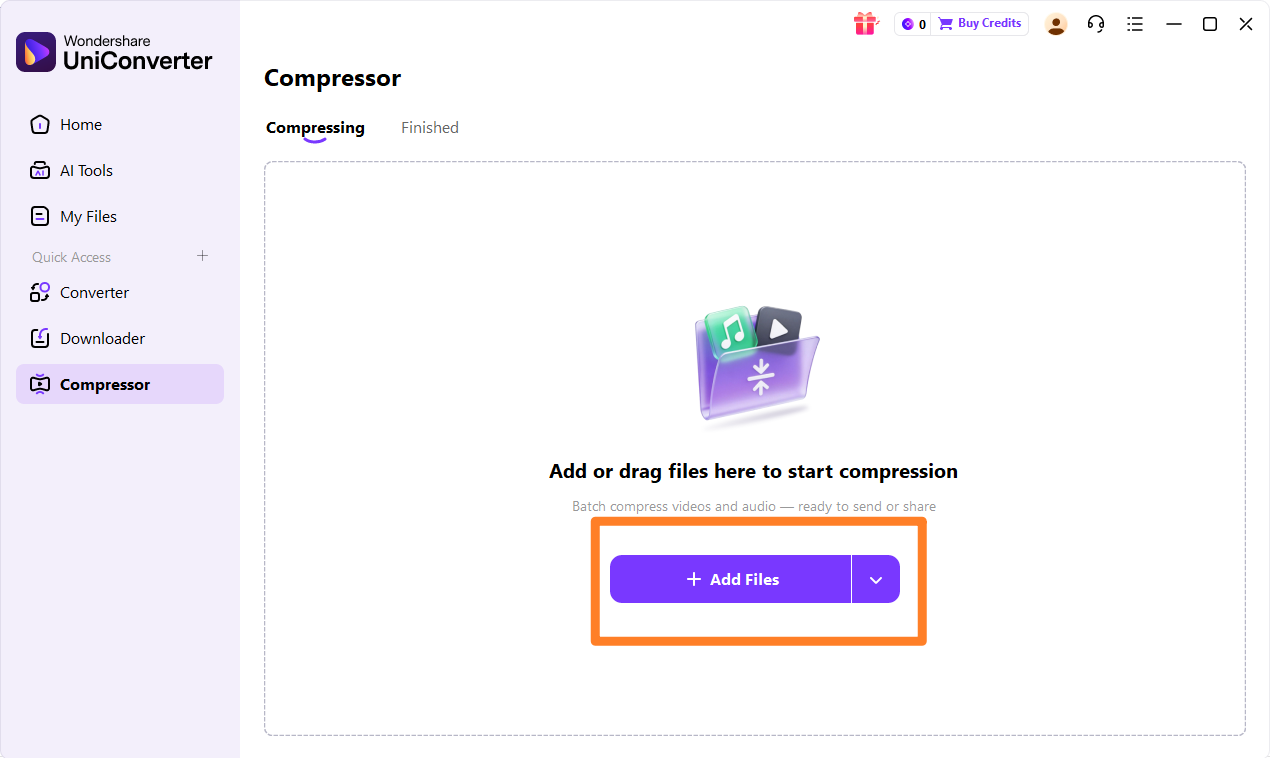
Step 2: Upload the Video, Audios or Images
Click on the "Add Files" button or simply drag and drop your video, audio, or image files into the UniConverter window.
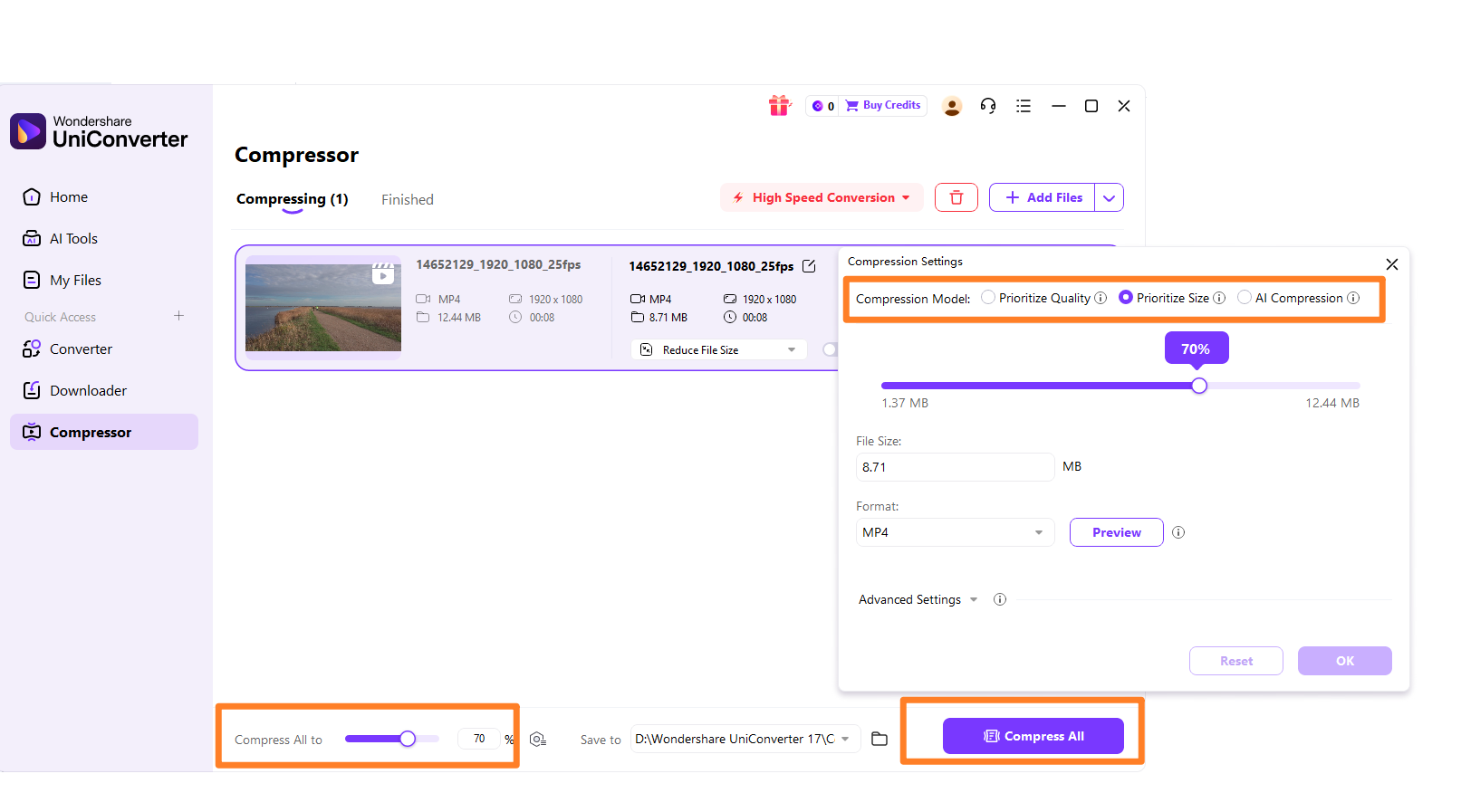
Step 3: Choose Required Parameters
After uploading, you can adjust the compression settings. UniConverter allows you to set the output format, resolution, bitrate, and quality. You can also preview the compressed file size.
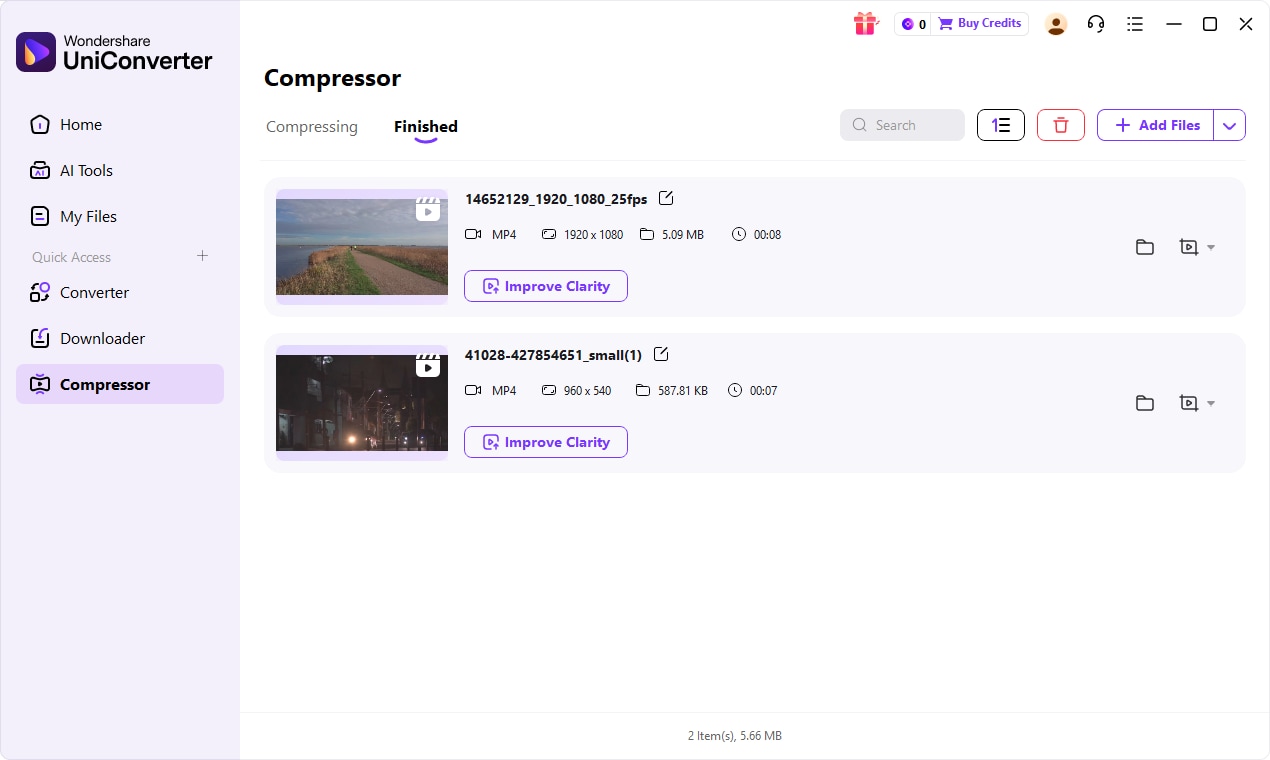
Step 4: Save the Compressed File
Once you're satisfied with the settings, click the "Compress" button. UniConverter will process your files, and you can then save them to your desired location.

FlexClip Compressor Alternative: Better Video Compression
Part 7: Final Verdict and Recommendations
After thoroughly exploring FlexClip Video Compressor review and comparing it with its alternatives, I can confidently say that its suitability largely depends on your specific needs and technical comfort level. For casual users and social media enthusiasts, FlexClip is an excellent choice. Its intuitive interface, cloud-based accessibility, and batch processing make it incredibly convenient for quickly reducing video file sizes for sharing on platforms like Instagram, Facebook, or via email. It's perfect for those who prioritize speed and simplicity over granular control. However, for professionals requiring advanced control over compression parameters, specific codecs, or lossless quality, FlexClip's limitations become apparent. In these scenarios, desktop software like HandBrake or UniConverter offers the necessary depth and precision. For users prioritizing offline functionality or needing to process sensitive data without uploading it to the cloud, a desktop application is also the safer and more reliable option. Ultimately, FlexClip serves its niche well for quick, everyday compression tasks, but it's crucial to understand its boundaries.
Part 8: FAQs
-
1. Is FlexClip Video Compressor completely free to use?
FlexClip offers a free version with certain limitations, such as file size caps, video duration limits, or watermarks. To unlock full features and remove restrictions, you typically need to subscribe to a paid plan.
-
2. How does FlexClip handle video quality during compression?
FlexClip aims to balance file size reduction with quality preservation. While it offers basic quality settings, significant compression can lead to some noticeable quality degradation, especially if you choose lower quality presets.
-
3. Can I compress multiple videos at once with FlexClip?
Yes, FlexClip Video Compressor supports batch processing, allowing you to upload and compress multiple videos simultaneously, which is a significant time-saver.
-
4. What are the main differences between FlexClip and desktop compressors like HandBrake?
FlexClip is a cloud-based tool, offering convenience and accessibility from any device with internet. HandBrake is a desktop application, providing more advanced customization options, offline functionality, and often better control over output quality, making it suitable for professional use. If you need more control and offline capabilities, UniConverter is also an excellent desktop alternative.
-
5. Is my data safe when using online video compressors like FlexClip?
While reputable online compressors generally employ security measures, uploading personal or sensitive videos to any cloud-based service always carries some inherent data privacy and security risks. It's crucial to review the service's privacy policy and terms of service to understand how your data is handled. For maximum security, consider using an offline desktop compressor like UniConverter.
