
- Filmora Compressor: Great for quick social media sharing; intuitive, but limited for advanced users.
- Core Features: Offers presets, custom resolution, format conversion, and Filmora integration for ease.
- Limitations: Lacks advanced settings, risks quality loss with aggressive compression, and has a subscription model.
- Vs. Competitors: Simpler than HandBrake (advanced), less robust than UniConverter (balanced features).
- UniConverter Advantage: Provides efficient, near-lossless compression with extensive format support and GPU acceleration.
- Decision: Choose Filmora for simplicity; UniConverter for balanced features and quality; HandBrake for advanced control.
In this article
- Part 1: What is Filmora Video Compressor?
- Part 2: Filmora Video Compressor: Core Features, Pros, and Cons
- Part 3: Filmora Video Compressor: Ideal Use Cases and Limitations
- Part 4: Filmora Video Compressor vs. Competitors
- Part 5: Risks and Pitfalls to Consider
- Part 6: How to Use UniConverter for Efficient Video and Audio Compression
- Part 7: Conclusion
- Part 8: FAQs
Video compression is a critical task for anyone dealing with digital media today. Whether you're a content creator, a student, or simply someone who shares videos with friends and family, the ability to reduce file size without sacrificing too much quality is invaluable. In this Filmora Video Compressor review, I'll dive deep into one of the most accessible tools on the market, examining its features, ideal use cases, and comparing it against its main competitors. My goal is to help you make an informed decision, understanding not just what Filmora Video Compressor offers, but also where it stands in a crowded market and when you might need to look elsewhere. Let's explore how this tool stacks up and whether it’s the right fit for your video compression needs.
Part 1: What is Filmora Video Compressor?
Filmora Video Compressor is a built-in feature and standalone tool offered by Wondershare, primarily known for its Filmora video editing software. It's designed to help users reduce the file size of their video projects, making them easier to store, share, and upload. As someone who frequently works with large video files, I find that a reliable compressor is not just a convenience but a necessity. This review aims to address a core question: how effectively does Filmora Video Compressor meet the diverse needs of users in a market saturated with compression tools?
Understanding the Need for Video Compression:
* Storage Limitations: Large video files quickly consume disk space, both on local drives and cloud storage.
* Slow Upload/Download Speeds: Sharing uncompressed videos can be a time-consuming and frustrating experience, especially with slower internet connections.
* Platform Restrictions: Many social media platforms and email services have strict file size limits for uploads, necessitating compression.
* Improved Playback Performance: Smaller files often stream more smoothly, leading to a better viewing experience for audiences.
Part 2: Filmora Video Compressor: Core Features, Pros, and Cons
Filmora Video Compressor, as part of the Filmora ecosystem, offers a straightforward approach to reducing video file sizes. From my experience, its core capabilities revolve around simplicity and integration. It's not about offering a myriad of complex settings, but rather providing an accessible solution for common compression needs.
Core Features:
* Preset Compression Options: Offers various quality and size presets (e.g., "Smaller Size," "Better Quality") for quick selection.
* Custom Resolution and Bitrate: Allows for manual adjustment of resolution, frame rate, and bitrate for more control.
* Format Conversion: Supports converting compressed videos into different popular formats like MP4, MOV, MKV, etc.
* Preview Functionality: Provides a preview of the compressed video before final export to assess quality.
* Direct Integration with Filmora Editor: Seamlessly compresses videos within the Filmora editing workflow.
Pros:
* Intuitive User Interface for Quick Compression: I found the interface incredibly easy to navigate, making compression a hassle-free task even for beginners.
* Batch Processing for Multiple Files: The ability to compress several videos at once saves a significant amount of time, which is a huge plus for content creators like me.
* Integration with Filmora Ecosystem for Seamless Workflow: If you're already a Filmora user, the compressor feels like a natural extension, streamlining your post-production process.
Cons:
* Limited Advanced Compression Settings: For those who need fine-grained control over codecs, profiles, and specific compression algorithms, Filmora Video Compressor can feel restrictive.
* Potential for Quality Degradation on Aggressive Compression: Pushing for the smallest file size often results in noticeable quality loss, which might not be acceptable for professional projects.
Part 3: Filmora Video Compressor: Ideal Use Cases and Limitations
Based on my hands-on experience, Filmora Video Compressor shines in specific scenarios, particularly for users who prioritize speed and simplicity over highly technical control. However, it also has its limitations, making it less suitable for more demanding professional tasks.
Best Use Case: Quick Social Media Sharing
When I need to quickly compress a video for platforms like Instagram, TikTok, or YouTube, Filmora Video Compressor is my go-to. Its intuitive interface and preset options allow me to reduce file size rapidly without getting bogged down in complex settings. For example, if I've just finished editing a short vlog in Filmora and need to upload it quickly, I can compress it directly within the software or use the standalone tool to get it ready for sharing in minutes. The focus here is on convenience and efficiency for casual content creators or anyone needing to share videos online without extensive technical knowledge.
Limited Use Case: Professional Archiving and High-Fidelity Delivery
For professional projects where maintaining the highest possible video quality for archiving or client delivery is paramount, I find Filmora Video Compressor falls short. When I'm working on a client project that requires specific bitrate targets, advanced codec settings, or lossless compression, the limited control offered by Filmora Video Compressor becomes a significant drawback. Aggressive compression can introduce artifacts or reduce detail to an unacceptable level for professional standards. In these situations, I need a tool that provides granular control over every aspect of the compression process to ensure the final output meets stringent quality requirements.
Part 4: Filmora Video Compressor vs. Competitors
When evaluating video compressors, it's crucial to see how Filmora Video Compressor stacks up against other popular tools. I've put it head-to-head with some of the industry's well-known names to highlight their respective strengths and weaknesses.
| Feature/Scenario | Filmora Video Compressor | HandBrake | Any Video Converter | UniConverter |
| Ease of Use (Beginner) | Excellent | Moderate | Good | Excellent |
| Advanced Settings (Pro) | Basic | Excellent | Moderate | Good |
| Batch Processing | Yes | Yes | Yes | Yes |
| Output Quality Control | Basic | Advanced | Moderate | Good |
| File Format Support | Good | Excellent | Excellent | Excellent |
| Integration with Editor | Yes (Filmora) | No | No | Yes (Wondershare) |
Key Differentiators:
Filmora's strength lies in its simplicity and integration for casual users. If you're already in the Filmora ecosystem, it's incredibly convenient. Competitors like HandBrake offer more granular control for advanced users, allowing for deep dives into codecs and parameters, which is essential for specific professional needs. UniConverter provides a balanced approach with ease of use and robust features, making it a strong all-rounder for many users. Any Video Converter offers a good balance of features and ease of use, making it a solid choice for general compression tasks.
Part 5: Risks and Pitfalls to Consider
While Filmora Video Compressor offers convenience, it's essential to be aware of potential risks and pitfalls, especially when dealing with video compression in general. My experience has taught me that cutting corners can lead to unexpected issues.
Potential for Unacceptable Quality Loss
One of the biggest risks I've encountered with simpler compressors like Filmora Video Compressor is the potential for significant and often unacceptable quality degradation. If you choose an aggressive compression preset to achieve a very small file size, you might end up with a video that looks pixelated, blurry, or has noticeable compression artifacts. This is particularly problematic for videos intended for larger screens or professional presentations where visual fidelity is crucial. I always recommend doing a test run with a small segment of your video before committing to a full compression.
Limited Control Over Compression Algorithms
The lack of granular control over compression algorithms and codecs in Filmora Video Compressor can be a pitfall for users with specific technical requirements. Unlike tools like HandBrake, which allow you to tweak every parameter, Filmora often abstracts these settings. This means you might not be able to achieve the optimal balance between file size and quality for certain platforms or devices, potentially leading to larger files than necessary or lower quality than desired.
Subscription Model vs. One-Time Purchase
Filmora Video Compressor is often part of the Filmora suite, which typically operates on a subscription model. While this provides access to ongoing updates and support, it can be a pitfall for users who prefer a one-time purchase for their software. If you only need a compressor occasionally, a subscription might not be the most cost-effective solution compared to free tools or those with perpetual licenses. Always consider your usage frequency and budget when choosing.
Data Privacy Concerns with Cloud-Based Options
While Filmora Video Compressor is primarily a desktop application, some users might be tempted by third-party cloud-based compression tools. A significant risk with these online services is data privacy. Uploading sensitive or personal video content to unknown servers can expose your data to potential breaches or misuse. I always advise extreme caution and recommend sticking to reputable desktop software for any video compression tasks involving private content.
Part 6: How to Use UniConverter for Efficient Video and Audio Compression
When other tools fall short—whether they don’t support batch compression, produce inconsistent results, or lead to noticeable quality loss—I usually switch to UniConverter for a more reliable experience. It offers an ad-free workflow, broad format support, and GPU acceleration for faster processing, making it a strong choice for anyone looking for a dependable video compressor. I also appreciate that it can help compress videos without quality loss as much as possible, while features like 2-pass encoding compression can further improve output quality. With its stable performance and efficient batch processing, it works well as an all-in-one solution for media conversion and compression.
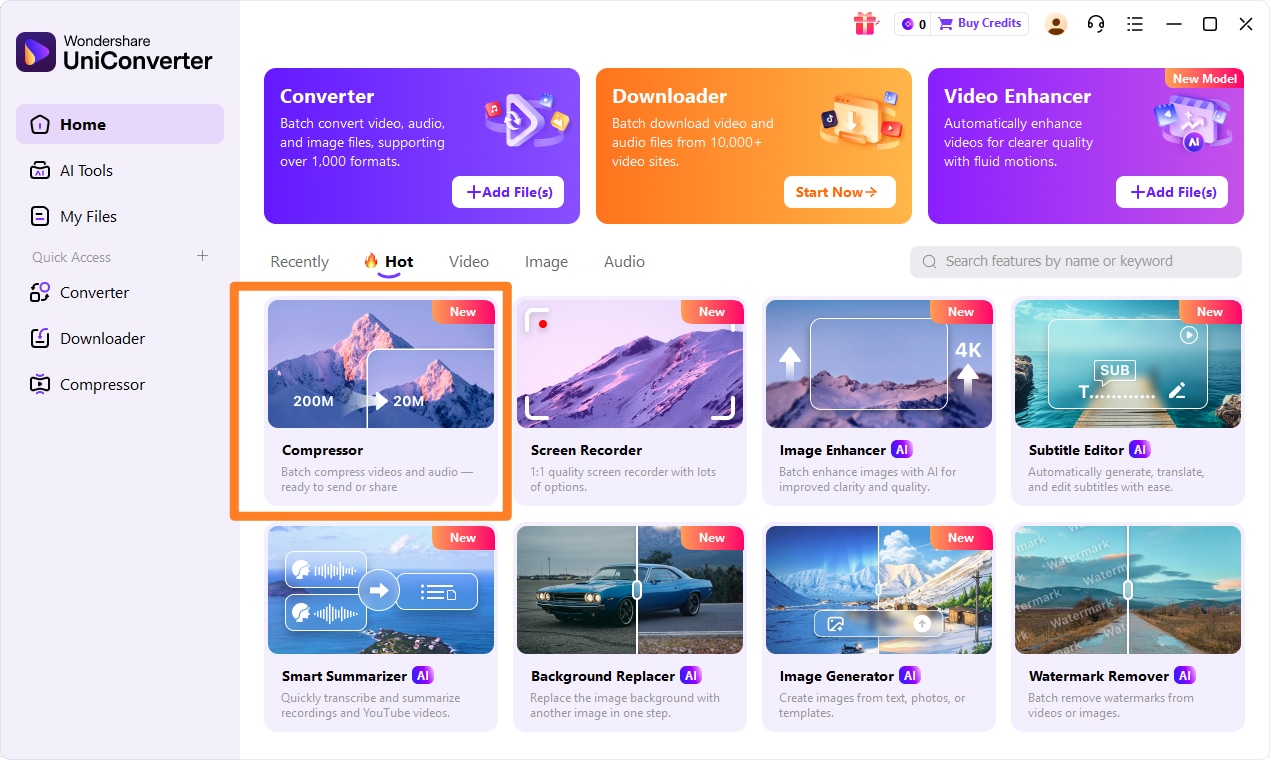
Step 1: Open UniConverter and Choose Compressor
Launch UniConverter on your computer. On the left-hand sidebar, you'll find various tools. Click on the "Compressor" option to begin.
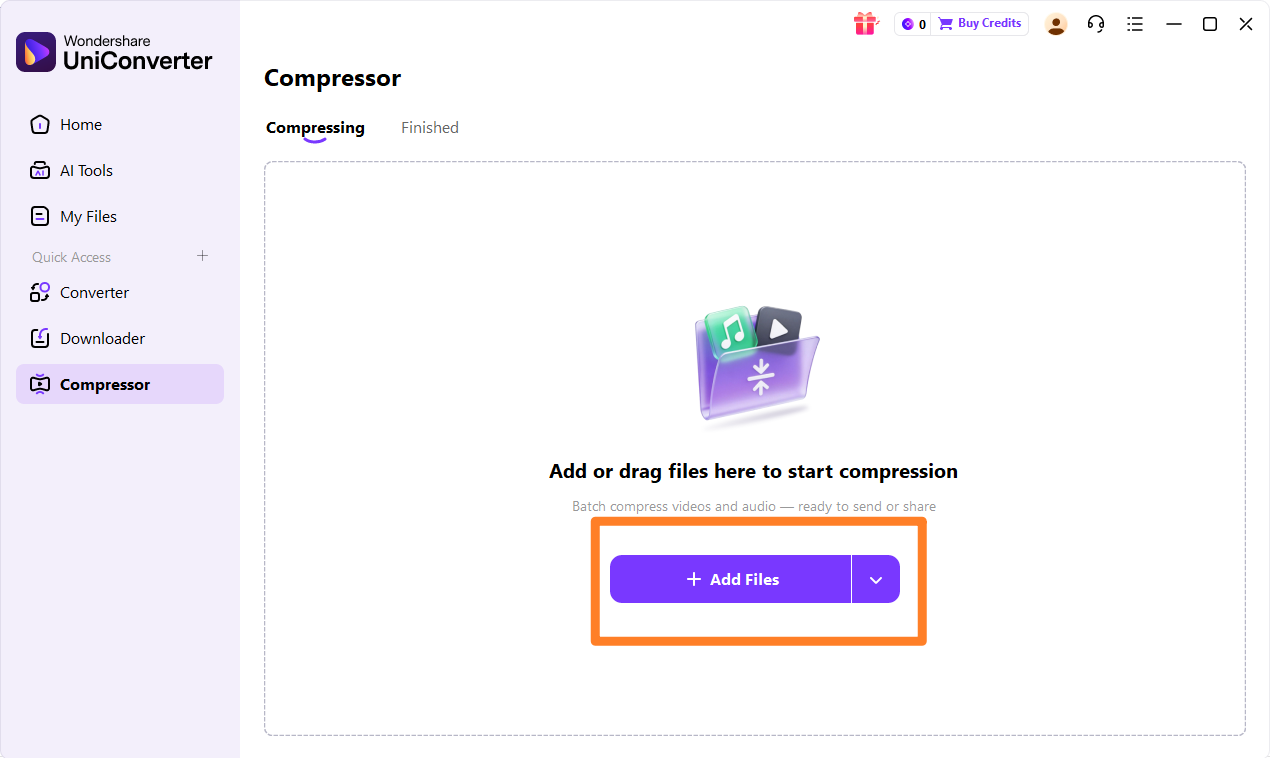
Step 2: Upload the Video, Audios or Images
Drag and drop your video, audio, or image files directly into the UniConverter window. Alternatively, click the "Add Files" button to browse and select the media you wish to compress.
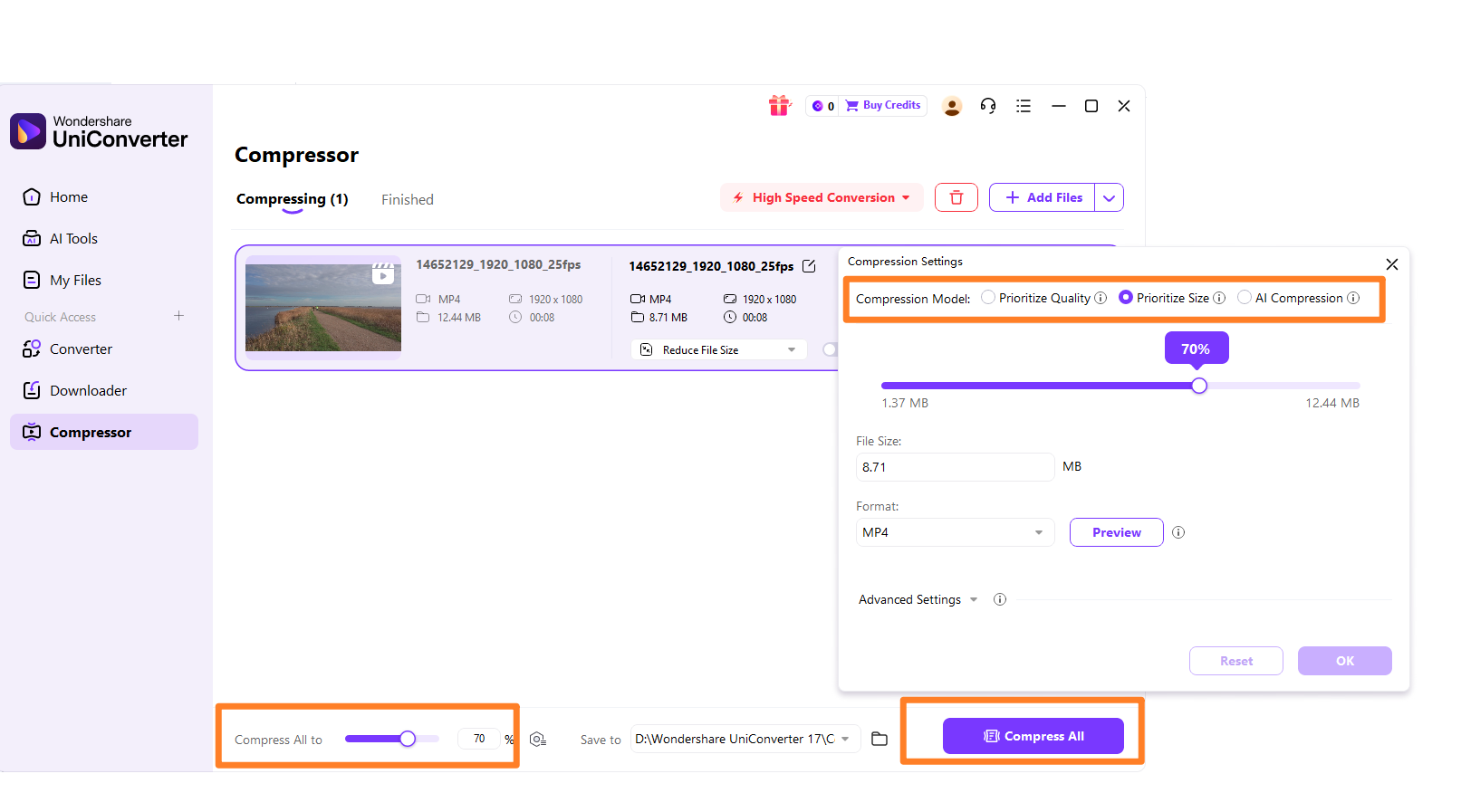
Step 3: Choose Required Parameters
Once your files are loaded, you can adjust the compression settings. UniConverter offers various options to balance file size and quality, including resolution, bitrate, and output format. You can also preview the changes.
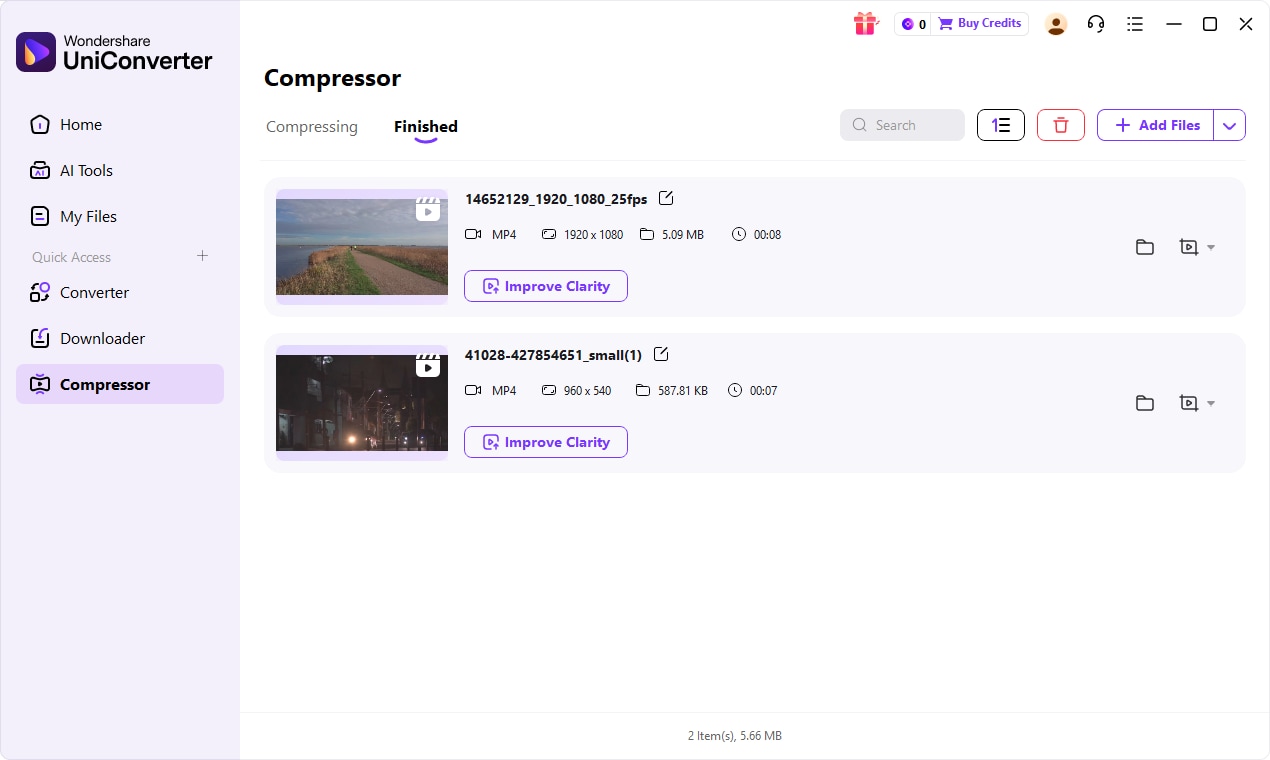
Step 4: Save the Compressed File
After configuring your settings, choose your desired output folder. Then, click the "Compress" or "Start All" button to begin the compression process. UniConverter will quickly process your files, and you'll find the optimized versions in your chosen destination.

Seeking a Filmora Video Compressor Alternative?
Part 7: Conclusion
After a thorough Filmora Video Compressor review and comparison, it's clear that this tool serves a specific segment of the market very well. For casual users and those deeply integrated into the Filmora ecosystem, its ease of use, intuitive interface, and seamless workflow integration make it an excellent choice for quick video compression, especially for social media sharing. However, for advanced users who require granular control over compression algorithms, specific codecs, and minimal quality degradation for professional archiving or high-fidelity delivery, Filmora Video Compressor's limitations become apparent. In such cases, tools like HandBrake offer the necessary depth of control. For those seeking a balanced solution that combines user-friendliness with robust features, UniConverter emerges as a strong contender, providing a comprehensive set of tools without overwhelming the user. Ultimately, your best choice depends on your specific needs, technical comfort level, and the importance of maintaining pristine video quality.
Part 8: FAQs
-
1. Does Filmora Video Compressor reduce video quality significantly?
The extent of quality reduction depends on how aggressively you compress the video. While Filmora Video Compressor aims to balance size and quality, choosing very small file sizes can lead to noticeable quality loss, especially with aggressive settings.
-
2. Can I compress multiple videos at once with Filmora Video Compressor?
Yes, Filmora Video Compressor supports batch processing, allowing you to compress multiple video files simultaneously, which is a great time-saving feature.
-
3. Is Filmora Video Compressor a free tool?
Filmora Video Compressor is typically included as part of the Filmora video editing software suite, which often operates on a subscription model or a one-time purchase for a perpetual license. There might be a free trial version, but full functionality usually requires a purchase.
-
4. How does Filmora Video Compressor compare to HandBrake for compression?
Filmora Video Compressor is simpler and more user-friendly, ideal for beginners and quick tasks. HandBrake offers significantly more advanced settings and granular control over codecs and parameters, making it better suited for experienced users who need precise control over output quality and file size.
-
5. What are the best settings for compressing videos for YouTube using Filmora Video Compressor?
For YouTube, I recommend using one of Filmora's "Web" or "YouTube" presets if available, or manually setting the resolution to 1080p or 720p with a moderate bitrate (e.g., 8-12 Mbps for 1080p) to balance quality and file size. If you find Filmora's options too limited, UniConverter offers more tailored presets and better control for platforms like YouTube, ensuring optimal upload quality without excessive file sizes.
