
- Value: File Converter Audio Compressors optimize storage, speed sharing, and enhance web performance by reducing audio file sizes.
- Features: Look for batch processing, broad format support, customizable settings, and intuitive interfaces for efficient compression.
- Use Cases: Ideal for content creators and web developers optimizing audio for web/mobile; not for archival-grade preservation where fidelity is paramount.
- Comparison: UniConverter offers superior control, format support, and offline capability compared to online tools or basic editors like Audacity.
- Risks: Beware of data privacy issues, hidden costs, quality degradation, inconsistent performance, and malware risks with free/online tools.
- Decision: Choose UniConverter for reliable, high-quality audio compression with extensive features and an ad-free experience.
In this article
- Part 1: What is a File Converter Audio Compressor?
- Part 2: File Converter Audio Compressor: Core Features, Pros, and Cons
- Part 3: File Converter Audio Compressor: User and Usage Scenarios
- Part 4: File Converter Audio Compressor and Alternatives Comparison
- Part 5: Risks and Pitfalls to Avoid
- Part 6: How to Use UniConverter for Efficient Audio Compression
- Part 7: Conclusion
- Part 8: FAQs
The Ultimate Guide to File Converter Audio Compressor: Choosing the Right Tool for Your Needs
When I started diving into digital audio, I quickly realized that managing file sizes was a constant battle. Whether I was recording podcasts, creating music, or just sharing voice notes, large audio files always seemed to slow things down. That's when I discovered the world of File Converter Audio Compressor review tools. These tools promise to shrink your audio without sacrificing quality, making them essential for anyone dealing with digital sound. In this comprehensive review, I'll break down what these tools do, who they're for, and how they stack up against each other, helping you make an informed decision about the best tool for your specific needs.
Part 1: What is a File Converter Audio Compressor?
A File Converter Audio Compressor is essentially a digital utility designed to reduce the size of audio files, often while simultaneously changing their format. This process is crucial in today's digital landscape where efficient data management is key. It allows you to store more audio on your devices, upload content faster, and stream music without buffering issues. My goal in this review is to help you navigate the myriad of options available and pinpoint the tool that best serves your individual requirements, balancing file size reduction with audio fidelity.
The Growing Demand for Efficient Audio Management
- Storage Optimization: With an ever-increasing volume of digital content, minimizing file sizes is vital for freeing up valuable storage space on hard drives, cloud services, and mobile devices.
- Faster Sharing and Streaming: Smaller audio files translate to quicker uploads, downloads, and smoother streaming experiences, which is critical for content creators, podcasters, and anyone sharing audio online.
- Enhanced Web Performance: For web developers and online businesses, optimized audio files contribute to faster website loading times, improving user engagement and SEO rankings.
- Mobile Data Conservation: Users on mobile networks benefit significantly from compressed audio, as it reduces data consumption, making it more economical to listen to music or podcasts on the go.
Part 2: File Converter Audio Compressor: Core Features, Pros, and Cons
When I look at a File Converter Audio Compressor, I expect it to handle a variety of tasks efficiently. Its core capabilities revolve around taking an audio file, reducing its size, and often converting it to a different format simultaneously. This involves sophisticated algorithms that identify and remove redundant audio data or re-encode it at a lower bitrate. The best tools offer a balance between compression ratio and maintaining perceived audio quality, which is a delicate art.
- Batch Processing: The ability to compress multiple files at once, saving significant time.
- Format Versatility: Support for a wide array of input and output audio formats (MP3, WAV, FLAC, AAC, OGG, etc.).
- Customizable Settings: Options to adjust bitrate, sample rate, and channels for fine-tuned control over compression.
- Quality Presets: Pre-defined settings for different quality levels (e.g., high, medium, low) for quick selection.
- User-Friendly Interface: An intuitive design that makes the compression process straightforward, even for beginners.
Pros:
- Efficiently reduces file size without significant quality loss for sharing and storage.
- Supports a wide range of audio formats, offering versatility for various projects.
- Streamlines workflows for content creators, podcasters, and musicians.
Cons:
- Potential for noticeable audio quality degradation if compression settings are too aggressive.
- Some tools may have complex interfaces, posing a learning curve for new users.
Part 3: File Converter Audio Compressor: User and Usage Scenarios
From my experience, the need for a File Converter Audio Compressor isn't universal, but it's incredibly specific for certain user groups and situations. If you're someone who regularly deals with audio files, understanding where these tools shine—and where they fall short—is crucial. I've found that the ideal user is someone who needs to balance file size with acceptable audio quality for practical, everyday applications.
Best-Fit Scenario: Optimizing Audio for Web and Mobile
- User Profile: Content creators, web developers, social media managers.
- Problem: Large audio files slow down website loading times and consume excessive mobile data.
- Solution: Using a file converter audio compressor to reduce file size for faster streaming and download, improving user experience. I've personally seen how a well-compressed audio file can drastically improve my website's loading speed, which directly impacts visitor engagement and SEO. For social media, it means my audio clips upload faster and play smoothly for my audience, regardless of their internet connection.
Limited-Fit Scenario: Archival-Grade Audio Preservation
- User Profile: Audio engineers, archivists, professional musicians.
- Problem: Need to preserve original audio quality for long-term storage and future editing.
- Limitation: Aggressive compression can lead to irreversible quality loss, making it unsuitable for archival purposes where fidelity is paramount. When I'm working on a critical music project or archiving historical recordings, I absolutely avoid lossy compression. The subtle nuances and dynamic range are too important to compromise. In these cases, lossless formats like FLAC or WAV are my go-to, even if they take up more space.
Part 4: File Converter Audio Compressor and Alternatives Comparison
When I'm looking for a File Converter Audio Compressor, I don't just pick the first one I see. I compare it against its alternatives to understand where each excels. This table breaks down how a general file converter audio compressor stacks up against some specific competitors, helping me decide which tool fits my workflow best.
| Feature/Tool | File Converter Audio Compressor (General) | UniConverter | Online Audio Converter | Audacity |
| Ease of Use | Moderate | High (Intuitive UI, guided steps) | High (Web-based, simple UI) | Moderate (Feature-rich, requires learning) |
| Supported Formats | Broad | Very Broad (1000+ formats) | Limited to common formats | Broad (Supports many, but some require plugins) |
| Compression Quality | Good | Excellent, fine-grained control, lossless options | Variable, depends on settings | Excellent, fine-grained control |
| Batch Processing | Often available | Always available, efficient | Sometimes | Yes, but less intuitive for pure compression |
| Offline Capability | No (for online tools) / Yes (for desktop) | Yes | No | Yes |
| Price | Free/Freemium | Paid (One-time purchase/Subscription) | Free (with ads/limits) | Free (Open-source) |
| Customer Support | Varies widely | Excellent, dedicated support | Limited (Community/FAQ) | Community-based |
| Security | Varies, depends on provider | High (Desktop app, local processing) | Moderate (Cloud-based, data upload) | High (Desktop app, local processing) |
From my perspective, UniConverter truly shines when I need a powerful, all-in-one solution with excellent control over quality and batch processing. Its comprehensive format support means I rarely hit a roadblock. Online Audio Converter is fantastic for quick, one-off tasks where I don't want to download software, but I'm always mindful of its limitations in format support and potential quality variations. Audacity, while incredibly powerful for editing, isn't primarily a compression tool, making it less efficient for straightforward file size reduction. For serious work where I prioritize stability, features, and support, UniConverter consistently comes out on top.
Part 5: Risks and Pitfalls to Avoid
When I'm using a File Converter Audio Compressor, especially a free or online one, I've learned to be extremely cautious. There are several risks and pitfalls that can turn a simple task into a frustrating or even damaging experience. It's not just about getting the job done; it's about protecting my data, my time, and the integrity of my audio.
Data Privacy Concerns with Online Tools
I've always been wary of uploading sensitive audio files to online converters. Many free online tools require you to upload your files to their servers for processing. This raises significant privacy questions: Who has access to my data? How long is it stored? Is it used for training AI models or shared with third parties? Without clear privacy policies, I feel like I'm taking a gamble with my personal or proprietary audio.
Hidden Costs and Subscription Models
Some "free" tools aren't truly free. I've encountered many that start free but then hit me with limitations – like file size caps, daily usage limits, or slower processing speeds – pushing me towards a paid subscription. Others might hide premium features behind a paywall, making the free version barely functional for my needs. It's a classic bait-and-switch that can be frustrating when I'm in a hurry.
Loss of Audio Fidelity with Aggressive Compression
This is perhaps the most common pitfall. While the goal is to reduce file size, being too aggressive with compression settings can lead to irreversible quality loss. I've heard audio files come out sounding tinny, muffled, or with noticeable artifacts. Once the data is gone, it's gone. For anything beyond casual listening, I always err on the side of caution with compression levels to avoid ruining my original sound.
Inconsistent Performance Across Different Platforms
I've noticed that some tools, especially online ones, don't perform consistently across different browsers or operating systems. What works perfectly on Chrome might be buggy on Firefox, or a desktop app might have issues on an older version of Windows. This inconsistency can lead to wasted time and repeated attempts, which is incredibly inefficient when I'm on a deadline.
Annoying Ads and Malware Risks
Many free online converters are ad-supported, and these ads can be intrusive, disruptive, or even lead to malicious websites. I've clicked on seemingly innocuous buttons only to be redirected to spam or sites trying to download unwanted software. In the worst cases, some free tools might even bundle malware or spyware with their downloads, posing a serious security risk to my computer.
Part 6: How to Use UniConverter for Efficient Audio Compression
A clunky interface, uneven compression results, and noticeable quality loss are usually signs that it’s time for a better tool. That’s why I often choose UniConverter, which offers a cleaner, ad-free experience and works well for both file conversion and audio compression. Its broad format support and GPU acceleration make processing much faster, while the overall compression quality stays far more consistent than with many basic alternatives. I also appreciate its batch processing features, which save a lot of time when handling multiple files at once. For anyone who needs a practical all-in-one solution that balances ease of use with reliable performance, UniConverter is a strong option.
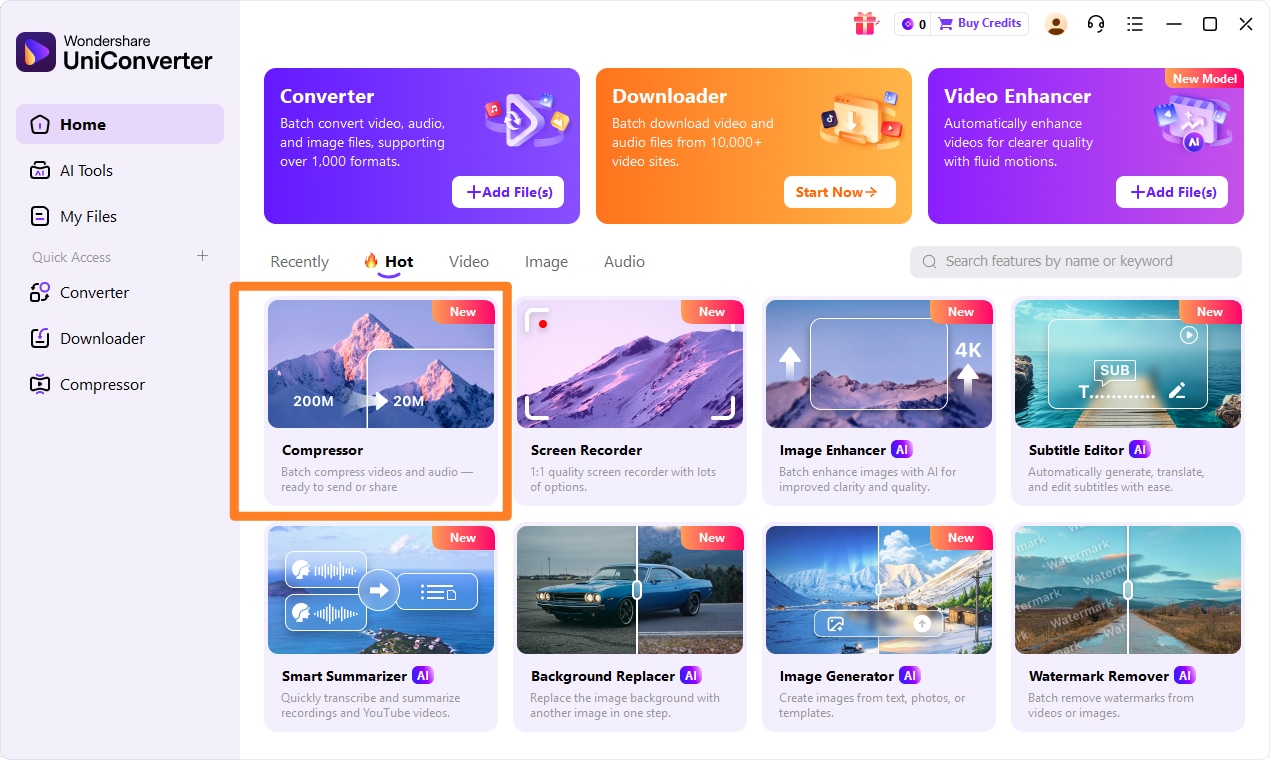
Step 1: Open UniConverter and Choose Compressor
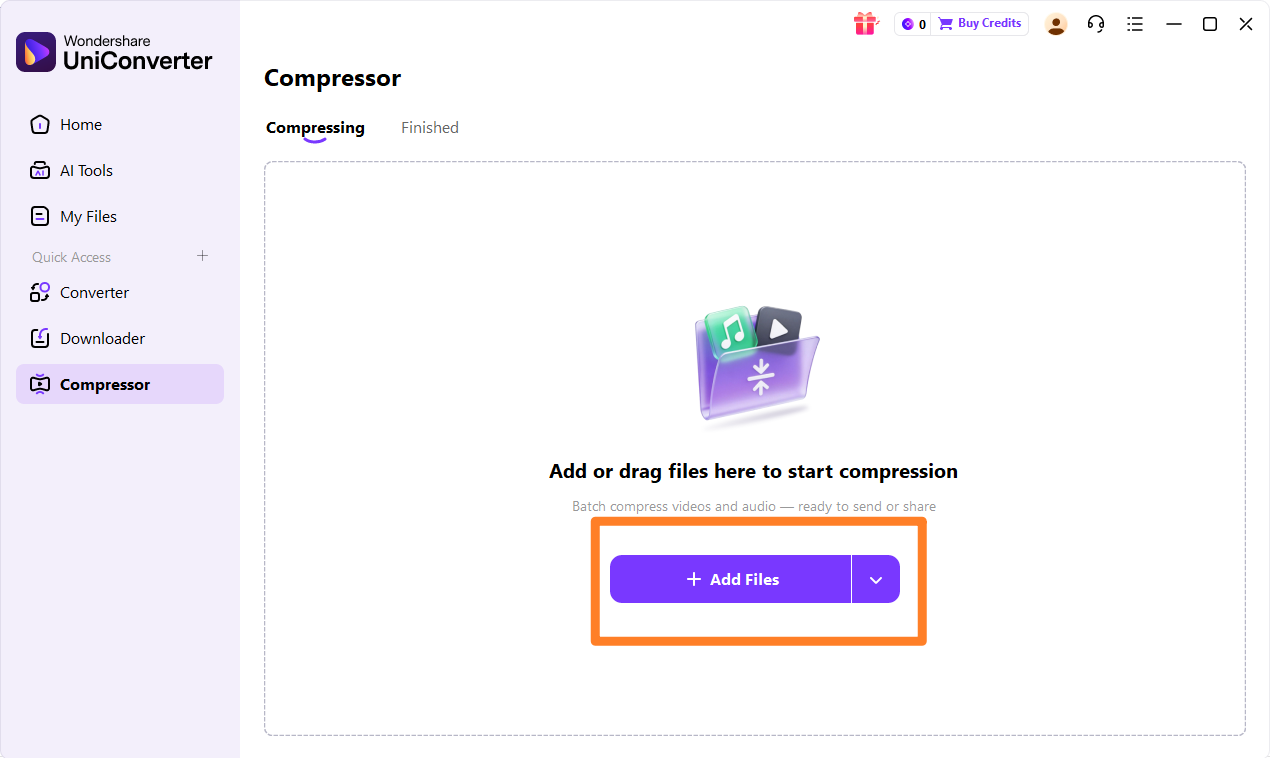
Step 2: Upload the Video, Audios or Images
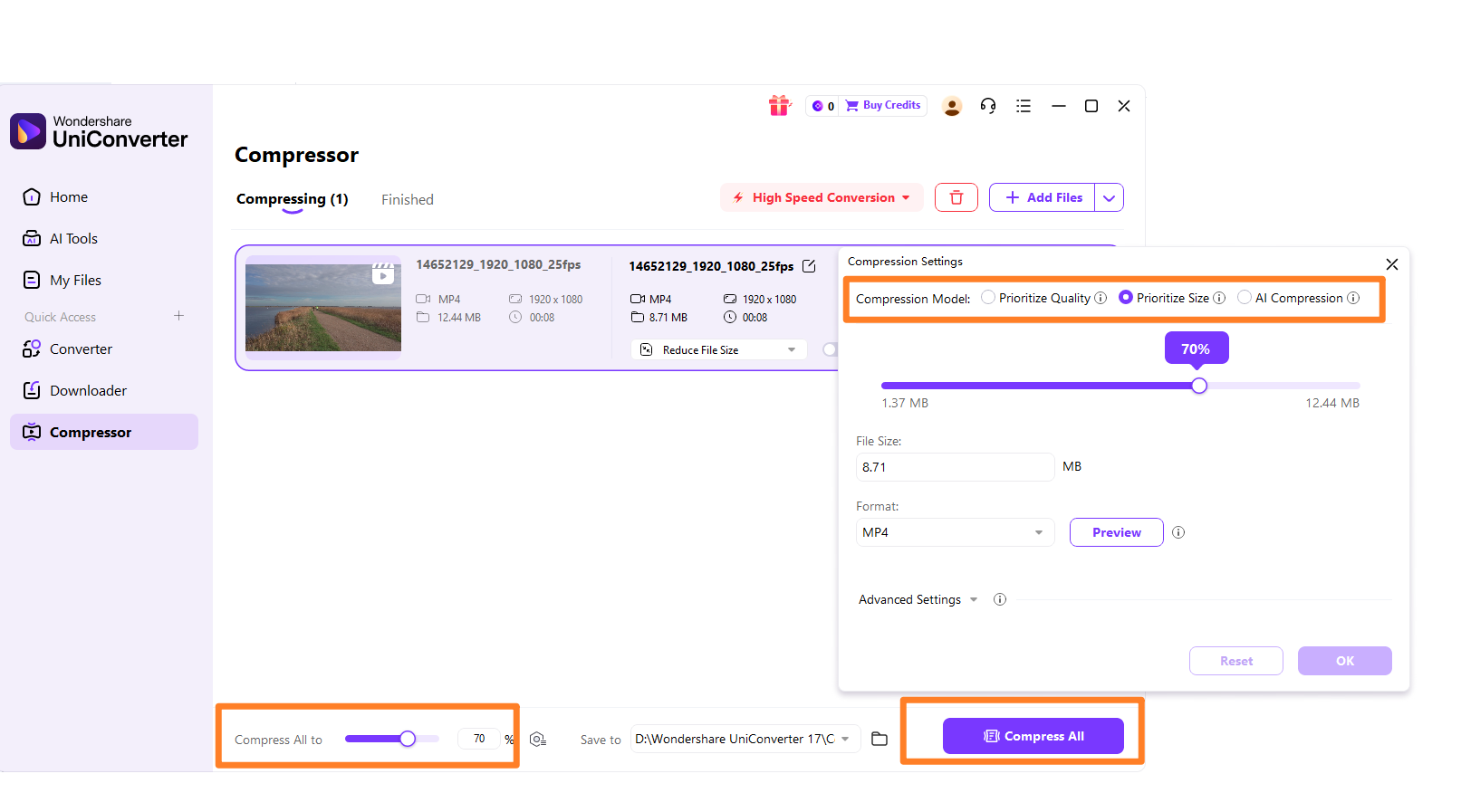
Step 3: Choose Required Parameters
Step 4: Save the Compressed File
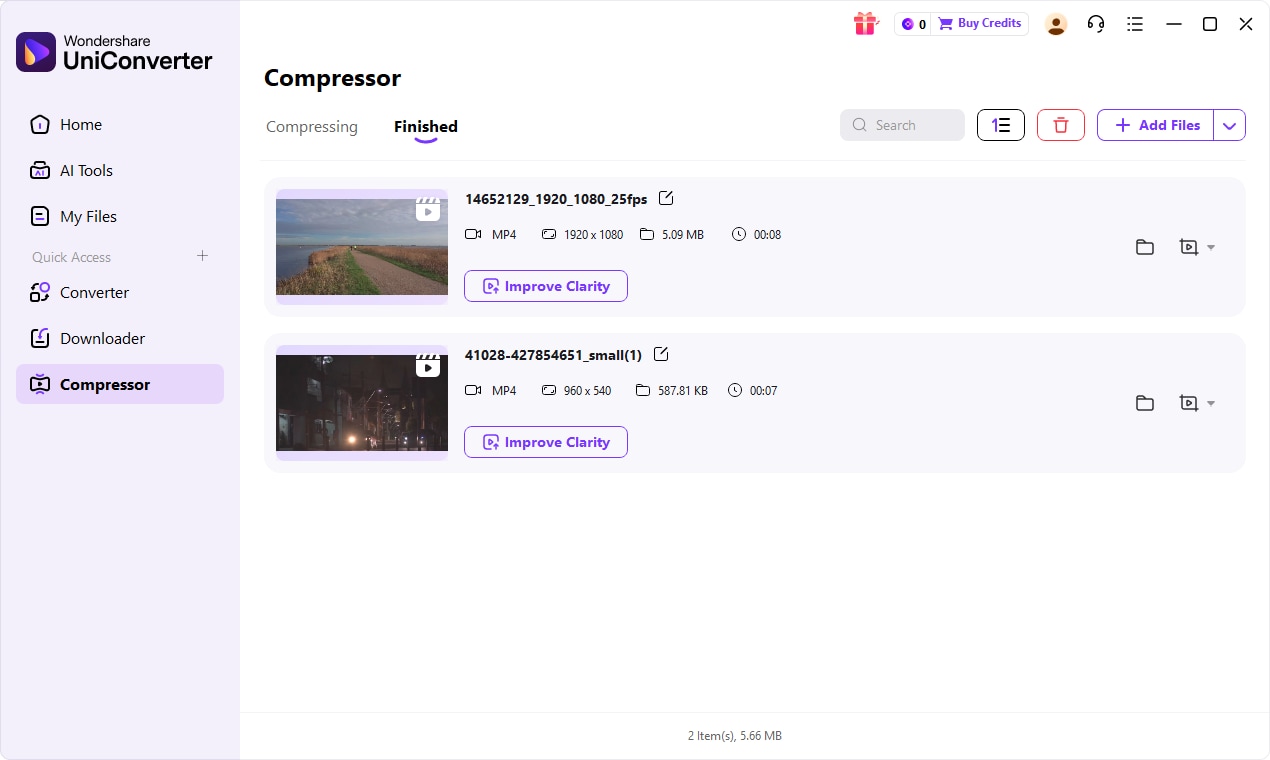

Efficient File Conversion and Audio Compression
Part 7: Conclusion
After exploring the landscape of File Converter Audio Compressor review tools, it's clear that the "best" option heavily depends on your specific needs and priorities. For casual users who occasionally need to shrink an audio file for sharing, a free online tool might suffice, but I'd advise extreme caution regarding privacy and potential quality degradation. Content creators and regular users will find more value in balanced desktop solutions that offer a good mix of features, ease of use, and reliable performance without the constant worry of ads or data breaches. For professionals, audio engineers, or anyone for whom audio fidelity is paramount, investing in dedicated software like UniConverter is undoubtedly the superior choice. It provides the granular control, extensive format support, and consistent high-quality output necessary for demanding projects. Ultimately, prioritizing security, understanding the potential for quality loss, and matching the tool to your specific workflow will lead you to the most effective solution.
Part 8: FAQs
-
1. What is the best file format for audio compression?
MP3 and AAC are popular choices for lossy compression, offering a good balance of file size and quality. For lossless compression, FLAC is an excellent option as it reduces file size without discarding any data.
-
2. How much can I compress an audio file without losing quality?
The perception of "quality loss" is subjective. Generally, a 20-30% reduction in file size is achievable without noticeable degradation for most listeners. However, for critical listening or professional use, even minor compression can be audible. Tools like UniConverter allow for fine-tuned control to minimize perceived quality loss.
-
3. Are free online audio compressors safe to use?
While many are safe, some free online tools may pose privacy risks or contain intrusive ads. Always check reviews and privacy policies before uploading sensitive files. For better security and privacy, I recommend using a reputable desktop application.
-
4. Can I compress multiple audio files at once?
Yes, many desktop file converter audio compressors and some advanced online tools offer batch processing capabilities. UniConverter, for example, excels at batch compression, allowing you to process numerous files simultaneously and saving a significant amount of time.
-
5. What's the difference between lossy and lossless audio compression?
Lossy compression permanently removes some audio data to reduce file size (e.g., MP3, AAC), meaning the original audio cannot be perfectly reconstructed. Lossless compression, on the other hand, reduces file size without discarding any data, allowing for perfect reconstruction of the original (e.g., FLAC, ALAC).
