
- FastStone Overview: Free, simple Windows tool for batch image resizing and basic compression.
- Core Strengths: Excellent for quick, high-volume image processing for web uploads; intuitive interface.
- Key Limitations: Outdated interface, limited advanced compression, no lossless options, Windows-only.
- UniConverter Advantage: Modern, comprehensive multimedia tool with superior lossless compression and cross-platform support.
- Decision Factor: Choose FastStone for basic, free batch tasks; UniConverter for professional-grade, versatile multimedia compression.
In this article
- Part 1: What is FastStone Photo Resizer Image Compressor?
- Part 2: FastStone Photo Resizer: Core Features, Pros, and Cons
- Part 3: FastStone Photo Resizer: Ideal Users and Use Cases
- Part 4: FastStone Photo Resizer and Alternatives Comparison
- Part 5: Risks and Pitfalls to Consider
- Part 6: How to Use UniConverter for Efficient Audio and Video Compression
- Part 7: Conclusion
- Part 8: FAQs
FastStone Photo Resizer has long been a go-to tool for quick image manipulation, particularly for batch resizing and basic compression. It carved out a niche by offering a free, straightforward solution in a market often dominated by complex or costly software. This FastStone Photo Resizer Image Compressor review will delve into its capabilities, comparing it against modern alternatives like UniConverter and various online tools. My aim is to provide a comprehensive, scenario-based analysis to help you understand where FastStone Photo Resizer truly shines and where it falls short, guiding your decision-making process for your specific image compression needs.
Part 1: What is FastStone Photo Resizer Image Compressor?
FastStone Photo Resizer Image Compressor is a freeware utility designed primarily for batch image conversion, resizing, renaming, and compression. It's a desktop application for Windows, known for its simplicity and efficiency in handling large numbers of image files. This review aims to address the core question: Does FastStone Photo Resizer still hold its own in today's fast-evolving digital landscape, especially when compared to more feature-rich or cloud-based solutions?
Understanding the Role of Image Compressors in Digital Workflows
* Optimizing Website Performance: Compressed images lead to faster loading times, improving user experience and SEO.
* Saving Storage Space: Smaller file sizes reduce the demand on local drives and cloud storage.
* Facilitating Sharing: Easier and quicker to upload or email compressed images.
* Maintaining Quality-to-Size Balance: The challenge is to reduce file size without significant visual degradation.
Part 2: FastStone Photo Resizer: Core Features, Pros, and Cons
FastStone Photo Resizer offers a range of core capabilities centered around image batch processing. Its primary functions include resizing, cropping, rotating, color adjustments, watermarking, and, of course, compression. It supports various image formats like JPEG, BMP, GIF, PNG, TIFF, and more.
Pros
* Batch Processing Efficiency for Large Photo Collections: I find it incredibly fast when I need to process hundreds of images at once.
* Intuitive User Interface for Quick Operations: The interface is very simple; I can jump in and start working without a steep learning curve.
* Versatile Image Manipulation Options Beyond Compression: It's not just compression; I can also rename, watermark, and add borders in bulk.
Cons
* Limited Advanced Compression Algorithms Compared to Modern Tools: The compression quality, especially for aggressive settings, isn't always as refined as newer tools.
* Outdated Interface Design and User Experience: The look and feel are definitely from an older era, which can feel clunky compared to modern software.
Part 3: FastStone Photo Resizer: Ideal Users and Use Cases
FastStone Photo Resizer is best suited for users who need a quick, no-frills solution for common image tasks, particularly those involving multiple files.
Best Use Case: Rapid Bulk Image Preparation for Web Uploads
Scenario: As a blogger, I often need to resize and compress hundreds of high-resolution photos for a new website gallery. I need to maintain acceptable quality for fast loading times without spending hours on individual adjustments. FastStone Photo Resizer allows me to drag and drop all my images, set a desired output size and quality, and process them in minutes. It's perfect for getting content online quickly without compromising too much on visual appeal.
Limited Use Case: Professional Photography Workflow Requiring Lossless Compression and Advanced Editing
Scenario: If I were a professional photographer, I would find FastStone Photo Resizer insufficient for archiving RAW files without any quality degradation, or for precise color management and selective compression for client deliverables. For these tasks, I need tools that offer true lossless compression, deep color profile support, and advanced editing capabilities that FastStone simply doesn't provide.
Part 4: FastStone Photo Resizer and Alternatives Comparison
| Feature/Scenario | FastStone Photo Resizer | UniConverter | Online Compressor X | ImageOptim (Mac) |
| Batch Processing Speed | Excellent | Very Good | Good | Excellent |
| Compression Quality (Lossy) | Good | Excellent | Good | Excellent |
| Compression Quality (Lossless) | Limited | Excellent | Limited | Excellent |
| User Interface Modernity | Basic | Modern | Modern | Modern |
| Additional Features (e.g., Video) | None | Extensive | Limited | None |
| Offline Capability | Yes | Yes | No | Yes |
| Pricing Model | Free | Subscription/One-time | Freemium | Free |
Key Differentiators Summarized
FastStone excels in basic, free batch operations, offering solid performance for its price point (free). UniConverter, on the other hand, provides a more comprehensive, modern solution with advanced compression algorithms, including excellent lossless options, and a wider array of multimedia features. Online tools offer convenience but often lack advanced controls and offline capabilities, while specialized tools like ImageOptim focus solely on superior image optimization for specific platforms.
Part 5: Risks and Pitfalls to Consider
When I use tools like FastStone Photo Resizer, especially for critical projects, I always consider potential downsides. While it's a great free tool, it's not without its limitations and risks.
Potential Quality Degradation with Aggressive Compression Settings
I've learned that pushing the compression too far in FastStone Photo Resizer can lead to noticeable artifacts and a significant drop in image quality. While it offers a quality slider, it doesn't always handle aggressive compression as gracefully as more advanced algorithms found in paid software. For important images, I always do a test run first.
Lack of Advanced Features for Professional Use Cases
As a casual user, I don't always need advanced features, but when I do, FastStone Photo Resizer falls short. There's no support for specific color profiles, no selective compression, and no way to handle RAW files effectively. This means I can't rely on it for professional-grade work where precision and control are paramount.
Privacy Concerns with Online Alternatives
While FastStone Photo Resizer is an offline tool, if I were to consider its online alternatives, I'd be very wary of privacy. Uploading sensitive or proprietary images to an unknown online server always carries the risk of data breaches or unauthorized access. I'd always read the privacy policy carefully before using any online compressor.
Absence of Cross-Platform Compatibility (Windows Only)
This is a significant limitation for me, as I often switch between Windows and Mac. FastStone Photo Resizer is strictly a Windows application. This means I can't use it on my MacBook, forcing me to find alternative solutions or transfer files between operating systems, which can be a hassle.
Part 6: How to Use UniConverter for Efficient Audio and Video Compression
When I come across tools that don’t support batch compression, produce inconsistent results, or noticeably reduce file quality, I usually turn to UniConverter for a more reliable workflow. It works especially well for both image compression and video compression, making it a practical option when I need to handle different media types in one place. I also like that GPU acceleration helps speed up processing, while its broader format support makes it easier to work with a wide range of files. With its smoother, ad-free experience and efficient batch features, it works well as a practical all-in-one solution for everyday multimedia compression needs.
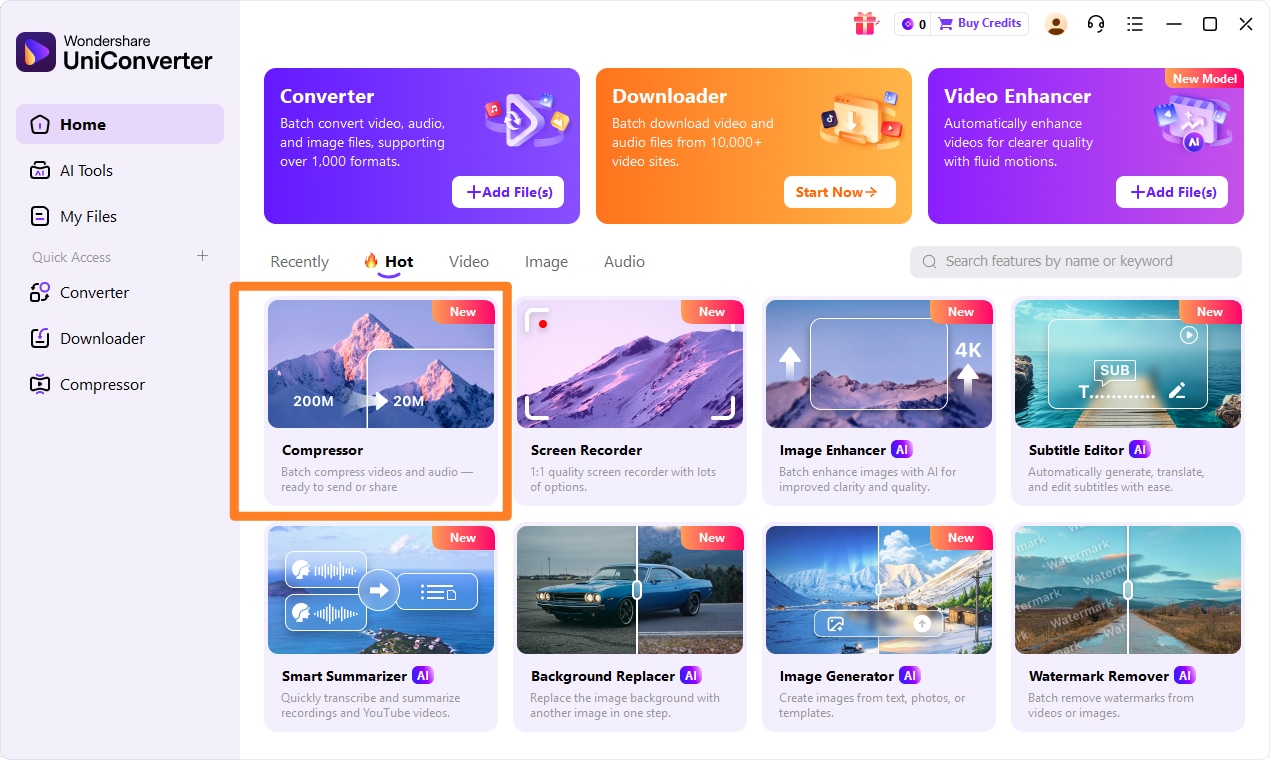
Step 1: Open UniConverter and Choose Compressor
I launch UniConverter and navigate to the "Compressor" tool from the main interface.
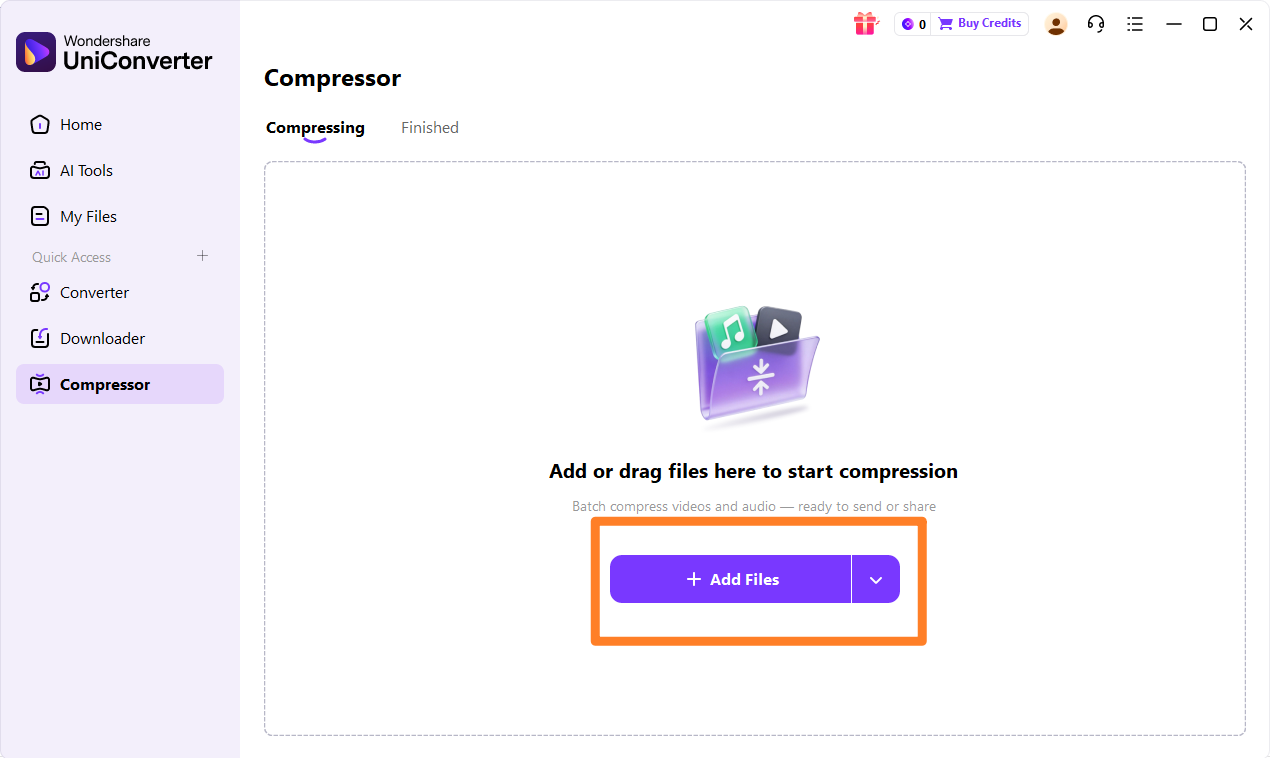
Step 2: Upload the Video, Audios or Images
I then drag and drop my files, whether they are videos, audios, or images, into the UniConverter window.
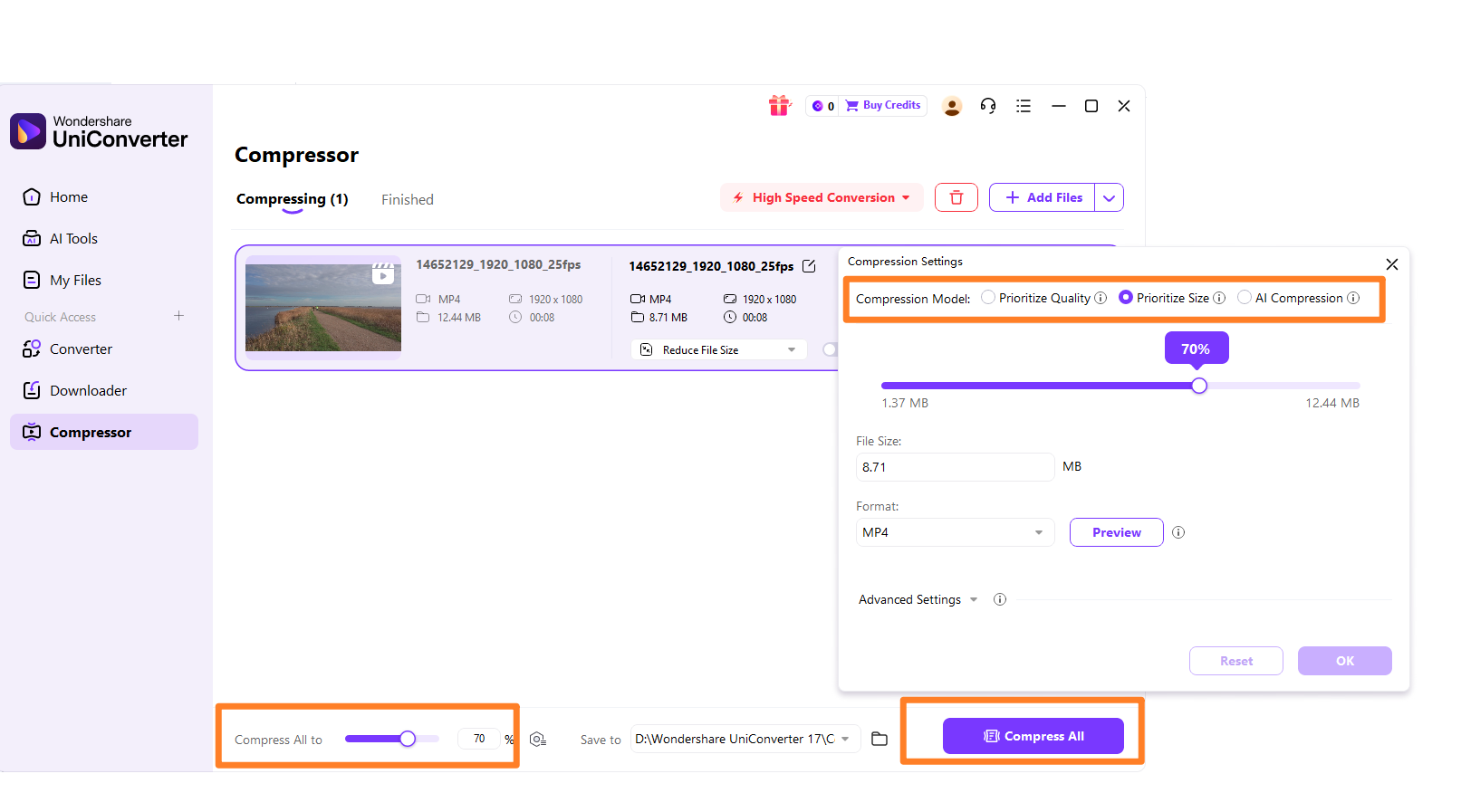
Step 3: Choose Required Parameters
I select my desired output format, resolution, and compression level. UniConverter provides clear options to balance file size and quality.
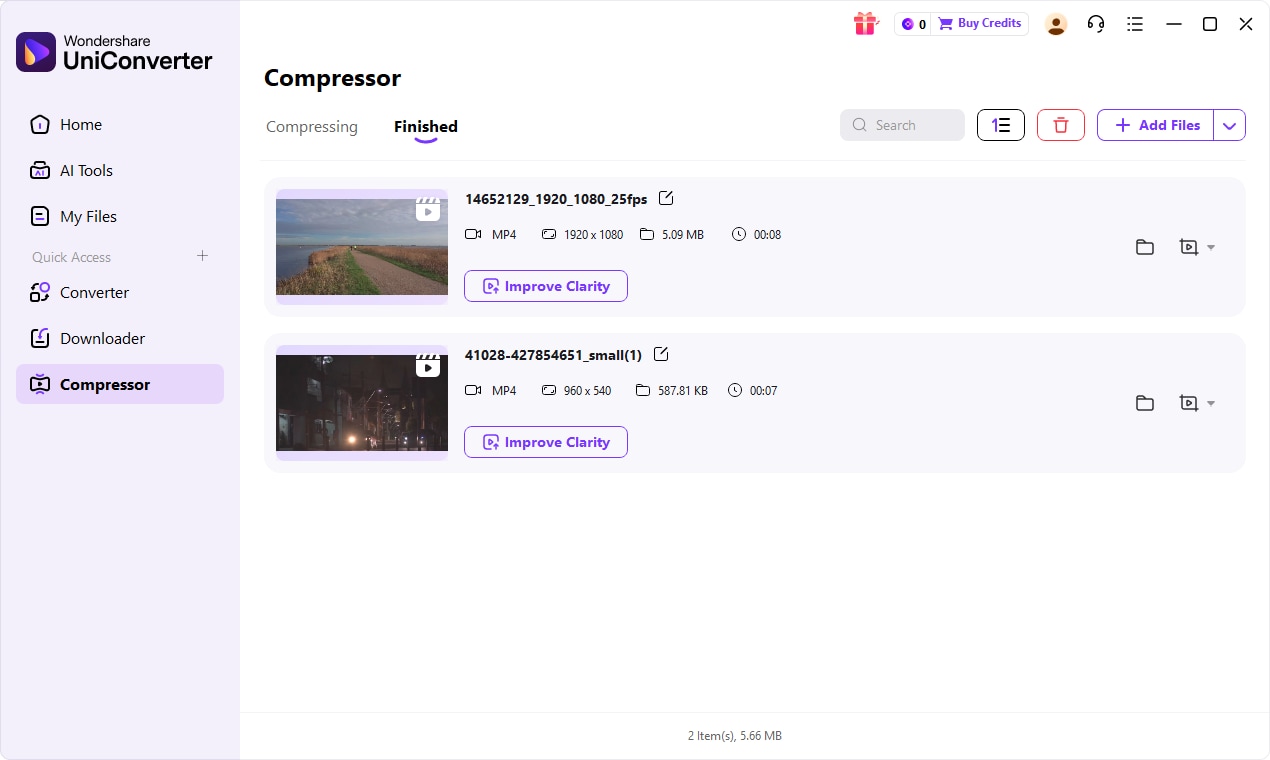
Step 4: Save the Compressed File
Finally, I click the "Compress" button, and UniConverter quickly processes my files, saving them to my specified output folder.

Need a Better FastStone Photo Resizer Alternative?
Part 7: Conclusion
After a thorough FastStone Photo Resizer Image Compressor review, it's clear that this tool remains a valuable asset for specific user groups. For casual users, bloggers, or anyone needing a free, straightforward solution for basic batch resizing and compression of images for web uploads or quick sharing, FastStone Photo Resizer is an excellent choice. Its efficiency and ease of use for these tasks are hard to beat, especially considering its freeware status. However, for professionals, photographers, or users who require advanced compression algorithms, lossless quality, cross-platform compatibility, or a wider range of multimedia features, investing in a more comprehensive tool like UniConverter is highly recommended. Prioritizing quality and advanced features over pure cost savings becomes crucial for critical projects where image integrity and workflow efficiency are paramount.
Part 8: FAQs
-
1. Is FastStone Photo Resizer completely free to use?
Yes, FastStone Photo Resizer is freeware for personal and educational use.
-
2. Can FastStone Photo Resizer compress images without losing quality?
FastStone Photo Resizer primarily uses lossy compression. While it offers quality settings, true lossless compression is not its strong suit. For lossless compression, I'd recommend a tool like UniConverter.
-
3. What are the main advantages of using UniConverter over FastStone Photo Resizer?
UniConverter offers a more modern interface, advanced compression algorithms (including lossless options), broader file format support, and additional multimedia features like video conversion and editing.
-
4. Are there any online alternatives that offer similar functionality to FastStone Photo Resizer?
Yes, many online image compressors exist, but they often come with limitations on file size, batch processing, and privacy concerns. I always prefer offline tools for sensitive data.
-
5. How important is image compression for website performance?
Image compression is crucial for website performance as it significantly reduces page load times, improving user experience and SEO rankings. Smaller images load faster, which keeps visitors on your site longer.
