
- EZ CD Audio Converter: Excellent for CD ripping and high-fidelity audio conversion; premium price, specialized focus.
- UniConverter: Best alternative for versatile multimedia needs, fast processing, and efficient compression.
- Value Comparison: EZ CD excels in audio quality, UniConverter in versatility and speed, free tools for basic needs.
- Decision Factors: Choose based on budget, frequency of use, and specific needs (e.g., CD ripping vs. all-in-one media management).
In this article
- Part 1: What is EZ CD Audio Converter?
- Part 2: EZ CD Audio Converter: Core Features, Pros, and Cons
- Part 3: EZ CD Audio Converter: Who is it For? Ideal Scenarios and Limitations
- Part 4: EZ CD Audio Converter and Alternatives Comparison
- Part 5: Potential Pitfalls and Considerations
- Part 6: How to Use UniConverter for Efficient Audio Compression
- Part 7: Final Verdict and Recommendations
- Part 8: FAQs
When I first started digitizing my extensive CD collection, I quickly realized the need for a reliable tool to convert and compress audio files. The sheer volume of music meant I needed something efficient, high-quality, and easy to use. This led me to explore various audio converters, with EZ CD Audio Converter review consistently appearing as a top contender. This comprehensive review and comparison will delve into its features, assess its strengths and weaknesses, and stack it against other popular options, helping you make an informed decision for your audio compression needs. I'll share my personal experiences and insights to guide you through the complex world of audio management.
Part 1: What is EZ CD Audio Converter?
EZ CD Audio Converter is a powerful and versatile audio conversion and compression software designed to handle a wide array of audio tasks. It's more than just a simple converter; it's a comprehensive suite that allows you to rip audio CDs, convert audio files between various formats, and burn audio CDs, MP3 CDs, and data discs. My journey with this software began when I was looking for a solution to digitize my physical music library without compromising on sound quality. The core problem I faced, and what many users encounter, is the delicate balance between file size and audio fidelity.
The Evolving Landscape of Audio Compression
The digital age has brought about significant changes in how we consume and manage audio.
* Storage Limitations: Even with large hard drives, extensive music collections can quickly consume valuable space.
* Device Compatibility: Different devices and platforms often require specific audio formats, making conversion a necessity.
* Streaming vs. Local Files: While streaming is convenient, many still prefer local files for offline access and higher quality.
* Preserving Quality: The challenge lies in reducing file size without noticeable degradation of the listening experience.
This review aims to address these challenges by thoroughly examining EZ CD Audio Converter's capabilities and comparing it with other prominent solutions in the market.
Part 2: EZ CD Audio Converter: Core Features, Pros, and Cons
From my experience, EZ CD Audio Converter stands out for its robust feature set and commitment to audio quality. Its core capabilities revolve around efficient audio conversion and compression, making it a go-to tool for many.
Core Features:
* CD Ripping: Accurately rips audio CDs with error detection and metadata retrieval.
* Audio Conversion: Supports a vast range of audio formats, including MP3, FLAC, AAC, WAV, and more.
* Audio Compression: Offers advanced compression settings to balance file size and quality.
* Metadata Editing: Allows for comprehensive editing of track information, album art, and lyrics.
* Burn Audio CDs: Creates standard Red Book audio CDs from your digital files.
Pros:
* Comprehensive Audio Format Support for Diverse Needs: I've rarely encountered a format it couldn't handle, which is a huge time-saver.
* High-Quality Audio Compression with Customizable Settings: The ability to fine-tune bitrates and sample rates means I can always achieve the perfect balance for my specific needs.
* Intuitive User Interface for Efficient Workflow: Even for complex tasks, I find the interface straightforward and easy to navigate.
Cons:
* Higher Price Point Compared to Some Competitors: While I believe it's worth the investment, the cost can be a barrier for some.
* Limited Advanced Editing Features for Professional Users: For tasks beyond conversion and basic metadata, I often need to turn to dedicated audio editing software.
Part 3: EZ CD Audio Converter: Who is it For? Ideal Scenarios and Limitations
Based on my extensive use, EZ CD Audio Converter caters to a specific demographic, excelling in certain scenarios while falling short in others.
Best Use Cases:
* Archiving Large Music Collections with Optimal Space-Saving: When I decided to digitize my entire CD collection, EZ CD Audio Converter was invaluable. Its ability to convert to high-quality compressed formats like FLAC or high-bitrate MP3s meant I could save significant space without sacrificing the listening experience.
* Converting Audio for Playback on Various Devices and Platforms: I frequently convert audio for my car's media system, my portable music player, and even for friends with different device requirements. The extensive format support ensures compatibility across the board.
Scenarios Where EZ CD Audio Converter Might Fall Short:
* Professional Audio Production Requiring Advanced Editing Tools: If you're a musician or audio engineer needing to mix, master, or perform intricate audio manipulations, EZ CD Audio Converter isn't designed for that. I'd look towards DAWs (Digital Audio Workstations) like Audacity or Adobe Audition for those tasks.
* Users Seeking Free or Open-Source Solutions for Basic Conversions: For someone who only needs to convert a few files occasionally and is on a tight budget, the premium price of EZ CD Audio Converter might be overkill. There are free alternatives that can handle basic conversions, albeit often with fewer features or lower quality.
Part 4: EZ CD Audio Converter and Alternatives Comparison
When I'm evaluating software, I always look at how it stacks up against its rivals. Here's my take on EZ CD Audio Converter compared to some other popular options, including UniConverter.
| Feature/Product | EZ CD Audio Converter | UniConverter | Freemake Audio Converter | Audacity |
| Audio Quality | Excellent | Excellent | Good | Excellent |
| Ease of Use | High | High | Medium | Medium |
| Price | Premium ($39.95) | Premium (Subscription/Lifetime) | Free (with limitations) | Free (Open Source) |
| Advanced Features | Moderate (Metadata, CD Burning) | High (Video, Image, AI Tools) | Limited | High (Audio Editing) |
| Supported Formats | Extensive (Lossless & Lossy) | Extensive (Video & Audio) | Moderate | Extensive (Audio) |
| Processing Speed | Fast | Very Fast (GPU Accelerated) | Moderate | Moderate |
| Customer Support | Responsive Email | 24/7 Live Chat/Email | Community Forum | Community Forum |
| Security | High | High | Moderate (Adware concerns) | High |
Key Differentiators:
EZ CD Audio Converter's superior audio quality and extensive format support often justify its premium price for discerning users like me, especially for CD ripping. UniConverter, on the other hand, offers a broader suite of tools beyond just audio, making it a more versatile all-in-one solution with impressive processing speed. Freemake Audio Converter focuses on affordability and basic conversion, appealing to budget-conscious users, though I've had concerns about bundled software. Audacity, while free and powerful for editing, has a steeper learning curve for simple conversions.
Part 5: Potential Pitfalls and Considerations
While I appreciate the power of various audio tools, I've also learned to be wary of potential downsides, especially when dealing with software that handles my precious audio files.
Data Privacy and Security Concerns
When I use online converters or less reputable desktop software, I always worry about my data. Some free tools might collect usage data or even upload my files to their servers, which is a big no-no for sensitive or private recordings. It's crucial to choose software from trusted developers to avoid these privacy breaches.
Unwanted Software Bundles During Installation
This is a common annoyance, particularly with free software. I've often found myself having to carefully uncheck boxes during installation to avoid installing toolbars, browser hijackers, or other unwanted programs. These can slow down my computer and compromise my system's security. Always read installation prompts carefully!
Impact on Original Audio Quality with Aggressive Compression
While the goal is to reduce file size, aggressive compression can severely degrade audio quality. I've made the mistake of setting too low a bitrate in the past, resulting in tinny, artifact-laden audio. It's a delicate balance, and understanding the implications of different compression settings is vital to preserve the listening experience. Always make a backup of your original files before compressing.
Compatibility Issues with Older Operating Systems
Sometimes, I've tried to run newer software on an older machine or operating system, only to encounter compatibility problems, crashes, or missing features. While most modern software aims for broad compatibility, it's always worth checking the system requirements before purchasing or installing, especially if you're not running the latest OS.
Lack of Batch Processing or Automation
For someone like me with a large music library, a tool that lacks batch processing capabilities is a non-starter. Manually converting hundreds of files one by one would be incredibly time-consuming and inefficient. I always look for software that can handle multiple files or even entire folders at once, and ideally, offers some level of automation.
Part 6: How to Use UniConverter for Efficient Audio Compression
A dependable media tool matters most when batch compression becomes unreliable, output quality starts to drop, or free utilities are packed with ads and limited format support. In that kind of workflow, UniConverter has proven to be a strong all-around choice for audio compression, video compression, and even image compression. Its GPU acceleration helps speed up larger jobs, while the overall compression performance stays much more consistent than with many lightweight alternatives. For video files, it can also help compress videos without quality loss as much as possible. With broad compatibility and a smoother, ad-free workflow, it works well as a practical multimedia toolkit for complete audio and media management.
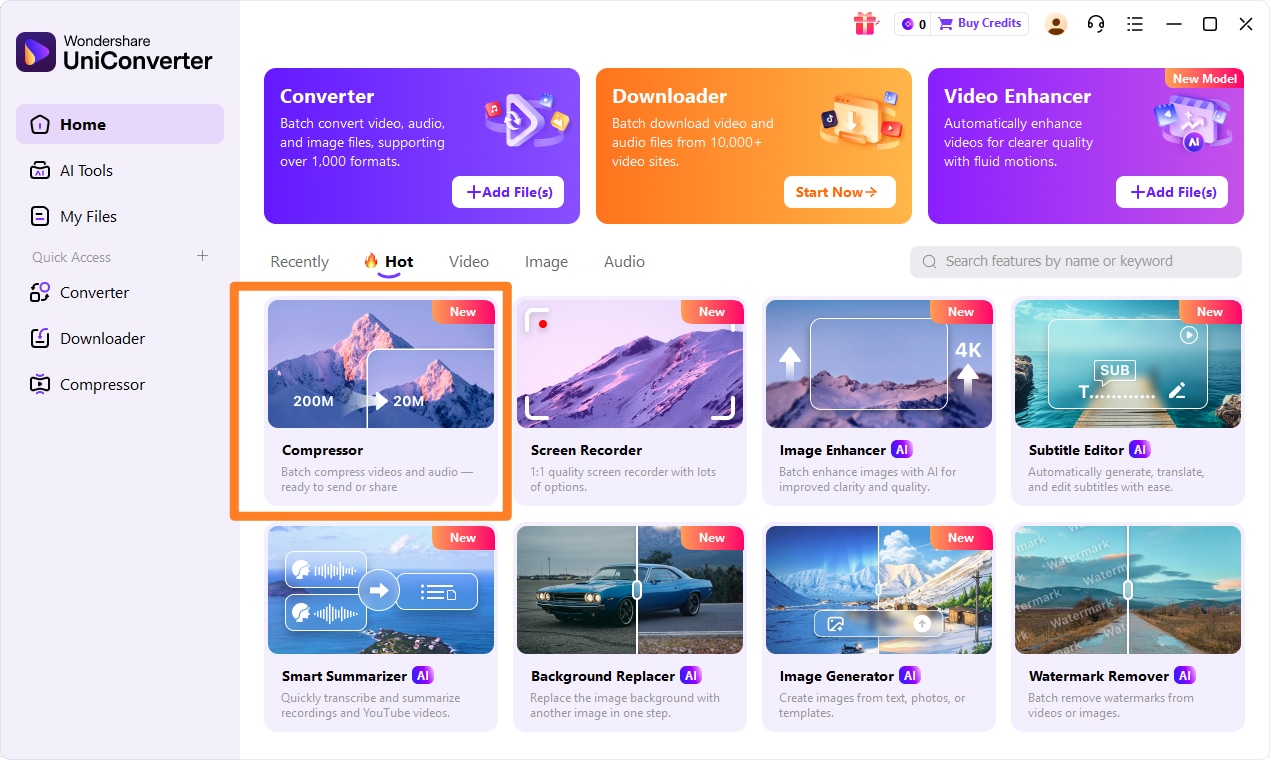
Step 1: Open UniConverter and Choose Compressor
First, I launch UniConverter on my desktop. On the left-hand sidebar, I navigate to the "Toolbox" section and select the "Compressor" option. This action immediately brings me to the compression interface.
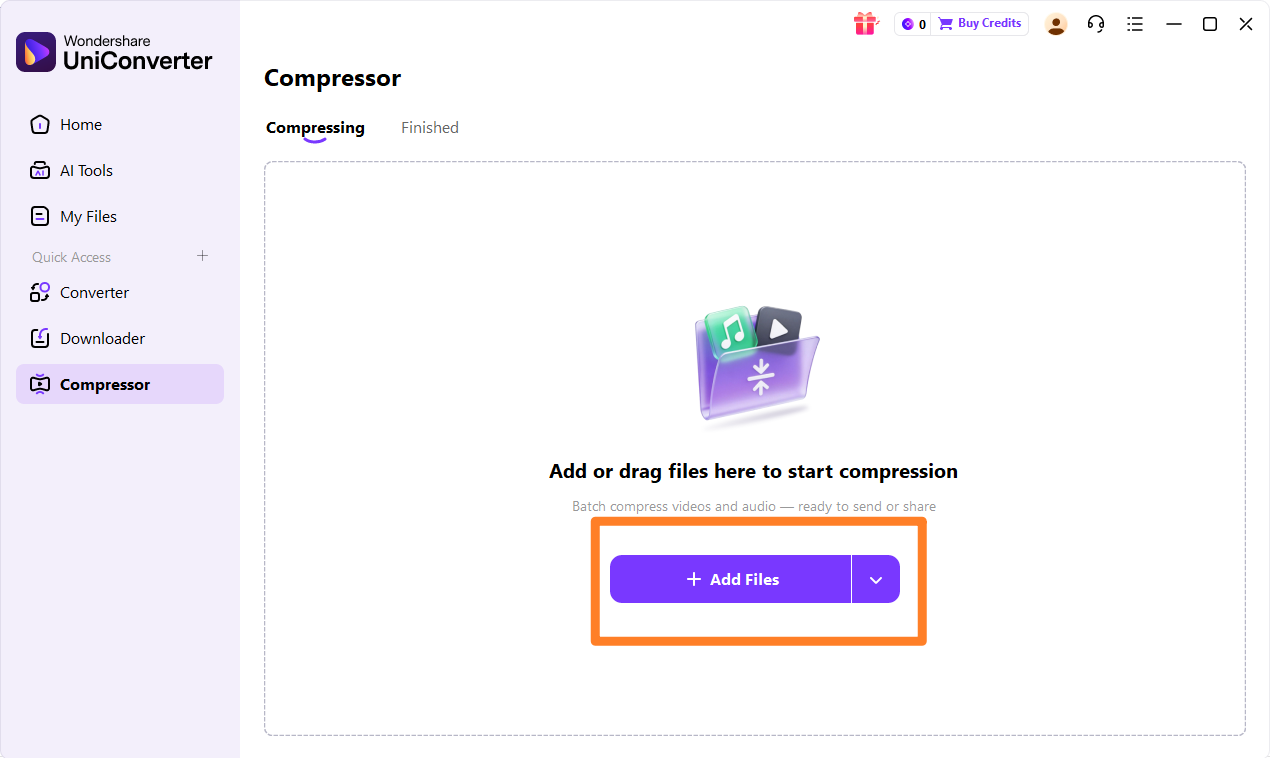
Step 2: Upload the Video, Audios or Images
Next, I click the "Add Files" button in the center of the Compressor window. This opens a file explorer where I can browse and select the audio files I wish to compress. I appreciate the ability to add multiple files or even entire folders, which significantly saves time for my extensive music library.
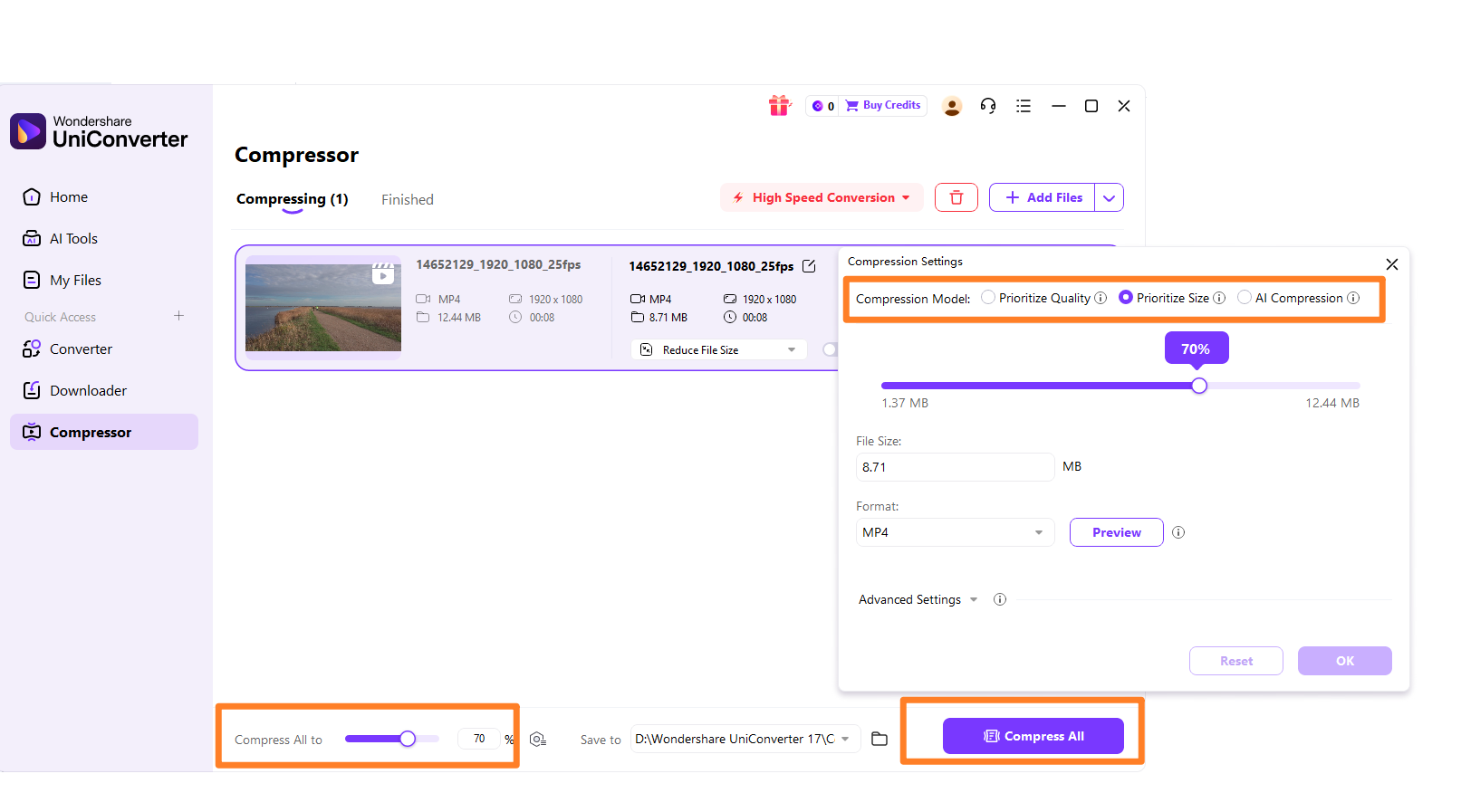
Step 3: Choose Required Parameters
Once my files are loaded, I can customize the compression settings. UniConverter allows me to adjust the output format, bitrate, sample rate, and channel. I typically aim for a balance between file size and quality, often utilizing a variable bitrate for MP3s or opting for a high-quality lossy format like AAC. For those looking to convert audio files, this step is crucial for optimizing the output.
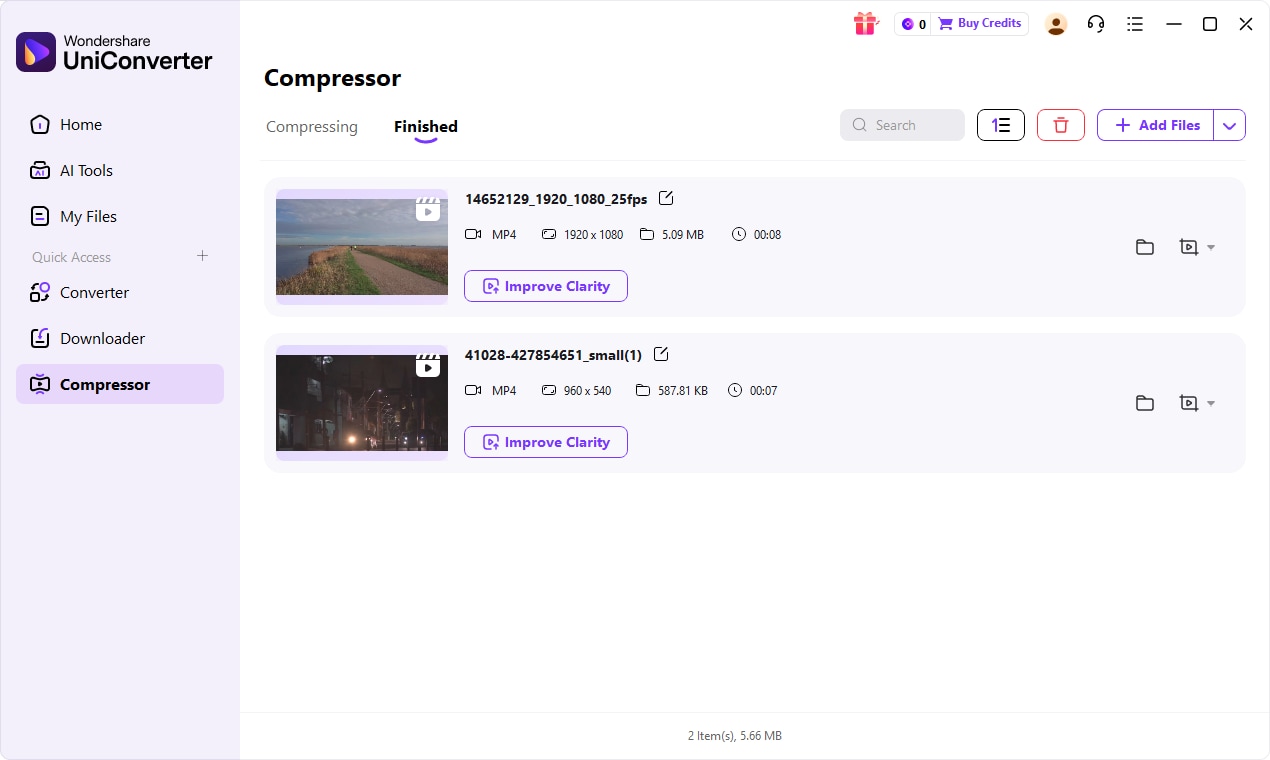
Step 4: Convert and Save Your Compressed File
After setting my desired parameters, I simply click the "Compress" button. UniConverter processes the files swiftly, thanks to its GPU acceleration. Once the compression is complete, I can locate my newly compressed audio files in the designated output folder, ready for use. This efficient process makes it easy to convert and manage my audio collection.

Seeking an EZ CD Audio Converter Alternative?
Part 7: Final Verdict and Recommendations
After extensively using and comparing various audio conversion and compression tools, my EZ CD Audio Converter review concludes that it remains a top-tier choice for specific users. Its dedication to audio fidelity and broad format support makes it invaluable for those who prioritize sound quality above all else. However, its premium price and specialized focus mean it's not a one-size-fits-all solution. For audiophiles and professionals, the investment in EZ CD Audio Converter is justified for its uncompromised quality and robust CD ripping capabilities. For everyday users and budget-conscious individuals, UniConverter offers a compelling alternative, providing exceptional value and versatility with its broader feature set and efficient compression. For those who only need to perform very basic, infrequent conversions, free online tools can suffice, but I always advise caution regarding privacy and potential quality loss. Ultimately, the best tool depends on your specific needs, budget, and how often you'll be managing your audio files.
Part 8: FAQs
-
1. **Is EZ CD Audio Converter worth the price?**
For me, yes, especially if you frequently rip CDs or need to convert between a wide range of high-quality audio formats. Its accuracy, speed, and comprehensive features justify the premium cost for serious music collectors or those who prioritize audio fidelity.
-
2. **Can EZ CD Audio Converter compress audio without losing quality?**
It can compress audio with minimal perceived quality loss, especially when using lossless formats like FLAC or high-bitrate lossy formats like MP3 or AAC. However, any lossy compression will inherently remove some data. The key is to find the right balance of compression settings that suits your ears and storage needs.
-
3. **What are the best alternatives to EZ CD Audio Converter?**
If you're looking for an all-in-one multimedia solution that handles video, audio, and images with excellent compression and speed, I highly recommend UniConverter. For free audio editing and conversion, Audacity is a powerful open-source option, though it has a steeper learning curve. For basic, free conversions, Freemake Audio Converter can work, but be mindful of bundled software.
-
4. **How does audio compression affect file size and playback?**
Audio compression reduces file size by removing redundant or less perceptible audio data. This means smaller files that take up less storage and can be transferred more quickly. However, aggressive compression can lead to a noticeable degradation in audio quality, resulting in artifacts or a "thin" sound during playback.
-
5. **Is UniConverter safe to use for audio conversion?**
Yes, in my experience, UniConverter is a safe and reliable tool for audio conversion and compression. It's from a reputable developer, doesn't bundle unwanted software, and respects user privacy. I've used it extensively without any security concerns.
