
- DivX Converter Value: Offers excellent compression quality and ease of use for everyday video tasks.
- Ideal Use Cases: Best for sharing videos online, freeing storage, and quality-conscious compression.
- Feature Comparison: Excels in quality and ease, but lacks advanced editing compared to competitors.
- Risks & Pitfalls: Be aware of bundled software, potential quality artifacts, and in-app ads.
- UniConverter Alternative: Provides a comprehensive, faster, and more robust solution for diverse media needs.
In this article
- Part 1: What is DivX Converter?
- Part 2: DivX Converter: Core Features, Pros, and Cons
- Part 3: DivX Converter: Ideal Users and Use Cases
- Part 4: DivX Converter & Competitors: A Comparative Analysis
- Part 5: Risks and Pitfalls to Consider
- Part 6: How to Use UniConverter for Efficient Audio and Video Compression
- Part 7: Conclusion
- Part 8: FAQs
When I'm looking to optimize my digital media, especially large video files, I often find myself navigating a sea of compression tools. This DivX Converter Video Compressor review dives deep into one of the more well-known players in this space. My goal here is to provide you with a comprehensive, scenario-based comparison, helping you understand where DivX Converter shines and where other options might be a better fit. We'll explore its features, weigh its pros and cons, and pit it against its competitors, all to help you make an informed decision about your video compression needs.
Part 1: What is DivX Converter?
DivX Converter is a software application designed to convert and compress video files into various formats, with a particular emphasis on the DivX codec. It's part of the broader DivX software suite, which has historically been known for its high-quality video compression technology. For me, it's always been about striking that balance between file size and visual fidelity. This review aims to address the core challenges I face when dealing with video compression, such as:
Understanding the Landscape of Video Compression Software
* The constant struggle with large file sizes: Modern video resolutions mean massive files that are difficult to store, share, or stream.
* The need for quality preservation: I don't want to sacrifice too much visual quality just to shrink a file.
* The desire for ease of use: I prefer tools that are intuitive and don't require a steep learning curve.
* Compatibility across devices: I need my compressed videos to play on various platforms without issues.
Part 2: DivX Converter: Core Features, Pros, and Cons
From my experience, DivX Converter offers a straightforward approach to video compression. Its primary capability lies in converting videos to DivX, MKV, and HEVC formats, often resulting in smaller file sizes without drastic quality loss. It also provides options for basic video editing like trimming and rotating.
* High-Quality Compression with Minimal Loss: This is where DivX Converter truly shines for me. It consistently delivers impressive compression ratios while maintaining a good visual experience.
* User-Friendly Interface for Quick Conversions: I appreciate how easy it is to navigate. The drag-and-drop functionality makes the process quick and painless.
* Support for a Wide Range of Video Formats: Whether I'm dealing with MP4, AVI, or MOV, DivX Converter handles most common formats without a hitch.
* Preset Profiles for Various Devices: It offers convenient presets for different devices, which saves me the hassle of manually adjusting settings.
* Batch Processing Capability: When I have multiple files to compress, the batch processing feature is a real time-saver.
Pros:
* Excellent balance between file size reduction and video quality.
* Intuitive design makes it accessible even for beginners.
* Broad format support ensures compatibility with most of my video files.
Cons:
* I've noticed occasional performance hiccups on my older laptop, especially with 4K videos.
* It lacks advanced editing features that I sometimes need for more complex projects.
Part 3: DivX Converter: Ideal Users and Use Cases
I find DivX Converter particularly useful for specific scenarios where its strengths align perfectly with my needs. It's not a one-size-fits-all solution, but it excels in its niche.
Best Use Case: I primarily use DivX Converter when I need to efficiently compress large video files for sharing online or saving storage space, especially when prioritizing quality is paramount. For instance, if I've recorded a family event in high definition and want to upload it to a cloud service or share it with relatives without them waiting hours for the download, DivX Converter is my go-to. It allows me to significantly reduce the file size while ensuring the video still looks great on their screens. It's also fantastic for archiving my personal video collection, freeing up valuable hard drive space without compromising the viewing experience.
Limited Use Case: However, I wouldn't reach for DivX Converter if I were a professional video editor requiring advanced features like multi-track editing, precise color grading, or complex visual effects. For those tasks, I'd need dedicated video editing software. DivX Converter's focus is squarely on conversion and compression, not comprehensive post-production. Similarly, if I needed to create highly specialized video formats for niche broadcast or production workflows, its capabilities might fall short.
Part 4: DivX Converter & Competitors: A Comparative Analysis
When I look at the video compression landscape, DivX Converter isn't the only player. Here's how I see it stacking up against some popular alternatives:
| Feature/Software | DivX Converter | HandBrake | Any Video Converter | UniConverter |
| Compression Quality | Excellent | Very Good | Good | Excellent |
| Ease of Use | High | Moderate | High | High |
| Supported Formats | Extensive | Extensive | Extensive | Extensive |
| Advanced Features | Basic | Moderate | Basic | Moderate |
| Pricing | Freemium | Free | Freemium | Paid |
| Processing Speed | Fast | Moderate | Fast | Very Fast (GPU Accelerated) |
| Customer Support | Email/Forum | Forum | Email/FAQ | 24/7 Live Chat/Email |
| Security | Good | Good | Good | Excellent |
Key Differentiators: Why DivX Converter Stands Out (or Falls Short)
For me, DivX Converter stands out for its exceptional balance of compression quality and ease of use. If I need to quickly shrink a video without diving into complex settings, it's often my first choice. HandBrake, while free and powerful, has a steeper learning curve, and I sometimes find its interface a bit overwhelming for quick tasks. Any Video Converter is user-friendly, but I've noticed its compression quality isn't always on par with DivX. UniConverter, on the other hand, offers a more comprehensive suite of tools and often delivers superior speed, especially with GPU acceleration, making it a strong contender if I need more than just compression.
Part 5: Risks and Pitfalls to Consider
While I appreciate DivX Converter for its core functionality, I've learned to be aware of certain risks and potential pitfalls, especially with freemium software.
Potential Privacy Concerns with Bundled Software
When I download the free version of DivX Converter, I'm always cautious about bundled software. It's not uncommon for free applications to include optional installations of other programs, toolbars, or even adware. I make sure to always choose the "custom" or "advanced" installation option and carefully uncheck anything I don't recognize or explicitly want. This helps me avoid unwanted software that could potentially compromise my privacy or system performance.
Impact on Video Quality: Understanding Compression Artifacts
Even with DivX Converter's good compression quality, I know that compression inherently involves some loss of data. This can lead to compression artifacts, especially if I push the compression settings too aggressively. I've seen blockiness, color banding, or a general softening of details in highly compressed videos. It's a trade-off I have to manage, and I always do a quick check of the output to ensure the quality is acceptable for my intended use.
Dealing with Advertisements and Upsells
The freemium model often means I'll encounter advertisements or prompts to upgrade to the Pro version. While not a deal-breaker, it can be a minor annoyance. These upsells might appear as pop-ups or banners within the interface, reminding me of the limitations of the free version. I've learned to navigate these, but it's something to be aware of if you prefer an entirely ad-free experience.
Compatibility Issues with Specific Operating Systems
While DivX Converter generally has good compatibility, I've occasionally run into minor issues with specific operating system updates or less common configurations. These are rare, but it's always a good idea to check the official system requirements and user forums if you're experiencing unexpected behavior.
The Learning Curve for Optimal Settings
Although the basic conversion is straightforward, achieving optimal compression settings for specific scenarios can involve a bit of a learning curve. Understanding bitrates, resolutions, and different codecs to get the perfect balance of file size and quality sometimes requires experimentation. While the presets are helpful, fine-tuning for a particular project demands a deeper dive into the settings.
Part 6: How to Use UniConverter for Efficient Audio and Video Compression
Sometimes, other tools just don’t deliver the results I need—they may lack batch processing, produce inconsistent output, or cause noticeable quality loss. In those situations, I usually turn to UniConverter as a more reliable all-in-one solution. It works especially well as a dedicated video compressor, with broad format support and GPU acceleration that helps speed up processing. I also like that it can help compress videos without quality loss as much as possible, which makes it a practical choice when quality matters. Beyond video, it also supports audio compression and image compression, making it a convenient option for handling different types of media files.
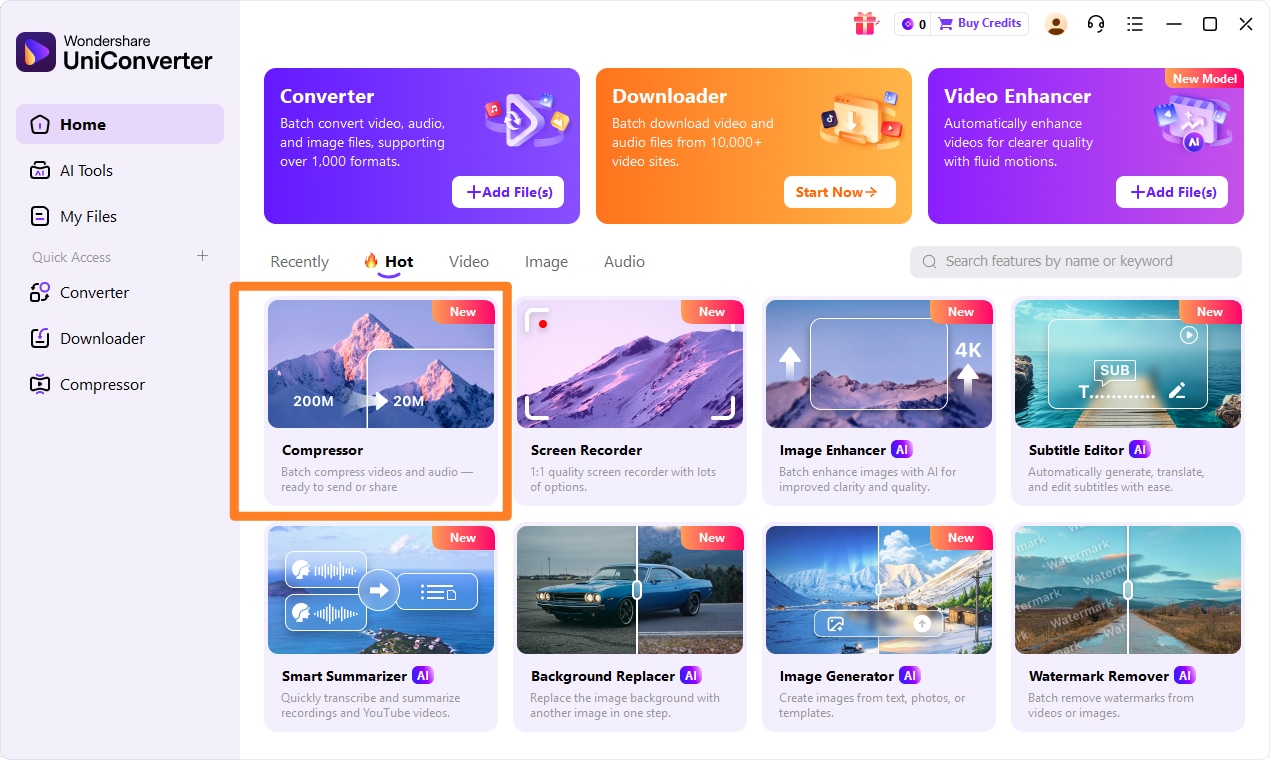
Step 1: Open UniConverter and Choose Compressor
I start by launching UniConverter and selecting the "Compressor" tool from the main interface.
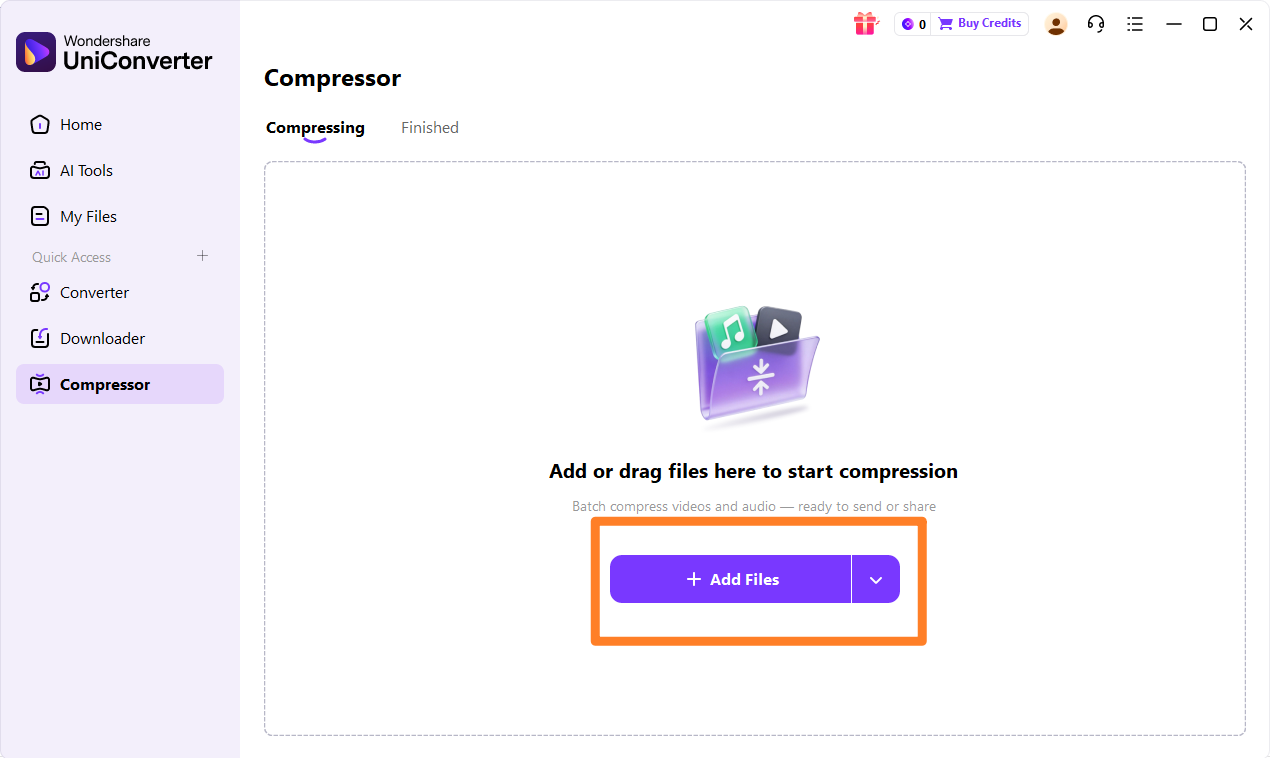
Step 2: Upload the Video, Audios or Images
Next, I drag and drop my video, audio, or image files directly into the UniConverter window. Alternatively, I can click the "Add Files" button to browse and select them.
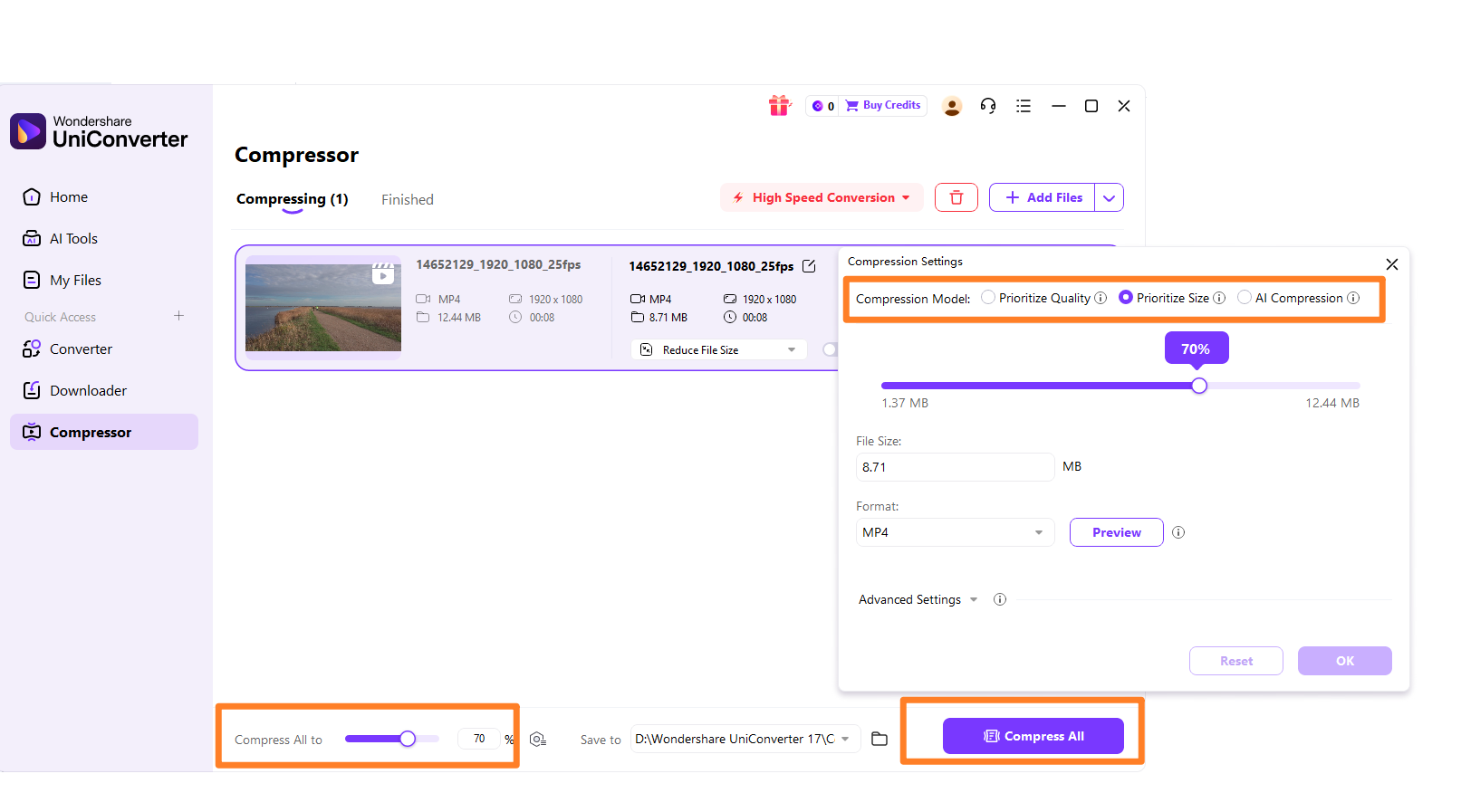
Step 3: Choose Required Parameters
Once my files are loaded, I can adjust the compression settings. UniConverter allows me to choose the output format, resolution, bitrate, and quality. I can also preview the compressed file size before proceeding.
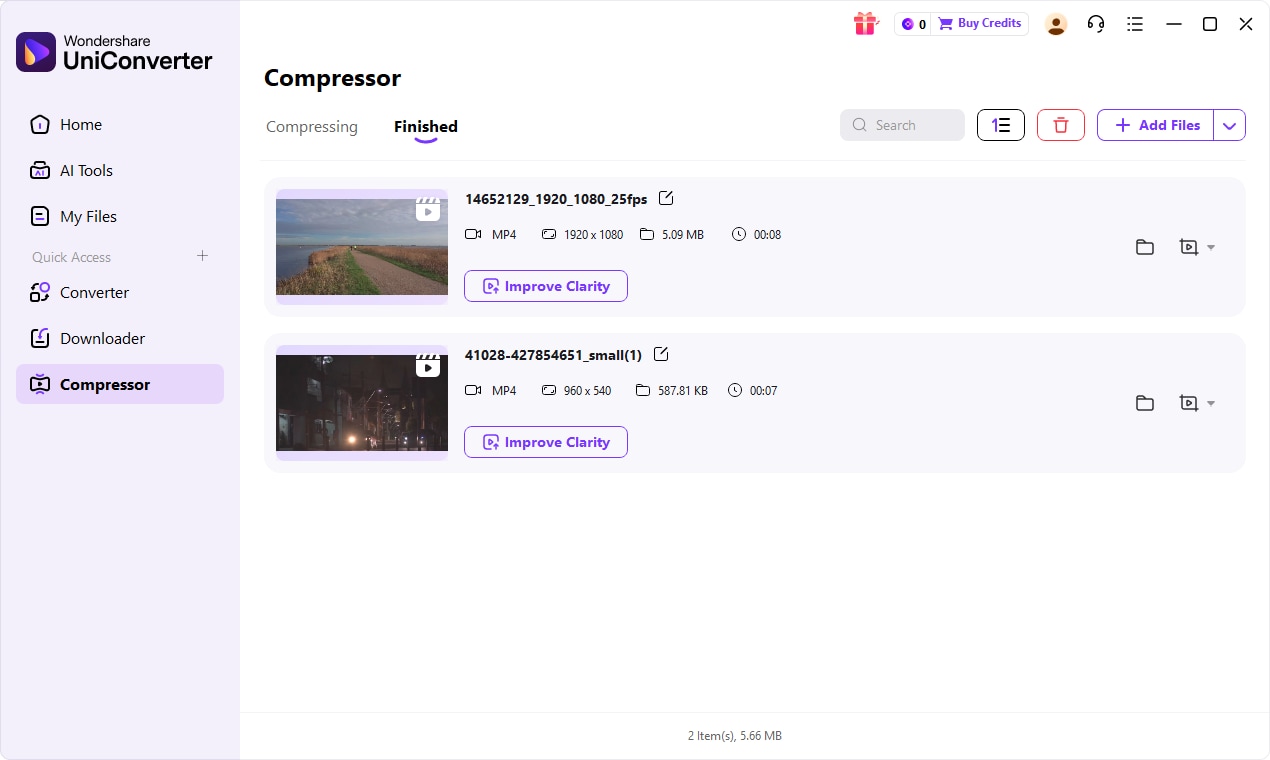
Step 4: Save the Compressed File
After setting my desired parameters, I click the "Compress" button. UniConverter quickly processes the files, and I can then find my compressed media in the specified output folder.

Seeking a DivX Converter Video Compressor Alternative?
Part 7: Conclusion
In conclusion, my DivX Converter Video Compressor review reveals it to be a solid choice for users prioritizing a balance of high-quality compression and ease of use, particularly for everyday tasks like sharing videos online or freeing up storage space. Its intuitive interface and reliable performance make it accessible for those who don't want to delve into complex settings. However, for professional video editors or users needing advanced features like multi-track editing, extensive color grading, or a completely ad-free experience, alternatives like UniConverter offer a more comprehensive and robust solution. Ultimately, the best tool depends on your specific needs: DivX Converter excels at straightforward, quality-conscious compression, while UniConverter provides a versatile toolkit for more demanding media management.
Part 8: FAQs
-
1. Is DivX Converter free to use?
DivX Converter offers a free version with basic functionalities and a paid Pro version for advanced features. The free version is perfectly adequate for most casual compression needs, but the Pro version unlocks additional codecs and features.
-
2. Does DivX Converter reduce video quality significantly?
While compression inherently involves some quality loss, DivX Converter is known for its ability to maintain high quality even at smaller file sizes. I've found that by choosing appropriate settings, the quality reduction is often imperceptible for general viewing.
-
3. Can DivX Converter compress 4K videos?
Yes, DivX Converter supports the compression of 4K videos, though processing time may vary depending on your computer's hardware. For very large 4K files or if you need faster processing, I often consider UniConverter due to its GPU acceleration capabilities.
-
4. What are the best settings for DivX Converter?
The best settings depend on your specific needs (e.g., target file size, desired quality, playback device). Experimenting with different presets is recommended. For a good balance, I usually start with a medium quality preset and adjust the bitrate if I need a smaller file or higher quality.
-
5. Is DivX Converter safe to download and install?
Downloading from the official DivX website ensures safety, but be mindful of bundled software during installation. Always opt for a custom installation and deselect any additional programs you don't want. If you're concerned about bundled software or want a cleaner installation experience, UniConverter is a good alternative as it focuses solely on its core functionalities without extra installations.
