
- Value: Descript's compressor seamlessly integrates into its editing workflow, ideal for existing users.
- Comparison: Unlike standalone tools, Descript offers an all-in-one edit-then-compress solution.
- Decision: Best for Descript users seeking workflow efficiency; less for standalone compression needs.
- Value: AI-powered compression balances file size and quality, reducing manual adjustments.
- Comparison: Alternatives like HandBrake offer more manual control but lack Descript's integration.
- Decision: Consider Descript if workflow integration is key; otherwise, standalone tools might be better.
- Value: UniConverter offers robust, user-friendly compression with GPU acceleration and batch processing.
- Comparison: UniConverter provides a powerful, dedicated alternative to Descript's ecosystem dependency.
- Decision: Choose UniConverter for reliable, high-quality compression outside of Descript's platform.
In this article
- Part 1: What is Descript Video Compressor?
- Part 2: Descript Video Compressor: Core Features, Pros, and Cons
- Part 3: Descript Video Compressor: Ideal Use Cases and Limitations
- Part 4: Descript Video Compressor and Alternatives Comparison
- Part 5: Risks and Pitfalls to Consider
- Part 6: How to Use UniConverter for Efficient Video Compression
- Part 7: Conclusion
- Part 8: FAQs
The digital content landscape is awash with video, and as creators, we constantly grapple with the challenge of delivering high-quality visuals without overwhelming file sizes. This is where video compressors become indispensable tools. Today, I'm diving deep into the Descript Video Compressor review, examining its capabilities, comparing it against key competitors, and helping you understand if it's the right fit for your workflow. My goal is to provide a clear, scenario-based analysis to guide your decision-making process, ensuring you make an informed choice for your video compression needs.
Part 1: What is Descript Video Compressor?
Descript Video Compressor is an integrated feature within the Descript platform, a powerful all-in-one video and audio editing software. Unlike standalone compression tools, Descript's compressor is designed to seamlessly fit into its broader ecosystem, allowing users to edit, transcribe, and then compress their video content within a single application. This integration is key to its appeal, particularly for content creators already embedded in the Descript workflow. My review aims to dissect its performance and value proposition, especially when compared to other dedicated compression solutions.
The Evolving Landscape of Video Compression
The need for efficient video compression has never been greater, driven by:
* Proliferation of High-Resolution Content: 4K and even 8K videos are becoming standard, leading to massive file sizes.
* Demand for Faster Uploads and Downloads: Users expect quick access to content, making smaller file sizes crucial for streaming and sharing.
* Storage and Bandwidth Constraints: Both cloud storage and internet bandwidth can be costly, making efficient compression a necessity.
* Mobile-First Consumption: Optimized video files are essential for smooth playback on mobile devices with varying network conditions.
Part 2: Descript Video Compressor: Core Features, Pros, and Cons
Descript Video Compressor, as part of the Descript suite, offers a streamlined approach to managing video file sizes. Its core capabilities revolve around intelligent compression algorithms designed to maintain visual fidelity while significantly reducing file size.
Core Capabilities:
* AI-powered intelligent compression: Automatically optimizes settings for the best balance between file size and quality.
* Integrated transcription and editing workflow: Allows for compression directly after editing and transcription within the same platform.
* Batch processing capabilities: Efficiently handles multiple video files for compression simultaneously.
* Customizable compression settings: Offers options to adjust resolution, bitrate, and other parameters for fine-tuned control.
* Support for various video formats: Compatible with a wide array of input and output video file types.
Pros:
* Seamless Workflow Integration: If you're already using Descript for editing and transcription, the compressor is right there, eliminating the need to export and use a separate tool.
* AI-Driven Optimization: The intelligent compression often yields impressive results, striking a good balance between file size reduction and visual quality without extensive manual tweaking.
* User-Friendly Interface: For Descript users, the compression process feels intuitive and is easy to navigate within the familiar editing environment.
Cons:
* Subscription Dependency: You need an active Descript subscription to access the compressor, making it less appealing for those who only need a standalone compression tool.
* Learning Curve for New Users: If you're not familiar with Descript's overall editing interface, there might be a slight learning curve to get comfortable with the platform before utilizing the compressor.
Part 3: Descript Video Compressor: Ideal Use Cases and Limitations
Understanding who Descript Video Compressor is for, and where it falls short, is crucial for making an informed decision. I've found it excels in specific scenarios but might not be the best fit for everyone.
Best Use Case: Streamlining Video Production for Content Creators
If you're a content creator, podcaster, or marketer who regularly uses Descript for editing, transcribing, and producing video content, the integrated compressor is a game-changer. It allows you to:
* Reduce friction in your workflow: No more exporting a large file, opening another application, compressing, and then re-uploading. You can go straight from editing to a compressed, shareable file.
* Maintain consistency: By keeping everything within one platform, you ensure your compression settings are applied consistently across your projects.
* Save time: The AI-powered compression often means less manual tweaking, letting you focus on content creation rather than technical details.
Limited Use Case: Quick, Standalone Compression for Non-Descript Users
For someone who simply needs to compress a video file quickly and doesn't use Descript for any other purpose, this tool isn't ideal.
* Cost-prohibitive: Subscribing to Descript just for compression is overkill when numerous free or low-cost standalone options exist.
* Overkill for simple tasks: If you just need to shrink a video for an email attachment, the full Descript suite is far more than you need. You'd be better off with a dedicated, lightweight compression tool.
Part 4: Descript Video Compressor and Alternatives Comparison
When I look at video compression tools, I consider a few key aspects: how easy they are to use, the quality of the output, and their overall flexibility. Here's how Descript Video Compressor stacks up against some popular alternatives.
| Feature/Tool | Descript Video Compressor | HandBrake | FFmpeg | Online Converters | UniConverter |
| Processing Speed | Fast (integrated, cloud) | Medium (local CPU/GPU) | Fast (command-line) | Variable (server load) | Fast (GPU acceleration) |
| Output Quality | AI-driven, balanced | High (manual control) | High (manual control) | Variable | High (lossless options) |
| Ease of Use | High (integrated) | Medium | Low (command-line) | High | High (intuitive UI) |
| Customer Support | Via Descript support | Community forums | Community forums | Limited/FAQ | Dedicated support |
| Security | Cloud-based, Descript's policy | Local processing | Local processing | Varies by service | Local processing |
| Cost | Descript Subscription | Free | Free | Free/Subscription | Paid (one-time/subscription) |
Key Differentiators: Integrated Workflow vs. Standalone Functionality
Descript's main advantage is its deep integration within its editing ecosystem. If you're already a Descript user, the compressor is a natural extension of your workflow, offering convenience and AI-driven optimization. HandBrake and FFmpeg, while free and powerful, require more technical know-how and are standalone tools. Online converters are great for quick, occasional use but often come with limitations on file size, quality, and privacy. UniConverter, on the other hand, strikes a balance, offering a user-friendly interface with powerful features, making it a strong contender for those seeking a dedicated, robust compression solution outside of an editing suite.
Part 5: Risks and Pitfalls to Consider
While Descript Video Compressor offers convenience, it's important to be aware of potential downsides, especially when comparing it to other options. I've identified a few areas where you should exercise caution.
Data Privacy Concerns with Cloud-Based Processing
Since Descript is a cloud-based platform, your video files are uploaded to their servers for processing, including compression. For sensitive or proprietary content, this raises data privacy questions. While Descript has robust security measures, entrusting your raw footage to a third-party server is a consideration. You need to be comfortable with their data handling policies, especially if you're dealing with confidential information.
Potential for Quality Degradation with Aggressive Compression
While Descript's AI aims for an optimal balance, any compression inherently involves some loss of data. If you push for extremely small file sizes, you will inevitably see a reduction in video quality, potentially manifesting as artifacts, blurriness, or reduced color fidelity. It's crucial to preview your compressed videos and understand that there's a trade-off between file size and visual integrity. Don't assume "AI-powered" means "magically lossless at any size."
Dependency on Descript's Ecosystem
The compressor is not a standalone tool; it's part of the Descript platform. This means you are tied to their ecosystem. If Descript experiences outages, changes its pricing model, or you decide to switch editing software, you lose access to this specific compression tool. This dependency can be a risk if you value flexibility and want to avoid vendor lock-in for your essential utilities.
Subscription Cost vs. Free Alternatives
Descript requires a paid subscription to use its features, including the video compressor. For someone who only needs occasional video compression, this can be a significant recurring cost compared to powerful free alternatives like HandBrake or FFmpeg. While the integrated workflow is a benefit for existing Descript users, for others, the subscription fee solely for compression might not justify the expense, especially when excellent free options exist that perform the core task effectively.
Part 6: How to Use UniConverter for Efficient Video Compression
Sometimes, tools just aren’t reliable enough—they may not support batch compression, produce inconsistent results, or reduce quality more than expected. In those situations, I usually turn to UniConverter as a more dependable alternative. It works especially well as a dedicated video compressor, offering a smoother, ad-free experience with broad format support and GPU acceleration for faster processing. I also like that it can help compress videos without quality loss as much as possible, which is especially useful when maintaining quality matters. Since it also supports audio compression and image compression, it works well as a practical all-in-one solution for handling different types of media files.
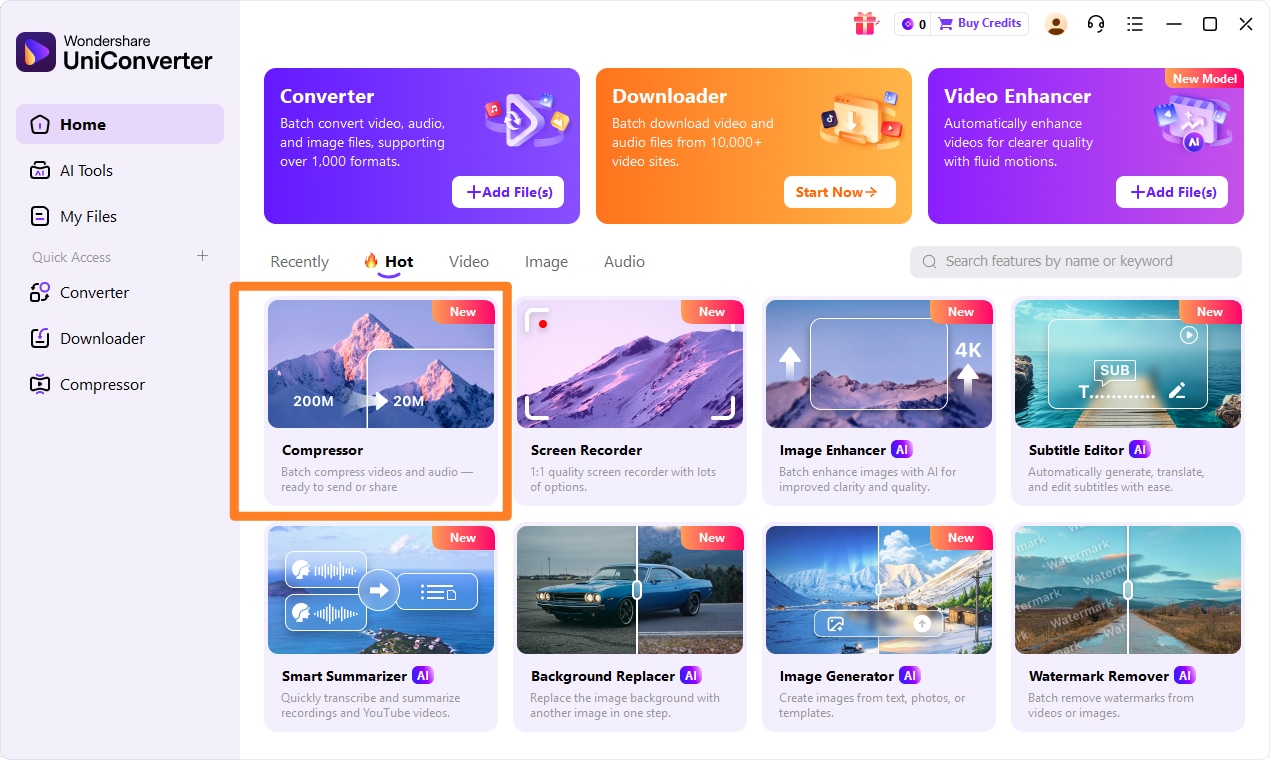
Step 1: Open UniConverter and Choose Compressor
Launch UniConverter on your computer. On the left sidebar, you'll find various tools. Click on the "Video Compressor" option to open the compression interface.
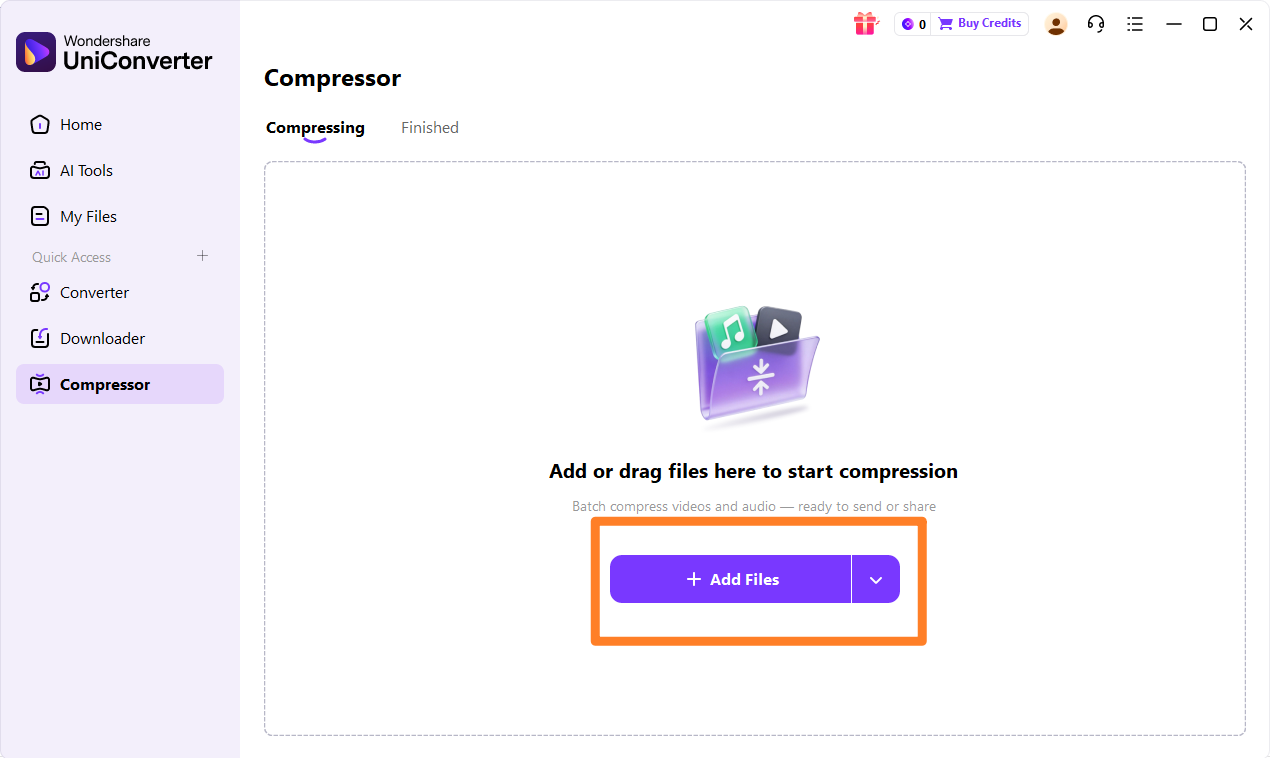
Step 2: Upload the Video, Audios or Images
Drag and drop your video files directly into the UniConverter window, or click the "Add Files" button to browse and select the videos you wish to compress. You can add multiple files for batch processing.
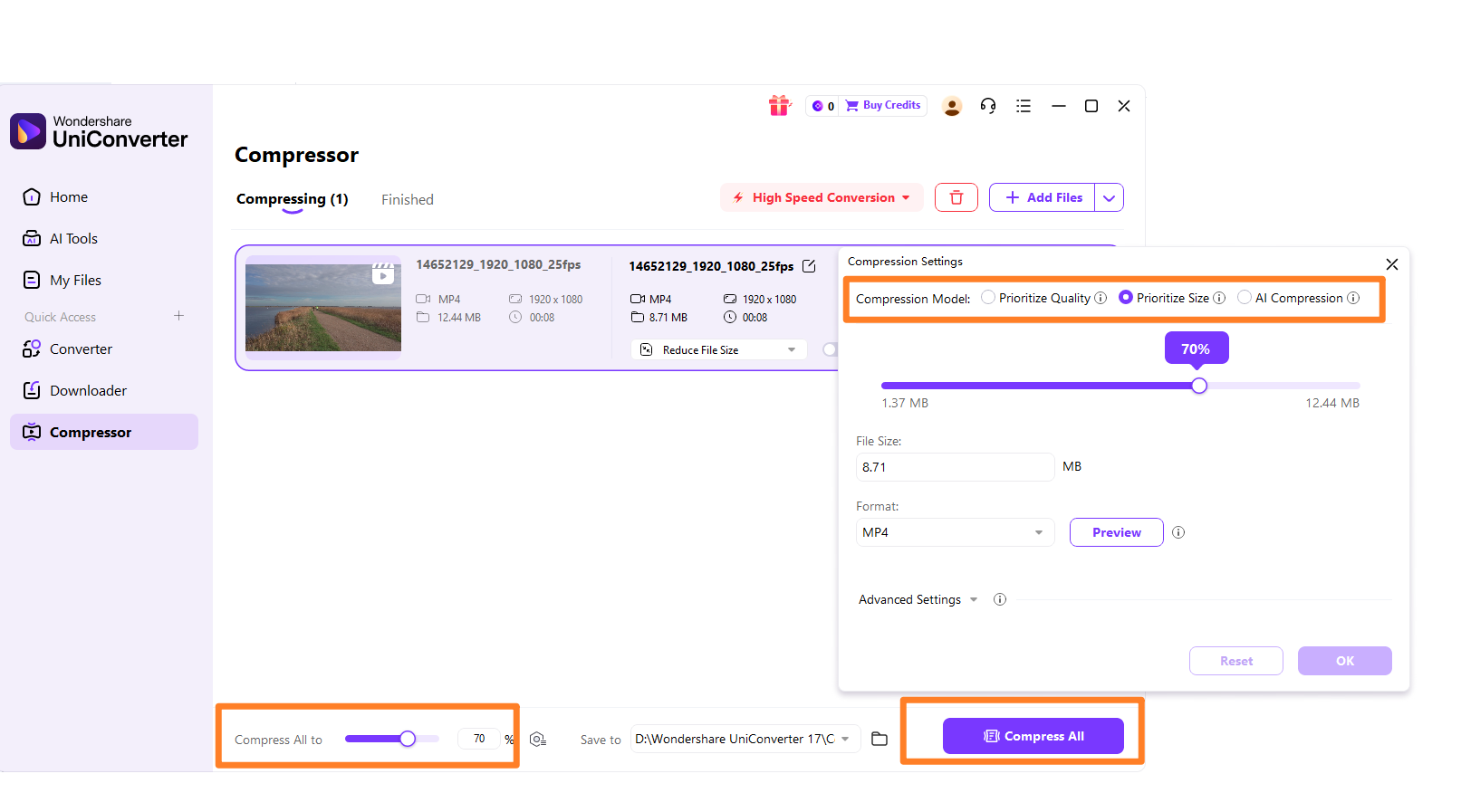
Step 3: Choose Required Parameters
Once your files are loaded, you can customize the compression settings. UniConverter allows you to adjust the file size, format, resolution, and bitrate. You can also preview the compressed file to ensure quality.
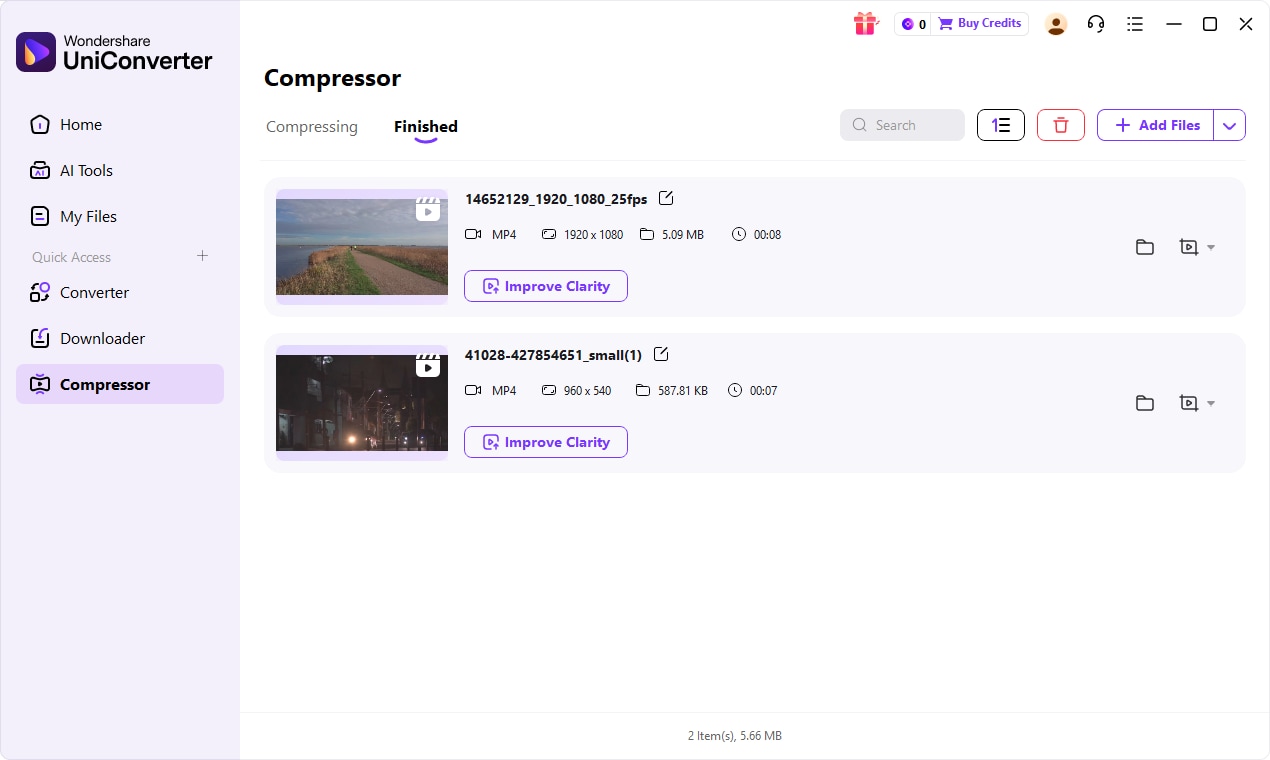
Step 4: Save the Compressed File
After setting your desired parameters, choose an output folder for your compressed files. Click the "Compress" or "Start All" button to begin the compression process. UniConverter will quickly process your files, and you'll find the optimized versions in your designated folder.

Descript Video Compressor Alternative?
Part 7: Conclusion
After a thorough Descript Video Compressor review and comparing it with its alternatives, my verdict is clear: Descript's compressor is an excellent, convenient feature for existing Descript users. Its AI-driven optimization and seamless integration into the editing workflow make it incredibly efficient for content creators already using the platform. However, for those not subscribed to Descript, or for users needing a standalone, quick compression tool, its subscription requirement makes it less ideal. Dedicated free tools like HandBrake offer powerful manual control, while UniConverter provides a user-friendly, feature-rich alternative for robust, high-quality compression without the Descript ecosystem dependency. Ultimately, the best choice hinges on your existing workflow, budget, and specific compression needs, always balancing the desire for smaller file sizes with the imperative of maintaining acceptable video quality.
Part 8: FAQs
-
1. Is Descript Video Compressor suitable for professional video editors?
Yes, especially for those already using Descript for editing and transcription. Its integrated workflow can significantly streamline the post-production process, reducing context switching and saving time.
-
2. Can Descript Video Compressor reduce video file size without losing quality?
It aims for an optimal balance, using AI to minimize perceived quality loss. However, some degree of quality reduction is inherent in any compression process. For critical projects, always preview the compressed output.
-
3. Are there any free alternatives to Descript Video Compressor?
Absolutely. Tools like HandBrake and FFmpeg offer powerful and highly customizable free compression options. For a more user-friendly experience with comprehensive features, consider UniConverter as a strong alternative.
-
4. How does Descript Video Compressor handle different video formats?
Descript Video Compressor supports a wide range of popular video formats for both input and output, ensuring compatibility with most common video files you'll encounter.
-
5. What are the main advantages of using an integrated compressor like Descript's?
The primary advantages are a seamless workflow, reduced context switching between applications, and often AI-driven optimization that simplifies the compression process, allowing you to focus more on content creation.
