
- Descript's Value: Integrated AI-driven audio/video editing, transcription, and compression for content creators.
- Ideal Users: Podcasters and content creators seeking efficient, AI-enhanced audio for spoken word.
- Limitations: Less granular control than professional tools; not ideal for advanced audio engineers.
- Comparison: Descript excels in integrated workflow; alternatives like Audacity are free, Adobe Audition/Logic Pro X offer advanced control.
- Risks: Cloud-based data privacy, potential over-compression, internet dependency, and a unique learning curve.
- UniConverter Alternative: Offers stable, high-quality, lossless batch compression for various media formats.
In this article
- Part 1: What is Descript Audio Compressor?
- Part 2: Descript Audio Compressor: Core Features, Pros, and Cons
- Part 3: Descript Audio Compressor: Ideal Users and Scenarios
- Part 4: Descript Audio Compressor and Alternatives Comparison
- Part 5: Risks and Pitfalls to Consider
- Part 6: How to Use UniConverter for Efficient Audio/Video Compression
- Part 7: Conclusion
- Part 8: FAQs
This Descript Audio Compressor review delves into its capabilities, comparing it against leading alternatives to help you make an informed decision. In a world saturated with audio content, from podcasts to video voiceovers, clear and professional sound is no longer a luxury but a necessity. Many content creators, myself included, grapple with background noise, inconsistent audio levels, and the sheer complexity of traditional audio editing software. This comprehensive analysis aims to cut through the noise, offering a candid look at Descript's strengths and weaknesses, and how it stacks up against competitors like Audacity, Adobe Audition, and Logic Pro X, ultimately guiding you toward the best tool for your specific needs.
Part 1: What is Descript Audio Compressor?
Descript Audio Compressor is an integrated feature within the broader Descript platform, a powerful all-in-one audio and video editing tool that leverages AI to simplify complex tasks. It's designed to automatically level audio, reduce background noise, and enhance speech clarity, making it particularly appealing for content creators who prioritize efficiency and ease of use. Unlike standalone compressors that require a deep understanding of audio engineering principles, Descript aims to democratize professional-sounding audio by automating much of the process. This review will explore whether Descript truly delivers on its promise of simplified, high-quality audio compression and how it stands in a competitive market.
The Landscape of Audio Compression Tools
The need for effective audio compression is universal, yet the tools available vary wildly in complexity and cost.
* User Pain Point 1: Time-consuming manual adjustments: Traditional audio editing often involves meticulous manual adjustments to achieve consistent sound levels.
* User Pain Point 2: Steep learning curve for advanced software: Many powerful audio editors come with a significant learning curve, deterring beginners.
* User Pain Point 3: Cost of professional-grade tools: High-end audio software can be prohibitively expensive for independent creators or small businesses.
* User Pain Point 4: Maintaining audio quality across diverse recording environments: Achieving consistent audio quality when recording in different environments presents a significant challenge.
Part 2: Descript Audio Compressor: Core Features, Pros, and Cons
Descript Audio Compressor is a standout for its innovative approach to audio processing, integrating seamlessly into a comprehensive editing suite. Its core capabilities extend beyond simple compression, offering a holistic solution for content creators. The platform excels in handling various audio formats, including MP3, WAV, and AAC, ensuring broad compatibility for import and export. Its processing speed is impressive, especially when leveraging its cloud-based AI, allowing for quick turnarounds on even complex audio projects. The editing capabilities are non-destructive, meaning you can always revert to your original audio, providing a safety net for experimentation.
Pros
- AI-powered noise reduction and speech enhancement for clear audio in interviews and podcasts.
- Integrated transcription and editing for seamless workflow in content creation.
- Non-destructive editing allows for flexible adjustments without losing original audio quality.
Cons
- Can be resource-intensive, potentially slowing down older computers during complex projects.
- Subscription-based model may be a barrier for infrequent users or those on a tight budget.
Part 3: Descript Audio Compressor: Ideal Users and Scenarios
Descript Audio Compressor carves out a distinct niche for itself, catering to specific user groups and scenarios where its integrated features and AI-driven enhancements truly shine. It's not a one-size-fits-all solution, but for those it's designed for, it offers unparalleled efficiency.
Best Use Case: Podcasters and Content Creators Needing Integrated Editing and Compression
If you're a podcaster, YouTuber, or any content creator who regularly works with spoken word audio, Descript is a game-changer. Imagine recording an interview, then having Descript automatically transcribe it. From there, you can edit the audio by simply editing the text, and the integrated compressor ensures your voices are clear and consistent, even if recorded in different environments. This integrated workflow drastically reduces the time spent on post-production, allowing you to focus more on content creation. The AI noise reduction is particularly effective for cleaning up less-than-ideal recording conditions, making your audio sound more professional with minimal effort.
Limited Use Case: Professional Audio Engineers Requiring Granular Control Over Compression Parameters
While Descript offers excellent automated compression, it's not designed for the highly specialized needs of professional audio engineers. These experts often require granular control over every parameter of a compressor – attack, release, ratio, threshold, knee, and more – to achieve specific sonic characteristics for music production, film mixing, or mastering. Descript's strength lies in its simplicity and automation, which, for an audio engineer, can feel restrictive. If you need to sculpt sound with surgical precision, you'll find Descript's compression features too high-level and lacking the intricate controls offered by dedicated digital audio workstations (DAWs) or specialized compression plugins.
Part 4: Descript Audio Compressor and Alternatives Comparison
When evaluating Descript Audio Compressor, it's crucial to understand how it stacks up against other popular tools in the market. Each offers a unique value proposition, catering to different needs and skill levels.
| Feature/Scenario | Descript Audio Compressor | Audacity | Adobe Audition | Logic Pro X |
| Ease of Use for Beginners | Excellent | Good | Moderate | Moderate |
| Integrated Transcription | Yes | No | No | No |
| Real-time Collaboration | Yes | No | No | No |
| Advanced Compression Controls | Moderate | Good | Excellent | Excellent |
| Cost | Subscription | Free | Subscription | One-time purchase |
Key Differentiators: Integrated Workflow and AI-driven Enhancements
Descript's key differentiator lies in its integrated workflow, combining transcription, video, and audio editing with AI-driven enhancements. For example, its "Studio Sound" feature, powered by AI, can dramatically improve audio quality with a single click, something Audacity or Adobe Audition can't replicate with the same ease. While Audacity is free and offers decent compression, it lacks the sophisticated AI and collaborative features of Descript. Adobe Audition and Logic Pro X provide superior advanced compression controls and are the go-to for professional audio engineers, but they come with a steeper learning curve and higher cost, without Descript's unique transcription-based editing. If you prioritize an all-in-one solution with smart features for content creation, Descript is a strong contender.
Part 5: Risks and Pitfalls to Consider
While Descript Audio Compressor offers compelling advantages, it's essential to be aware of potential risks and pitfalls, especially when integrating a cloud-based, AI-driven tool into your workflow. Understanding these can help you mitigate issues and make the most of the platform.
Data Privacy Concerns with Cloud-based Processing
As a cloud-based platform, Descript processes your audio and video files on its servers. This raises legitimate data privacy concerns, especially for sensitive content. While Descript states it employs robust security measures, entrusting your raw, unedited content to a third-party server always carries an inherent risk. You should carefully review their privacy policy and terms of service to understand how your data is stored, processed, and protected. For projects with highly confidential information, this might be a significant consideration.
Potential for Over-compression if Settings are Not Understood
Descript's automated compression, while convenient, can lead to over-compression if you don't understand the underlying principles or if the default settings aren't suitable for your specific audio. Over-compression can make audio sound unnatural, "pumped," or lifeless, losing its dynamic range. While Descript aims for simplicity, a basic understanding of what compression does is still beneficial to ensure you're getting the desired results and not inadvertently degrading your audio quality. It’s easy to rely too heavily on the AI without fine-tuning.
Learning Curve for New Users Unfamiliar with Non-linear Editing
Descript's unique text-based editing interface is incredibly powerful but can present a learning curve for users accustomed to traditional timeline-based non-linear editors. The paradigm shift from editing waveforms to editing text can be disorienting initially. While intuitive once grasped, new users might spend extra time figuring out how to perform common editing tasks in this new environment. Patience and a willingness to adapt are key to fully leveraging Descript's innovative workflow.
Reliance on Internet Connection for Full Functionality
Given its cloud-based nature and AI features, Descript's full functionality is heavily reliant on a stable internet connection. While some basic editing might be possible offline, core features like transcription, cloud sync, and advanced AI processing require continuous connectivity. This can be a significant limitation if you frequently work in environments with unreliable or no internet access. Your workflow could be severely hampered, making it challenging to meet deadlines or work remotely without robust connectivity.
Part 6: How to Use UniConverter for Efficient Audio/Video Compression
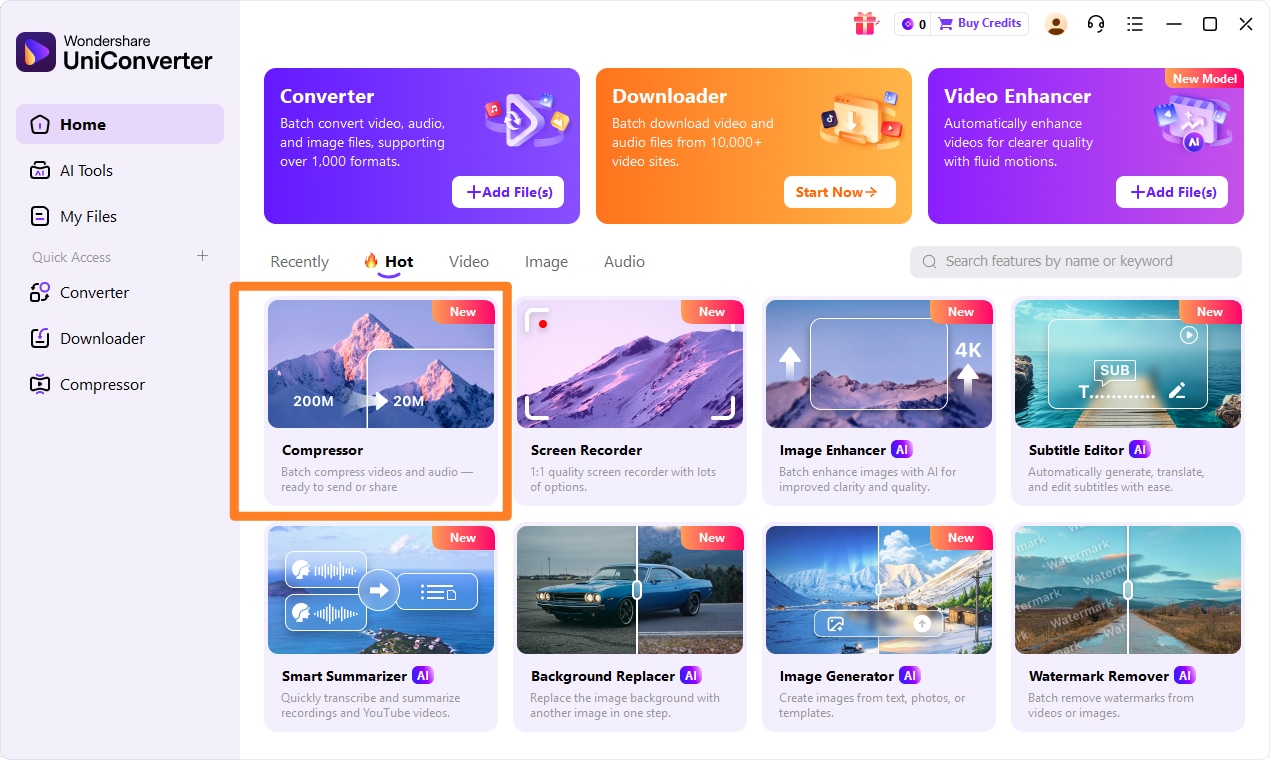
When other tools fall short with batch compression, unstable results, or quality loss, UniConverter emerges as a reliable alternative. It helps avoid these common issues while providing a stable and practical solution for video compression, audio compression, and image compression. With broad format support, efficient processing, and dependable performance for repeated tasks, it also works well as a versatile media compression tool for everyday use.
Step 1: Open UniConverter and Choose Compressor
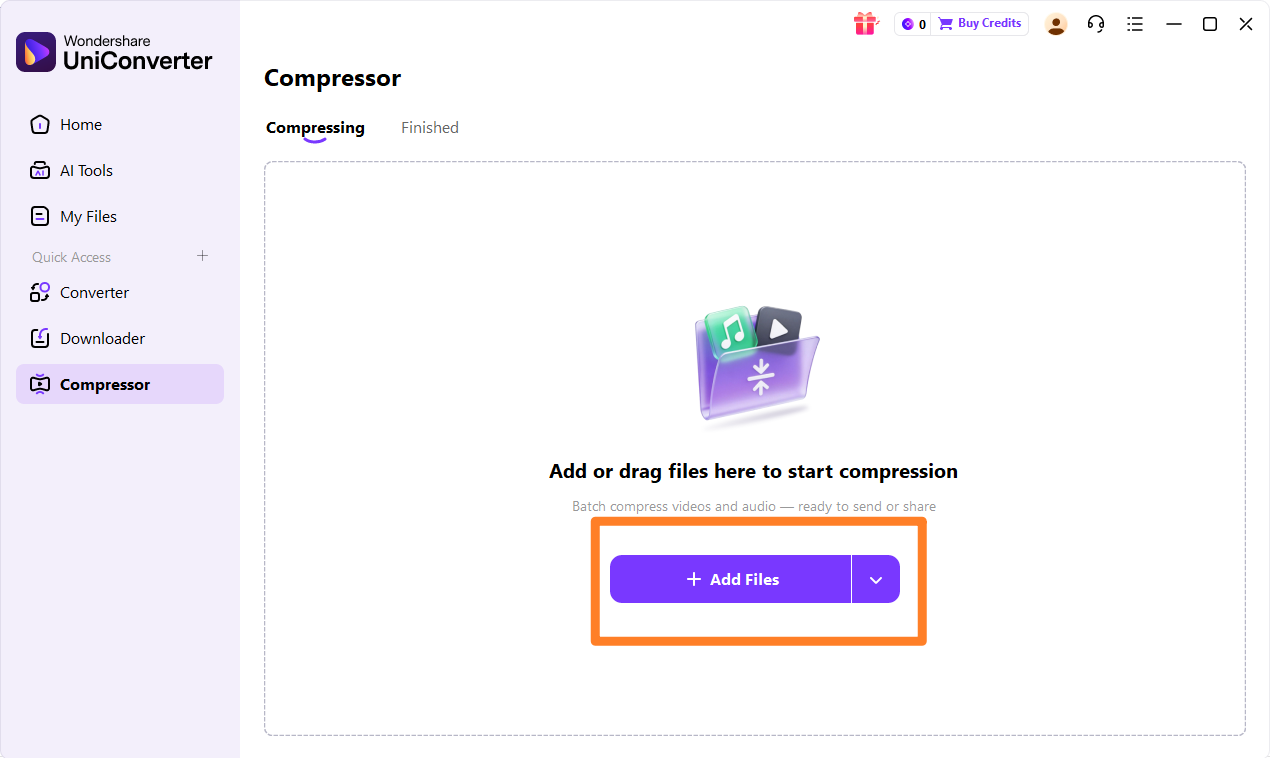
Step 2: Upload the Video, Audios or Images
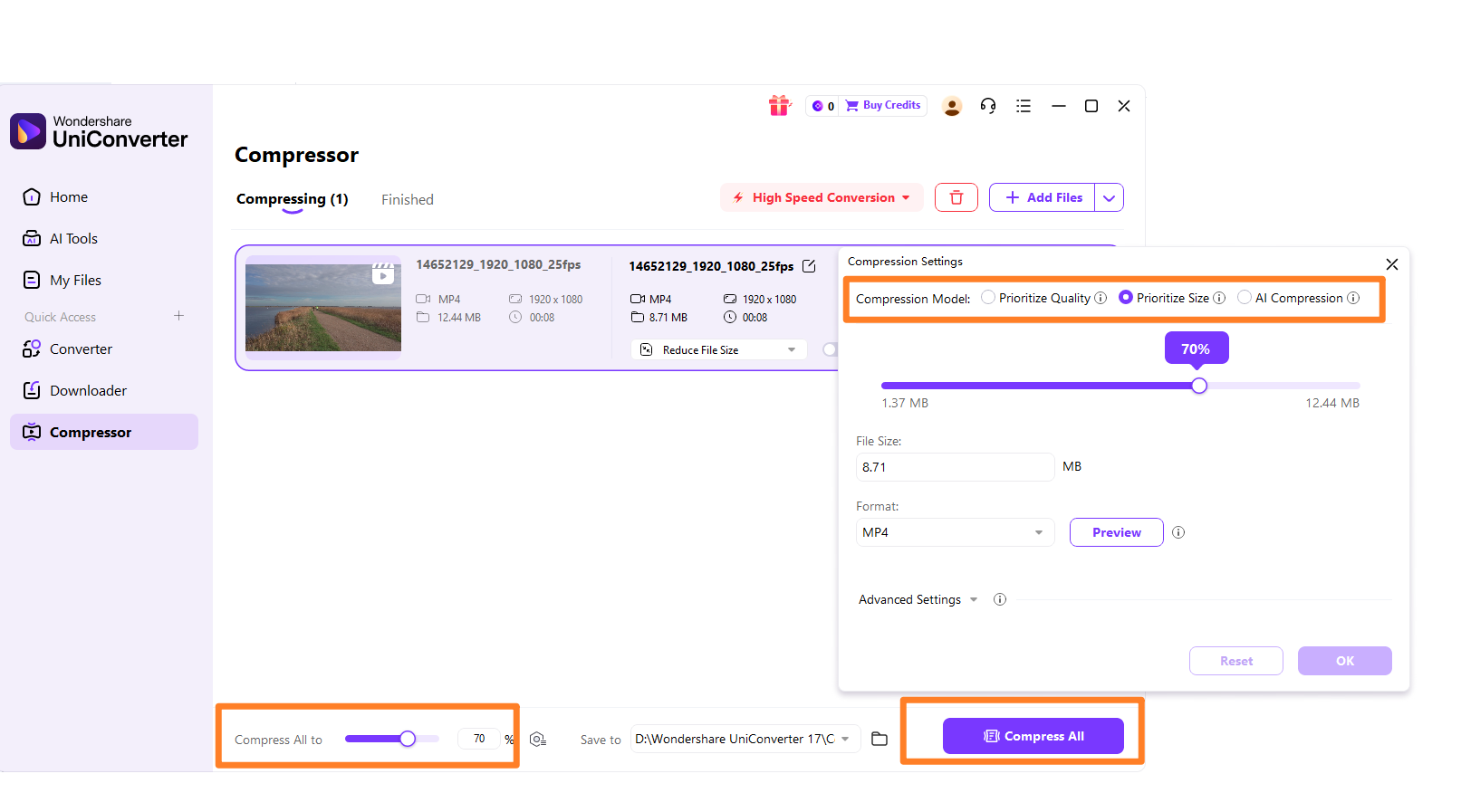
Step 3: Choose Required Parameters
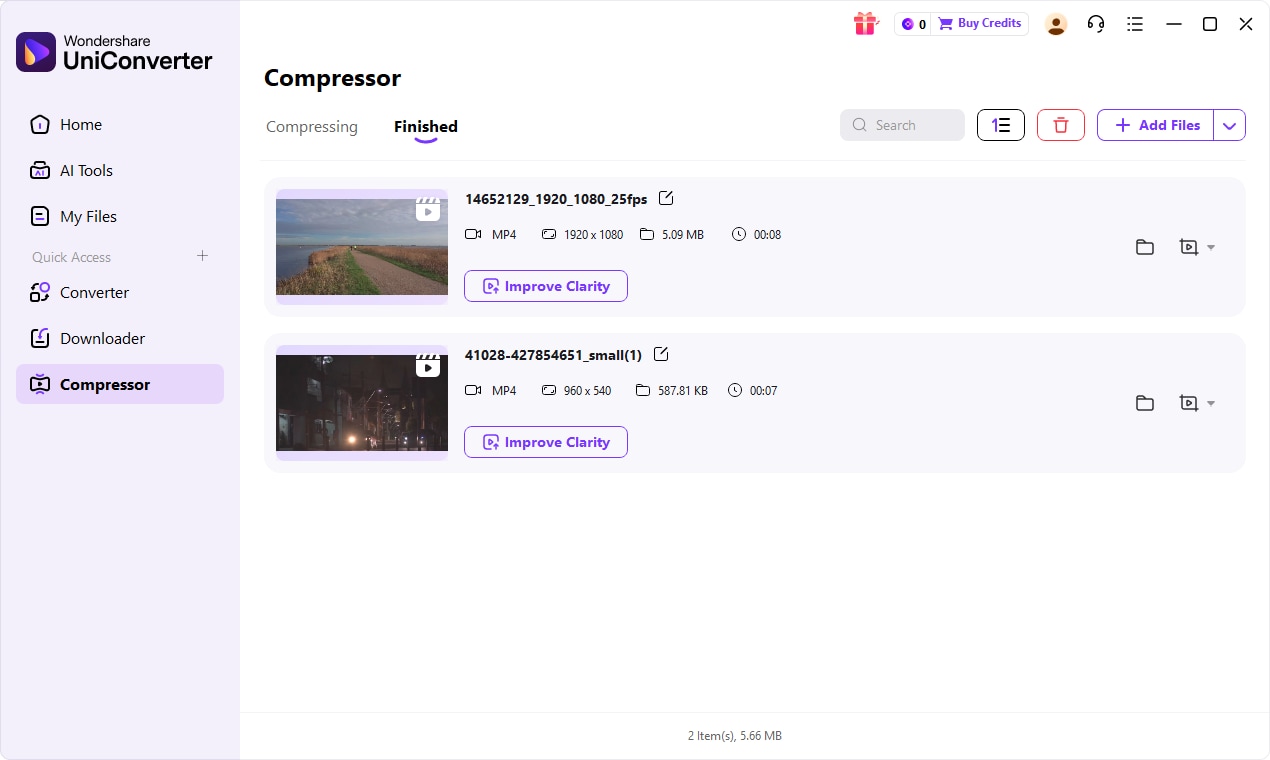
Step 4: Save the Compressed File

Descript Audio Compressor Alternative for Better Audio
Part 7: Conclusion
In conclusion, the Descript Audio Compressor review reveals a powerful and innovative tool, particularly for podcasters and content creators who prioritize an integrated workflow and AI-driven enhancements. Its ability to combine transcription with audio and video editing, alongside intelligent compression, makes it a highly efficient solution for producing professional-sounding spoken-word content. However, its subscription model, reliance on an internet connection, and less granular control over compression parameters might not suit professional audio engineers or those on a tight budget. For the latter, free alternatives like Audacity or a one-time purchase solution like UniConverter offer significant value. Ultimately, your choice should align with your specific needs, skill level, and budget. If seamless, AI-assisted content creation is your goal, Descript excels; if precise audio engineering or cost-effectiveness is paramount, other tools might be more appropriate.
Part 8: FAQs
-
1. Is Descript Audio Compressor suitable for music production?
While Descript can compress audio, its primary strength lies in speech-based content. For music production, dedicated DAWs offer more precise control over dynamics and effects, which are crucial for a polished musical sound.
-
2. Can I use Descript Audio Compressor offline?
Some basic editing functions might be available offline, but core features like transcription, cloud-based processing, and real-time collaboration require an internet connection. For full functionality, online access is essential.
-
3. How does Descript handle different audio file formats?
Descript supports a wide range of common audio formats for import and export, including MP3, WAV, and AAC, ensuring broad compatibility with most recording devices and platforms.
-
4. What is the main advantage of Descript's AI compression?
The AI compression in Descript, particularly its "Studio Sound" feature, is designed to intelligently reduce background noise and enhance speech clarity, making audio sound more professional with minimal manual effort. This is a huge time-saver for content creators.
-
5. Is there a free trial for Descript Audio Compressor?
Yes, Descript typically offers a free trial period or a limited free tier to allow you to test its features before committing to a subscription. This is a great way to see if it fits your workflow. If you find yourself needing a robust, one-time purchase solution for general audio and video compression, UniConverter also offers a free trial to explore its capabilities.
