
- DaVinci Resolve: Ideal for pros needing integrated, high-control compression within their editing workflow.
- Feature Comparison: Resolve offers extensive settings and codec support, but has a steep learning curve.
- User Suitability: Best for professional filmmakers and editors; overkill for quick, simple compression tasks.
- Performance: Resource-intensive, requiring powerful hardware for efficient rendering and compression.
- Risks: Incorrect settings can lead to quality loss; codec compatibility knowledge is crucial.
- UniConverter Alternative: Offers an easy, fast, and efficient solution for quick and batch compression needs.
In this article
- Part 1: What is DaVinci Resolve Video Compressor?
- Part 2: DaVinci Resolve Video Compressor: Core Features, Pros & Cons
- Part 3: DaVinci Resolve Video Compressor: Ideal Users & Use Cases
- Part 4: DaVinci Resolve Video Compressor vs. Competitors
- Part 5: Risks & Pitfalls to Consider
- Part 6: How to Use UniConverter to Compress Efficient Audio and Video
- Part 7: Conclusion
- Part 8: FAQs
When I first started diving deep into video editing, the sheer volume of footage I accumulated quickly became a storage nightmare. That's when I realized the critical importance of effective video compression. For many, DaVinci Resolve is synonymous with professional-grade editing, but its capabilities as a video compressor often fly under the radar. This DaVinci Resolve Video Compressor review aims to shed light on its strengths and weaknesses, comparing it against other popular tools in the market. My goal is to help you navigate the complex world of video compression, ensuring your files are optimized without sacrificing quality, and ultimately guiding you to the best solution for your specific needs, whether you're a seasoned pro or just starting out.
Part 1: What is DaVinci Resolve Video Compressor?
DaVinci Resolve, primarily known as a powerful non-linear editing (NLE) suite, color correction tool, visual effects, and audio post-production software, also integrates robust video compression functionalities. It's not a standalone compressor but rather a comprehensive module within its "Deliver" page, allowing users to export their finished projects in various compressed formats. This integration means that once your edit is complete, you can directly move to the compression and rendering stage without needing to switch applications. This seamless workflow is a significant advantage for professionals who value efficiency and consistency in their post-production pipeline.
The Landscape of Video Compression Software
The need for efficient video compression is more critical than ever, driven by:
* Exploding Video Content: From social media to professional filmmaking, video is king, demanding effective storage and distribution solutions.
* Diverse Platform Requirements: Different platforms (YouTube, Vimeo, broadcast) have specific file size and format requirements, necessitating versatile compression tools.
* Bandwidth Limitations: Smaller file sizes mean faster uploads, downloads, and smoother streaming experiences for audiences.
* Storage Constraints: High-resolution video files consume vast amounts of storage, making compression essential for managing media libraries.
Part 2: DaVinci Resolve Video Compressor: Core Features, Pros & Cons
DaVinci Resolve's compression capabilities are deeply embedded within its powerful rendering engine, offering a sophisticated approach to file optimization. It excels in providing granular control over export settings, making it a favorite among those who demand precision.
Core Features:
* Integrated Rendering: Seamlessly compress and export directly from your edited timeline.
* Extensive Codec Support: Supports a wide array of codecs including H.264, H.265, ProRes, DNxHD, and more.
* Customizable Export Presets: Create and save your own compression settings for various platforms and uses.
* Bitrate Control: Fine-tune bitrate settings for optimal balance between file size and quality.
* Hardware Acceleration: Leverages GPU acceleration for faster encoding times on compatible systems.
Pros:
* Integrated Workflow for Post-Production Professionals: My favorite aspect is the all-in-one solution; I can edit, color grade, and compress without ever leaving the software.
* High-Quality Output with Advanced Codec Support: The quality I achieve, especially with H.265, is consistently top-notch, even at aggressive compression ratios.
* Powerful Customization for Compression Settings: I have complete control over every parameter, which is crucial for meeting specific client or platform requirements.
Cons:
* Steep Learning Curve for Beginners: When I first started, the sheer number of options on the Deliver page felt overwhelming. It's not intuitive for a quick compress.
* Resource-Intensive for Lower-End Hardware: My older laptop struggles significantly with rendering and compression in Resolve; it really demands a powerful machine.
Part 3: DaVinci Resolve Video Compressor: Ideal Users & Use Cases
DaVinci Resolve's compression features are best suited for a specific demographic within the video production ecosystem, primarily those who are already deeply invested in its ecosystem.
Best Use Case: Professional Filmmakers and Editors Needing Integrated Compression
For me, as a professional editor, DaVinci Resolve is indispensable. After I've spent hours meticulously editing and color grading a project, being able to export and compress directly within the same application is a huge time-saver. I can maintain consistent quality across all my deliverables, whether it's a high-bitrate master for archiving or a highly compressed version for web distribution. The advanced codec options and fine-tuned controls allow me to meet specific client specifications without compromising on the visual integrity of my work. It's perfect for projects where quality and control are paramount, and where the compression is the final step in a complex post-production workflow.
Limitation Scenario: Quick, Simple Compression for Casual Users
However, if all I need is to quickly shrink a video file from my phone to share with friends, DaVinci Resolve is overkill. The process of importing, setting up a timeline (even if it's just one clip), navigating to the Deliver page, and then configuring the export settings is far too cumbersome for a casual user. For someone who just wants to drag and drop a video and hit "compress" without worrying about codecs, bitrates, or resolutions, Resolve presents a significant barrier to entry and an unnecessarily complex workflow. It's like using a sledgehammer to crack a nut.
Part 4: DaVinci Resolve Video Compressor vs. Competitors
When it comes to video compression, DaVinci Resolve stands in a unique position due to its integrated nature. Let's see how it stacks up against some popular alternatives.
| Feature/Software | DaVinci Resolve | HandBrake | Adobe Media Encoder | UniConverter |
| Integration | Excellent (within Resolve) | Standalone | Excellent (Adobe Suite) | Standalone |
| Ease of Use | Complex | Moderate | Moderate | Easy |
| Output Quality | High | High | High | High |
| Advanced Settings | Extensive | Good | Extensive | Moderate |
| Price | Free (Studio Paid) | Free | Subscription | Paid |
| Processing Speed | Fast (with GPU) | Moderate | Fast (with GPU) | Very Fast (with GPU) |
| Batch Processing | Yes | Yes | Yes | Yes |
| Format Support | Extensive | Good | Extensive | Extensive |
| Customer Support | Forum/Paid | Forum | Extensive | Dedicated |
| Security | High | High | High | High |
From my experience, DaVinci Resolve truly shines for its deep integration within a professional editing suite, offering unparalleled control over the final output quality. Adobe Media Encoder, similarly, excels within the Adobe ecosystem, providing robust features and excellent integration for Adobe users. HandBrake is a fantastic free option for those who need high-quality compression without the bells and whistles of an NLE, offering a good balance of settings and ease of use. UniConverter, on the other hand, stands out for its exceptional ease of use and speed, making it ideal for users who prioritize quick, efficient compression without a steep learning curve, especially for batch processing and a wide range of formats.
Part 5: Risks & Pitfalls to Consider
While DaVinci Resolve offers powerful compression capabilities, there are several risks and pitfalls I've encountered or observed that you should be aware of, especially when dealing with complex projects and diverse hardware.
Potential for Quality Loss with Incorrect Settings
One of the biggest risks I face is inadvertently compromising video quality. With so many settings available – codecs, bitrates, resolutions, frame rates, keyframe intervals – it's easy to make a mistake. If I choose too low a bitrate for a given resolution, or an inefficient codec, the resulting video can suffer from blockiness, banding, or a general lack of detail. This is particularly critical for client deliverables where visual fidelity is paramount. It requires a solid understanding of compression principles to consistently achieve optimal results.
Performance Issues on Underpowered Systems
I've learned the hard way that DaVinci Resolve, especially during the rendering and compression phase, is a resource hog. If your computer doesn't have a powerful CPU, ample RAM, and a dedicated GPU, the compression process can be excruciatingly slow. I've had renders take hours for relatively short videos on less capable machines, which can significantly impact project deadlines and my overall productivity. It's not just about having the software; it's about having the hardware to back it up.
Time-Consuming for Batch Processing
While Resolve does support batch rendering, setting up multiple export jobs with different settings can still be time-consuming. If I need to compress dozens of individual clips with unique parameters, the manual configuration for each can add up. Unlike dedicated compression tools that might offer more streamlined batch processing interfaces, Resolve's focus is on project delivery, which can make high-volume, varied batch compression less efficient.
Understanding Codec Compatibility
Another pitfall is codec compatibility. While Resolve supports many codecs, ensuring that the chosen output format is compatible with the intended playback device or platform is crucial. I've sometimes exported videos only to find they wouldn't play correctly on a specific smart TV or older media player because of an unsupported codec or profile level. It requires prior knowledge of the target environment to avoid re-rendering.
Part 6: How to Use UniConverter to Compress Efficient Audio and Video
Sometimes, I just need a quick and straightforward way to reduce file size, especially when DaVinci Resolve feels too heavy for a simple task or when other tools give me slow processing, inconsistent results, or noticeable quality loss. In those situations, I usually turn to UniConverter as a more efficient alternative. It offers a clean and user-friendly workflow, works well as a dedicated video compressor, and uses GPU acceleration to speed up processing without making the experience complicated. I also like that it can help compress videos without quality loss as much as possible, which is especially useful when maintaining visual quality matters. Beyond video, it also supports audio compression and image compression, making it a practical all-in-one solution for everyday media compression needs.
Step 1: Open UniConverter and Choose Compressor
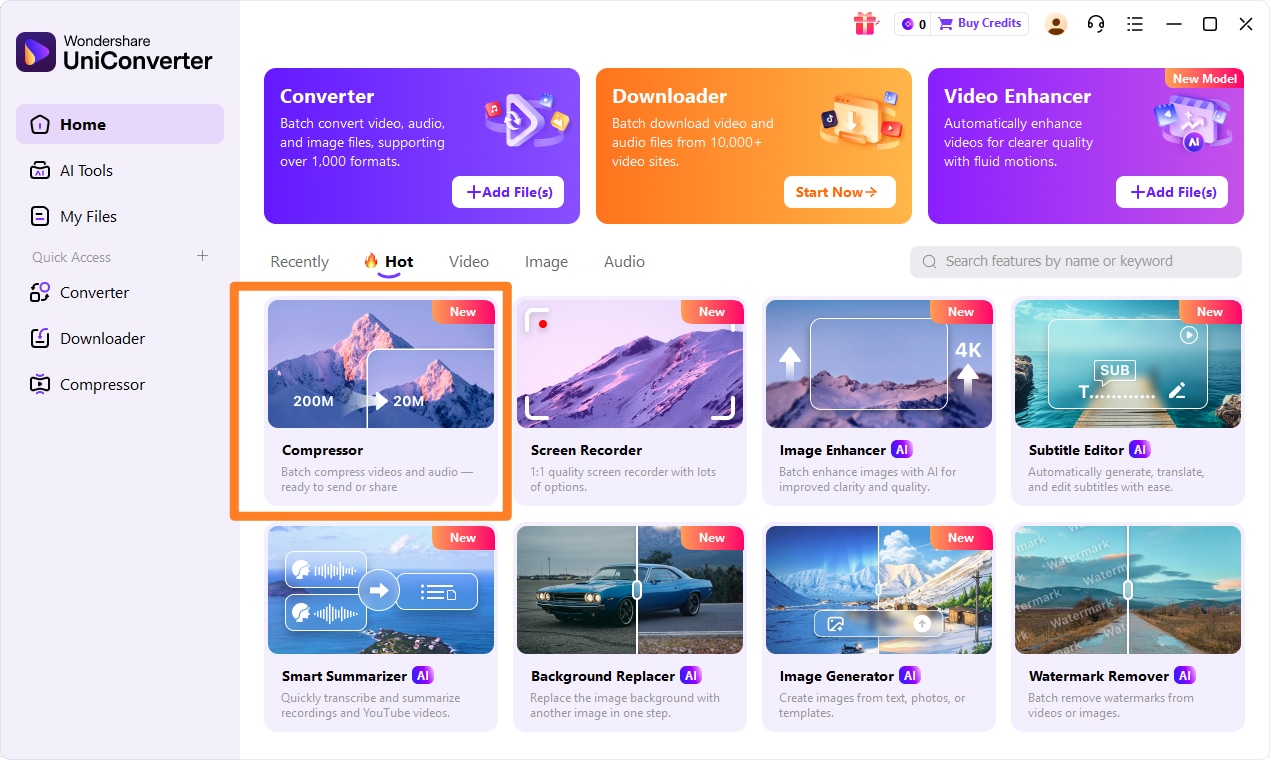
Launch UniConverter on your computer. On the main interface, navigate to the "Video Compressor" or "Audio Compressor" tool from the left-hand menu. This dedicated module is designed for efficient file size reduction.
Step 2: Upload the Video, Audios or Images
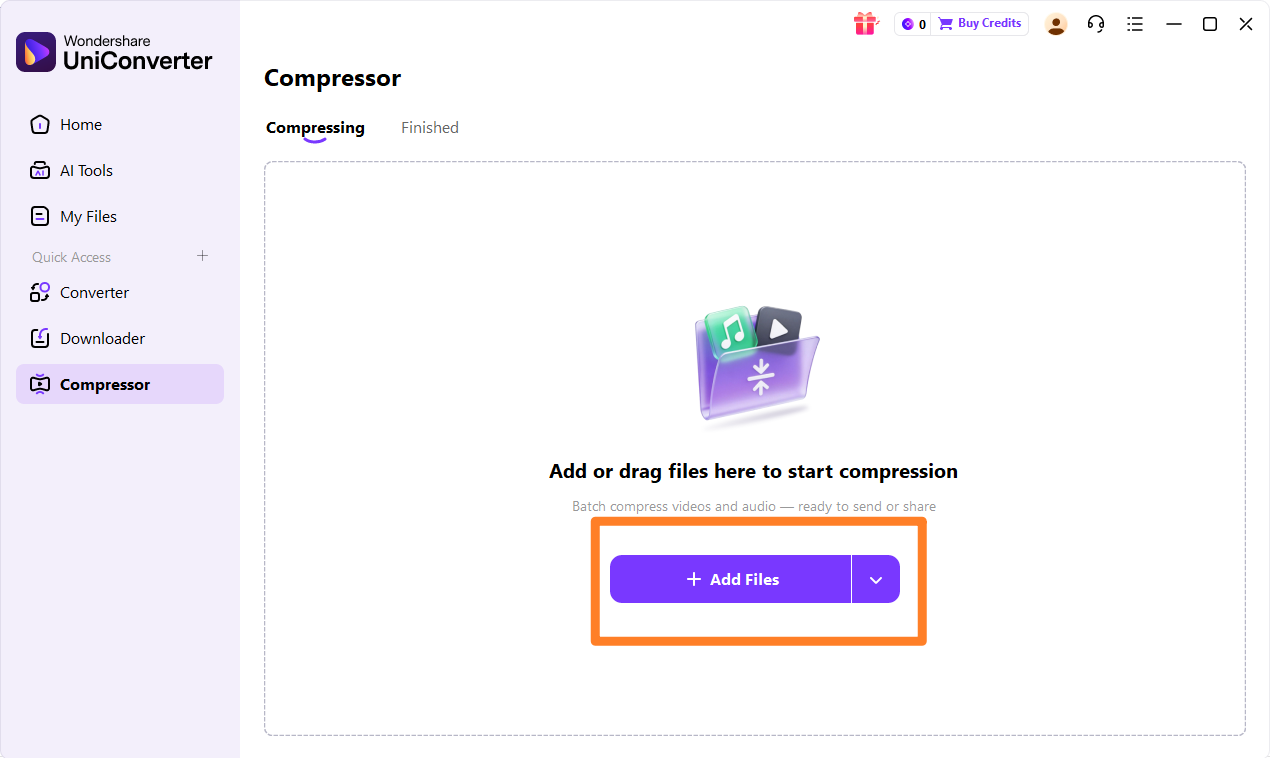
Click the "Add Files" button or simply drag and drop your video, audio, or image files into the designated area. You can add multiple files for batch compression, which is a huge time-saver.
Step 3: Choose Required Parameters
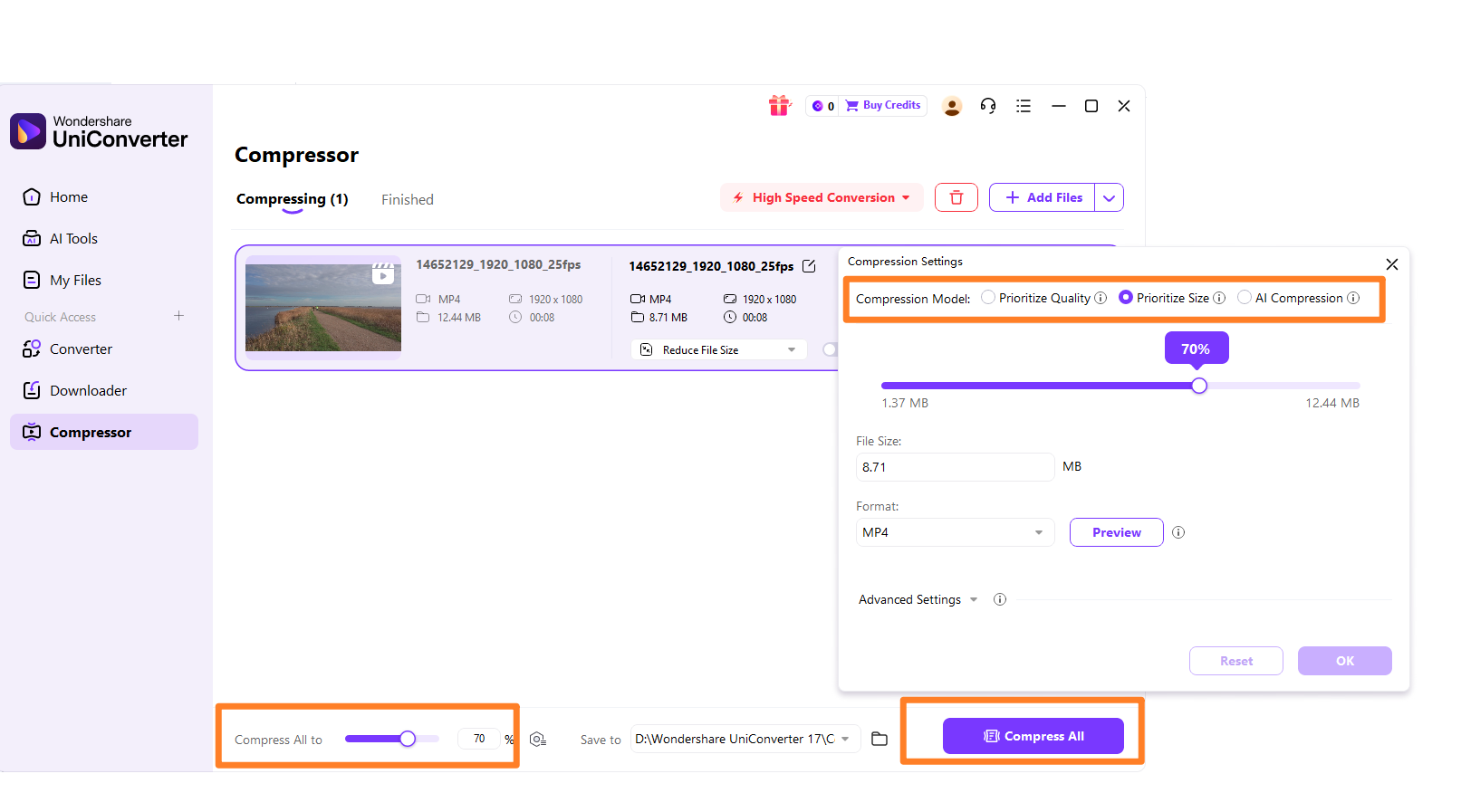
Once your file is loaded, you'll see options to adjust compression parameters. You can choose your desired output format, resolution, bitrate, and quality. UniConverter often provides a "Smart Compress" option that automatically suggests optimal settings.
Step 4: Save the Compressed File
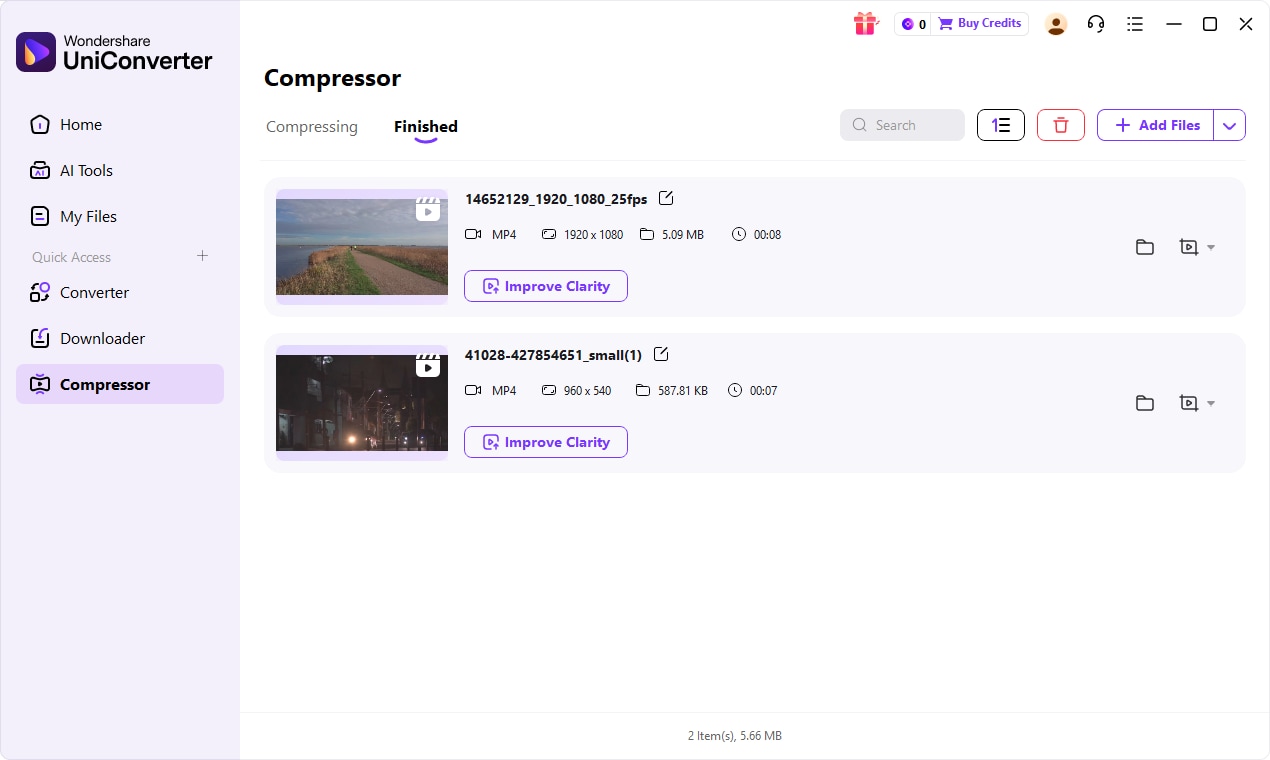
After configuring your settings, click the "Compress" button. UniConverter will quickly process your file. Once complete, you can find your compressed file in the output folder you specified.

Need a Simpler DaVinci Resolve Compressor Alternative?
Part 7: Conclusion
In conclusion, my journey through video compression has shown me that there's no one-size-fits-all solution. The DaVinci Resolve Video Compressor review highlights its undeniable strength as an integrated, powerful tool for professionals already entrenched in its ecosystem. Its extensive controls and high-quality output make it ideal for filmmakers and editors who demand precision and seamless workflow. However, its complexity and resource demands mean it's not the best fit for casual users or those with less powerful hardware. For them, simpler, dedicated tools like HandBrake or UniConverter offer a more accessible and efficient path to file optimization. Ultimately, the choice boils down to your specific needs: prioritize an integrated, highly customizable workflow if you're a pro, or opt for ease of use and speed if you're looking for quick, high-quality compression without the steep learning curve. Always remember to balance quality and file size, and consider your hardware capabilities before committing to a solution.
Part 8: FAQs
-
1. Can DaVinci Resolve compress videos without losing quality?
DaVinci Resolve can compress videos with minimal perceived quality loss by using efficient codecs like H.264 or H.265 and appropriate bitrate settings. However, some data reduction is inherent in any compression process, so "lossless" in the strictest sense is rarely achievable for significant file size reduction.
-
2. Is DaVinci Resolve's compressor free to use?
Yes, the compression features are available in both the free version of DaVinci Resolve and the paid Studio version. The Studio version might offer some additional codec support or faster hardware acceleration options.
-
3. What are the best settings for compressing videos in DaVinci Resolve for YouTube?
For YouTube, I generally recommend using the H.264 or H.265 codec. For 1080p video, a target bitrate of 8-12 Mbps is usually sufficient, while for 4K, aim for 35-45 Mbps. Ensure your frame rate matches your source footage.
-
4. How long does it take to compress a video in DaVinci Resolve?
Compression time varies significantly. It depends on the video's length, resolution, the chosen codec and its settings (especially bitrate), and critically, your computer's hardware specifications (CPU, GPU, RAM). A powerful system can compress a 10-minute 4K video in minutes, while a weaker system might take hours.
-
5. Can I batch compress multiple videos in DaVinci Resolve?
Yes, DaVinci Resolve allows for batch rendering and compression. You can add multiple clips or timelines to the render queue on the Deliver page, configure individual export settings for each, and then render them all in one go. If you find this process too complex or slow, UniConverter offers a very user-friendly and efficient batch compression feature.
