
- CyberLink PowerDirector: Integrated video compressor offers seamless workflow for existing users.
- Value Proposition: Ideal for content creators needing efficient file size management within their editing suite.
- Comparison Insight: PowerDirector excels in integration; dedicated tools like HandBrake offer granular control.
- Decision Factor: Choose PowerDirector for convenience within its ecosystem; UniConverter for versatile, standalone compression.
- Pitfall Avoidance: Beware of quality loss from over-compression and privacy risks with online tools.
- UniConverter Advantage: Offers stable, high-quality compression with GPU acceleration, avoiding common pitfalls.
In this article
- Part 1: What is CyberLink PowerDirector Video Compressor?
- Part 2: CyberLink PowerDirector Video Compressor: Core Features, Pros, and Cons
- Part 3: CyberLink PowerDirector Video Compressor: Ideal Users and Scenarios
- Part 4: CyberLink PowerDirector Video Compressor & Competitors: A Comparative Analysis
- Part 5: Risks and Pitfalls When Using Video Compressors
- Part 6: How to Use UniConverter for Efficient Video Compression
- Part 7: Conclusion
- Part 8: FAQs
When it comes to video editing, managing file sizes is a perpetual challenge. High-resolution footage, especially 4K and beyond, can quickly consume storage and slow down workflows. This is where video compressors become indispensable. In this CyberLink PowerDirector Video Compressor review, I'll dive deep into its capabilities, comparing it against other prominent tools in the market. My goal is to provide you with a comprehensive analysis, helping you understand its strengths and weaknesses, and ultimately guide your decision-making process for your video compression needs.
Part 1: What is CyberLink PowerDirector Video Compressor?
CyberLink PowerDirector Video Compressor is an integrated feature within the popular CyberLink PowerDirector video editing software. It's not a standalone application but rather a crucial component designed to help editors manage the output size of their video projects. For many content creators, the ability to compress videos efficiently without significant quality loss is paramount, especially when preparing content for online platforms, archiving, or sharing with clients. This review aims to address the core question: how effectively does PowerDirector's built-in compressor meet these demands compared to dedicated compression tools?
Understanding the Need for Video Compression
* Storage Management: Large video files quickly fill up hard drives and cloud storage, necessitating efficient compression.
* Faster Uploads and Downloads: Smaller file sizes mean quicker uploads to platforms like YouTube and Vimeo, and faster downloads for viewers.
* Improved Playback Performance: Compressed videos are easier for devices to process, leading to smoother playback, especially on mobile or older hardware.
* Meeting Platform Requirements: Many social media and streaming platforms have file size limits or recommended specifications that require video compression.
Part 2: CyberLink PowerDirector Video Compressor: Core Features, Pros, and Cons
CyberLink PowerDirector Video Compressor is an integral part of the PowerDirector suite, offering a streamlined approach to video size reduction. Its core capabilities include a variety of output profiles, resolution scaling, and bitrate adjustments. It supports a wide range of video formats for both input and output, making it versatile for various post-production needs. The compressor leverages the software's existing rendering engine, which often benefits from hardware acceleration for faster processing.
Pros:
* Integrated Workflow for Video Editors: Seamlessly compress videos directly within your editing project, eliminating the need to export and then re-import into a separate compression tool.
* High-Quality Compression Presets: Offers a range of intelligent presets optimized for different platforms (e.g., YouTube, Facebook) and devices, balancing file size and visual fidelity.
* Batch Processing Capabilities: You can queue multiple video projects or clips for compression, saving significant time when dealing with numerous files.
Cons:
* Resource-Intensive for Large Files: While integrated, compressing very large or high-resolution files can still be demanding on system resources, potentially slowing down your computer.
* Limited Advanced Compression Algorithms: Compared to specialized tools, it might offer fewer granular controls over advanced compression parameters, potentially limiting optimization for niche scenarios.
Part 3: CyberLink PowerDirector Video Compressor: Ideal Users and Scenarios
The CyberLink PowerDirector Video Compressor is primarily designed for existing users of PowerDirector who need to manage their video file sizes efficiently within their editing workflow. It's particularly well-suited for content creators, YouTubers, and small businesses that regularly produce and upload video content. If you're already invested in the PowerDirector ecosystem, this integrated tool provides a convenient and often sufficient solution for your compression needs.
Best Use Case: Streamlining Post-Production for Content Creators
Imagine you've just finished editing a 15-minute 4K video for your YouTube channel. Instead of exporting a massive file and then opening a separate application to compress it, you can directly use PowerDirector's built-in compressor. You select a YouTube-optimized preset, hit render, and the software handles both the final export and compression in one go. This saves you valuable time and simplifies your post-production pipeline.
Limited Use Case: Quick, On-the-Go Compression for Mobile Users
If you're a mobile user who needs to quickly compress a video captured on your phone to send via messaging apps or upload from a remote location, PowerDirector's desktop-bound compressor isn't your ideal choice. For such scenarios, dedicated mobile compression apps or online tools would be far more practical and immediate.
Part 4: CyberLink PowerDirector Video Compressor & Competitors: A Comparative Analysis
When evaluating video compressors, it's crucial to look beyond just file size reduction. Factors like output quality, speed, ease of use, and feature set play significant roles. Here's how CyberLink PowerDirector Video Compressor stacks up against some of its prominent competitors: HandBrake, Adobe Media Encoder, and UniConverter.
| Feature/Criteria | CyberLink PowerDirector Video Compressor | HandBrake | Adobe Media Encoder | UniConverter |
| Ease of Use | Integrated, Moderate Learning Curve | Steep Learning Curve | Integrated, Moderate Learning Curve | Very Easy |
| Compression Quality | Excellent | Excellent (with fine-tuning) | Excellent | Excellent |
| Speed | Good | Good | Excellent | Excellent |
| Features | Comprehensive (part of NLE) | Highly Customizable | Comprehensive (part of NLE) | Comprehensive (standalone) |
| Cost | Subscription/One-time Purchase | Free | Subscription | One-time Purchase |
| Target User | Video Editors | Tech-Savvy Users | Video Professionals | All Users (Casual to Pro) |
CyberLink PowerDirector's compressor shines for its seamless integration within its NLE, making it a natural choice for existing users. HandBrake offers unparalleled customization for those who want deep control over every compression parameter, but its interface can be intimidating for beginners. Adobe Media Encoder, like PowerDirector, benefits from being part of a professional suite, offering robust features and excellent speed, especially for Adobe Creative Cloud users. UniConverter stands out as a versatile standalone solution, balancing ease of use with powerful features, making it suitable for a broad audience.
Part 5: Risks and Pitfalls When Using Video Compressors
While video compressors are incredibly useful, their misuse or reliance on unreliable tools can lead to several frustrating issues. It's important to be aware of these potential risks to ensure a smooth and effective compression process.
Potential Loss of Video Quality
The most common pitfall is over-compression, which can lead to noticeable degradation in video quality. This manifests as pixelation, blockiness, or a "muddy" appearance, especially in areas with fine detail or fast motion. Aggressive compression settings, particularly low bitrates, are often the culprit.
Privacy Concerns with Online Tools
Many free online video compressors require you to upload your video files to their servers. This raises significant privacy concerns, especially for sensitive or proprietary content. You have little control over how your data is stored, processed, or potentially accessed by third parties.
Software Compatibility Issues
Not all video compressors handle every file format or codec equally well. You might encounter errors, crashes, or corrupted output files if the software struggles with a particular input format or if your system lacks necessary codecs. This can be particularly frustrating when dealing with less common or professional-grade formats.
Unexpected File Size Increases
Paradoxically, sometimes attempting to compress a video can result in a larger file size. This often happens when converting from an already highly compressed format to another format with less efficient compression, or when using inappropriate settings that add overhead.
Over-Compression Artifacts
Beyond general quality loss, over-compression can introduce specific visual artifacts. These include "mosquito noise" around sharp edges, banding in gradients (like skies), or "ghosting" effects. These artifacts are often irreversible and can significantly detract from the viewing experience.
Part 6: How to Use UniConverter for Efficient Video Compression
When other tools can’t keep up—whether because batch compression is limited, results are inconsistent, or the output quality drops too much—UniConverter stands out as a practical and user-friendly alternative. It’s built to avoid many of the usual compression issues, offering a smoother experience for anyone who needs a reliable video compressor. With broad format support, GPU acceleration for faster processing, and the ability to compress videos without quality loss as much as possible, it delivers a good balance of speed and quality. Beyond video, it also supports audio compression and image compression, making it a versatile all-in-one solution for media processing without ads or a complicated interface.
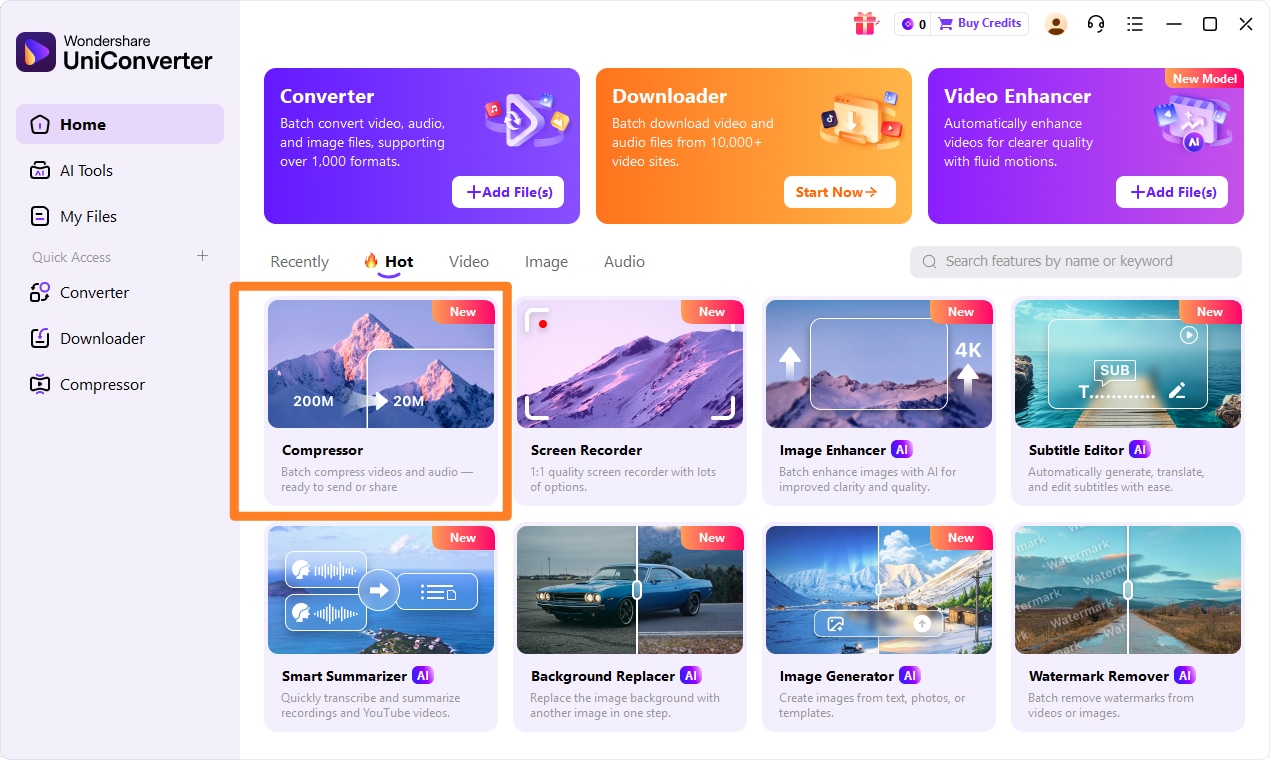
Step 1: Open UniConverter and Choose Compressor
Launch UniConverter on your computer. From the main interface, navigate to the "Compressor" tab on the left sidebar. This dedicated module is optimized for efficient file size reduction.
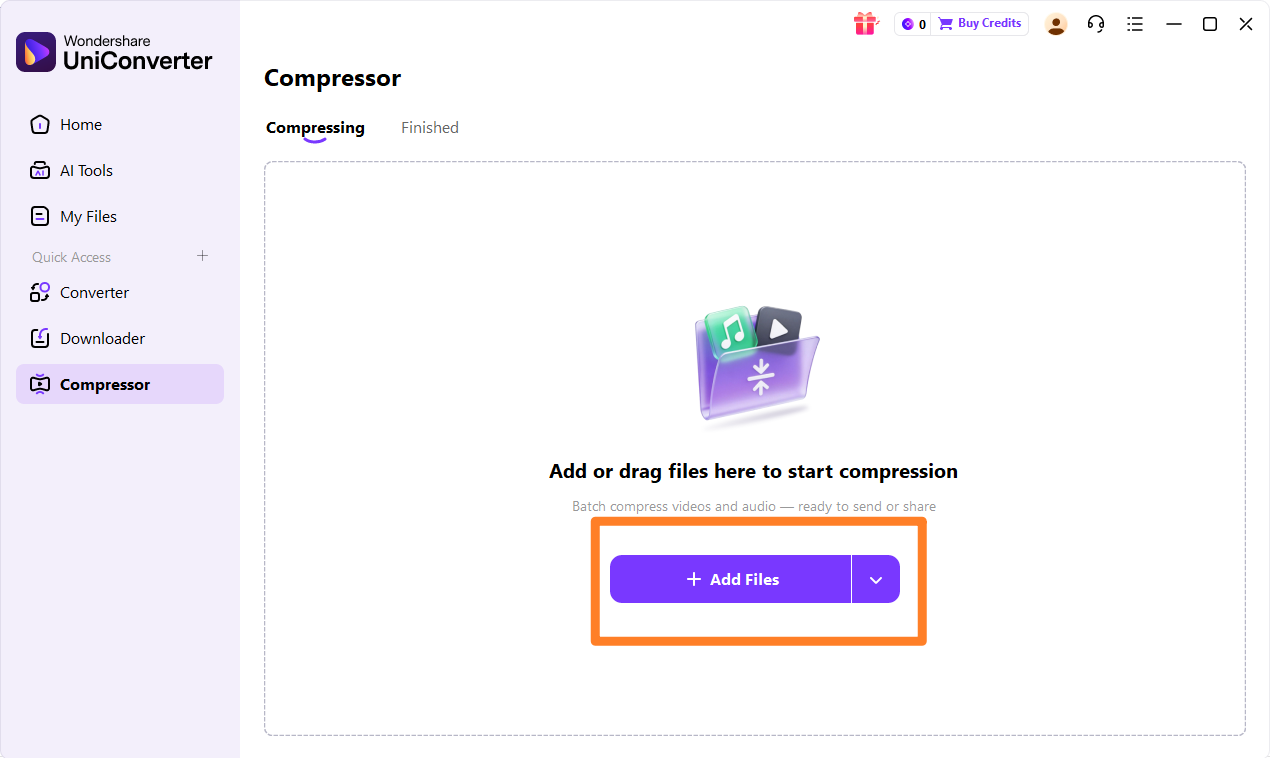
Step 2: Upload the Video, Audios or Images
Click the "Add Files" button or simply drag and drop your video, audio, or image files into the UniConverter window. You can add multiple files for batch processing.
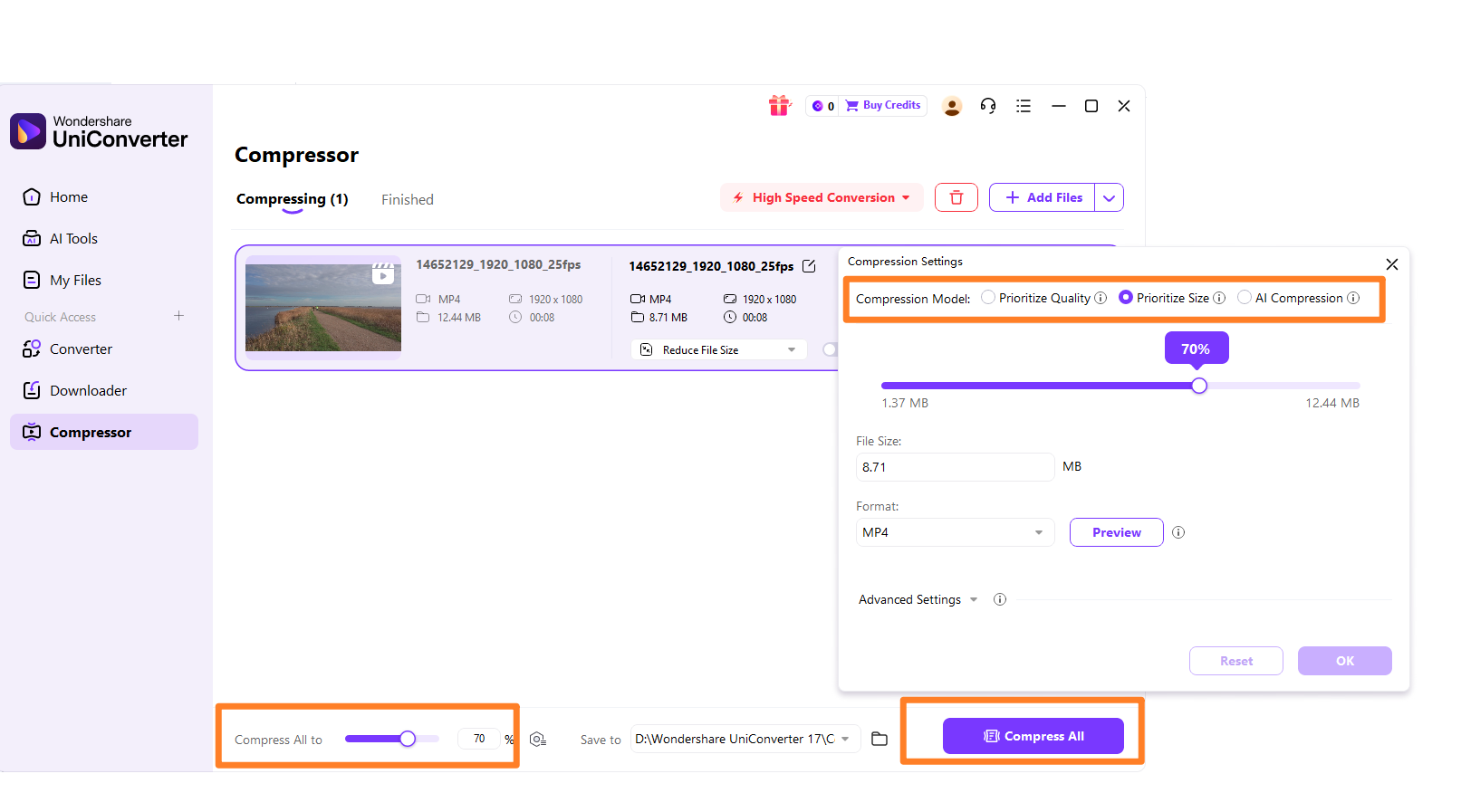
Step 3: Choose Required Parameters
For each file, you can adjust compression settings. You'll see options to change the output format, resolution, bitrate, and quality. UniConverter also offers smart presets for various devices and platforms.
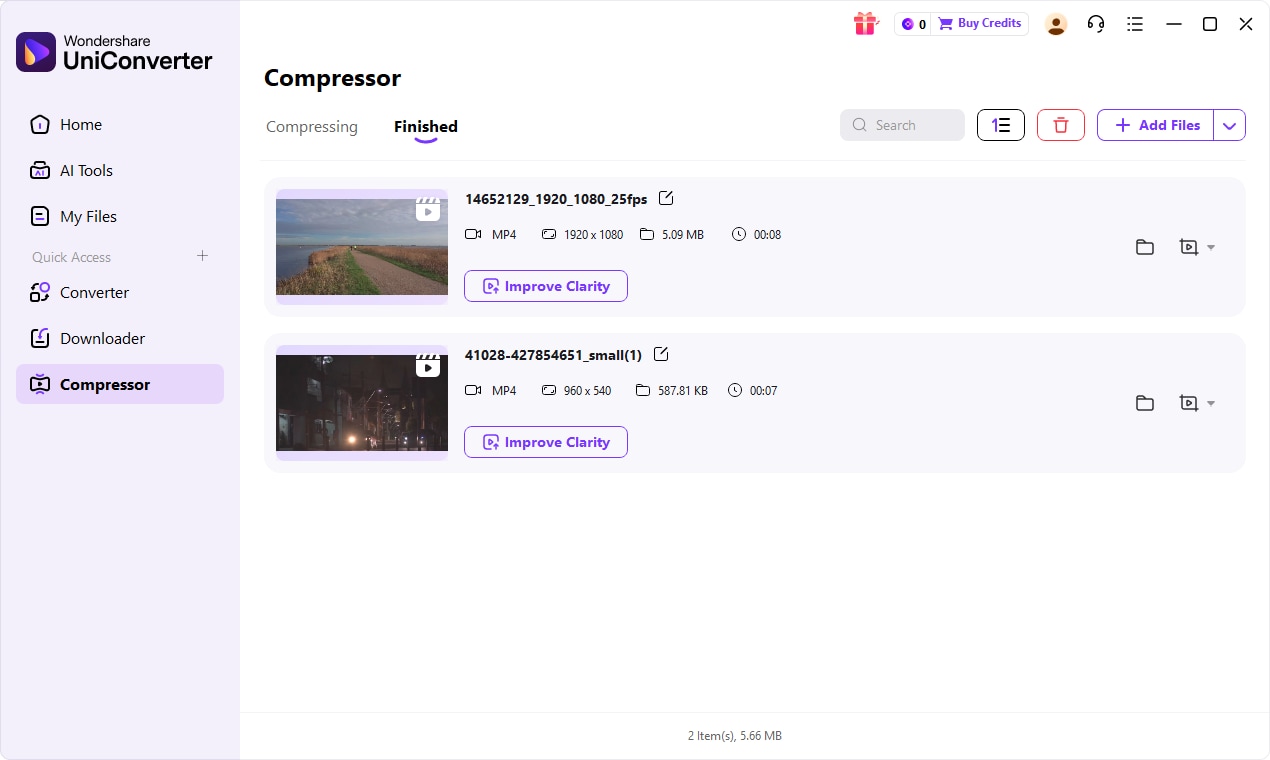
Step 4: Save the Compressed File
Once you've set your desired parameters, click the "Compress" button. UniConverter will process your files quickly. After compression, you can find your optimized files in the specified output folder.

CyberLink PowerDirector Alternative for Video Compression
Part 7: Conclusion
In conclusion, the CyberLink PowerDirector Video Compressor review reveals it as a highly convenient and capable tool for existing PowerDirector users. Its seamless integration into the editing workflow is a significant advantage for content creators who prioritize efficiency. For professional video editors already using PowerDirector, it offers a robust solution for managing file sizes without leaving their primary application. However, for casual users needing quick, on-the-go compression or advanced users seeking granular control beyond what PowerDirector offers, dedicated standalone tools like HandBrake or UniConverter might be more suitable. Ultimately, the best choice depends on your specific workflow, technical proficiency, and the level of control you require over the compression process.
Part 8: FAQs
-
1. What is the best video compression format for web upload?
H.264 (MP4) is widely considered the best format for web upload due to its excellent balance of compression efficiency and broad compatibility across devices and platforms.
-
2. How much can I compress a video without losing quality?
The amount you can compress a video without *perceptible* quality loss depends heavily on the original video's quality, complexity, and the compression algorithm used. Generally, you can often reduce file size by 20-50% without a noticeable impact, but aggressive compression beyond that will likely introduce artifacts.
-
3. Is it safe to use online video compressors?
The safety of online video compressors varies. While many are reputable, some may pose privacy risks by storing your data or injecting ads. For sensitive content, desktop software like UniConverter offers greater security and control as your files never leave your computer.
-
4. Does video compression affect audio quality?
Yes, video compression can affect audio quality if the audio stream is also compressed. Most video compression tools allow you to adjust audio bitrate, and reducing it too much can lead to a loss of fidelity, clarity, or dynamic range in the sound.
-
5. What's the difference between lossy and lossless compression?
Lossy compression permanently removes some data from the file to achieve a smaller size, resulting in some quality degradation (e.g., MP4, JPEG). Lossless compression reduces file size without discarding any data, meaning the original data can be perfectly reconstructed, but the file size reduction is less significant (e.g., FLAC, PNG).
