
- CompressPNG Value: Ideal for quick, free web image optimization for casual users and bloggers.
- Feature Comparison: Offers simplicity and batch processing, but lacks advanced controls found in alternatives.
- Quality vs. Speed: Balances decent quality with efficient compression, but aggressive settings can degrade images.
- Privacy & Ads: Online tools like CompressPNG may pose privacy risks and feature intrusive ads.
- UniConverter Advantage: Desktop solution for consistent, high-quality compression without privacy concerns or ads.
In this article
- Part 1: What is CompressPNG Image Compressor?
- Part 2: CompressPNG Image Compressor: Core Features, Pros, and Cons
- Part 3: CompressPNG Image Compressor: The Users and Use Cases
- Part 4: CompressPNG Image Compressor vs. Alternatives
- Part 5: Risks and Pitfalls to Consider
- Part 6: How to Use UniConverter for Efficient Image Compression
- Part 7: Final Verdict and Recommendations
- Part 8: FAQs about Image Compression
When I first started blogging, optimizing image sizes for faster loading times was a constant headache. Online tools promised quick fixes, but often delivered inconsistent results or compromised quality. That's when I stumbled upon CompressPNG Image Compressor review, a tool that aims to simplify this process. This review will delve into its core functionalities, compare it with popular alternatives, and help you determine if it's the right solution for your image compression needs, especially if you're looking for efficiency without a steep learning curve.
Part 1: What is CompressPNG Image Compressor?
CompressPNG Image Compressor is a web-based utility designed to reduce the file size of PNG and JPEG images. Its primary purpose is to help users optimize their images for web use, leading to faster website loading times and improved user experience. In my experience, it's a straightforward tool that gets the job done without unnecessary frills. This review aims to address the core question: Can CompressPNG Image Compressor effectively balance image file size reduction with quality preservation for various user needs?
The Landscape of Online Image Compression Tools
* Growing Need for Web Optimization: With the increasing emphasis on website performance, efficient image compression has become crucial for SEO and user engagement.
* Variety of Solutions: The market is flooded with online and offline image compression tools, each with its own strengths and weaknesses.
* Balancing Act: The main challenge for any image compressor is to reduce file size significantly without noticeable degradation in visual quality.
* User Accessibility: Many users, especially those without technical backgrounds, seek tools that are easy to use and require minimal setup.
Part 2: CompressPNG Image Compressor: Core Features, Pros, and Cons
CompressPNG Image Compressor offers a focused set of features aimed at simplifying image optimization. Its core ability lies in its compression algorithms for PNG and JPEG files, allowing me to quickly reduce file sizes for my website and social media posts. The interface is intuitive, making it easy to upload images and initiate the compression process without any prior experience. It also supports batch processing, which is a huge time-saver when I have multiple images to optimize.
Pros:
* Efficient Compression for Web Optimization: I've found it significantly reduces file sizes, which is excellent for improving page load speeds.
* User-Friendly Interface for Quick Tasks: The drag-and-drop functionality and clear instructions make it incredibly easy to use, even for beginners.
* Batch Processing Capability for Multiple Images: This feature is a lifesaver when I need to compress a large number of images for a new blog post or product launch.
Cons:
* Limited Advanced Features for Professional Users: As someone who sometimes needs more control over compression settings, I find its options a bit basic.
* Potential Quality Degradation on Aggressive Compression: While generally good, pushing for maximum compression can sometimes lead to noticeable artifacts, especially with complex images.
Part 3: CompressPNG Image Compressor: The Users and Use Cases
CompressPNG Image Compressor is particularly well-suited for individuals and small businesses who need a quick and easy way to optimize images for the web without investing in complex software. If you're like me, a blogger or a small e-commerce store owner, you'll appreciate its simplicity and effectiveness. It's designed for speed and convenience, making it ideal for everyday image compression tasks.
Best Use Case: Quick Web Image Optimization for Bloggers and Small Businesses
For my blog, where I frequently upload images, CompressPNG Image Compressor is perfect. I can quickly compress photos from my camera or stock image sites, ensuring they load fast on my website without sacrificing too much visual appeal. It saves me time and keeps my site performing well for my readers.
Limited Use Case: High-Fidelity Image Compression for Professional Photographers
However, if you're a professional photographer or a graphic designer dealing with high-resolution, print-quality images, CompressPNG Image Compressor might not be your go-to. The lack of granular control over compression settings and the potential for quality loss on aggressive compression means it's not ideal for preserving the intricate details and color fidelity required for professional work. For those scenarios, I'd definitely look for more advanced tools.
Part 4: CompressPNG Image Compressor vs. Alternatives
When I look at CompressPNG Image Compressor compared to other tools, I see it as a solid, free option for basic needs. It holds its own in terms of ease of use and batch processing, but where it truly differentiates itself is its straightforward, no-frills approach, making it perfect for quick tasks. However, when it comes to advanced control or superior compression ratios, other tools often pull ahead.
| Feature/Tool | CompressPNG Image Compressor | TinyPNG | JPEGmini | Optimizilla |
| Compression Ratio | Moderate | High | Very High | High |
| Quality Preservation | Good | Excellent | Excellent | Good |
| Batch Processing | Yes | Yes | Yes | Yes |
| File Type Support | PNG, JPEG | PNG, JPEG | JPEG | PNG, JPEG |
| Advanced Features | No | Limited | Limited | Limited |
| Pricing | Free | Free (with paid options) | Paid | Free |
Key Differentiators: What Sets Them Apart
CompressPNG Image Compressor stands out for its absolute simplicity and free access, making it a great entry point for casual users. TinyPNG and Optimizilla offer slightly better compression ratios while maintaining good quality, often with a few more options. JPEGmini, though paid, excels in achieving very high compression with minimal perceived quality loss, especially for JPEGs, making it a favorite for those who prioritize quality above all else. UniConverter, as I'll discuss later, offers a broader suite of features beyond just image compression, making it a more comprehensive solution.
Part 5: Risks and Pitfalls to Consider
While online image compressors like CompressPNG Image Compressor offer convenience, I've learned that it's crucial to be aware of potential risks, especially when dealing with sensitive data or relying on free services. My experience has shown me that not all tools are created equal, and some come with hidden downsides that can impact your work or privacy.
Data Privacy Concerns with Online Tools
When I upload images to online compressors, I always consider the privacy implications. Who has access to my images? Are they stored on servers, and for how long? For personal photos or confidential business graphics, this is a significant concern. Many free tools don't explicitly state their data retention policies, leaving me wondering about the security of my uploaded content.
Intrusive Advertisements and Pop-ups
A common trade-off for free online services is the presence of advertisements. While some are discreet, others can be quite intrusive, with pop-ups and banner ads that disrupt the workflow. I've encountered instances where ads have made the user experience frustrating, sometimes even leading to accidental clicks on malicious links.
Unpredictable Image Quality Loss
Although these tools aim to preserve quality, the compression algorithms can sometimes be aggressive, leading to noticeable degradation, especially if I push for maximum file size reduction. Colors can become desaturated, details can blur, and artifacts might appear, making the image unsuitable for its intended purpose. It's a gamble, and I often have to re-evaluate if the file size reduction is worth the potential quality compromise.
Dependence on Internet Connectivity
Since CompressPNG Image Compressor is a web-based tool, a stable internet connection is a prerequisite. This can be a significant limitation if I'm working offline or in an area with unreliable internet access. It means I can't compress images on the go without connectivity, which can hinder productivity in certain situations.
Part 6: How to Use UniConverter for Efficient Image Compression
When online tools fall short—especially when batch processing is limited or compression results are inconsistent and noticeably reduce quality—I usually turn to UniConverter as a more dependable desktop alternative. It avoids many of the common drawbacks of browser-based services, including intrusive ads and privacy concerns, while providing a smoother workflow for video compression. I also like that it can help compress videos without quality loss as much as possible, while GPU acceleration keeps processing fast and efficient. Since it also supports audio compression and image compression, it works well as a practical all-in-one solution for everyday media management.
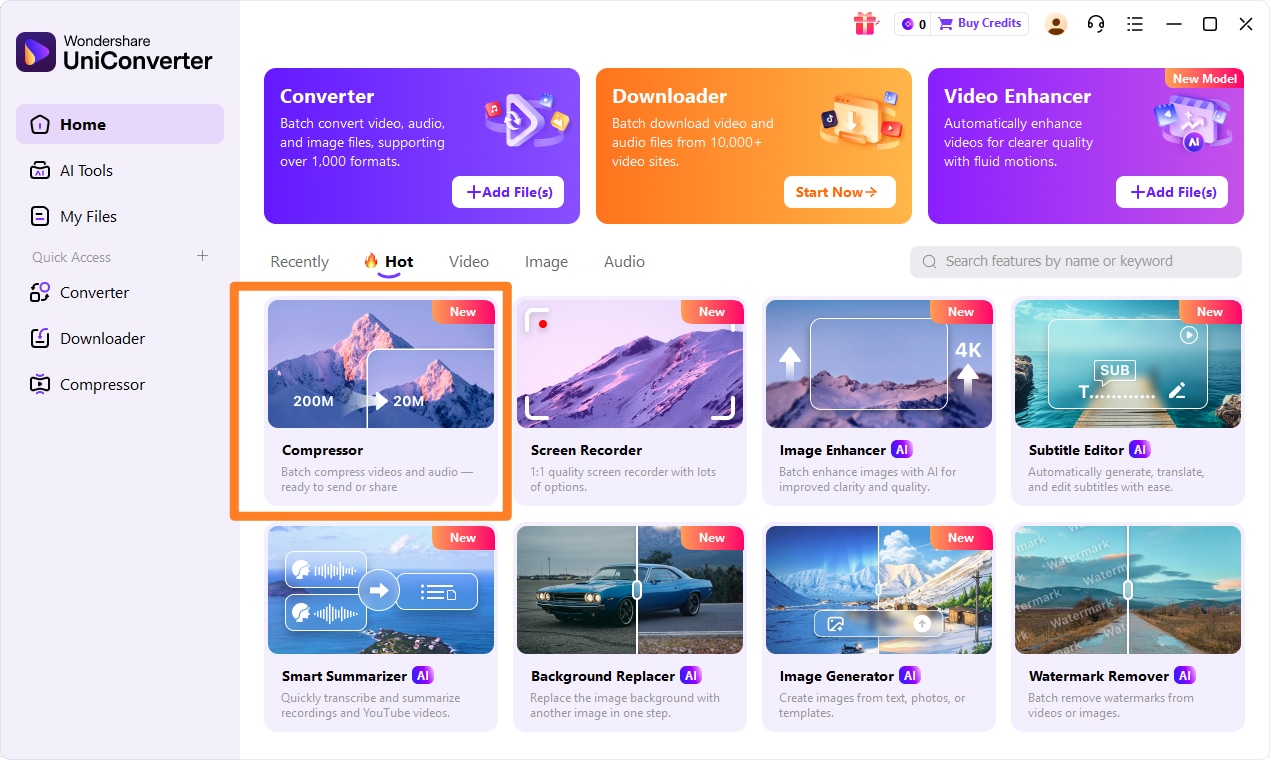
Step 1: Open UniConverter and Choose Compressor
First, I launch UniConverter on my desktop. On the main interface, I navigate to the "Compressor" tab, which is clearly labeled and easy to find. This is where all my compression tasks begin.
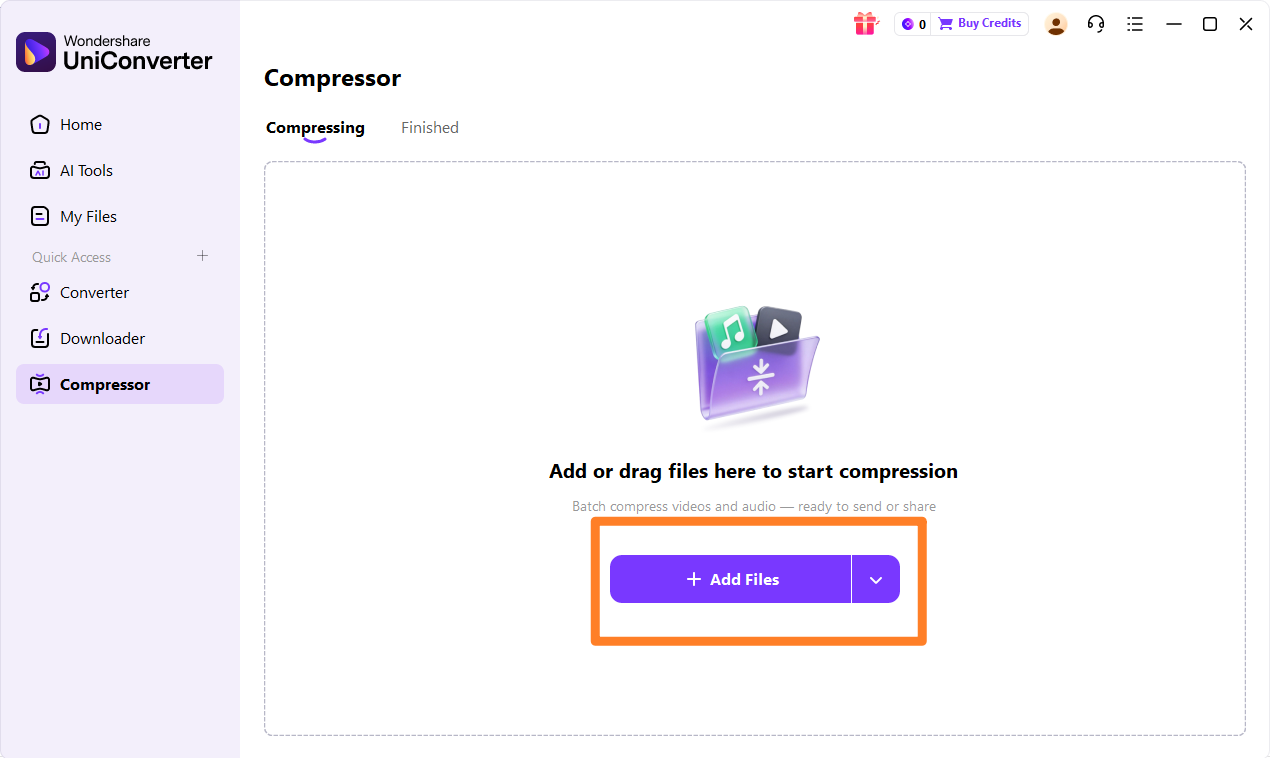
Step 2: Upload the Video, Audios or Images
Next, I simply drag and drop the images, videos, or audio files I want to compress into the UniConverter window. Alternatively, I can click the "Add Files" button to browse and select them from my computer.
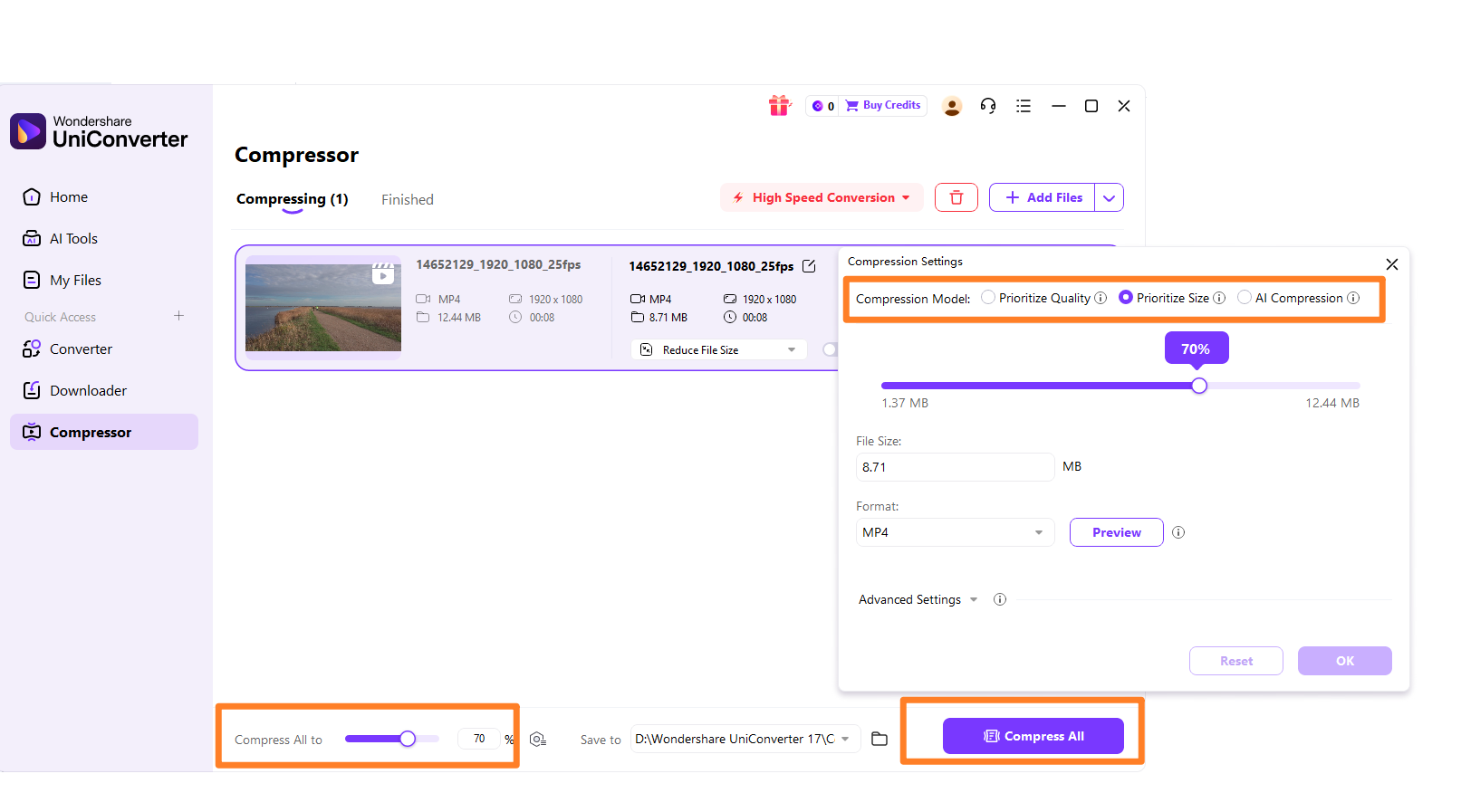
Step 3: Choose Required Parameters
Once my files are loaded, I can adjust the compression settings. UniConverter offers various options to control the output size, quality, and format. I can choose a preset or customize the parameters to achieve the desired balance between file size and quality. For instance, I can easily convert different image formats if needed.
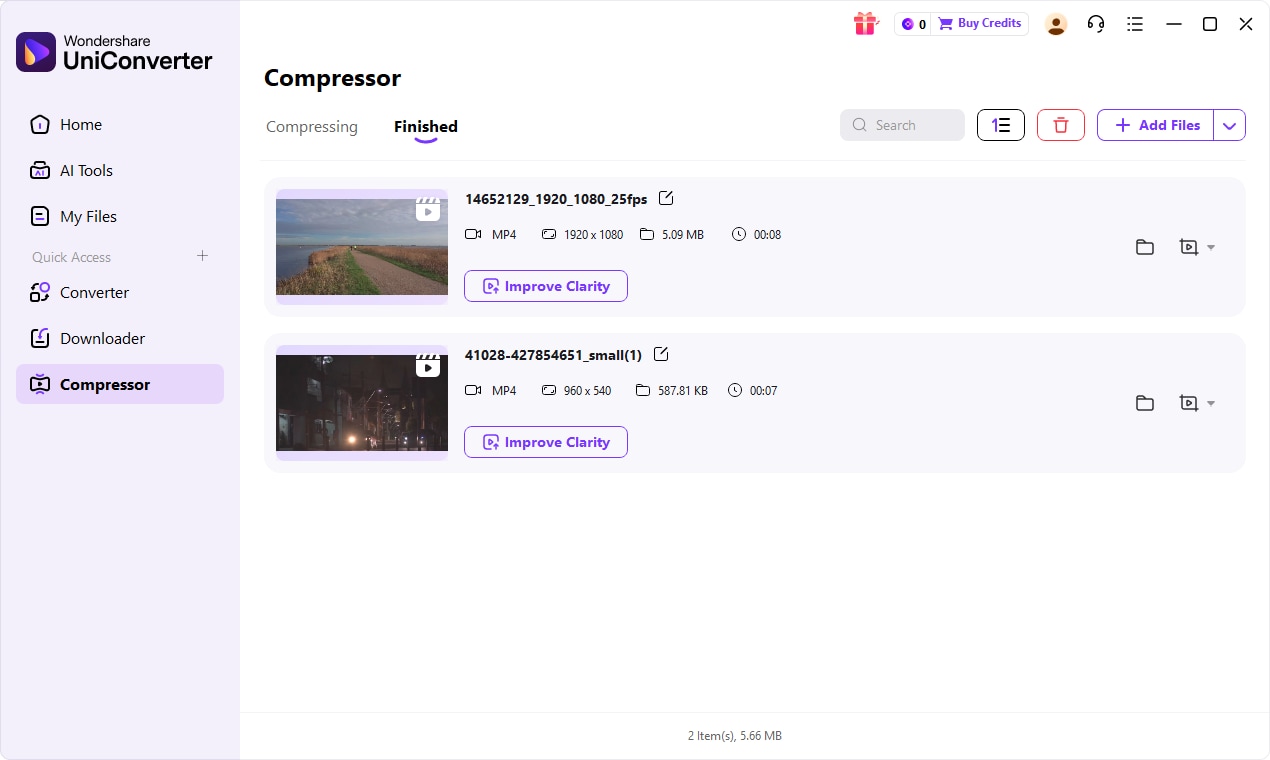
Step 4: Start Compression and Save Your Optimized Images
After setting my preferred parameters, I click the "Compress" button. UniConverter quickly processes the files, and once completed, I can save the optimized images to my desired location on my computer. This process is just as straightforward as when I need to convert other media types.

Need a Better CompressPNG Alternative?
Part 7: Final Verdict and Recommendations
After thoroughly evaluating CompressPNG Image Compressor review and comparing it with its alternatives, my conclusion is that it serves a specific niche very well. For casual users and bloggers who prioritize speed and ease of use for basic web image optimization, CompressPNG Image Compressor is an excellent, free choice. Its straightforward interface and batch processing capabilities make it highly efficient for quick tasks. However, for web developers and designers who require more control over compression settings and demand higher quality preservation, tools like TinyPNG or JPEGmini might offer a better balance of features and performance. For professional photographers and graphic artists, where image fidelity is paramount, investing in a robust desktop solution like UniConverter or specialized photo editing software is advisable. These tools provide the granular control and advanced algorithms necessary to maintain pristine image quality while still achieving significant file size reductions. Ultimately, the best tool depends on your specific needs, technical expertise, and the importance you place on image quality versus file size.
Part 8: FAQs about Image Compression
-
1. What is the best image format for web use?
For web use, JPEG is generally best for photographs due to its excellent compression for complex images, while PNG is ideal for images with transparency or sharp edges like logos and screenshots. WebP is an emerging format that offers superior compression for both lossy and lossless images, often resulting in smaller file sizes than JPEGs and PNGs without significant quality loss.
-
2. How much compression is too much?
Too much compression is when the visual quality of an image becomes noticeably degraded, with artifacts, blurriness, or color distortion. The acceptable level of compression depends on the image's purpose; a small thumbnail can withstand more compression than a large hero image on a website. Always preview the compressed image to ensure it meets your quality standards.
-
3. Do online image compressors compromise privacy?
Some online image compressors might raise privacy concerns as you upload your images to their servers. It's crucial to read their privacy policies to understand how your data is handled, stored, and if it's deleted after processing. For sensitive images, a desktop application like UniConverter offers better privacy as your files remain on your local machine.
-
4. Can I compress images without losing quality?
Yes, you can compress images without losing quality using lossless compression methods. These methods reduce file size by removing redundant data without discarding any visual information. PNG is a lossless format, and some tools offer lossless optimization for JPEGs. However, lossless compression typically results in less file size reduction compared to lossy methods.
-
5. What is the difference between lossy and lossless compression?
Lossy compression permanently removes some data from the image to achieve a smaller file size. This can lead to a reduction in image quality, but it's often imperceptible at moderate compression levels. JPEG is a common lossy format. Lossless compression, on the other hand, reduces file size without discarding any data, meaning the original image can be perfectly reconstructed from the compressed version. PNG is a common lossless format.
