
- Value: Compressor.io excels for quick, free, single-image compression, ideal for casual users and social media.
- Comparison: It's simpler than competitors like TinyPNG or Squoosh, lacking batch processing and advanced controls.
- Decision: Choose Compressor.io for basic needs; for professional or batch tasks, consider robust alternatives like UniConverter.
- Risk: Be aware of potential quality degradation, privacy concerns, and reliance on internet connectivity with online tools.
- Alternative: UniConverter offers comprehensive, offline image optimization with batch processing and advanced features for professionals.
In this article
- Part 1: What is Compressor.io?
- Part 2: Compressor.io: Core Features, Pros, and Cons
- Part 3: Compressor.io: Users and Use Cases
- Part 4: Compressor.io vs. Competitors: A Side-by-Side Look
- Part 5: Risks and Pitfalls to Consider
- Part 6: How to Use UniConverter for Comprehensive Image Optimization
- Part 7: Conclusion
- Part 8: FAQs
Compressor.io Image Compressor: A Comprehensive Review and Comparison
For anyone working with digital content, optimizing image file sizes is a constant challenge. Large images can slow down websites, consume excessive bandwidth, and negatively impact user experience. This Compressor.io Image Compressor review aims to provide a detailed look at one of the most popular online image compression tools. I'll delve into its features, evaluate its performance against key competitors like TinyPNG and Squoosh, and highlight the scenarios where it truly shines—or falls short. My goal is to equip you with the insights needed to make an informed decision about whether Compressor.io is the right tool for your specific image optimization needs, or if a more robust alternative might be a better fit.
Part 1: What is Compressor.io?
Compressor.io is an online image compression tool designed to reduce the file size of various image formats without significantly compromising visual quality. It's a web-based service, meaning you can access it directly through your browser without needing to download or install any software. The primary goal of Compressor.io is to help users optimize their images for faster loading times on websites, social media, and other digital platforms.
This review will address the core question: Is Compressor.io the best solution for your image compression needs, or are there more effective alternatives available?
The Landscape of Online Image Compression Tools
The digital world demands efficiency, and large image files are often a bottleneck. This has led to a proliferation of online image compression tools, each promising to deliver smaller files with minimal quality loss. However, not all tools are created equal, and understanding their nuances is crucial for optimal results.
* The Need for Speed: Slow-loading websites are a major turn-off for users and can negatively impact SEO. Image compression directly addresses this by reducing the data transfer required.
* Balancing Quality and Size: The art of image compression lies in finding the sweet spot where file size is significantly reduced without noticeable degradation in visual fidelity.
* Diverse User Needs: From casual bloggers to professional web developers, different users have varying requirements for compression ratios, batch processing, and advanced controls.
Part 2: Compressor.io: Core Features, Pros, and Cons
Compressor.io positions itself as a straightforward and efficient solution for image compression. Its core capabilities revolve around its ability to significantly reduce file sizes while attempting to maintain visual integrity. I've found it particularly useful for quick, on-the-fly optimizations.
Here are its key features:
* High Compression Ratio: Employs advanced algorithms to achieve substantial file size reductions.
* Multiple Format Support: Handles JPEG, PNG, GIF, and SVG files.
* Drag-and-Drop Interface: Simplifies the upload process for users.
* Before & After Comparison: Allows you to visually assess the compressed image quality.
* No Software Installation: Accessible directly from any web browser.
Pros:
* High compression ratio with minimal perceived quality loss for web optimization.
* User-friendly interface, making it accessible for beginners.
* Supports multiple image formats (JPEG, PNG, GIF, SVG).
Cons:
* Limited advanced features for professional users (e.g., batch processing, custom settings).
* Occasional slowdowns during peak usage.
Part 3: Compressor.io: Users and Use Cases
Compressor.io is designed for a broad audience, but its strengths truly shine for those with specific, often immediate, needs. I've found it to be an excellent tool for quick tasks where simplicity and speed are paramount.
Best Use Case: Quick, one-off image compression for personal blogs or social media.
If you're a blogger, social media manager, or just someone who needs to quickly optimize a few images for online sharing, Compressor.io is a fantastic choice. Its intuitive interface means you can drag, drop, and download compressed images in seconds. For instance, when I'm preparing images for a blog post and need them to load fast without looking pixelated, Compressor.io is my go-to for a quick fix. It's perfect for reducing the size of profile pictures, header images, or images embedded in casual online content.
Limited Use Case: Large-scale image optimization for e-commerce sites or professional photography portfolios.
However, for more demanding scenarios, Compressor.io's limitations become apparent. If you're managing an e-commerce site with thousands of product images, or a professional photographer needing precise control over compression settings and batch processing, Compressor.io won't cut it. I've tried using it for large batches, and the lack of batch processing quickly becomes a bottleneck. The absence of advanced customization options, like specific quality percentages or metadata retention, also makes it unsuitable for professional workflows where image integrity and detailed control are crucial.
Part 4: Compressor.io vs. Competitors: A Side-by-Side Look
When I'm evaluating image compression tools, I don't just look at one; I compare them across various dimensions to see where each truly stands out. Here's how Compressor.io stacks up against some of its notable competitors.
| Feature/Tool | Compressor.io | TinyPNG | ImageOptim | Squoosh |
| Compression Ratio | High | High | Very High | Customizable |
| Ease of Use | Excellent | Excellent | Good | Moderate |
| Batch Processing | No | Yes (paid) | Yes | No |
| Offline Use | No | No | Yes | No |
| Advanced Settings | Limited | Limited | Extensive | Extensive |
Key Differentiators:
Compressor.io excels in simplicity and quick results for basic needs. If I just need to compress a single image quickly for a blog post, its drag-and-drop interface is incredibly efficient. Competitors like TinyPNG offer more robust batch processing, which is a lifesaver when I have dozens of images to optimize for a client's website (though often behind a paywall). ImageOptim, a desktop application, and Squoosh, a powerful web app developed by Google, cater to users needing more control and, in ImageOptim's case, offline capabilities. Squoosh, in particular, offers granular control over compression algorithms and quality settings, which I find invaluable for professional projects where every detail matters.
Part 5: Risks and Pitfalls to Consider
While online image compression tools like Compressor.io offer undeniable convenience, it's crucial to be aware of the potential risks and pitfalls, especially when dealing with sensitive data or professional projects. I've encountered several issues that users should consider before relying solely on these services.
Data Privacy Concerns with Online Tools
When you upload your images to an online compressor, you're essentially entrusting your data to a third-party server. While most reputable services have privacy policies, it's vital to understand what happens to your images after compression. Are they stored? For how long? Are they used for analytics or other purposes? For sensitive or proprietary images, this can be a significant concern. I always advise caution and, if possible, using offline alternatives for highly confidential content.
Potential for Quality Degradation on Aggressive Compression
The promise of "minimal perceived quality loss" is often subjective. While Compressor.io generally does a good job, aggressive compression can lead to noticeable artifacts, color banding, or a loss of fine detail, especially in images with complex textures or gradients. I've seen instances where a seemingly high compression ratio resulted in an image that was technically smaller but visually compromised, making it unsuitable for its intended purpose. Always review the compressed output carefully.
Reliance on Internet Connectivity
As an online tool, Compressor.io requires a stable internet connection to function. This might seem obvious, but it can be a significant limitation if you're working offline, in areas with poor connectivity, or if the service itself experiences downtime. I've been in situations where I needed to compress images urgently but couldn't due to internet issues, highlighting the benefit of desktop software.
Presence of Advertisements or Upsells
Many free online tools, including some image compressors, rely on advertisements or try to upsell you to premium versions. While Compressor.io is relatively clean, some competitors can be quite intrusive with pop-ups or banners. This can disrupt your workflow and detract from the user experience. It's a trade-off for using a free service, but one to be mindful of.
Lack of Advanced Customization Options
For professional users, the limited customization options of tools like Compressor.io can be a major pitfall. I often need to specify exact quality percentages, retain specific metadata, or apply different compression algorithms for different parts of an image. Free online tools typically offer a "one-size-fits-all" approach, which isn't always suitable for high-stakes projects where precise control is essential.
Part 6: How to Use UniConverter for Comprehensive Image Optimization
When online tools aren’t enough—especially when batch processing is missing, results are inconsistent, or image quality drops too much—I usually turn to UniConverter as a more dependable desktop alternative. It works especially well for image compression, giving me more control, offline access, and a smoother workflow without the ads or privacy concerns that often come with browser-based tools. I also like that it supports a wide range of formats and uses GPU acceleration to speed up processing, which makes handling large batches much easier. Since it also includes broader media tools for conversion and optimization, it works well as a practical all-in-one solution for everyday file management.
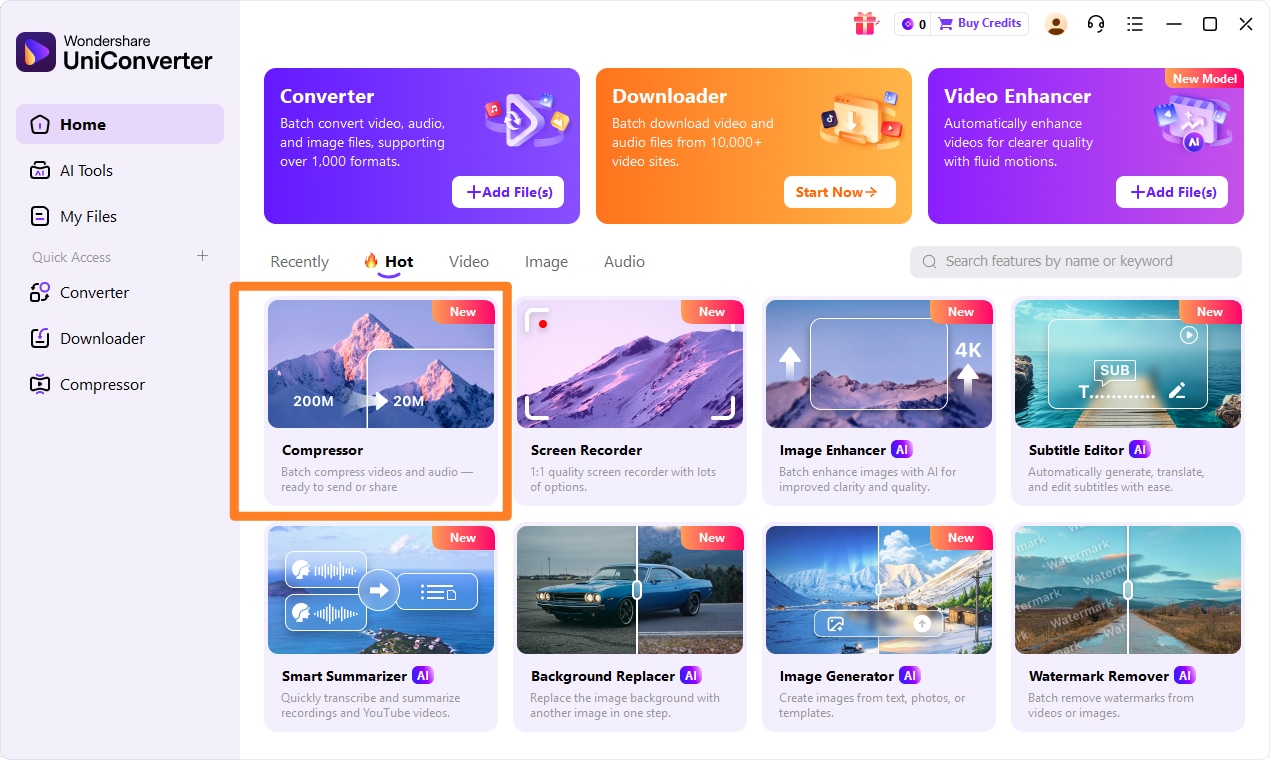
Step 1: Open UniConverter and Choose Compressor
Launch UniConverter on your computer. On the main interface, navigate to the "Toolbox" section and select the "Image Compressor" option.
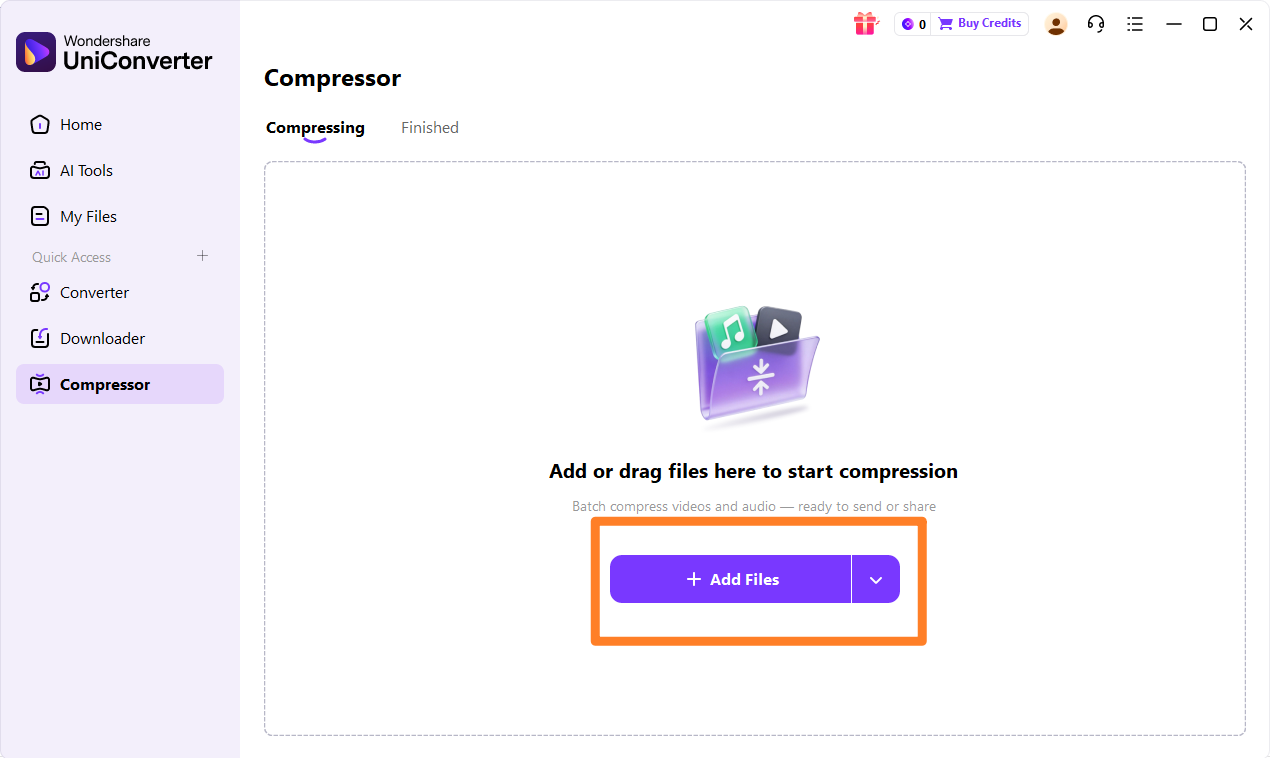
Step 2: Upload the Video, Audios or Images
Drag and drop your desired images into the UniConverter window. You can also click the "Add Files" button to browse and select multiple images from your computer.
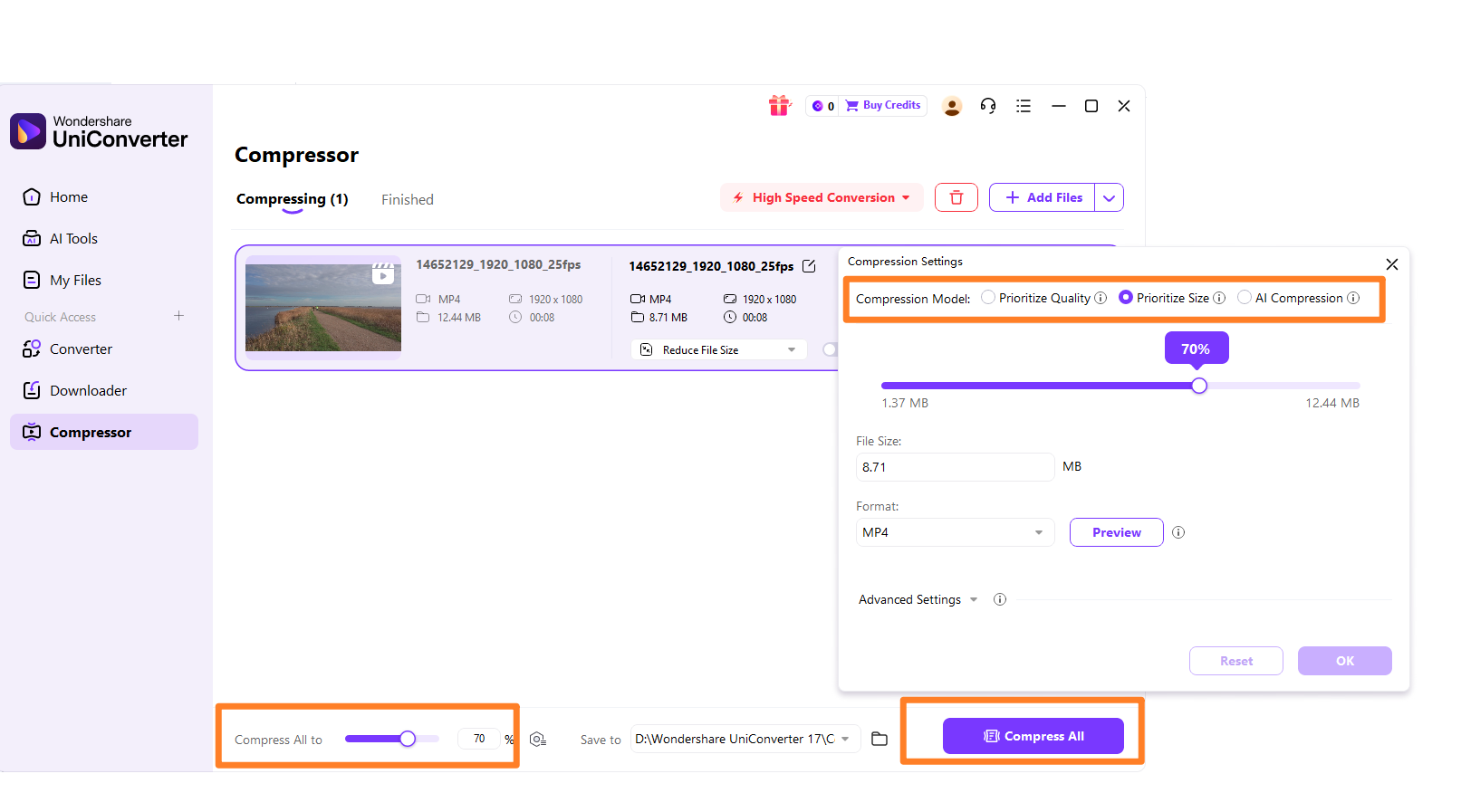
Step 3: Choose Required Parameters
Once your images are loaded, you can adjust the compression settings. UniConverter allows you to set the output quality, resolution, and format. You can also preview the compressed image to ensure quality.
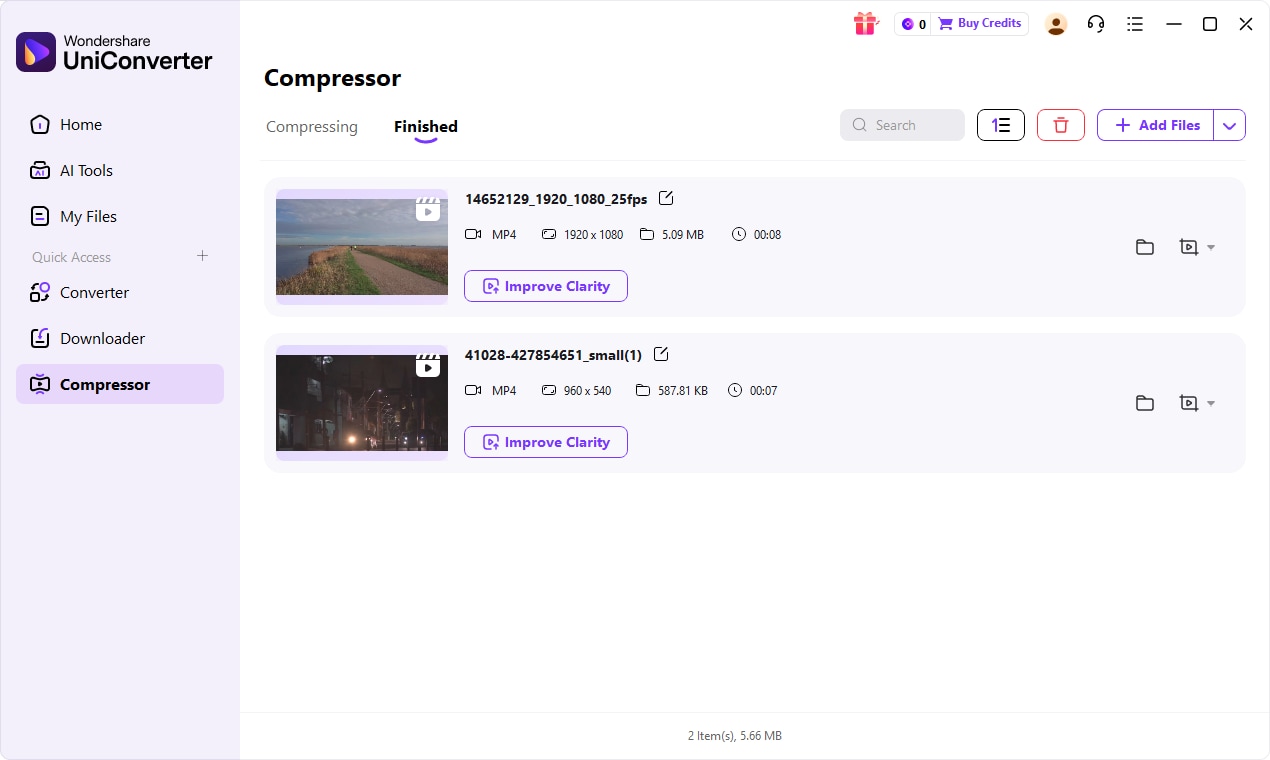
Step 4: Save the Compressed File
After configuring your settings, click the "Compress" button. UniConverter will process your images, and you can then choose the destination folder to save your optimized files.

Need a Better Compressor.io Alternative?
Part 7: Conclusion
After thoroughly exploring Compressor.io and comparing it with its competitors, my final verdict is that it remains a valuable tool, but its utility depends heavily on your specific needs. For casual users, bloggers, or anyone needing quick, free, and straightforward image compression for personal projects or social media, Compressor.io is an excellent choice. Its user-friendly interface and effective compression ratio for common formats make it incredibly convenient. However, for web developers, designers, or professionals who require batch processing, advanced customization, or offline capabilities, Compressor.io's limitations become apparent. In such scenarios, tools like TinyPNG (for paid batch processing), ImageOptim (for desktop control), Squoosh (for granular web-based control), or a comprehensive desktop solution like UniConverter are far more suitable. Ultimately, while Compressor.io Image Compressor review highlights its strengths in simplicity, always consider your project's scale, your need for control, and your privacy concerns before settling on a single solution.
Part 8: FAQs
-
1. Is Compressor.io completely free to use?
Yes, Compressor.io offers a free tier that allows you to compress images with certain limitations, typically regarding file size and the number of images processed at once.
-
2. Does Compressor.io reduce image quality significantly?
Compressor.io aims to achieve high compression with minimal *perceived* quality loss. While it's generally effective, aggressive compression can sometimes lead to noticeable degradation, especially if the original image quality is already low.
-
3. Can I compress multiple images at once with Compressor.io?
The free version of Compressor.io typically processes images one by one. For batch compression, you would generally need to look at paid versions of other online tools like TinyPNG or desktop software like UniConverter.
-
4. What image formats does Compressor.io support?
Compressor.io supports common image formats including JPEG, PNG, GIF, and SVG.
-
5. Are there any privacy concerns when using online image compressors?
While most reputable online compressors, including Compressor.io, have privacy policies, it's always wise to be mindful of data privacy when uploading sensitive images. For maximum privacy and control, especially with confidential content, I recommend using offline desktop solutions such as UniConverter, which processes files locally on your computer.
