
- CompressNow Overview: Free, web-based tool for quick JPG/PNG image compression, ideal for web optimization.
- Core Features: Offers lossy/lossless compression, batch processing, and a user-friendly drag-and-drop interface.
- Pros & Cons: Efficient for quick web tasks but lacks advanced customization and can degrade quality with aggressive compression.
- Best Use Cases: Perfect for bloggers and small businesses needing fast, free web image optimization; not for professional photography.
- Competitor Comparison: Simpler than TinyPNG, ImageOptim, or UniConverter, offering basic compression for free.
- Potential Pitfalls: Be aware of data privacy, ads, quality loss, file limits, and the need for an internet connection.
- UniConverter Alternative: For advanced features, wider format support, and consistent quality, UniConverter is a robust desktop solution.
In this article
- Part 1: What is CompressNow Image Compressor?
- Part 2: CompressNow Image Compressor: Core Features, Pros, and Cons
- Part 3: Who Should Use CompressNow Image Compressor? (And When Not To)
- Part 4: CompressNow vs. Competitors: Finding the Right Fit
- Part 5: Potential Pitfalls and How to Avoid Them
- Part 6: How to Use UniConverter for Efficient Image Compression
- Part 7: Conclusion
- Part 8: FAQs
When I first started my blog, I quickly realized the importance of optimizing images for web performance. Large image files can significantly slow down a website, leading to a poor user experience and even impacting SEO. That's when I began my search for a reliable image compression tool. This CompressNow Image Compressor review aims to provide a comprehensive look at this popular online tool, evaluating its features, comparing it to competitors, and helping you determine if it's the right solution for your image optimization needs. I'll share my personal experiences and insights to guide you through the pros and cons, ensuring you make an informed decision.
Part 1: What is CompressNow Image Compressor?
CompressNow Image Compressor is a free, web-based tool designed to reduce the file size of images without significantly compromising their visual quality. Its primary goal is to help users optimize their images for faster loading times on websites, social media, and email attachments. As someone who frequently uploads visuals, I found myself constantly battling with oversized files, and CompressNow emerged as a straightforward solution. This review will delve into its capabilities, limitations, and how it stacks up against other options available in the market.
The Rise of Online Image Compression Tools
The digital landscape has made image optimization an essential practice for various reasons:
* Faster Website Loading: Large images are a primary culprit for slow page load times, which can deter visitors and negatively impact search engine rankings.
* Improved User Experience: Quick-loading content keeps users engaged and reduces bounce rates, leading to a more pleasant browsing experience.
* Reduced Storage and Bandwidth Costs: Smaller file sizes mean less storage space required on servers and lower bandwidth consumption, which can be crucial for businesses.
* Enhanced Mobile Performance: With an increasing number of users accessing content on mobile devices, optimized images are vital for a smooth experience on varying network speeds.
Part 2: CompressNow Image Compressor: Core Features, Pros, and Cons
CompressNow Image Compressor offers a focused set of features aimed at simplifying the image compression process. From my experience, its core strength lies in its ability to quickly and efficiently reduce file sizes for common web formats.
Core Capabilities:
* Lossy Compression: Utilizes algorithms to reduce file size by selectively discarding some image data.
* Lossless Compression: For PNGs, it can apply lossless compression to reduce file size without any quality loss.
* Multiple Image Upload: Allows users to upload and process several images simultaneously.
* Drag-and-Drop Interface: Simplifies the upload process, making it intuitive for all users.
* Supports JPG and PNG: Focuses on the two most widely used image formats for web.
Pros
* Efficient Compression for Web Optimization: I've found it excellent for quickly getting images ready for my blog, significantly cutting down on loading times.
* User-Friendly Interface for Quick Tasks: The drag-and-drop functionality and simple controls mean I can compress images in seconds without any hassle.
* Batch Processing Capability for Multiple Images: This is a huge time-saver when I have a gallery of images to prepare for a new post.
Cons
* Limited Advanced Customization Options: For more granular control over compression settings, I often find myself wanting more.
* Potential Quality Degradation for Aggressive Compression: If I push the compression too far, I sometimes notice a visible drop in image quality, especially in detailed areas.
Part 3: Who Should Use CompressNow Image Compressor? (And When Not To)
Based on my usage, CompressNow Image Compressor is a fantastic tool for specific user groups and scenarios, but it's not a one-size-fits-all solution. Understanding its ideal applications and limitations is key to making the most of it.
Best Use Case: Quick Web Image Optimization for Bloggers and Small Businesses
As a blogger, I find CompressNow invaluable for preparing images for my website. If you're running a blog, a small e-commerce store, or managing social media content, and you need to quickly reduce image file sizes without getting bogged down in complex settings, CompressNow is perfect. It's fast, free, and gets the job done for everyday web optimization tasks. It's also great for sending images via email where file size limits are a concern.
Limited Use Case: Professional Photography or Print Media
However, if you're a professional photographer, a graphic designer working on high-resolution print media, or anyone who requires absolute pixel-perfect quality and extensive control over compression parameters, CompressNow will likely fall short. For these applications, where every detail matters and quality degradation is unacceptable, you'll need more sophisticated software that offers advanced settings, supports a wider range of formats, and provides lossless or near-lossless compression with precise control. I wouldn't use it for client work where image integrity is paramount.
Part 4: CompressNow vs. Competitors: Finding the Right Fit
When it comes to image compression, CompressNow is just one player in a crowded field. I've tried several tools, and each has its strengths and weaknesses. Here's how CompressNow stacks up against some notable alternatives.
CompressNow & Competitors: A Feature Comparison
| Feature/Tool | CompressNow | TinyPNG | ImageOptim | UniConverter |
| Compression Ratio | High | Very High | High | Very High |
| Batch Processing | Yes | Yes | Yes | Yes |
| Output Formats | JPG, PNG | JPG, PNG | JPG, PNG, GIF | JPG, PNG, GIF, BMP, TIFF, WebP |
| Advanced Settings | Limited | Limited | Moderate | Extensive |
| Price | Free | Freemium | Free (Mac only) | Paid (Free Trial) |
Key Differentiators: Why Choose (or Avoid) CompressNow
CompressNow is a solid choice if you prioritize simplicity and speed for basic JPG and PNG compression. It's completely free, which is a huge plus for casual users or those on a tight budget. However, for maximum compression efficiency, especially for PNGs, TinyPNG often yields slightly better results. ImageOptim, being a desktop application, offers more control and often better quality retention for Mac users. UniConverter, while a paid solution, provides a much broader range of features, including support for more formats and advanced settings, making it a more comprehensive tool for all media management, not just images. If you need more than just basic compression, UniConverter offers a more robust and versatile experience.
Part 5: Potential Pitfalls and How to Avoid Them
While online image compression tools like CompressNow are incredibly convenient, it's crucial to be aware of potential drawbacks, especially when dealing with your valuable images. I've encountered a few issues over time that are worth highlighting.
Data Privacy Concerns with Online Tools
When I upload images to an online compressor, I'm essentially sending my data to a third-party server. For personal photos or sensitive business images, this raises privacy questions. I always recommend avoiding uploading any images that contain confidential information. Always check the tool's privacy policy to understand how your data is handled and if images are stored temporarily.
Annoying Ads and Pop-ups
Many free online tools, including some image compressors, rely on advertising revenue. This can sometimes lead to a cluttered interface filled with distracting ads or even intrusive pop-ups. While CompressNow is generally clean, some competitors can be quite aggressive. I find this disrupts my workflow and can be frustrating.
Unacceptable Image Quality Loss
The primary goal of compression is to reduce file size, but aggressive compression can lead to noticeable quality degradation. This is particularly true for lossy compression methods. I've learned to always preview compressed images before using them, especially if they contain fine details or text. If the quality loss is too significant, it defeats the purpose of optimization.
File Size Limits and Upload Restrictions
Free online tools often come with limitations on the maximum file size you can upload or the number of images you can process in a single batch. This can be a bottleneck if I have many large images to compress. It's important to check these limits before committing to a tool for a big project.
Lack of Offline Functionality
Being an online tool, CompressNow requires an internet connection to function. This means I can't use it if I'm working offline or in an area with poor connectivity. For consistent access and reliability, a desktop application might be a better choice.
Part 6: How to Use UniConverter for Efficient Image Compression
While online tools like CompressNow are convenient, they can feel limited when batch processing is important, compression results are inconsistent, or image quality drops more than expected. In those situations, I usually turn to UniConverter as a more flexible alternative. It works especially well for image compression, while also supporting video compression and audio compression, which makes it a practical all-in-one media solution. I also like that GPU acceleration helps speed up processing, and the broader format support makes it easier to handle different types of files without relying on multiple tools. Overall, it’s a dependable option when I need more control, better quality, and a smoother workflow than most free online compressors can offer.
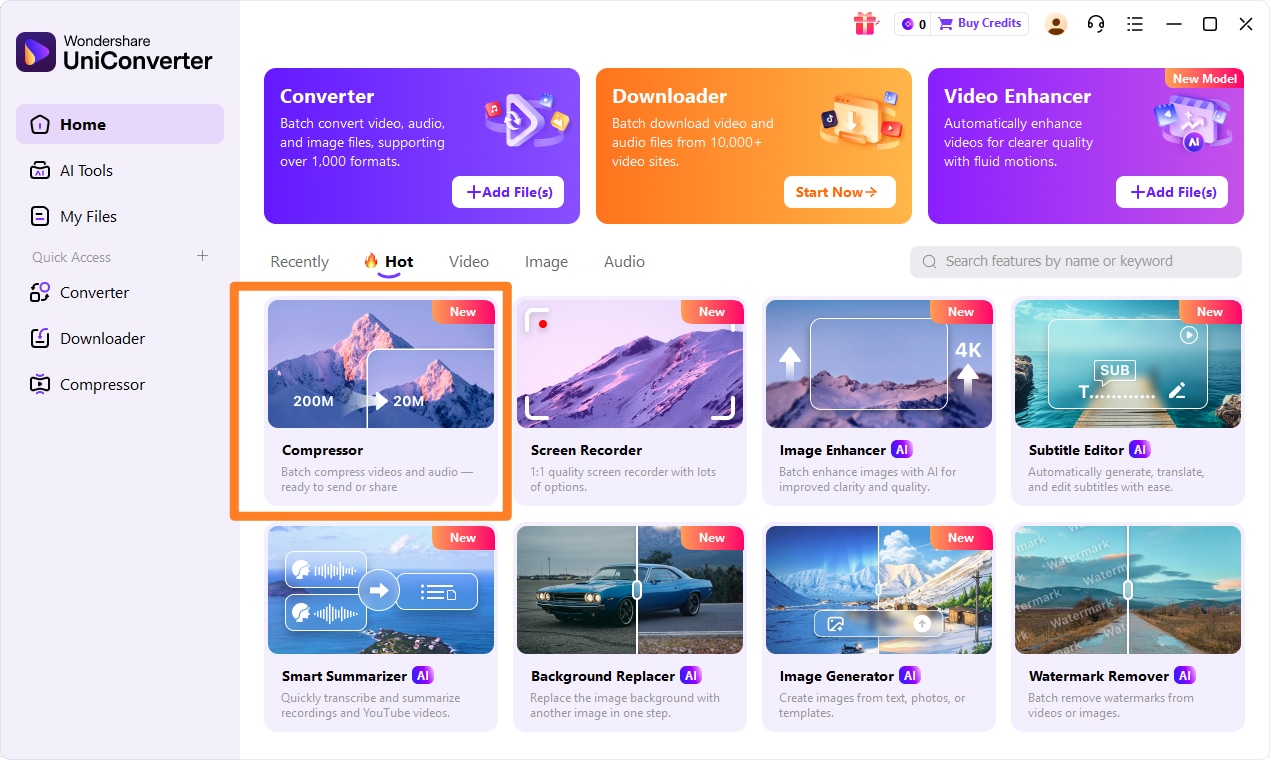
Step 1: Open UniConverter and Choose Compressor
Launch UniConverter on your computer. On the main interface, navigate to the "Toolbox" section and select the "Image Converter" option. This will open the image processing module.
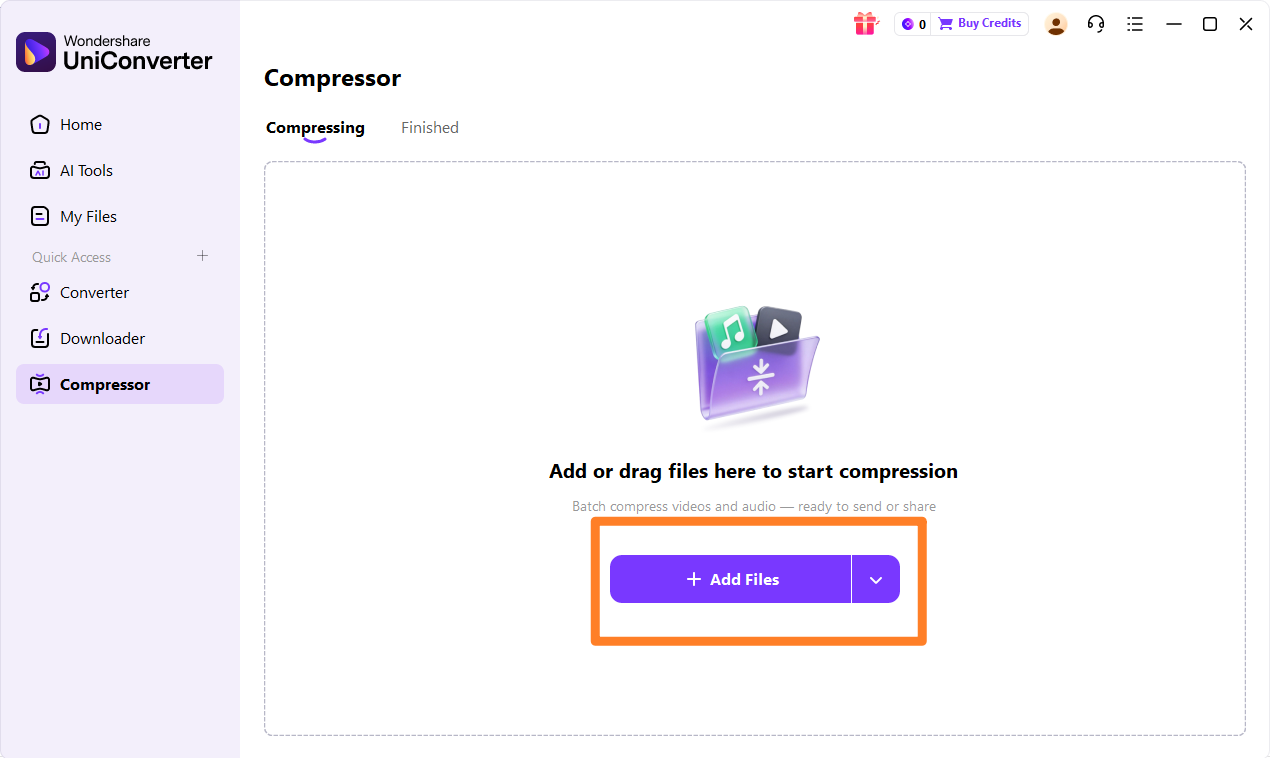
Step 2: Upload the Images
Drag and drop your desired images directly into the UniConverter interface. You can also click the "Add Files" button to browse and select images from your computer. UniConverter supports various image formats.
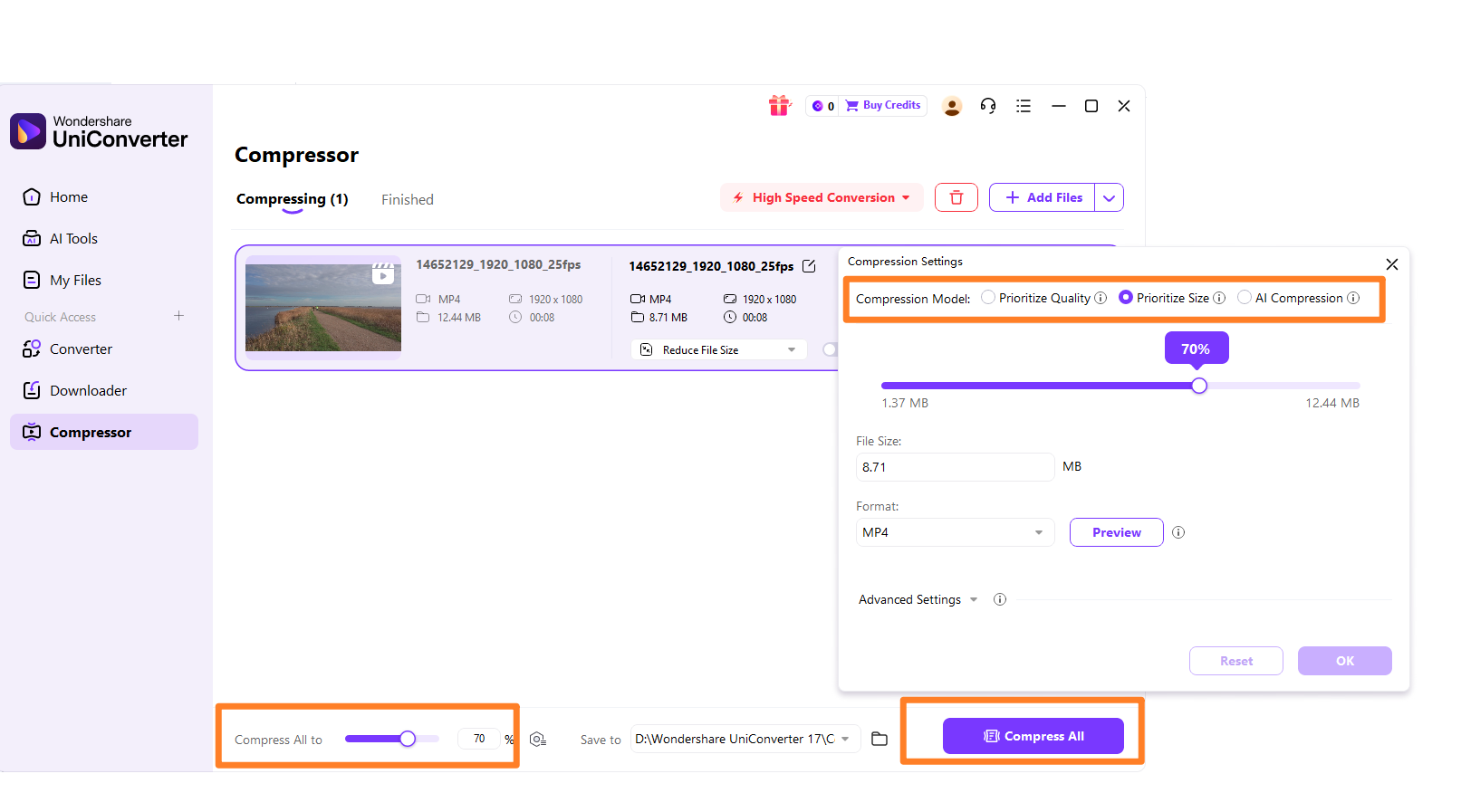
Step 3: Select Compression Settings
Once your images are loaded, you can adjust the compression settings. Choose your desired output format (e.g., JPG, PNG) and then use the quality slider to set the compression level. You can preview the estimated file size.
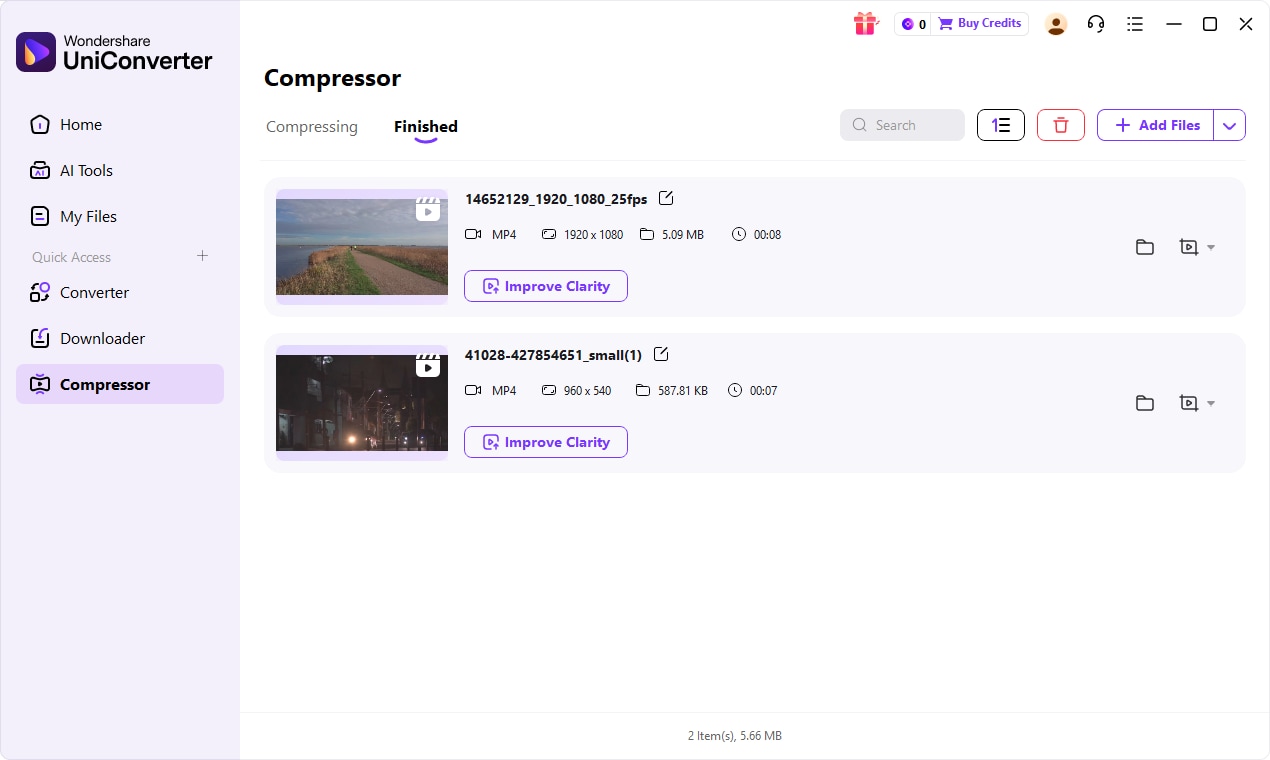
Step 4: Export Your Optimized Images
After configuring your settings, select an output folder for your compressed images. Finally, click the "Convert" or "Start All" button to begin the compression process. Your optimized images will be saved to the specified location.

Seeking a Better CompressNow Image Compressor Alternative?
Part 7: Conclusion
After thoroughly exploring CompressNow Image Compressor, it's clear that this tool serves a valuable niche in the image optimization landscape. For casual users, bloggers, and small businesses needing quick and free web image optimization, CompressNow is an excellent choice due to its user-friendly interface and efficient compression for JPG and PNG files. It excels at tasks where speed and simplicity are paramount, helping to improve website loading times and overall user experience without requiring any financial investment. However, for professionals such as photographers or graphic designers who demand precise control over quality, support for a wider range of formats, or advanced editing capabilities, CompressNow will likely be insufficient. In such cases, investing in a more comprehensive desktop solution like UniConverter, which offers extensive features, stable performance, and no quality compromise, would be a more appropriate decision. Ultimately, the best tool depends on your specific needs, balancing the convenience of free online services with the robust functionality of dedicated software.
Part 8: FAQs
-
1. Is CompressNow Image Compressor completely free to use?
Yes, CompressNow offers a free service for basic image compression without any hidden costs or subscriptions for its core features.
-
2. Does CompressNow support all image formats?
CompressNow primarily supports JPG and PNG formats, which are the most common for web use. It does not typically support less common formats like GIF, BMP, or TIFF.
-
3. How does CompressNow ensure image quality after compression?
CompressNow uses algorithms to balance file size reduction with visual quality. While it aims to minimize noticeable degradation, aggressive compression settings can lead to some loss of detail or introduction of artifacts.
-
4. Are there any file size or quantity limits with CompressNow?
Yes, like many free online tools, CompressNow often has file size and quantity limits for uploads per session. These limits can vary and are usually displayed on the interface. For unlimited processing, a desktop alternative like UniConverter might be necessary.
-
5. Can I use CompressNow offline?
No, CompressNow is an online tool and requires an active internet connection to function. If you need to compress images without an internet connection, a desktop application such as UniConverter would be a suitable alternative.
