
- CompressJPEG Value: Offers quick, free, and easy online JPEG compression, ideal for basic web optimization needs.
- Feature Comparison: Excels in simplicity and batch processing, but lacks advanced controls and offline functionality compared to alternatives.
- Ideal Users: Best for bloggers and small businesses needing fast image optimization without granular control.
- Limitations: Not suitable for professional workflows requiring precise quality, offline access, or diverse format support.
- Privacy & Ads: Online nature raises data privacy concerns; free version includes ads that may impact user experience.
- UniConverter Advantage: Provides a comprehensive, ad-free desktop solution for high-quality, batch compression of various media formats.
In this article
- Part 1: What is CompressJPEG?
- Part 2: CompressJPEG's Core Features and Performance
- Part 3: CompressJPEG's Ideal Users and Scenarios
- Part 4: CompressJPEG and Alternatives: A Comparative Analysis
- Part 5: Potential Pitfalls and Considerations When Using CompressJPEG
- Part 6: How to Use UniConverter for Efficient Video and Image Compression
- Part 7: Conclusion
- Part 8: FAQs
Image optimization is crucial for web performance and storage efficiency. In this CompressJPEG Image Compressor review, I'll dive deep into one of the most popular online tools for this task. I'll explore its features, compare it with leading alternatives like TinyPNG and JPEGmini, and highlight scenarios where it shines or falls short. My goal is to provide you with a comprehensive understanding to help you make an informed decision about your image compression needs, whether you're a casual blogger or a professional web developer.
Part 1: What is CompressJPEG?
CompressJPEG is a straightforward, web-based image compression tool designed to reduce the file size of JPEG images without significant loss of visual quality. It's built for simplicity, allowing users to quickly upload images, compress them, and download the optimized versions. My experience with CompressJPEG has always been about getting the job done fast and efficiently, especially when I need to prepare images for web use. This review aims to address the core question: Is CompressJPEG the right tool for your image compression needs, given the myriad of options available today?
The Evolving Landscape of Image Compression: User Needs and Challenges
The demand for efficient image compression has never been higher, driven by several key factors:
* Faster Website Loading Times: Large image files are a primary culprit for slow websites, directly impacting user experience and SEO rankings.
* Reduced Storage Costs: For businesses and individuals managing vast image libraries, smaller file sizes translate to significant savings on storage.
* Mobile-First Design: With an increasing number of users accessing content on mobile devices, optimized images are essential for quick loading on varying network conditions.
Part 2: CompressJPEG's Core Features and Performance
CompressJPEG offers a focused set of features aimed at making image compression as simple as possible. When I use it, I appreciate its direct approach to tackling file size reduction.
Here are its core capabilities:
* Drag-and-Drop Interface: Effortlessly upload images by dragging them directly into the browser window.
* Automatic Compression: The tool automatically applies an optimal compression algorithm upon upload.
* Batch Processing: I can upload multiple images simultaneously, and CompressJPEG processes them all at once.
* Download All Option: After compression, it provides a convenient option to download all optimized images in a single ZIP file.
* JPEG Format Focus: As its name suggests, it specializes in compressing JPEG files, ensuring good results for this common format.
Pros:
* Effortless User Interface: The intuitive drag-and-drop functionality makes for quick compression, even for first-time users.
* Batch Processing Capability: I find it incredibly efficient for handling multiple images simultaneously, saving me a lot of time.
* Good Balance of Quality and Compression: For most common web uses, it delivers noticeable file size reduction without significant visual degradation.
Cons:
* Limited Advanced Features: It lacks options for specific quality control, resizing, or format conversion, which I sometimes need.
* Reliance on Internet Connection: As an online tool, it's unusable offline, impacting my productivity when I'm in certain environments without internet access.
Part 3: CompressJPEG's Ideal Users and Scenarios
CompressJPEG is designed for users who prioritize speed and simplicity over granular control. It's a tool I often reach for when I need a quick fix for image sizes.
Best Use Case: Rapid Web Optimization for Bloggers and Small Businesses
I've found CompressJPEG to be incredibly useful for quickly optimizing images for my blog posts or for small business websites. When I'm publishing content regularly, I don't have time to delve into complex settings. I just need my images to be web-ready, fast. For instance, if I've taken photos with my phone or a digital camera and they're too large for a web page, I can simply drag them into CompressJPEG, let it do its magic, and download the optimized versions in minutes. This scenario perfectly suits its "set it and forget it" approach.
Limited Scenario: Professional Photography Workflows Requiring Granular Control
However, CompressJPEG falls short when I'm working on professional photography projects that demand precise control over image quality and specific output parameters. For example, if I'm preparing images for high-resolution printing, or if I need to maintain specific color profiles and metadata, CompressJPEG's automatic compression might not be sufficient. It doesn't offer options to adjust compression levels manually, preview different quality settings side-by-side, or handle other formats like TIFF or RAW, which are crucial for professional workflows. In these cases, I need a more robust desktop application.
Part 4: CompressJPEG and Alternatives: A Comparative Analysis
When it comes to image compression, CompressJPEG is just one player in a crowded field. I've used several tools, and each has its strengths. Here's how CompressJPEG stacks up against some popular alternatives.
| Feature/Tool | CompressJPEG | TinyPNG | JPEGmini | ImageOptim |
| Ease of Use | Very High | High | High | Medium |
| Batch Processing | Yes | Yes | Yes | Yes |
| Offline Capability | No | No | Yes (Pro) | Yes |
| Advanced Settings | No | Limited (e.g., resize) | Limited (e.g., quality slider) | Extensive (e.g., lossy/lossless, tools) |
| Price Model | Free | Freemium | Freemium | Free (Mac) |
| Processing Speed | Fast | Fast | Very Fast | Medium |
| Output Quality | Good | Excellent | Excellent | Excellent |
Key Differentiators: Simplicity vs. Advanced Control
From my experience, CompressJPEG excels in pure simplicity. If I just need to reduce a JPEG's size quickly without much thought, it's my go-to. TinyPNG, while similar in ease of use, often provides slightly better compression ratios for PNGs and JPEGs with minimal perceived quality loss, making it a strong contender when quality is paramount. JPEGmini, especially its Pro version, offers incredibly fast processing and maintains excellent quality, often feeling like magic. Its offline capability is a huge plus for me. ImageOptim, being a desktop app for Mac, provides the most granular control with various optimization tools, but it has a steeper learning curve. For quick, online JPEG compression, CompressJPEG is hard to beat for its sheer ease, but for more demanding tasks or offline work, the others offer compelling advantages.
Part 5: Potential Pitfalls and Considerations When Using CompressJPEG
While CompressJPEG offers a convenient solution for quick image compression, I've learned that relying solely on online tools, especially free ones, comes with its own set of considerations and potential risks. It's important to be aware of these before uploading sensitive or critical images.
Data Privacy Concerns with Online Uploads
When I upload images to any online service, including CompressJPEG, I'm essentially entrusting my data to a third-party server. This raises questions about data privacy. How long are my images stored? Who has access to them? While CompressJPEG's privacy policy might state that images are deleted after a certain period, there's always an inherent risk with transmitting potentially sensitive visual information over the internet. I'm always cautious about uploading personal photos or proprietary company images.
Impact of Compression on Image Quality for Specific Applications
CompressJPEG does a good job balancing quality and file size for general web use. However, for specific applications like high-resolution printing, professional graphic design, or medical imaging, the automatic compression might introduce artifacts or reduce detail to an unacceptable level. Since I can't control the compression ratio or preview different quality settings, I risk over-compressing images for critical projects, leading to irreversible quality loss.
Presence of Advertisements and User Experience
As a free online tool, CompressJPEG often relies on advertisements for revenue. While not always intrusive, I sometimes encounter pop-ups or banner ads that can detract from the user experience and slow down my workflow. These ads can also be a distraction, and in some cases, might even lead to accidental clicks on malicious content, though this is less common with reputable sites.
Dependence on Server Availability and Speed
Being an online service, CompressJPEG's performance is entirely dependent on its server availability and my internet connection. If their servers are down, overloaded, or if my internet is slow, I won't be able to compress images. This can be a significant bottleneck if I'm on a tight deadline or working in an area with unreliable connectivity. Desktop alternatives offer a more consistent experience in such scenarios.
Lack of Support for Less Common Image Formats
CompressJPEG, as its name implies, primarily focuses on JPEG files. While JPEG is widely used, I sometimes work with other formats like PNG, GIF, WebP, or even TIFF. CompressJPEG doesn't support these, forcing me to use multiple tools or convert formats beforehand, which adds extra steps to my workflow. This lack of versatility can be a limitation for diverse image compression needs.
Part 6: How to Use UniConverter for Efficient Video and Image Compression
Once online tools start showing their limits—especially with batch processing across different formats, inconsistent output, or concerns about quality loss—UniConverter becomes a much more practical alternative. It works well not only for image compression, but also for video compression and audio compression, which makes it easier to manage different media types in one place. I also like that it supports a wide range of formats, runs without the usual distractions of ad-heavy online services, and uses GPU acceleration to improve speed and efficiency. For video files in particular, it can help compress videos without quality loss as much as possible, making it a solid all-in-one option for more reliable media compression.
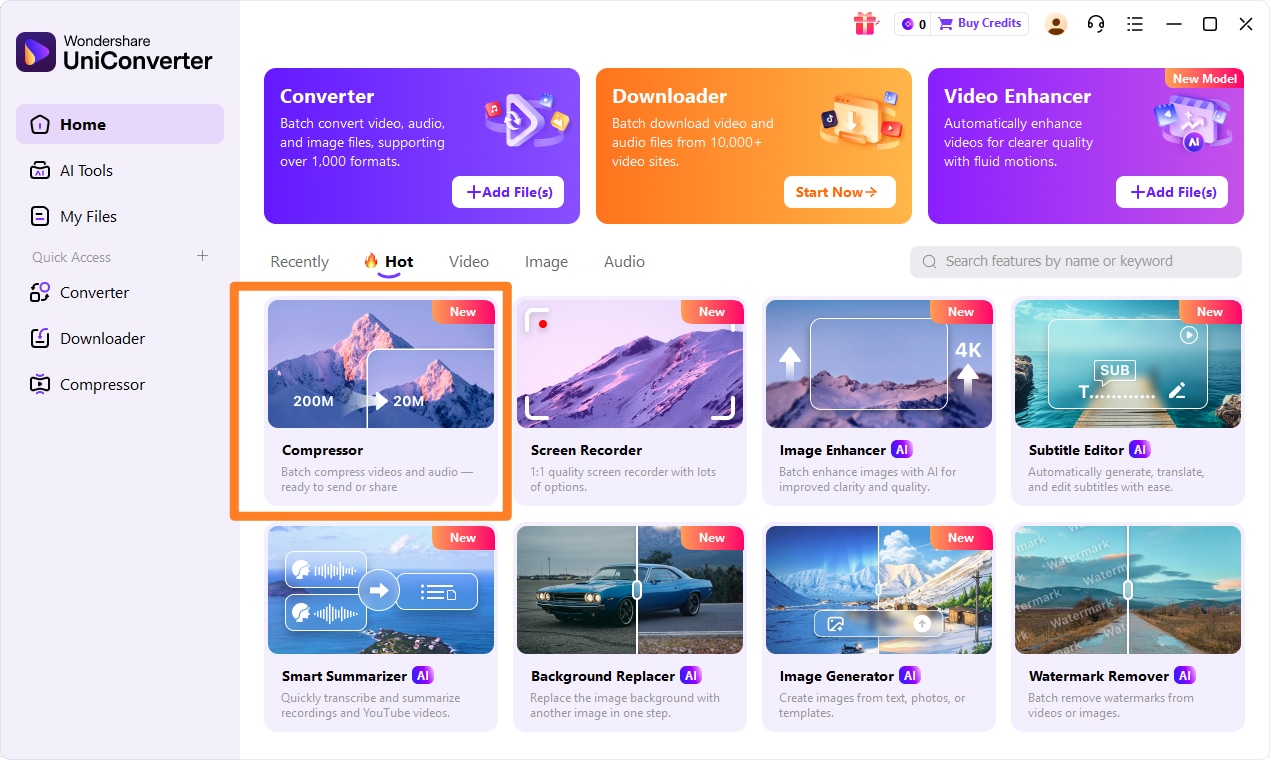
Step 1: Open UniConverter and Choose Compressor
Launch UniConverter on your computer. On the main interface, navigate to the "Compressor" tab.
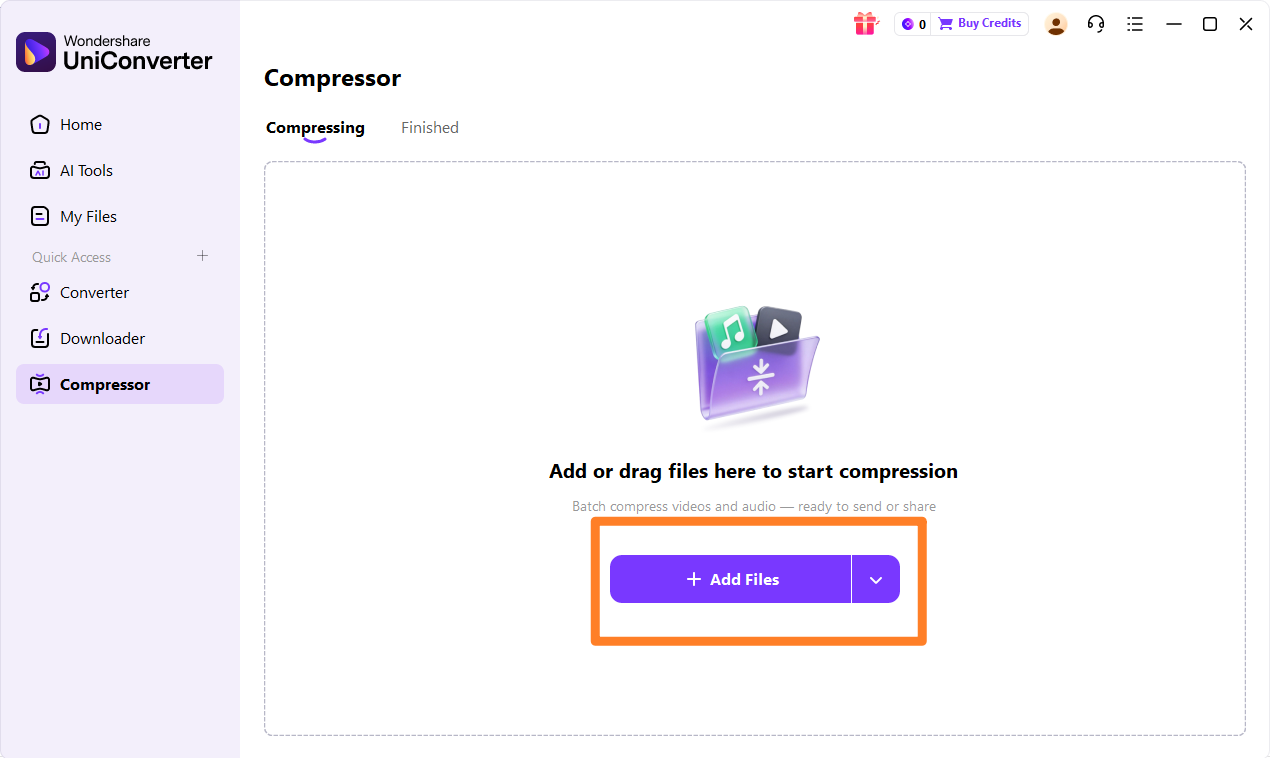
Step 2: Upload the Video, Audios or Images
Drag and drop your desired video, audio, or image files into the compressor window. UniConverter supports various formats.
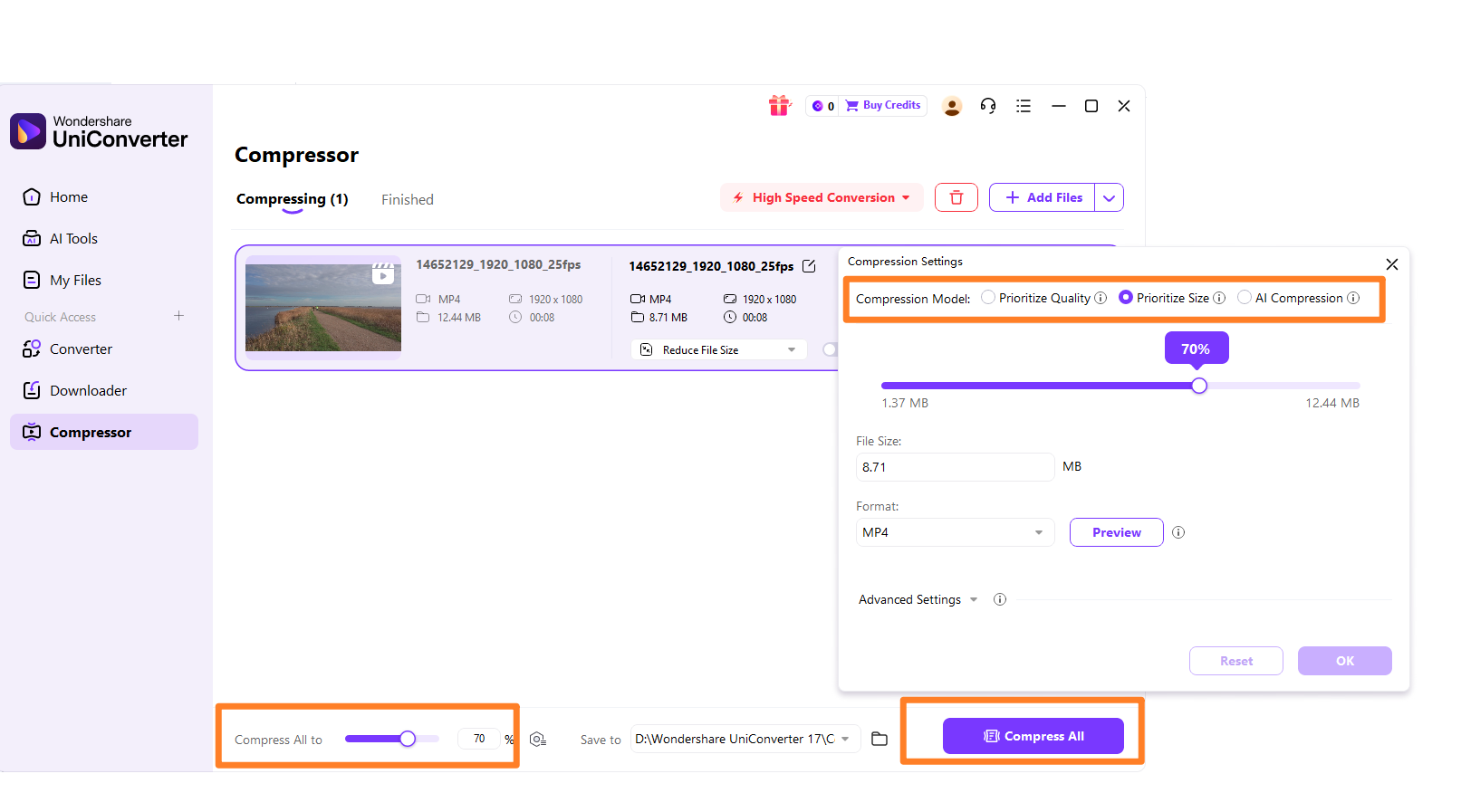
Step 3: Choose Required Parameters
Adjust the compression settings according to your needs. You can specify the output size, quality, and format.
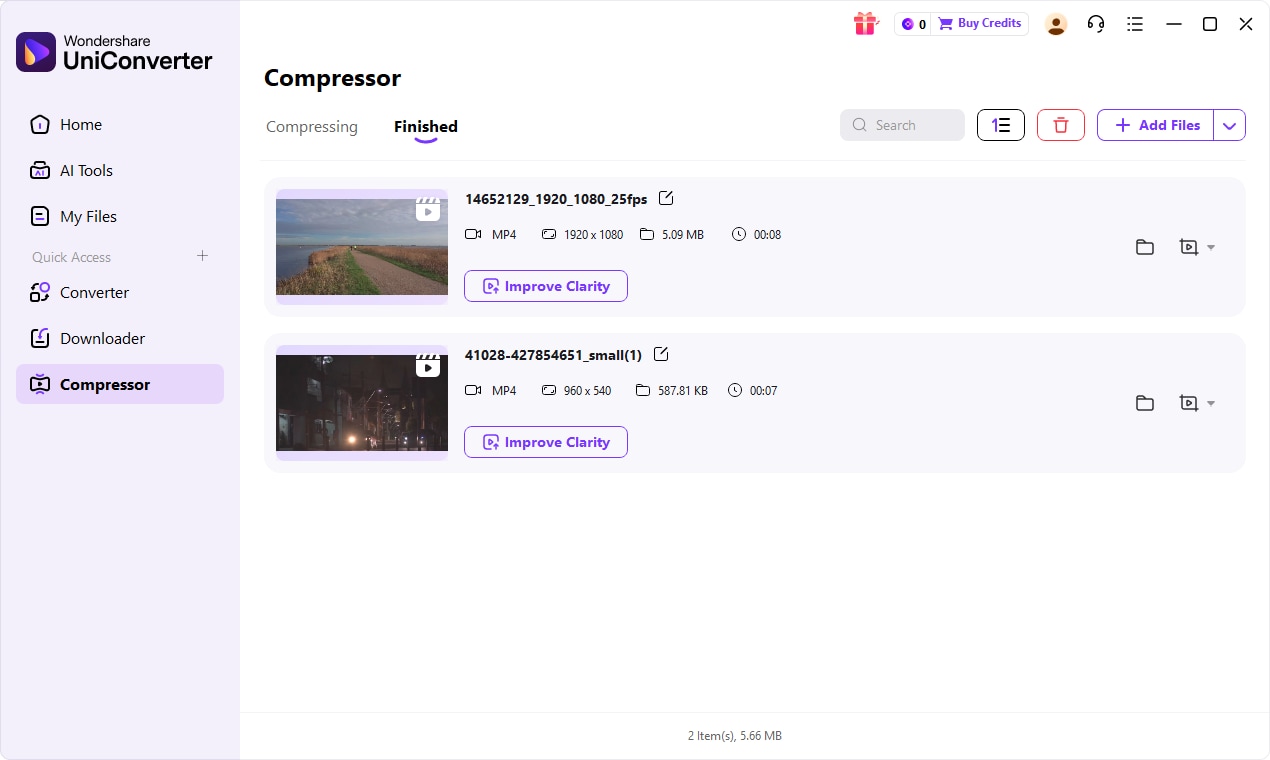
Step 4: Save the Compressed File
Click the "Compress" button to start the process. Once completed, select your desired output folder and save the optimized files.

Need a Better CompressJPEG Alternative?
Part 7: Conclusion
In conclusion, my CompressJPEG Image Compressor review reveals it as an excellent tool for quick, no-frills JPEG compression, particularly beneficial for bloggers and small businesses needing rapid web optimization. Its intuitive interface and batch processing are significant advantages for casual users. However, its limitations in advanced features, offline capability, and potential privacy concerns make it less suitable for professional workflows requiring granular control or handling sensitive data. For those needing more comprehensive image management, especially professionals, desktop solutions like JPEGmini Pro or ImageOptim offer greater control and reliability. UniConverter emerges as a robust alternative for diverse image, video, and audio compression needs, providing a balanced solution for both quality and efficiency. Ultimately, the best tool depends on your specific requirements, balancing convenience with control and security.
Part 8: FAQs
-
1. Is CompressJPEG completely free to use?
Yes, CompressJPEG is generally free for basic image compression, allowing you to compress images without any cost.
-
2. Does CompressJPEG reduce image quality significantly?
For most web uses, the quality reduction is minimal and often unnoticeable. However, for high-resolution printing or professional applications, it might be a concern as it lacks fine-tuned control over compression levels.
-
3. Can I compress multiple images at once with CompressJPEG?
Yes, CompressJPEG supports batch processing, allowing you to upload and compress several images simultaneously, which is a great time-saver.
-
4. Are there any file size or quantity limits on CompressJPEG?
While there aren't strict published limits, very large files or an excessive number of images might experience slower processing or occasional errors. For unlimited batch processing and larger files without hassle, consider a desktop tool like UniConverter.
-
5. Is CompressJPEG safe for my private images?
As with any online tool, you should exercise caution with highly sensitive or private images due to data transmission and storage on third-party servers. If data privacy is a major concern, a secure offline solution like UniConverter might be a better choice for your private images.
