
- CloudConvert Value: Ideal for quick, casual video compression and social media sharing due to its cloud-based accessibility.
- Free Tier Limitations: CloudConvert's free version has significant restrictions on file size and usage, potentially requiring paid upgrades.
- Quality vs. Convenience: Online tools like CloudConvert prioritize convenience but may compromise video quality with aggressive compression.
- Desktop Advantage: UniConverter offers superior control, offline capability, faster processing, and better quality retention for demanding tasks.
- Data Security: Be mindful of data privacy with online tools; desktop solutions keep sensitive files on your local machine.
- Decision Factor: Choose CloudConvert for simple, occasional use; opt for UniConverter for professional, high-quality, and batch compression needs.
In this article
- Part 1: What is CloudConvert Video Compressor?
- Part 2: CloudConvert Video Compressor: Core Features, Pros, and Cons
- Part 3: CloudConvert Video Compressor: Ideal Users and Use Cases
- Part 4: CloudConvert Video Compressor & Competitors: A Comparative Analysis
- Part 5: Risks and Pitfalls to Consider
- Part 6: How to Use UniConverter to Compress Efficient Audio and Video
- Part 7: Conclusion
- Part 8: FAQs
The digital age has made video content king, but with great content comes great file sizes. As a seasoned product review expert, I've seen countless tools emerge to tackle this challenge. Today, I'm diving deep into CloudConvert Video Compressor review, a popular online solution, to see how it stacks up against the competition. My goal is to provide you with a comprehensive, scenario-based comparison that helps you make an informed decision about your video compression needs.
Part 1: What is CloudConvert Video Compressor?
CloudConvert Video Compressor is an online service designed to reduce the file size of your video content. It operates entirely in the cloud, meaning you don't need to download or install any software. This accessibility is a major draw for many, allowing you to compress videos from virtually any device with an internet connection. My review aims to address the core question: Is CloudConvert the most efficient and reliable solution for your video compression needs, especially when compared to robust desktop alternatives?
The Evolving Landscape of Online Video Compression
The demand for efficient video compression has never been higher, driven by:
* The explosion of video content: From social media to professional presentations, video is everywhere.
* Storage and bandwidth limitations: Large video files consume significant storage space and bandwidth, making sharing and uploading cumbersome.
* The need for quick sharing: Users often need to compress videos rapidly for immediate sharing on platforms with file size restrictions.
* Accessibility from anywhere: The desire to compress videos on the go, without being tied to a specific device.
Part 2: CloudConvert Video Compressor: Core Features, Pros, and Cons
CloudConvert Video Compressor offers a straightforward approach to reducing video file sizes. Its core capability lies in its ability to convert and compress a vast array of video formats into smaller, more manageable files. You simply upload your video, choose your desired output settings, and let the cloud do the work. The platform handles various codecs and resolutions, aiming to strike a balance between file size reduction and maintaining acceptable video quality.
Pros:
* Wide Range of Supported Formats for Versatile Conversion: I've found CloudConvert to be incredibly flexible, supporting almost any video format I throw at it, from MP4 to MOV, AVI, and even less common ones.
* Cloud-Based Convenience for Accessibility Anywhere: The ability to access it from any browser on any device is a huge plus for me when I'm on the go and need a quick compression.
* User-Friendly Interface for Quick and Easy Operations: The interface is clean and intuitive, making it easy for even a novice to navigate and compress videos without a steep learning curve.
Cons:
* Limitations on Free Tier Usage and File Size: The free tier has significant limitations on file size and the number of conversions, which can be restrictive for larger projects or frequent use.
* Potential for Slower Processing Speeds with Large Files: When I've uploaded larger video files, the processing time can be noticeably slower compared to dedicated desktop applications, which can be frustrating.
Part 3: CloudConvert Video Compressor: Ideal Users and Use Cases
CloudConvert Video Compressor is particularly well-suited for individuals who prioritize convenience and accessibility over raw power or advanced features. It's a fantastic tool for casual users or those with occasional compression needs who don't want to invest in or learn complex software.
Best Use Case: Quick, On-the-Go Compression for Social Media Sharing
For me, CloudConvert shines when I need to quickly compress a video from my phone or a public computer to upload to social media platforms like Instagram, Facebook, or WhatsApp. The file size limits on these platforms often necessitate compression, and CloudConvert's cloud-based nature means I can do it without installing any apps. It's perfect for those moments when I capture a spontaneous video and want to share it immediately without worrying about large file sizes.
Limited Use Case: Professional Video Editing Workflows Requiring High Fidelity
However, if I'm working on a professional video editing project where maintaining the absolute highest video quality and precise control over compression settings is paramount, CloudConvert falls short. The lack of granular control over codecs, bitrates, and other advanced settings means I can't guarantee the exact output quality I need for client work or high-stakes presentations. For these scenarios, I'd always opt for a dedicated desktop application that offers more robust features and ensures minimal quality degradation.
Part 4: CloudConvert Video Compressor & Competitors: A Comparative Analysis
When it comes to video compression, CloudConvert is just one player in a diverse market. Let's see how it stacks up against some notable alternatives.
| Feature/Competitor | CloudConvert | HandBrake | UniConverter | FFmpeg |
| Ease of Use | High | Medium | High | Low |
| Supported Formats | Very High | High | Very High | Very High |
| Offline Capability | No | Yes | Yes | Yes |
| Batch Processing | Limited | Yes | Yes | Yes |
| Advanced Features | Basic | Advanced | Advanced | Extremely Advanced |
| Pricing Model | Freemium | Free | Freemium | Free (Command-line) |
In my experience, CloudConvert excels in ease of use and its extensive format support, making it ideal for quick, straightforward conversions. HandBrake, on the other hand, offers a powerful free desktop solution with advanced controls, perfect for users who need more fine-tuning but are comfortable with a slightly steeper learning curve. UniConverter strikes a great balance, combining ease of use with a comprehensive feature set, including offline capability and batch processing, making it a strong contender for those needing more than basic online compression. FFmpeg is the ultimate power tool for developers and advanced users, offering unparalleled control via command line, but it's far from user-friendly for the average person.
Part 5: Risks and Pitfalls to Consider
While online tools like CloudConvert offer undeniable convenience, it's crucial to be aware of the potential risks and pitfalls, especially when dealing with your valuable video content.
Data Privacy and Security Concerns with Online Tools
When I upload my videos to an online service, I'm essentially entrusting my data to a third party. This raises questions about how my data is stored, who has access to it, and for how long. While CloudConvert states it deletes files after a certain period, the initial upload and processing still involve my content residing on their servers. For sensitive or private videos, this is a significant concern for me.
Impact on Video Quality and Compression Artifacts
Compression inherently involves discarding some data to reduce file size. While CloudConvert generally does a decent job, I've noticed that aggressive compression settings, especially on the free tier, can sometimes introduce noticeable compression artifacts, such as blockiness or loss of detail. This can be particularly frustrating if I'm aiming for a clean, professional look.
Hidden Costs and Subscription Models
The "free" aspect of many online compressors, including CloudConvert, often comes with limitations. Once I hit the file size or usage limits, I'm prompted to upgrade to a paid subscription. These costs can add up, and if my needs are frequent, a one-time purchase of a desktop application might be more cost-effective in the long run.
Reliance on Internet Connectivity
As an online tool, CloudConvert is entirely dependent on a stable internet connection. If my internet is slow or unreliable, the upload and download times can be excruciatingly long, effectively rendering the tool unusable for larger files. This lack of offline capability is a major drawback for me when I'm working in areas with poor connectivity.
Advertisements and User Experience
While CloudConvert itself is relatively ad-free on its main interface, some free online tools are riddled with intrusive advertisements and pop-ups, which can significantly degrade the user experience and even pose security risks if they lead to malicious sites. While CloudConvert is generally good in this regard, it's a common pitfall to be aware of with other free online services.
Part 6: How to Use UniConverter to Compress Efficient Audio and Video
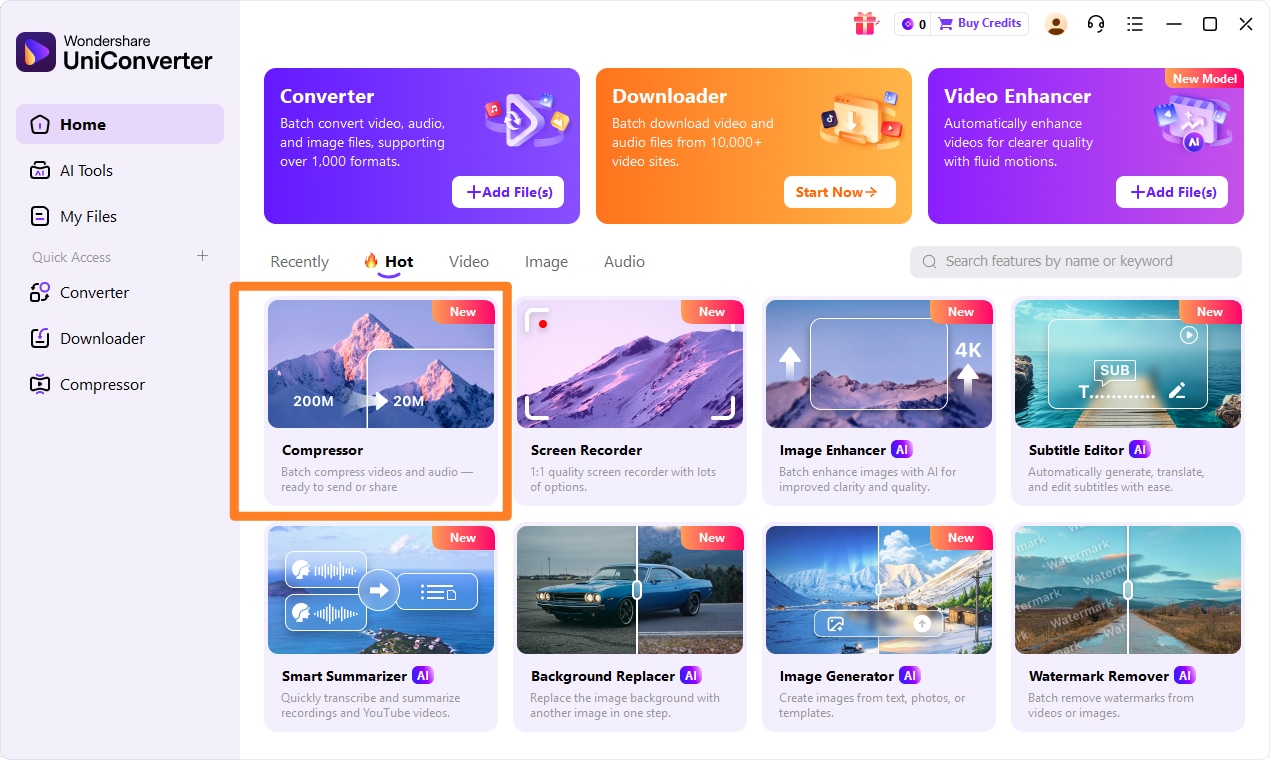
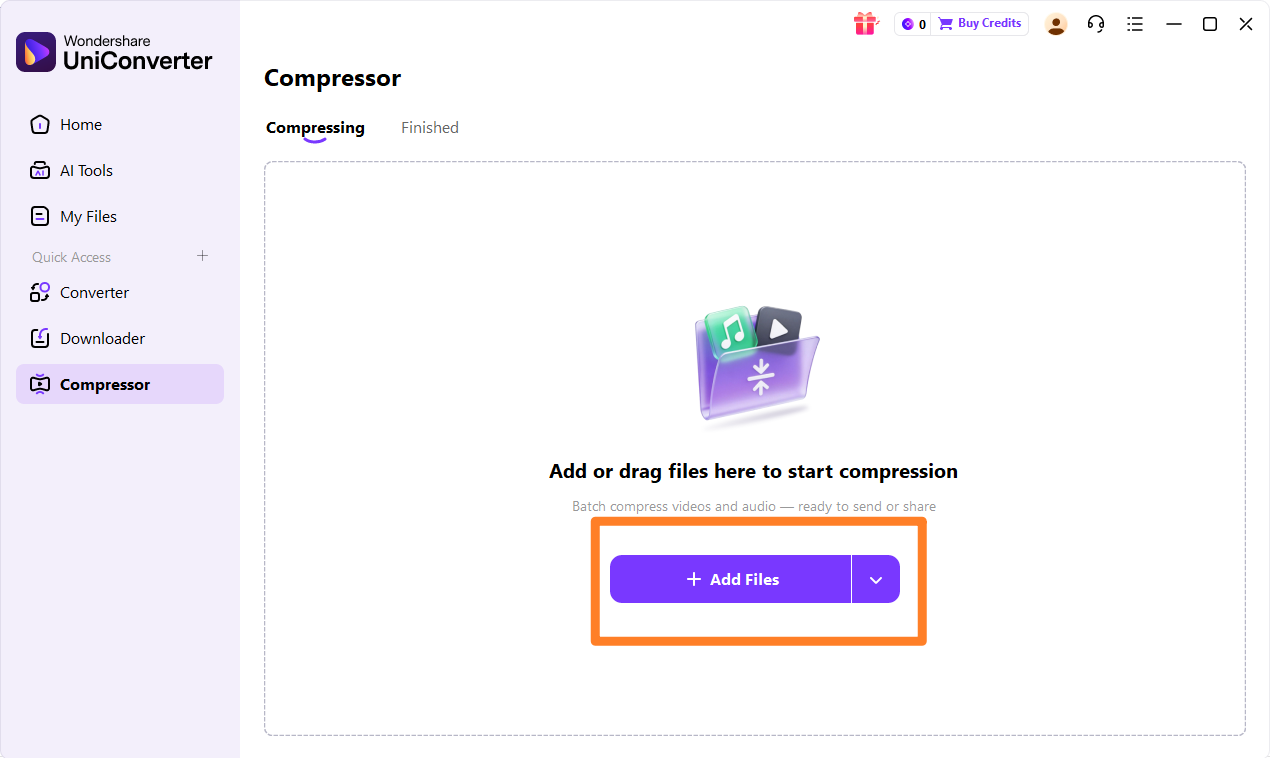
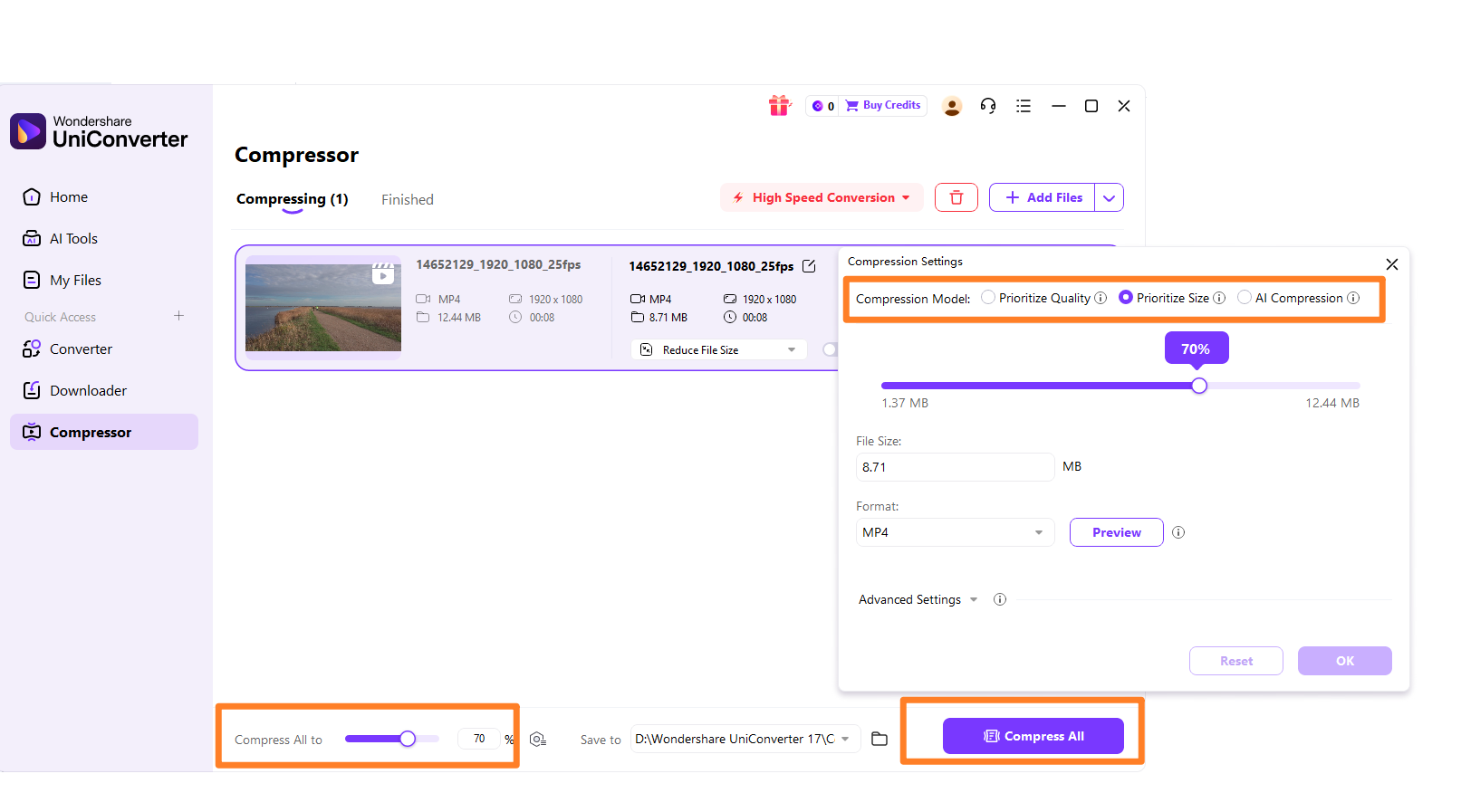
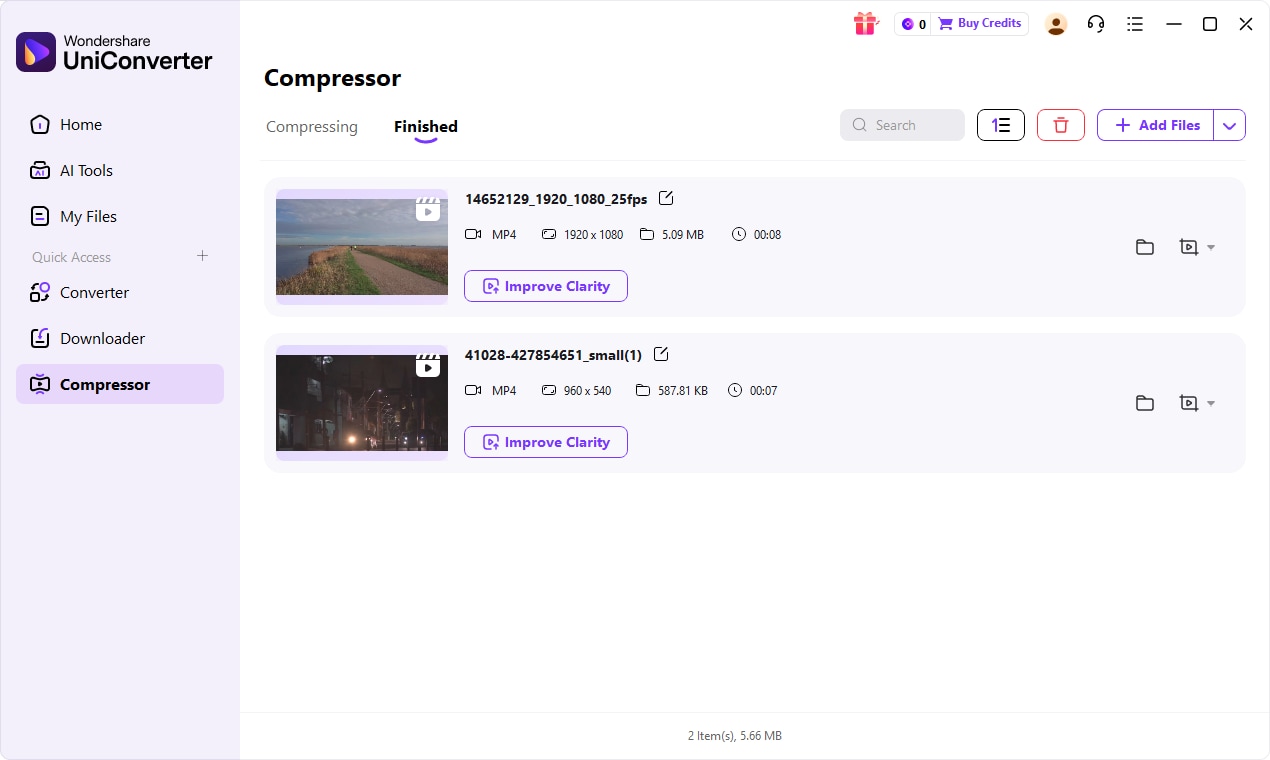
Sometimes, online tools just can’t handle everything well—especially when I need to compress multiple videos, maintain stable results, or reduce file size without causing too much quality loss. In those situations, I usually rely on UniConverter as a more dependable desktop solution. It works particularly well as a dedicated video compressor, offering a smoother workflow without the common drawbacks of web-based services like ads or limited format support. I also like that it can help compress videos without quality loss as much as possible, while GPU acceleration helps speed up processing. Since it also supports audio compression and image compression, it’s a practical all-in-one solution for managing different types of media files efficiently.
Step 1: Open UniConverter and Choose Compressor
Step 2: Upload the Video, Audios or Images
Step 3: Choose Required Parameters
Step 4: Save the Compressed File

CloudConvert Video Compressor Alternative?
Part 7: Conclusion
After a thorough CloudConvert Video Compressor review and comparison, it's clear that this online tool serves a specific niche effectively. For casual users who need quick, occasional video compression for social media sharing and prioritize ease of use and accessibility, CloudConvert is a convenient option. Its broad format support and cloud-based nature make it a go-to for on-the-go tasks. However, for professionals or users with more demanding needs, such as batch processing, advanced quality control, offline capability, or handling sensitive data, its limitations in terms of free tier usage, potential processing speeds, and lack of granular control become apparent. In these scenarios, desktop alternatives like UniConverter or HandBrake offer a more robust and reliable solution, providing greater control over the compression process and ensuring higher fidelity results. Ultimately, the best tool depends on your specific use case, balancing convenience with performance and feature requirements.
Part 8: FAQs
-
1. Is CloudConvert Video Compressor truly free to use?
CloudConvert offers a free tier with limitations on file size and the number of conversions per day. For more extensive use, you'll need to purchase a paid package or subscription.
-
2. How does CloudConvert handle my video data?
CloudConvert states that uploaded files are stored temporarily on their servers for processing and are automatically deleted after a certain period. They emphasize data security, but for highly sensitive content, a desktop solution might offer more peace of mind.
-
3. Can CloudConvert compress 4K videos without significant quality loss?
While CloudConvert can compress 4K videos, achieving significant file size reduction without noticeable quality loss can be challenging with any compressor. Online tools often offer less granular control over compression settings, which might lead to more visible artifacts compared to advanced desktop software like UniConverter.
-
4. What are the main advantages of using a desktop compressor over an online one?
Desktop compressors like UniConverter offer offline capability, faster processing speeds (especially with GPU acceleration), more advanced control over compression settings (bitrate, codec, resolution), batch processing, and often better privacy as your files don't leave your computer.
-
5. Is UniConverter difficult to learn for beginners?
No, UniConverter is designed with a user-friendly interface that makes it easy for beginners to navigate. Its intuitive layout and clear options allow you to compress videos efficiently without a steep learning curve, while still offering advanced features for experienced users.
