
- CloudConvert Overview: Online audio compressor for quick, easy file size reduction, part of a versatile conversion platform.
- Core Features: Supports extensive formats, adjustable compression, cloud-based processing, and cloud storage integration.
- Pros: Wide format support, user-friendly interface, no software installation needed for convenience.
- Cons: Limited advanced customization, potential for slower processing with large files or high server load.
- Ideal Use: Perfect for quick, on-the-go audio compression for social media sharing and casual use.
- Limited Use: Not suitable for professional audio production requiring precise control and batch processing.
- Vs. Competitors: Simplicity is CloudConvert's strength; UniConverter offers advanced features, batch processing, and offline capability.
- Risks: Data privacy concerns, potential quality degradation with aggressive compression, internet dependency.
- UniConverter Alternative: Desktop solution for advanced compression, batch processing, and precise control.
- Final Verdict: CloudConvert for casual users; UniConverter for professionals needing robust, high-quality compression.
In this article
- Part 1: What is CloudConvert Audio Compressor?
- Part 2: CloudConvert Audio Compressor: Core Features, Pros, and Cons
- Part 3: CloudConvert Audio Compressor: Ideal Users and Use Cases
- Part 4: CloudConvert Audio Compressor vs. Competitors
- Part 5: Risks and Pitfalls to Consider
- Part 6: How to Use UniConverter for Advanced Audio Compression
- Part 7: Final Verdict and Recommendations
- Part 8: FAQs
CloudConvert Audio Compressor: A Comprehensive Review and Comparison
In today's digital landscape, where content creation and sharing are paramount, the need for efficient audio file management has never been greater. From podcasts and music demos to voice notes and social media clips, audio files often come with sizes that can hinder sharing, storage, and even playback. This is where audio compressors step in, offering a crucial solution to reduce file sizes without significant loss of quality. Among the myriad of online tools available, CloudConvert has emerged as a prominent player, known for its versatility in file conversions. This CloudConvert Audio Compressor review will delve into its capabilities, compare it with key competitors, and help you determine if it's the right tool for your audio compression needs. I'll explore its features, ideal use cases, potential pitfalls, and offer alternative solutions for more demanding requirements, ensuring you make an informed decision.
Part 1: What is CloudConvert Audio Compressor?
CloudConvert Audio Compressor is an online, cloud-based service that allows you to reduce the file size of your audio files. It's part of the broader CloudConvert platform, which is primarily known for its extensive file conversion capabilities across various media types. The audio compressor leverages this robust infrastructure to offer a straightforward solution for shrinking audio files, making them easier to store, share, and upload. My aim with this review is to cut through the noise and provide you with a clear understanding of its strengths and weaknesses, helping you decide if it aligns with your specific needs.
The Rise of Online Audio Compression Tools
The demand for online audio compression tools has surged due to several key factors:
* Increasing Digital Content Creation: More people are creating and sharing audio content, from podcasts to social media videos, requiring efficient file management.
* Limited Storage and Bandwidth: Large audio files consume significant storage space and can be slow to upload or download, especially on mobile devices or slower internet connections.
* Ease of Access and Convenience: Online tools eliminate the need for software installation, offering a quick and accessible solution from any device with an internet connection.
* Social Media Platform Requirements: Many social media platforms have file size limits for uploads, making compression essential for sharing audio-rich content.
Part 2: CloudConvert Audio Compressor: Core Features, Pros, and Cons
CloudConvert Audio Compressor is designed for simplicity and efficiency, focusing on delivering quick results for audio file size reduction. Its core capabilities revolve around its ability to handle a wide array of audio formats and provide a user-friendly interface for compression.
Here are its core features:
* Extensive Format Support: It handles a vast range of input and output audio formats.
* Adjustable Compression Levels: You can often choose between different quality settings to balance file size and audio fidelity.
* Cloud-Based Processing: All compression happens on their servers, freeing up your local resources.
* Direct File Upload and URL Support: You can upload files directly from your device or provide a URL.
* Integration with Cloud Storage: Supports direct uploads from and saves to cloud services like Google Drive and Dropbox.
Pros:
* Wide range of supported audio formats for input and output: I've found it incredibly versatile for almost any audio file I throw at it.
* User-friendly interface for quick and easy compression: The process is intuitive, even for someone who's not tech-savvy.
* Cloud-based processing, no software installation required: This is a huge plus for me, as I don't want to clutter my computer with more programs.
Cons:
* Limited advanced customization options for audio parameters: If you need precise control over bitrate or sample rate, you might find it lacking.
* Potential for slower processing times with larger files or high server load: I've experienced some delays, especially during peak usage.
Part 3: CloudConvert Audio Compressor: Ideal Users and Use Cases
CloudConvert Audio Compressor shines in scenarios where speed and convenience are prioritized over granular control. It's a fantastic tool for casual users and content creators who need to quickly optimize audio for specific platforms or storage.
Best Use Case: Quick, On-the-Go Audio Compression for Social Media Sharing
I often use CloudConvert when I need to quickly compress a voice memo or a short audio clip for sharing on WhatsApp, Instagram, or email. The process is so fast – I just upload, choose my desired quality (usually a preset), and download the smaller file. It's perfect for when I'm on my phone or a public computer and don't have access to my usual desktop software. For instance, if I record a quick podcast snippet and need to send it to a collaborator, CloudConvert makes it effortless to reduce the file size without noticeable quality loss for a casual listen.
Limited Use Case: Professional Audio Production Requiring Precise Control and Batch Processing
However, I wouldn't recommend CloudConvert for professional audio work. When I'm working on a music project or a high-quality podcast episode, I need absolute control over every aspect of the compression – specific bitrates, sample rates, and even channel configurations. CloudConvert's basic settings just don't cut it for that level of precision. Moreover, if I have dozens of audio files that need to be processed with identical settings, the lack of batch processing in CloudConvert means I'd have to do them one by one, which is incredibly time-consuming and inefficient for a professional workflow.
Part 4: CloudConvert Audio Compressor vs. Competitors
When it comes to online audio compression, CloudConvert isn't the only player in the game. I've tried several others, and here's how it stacks up against some popular alternatives like Online Audio Converter, FreeConvert Audio Compressor, and the more robust UniConverter.
| Feature/Competitor | CloudConvert Audio Compressor | Online Audio Converter | FreeConvert Audio Compressor | UniConverter |
| Ease of Use | Excellent | Good | Good | Excellent |
| Supported Formats | Very Broad | Broad | Broad | Extremely Broad |
| Advanced Settings | Basic | Moderate | Basic | Comprehensive |
| Batch Processing | No | Limited | No | Yes |
| Offline Capability | No | No | No | Yes |
| Pricing Model | Freemium | Freemium | Freemium | Freemium (Desktop) |
| Processing Speed | Good | Good | Good | Excellent (GPU Accelerated) |
| Output Quality | Good | Good | Good | Excellent (Lossless options) |
| Customer Support | 24/7 Live Chat & Email | |||
| Security | Standard SSL | Standard SSL | Standard SSL | Local Processing (Enhanced) |
Key Differentiators: CloudConvert's Simplicity vs. Competitors' Feature Sets
CloudConvert truly excels in its simplicity and broad format support. For quick, one-off compressions, it's often my go-to. Online Audio Converter offers a bit more in terms of basic advanced settings, like choosing specific bitrates, which can be useful when I need a little more control than CloudConvert provides. FreeConvert is very similar to CloudConvert in its straightforward approach. However, for anything beyond basic compression, especially if I need batch processing, offline capability, or truly lossless compression, UniConverter is in a league of its own. Its desktop nature allows for much faster processing, especially with GPU acceleration, and its comprehensive settings give me the precise control I need for more professional tasks. While the online tools are great for convenience, UniConverter offers a level of power and reliability that cloud-based services simply can't match for demanding users.
Part 5: Risks and Pitfalls to Consider
While online audio compressors like CloudConvert offer undeniable convenience, it's crucial to be aware of the potential risks and drawbacks, especially when dealing with your valuable audio files. I've learned these lessons through experience, and I want to share them so you can make informed choices.
Data Privacy and Security Concerns with Cloud-Based Services
When I upload my audio files to a cloud-based service, I'm essentially entrusting my data to a third party. While most reputable services, including CloudConvert, state they delete files after a certain period, there's always a lingering concern about what happens to my data in transit and on their servers. For sensitive or proprietary audio, I always think twice before using an online tool. It's a matter of trust and understanding their privacy policies.
Potential for Quality Degradation with Aggressive Compression
The primary goal of compression is to reduce file size, but aggressive settings can lead to noticeable quality loss. I've sometimes pushed the compression too far with online tools, only to find the resulting audio sounding thin, distorted, or losing its dynamic range. It's a delicate balance, and without precise control over parameters, it's easy to over-compress, especially if I'm not careful with the quality presets.
Reliance on Internet Connectivity for Functionality
This is a pretty obvious one, but it's a significant limitation. If my internet connection is slow, unstable, or non-existent, online compressors are useless. I've been in situations where I needed to quickly compress an audio file but couldn't because of a poor Wi-Fi signal. This dependency makes them less reliable for on-the-go work or in areas with limited connectivity.
Advertisements and Upselling in Free Tiers
Many free online tools, including some competitors, rely on advertisements to sustain their services. These ads can be intrusive, distracting, and sometimes even lead to accidental clicks on malicious sites. Additionally, the free tiers often come with limitations on file size, daily usage, or features, constantly pushing me towards a paid subscription. While CloudConvert is relatively clean, some alternatives can be quite aggressive with their upsell tactics.
Limited or No Batch Processing Capabilities
For me, one of the biggest frustrations with many online compressors is the lack of efficient batch processing. If I have multiple audio files that need to be compressed, having to upload, process, and download each one individually is incredibly time-consuming. This limitation significantly slows down my workflow when dealing with projects that involve numerous audio assets.
Part 6: How to Use UniConverter for Advanced Audio Compression
Sometimes, online tools simply do not suffice. If you're facing issues such as the absence of batch processing, inconsistent compression outcomes, or substantial quality degradation with online audio compressors, UniConverter provides a practical desktop alternative. This all-in-one toolkit is designed to handle audio, video, and image compression tasks more reliably, making it a strong choice for users who need a dependable desktop media management solution.
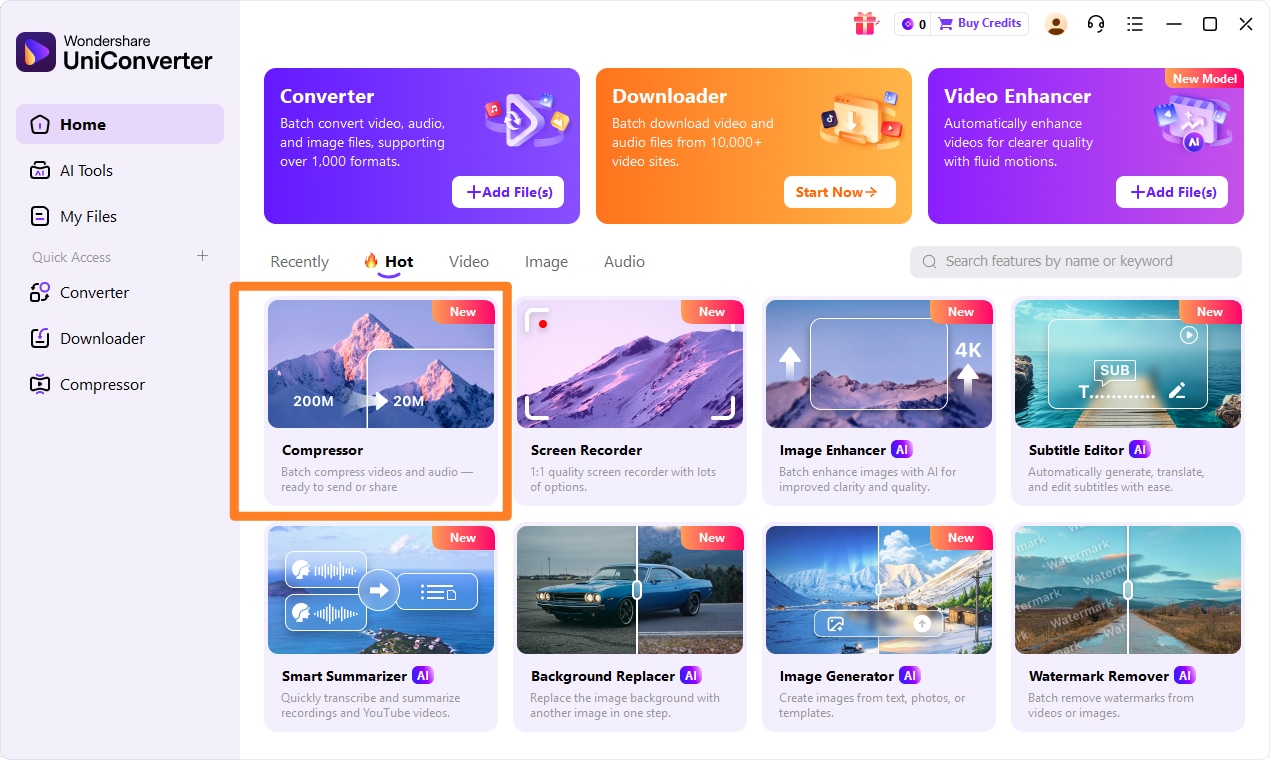
Step 1: Open UniConverter and Choose Compressor
First, launch UniConverter on your computer. On the left sidebar, you'll find various tools. Select the "Compressor" option.
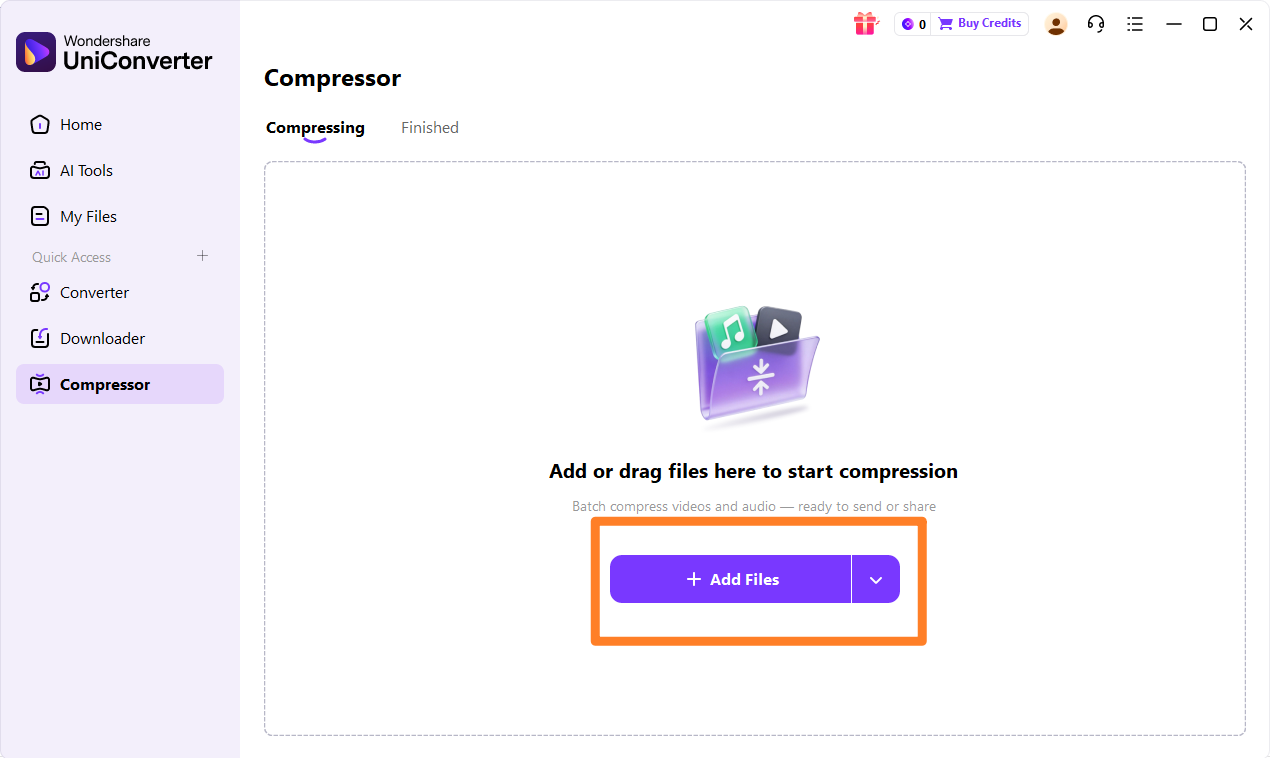
Step 2: Upload the Video, Audios or Images
Click on the "Add Files" button or simply drag and drop your audio files into the UniConverter interface. You can add multiple files for batch compression.
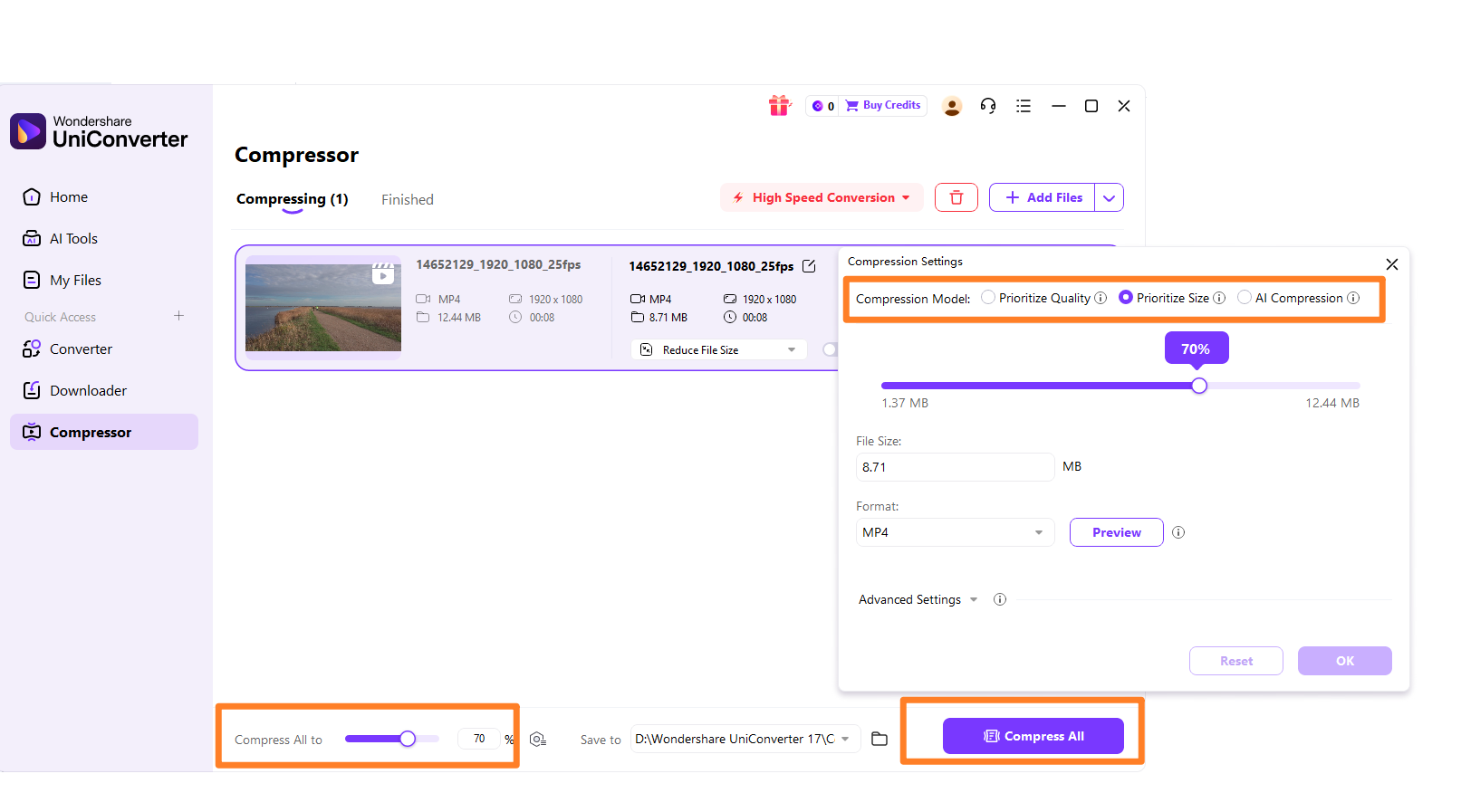
Step 3: Choose Required Parameters
After uploading, you'll see options to customize your compression settings. You can adjust the file size, quality, format, and bitrate to achieve your desired outcome. UniConverter provides a preview function to check the quality before final compression.
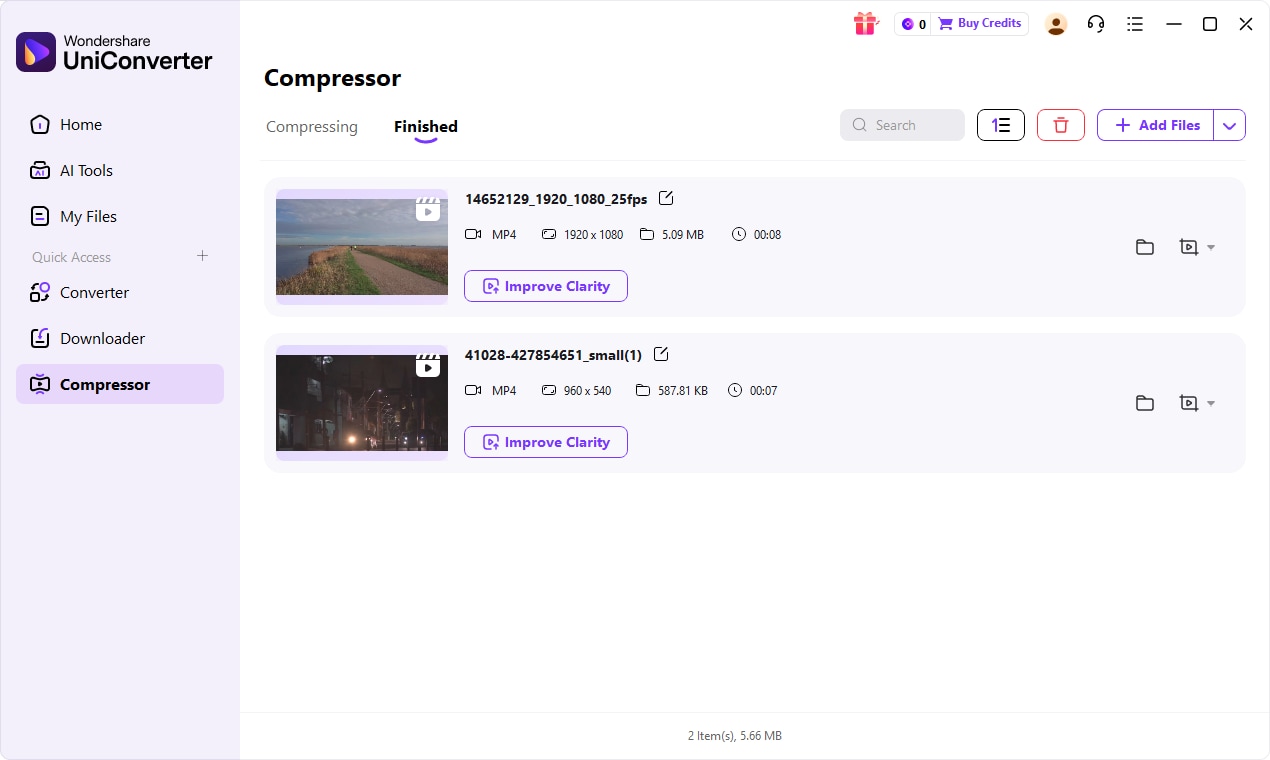
Step 4: Start Compression and Save Your Files
Once you've set your parameters, click the "Compress" button. UniConverter will quickly process your files. After compression, you can find your optimized audio files in the specified output folder.

CloudConvert Audio Compressor Alternative?
Part 7: Final Verdict and Recommendations
After thoroughly reviewing CloudConvert Audio Compressor and comparing it with its online counterparts and a powerful desktop alternative like UniConverter, I can offer some clear recommendations based on different user needs. For casual users who occasionally need to shrink an audio file for quick sharing or storage, CloudConvert's convenience and ease of use are unmatched. Its broad format support and straightforward interface make it an excellent choice for one-off tasks without the need for software installation. However, for content creators who frequently deal with audio and need a balance between speed and quality, they might find CloudConvert's limited customization options a bit restrictive. They might benefit from exploring online tools that offer slightly more control over compression parameters or consider a hybrid approach, using CloudConvert for quick tasks and a more robust solution for critical projects. For professionals, the need for desktop solutions like UniConverter becomes paramount. The precision control over audio parameters, batch processing capabilities, offline functionality, and superior processing speed offered by desktop software are essential for maintaining high-quality output and efficient workflows. Finally, for budget-conscious users, evaluating the free vs. paid options is key. While CloudConvert offers a generous free tier, understanding its limitations and the potential for upselling in other free online tools is important. Sometimes, investing in a one-time purchase of a desktop tool like UniConverter can be more cost-effective and efficient in the long run, especially if audio compression is a regular part of your routine. This CloudConvert Audio Compressor review aims to guide you to the best tool for your specific situation.
Part 8: FAQs
-
1. Is CloudConvert Audio Compressor truly free to use?
CloudConvert offers a free tier with daily limits on file size and conversion minutes. If you exceed these limits or need more features, you'll need to purchase a paid package.
-
2. What audio formats does CloudConvert support for compression?
CloudConvert supports a very broad range of audio formats for both input and output, including popular ones like MP3, WAV, AAC, FLAC, OGG, and many more.
-
3. How does CloudConvert ensure the privacy of my uploaded audio files?
CloudConvert states that all uploaded files are deleted from their servers shortly after processing. They use secure connections (SSL) for data transfer. However, for highly sensitive files, a desktop solution like UniConverter, which processes files locally, offers enhanced privacy.
-
4. Can I compress multiple audio files at once with CloudConvert?
No, CloudConvert does not offer true batch processing for audio compression. You would need to compress each file individually. For batch compression, I recommend using a desktop application like UniConverter.
-
5. What are the main differences between CloudConvert and desktop audio compressors?
CloudConvert is an online, cloud-based tool, offering convenience and no software installation, but it relies on internet connectivity and has limited advanced features. Desktop compressors like UniConverter offer offline capability, superior processing speed (often with GPU acceleration), precise control over compression parameters, and robust batch processing, making them ideal for professional or demanding users.
