
- Clipchamp Overview: Web-based tool for basic video compression, integrated with Microsoft ecosystem. Ideal for quick, casual use.
- Feature Limitations: Offers simple interface and presets but lacks advanced compression controls for precise quality management.
- Ideal User: Best for casual users needing fast, easy compression for social media or email, not for professional-grade projects.
- Alternatives Comparison: Clipchamp is simpler than HandBrake, Adobe Media Encoder, or UniConverter, which offer more control and quality.
- Risks & Pitfalls: Cloud-based privacy concerns, potential quality loss, limited codec support, and internet dependency are key drawbacks.
- UniConverter Solution: Provides advanced, fast, and stable compression with GPU acceleration, batch processing, and extensive format support.
- Decision Factor: Choose Clipchamp for convenience; opt for UniConverter or similar for quality, control, and professional needs.
In this article
- Part 1: What is Clipchamp Video Compressor?
- Part 2: Clipchamp Video Compressor: Core Features, Pros, and Cons
- Part 3: Clipchamp Video Compressor: Ideal Users and Use Cases
- Part 4: Clipchamp Video Compressor and Alternatives Comparison
- Part 5: Risks and Pitfalls to Consider
- Part 6: How to Use UniConverter to Compress Efficient Video and Audio
- Part 7: Final Verdict and Recommendations
- Part 8: FAQs
When you're constantly dealing with video files, whether for social media, presentations, or just sharing with friends, the need for efficient compression is undeniable. Large video files can be a headache, slowing down uploads, hogging storage, and making sharing a cumbersome process. This is where video compressors like Clipchamp come into play, promising to shrink your files without sacrificing too much quality. In this Clipchamp Video Compressor review, I'll dive deep into its capabilities, compare it with other popular tools, and help you understand if it's the right solution for your specific needs. We'll explore its features, ideal use cases, potential pitfalls, and even suggest robust alternatives for those who demand more control and higher quality.
Part 1: What is Clipchamp Video Compressor?
Clipchamp Video Compressor is a web-based video editing and compression tool that gained significant traction after being acquired by Microsoft. It's designed to make video creation and manipulation accessible to a broader audience, with its compression feature being a key component of its offering. The tool aims to simplify the often complex process of reducing video file sizes, making it easier for users to manage and share their digital content. My goal in this review is to determine if Clipchamp truly delivers on its promise of efficient and user-friendly video compression, especially when stacked against more specialized or professional alternatives.
Understanding the Market Landscape of Video Compression Tools
The market for video compression tools is diverse, catering to a wide range of users from casual social media posters to professional videographers.
* The need for speed: Many users prioritize quick compression for immediate sharing, often sacrificing some quality for convenience.
* Quality vs. size dilemma: Balancing file size reduction with maintaining acceptable video quality is a constant challenge for all users.
* Accessibility and ease of use: The demand for intuitive interfaces and straightforward workflows is high, particularly for non-technical users.
* Integration with existing workflows: Tools that seamlessly integrate with other platforms or operating systems often gain an advantage.
Part 2: Clipchamp Video Compressor: Core Features, Pros, and Cons
Clipchamp Video Compressor, as part of the broader Clipchamp suite, offers a straightforward approach to reducing video file sizes. Its core strength lies in its accessibility and integration within the Microsoft ecosystem.
* Simple Interface: A clean and intuitive drag-and-drop interface makes it easy to upload and compress videos.
* Preset Compression Options: Offers various quality presets (e.g., 480p, 720p, 1080p) for quick selection, catering to different output needs.
* Direct Export to Social Media: Allows direct sharing of compressed videos to platforms like YouTube, TikTok, and Instagram.
* Basic Editing Capabilities: Beyond compression, it includes fundamental editing tools like trimming, cutting, and adding text.
* Cloud-Based Operation: Being a web-based tool, it's accessible from any device with an internet connection, without needing software installation.
- Pros:
- User-friendly interface for quick compression, making it ideal for beginners.
- Integrated with Microsoft ecosystem for seamless workflow, especially for Windows users.
- Decent compression ratio for common video formats, suitable for everyday sharing.
- Cons:
- Limited advanced compression settings, which can be frustrating for experienced users seeking precise control.
- Potential quality degradation on aggressive compression, especially noticeable on larger screens or for professional use.
Part 3: Clipchamp Video Compressor: Ideal Users and Use Cases
Clipchamp Video Compressor is designed with a specific user base in mind, primarily those who need quick and easy video compression without delving into complex technical details. It's not a one-size-fits-all solution, and understanding its strengths and limitations is key to deciding if it's right for you.
- Best Use Case: Quick, on-the-fly video compression for social media sharing or email attachments by casual users. If you're a student needing to compress a presentation video for an online submission, or a small business owner wanting to quickly upload a short promotional clip to Instagram, Clipchamp is incredibly convenient. Its web-based nature means I can access it from any computer, and the intuitive interface gets the job done without a steep learning curve.
- Limited Use Case: Professional video editors requiring precise control over compression parameters and maintaining high-fidelity output. For someone like me, who works with 4K footage for client projects and needs to ensure every detail is preserved while optimizing for specific platforms, Clipchamp falls short. I can't fine-tune bitrates, codecs, or advanced encoding settings, which are crucial for maintaining professional quality and meeting specific delivery requirements. The lack of granular control means I often have to compromise on quality or accept larger file sizes than necessary for my professional work.
Part 4: Clipchamp Video Compressor and Alternatives Comparison
When I look at video compression tools, I'm always weighing ease of use against power and flexibility. Clipchamp offers a certain level of convenience, but it's important to see how it stacks up against other popular options like HandBrake, Adobe Media Encoder, and UniConverter.
| Feature/Scenario | Clipchamp Video Compressor | HandBrake | Adobe Media Encoder | UniConverter |
| Ease of Use | Very High | Moderate | Moderate | High |
| Compression Control | Basic | Advanced | Advanced | Advanced |
| Output Quality | Good (for basic needs) | Excellent | Excellent | Excellent |
| Integration | Microsoft Ecosystem | Standalone | Adobe Creative Cloud | Standalone/Desktop |
| Price | Free (basic) | Free | Subscription | One-time purchase/Subscription |
| Processing Speed | Moderate (cloud-dependent) | Fast (local CPU/GPU) | Fast (local CPU/GPU) | Very Fast (GPU acceleration) |
| Supported Formats | Common web formats | Wide range (incl. niche) | Very wide range | Very wide range |
| Batch Processing | Limited | Yes | Yes | Yes |
Key Differentiators:
Clipchamp excels in simplicity and integration for everyday users, especially if you're already in the Microsoft ecosystem. HandBrake, on the other hand, offers robust, free, open-source advanced compression for those who don't mind a slightly steeper learning curve but want full control. Adobe Media Encoder provides professional-grade compression within a broader creative suite, ideal for those already invested in Adobe products. UniConverter strikes a great balance, providing advanced features with a user-friendly interface and impressive processing speeds, making it a strong contender for both casual and more demanding users. If I need quick, no-fuss compression, Clipchamp is there. But for anything requiring precise quality control or batch processing, I'm definitely looking at HandBrake, Adobe Media Encoder, or UniConverter.
Part 5: Risks and Pitfalls to Consider
While Clipchamp Video Compressor offers a convenient solution for quick video compression, it's crucial to be aware of certain risks and limitations, especially when dealing with your valuable content. I've encountered several issues that you should consider before relying solely on this tool.
Data Privacy Concerns with Cloud-Based Compression
As a cloud-based service, Clipchamp requires me to upload my video files to their servers for processing. This immediately raises questions about data privacy and security. While Microsoft generally has strong security protocols, I'm always cautious about sending sensitive or proprietary video content to third-party cloud services. There's an inherent risk of data breaches or unauthorized access, even if the chances are low. For personal projects, it might be less of a concern, but for professional work, this is a significant consideration.
Potential for Unwanted Advertisements or Upsells
Like many free or freemium services, Clipchamp can sometimes push me towards paid upgrades or display advertisements. While the basic compression features are free, I've noticed that certain advanced options or higher quality exports are often locked behind a subscription. This can be disruptive to my workflow if I'm trying to get a quick task done and suddenly hit a paywall. It's a common business model, but it's something to be aware of if you're expecting a completely unfettered experience.
Noticeable Quality Loss on High Compression Settings
One of the biggest frustrations I've experienced with Clipchamp is the noticeable quality degradation when I try to achieve significant file size reductions. While it's expected that compression will reduce quality to some extent, Clipchamp's aggressive settings can sometimes make videos look pixelated or blurry, especially on larger screens. For casual sharing, this might be acceptable, but for anything where visual fidelity is important, I find myself having to re-evaluate or use a different tool. It often feels like a trade-off between a small file size and a watchable video.
Limited Support for Niche Video Codecs
Clipchamp primarily supports common video formats and codecs. If I'm working with less common or professional-grade codecs, I often find that Clipchamp either struggles to process them or doesn't support them at all. This forces me to convert my videos to a more compatible format before even attempting compression, adding an extra, time-consuming step to my workflow. This limitation can be a significant bottleneck for users dealing with diverse video sources.
Dependence on Internet Connectivity for Cloud Operations
Since Clipchamp is entirely cloud-based, a stable and fast internet connection is non-negotiable. If my internet is slow or drops out, my compression tasks can be interrupted or take an excruciatingly long time. This dependence means I can't work offline, which is a major drawback when I'm on the go or in an area with unreliable connectivity. Desktop-based compressors offer a significant advantage in this scenario, as they process files locally without needing constant internet access.
Part 6: How to Use UniConverter to Compress Efficient Video and Audio
When other tools fall short—whether through limited batch compression, inconsistent output, or noticeable quality loss—I often turn to UniConverter as a more reliable and versatile solution. It offers a smooth, ad-free experience and works especially well as a dedicated video compressor for reducing file sizes efficiently without making the process complicated. I also like that it can help compress videos without quality loss as much as possible, while GPU acceleration speeds up processing. Since it also supports audio compression, it works well as a practical all-in-one option for everyday media compression and conversion needs.
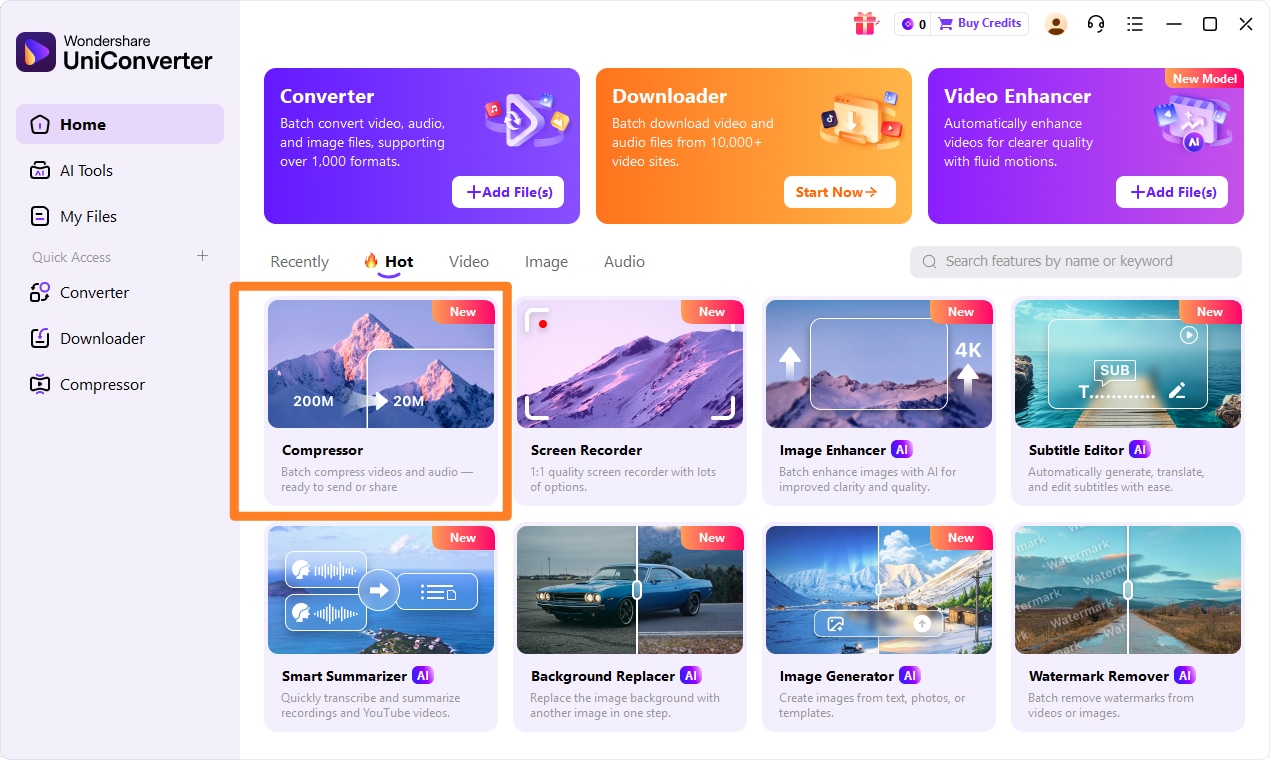
Step 1: Open UniConverter and Choose Compressor
First, I launch UniConverter on my desktop. On the left-hand sidebar, I navigate to the "Toolbox" section and select the "Video Compressor" option. This immediately opens the compression interface.
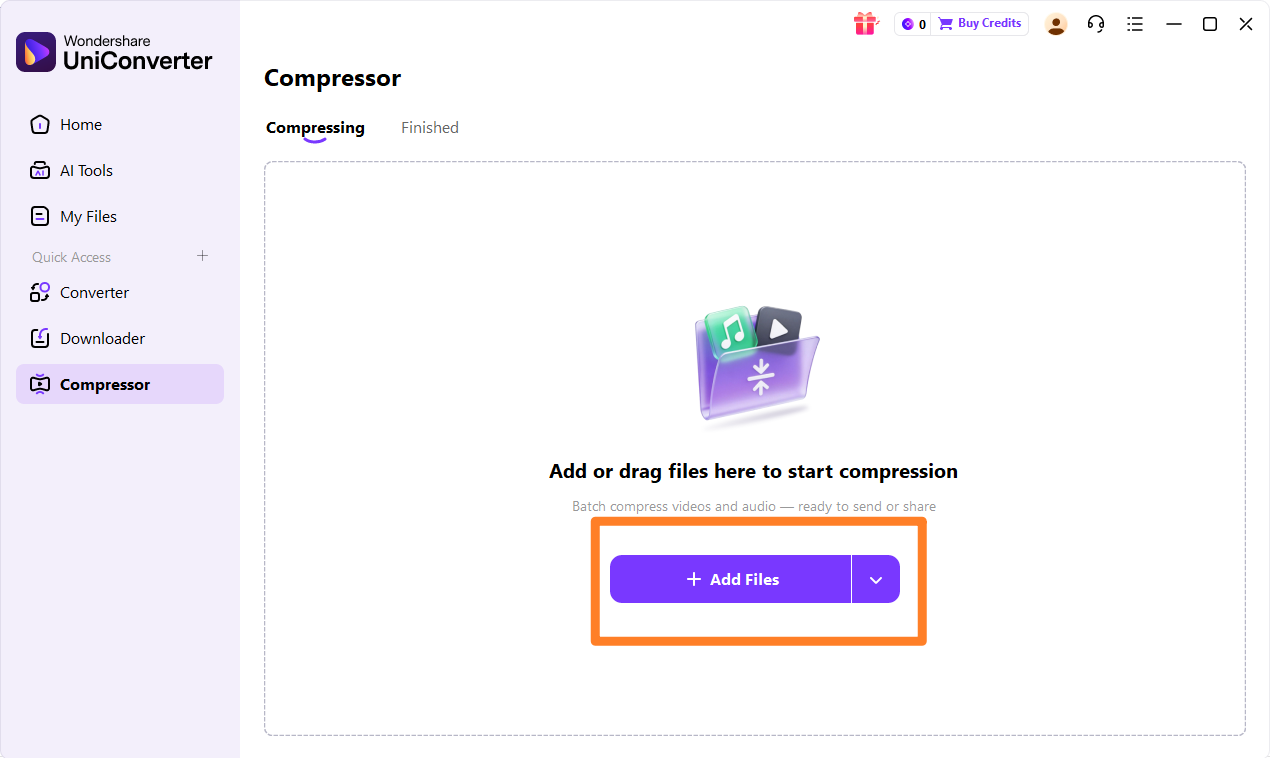
Step 2: Upload the Video, Audios or Images
Next, I simply drag and drop the video, audio, or image files I want to compress into the designated area. Alternatively, I can click the "Add Files" button to browse and select them from my computer.
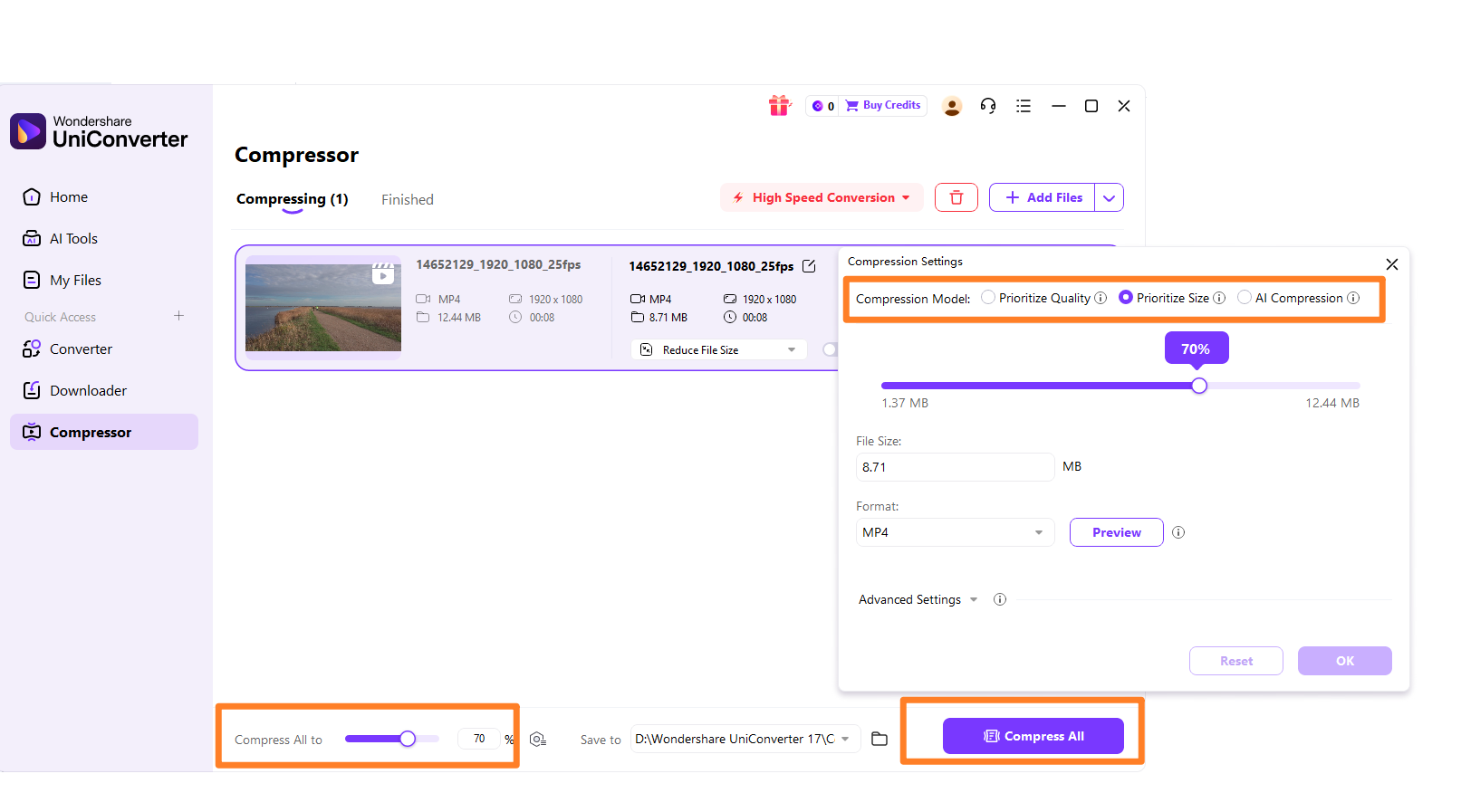
Step 3: Choose Required Parameters
Once my files are loaded, I can adjust the compression settings. UniConverter allows me to choose the output format, resolution, bitrate, and quality. I can also use the handy slider to quickly adjust the compression ratio and see the estimated file size.
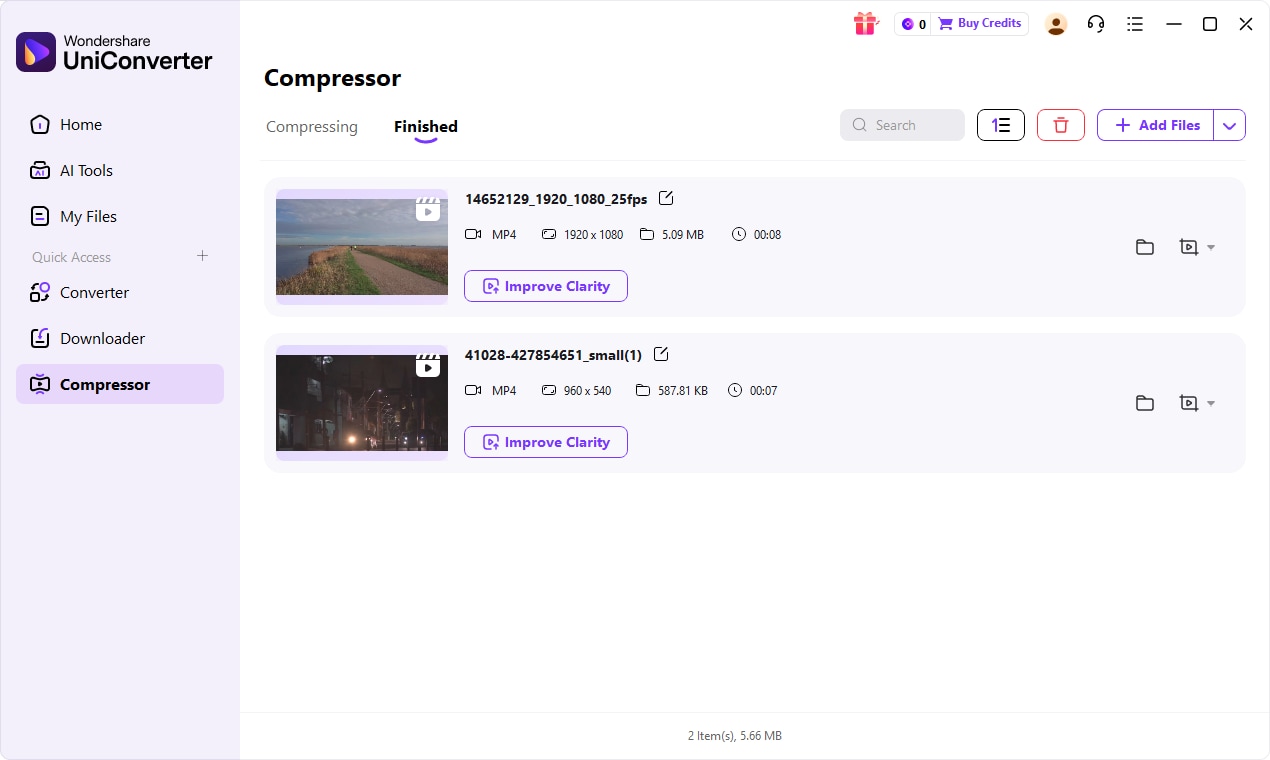
Step 4: Save the Compressed File
After setting my desired parameters, I click the "Compress" button. UniConverter processes the files quickly, often leveraging GPU acceleration. Once done, I can find my compressed files in the specified output folder, ready for sharing or storage.

Seeking a Better Clipchamp Video Compressor Alternative?
Part 7: Final Verdict and Recommendations
After thoroughly reviewing Clipchamp Video Compressor and comparing it with its alternatives, my conclusion is that its suitability largely depends on your specific needs and technical proficiency. For casual users who primarily need to quickly shrink video files for social media or email attachments, Clipchamp is a convenient starting point. Its integration with the Microsoft ecosystem and user-friendly interface make it accessible, allowing you to get basic compression tasks done without much fuss. However, for advanced users who demand precise control over compression parameters, such as specific bitrates, codecs, and resolution settings, I strongly recommend considering alternatives. These users will find Clipchamp's limited options restrictive and potentially frustrating. For professionals, investing in dedicated software is almost always the optimal choice. Tools like Adobe Media Encoder or UniConverter offer the granular control, high-fidelity output, and batch processing capabilities essential for professional workflows. Ultimately, balancing quality and file size is a crucial consideration for all users. While Clipchamp can reduce file size, it often comes at a noticeable cost to quality, especially with aggressive compression. Therefore, evaluate your priorities: if speed and simplicity are paramount and quality is secondary, Clipchamp might suffice. But if maintaining visual integrity and having detailed control are important, look beyond Clipchamp for a more robust solution.
Part 8: FAQs
-
1. Is Clipchamp Video Compressor completely free to use?
Clipchamp offers a free tier with basic compression features, but advanced functionalities, higher resolution exports, and some premium tools may require a paid subscription. I've found that for anything beyond very basic needs, you'll likely hit a paywall.
-
2. Can Clipchamp compress 4K videos without significant quality loss?
While Clipchamp can compress 4K videos, aggressive compression settings might lead to noticeable quality degradation, especially for professional use. If maintaining high quality for 4K footage is crucial, I'd suggest using a more powerful desktop compressor like UniConverter, which offers better control over quality settings.
-
3. What are the main advantages of using a desktop video compressor over an online one?
Desktop compressors generally offer more control over compression settings, faster processing speeds (especially for large files due to local processing and GPU acceleration), and often better privacy as files are processed locally rather than uploaded to a cloud server. I personally prefer desktop tools for large or sensitive files.
-
4. Does Clipchamp support batch video compression?
Clipchamp's free tier might have limitations on batch processing, often requiring you to compress files one by one or in small groups. Dedicated video compression software, like UniConverter, often provides more robust batch compression capabilities, allowing me to process multiple videos simultaneously with consistent settings.
-
5. How does video compression affect SEO for websites?
Smaller video file sizes lead to faster website loading times, which is a significant factor in SEO ranking. Efficient video compression can improve user experience, reduce bounce rates, and ultimately enhance search engine visibility. It's a critical step I always take to optimize my website content.
