
- Clideo Overview: Online tool for quick audio compression, ideal for casual users and social media.
- Pros & Cons: Easy web-based interface, wide format support; limited customization, requires internet.
- Use Cases: Perfect for quick social media audio; unsuitable for professional, high-control needs.
- Comparison: Simpler than Audacity, less powerful than UniConverter; balances ease with basic function.
- Risks: Data privacy, quality degradation with aggressive compression, internet dependency, ads.
- UniConverter Alternative: Desktop solution for stable, high-quality, batch audio compression with advanced features.
- Final Verdict: Clideo is great for convenience; UniConverter offers control, privacy, and professional results.
In this article
- Part 1: What is Clideo Audio Compressor?
- Part 2: Clideo Audio Compressor: Core Features, Pros, and Cons
- Part 3: Who Benefits from Clideo Audio Compressor? (Scenario-Based Analysis)
- Part 4: Clideo Audio Compressor vs. Competitors
- Part 5: Risks and Pitfalls to Consider
- Part 6: How to Use UniConverter for Efficient Audio Compression
- Part 7: Final Verdict and Recommendations
- Part 8: FAQs
When it comes to managing digital audio, file size can often be a significant hurdle, especially for sharing online or saving storage space. This Clideo Audio Compressor review delves into a popular online tool designed to tackle this very issue. I'll be exploring its features, comparing it with alternatives, and ultimately helping you decide if it's the right solution for your audio compression needs. My goal is to provide an objective, scenario-based analysis to guide your purchasing or usage decisions.
Part 1: What is Clideo Audio Compressor?
Clideo Audio Compressor is an online, web-based tool that allows you to reduce the file size of your audio files without needing to download or install any software. It's part of the broader Clideo suite of online video and audio editing tools, aiming to provide quick and accessible solutions for common media tasks. My experience with it suggests it's built for convenience, offering a straightforward approach to a task that can sometimes feel technical. This review will address whether its simplicity comes at the cost of control or quality.
The Rise of Online Audio Tools
The digital landscape has seen a significant shift towards cloud-based and online tools, and audio compression is no exception.
* Accessibility: Online tools are available from any device with an internet connection, removing the barrier of software installation.
* Ease of Use: Many online compressors prioritize user-friendly interfaces, making complex tasks accessible to everyone.
* Cost-Effectiveness: Often, these tools offer free tiers or are entirely free, appealing to users with occasional needs.
* Instant Results: The ability to quickly upload, process, and download files without local processing power is a major draw.
Part 2: Clideo Audio Compressor: Core Features, Pros, and Cons
Clideo Audio Compressor's core strength lies in its ability to quickly and efficiently reduce audio file sizes directly within your web browser. It supports a decent array of common audio formats, making it versatile for most everyday needs. The process is typically a few clicks: upload, select compression level (or let it auto-compress), and download. It’s designed for speed and convenience, not for intricate audio engineering.
Pros:
* Intuitive Web-Based Interface for Quick Compressions: The drag-and-drop functionality and clear instructions make it incredibly easy to use, even for first-timers.
* Supports a Wide Range of Audio Formats: I've successfully compressed MP3, WAV, OGG, and FLAC files without any issues.
* No Software Installation Required: This is a huge plus for me, as I often work on different computers and prefer not to clutter them with single-use applications.
Cons:
* Limited Advanced Customization Options: You won't find granular control over bitrates, sample rates, or specific codecs. It's more of a "set it and forget it" tool.
* Reliance on Internet Connection for Functionality: Without a stable internet connection, the tool is unusable, which can be a drawback when I'm on the go or have unreliable Wi-Fi.
Part 3: Who Benefits from Clideo Audio Compressor? (Scenario-Based Analysis)
Clideo Audio Compressor shines in scenarios where speed and simplicity are paramount, and deep technical control isn't a requirement. It's built for the casual user who needs a quick fix.
Best Use Case: Quick, On-the-Go Audio Compression for Social Media
Imagine I've just recorded a short voice memo or a snippet of music on my phone and want to share it on Instagram or WhatsApp. The original file might be too large or take too long to upload. I can quickly hop onto Clideo's website on my phone or laptop, upload the file, compress it in a minute or two, and then share the smaller, more manageable version. It’s perfect for content creators who need to optimize audio for social platforms without getting bogged down in complex software.
Limited Use Case: Professional Audio Production Requiring Granular Control
If I'm a sound engineer working on a podcast or a musician mixing a track, Clideo Audio Compressor simply won't cut it. Professional audio production demands precise control over every aspect of the audio, including specific bitrates, sample rates, and codec choices to maintain the highest possible quality. The limited customization options in Clideo would be a significant hindrance, potentially leading to unacceptable quality degradation for professional projects. For these tasks, dedicated desktop software is essential.
Part 4: Clideo Audio Compressor vs. Competitors
When I look at online audio compression, Clideo isn't the only player. Let's see how it stacks up against some common alternatives.
| Feature/Scenario | Clideo Audio Compressor | Online Audio Converter | Audacity | UniConverter |
| Ease of Use | Very High | High | Moderate | High |
| Advanced Settings | Low | Moderate | High | High |
| Offline Capability | No | No | Yes | Yes |
| Batch Processing | Limited | Moderate | High | High |
| Output Quality Control | Basic | Moderate | High | High |
| Processing Speed | Fast | Fast | Varies (local) | Very Fast (GPU accelerated) |
| Supported Formats | Good | Excellent | Excellent | Excellent |
Key Differentiators: Simplicity vs. Power
Clideo's main differentiator is its absolute simplicity and ease of access. For a quick, no-frills compression, it's hard to beat. Online Audio Converter offers a bit more control over output settings, making it a good middle-ground for those who want a bit more say in the final file. Audacity, being a desktop application, provides extensive control and offline capability, but it has a steeper learning curve. UniConverter, on the other hand, bridges the gap, offering a user-friendly interface with professional-grade features and offline capability, making it a strong contender for both casual and more demanding users.
Part 5: Risks and Pitfalls to Consider
While online tools like Clideo Audio Compressor offer undeniable convenience, it's crucial to be aware of the potential risks and pitfalls, especially when dealing with your personal or sensitive audio files.
Data Privacy Concerns with Online Tools
When I upload my audio files to an online server for compression, I'm essentially entrusting my data to a third party. While reputable services like Clideo generally have privacy policies in place, there's always an inherent risk. I always consider what kind of audio I'm uploading. Is it a personal recording? Does it contain sensitive information? For anything confidential, I'd be very hesitant to use an online tool. It's important to read their privacy policy carefully to understand how your data is handled, stored, and potentially used.
Potential for Quality Degradation on Aggressive Compression
The primary goal of an audio compressor is to reduce file size, which often involves removing data. While smart algorithms try to minimize audible loss, aggressive compression can lead to noticeable quality degradation. I've found that if I push the compression too far with Clideo, the audio can sound "tinny" or lose its richness, especially in music files. It's a trade-off: smaller file size often means some compromise in fidelity. Always listen to the compressed output before relying on it for important projects.
Reliance on Stable Internet Connection
This is a practical limitation I've run into multiple times. If my internet connection is slow or drops out mid-upload or download, the process can fail, forcing me to start over. For larger files, this can be incredibly frustrating. It means I can't rely on Clideo when I'm in an area with poor connectivity, like during travel or in certain remote locations.
Presence of Advertisements or Upsells
Many free online tools, including Clideo, often rely on advertisements or try to upsell you to a premium version to support their services. While Clideo's ads aren't overly intrusive, they are present. Sometimes, these ads can distract from the task at hand or even lead to accidental clicks. The upsell to a paid plan typically removes ads, increases file size limits, or unlocks additional features, which is something to consider if I find myself using the tool frequently.
Part 6: How to Use UniConverter for Efficient Audio Compression
When online tools fall short due to batch processing limitations, unstable compression results, or noticeable quality loss, UniConverter offers a more dependable desktop solution. It helps users handle video compression, audio compression, and even image compression more efficiently, making it a practical choice for users who need stable results and broader format support. For anyone looking for a reliable desktop media processing tool, it stands out as a strong all-in-one option.
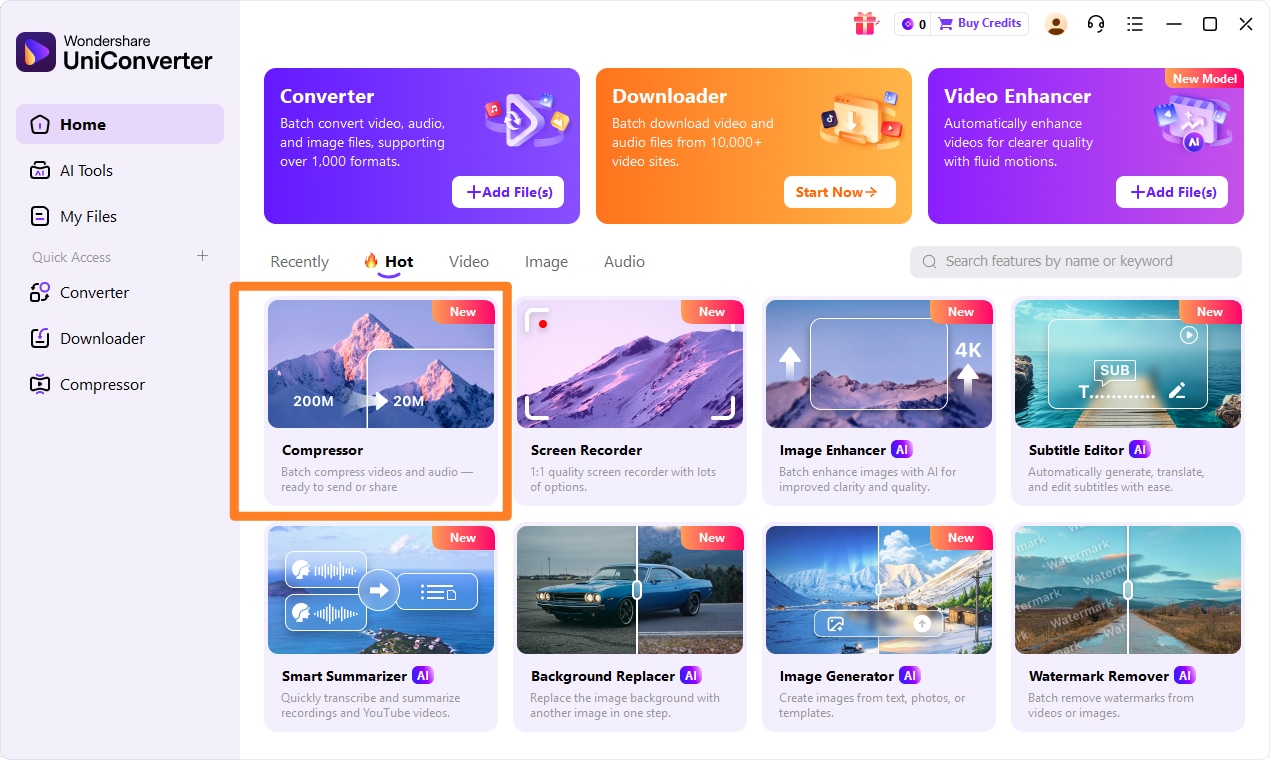
Step 1: Open UniConverter and Choose Compressor
Launch UniConverter on your computer. From the main interface, navigate to the "Toolbox" section and select the "Compressor" feature.
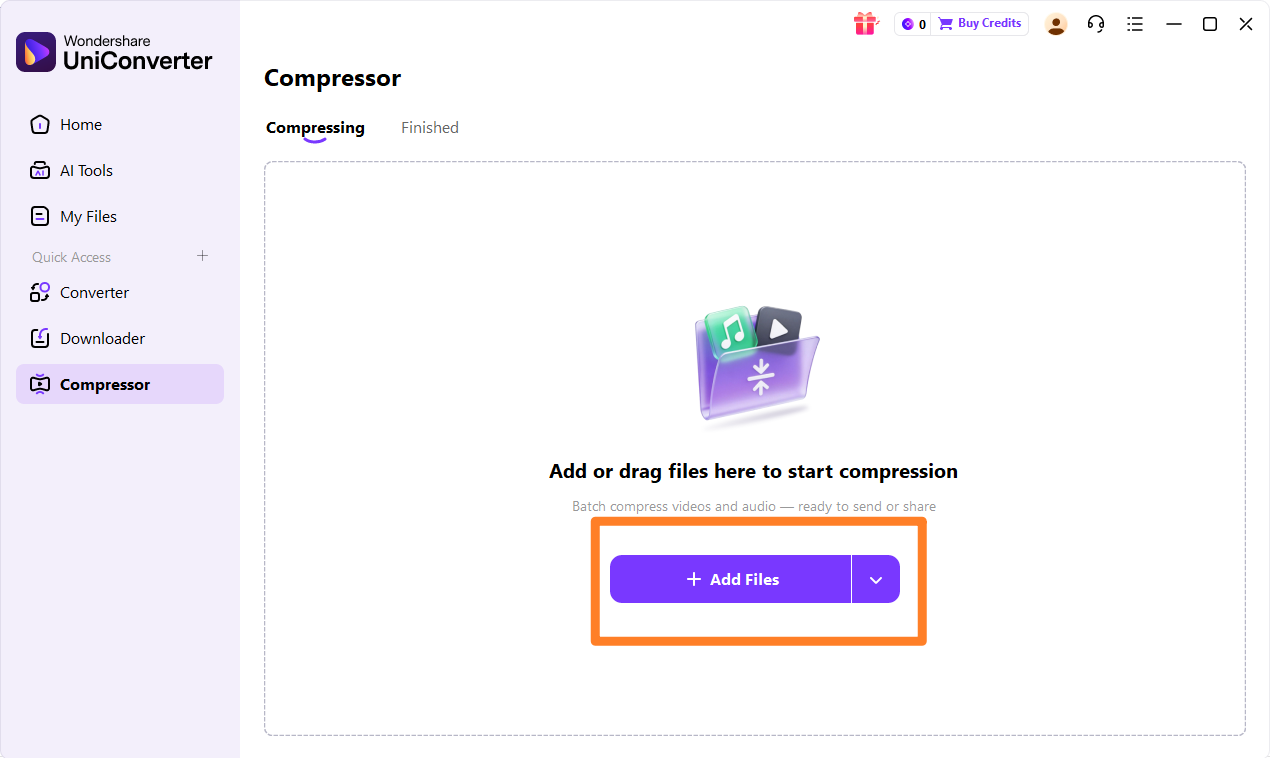
Step 2: Upload the Video, Audios or Images
Click on the "Add Files" button or drag and drop your audio files directly into the compressor window. You can add multiple files for batch processing.
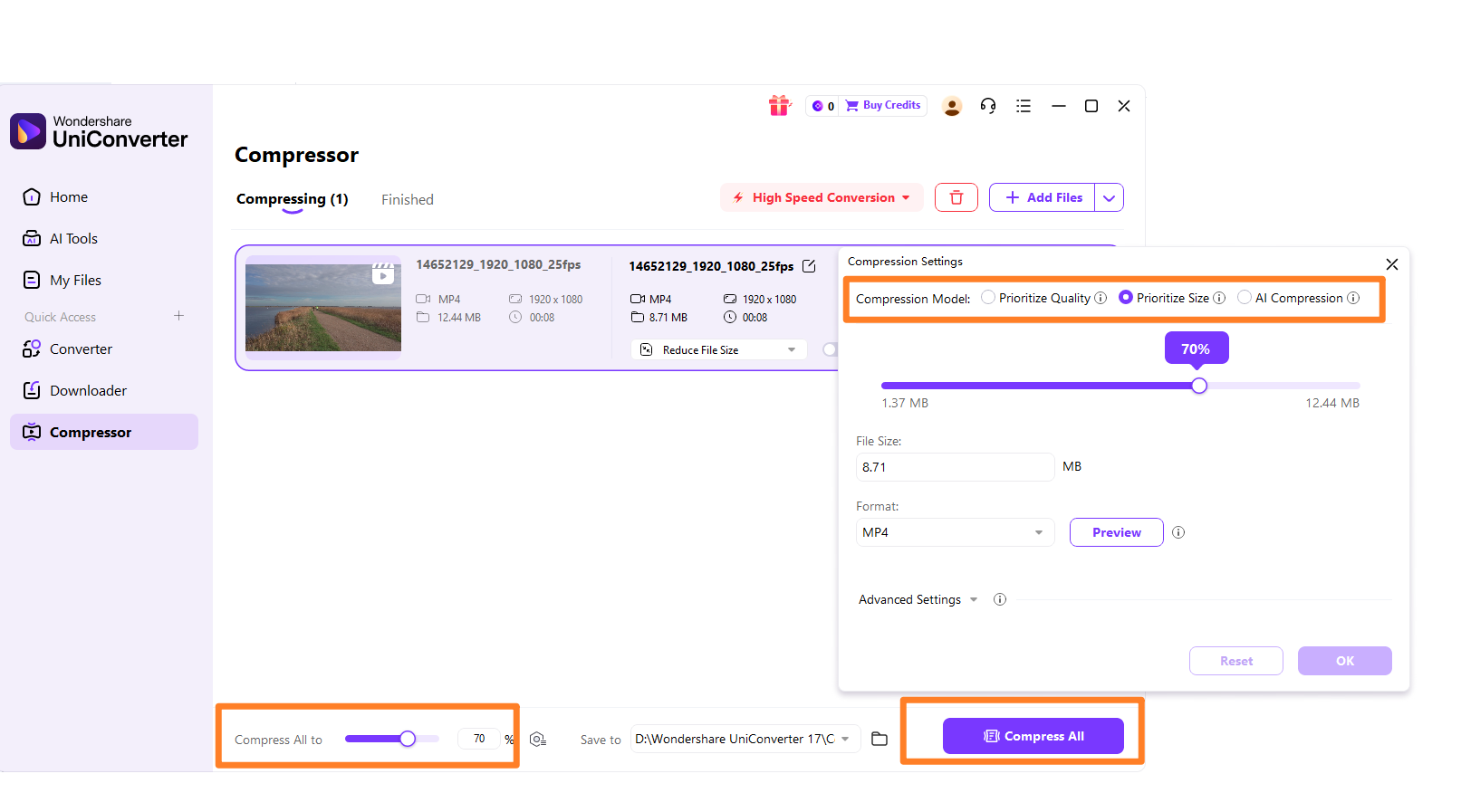
Step 3: Choose Required Parameters
Once your files are loaded, you can adjust the compression settings. UniConverter allows you to customize parameters like output format, quality, and file size. You can preview the estimated compressed size.
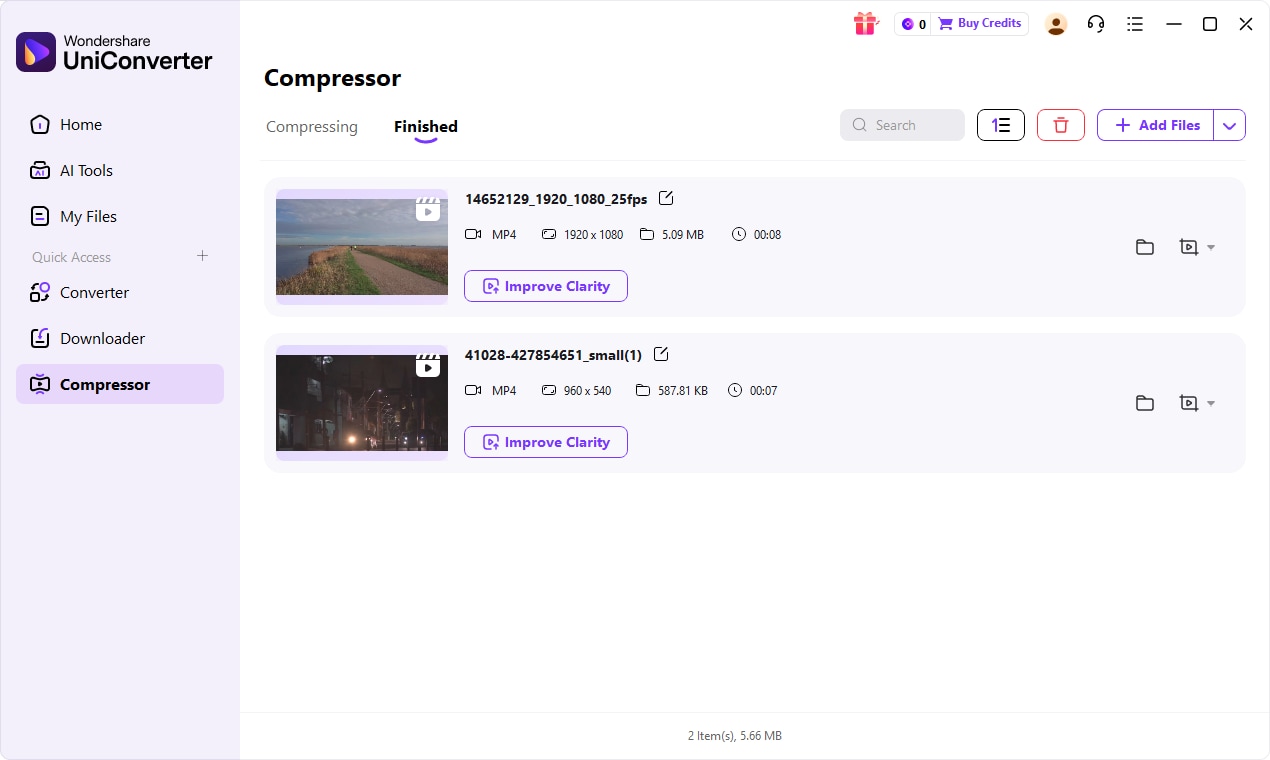
Step 4: Save the Compressed File
After setting your desired parameters, click the "Compress" button. UniConverter will process your files quickly. Once complete, you can find your compressed audio in the designated output folder.

Clideo Audio Compressor Alternative for Better Control?
Part 7: Final Verdict and Recommendations
After thoroughly reviewing Clideo Audio Compressor and comparing it with its alternatives, my final verdict is that it serves a specific niche very well. This Clideo Audio Compressor review highlights its strength as a quick, accessible, and user-friendly online tool for basic audio compression needs. However, its limitations become apparent when more control or professional-grade results are required.
For casual users needing quick compressions, such as optimizing audio for social media or sending small voice notes, Clideo is an excellent choice. Its intuitive web interface and no-installation requirement make it incredibly convenient. I would recommend it for anyone who needs to shrink an audio file occasionally without delving into technical settings.
For users prioritizing data privacy and offline access, or those dealing with sensitive audio, I would strongly advise against relying solely on online tools. Desktop applications like Audacity or UniConverter offer a more secure and reliable environment, ensuring your files remain on your local machine and are processed without an internet connection.
For professionals requiring advanced audio editing, granular control over compression parameters, and batch processing capabilities, Clideo Audio Compressor is simply not sufficient. In these scenarios, dedicated software like Audacity or a comprehensive solution like UniConverter would be far more appropriate, offering the precision and features necessary for high-quality output and efficient workflows. Ultimately, your choice should align with your specific needs, balancing convenience with control and security.
Part 8: FAQs
-
1. Is Clideo Audio Compressor free to use?
Yes, Clideo Audio Compressor offers a free tier with certain limitations, such as file size limits and the presence of watermarks or ads. For unlimited usage and advanced features, a paid subscription is required.
-
2. What audio formats does Clideo Audio Compressor support?
Clideo Audio Compressor supports a wide range of popular audio formats, including MP3, WAV, OGG, FLAC, and more. You can generally upload most common audio file types for compression.
-
3. Can I compress multiple audio files at once with Clideo?
While Clideo allows you to process files one by one, its free version has limitations on batch processing. For efficient batch compression of multiple files, a desktop application like UniConverter is often a better solution.
-
4. Does Clideo Audio Compressor reduce audio quality significantly?
The degree of audio quality reduction depends on how aggressively you compress the file. While Clideo aims to minimize noticeable loss, very high compression ratios can lead to some degradation. It's always recommended to listen to the output.
-
5. Is Clideo Audio Compressor safe for my files?
Clideo states that it uses secure connections and deletes uploaded files from its servers after a certain period. However, as with any online tool, there's an inherent trust involved. For highly sensitive or confidential audio, using an offline desktop application like UniConverter provides greater control over your data's privacy and security.
