
- Camtasia Compressor Value: Integrated convenience for basic video sharing and online course delivery.
- Core Features: Seamlessly compress H.264/H.265 videos within Camtasia, ideal for quick exports.
- Limitations: Lacks advanced controls, batch processing, and professional codec support, risking quality degradation.
- Ideal Users: Educators and content creators prioritize ease-of-use for online course content.
- Vs. Competitors: Camtasia prioritizes integration; UniConverter offers advanced compression, batch processing, and broader format support.
- Decision Point: Use Camtasia for simple needs; choose UniConverter for superior control, quality, and efficiency.
In this article
- Part 1: What is Camtasia Video Compressor?
- Part 2: Camtasia Video Compressor: Core Features, Pros, and Cons
- Part 3: Camtasia Video Compressor: Ideal Users and Use Cases
- Part 4: Camtasia Video Compressor vs. Competitors
- Part 5: Risks and Pitfalls of Using Camtasia Video Compressor
- Part 6: How to Use UniConverter for Efficient Audio and Video Compression
- Part 7: Conclusion
- Part 8: FAQs
When you're knee-deep in video creation, especially with tools like Camtasia, you quickly realize that file sizes can balloon out of control. This often leads to frustratingly slow uploads, storage issues, and a less-than-ideal viewing experience for your audience. As a product reviewer, I've seen countless users grapple with this challenge, and it's why understanding video compression is so crucial. This Camtasia Video Compressor review aims to cut through the noise, offering you a comprehensive look at Camtasia's built-in compression capabilities, comparing it against leading alternatives, and ultimately helping you make informed decisions about your video workflow. We'll delve into its strengths, weaknesses, ideal use cases, and even highlight potential pitfalls, ensuring you get the most out of your video projects.
Part 1: What is Camtasia Video Compressor?
Camtasia Video Compressor refers to the integrated video compression features within TechSmith's Camtasia software, a popular all-in-one screen recorder and video editor. Unlike dedicated video compression tools, Camtasia's compressor is designed to seamlessly fit into the video editing and export workflow, allowing you to reduce file sizes directly after you've finished editing your project. This integration is a significant selling point for users who prioritize convenience and a streamlined process. However, its primary purpose is to facilitate easier sharing and uploading of Camtasia-produced videos, rather than offering the most advanced or granular compression controls found in specialized software.
Market Position of Camtasia in Video Editing Software
Camtasia holds a strong market position, particularly among educators, content creators, and corporate trainers. Its appeal stems from:
* User-Friendly Interface: It's known for its intuitive design, making it accessible even for beginners.
* All-in-One Solution: It combines screen recording, video editing, and basic compression into a single package.
* Focus on Educational Content: Many features are tailored for creating tutorials, online courses, and presentations.
* Strong Community Support: A large user base and extensive tutorials are readily available.
Part 2: Camtasia Video Compressor: Core Features, Pros, and Cons
Camtasia's built-in video compressor is an integral part of its export functionality, allowing you to reduce file sizes for easier sharing and distribution. Its core capability revolves around encoding your edited video into common formats with adjustable quality settings. You can typically choose between different quality presets or manually adjust parameters like resolution, frame rate, and bitrate. It primarily utilizes standard codecs like H.264, which is widely supported across devices and platforms. The process is straightforward: once your video is edited, you go to the export option, select your desired output settings, and Camtasia handles the compression during rendering.
Pros
* Integrated Workflow for Camtasia Users: The biggest advantage is its seamless integration directly within the Camtasia editing environment. You don't need to export to another application.
* User-Friendly Interface for Basic Compression: The options are clear and easy to understand, even for those new to video compression.
* Good for Quick Edits and Sharing: For everyday videos that need to be shared online quickly, it gets the job done without much fuss.
Cons
* Limited Advanced Compression Options: You won't find granular control over advanced codecs or specific compression algorithms.
* Potential for Quality Degradation with Aggressive Compression: Pushing for very small file sizes can noticeably impact video quality, especially with complex visuals.
Part 3: Camtasia Video Compressor: Ideal Users and Use Cases
Camtasia's video compressor is best suited for a specific demographic and set of tasks, primarily those who prioritize convenience and integration within the Camtasia ecosystem. If you're already using Camtasia for your video production, its built-in compressor offers a straightforward way to prepare your videos for distribution without needing to learn another piece of software.
Best Use Case: Educators and Content Creators Using Camtasia for Online Course Delivery
For educators creating online lectures, tutorials, or training videos, Camtasia's compressor is incredibly useful. You've just finished recording and editing a 30-minute lesson, and you need to upload it to a learning management system (LMS) or YouTube. The integrated compressor allows you to quickly export a reasonably sized file that maintains decent quality for educational purposes. The goal here isn't broadcast-quality video, but rather clear, accessible content that loads quickly for students. It's perfect for preparing videos for platforms like Canvas, Moodle, or personal websites where file size can impact loading times and storage limits.
Limited Use Case: Professional Videographers Requiring Lossless Compression for Archival
On the other hand, if you're a professional videographer working on client projects, documentaries, or high-end productions, Camtasia's compressor will fall short. You often require lossless or near-lossless compression for archival purposes, or need to deliver files in specific, high-quality codecs like ProRes or DNxHD. Camtasia's basic H.264/H.265 options, while good for general use, don't offer the fidelity or the advanced codec support needed for professional archival or broadcast-quality deliverables. In these scenarios, the potential for quality degradation, even subtle, is unacceptable, and you'd turn to dedicated, more powerful compression tools.
Part 4: Camtasia Video Compressor vs. Competitors
When evaluating video compression, it's crucial to see how Camtasia's built-in tool stacks up against dedicated software. Here's a comparison to help you understand the landscape:
| Feature/Software | Camtasia Video Compressor | HandBrake | Adobe Media Encoder | UniConverter |
| Integration | Excellent (Camtasia) | Standalone | Excellent (Adobe Suite) | Standalone/Integrated |
| Compression Algorithms | Basic H.264/H.265 | Advanced (x264, x265, VP8, VP9) | Advanced (H.264, H.265, ProRes, DNxHD) | Advanced (H.264, H.265, VP9, AV1) |
| Batch Processing | Limited | Yes | Yes | Yes |
| Output Formats | MP4, MOV, GIF | MP4, MKV, WebM | Wide Range | Wide Range |
| Price | Included with Camtasia | Free | Subscription | One-time/Subscription |
Key Differentiators: Integration vs. Advanced Features
Camtasia's compressor shines in its seamless integration within the Camtasia workflow, making it incredibly convenient for users already invested in the platform. However, for advanced compression algorithms, wider format support, and robust batch processing capabilities, tools like HandBrake, Adobe Media Encoder, and UniConverter offer significantly more power and flexibility. HandBrake is a fantastic free option for advanced users, while Adobe Media Encoder is the go-to for professionals in the Adobe ecosystem. UniConverter provides a user-friendly yet powerful solution for a broad range of compression needs.
Part 5: Risks and Pitfalls of Using Camtasia Video Compressor
While the convenience of Camtasia's integrated video compressor is undeniable, relying solely on it for all your compression needs can introduce several risks and pitfalls, especially if you're not aware of its limitations. Understanding these can help you avoid common frustrations and ensure your videos maintain the quality you expect.
Potential for Noticeable Quality Loss
One of the most significant risks is the potential for noticeable quality loss, particularly if you're aggressive with your compression settings to achieve a very small file size. Camtasia's compressor, while functional, doesn't always employ the most sophisticated algorithms to balance file size and visual fidelity. This can result in artifacts, pixelation, or a general "softness" in your video, especially in areas with fine details, fast motion, or complex textures. If your video is destined for a large screen or requires a high level of visual clarity, this quality degradation can be a major issue.
Limited Control Over Compression Parameters
Camtasia offers a relatively simple set of controls for compression. You might be able to adjust resolution, frame rate, and a general quality slider, but you won't find the granular control over bitrate, GOP structure, or specific codec profiles that advanced users often require. This lack of fine-tuning means you're often relying on presets, which might not be optimized for your specific content or target platform. This can lead to either unnecessarily large files or overly compressed files with compromised quality.
Not Ideal for Large Batch Processing
If you have a large number of videos that need to be compressed, Camtasia's built-in compressor is not designed for efficient batch processing. You typically have to export each video individually or rely on its production wizard, which can be time-consuming and cumbersome for multiple files. This limitation can significantly slow down your workflow if you're dealing with a high volume of video content, making it inefficient for tasks like preparing an entire course library for upload.
Lack of Advanced Codec Support
While Camtasia supports common codecs like H.264 and H.265, it lacks support for more specialized or professional-grade codecs such as ProRes, DNxHD, or even more advanced open-source options like VP9 or AV1 with full parameter control. This can be a significant drawback if your project requires specific codecs for compatibility with professional editing suites, broadcast standards, or if you're aiming for the absolute best compression efficiency for web delivery. You might find yourself needing to re-encode your videos in another application, adding an extra, often time-consuming, step to your post-production process.
Part 6: How to Use UniConverter for Efficient Audio and Video Compression
Camtasia’s built-in compressor can be convenient for simple tasks, but it starts to feel limiting once batch processing, output consistency, or quality control becomes more important. In that kind of workflow, UniConverter is a much more capable alternative. It works especially well as a dedicated video compressor, giving you a smoother experience with broad format support, faster processing through GPU acceleration, and more flexibility for larger projects. Another advantage is that it can help compress videos without quality loss as much as possible, which is useful when file size needs to come down without sacrificing too much visual quality. With its intuitive interface and reliable batch features, it’s a practical, ad-free option for managing video conversion, editing, and compression more efficiently.
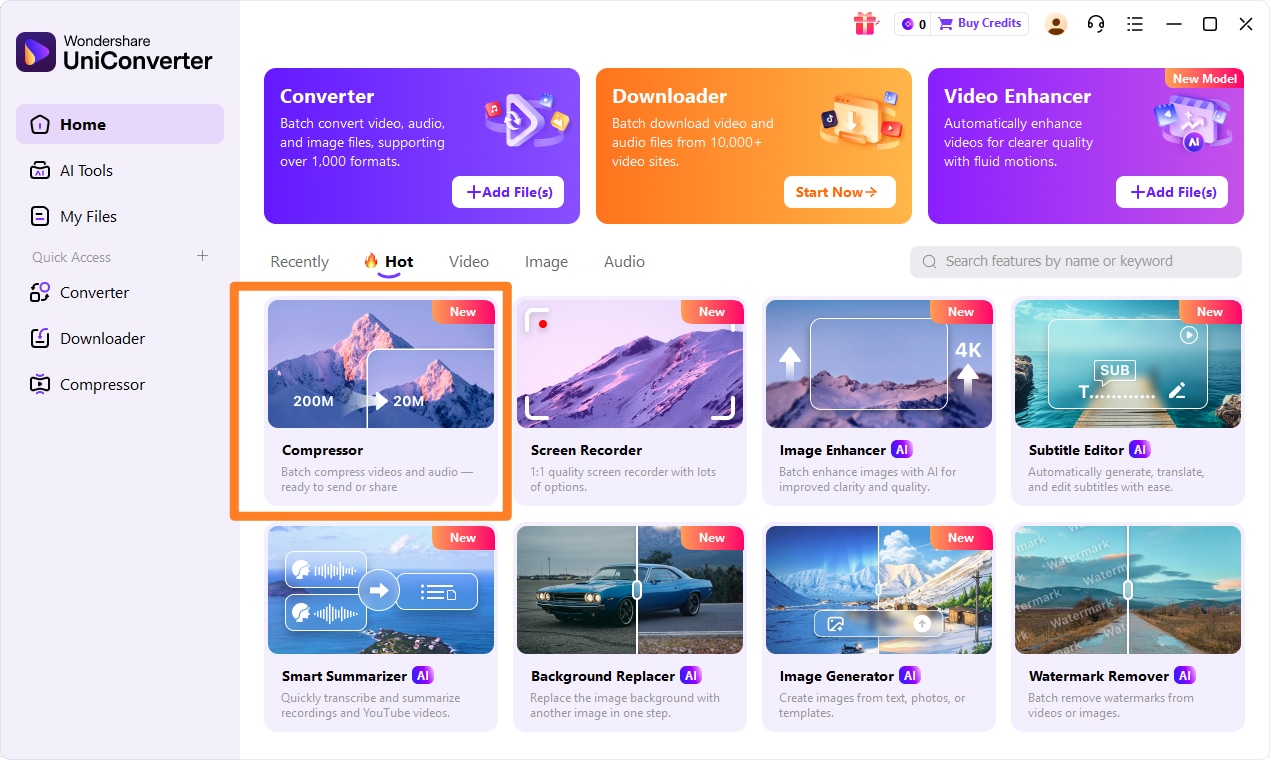
Step 1: Open UniConverter and Choose Compressor
Launch UniConverter on your computer. On the left-hand sidebar, you'll find various tools. Click on the "Compressor" option to access the video compression feature.
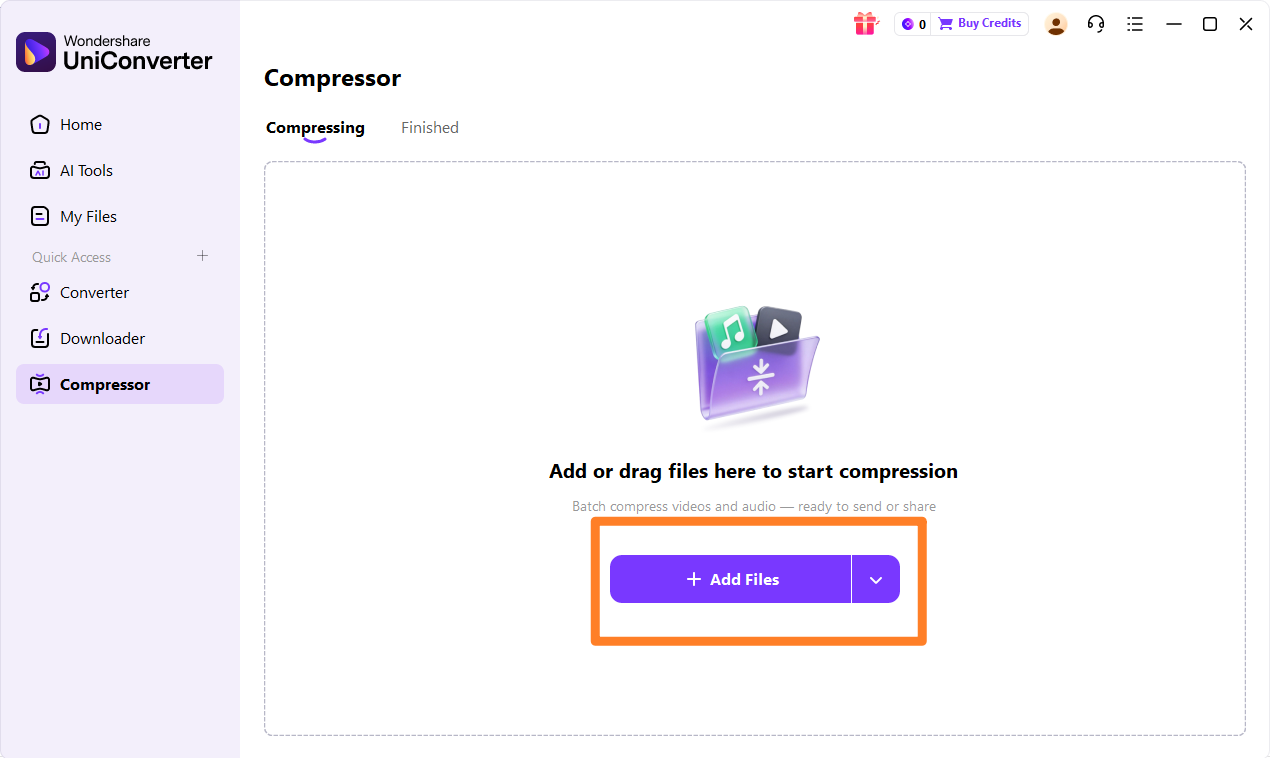
Step 2: Upload the Video, Audios or Images
Drag and drop your video files directly into the UniConverter window, or click the "Add Files" button to browse and select the videos you wish to compress. You can add multiple files for batch compression.
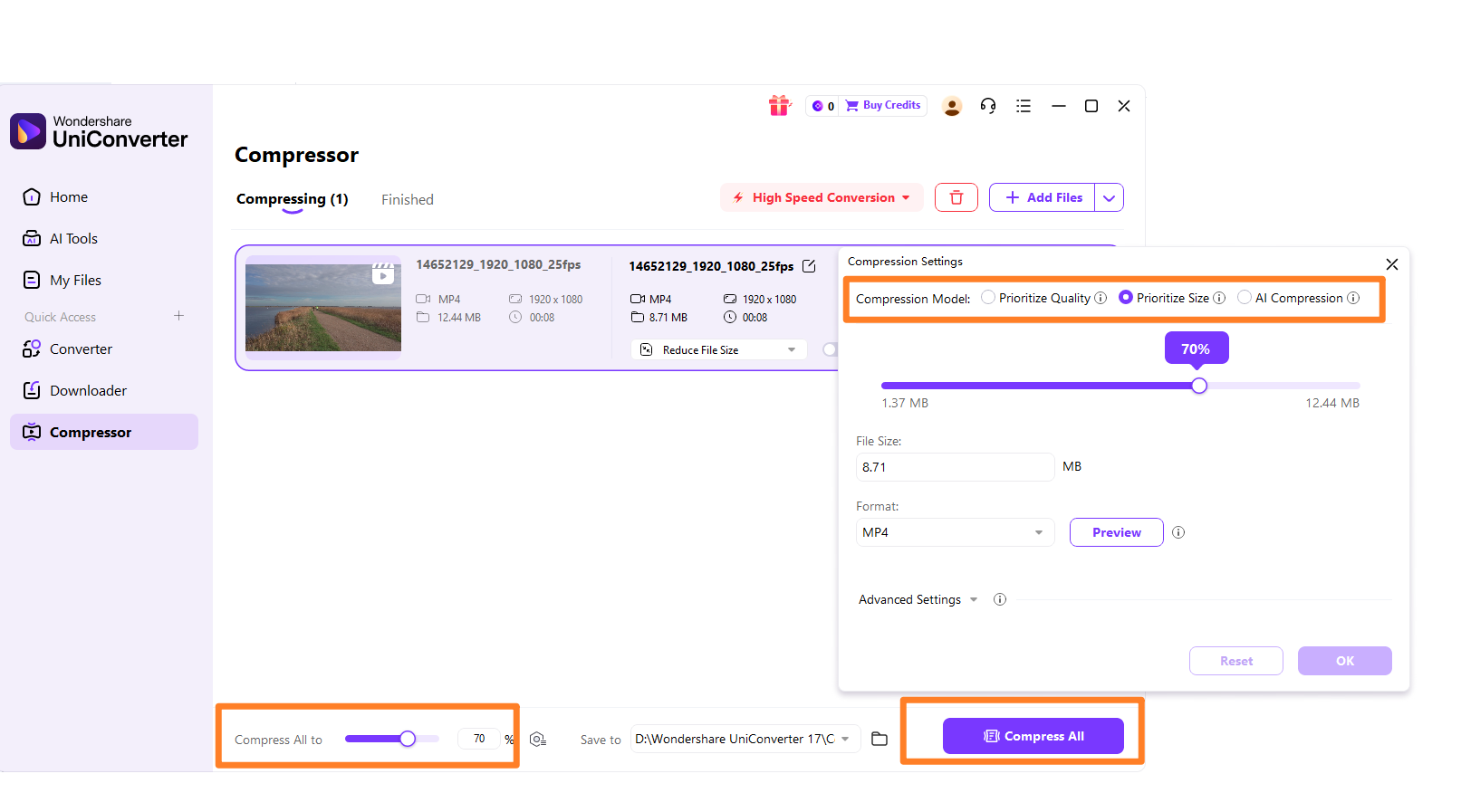
Step 3: Choose Required Parameters
Once your files are loaded, you can adjust the compression settings. UniConverter allows you to customize parameters like video resolution, quality, bitrate, and output format. You can also use smart compression presets.
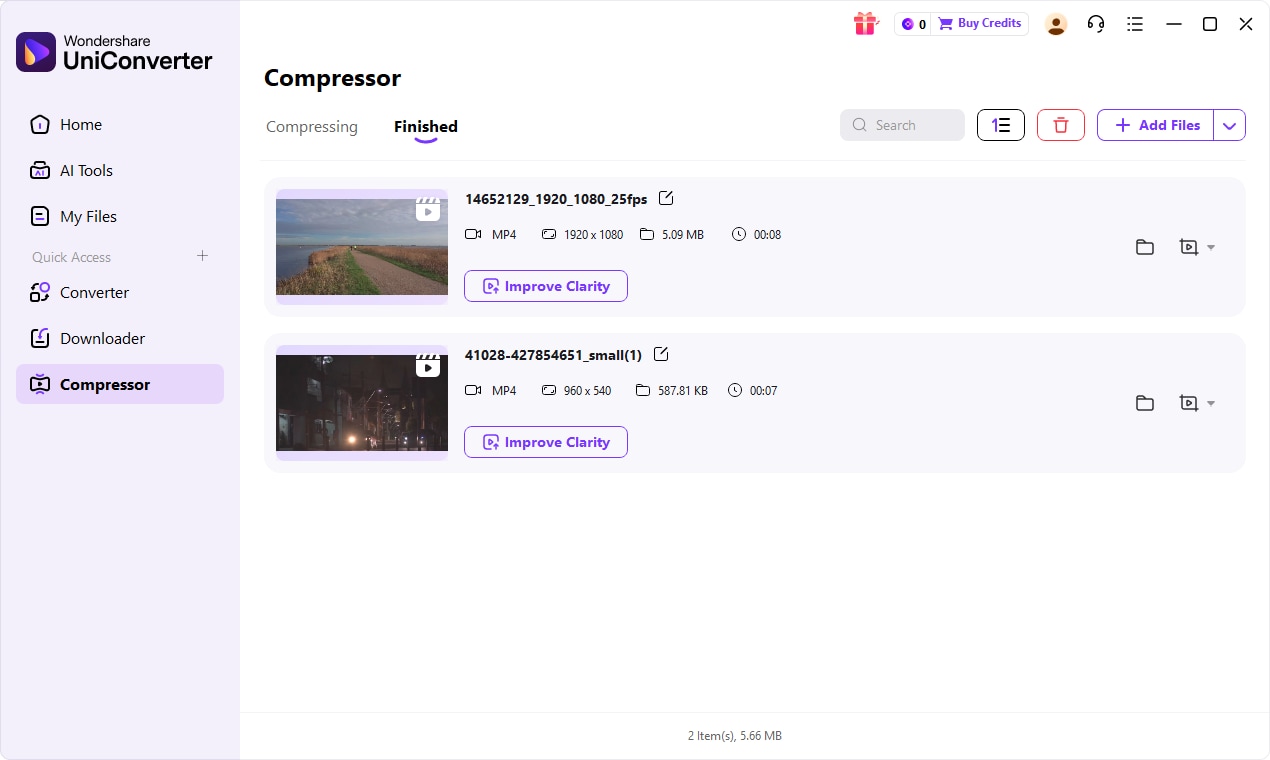
Step 4: Save the Compressed File
After configuring your settings, click the "Compress" button. UniConverter will process your files. Once complete, you can find your compressed videos in the specified output folder.

Efficiently Compress Videos Beyond Camtasia
Part 7: Conclusion
In conclusion, the Camtasia Video Compressor review reveals it to be a highly convenient and integrated tool, perfectly suited for Camtasia users who prioritize a streamlined workflow for basic video sharing and online course delivery. Its user-friendly interface and direct integration make it ideal for quick exports where moderate file size reduction is sufficient. However, for users demanding advanced compression algorithms, granular control over parameters, robust batch processing, or support for a wider array of professional codecs, Camtasia's built-in compressor falls short. In such scenarios, dedicated tools like HandBrake, Adobe Media Encoder, or UniConverter offer superior capabilities. My recommendation is this: if you live and breathe in Camtasia and your compression needs are simple, stick with its integrated solution for convenience. But if you frequently encounter issues with quality, file size, or batch processing, or if your projects demand professional-grade compression, investing in a more powerful, standalone compressor like UniConverter will significantly enhance your workflow and the quality of your final output.
Part 8: FAQs
-
1. Does Camtasia Video Compressor support 4K video?
Yes, Camtasia can compress 4K video, but the quality of the compressed output may vary depending on your settings.
-
2. Can I compress multiple videos at once with Camtasia?
Camtasia's built-in compressor is primarily designed for single-video export. For efficient batch processing, dedicated tools like UniConverter are more effective.
-
3. How does Camtasia's compression compare to HandBrake?
HandBrake offers more advanced compression algorithms and greater control over settings, often resulting in smaller file sizes with better quality retention than Camtasia's basic compressor.
-
4. Will compressing my video in Camtasia affect the original file?
No, Camtasia creates a new compressed file, leaving your original source file untouched.
-
5. Is UniConverter free to use?
UniConverter offers a free trial with limited features, and a paid version unlocks its full capabilities, including advanced compression and a comprehensive suite of media tools.
