
- Camtasia's Role: Integrated compressor within Camtasia, not standalone. Ideal for seamless workflow.
- Core Strengths: User-friendly for quick edits, excellent for educational content creators.
- Limitations: Lacks advanced customization for professional-grade compression; resource-intensive for 4K.
- Comparison: Camtasia excels in integration; UniConverter offers better batch processing and advanced control.
- Risks: Aggressive compression can degrade quality; performance issues on older hardware.
- Decision Point: Choose Camtasia for integrated editing; UniConverter for dedicated, efficient compression.
In this article
- Part 1: What is Camtasia Video Compressor?
- Part 2: Camtasia Video Compressor: Core Features, Pros, and Cons
- Part 3: Camtasia Video Compressor: Ideal Use Cases and Limitations
- Part 4: Camtasia Video Compressor and Alternatives: A Head-to-Head Comparison
- Part 5: Risks and Pitfalls to Consider
- Part 6: How to Use UniConverter for Efficient Video Compression
- Part 7: Final Verdict and Recommendations
- Part 8: FAQs
When you're creating video content, especially for online courses or tutorials, you often run into the challenge of large file sizes. These can make uploading slow, streaming difficult for your audience, and storage a nightmare. This is where a good video compressor comes in. Today, I'm going to dive deep into the Camtasia Video Compressor review, exploring its capabilities, its place in the market, and how it stacks up against some of its key competitors. My goal is to help you understand if Camtasia is the right tool for your video compression needs, or if you should look elsewhere for a more specialized solution.
Part 1: What is Camtasia Video Compressor?
Camtasia, developed by TechSmith, is primarily known as an all-in-one screen recorder and video editor. The "Camtasia Video Compressor" isn't a standalone product but rather an integrated feature within the broader Camtasia software suite. It allows you to reduce the file size of your video projects, making them more manageable for sharing, uploading, and storage. My experience shows that it's designed to seamlessly fit into the content creation workflow, particularly for those who record, edit, and produce videos within the Camtasia ecosystem. This review will specifically address the effectiveness and limitations of this integrated compression capability.
The Growing Need for Efficient Video Compression
The digital landscape is increasingly visual, with video content dominating online platforms. This surge brings with it several challenges:
* Large File Sizes: High-definition and 4K videos consume significant storage space and bandwidth.
* Slow Upload/Download Times: Uncompressed videos can take ages to upload to platforms like YouTube or deliver to students.
* Playback Issues: Large files can cause buffering and poor streaming experiences for viewers, especially on slower internet connections.
* Storage Costs: Storing numerous large video files can quickly become expensive, whether on cloud services or local drives.
Part 2: Camtasia Video Compressor: Core Features, Pros, and Cons
From my perspective, Camtasia's video compression capabilities are an extension of its robust video editing suite. It’s not just about shrinking files; it’s about doing so within a familiar and user-friendly environment. Here are some of its core features:
* Integrated Production Wizard: Guides you through output settings, including compression.
* Customizable Export Presets: Offers various presets for different platforms (YouTube, Vimeo, local file) with adjustable quality.
* Codec Selection: Supports common codecs like H.264 for efficient compression.
* Resolution and Frame Rate Control: Allows you to scale down resolution and adjust frame rates to reduce file size.
* Bitrate Adjustment: Provides options to manually set the video and audio bitrates for finer control over quality and file size.
Pros:
* Intuitive Interface for Quick Edits and Compression: I find Camtasia incredibly easy to navigate, especially when I need to quickly compress a video I just finished editing. The workflow is logical and straightforward.
* Integrated Screen Recording and Editing Workflow: The biggest advantage for me is the seamless transition from recording to editing to compressing, all within one application. It saves a lot of time and hassle.
* High-Quality Output Options for Various Platforms: Camtasia offers good quality output for common platforms, ensuring my videos look professional without being excessively large.
Cons:
* Limited Advanced Compression Customization: While it offers basic controls, I sometimes wish for more granular control over compression parameters, especially when dealing with very specific requirements.
* Resource-Intensive for Large Files: When I'm compressing very large 4K files, Camtasia can become quite demanding on my system resources, leading to slower processing times.
Part 3: Camtasia Video Compressor: Ideal Use Cases and Limitations
Based on my extensive use, Camtasia's video compressor shines in specific scenarios, but it also has its limitations.
Best Use Case: Educational Content Creation and Online Course Delivery
For educators and online course creators like myself, Camtasia is a godsend. I record my lectures, edit them, and then compress them directly within Camtasia for platforms like Teachable or Moodle. The integrated workflow is incredibly efficient. I can easily produce high-quality, reasonably sized video lessons that my students can stream without issues. The presets for web delivery are usually spot-on, making the process almost automatic. It’s perfect for anyone who needs a quick, reliable solution for producing and sharing educational video content without getting bogged down in complex compression settings.
Limited Use Case: Professional Video Production with Strict Compression Requirements
However, if I'm working on a professional video production that demands highly specific compression profiles, perhaps for broadcast or archival purposes with very strict bitrate or codec requirements, Camtasia's compressor can fall short. It offers good general-purpose compression, but it lacks the deep, granular control that dedicated compression software provides. For instance, if I need to optimize a video for a very niche streaming service with unusual specifications, I often find myself needing to export from Camtasia and then re-compress using a more specialized tool. It’s not designed for the absolute highest level of technical control over every compression parameter.
Part 4: Camtasia Video Compressor and Alternatives: A Head-to-Head Comparison
When I look at video compression, I don't just consider Camtasia in isolation. I often compare it with other tools I use or have used. Here's how Camtasia's video compressor stacks up against some popular alternatives:
| Feature/Scenario | Camtasia Video Compressor | HandBrake | Adobe Media Encoder | UniConverter |
| Ease of Use for Beginners | Excellent | Moderate | Advanced | Excellent |
| Batch Processing | Limited | Excellent | Excellent | Excellent |
| Integration with Editing | Seamless | None | Seamless (Adobe Ecosystem) | Standalone/External |
| Output Quality Control | Good | Excellent | Excellent | Excellent |
| Price | Mid-range | Free | Subscription | One-time/Subscription |
Key Differentiators: Ease of Integration vs. Advanced Control
What I've found is that Camtasia's strength lies in its ease of integration. If you're already using Camtasia for recording and editing, its built-in compressor is incredibly convenient. You don't have to export, open another application, and re-import. This saves a lot of time and streamlines my workflow.
However, for advanced control, tools like HandBrake and Adobe Media Encoder truly shine. HandBrake, despite its slightly steeper learning curve, offers incredibly detailed control over codecs, bitrates, and filters, allowing for highly optimized compression. Adobe Media Encoder, especially within the Adobe Creative Cloud ecosystem, provides powerful batch processing and deep customization options, making it ideal for professional workflows. UniConverter, on the other hand, strikes a great balance, offering excellent ease of use with robust features and batch processing capabilities that often surpass Camtasia's.
Part 5: Risks and Pitfalls to Consider
When I'm compressing videos, especially with tools that offer varying levels of control, I'm always mindful of potential risks and pitfalls. It's not just about making the file smaller; it's about doing it smartly.
Potential Loss of Video Quality with Aggressive Compression
This is the most common pitfall. If I push the compression settings too aggressively in Camtasia (or any compressor), I risk introducing artifacts, pixelation, or a general degradation of video quality. What looks fine on my small preview screen might look terrible on a larger display or when streamed. It's a delicate balance between file size and visual fidelity, and sometimes Camtasia's default "smaller file size" presets can be a bit too aggressive for my taste.
Performance Issues on Older Hardware
Compressing video is a computationally intensive task. If I'm running Camtasia on an older computer or one with insufficient RAM and a weaker processor, the compression process can be incredibly slow. My system might become unresponsive, and the export times can stretch from minutes to hours, which is a significant bottleneck in my workflow.
Limited Codec Support for Niche Formats
While Camtasia supports common codecs like H.264, I've occasionally run into situations where I need to compress a video in a less common format or use a specific, high-efficiency codec that Camtasia doesn't natively support. In these cases, I'm forced to use another tool, which adds an extra step to my process.
Subscription Model vs. One-Time Purchase
Camtasia is a one-time purchase, but it also has an optional maintenance agreement for updates. Some dedicated compression tools are free (like HandBrake), while others are subscription-based (like Adobe Media Encoder). I always weigh the cost against the features. A one-time purchase might seem cheaper upfront, but if I need continuous updates or advanced features, a subscription might offer better long-term value or access to more powerful tools.
Part 6: How to Use UniConverter for Efficient Video Compression
Sometimes, despite Camtasia’s convenience, its compression tools can feel a bit limited—especially when I need to batch process a large number of videos, fine-tune the balance between file size and quality, or work with formats it doesn’t handle as smoothly. In those situations, I usually turn to UniConverter as a more reliable alternative. It works especially well as a dedicated video compressor, offering a smoother workflow with broad format support and GPU acceleration for faster processing. I also like that it can help compress videos without quality loss as much as possible, which is useful when quality retention really matters. With its stable performance and efficient batch features, it’s a practical all-in-one solution for everyday video compression and conversion needs.
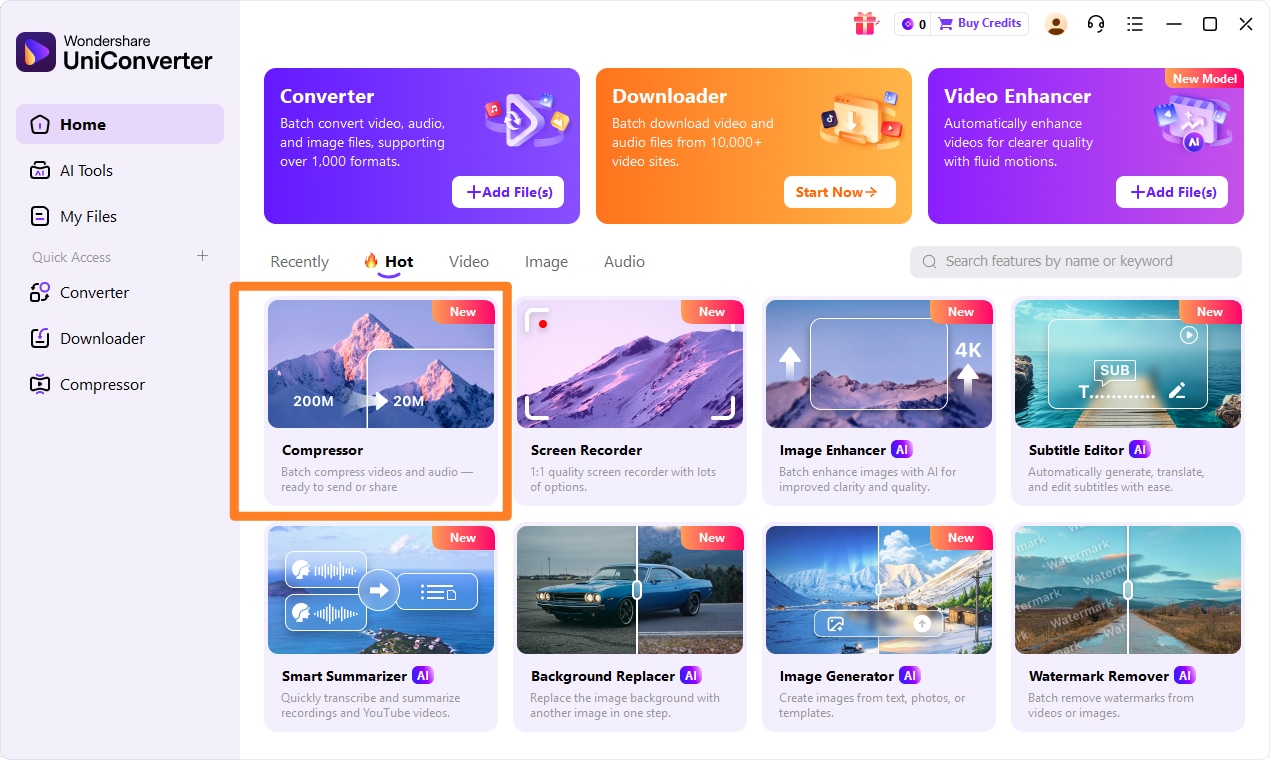
Step 1: Open UniConverter and Choose Compressor
Launch UniConverter and navigate to the "Video Compressor" tool from the main interface.
Step 2: Upload the Video, Audios or Images
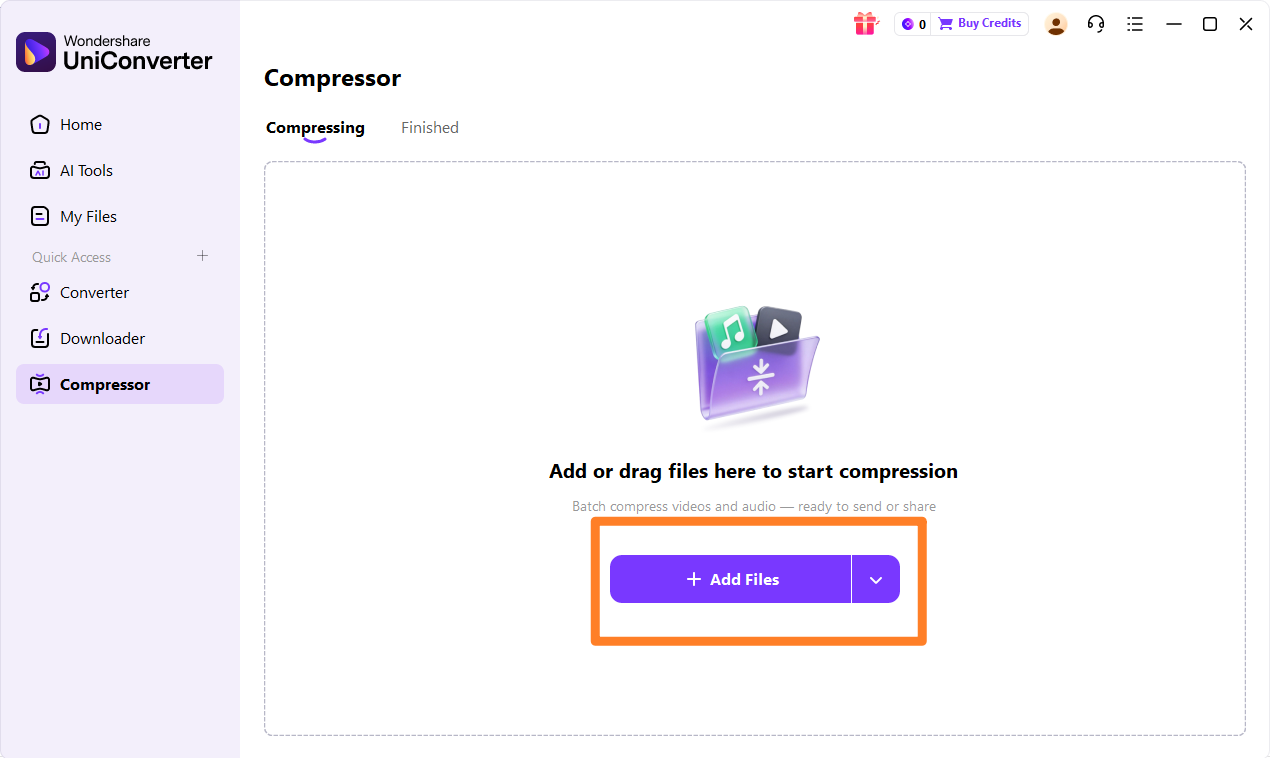
Drag and drop your video files directly into the UniConverter window, or click "Add Files" to browse and select them.
Step 3: Choose Required Parameters
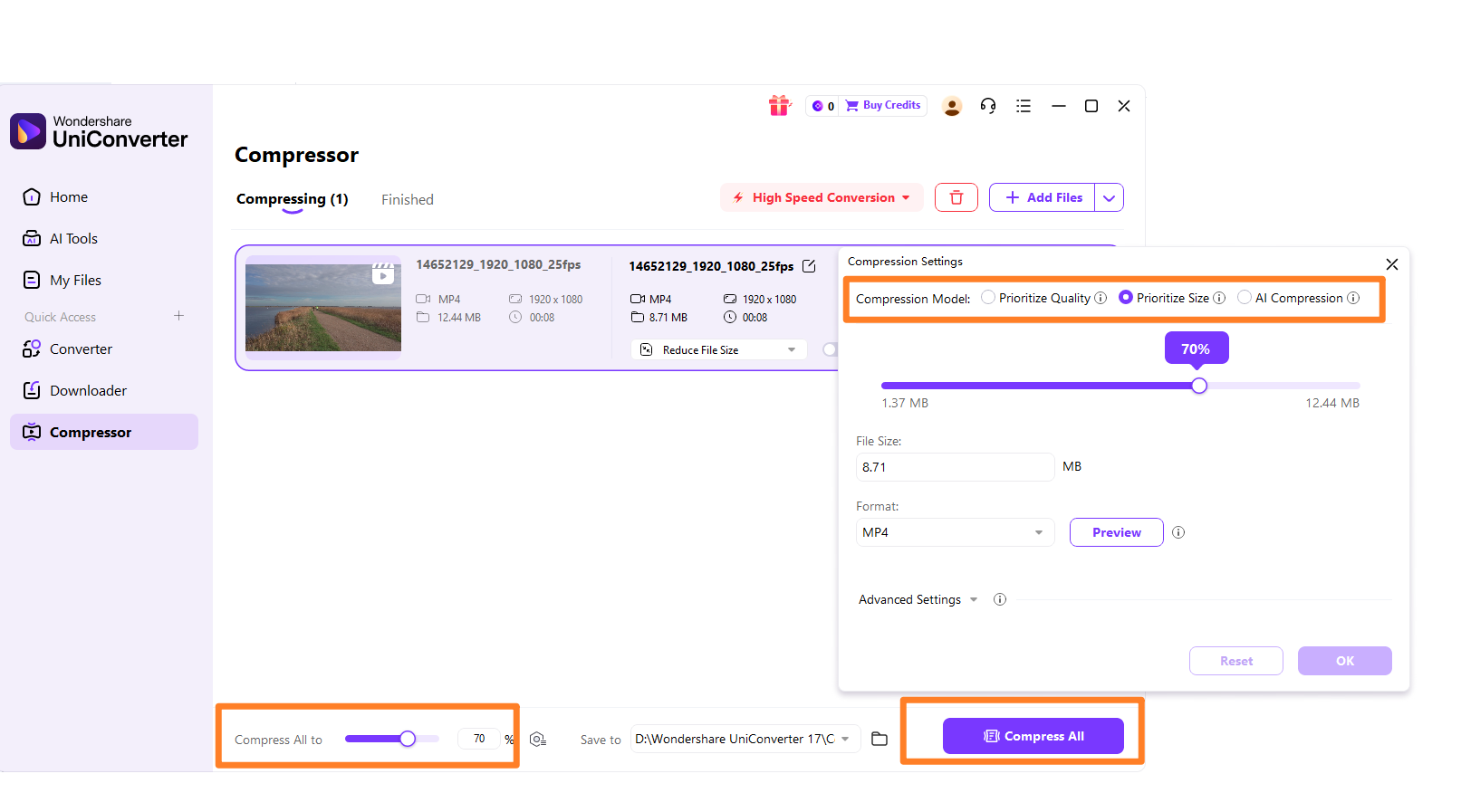
Select your desired output format, resolution, and quality settings. You can use the slider to adjust the compression ratio and preview the estimated file size.
Step 4: Save the Compressed File
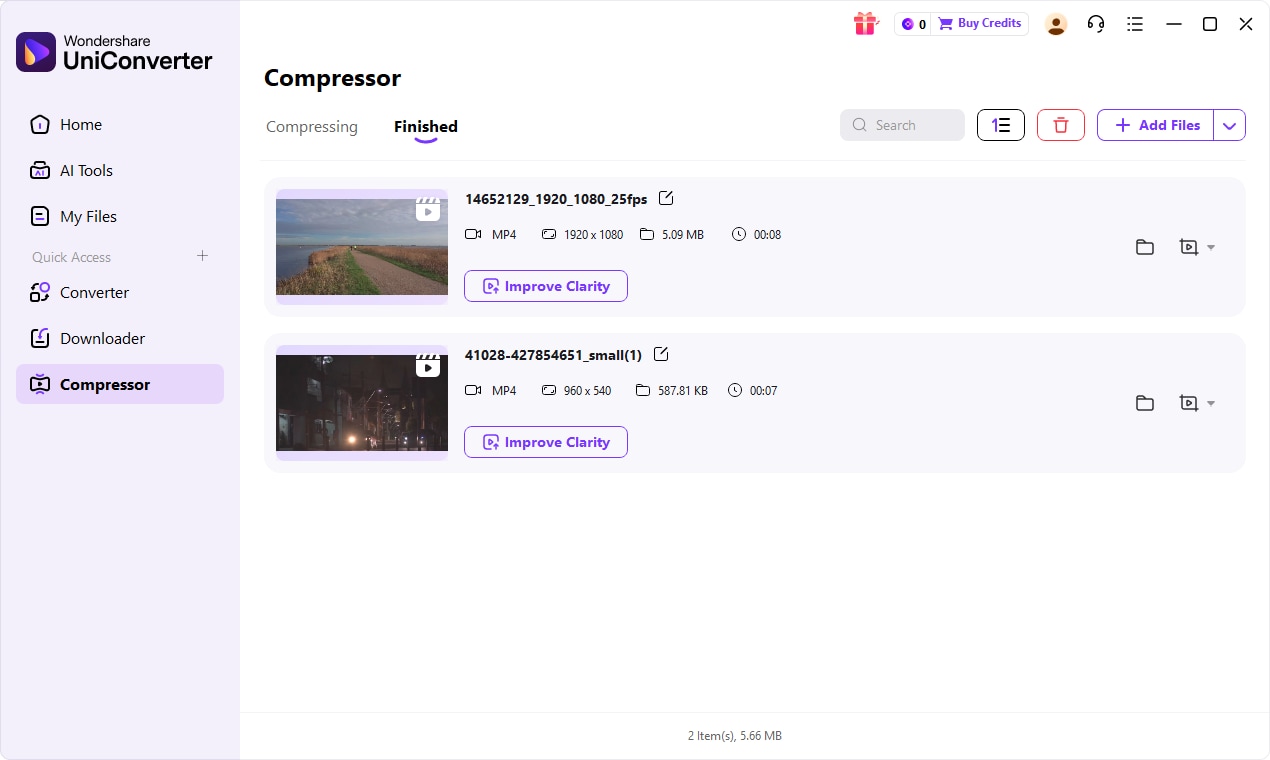
Click the "Compress" button to start the process. Once complete, your compressed video will be saved to your specified output folder.

Camtasia Video Compressor Alternative?
Part 7: Final Verdict and Recommendations
After extensively using and comparing Camtasia's video compressor, my final verdict is that it's an excellent tool for specific user groups, but not a one-size-fits-all solution. For educators, content creators, and anyone who primarily records and edits within the Camtasia ecosystem, the integrated Camtasia Video Compressor review shows it offers unparalleled convenience and a streamlined workflow. It produces good quality output for most web-based platforms and is incredibly user-friendly. However, if you're an advanced user requiring granular control over compression parameters, dealing with very large 4K files frequently, or needing robust batch processing capabilities, you might find Camtasia's compressor somewhat limiting. In such cases, dedicated tools like HandBrake or Adobe Media Encoder offer more power and flexibility. For those on a tight budget, free alternatives can suffice, though they often come with their own set of compromises. Ultimately, for an all-in-one, versatile solution that balances ease of use with powerful features, UniConverter stands out as a strong recommendation for comprehensive video compression needs.
Part 8: FAQs
-
1. Does Camtasia Video Compressor support 4K video?
Yes, Camtasia can handle 4K video, but compression performance may vary depending on your system's hardware. For very large 4K files, you might experience slower processing times.
-
2. Can I compress multiple videos at once with Camtasia?
Camtasia's batch processing for compression is not as robust as dedicated tools. While you can queue multiple projects for production, it's not designed for efficient, high-volume batch compression of already-rendered videos in the same way a tool like UniConverter or HandBrake is.
-
3. Is there a free trial for Camtasia Video Compressor?
Yes, TechSmith offers a free trial for Camtasia, which includes access to its video compression features. This allows you to test its capabilities before making a purchase.
-
4. How does Camtasia's compression compare to online video compressors?
Camtasia generally offers better control, higher quality, and more privacy than most free online compressors. Online tools often have file size limits, can be slower, and may compromise video quality more significantly.
-
5. What are the recommended settings for optimal compression in Camtasia?
It depends on your target platform and desired quality. Generally, for web delivery, I recommend using the H.264 codec with a balanced bitrate (e.g., 5-10 Mbps for 1080p) and selecting a resolution appropriate for your audience. Experimenting with Camtasia's built-in presets for YouTube or Vimeo is a good starting point.
