
- Value: BulkResizePhotos excels at quick, bulk image optimization for web use, ideal for bloggers and small businesses.
- Comparison: It offers superior batch processing simplicity compared to TinyPNG or Compressor.io, but lacks advanced features.
- Decision: Choose BulkResizePhotos for fast, basic web image prep; opt for UniConverter for advanced control, offline use, and diverse media compression.
- Pitfalls: Be aware of potential quality loss with aggressive compression, data privacy concerns with online tools, and reliance on internet connectivity.
In this article
- Part 1: What is BulkResizePhotos Image Compressor
- Part 2: BulkResizePhotos Image Compressor's Core Performance, Pros, and Cons
- Part 3: BulkResizePhotos Image Compressor's Target Audience and Use Cases
- Part 4: BulkResizePhotos Image Compressor and Alternatives Comparison
- Part 5: Risks and Pitfalls to Consider
- Part 6: How to Use UniConverter for Efficient Audio and Video Compression
- Part 7: Conclusion
- Part 8: FAQs
BulkResizePhotos Image Compressor: A Comprehensive Review and Comparison
Welcome to my BulkResizePhotos Image Compressor review! As someone who frequently deals with large volumes of images for various online projects, I'm always on the lookout for tools that can streamline my workflow without compromising quality. BulkResizePhotos Image Compressor positions itself as a straightforward solution for quickly resizing, cropping, and compressing images in bulk. In this comprehensive review, I'll dive deep into its features, compare it with leading competitors, and help you determine if it's the right tool for your specific needs. We'll explore its strengths, weaknesses, and potential pitfalls, offering a balanced perspective to guide your decision-making process.
Part 1: What is BulkResizePhotos Image Compressor
BulkResizePhotos Image Compressor is an online web-based tool designed to simplify the process of optimizing images for web use. Its primary function is to allow users to upload multiple images simultaneously and then apply various transformations like resizing, cropping, and compression. The tool aims to provide a quick and efficient way to prepare images for websites, blogs, and social media platforms, where file size and dimensions are crucial for loading speed and visual presentation. My goal with this review is to assess whether it truly delivers on its promise of efficiency and quality for everyday users.
Understanding the Landscape of Online Image Compression Tools
The digital world demands optimized images, and online compression tools have become indispensable.
* The need for speed: Slow-loading websites due to large image files can significantly impact user experience and SEO rankings.
* Storage efficiency: Smaller image files consume less storage space, which is beneficial for both personal and professional use.
* Ease of use: Many users, especially those without advanced graphic design skills, require intuitive tools to handle image optimization.
Part 2: BulkResizePhotos Image Compressor's Core Performance, Pros, and Cons
BulkResizePhotos Image Compressor is built around a few key capabilities that make it attractive for quick image optimization. It excels at processing multiple images at once, offering a significant time-saving advantage. The interface is remarkably simple, allowing me to jump right into compressing without a steep learning curve. It supports common formats like JPG, PNG, and GIF, and provides options for resizing by pixels or percentage, cropping to specific aspect ratios, and adjusting compression levels.
Pros:
* Batch Processing Efficiency for Multiple Images: I can upload dozens of photos and apply the same settings to all of them in one go, which is a huge time-saver.
* User-Friendly Interface for Quick Operations: The layout is clean and intuitive; I don't need any tutorials to figure out how to use it.
* Diverse Output Options (Resizing, Cropping, Compression): It’s not just compression; I can also resize and crop, which covers most of my basic image preparation needs.
Cons:
* Limited Advanced Editing Capabilities: If I need to do more than basic adjustments, I have to switch to another tool.
* Potential for Quality Degradation with Aggressive Compression: Pushing the compression too far can sometimes result in noticeable artifacts or blurriness.
Part 3: BulkResizePhotos Image Compressor's Target Audience and Use Cases
From my experience, BulkResizePhotos Image Compressor is perfectly suited for individuals and small businesses who need a fast, no-frills solution for image optimization. It’s not designed for professional photographers or graphic designers who require pixel-perfect control and advanced editing features. Instead, it targets those who prioritize speed and simplicity for common web-related tasks.
Best Use Case: Rapid Bulk Image Optimization for Web Uploads
I find it incredibly useful when I'm preparing images for a new blog post or updating product photos on an e-commerce site. I can quickly resize and compress all the images to a consistent size and optimal file weight, ensuring fast page loading times without spending hours in complex photo editing software. It’s ideal for bloggers, social media managers, and small online shop owners.
Limited Use Case: Professional Photo Editing Requiring Precise Control
However, if I'm working on a high-resolution print project or need to perform intricate color corrections, selective sharpening, or noise reduction, BulkResizePhotos Image Compressor simply doesn't cut it. For those tasks, I'd definitely turn to more robust desktop applications like Adobe Photoshop or GIMP, which offer the granular control and advanced features necessary for professional-grade image manipulation.
Part 4: BulkResizePhotos Image Compressor and Alternatives Comparison
When I look at BulkResizePhotos Image Compressor against its competitors, its strength lies in its straightforward batch processing. While other tools offer excellent compression, they often lack the same level of simplicity for handling multiple files at once. For example, TinyPNG is fantastic for PNG compression but doesn't always offer the same batch resizing flexibility. Compressor.io provides great quality but can be more restrictive with file types and batch limits. UniConverter, on the other hand, stands out with its comprehensive feature set, including offline capability and support for a wider range of formats, making it a more versatile option for diverse needs.
| Feature/Tool | BulkResizePhotos Image Compressor | TinyPNG | Compressor.io | UniConverter |
| Batch Processing | Yes | Limited (up to 20 images) | Limited (up to 10 images) | Yes (unlimited) |
| Output Formats | JPG, PNG, GIF | JPG, PNG | JPG, PNG, SVG, GIF, WEBP | JPG, PNG, GIF, BMP, TIFF, WEBP, HEIC |
| Advanced Settings | Basic (quality slider, dimensions) | Moderate (lossy/lossless) | Moderate (quality slider) | Advanced (bitrate, resolution, frame rate, quality) |
| User Interface | Very Simple | Simple | Modern & Clean | Modern & Feature-rich |
| Offline Capability | No | No | No | Yes |
Key Differentiators: Batch Processing and Simplicity
BulkResizePhotos Image Compressor truly shines in its ability to handle multiple images with minimal fuss. Its interface is arguably the easiest to navigate among these options, making it perfect for users who just want to get the job done quickly without delving into complex settings. While TinyPNG and Compressor.io offer excellent compression algorithms, they often impose stricter limits on batch processing or lack the integrated resizing and cropping options that BulkResizePhotos provides. UniConverter, however, offers a more robust solution, combining batch processing with advanced settings and offline functionality, catering to a broader spectrum of user needs.
Part 5: Risks and Pitfalls to Consider
Using any online tool, including BulkResizePhotos Image Compressor, comes with its own set of considerations and potential risks that I always keep in mind. It's important to be aware of these before committing your images to an online service, especially if they contain sensitive information or require pristine quality.
Data Privacy Concerns with Online Tools
When I upload images to an online platform, I'm essentially entrusting my data to a third-party server. While BulkResizePhotos Image Compressor likely has privacy policies in place, there's always a lingering question about how long images are stored, who has access to them, and whether they are used for any other purposes. For highly sensitive or confidential images, I would strongly advise against using any online compressor and instead opt for an offline desktop application.
Impact of Aggressive Compression on Image Quality
One of the biggest trade-offs with image compression is the potential for quality degradation. While BulkResizePhotos Image Compressor aims to balance file size and visual quality, pushing the compression slider too far can result in noticeable artifacts, color banding, or a general loss of sharpness. I've found that for images where visual fidelity is paramount, I need to be very careful with the compression settings and always preview the output before finalizing. It's a fine line between a smaller file and a visibly compromised image.
Presence of Advertisements and User Experience
As a free online tool, BulkResizePhotos Image Compressor relies on advertisements for revenue. While these ads are generally not overly intrusive, they can sometimes interrupt the workflow or distract from the main task. I've encountered instances where ads pop up or are strategically placed, which can slightly diminish the overall user experience. This is a common trade-off for free services, but it's something to be aware of if you prefer an ad-free environment.
Dependency on Internet Connectivity
Since BulkResizePhotos Image Compressor is a web-based tool, it requires a stable internet connection to function. This means if I'm working offline, or if my internet connection is slow or unreliable, I won't be able to use the service. This can be a significant limitation for users who frequently work in environments with poor connectivity or prefer the flexibility of an offline solution.
Part 6: How to Use UniConverter for Efficient Audio and Video Compression
Tools like BulkResizePhotos Image Compressor can be useful for quick image tasks, but they start to feel limited once you need to handle more than just pictures. If batch processing becomes unreliable, results look inconsistent, or you also need to work with audio and video, UniConverter is a much more flexible alternative. It works well for image compression, audio compression, and video compression, so it’s easier to manage different file types in one place. I also like that it offers an ad-free workflow, broad format support, and GPU acceleration for faster processing. For video files, it can even help compress videos without quality loss as much as possible, making it a practical all-in-one solution for everyday media compression.
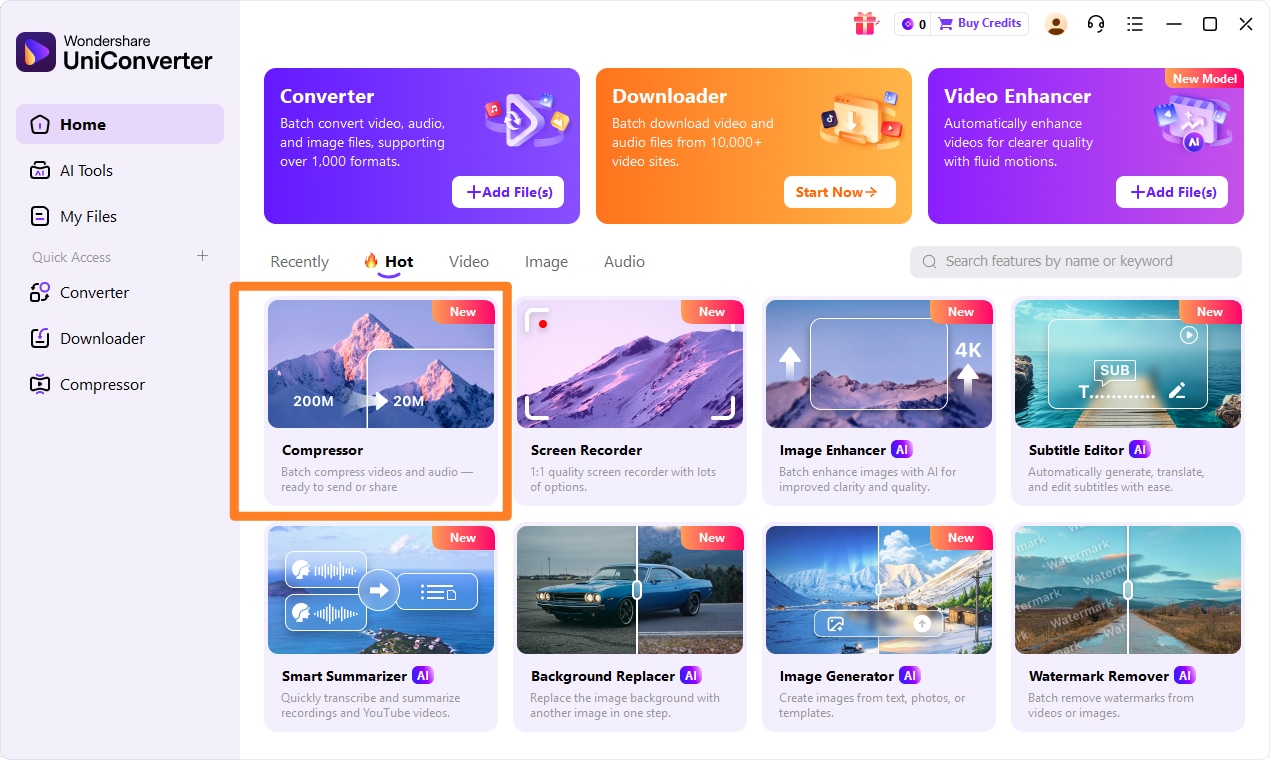
Step 1: Open UniConverter and Choose Compressor
First, I launch UniConverter on my desktop. From the main interface, I navigate to the "Compressor" module, which is specifically designed for reducing file sizes.
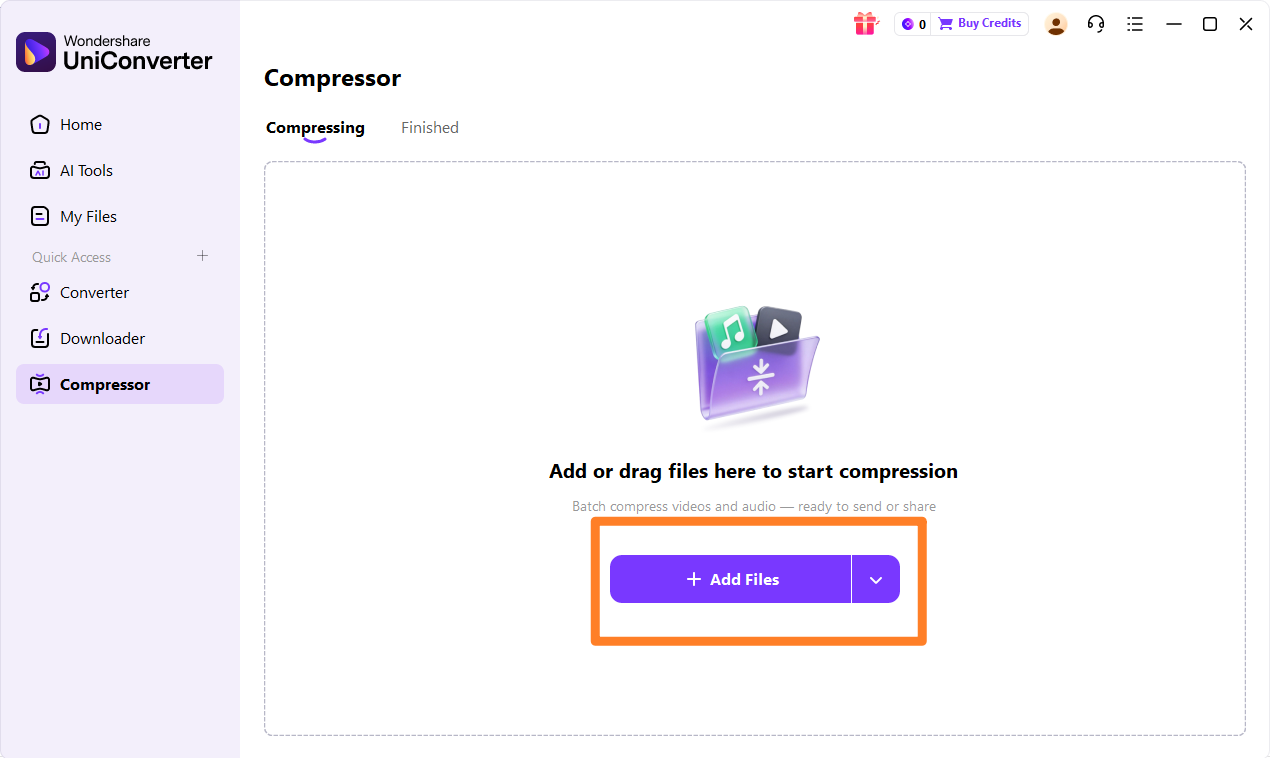
Step 2: Upload the Video, Audios or Images
Next, I click on the "Add Files" button or simply drag and drop the video, audio, or image files I want to compress into the UniConverter window.
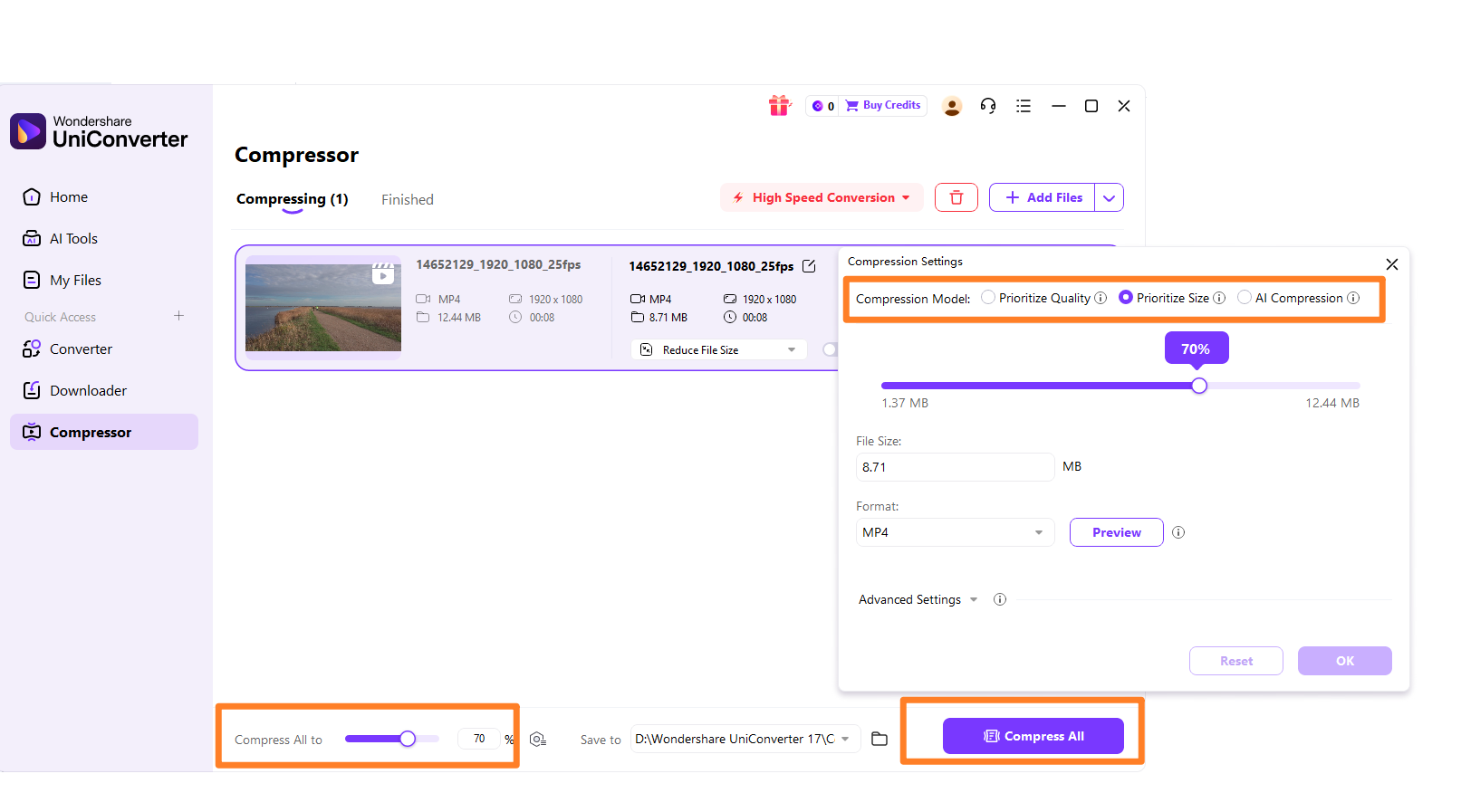
Step 3: Choose Required Parameters
Once my files are loaded, I can select the desired output format and adjust various compression parameters such as resolution, bitrate, and quality. UniConverter provides presets for common uses, or I can customize settings for precise control.
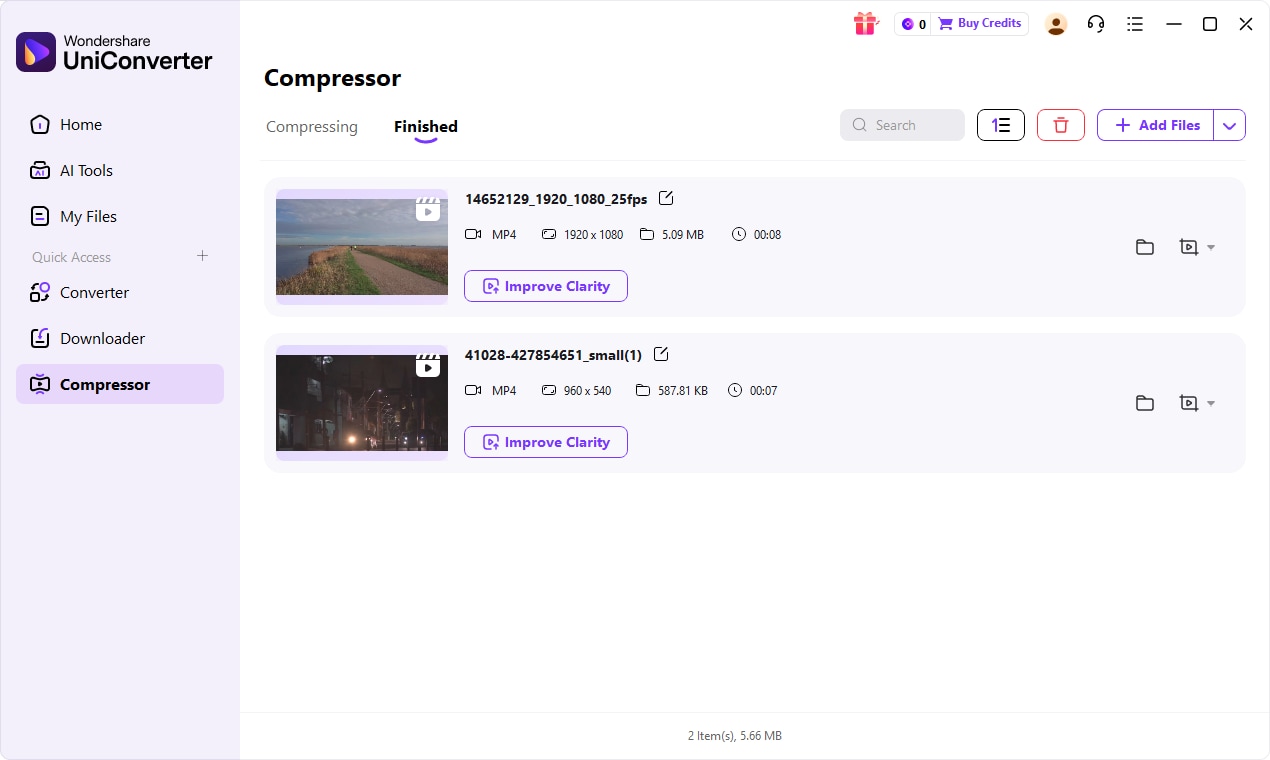
Step 4: Start Compression and Save Your Optimized Files
Finally, I click the "Compress" button. UniConverter will then process my files, and once completed, I can find my optimized files in the designated output folder.

Need a Better Bulk Image Compressor Alternative?
Part 7: Conclusion
In conclusion, my BulkResizePhotos Image Compressor review reveals it to be an excellent tool for casual users, bloggers, and small business owners who need a quick and easy way to optimize images for web use. Its strength lies in its user-friendly interface and efficient batch processing capabilities, making it ideal for rapid, high-volume tasks where simplicity is key. However, for professionals or those requiring advanced editing features, precise quality control, or an ad-free offline experience, it falls short. In such scenarios, I highly recommend considering a more comprehensive solution like UniConverter, which offers greater control, broader format support, and offline functionality. The choice ultimately depends on balancing the need for speed and simplicity against the demand for advanced features and uncompromised quality.
Part 8: FAQs
-
1. Is BulkResizePhotos Image Compressor free to use?
Yes, it offers a free tier with basic functionalities, allowing you to compress and resize images without charge.
-
2. Does BulkResizePhotos Image Compressor support all image formats?
It primarily supports common formats like JPG, PNG, and GIF. For less common or specialized formats, you might need an alternative tool.
-
3. How does BulkResizePhotos Image Compressor ensure image quality?
It uses algorithms to balance file size reduction with visual quality. However, aggressive compression settings can still lead to noticeable degradation, so it's important to preview your results.
-
4. Can I use BulkResizePhotos Image Compressor offline?
No, it is an online tool and requires an active internet connection to upload, process, and download your images.
-
5. What are the main advantages of using UniConverter over BulkResizePhotos Image Compressor?
UniConverter offers more advanced features, including offline capability, support for a wider range of media formats (video, audio, and images), greater control over compression settings, and an ad-free experience, making it suitable for professional and more demanding use cases.
