
- Bandicam's Niche: Ideal for quick, integrated audio compression within Bandicam's recording workflow.
- Quality vs. Size: Offers good file size reduction, but risks quality degradation if not configured carefully.
- Limited Features: Lacks advanced editing, noise reduction, and robust batch processing capabilities.
- Competitor Comparison: Simpler than Audacity/Adobe Audition, more reliable than generic online converters.
- UniConverter Alternative: For comprehensive, high-quality, and batch audio compression, UniConverter is recommended.
In this article
- Part 1: What is Bandicam Audio Compressor?
- Part 2: Bandicam Audio Compressor: Core Features, Pros, and Cons
- Part 3: Bandicam Audio Compressor: Ideal Users and Use Cases
- Part 4: Bandicam Audio Compressor vs. Competitors
- Part 5: Risks and Pitfalls to Consider
- Part 6: How to Use UniConverter for Comprehensive Audio Compression
- Part 7: Conclusion
- Part 8: FAQs
Bandicam Audio Compressor: A Comprehensive Review and Comparison
When I'm creating digital content, especially gameplay videos or online tutorials, I often find myself wrestling with large file sizes. This isn't just an inconvenience; it impacts upload times, storage space, and even viewer experience. That's where audio compression comes in, and Bandicam, a popular screen recorder, offers its own built-in solution. This Bandicam Audio Compressor review will dive deep into its features, compare it with alternatives, and help you understand if it's the right tool for your needs. I'll share my personal experiences, highlight its strengths and weaknesses, and guide you through various scenarios to make an informed decision about your audio compression workflow.
Part 1: What is Bandicam Audio Compressor?
Bandicam is widely recognized as a lightweight yet powerful screen recording software, favored by gamers and content creators for its ability to capture high-quality video with minimal performance impact. Integrated within this recording suite is the Bandicam Audio Compressor, designed to reduce the size of audio tracks recorded alongside video. Its primary purpose is to make recorded files more manageable for storage, sharing, and uploading without requiring a separate audio editing application. This review aims to address the core problem of balancing file size reduction with maintaining acceptable audio quality, a common challenge for anyone producing digital content.
The Growing Need for Efficient Audio Compression in Digital Content Creation
* Large File Sizes: High-quality video recordings often come with uncompressed or minimally compressed audio, leading to massive file sizes that are cumbersome to handle.
* Slow Uploads and Downloads: Large files translate to longer upload times for platforms like YouTube or Twitch, and slower download speeds for viewers.
* Storage Constraints: Content creators, especially those with extensive archives, constantly battle storage limitations, making efficient compression crucial.
* Bandwidth Limitations: For both creators and consumers, optimized file sizes ensure a smoother experience, particularly in regions with limited internet bandwidth.
Part 2: Bandicam Audio Compressor: Core Features, Pros, and Cons
The Bandicam Audio Compressor is an integrated tool within the Bandicam screen recording software, primarily focused on reducing the file size of recorded audio. Its core capability lies in applying various compression codecs and settings to the audio track of your video recordings. I've found it to be a straightforward solution for post-recording optimization. It allows me to select different bitrates and sample rates, offering a balance between file size and perceived audio quality. While it doesn't boast a plethora of advanced audio editing features, its strength lies in its simplicity and direct integration into my recording workflow.
Pros:
* Seamless Integration with Bandicam's Recording Workflow: I love that I can compress audio right after recording, without exporting to another program. It saves me a lot of time.
* User-Friendly Interface for Quick Adjustments: The settings are intuitive; I can easily find and adjust the compression parameters without feeling overwhelmed.
* Effective for Reducing File Size without Significant Quality Loss: For most of my gameplay videos, the compression is good enough that my viewers don't notice a drop in quality.
Cons:
* Limited Advanced Audio Editing Capabilities: If I need to remove background noise or perform detailed EQ adjustments, I have to use a separate audio editor.
* Potential for Over-Compression if Not Configured Properly: I've learned the hard way that setting the bitrate too low can make my voice sound robotic or muffled.
Part 3: Bandicam Audio Compressor: Ideal Users and Use Cases
I've found the Bandicam Audio Compressor to be particularly useful for specific types of users and scenarios. It's not a professional audio workstation, but it excels in its niche. If you're primarily a content creator who uses Bandicam for screen recording and needs a quick, integrated solution for managing file sizes, this tool is definitely for you. It's perfect for those who prioritize efficiency and ease of use over granular audio control.
Scenario 1: Optimizing Recorded Gameplay for Online Sharing
This is where Bandicam Audio Compressor shines for me. After a long gaming session, my raw video files can be huge. Before uploading to YouTube or sharing with friends, I use the compressor to significantly reduce the file size. This makes uploads much faster and consumes less bandwidth for both me and my audience. I can quickly select a moderate bitrate, and the audio quality remains perfectly acceptable for gameplay commentary and in-game sounds. It's an essential step in my post-recording workflow.
Scenario 2: Compressing Lecture Recordings for Storage and Distribution (with limitations)
I've also tried using it for compressing lecture recordings. While it does reduce the file size, which is great for storage and distributing to students, its limitations become apparent here. If the original recording has background noise or inconsistent volume levels, Bandicam's compressor won't fix those issues. It simply compresses what's there. For academic content where clarity is paramount, I often find myself needing a more robust audio editor before compression, or at least being very careful with the compression settings to avoid further degradation of already imperfect audio.
Part 4: Bandicam Audio Compressor vs. Competitors
When I look at the landscape of audio compression tools, Bandicam's offering sits in a specific spot. It's convenient for Bandicam users, but it's important to see how it stacks up against dedicated audio software and online solutions.
Comparison Table Placeholder:
| Feature/Aspect | Bandicam Audio Compressor | Audacity | Adobe Audition | Online Converters |
| Ease of Use | Very Easy | Moderate | Complex | Very Easy |
| Compression Quality | Good (for its purpose) | Excellent | Professional | Variable |
| Advanced Features | Limited | Good (editing) | Extensive | Minimal |
| Integration | Seamless with Bandicam | Standalone | Adobe Ecosystem | Web-based |
| Price | Included with Bandicam | Free | Subscription | Free (with ads/limits) |
Key Differentiators and When to Choose Each
From my experience, Bandicam Audio Compressor is best when you're already using Bandicam and just need a quick, integrated way to shrink your audio files without leaving the ecosystem. Audacity, being free and open-source, offers much more control over audio editing and compression algorithms; I'd pick it if I needed to clean up audio before compressing. Adobe Audition is for professionals who demand the absolute best quality and have complex audio projects, but it comes with a steep learning curve and a subscription fee. Online converters are great for one-off tasks with small files, but I wouldn't rely on them for consistent, high-quality results due to potential privacy concerns and varying compression quality.
Part 5: Risks and Pitfalls to Consider
While the Bandicam Audio Compressor offers convenience, I've learned that it's crucial to be aware of its limitations and potential downsides. Relying solely on it for all my audio compression needs can lead to unexpected issues, especially if I'm not careful with the settings.
Potential for Audio Quality Degradation
This is my biggest concern. If I set the compression bitrate too low, my audio can quickly sound muddy, tinny, or even introduce artifacts. This is particularly noticeable with speech or music. It's a delicate balance between file size reduction and maintaining clarity, and sometimes, the "effective" reduction comes at the cost of noticeable quality loss, especially for discerning listeners.
Lack of Advanced Noise Reduction or Enhancement
Bandicam's compressor is just that – a compressor. It won't magically remove background hums, fan noise, or echo from my recordings. If my original audio is noisy, compressing it will only make the noise more prominent or introduce new compression artifacts on top of it. I've had to learn that pre-processing audio in a dedicated editor is often necessary before even thinking about compression if the source isn't clean.
Limited Batch Processing Capabilities
One of the frustrations I've encountered is the lack of robust batch processing. If I have multiple video files with audio that needs compressing, I often have to process them one by one within Bandicam or re-encode the entire video, which can be time-consuming. This significantly slows down my workflow when dealing with a large volume of content.
Dependence on Bandicam Ecosystem
The compressor is tied directly to Bandicam. This means if I record audio separately or use a different screen recorder, I can't leverage Bandicam's built-in compressor. I'm locked into their ecosystem, which limits my flexibility if I decide to switch recording software or need to compress audio from other sources. It's a convenience for Bandicam users, but a limitation for everyone else.
Part 6: How to Use UniConverter for Comprehensive Audio Compression
Sometimes, Bandicam's built-in compressor simply isn't sufficient, especially when I need greater control, better quality, or support for files from different sources. When I run into issues like inconsistent compression results, noticeable quality loss, or the inability to handle batch processing, I rely on UniConverter. It serves as a powerful alternative that avoids many of these common limitations, offering a more complete solution for both audio compression and video compression. With broad format support, stable output quality, and efficient performance for large files, it is also a practical choice for users looking for a reliable video compressor for PC. For me, it remains a dependable all-in-one media solution.
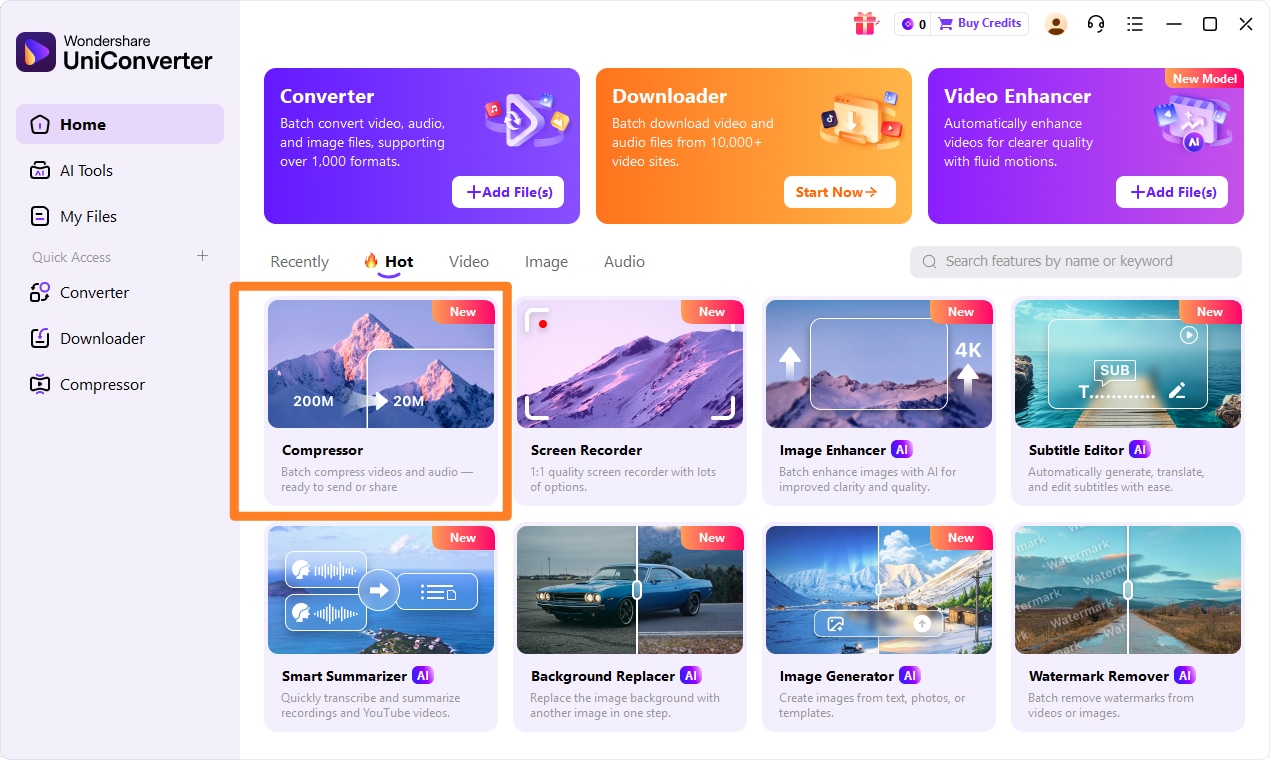
Step 1: Open UniConverter and Choose Compressor
First, I launch UniConverter and navigate to the "Compressor" tool from the main interface.
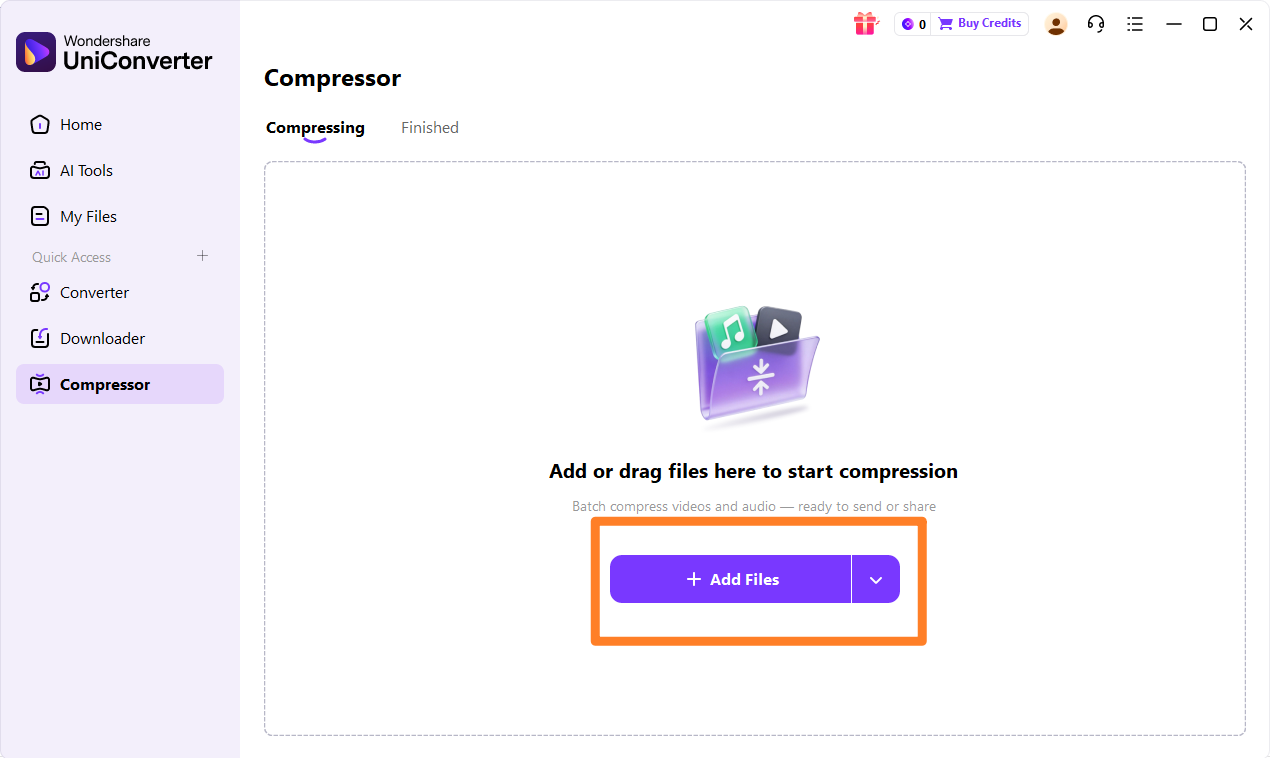
Step 2: Upload the Video, Audios or Images
Next, I drag and drop my audio files (or video files if I intend to compress the audio embedded within them) into the UniConverter window. I can add multiple files for batch processing.
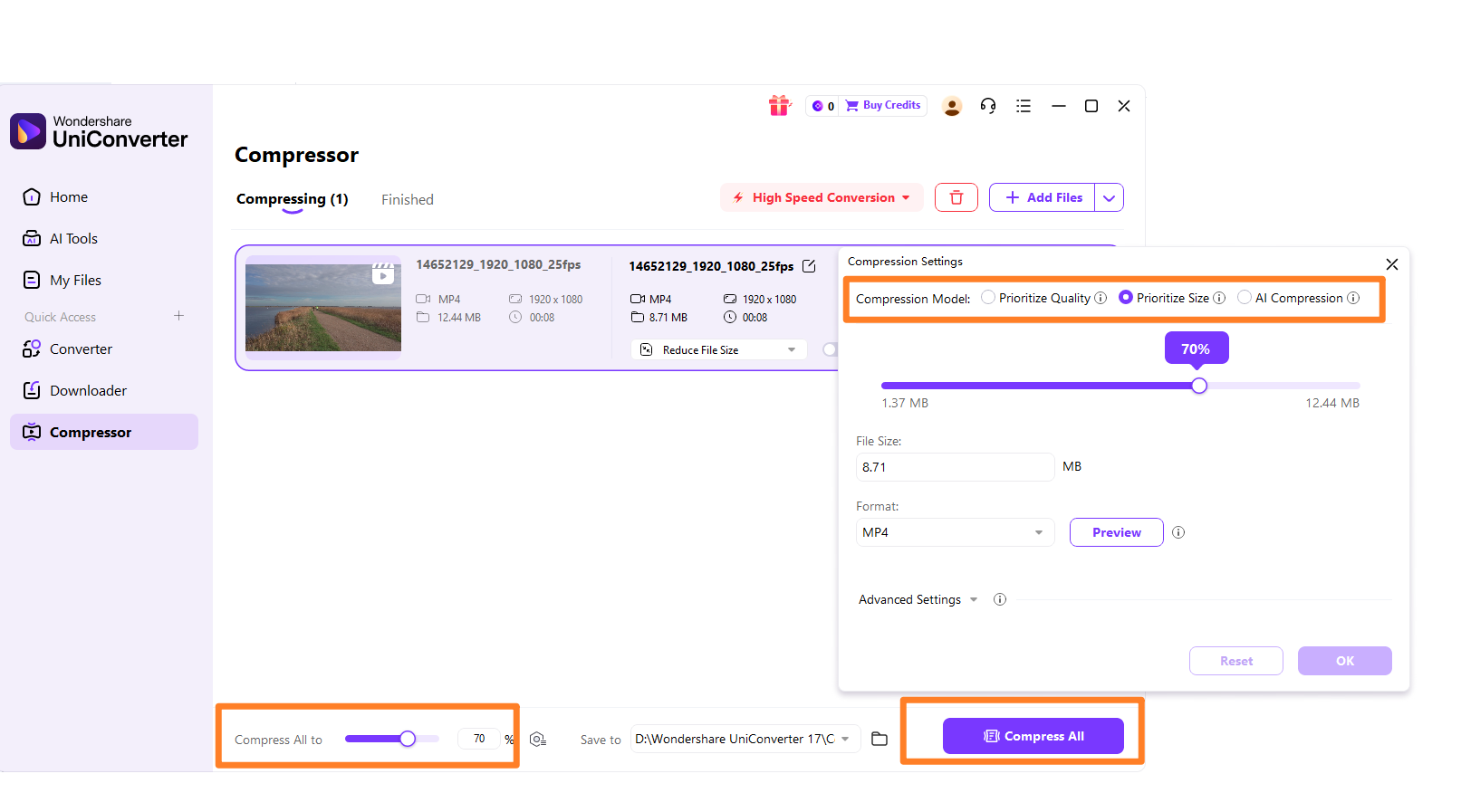
Step 3: Choose Required Parameters
Then, I select my desired compression settings. UniConverter provides various options for quality, bitrate, and format, enabling me to achieve the ideal balance for my requirements.
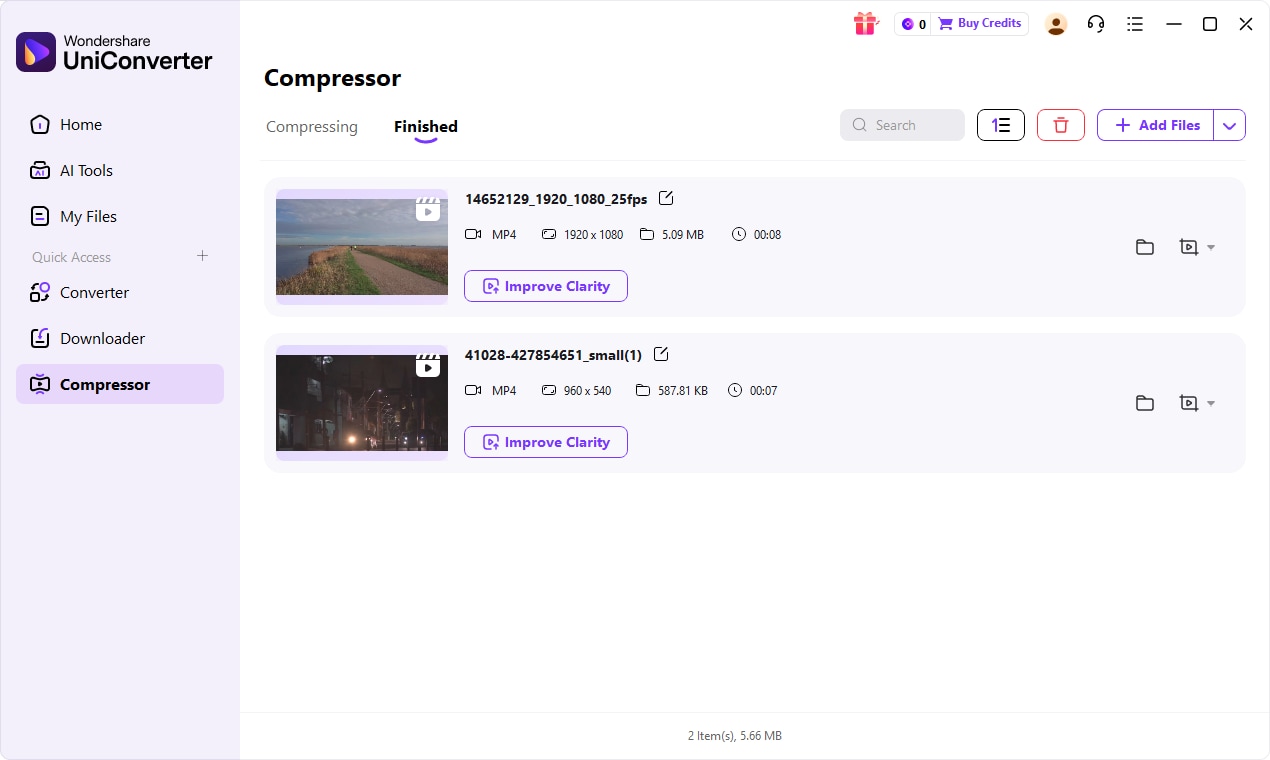
Step 4: Save the Compressed File
Finally, I choose my output folder and click "Compress" to save my optimized audio files.

Need a Better Bandicam Audio Compressor Alternative?
Part 7: Conclusion
After extensively using and comparing the Bandicam Audio Compressor review with other tools, my conclusion is that it serves a specific, valuable niche. For casual users and content creators who primarily use Bandicam for screen recording and need a quick, integrated way to reduce file sizes for online sharing or basic storage, it's an excellent, convenient option. Its seamless integration and user-friendly interface make it a go-to for simple post-recording optimization. However, for professionals or those requiring advanced audio editing, noise reduction, or precise control over compression parameters, its limitations become apparent. In such cases, dedicated audio editors like Audacity or Adobe Audition are indispensable. For users seeking a balanced solution that offers more control and batch processing capabilities without the complexity of professional software, while avoiding the pitfalls of online converters, UniConverter stands out as a highly recommended alternative. Ultimately, the best tool depends on your specific workflow, technical requirements, and the level of audio fidelity you need to maintain.
Part 8: FAQs
-
1. Does Bandicam Audio Compressor support all audio formats?
Bandicam primarily compresses the audio track within its recorded video files. While it uses common codecs like AAC, it doesn't function as a universal audio format converter for standalone audio files. For broader format support, you'd need a dedicated audio converter.
-
2. Can I compress multiple audio files at once with Bandicam?
No, Bandicam's built-in audio compressor is designed to work with the audio embedded in its video recordings, typically one video file at a time. It lacks robust batch processing capabilities for multiple independent audio files. For batch compression, I recommend using a tool like UniConverter.
-
3. How does Bandicam's audio compression compare to dedicated audio editors?
Bandicam's compressor is much simpler. It's good for basic file size reduction. Dedicated audio editors like Audacity or Adobe Audition offer far more advanced control over compression algorithms, noise reduction, equalization, and other audio enhancements, leading to higher quality results but requiring more expertise.
-
4. Is there a free version of Bandicam Audio Compressor?
The audio compressor is a feature included with the Bandicam screen recording software. Bandicam itself has a free trial version with limitations (like watermarks and recording time limits). So, you can use the compressor within the free trial, but it's not a standalone free product.
-
5. What are the best settings for compressing audio without losing quality in Bandicam?
To minimize quality loss, I usually aim for a higher bitrate, like 192 kbps or 256 kbps for AAC audio, and a sample rate of 44.1 kHz. Experimentation is key, as the "best" settings depend on your original audio quality and your tolerance for file size. Always listen to the compressed output before finalizing.
