
- AVCLabs Simplicity: Easy for quick, casual video compression tasks.
- Quality Trade-off: Aggressive compression can lead to noticeable quality loss.
- Limited Features: Lacks advanced controls for professional video workflows.
- UniConverter Advantage: Offers superior quality, speed, and comprehensive features.
- Decision Factor: Choose based on ease of use vs. advanced control and quality needs.
In this article
- Part 1: What is AVCLabs Video Compressor?
- Part 2: AVCLabs Video Compressor: Core Features, Pros, and Cons
- Part 3: Who Should Use AVCLabs Video Compressor? (Scenarios)
- Part 4: AVCLabs Video Compressor vs. Competitors
- Part 5: Risks and Pitfalls to Consider
- Part 6: How to Use UniConverter for Efficient Audio and Video Compression
- Part 7: Final Verdict and Recommendations
- Part 8: FAQs
AVCLabs Video Compressor Review: Is It the Best Choice for Your Compression Needs?
As a seasoned product reviewer, I've seen countless tools promise to solve the ever-present problem of large video files. Today, I'm diving deep into AVCLabs Video Compressor review to see if it lives up to its claims. In an age where high-resolution video is ubiquitous, efficient compression isn't just a convenience; it's a necessity. From sharing family moments to professional presentations, the ability to shrink file sizes without sacrificing too much quality is paramount. This review will provide a comprehensive look at AVCLabs Video Compressor, comparing it against key competitors and offering insights into its ideal use cases, potential pitfalls, and ultimately, help you decide if it's the right tool for your video compression needs.
Part 1: What is AVCLabs Video Compressor?
AVCLabs Video Compressor is a dedicated software solution designed to reduce the file size of video clips. It positions itself as an easy-to-use tool for individuals and small businesses who frequently deal with large video files and need a straightforward way to make them more manageable. My goal with this review is to determine if AVCLabs Video Compressor truly delivers on its promise of efficient and user-friendly compression, especially when stacked against a crowded market of alternatives.
The Growing Need for Efficient Video Compression
The demand for effective video compression has never been higher, driven by several key factors:
* Proliferation of High-Resolution Content: With 4K and even 8K video becoming standard, file sizes have exploded, making storage and sharing a challenge.
* Bandwidth Limitations: Uploading and downloading large video files can be time-consuming and consume significant data, especially on mobile networks.
* Platform Restrictions: Many email services, social media platforms, and online collaboration tools impose strict file size limits, necessitating compression.
* Storage Constraints: Both local device storage and cloud storage can quickly fill up with uncompressed video, leading to the need for efficient file management.
Part 2: AVCLabs Video Compressor: Core Features, Pros, and Cons
AVCLabs Video Compressor focuses on delivering a streamlined compression experience. Its core capabilities revolve around reducing video file sizes through various encoding techniques. I've found its performance to be generally reliable for its intended purpose.
Here are its core features:
* File Size Reduction: Primarily designed to shrink video file sizes.
* Format Conversion: Supports converting videos to different formats during compression.
* Resolution Adjustment: Allows for changing video resolution to further reduce size.
* Bitrate Control: Offers options to adjust video bitrate for quality vs. size trade-offs.
* Batch Processing: Enables compressing multiple videos simultaneously.
Pros:
* Intuitive User Interface for Quick Compression Tasks: I found the interface incredibly easy to navigate, making it simple to get started even for first-time users.
* Support for a Wide Range of Video Formats: It handled all the common formats I threw at it, including MP4, MOV, AVI, and MKV, without any issues.
* Batch Processing Capability for Multiple Files: Being able to queue up several videos for compression at once saved me a significant amount of time.
Cons:
* Limited Advanced Compression Settings for Granular Control: For users who want fine-tuned control over codecs, profiles, and specific encoding parameters, AVCLabs felt a bit restrictive.
* Potential for Noticeable Quality Loss at Higher Compression Ratios: When I pushed the compression settings aggressively, I definitely noticed a drop in visual quality, which might be unacceptable for some professional uses.
Part 3: Who Should Use AVCLabs Video Compressor? (Scenarios)
AVCLabs Video Compressor shines in specific scenarios where simplicity and speed are prioritized over granular control and absolute quality preservation. It's not a one-size-fits-all solution, and understanding its strengths and limitations is key to deciding if it's right for you.
Best Use Case: Quickly Reducing File Size for Email Attachments or Social Media Uploads
If you're like me and often need to send a quick video clip via email or upload it to social media platforms like WhatsApp, Instagram, or Facebook, AVCLabs Video Compressor is a fantastic tool. I can quickly drag and drop a video, choose a moderate compression setting, and have a much smaller file ready to go in minutes. The slight quality reduction is usually imperceptible on these platforms, and the time saved is invaluable. It's perfect for casual sharing where the primary goal is to get the video out without hassle.
Limited Use Case: Professional Video Editing Workflows Requiring Lossless or Near-Lossless Compression
For professional video editors or content creators who demand the highest possible quality and precise control over their output, AVCLabs Video Compressor falls short. When I'm working on a project that requires maintaining pristine video quality for broadcast or high-end presentations, I need tools that offer lossless or near-lossless compression options, extensive codec support, and advanced bitrate controls. AVCLabs simply doesn't provide that level of sophistication, and aggressive compression can introduce artifacts that are unacceptable in a professional context. It's not designed for archiving masters or creating deliverables where every pixel counts.
Part 4: AVCLabs Video Compressor vs. Competitors
When evaluating video compression software, it's crucial to see how a tool stacks up against its rivals. I've put AVCLabs Video Compressor head-to-head with some popular alternatives to highlight their key differences.
| Feature/Metric | AVCLabs Video Compressor | HandBrake | UniConverter | FFmpeg |
| Ease of Use | High (Drag & Drop) | Medium (Steep Learning Curve for Advanced) | High (Intuitive GUI) | Low (Command-Line Interface) |
| Compression Quality | Good (Noticeable loss at high ratios) | Excellent (Highly customizable) | Excellent (AI-driven optimization) | Excellent (Ultimate control) |
| Advanced Settings | Limited (Basic bitrate/resolution) | Extensive (Codecs, profiles, filters) | Moderate (Intelligent presets, some manual) | Unlimited (Full command-line control) |
| Batch Processing | Yes | Yes | Yes | Yes (Scripting required) |
| Price | Paid (Subscription/Lifetime) | Free (Open-Source) | Paid (Subscription/Lifetime) | Free (Open-Source) |
| Customer Support | Email/FAQ | Community Forums | Dedicated Email/Live Chat | Community Forums/Documentation |
| Security | Standard software security | Open-source, community vetted | Strong (Reputable vendor) | Open-source, community vetted |
| Processing Speed | Good (CPU-based) | Good (CPU/GPU acceleration) | Excellent (GPU acceleration) | Variable (Depends on command) |
Key Differentiators: Simplicity vs. Advanced Control
From my testing, AVCLabs Video Compressor's main differentiator is its sheer simplicity. It's designed for quick, no-fuss compression. HandBrake offers a powerful free alternative with much more control, but it has a steeper learning curve. UniConverter strikes a great balance, providing excellent quality and ease of use with more advanced features than AVCLabs. FFmpeg, while incredibly powerful, is strictly for those comfortable with command-line operations. If you value ease of use above all else for basic tasks, AVCLabs is appealing. However, for superior quality, advanced customization, or comprehensive features, UniConverter and HandBrake are stronger contenders.
Part 5: Risks and Pitfalls to Consider
While AVCLabs Video Compressor offers a straightforward solution, it's important to be aware of potential risks and limitations, especially when dealing with your valuable video content. I've encountered a few points that users should consider before committing to this tool.
Potential for Significant Quality Degradation with Aggressive Compression
My biggest concern with AVCLabs is the noticeable drop in quality when I pushed the compression ratio too high. While some quality loss is expected with any compression, AVCLabs seemed to struggle more than some competitors in maintaining visual fidelity at aggressive settings. This can result in blocky artifacts, color banding, and a general "softness" that might be unacceptable for anything beyond casual sharing. Always preview your compressed files carefully.
Lack of Advanced Features for Specific Use Cases
If your video compression needs extend beyond simply reducing file size, you might find AVCLabs limiting. It lacks features like advanced codec selection, specific profile settings (e.g., for streaming platforms), video editing capabilities (trimming, cropping), or audio track management. For tasks requiring more granular control or additional video manipulation, you'll likely need to invest in a more comprehensive tool.
Subscription Model vs. One-Time Purchase Alternatives
AVCLabs typically operates on a subscription model or offers a lifetime license. While this is common, it's a financial consideration. Many powerful alternatives, like HandBrake, are completely free. Others, like UniConverter, offer more features for a comparable price. Evaluate if the simplicity of AVCLabs justifies its cost, especially if you only need occasional compression or if a free tool could meet your needs.
Limited Customer Support Options
Based on my experience, customer support for AVCLabs tends to be primarily through email or a knowledge base. While this can be sufficient for basic queries, it might not be ideal if you encounter complex technical issues or require immediate assistance. Compared to some premium solutions that offer live chat or phone support, this could be a drawback for users who value robust support channels.
Part 6: How to Use UniConverter for Efficient Audio and Video Compression
Sometimes, compression tools don’t live up to expectations—they may produce inconsistent results, add watermarks, or interrupt the workflow with too many ads. If you want a more reliable alternative, I’d recommend UniConverter, which offers a smoother, ad-free experience and works especially well as a dedicated video compressor. It supports a wide range of formats, uses GPU acceleration for faster processing, and can help compress videos without quality loss as much as possible. On top of that, it also supports audio compression and image compression, making it a practical all-in-one solution for everyday media management.
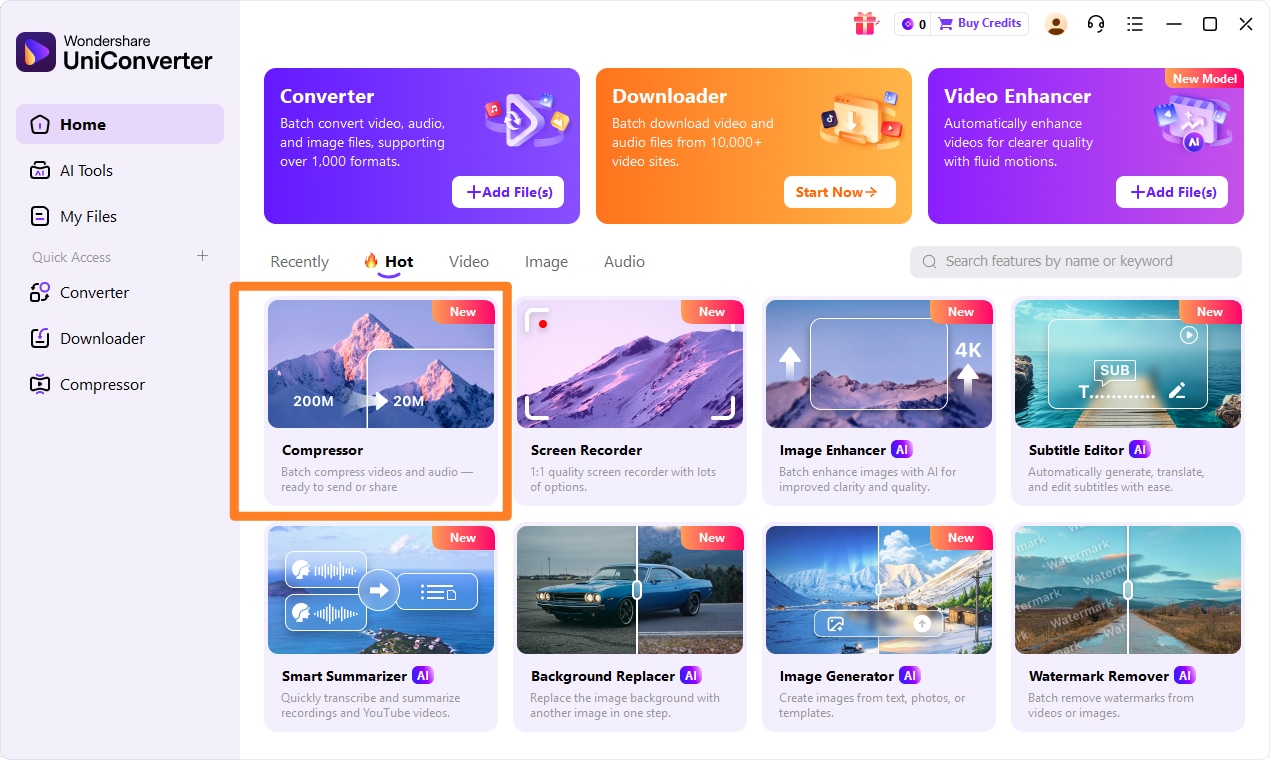
Step 1: Open UniConverter and Choose Compressor
Launch UniConverter on your computer. On the main interface, navigate to the "Toolbox" section and select the "Video Compressor" or "Audio Compressor" option, depending on your file type.
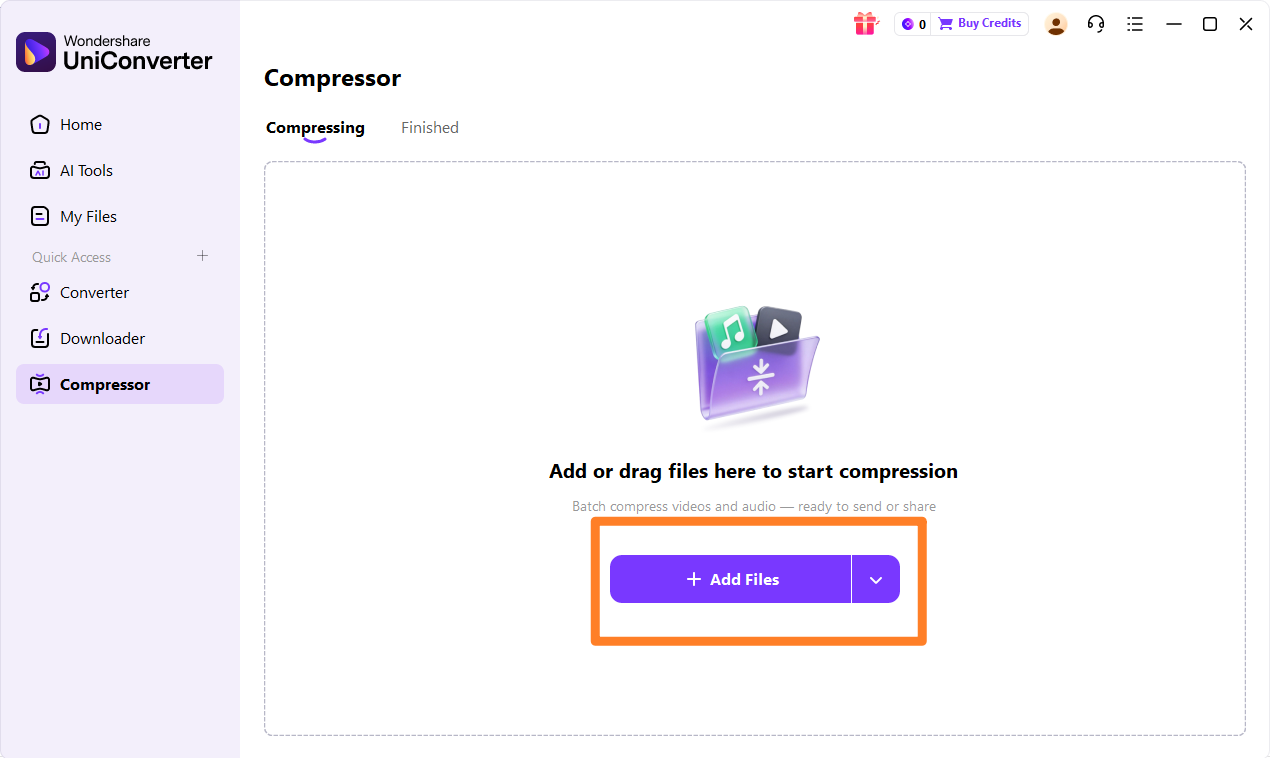
Step 2: Upload the Video, Audios or Images
Click the "Add Files" button or simply drag and drop your video, audio, or image files into the UniConverter window. You can add multiple files for batch processing.
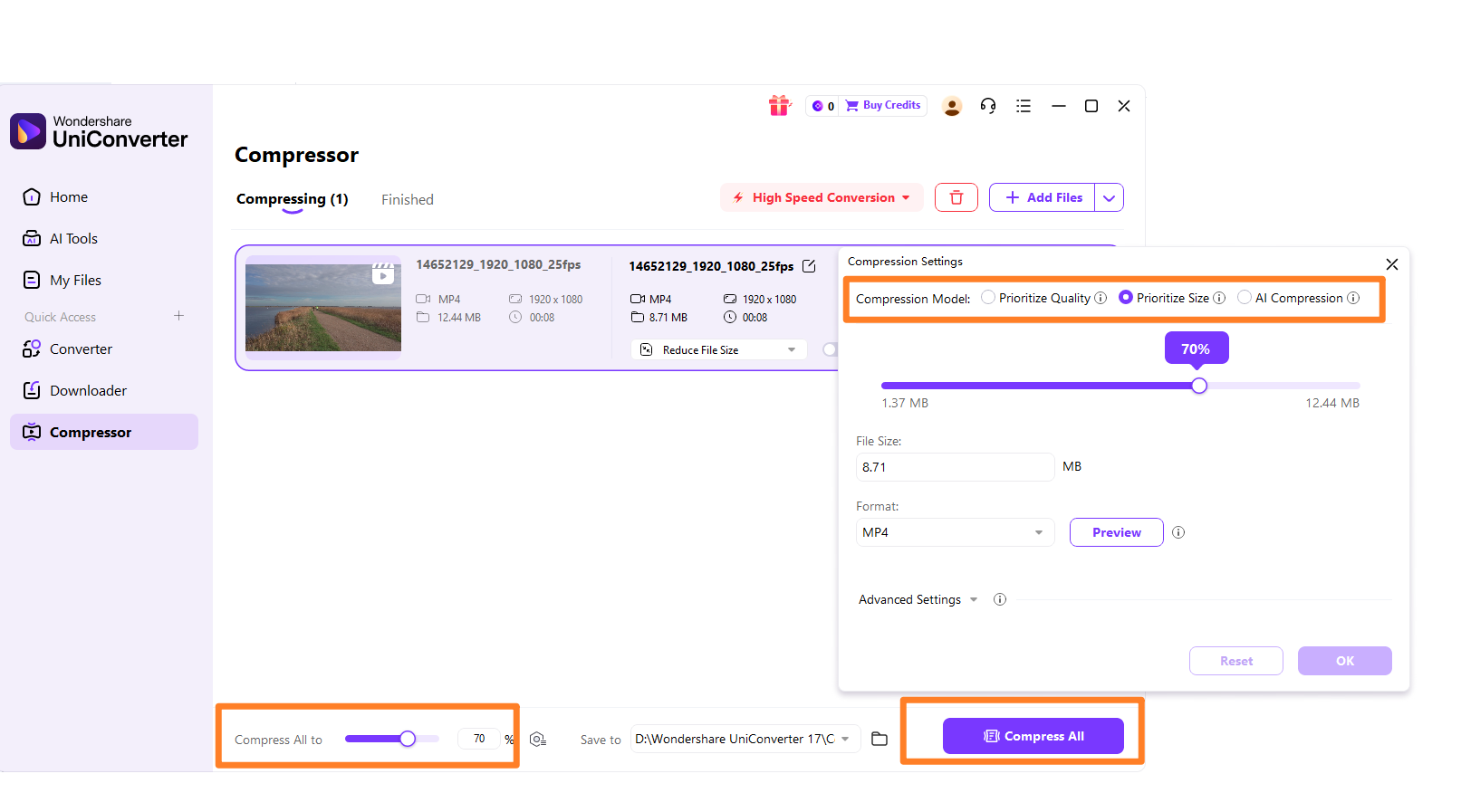
Step 3: Choose Required Parameters
Once your files are loaded, you can adjust the compression settings. UniConverter offers intelligent presets or allows you to manually set parameters like file size, format, resolution, and bitrate. Preview the changes to ensure quality.
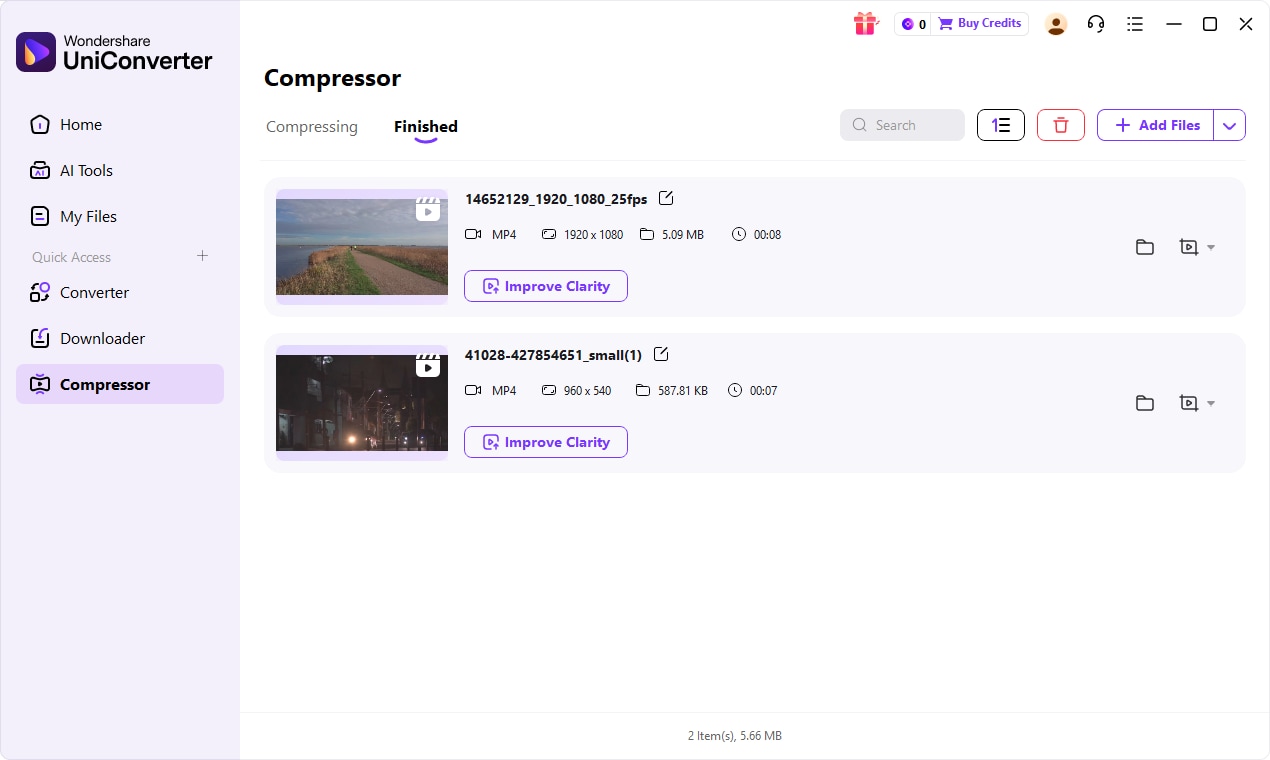
Step 4: Save the Compressed File
After configuring your settings, click the "Compress" button. UniConverter will quickly process your files. Once complete, you can find your compressed files in the designated output folder.

Seeking an AVCLabs Video Compressor Alternative?
Part 7: Final Verdict and Recommendations
After a thorough AVCLabs Video Compressor review, my conclusion is that it serves a specific niche in the video compression market. For casual users who prioritize an extremely simple interface and quick file size reduction for sharing on social media or via email, AVCLabs Video Compressor is a decent option. Its ease of use is its strongest selling point, allowing anyone to compress videos without a steep learning curve. However, for users who need more control over the compression process, demand higher quality retention, or require advanced features like specific codec settings or editing capabilities, exploring alternatives is highly recommended. Tools like UniConverter offer a more comprehensive suite of features, better quality control, and often faster processing due to GPU acceleration, making them superior for more demanding tasks. For budget-conscious users, free open-source tools like HandBrake provide extensive functionality, albeit with a steeper learning curve. Ultimately, your choice should align with your specific needs, balancing ease of use, quality requirements, and budget.
Part 8: FAQs
-
1. Does AVCLabs Video Compressor support 4K video compression?
Yes, AVCLabs Video Compressor can compress 4K videos, but the quality retention may vary depending on the compression settings. For optimal 4K compression with minimal quality loss, UniConverter offers more advanced algorithms and GPU acceleration.
-
2. Is there a free trial available for AVCLabs Video Compressor?
Typically, AVCLabs offers a free trial version with limited features or watermarks on output files, allowing you to test its basic functionality before purchasing.
-
3. How does AVCLabs Video Compressor handle different video codecs?
It supports a variety of common codecs like H.264 and H.265, but for optimal results with specific or less common codecs, checking the official documentation is recommended. UniConverter provides broader codec support and more control over encoding settings.
-
4. Can I compress multiple videos at once with AVCLabs Video Compressor?
Yes, AVCLabs Video Compressor includes a batch processing feature for compressing multiple files simultaneously, which is a convenient time-saver.
-
5. What are the system requirements for AVCLabs Video Compressor?
The system requirements are generally moderate, typically needing Windows 7 or later, a 1GHz processor, and 1GB RAM. However, for smoother performance with large files or 4K videos, a more powerful CPU and sufficient RAM (4GB+) are beneficial.
