
- Value: Audacity's compressor is a free, powerful tool for audio dynamics, ideal for budget-conscious users.
- Comparison: It excels for podcasting and voiceovers but lacks real-time processing and dedicated support compared to paid alternatives.
- Decision: Choose Audacity for offline editing and tight budgets; consider UniConverter for ease, batch processing, and quality.
- Pitfalls: Be aware of over-compression, a steep learning curve, and potential compatibility issues with Audacity.
- Alternative: UniConverter offers intuitive, stable, and efficient audio compression with rich format support and batch processing.
In this article
- Part 1: What is Audacity Audio Compressor?
- Part 2: Audacity Audio Compressor: Core Features, Pros, and Cons
- Part 3: Audacity Audio Compressor: Ideal Users and Use Cases
- Part 4: Audacity Audio Compressor and Competitors
- Part 5: Risks and Pitfalls
- Part 6: How to Use UniConverter for Efficient Audio Compression
- Part 7: Conclusion
- Part 8: FAQs
The Audacity Audio Compressor review delves into a powerful, free tool that has become a staple for many audio enthusiasts and professionals. In a world where audio quality can make or break content, understanding how to effectively manage dynamic range is crucial. This review will explore Audacity's compressor in detail, comparing it to other market offerings and highlighting its strengths and weaknesses. My aim is to provide you with a clear picture of when and how to best utilize this feature, helping you make informed decisions about your audio production workflow.
Part 1: What is Audacity Audio Compressor?
Audacity's Audio Compressor is a built-in effect within the popular open-source audio editor, Audacity. It's designed to reduce the dynamic range of an audio signal, making the quiet parts louder and the loud parts quieter, resulting in a more consistent and impactful sound. This is particularly useful for vocals, podcasts, and any audio where level consistency is paramount. My experience with it has shown it to be a robust tool, especially considering its free nature. This review aims to address the core question of whether Audacity's compressor can stand up to its paid counterparts and when it's the right choice for your audio needs.
Understanding the Market Landscape of Audio Compression Tools
The audio compression market is vast, ranging from simple one-knob solutions to complex multi-band processors. Users often face challenges such as:
* Achieving consistent audio levels: Especially in podcasts or voiceovers with varying speaker volumes.
* Improving clarity and presence: Making vocals cut through a mix without sounding harsh.
* Balancing cost and functionality: Finding a compressor that fits both budget and technical requirements.
Audacity's compressor attempts to bridge this gap by offering advanced controls without the price tag.
Part 2: Audacity Audio Compressor: Core Features, Pros, and Cons
Audacity's compressor offers a suite of features that allow for detailed control over your audio's dynamics. I've found its ability to shape the sound quite impressive for a free tool.
* Threshold: Determines the level at which compression begins.
* Ratio: Controls how much the audio exceeding the threshold is reduced.
* Attack Time: Sets how quickly the compressor reacts to signals above the threshold.
* Release Time: Dictates how long it takes for the compressor to stop compressing after the signal drops below the threshold.
* Noise Floor: Helps to prevent unwanted noise from being amplified.
* Make-up Gain: Allows you to boost the overall level after compression to compensate for the reduction in volume.
- Pros:
- Highly customizable compression parameters for nuanced sound shaping.
- Open-source and completely free, making it accessible to all users.
- Integrated within a full-featured audio editor, allowing for seamless workflow.
- Cons:
- User interface can be intimidating for beginners, requiring a learning curve.
- Lacks real-time preview for compression adjustments, slowing down the editing process.
Part 3: Audacity Audio Compressor: Ideal Users and Use Cases
From my perspective, Audacity's compressor shines in specific scenarios, while its limitations become apparent in others. It's about understanding where it fits best in your workflow.
- Best Use Case: Podcasting and Voiceover Production
- Scenario: I'm a podcaster and I need to normalize vocal levels and reduce dynamic range for a consistent listening experience across episodes. Audacity's compressor offers precise control over threshold, ratio, and attack/release times to achieve professional-sounding voice tracks without breaking the bank. I can fine-tune my voice to sound clear and even, which is crucial for listener engagement.
- Limitation Scenario: Live Performance Audio Processing
- Scenario: I'm a musician and I require real-time audio compression during a live stream to prevent clipping and maintain a balanced mix. Audacity's compressor, being a post-production tool, is unsuitable for live applications due to its offline processing nature and lack of real-time monitoring. I can't use it to react to sudden volume changes in real-time, which would be disastrous for a live performance.
Part 4: Audacity Audio Compressor and Competitors
When I look at the landscape of audio compressors, Audacity's offering stands out primarily due to its cost. However, when I need more advanced features or a smoother workflow, I often turn to other options.
| Feature/Scenario | Audacity Audio Compressor | Adobe Audition | Logic Pro X | UniConverter |
| Ease of Use for Beginners | Moderate | High | Moderate | High |
| Real-time Processing | No | Yes | Yes | Yes (for some features) |
| Advanced Parameter Control | High | High | High | Moderate |
| Cost | Free | Subscription | One-time purchase | One-time purchase/Subscription |
| Integration with DAW | Standalone | Integrated | Integrated | Standalone/Integrated (via plugins) |
Key Differentiators:
Audacity's strength lies in its cost-effectiveness and detailed control for offline editing. I find it invaluable for projects where budget is a primary concern and I have ample time for post-production. Competitors like Adobe Audition and Logic Pro X, on the other hand, offer more streamlined workflows and real-time capabilities, which are essential for professional studios and live sound engineers, often at a premium. UniConverter provides a good balance for general audio and video needs, focusing on ease of use for common tasks.
Part 5: Risks and Pitfalls
While Audacity's compressor is a powerful tool, I've learned through experience that it comes with its own set of challenges and potential pitfalls that you should be aware of.
Potential for Over-Compression and Unnatural Sound
One of the biggest risks I've encountered is over-compression. It's easy to get carried away with the settings, especially when you're trying to achieve a very "loud" or "present" sound. However, pushing the compressor too hard can lead to a squashed, lifeless, and unnatural sound. Vocals can lose their dynamics, drums can sound thin, and the overall audio can become fatiguing to listen to. I've had to re-do entire sections because I compressed too aggressively, learning that subtlety is often key.
Steep Learning Curve for Optimal Results
The interface, while comprehensive, isn't the most intuitive for beginners. I remember spending a significant amount of time understanding what each parameter (threshold, ratio, attack, release, make-up gain) actually did and how they interacted. Without a solid grasp of these concepts, it's easy to apply compression incorrectly, leading to undesirable results. It definitely requires some dedication to learn to use it effectively.
Lack of Dedicated Customer Support
As an open-source project, Audacity doesn't offer dedicated customer support in the traditional sense. If I run into a complex issue or have a specific question, I rely on community forums and online tutorials. While the community is generally helpful, it's not the same as having a direct line to technical support, which can be frustrating when you're on a tight deadline.
Compatibility Issues with Newer Operating Systems
Occasionally, I've run into minor compatibility issues, especially after major operating system updates. While the developers are usually quick to release updates, there can be periods where certain features don't work as expected or the application crashes. This can disrupt my workflow and force me to find temporary workarounds or wait for a patch.
Part 6: How to Use UniConverter for Efficient Audio Compression
For quick audio compression—especially when I’m handling multiple files or want something more straightforward than Audacity—UniConverter is often the tool I reach for. It offers a smoother workflow for audio compression, which is particularly useful when batch processing, stable output, and file quality all matter. Compared with tools that can feel inconsistent or overly manual, it provides a cleaner experience with broad format support and GPU acceleration to speed things up. And because it also includes features like video compression, it works well as a practical all-in-one solution for managing different media files in one place.
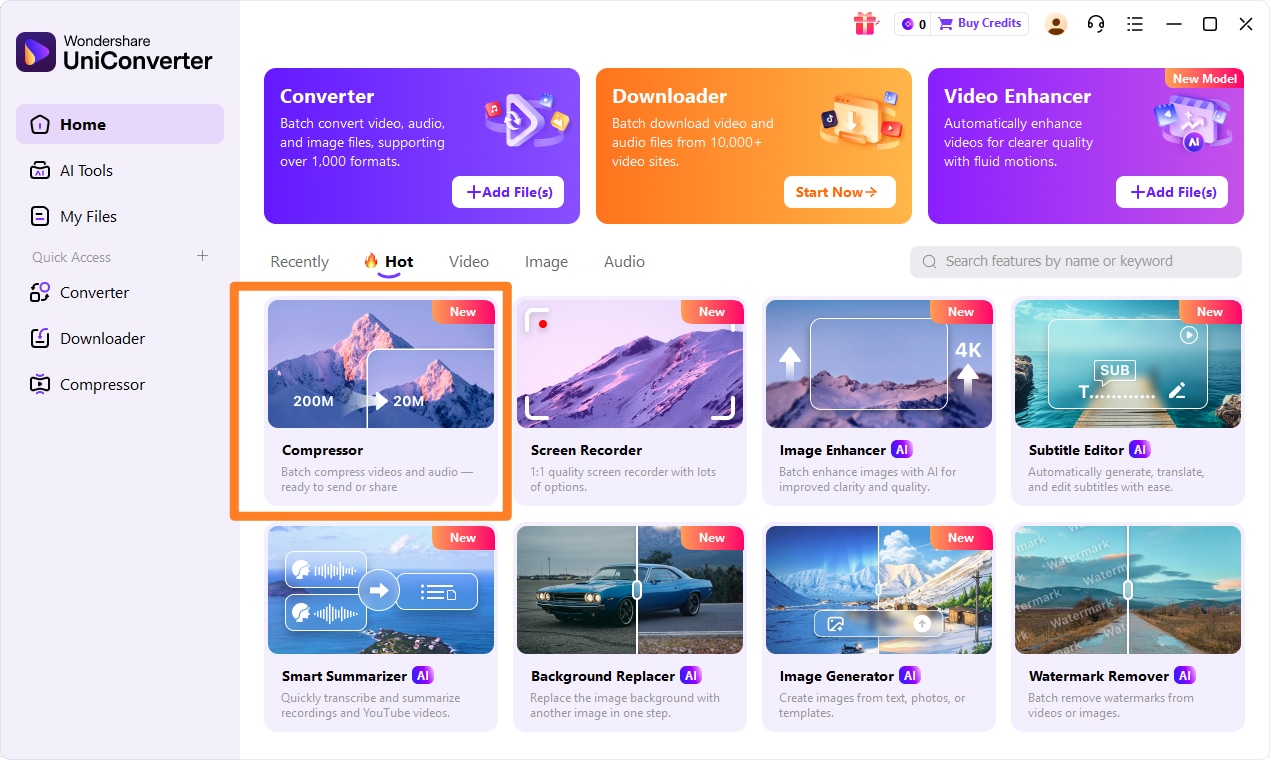
Step 1: Open UniConverter and Choose Compressor
I launch UniConverter and navigate to the "Compressor" tool from the main interface.
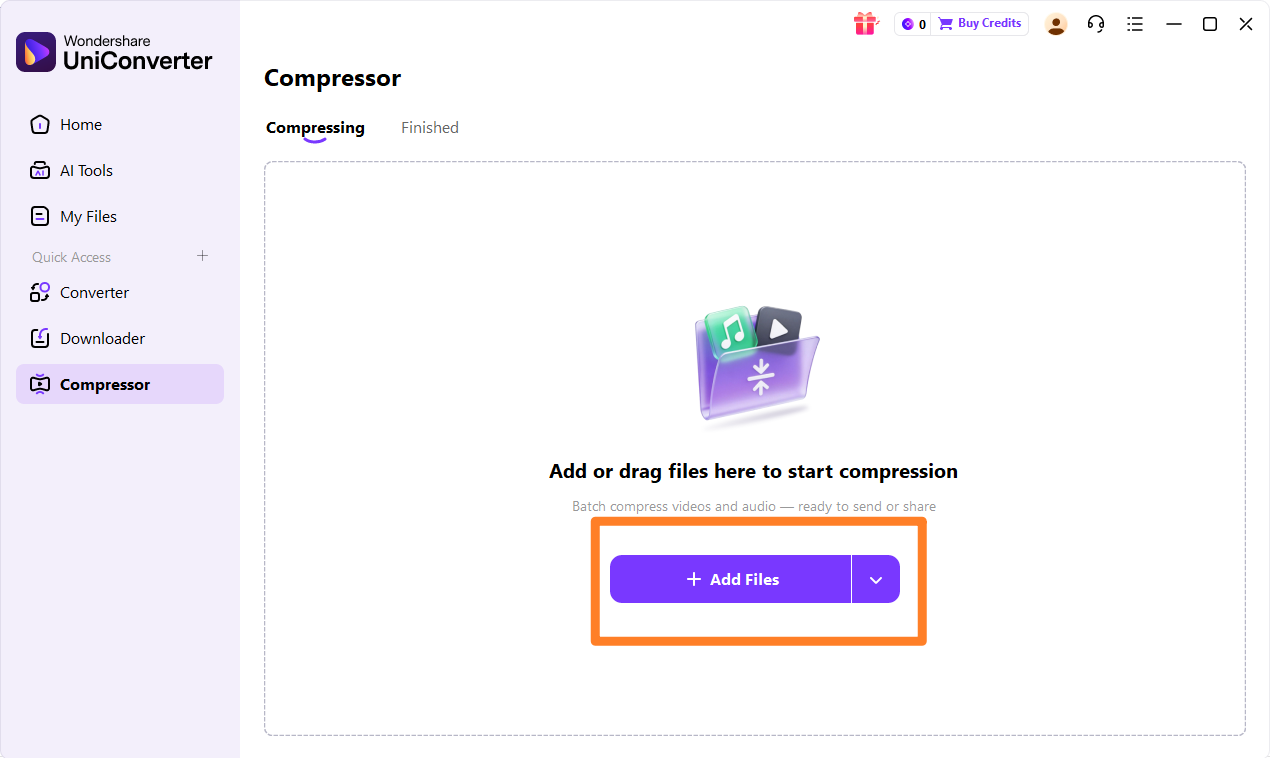
Step 2: Upload the Video, Audios or Images
I drag and drop my audio files into the program, or click "Add Files" to browse for them.
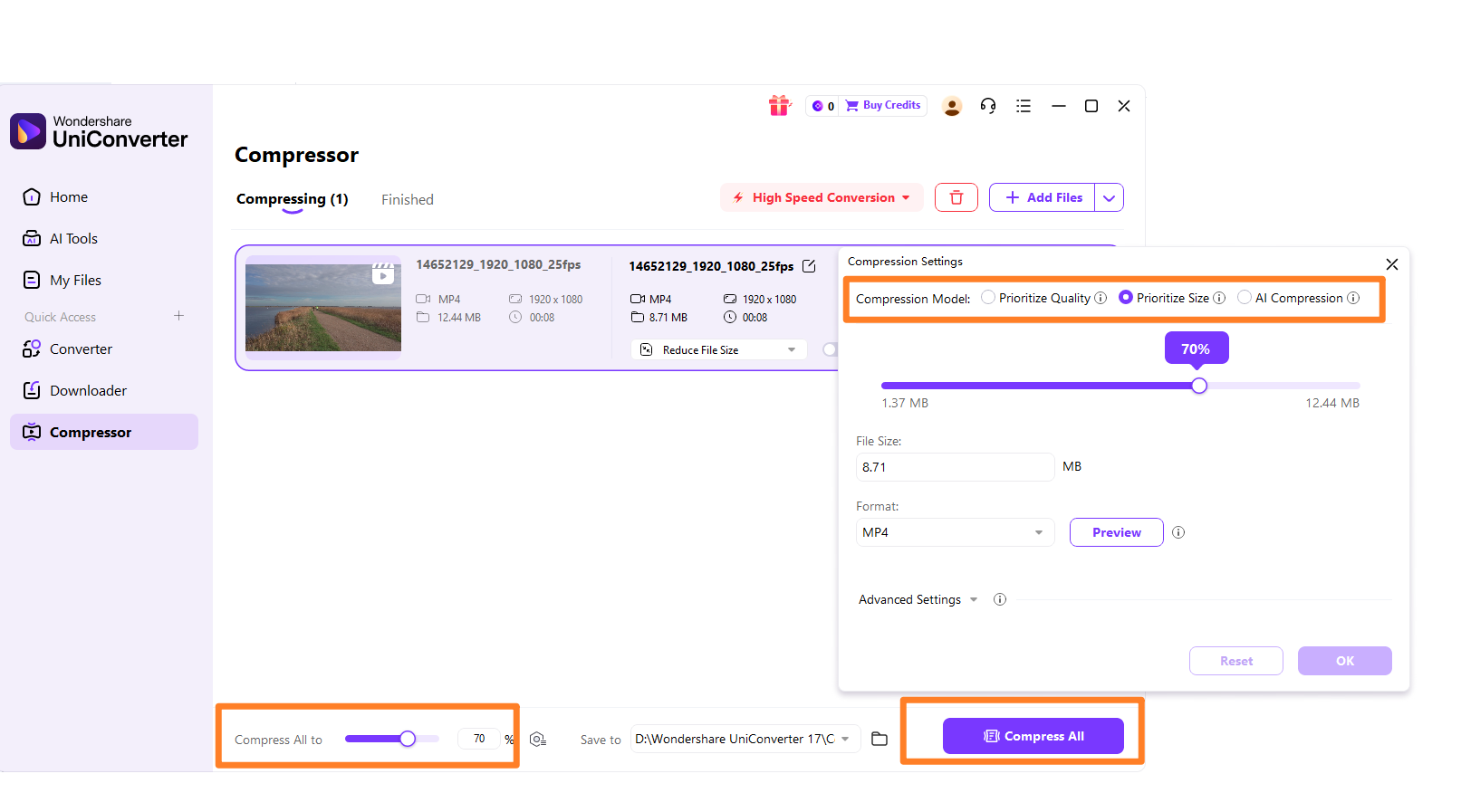
Step 3: Choose Required Parameters
I can then adjust the compression settings, such as output format, quality, and file size, using the intuitive sliders and presets.
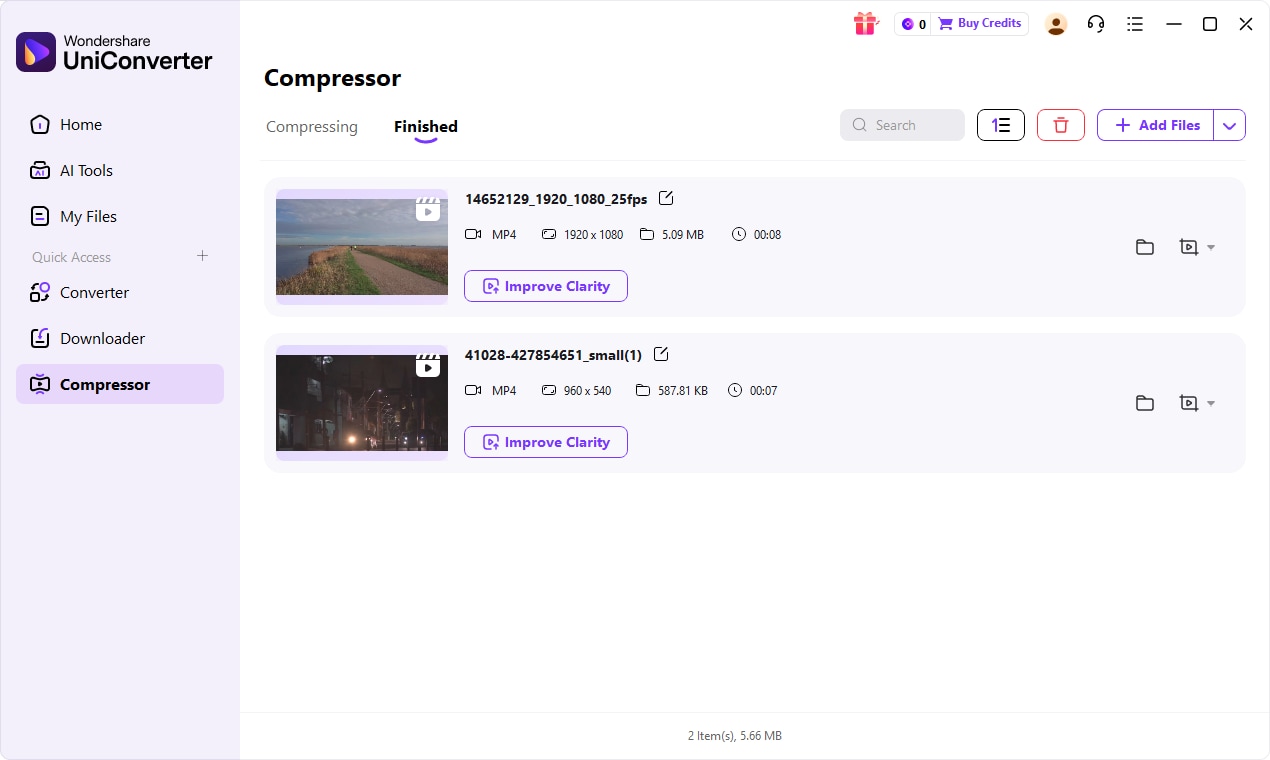
Step 4: Save the Compressed File
Once I'm satisfied with the settings, I click "Compress" and UniConverter quickly processes my files, saving them to my desired output folder.

Beyond Audacity: A Better Audio Compressor?
Part 7: Conclusion
In conclusion, the Audacity Audio Compressor review reveals a powerful and free tool that offers extensive control over audio dynamics, making it an excellent choice for budget-conscious users and hobbyists, particularly for podcasting and voiceover production. Its open-source nature and integration within a full-featured audio editor are significant advantages. However, its steep learning curve, lack of real-time processing, and absence of dedicated customer support can be limiting for professionals requiring immediate feedback or complex live applications. For those prioritizing ease of use, real-time capabilities, or a more streamlined workflow, paid alternatives like Adobe Audition or Logic Pro X might be more suitable. For users seeking a balanced solution that offers intuitive compression for various media types without the complexities, UniConverter presents a compelling and efficient alternative, especially for batch processing and maintaining quality. Ultimately, the best choice depends on your specific needs, technical expertise, and project requirements.
Part 8: FAQs
-
1. Is Audacity's compressor suitable for mastering audio?
While it can be used, dedicated mastering compressors offer more sophisticated algorithms and features for professional results. For critical mastering tasks, I'd generally recommend specialized tools.
-
2. Can Audacity's compressor handle multiple audio tracks simultaneously?
Yes, you can apply the compressor effect to individual tracks or a mixed stereo track. You'll need to select the track(s) you want to compress before applying the effect.
-
3. What are the key parameters to understand in Audacity's compressor?
Threshold, Ratio, Attack Time, Release Time, and Make-up Gain are crucial for effective compression. Understanding how each of these parameters influences the sound is key to getting good results.
-
4. Are there any good tutorials for using Audacity's compressor?
Numerous online tutorials and community forums provide guidance for optimizing its use. I've found YouTube videos and the official Audacity wiki to be particularly helpful resources.
-
5. How does Audacity's compressor compare to a hardware compressor?
Software compressors like Audacity's emulate hardware, but hardware often offers a unique sonic character and tactile control. For most home studio users, a software compressor like Audacity's or UniConverter will be more than sufficient, but a hardware unit can offer a distinct warmth or punch.
