
- Ashampoo Converter: Best for quick format changes, ensuring device and social media compatibility.
- Ashampoo Compressor: Ideal for reducing video file sizes for sharing and saving storage space.
- Ashampoo Limitations: Lacks advanced editing and granular control found in professional tools.
- UniConverter Advantage: Offers a comprehensive, all-in-one solution for diverse video needs.
- Decision Factor: Choose based on specific needs: simplicity for basic tasks or robust features for complex projects.
In this article
- Part 1: Ashampoo's Position in the Video Software Market
- Part 2: Ashampoo Video Converter & Video Compressor: Core Features, Pros, and Cons
- Part 3: Ashampoo Video Converter & Video Compressor: Target Audience and Use Cases
- Part 4: Ashampoo Video Converter & Video Compressor vs. Competitors
- Part 5: Risks and Pitfalls to Consider
- Part 6: How to Use UniConverter to Efficiently Compress Audio and Video
- Part 7: Conclusion
- Part 8: FAQs
When you're dealing with video files, whether it's for sharing online, archiving, or simply saving space, you often run into two common needs: changing the file format or reducing its size. Ashampoo, a well-known software developer, offers two distinct tools to address these challenges: Ashampoo Video Converter and Ashampoo Video Compressor. This Ashampoo Video Converter vs. Video Compressor review will dive deep into their functionalities, comparing their strengths and weaknesses through various real-world scenarios. My goal is to help you understand which tool is best suited for your specific needs, or if an alternative solution might be a better fit for your video processing tasks.
Part 1: Ashampoo's Position in the Video Software Market
Ashampoo has carved out a niche for itself in the utility software market by offering user-friendly and often affordable solutions for everyday computing tasks. In the realm of video processing, their tools typically cater to a broad audience, from casual users to small content creators, who need straightforward solutions without the complexity of professional-grade software. This review aims to clarify the distinct roles of Ashampoo Video Converter and Video Compressor, helping you decide which one aligns with your video management goals. Many users, myself included, often grapple with:
The Challenge of Video Management in the Digital Age
* Incompatible Formats: Videos come in a myriad of formats, and not all devices or platforms support them universally, leading to frustrating playback issues.
* Large File Sizes: High-resolution videos, especially from modern cameras and smartphones, consume vast amounts of storage and are cumbersome to share via email or upload to cloud services.
* Balancing Quality and Size: The perennial dilemma of reducing file size without sacrificing too much visual fidelity is a constant concern for anyone working with video.
* Navigating Complex Software: Many powerful video tools come with steep learning curves, deterring users who simply need quick and efficient solutions.
Part 2: Ashampoo Video Converter & Video Compressor: Core Features, Pros, and Cons
When I look at Ashampoo's video tools, I see a clear distinction in their core functionalities, each designed to tackle a specific problem. Understanding these differences is key to choosing the right one for your workflow.
Ashampoo Video Converter: Core Performance
The Video Converter is built for format flexibility. It allows me to take a video in one format, like MOV, and easily change it to another, such as MP4, AVI, or WMV. It also offers basic editing features like trimming and rotating.
* Format Flexibility: Supports a vast array of input and output video formats.
* Resolution Control: Allows me to adjust video resolution and aspect ratio.
* Device Presets: Includes optimized profiles for various devices (smartphones, tablets, gaming consoles).
* Audio Extraction: Can extract audio tracks from video files.
* Basic Editing: Offers simple trimming, cutting, and rotating functionalities.
Ashampoo Video Converter: Pros
* Intuitive interface for quick format conversions. I find it incredibly easy to navigate and get my conversions done without fuss.
* Wide range of supported input and output formats. This means I rarely encounter a file it can't handle.
* Batch processing for multiple video files. A huge time-saver when I have several videos to convert.
Ashampoo Video Converter: Cons
* Limited advanced editing features. If I need more than basic cuts, I have to look elsewhere.
* Occasional performance dips with very large files. For extremely big videos, it can sometimes feel a bit sluggish.
Ashampoo Video Compressor: Core Performance
The Video Compressor, on the other hand, is all about shrinking file sizes. It uses various compression algorithms to reduce the storage footprint of my videos, which is invaluable for sharing or saving space.
* Efficient Compression: Utilizes advanced algorithms to significantly reduce file size.
* Quality Control: Allows me to adjust compression levels to balance size and quality.
* Preview Function: I can preview the compressed video before finalizing the changes.
* Batch Compression: Compresses multiple videos simultaneously.
* Metadata Preservation: Retains original video metadata during compression.
Ashampoo Video Compressor: Pros
* Efficient compression algorithms for significant file size reduction. It does a great job of making my files smaller.
* Preserves acceptable video quality during compression. I'm often surprised by how good the compressed video still looks.
* User-friendly controls for compression settings. It's easy to dial in the right balance of size and quality.
Ashampoo Video Compressor: Cons
* Can be slow for extremely large video files. Just like the converter, very big files can take a while to process.
* Less control over specific compression parameters compared to professional tools. For granular control, I'd need something more advanced.
Part 3: Ashampoo Video Converter & Video Compressor: Target Audience and Use Cases
Understanding who these tools are for and in what situations they shine is crucial. I've found that Ashampoo's offerings are best suited for users who prioritize simplicity and efficiency for common video tasks.
Best Use Case: Quick Format Conversion for Social Media Uploads
Scenario: As a content creator, I often record high-resolution videos on my camera that are in a format like MOV. Before uploading to platforms like Instagram or YouTube, I need to convert them to a web-friendly format, typically MP4, and sometimes adjust the aspect ratio. Ashampoo Video Converter is perfect here. I can quickly drag and drop my MOV file, select an MP4 output with the desired resolution and aspect ratio preset, and convert it in minutes. The intuitive interface means I don't waste time navigating complex settings, ensuring my content is ready for upload without unnecessary delays or quality degradation.
Best Use Case: Reducing Video File Size for Email or Cloud Storage
Scenario: When I'm working on a video project for school or work, the final output can often be several gigabytes. If I need to email this project to a professor or colleague, or upload it to a cloud storage service with limited free space, the file size becomes a major hurdle. Ashampoo Video Compressor is my go-to tool. I can take that large video file, load it into the compressor, and choose a compression level that significantly reduces its size while maintaining enough clarity for review. This allows me to easily share the file without hitting attachment limits or waiting hours for uploads.
Limited Use Case: Professional Video Editing and Advanced Color Grading
Scenario: For a professional videographer working on a client project, the requirements go far beyond simple format conversion or file size reduction. They need precise control over color correction, multi-track editing, complex transitions, special effects, and audio mixing. In this scenario, Ashampoo Video Converter and Video Compressor would be entirely inadequate. These tools lack the advanced features, granular controls, and professional-grade capabilities necessary for such intricate and demanding tasks. A professional would need dedicated video editing software like Adobe Premiere Pro or DaVinci Resolve.
Part 4: Ashampoo Video Converter & Video Compressor vs. Competitors
When I compare Ashampoo's video tools to others on the market, I see them fitting a specific niche. Here's how they stack up against some popular alternatives, focusing on their primary functions and overall user experience.
Ashampoo Video Converter & Video Compressor vs. Competitors: A Comparative Overview
| Feature/Tool | Ashampoo Video Converter | Ashampoo Video Compressor | HandBrake | Any Video Converter |
| Primary Function | Format Conversion | File Size Reduction | Conversion & Compression | Conversion & Basic Editing |
| Ease of Use | High | High | Medium | High |
| Advanced Features | Low | Low | Medium | Medium |
| Batch Processing | Yes | Yes | Yes | Yes |
| Output Quality | Good | Good | Excellent | Good |
| Processing Speed | Good | Good | Excellent | Good |
| Customer Support | Good | Good | Community | Good |
| Security | Good | Good | Excellent | Good |
Key Differentiators
Ashampoo's Simplicity: Both Ashampoo tools excel in ease of use, making them perfect for everyday users who want quick, straightforward conversion or compression without getting bogged down in technical details. HandBrake's Customization: HandBrake offers more granular control over encoding settings, making it a favorite for advanced users who want to fine-tune every aspect of their video output, often resulting in superior quality and smaller file sizes for specific codecs. * Any Video Converter's Versatility: This competitor provides a broader range of basic editing tools alongside conversion, offering a slightly more all-in-one solution for users who need a bit more than just format changes.
For me, if I need something done quickly and simply, Ashampoo is great. If I'm willing to spend more time for better quality or more control, HandBrake is a strong contender. If I need a little bit of everything, Any Video Converter might be a good middle ground.
Part 5: Risks and Pitfalls to Consider
While Ashampoo's tools are generally reliable, and I've had good experiences with them, it's important to be aware of potential risks and pitfalls, especially when considering any software, free or paid, that handles your personal media.
Potential Privacy Concerns with Free Versions
If you're using a free trial or a heavily discounted version, always be cautious. Sometimes, free software can come with hidden clauses in their privacy policies that allow for data collection, even if it's anonymized. I always make sure to read the fine print before installing anything that might access my files.
Unwanted Advertisements or Bundled Software
This is a common issue with many free or "freemium" tools. During installation, you might be prompted to install additional, often unrelated, software or browser extensions. I've learned to be very careful during the installation process, always opting for custom installation to deselect any bundled bloatware.
Impact on Video Quality During Aggressive Compression
While Ashampoo Video Compressor aims to preserve quality, aggressive compression settings will inevitably lead to a noticeable drop in video fidelity. If I push the compression too far to achieve a tiny file size, I often end up with pixelation, artifacts, or a generally blurry image. It's a trade-off, and I always preview the output to ensure it meets my quality standards.
Compatibility Issues with Niche Video Codecs
Although Ashampoo Video Converter boasts wide format support, I've occasionally encountered very niche or proprietary video codecs that it struggles with. These are rare, but if you're working with highly specialized video equipment, you might run into a file that the converter can't properly process or output.
Limited Customer Support for Free or Older Versions
If you're using a free trial or an older, unsupported version of Ashampoo's software, don't expect robust customer support. While the paid versions typically offer decent assistance, I've found that free users often have to rely on community forums or self-help resources, which can be frustrating if you run into a complex issue.
Part 6: How to Use UniConverter to Efficiently Compress Audio and Video
For workflows that go beyond a single-purpose tool, UniConverter is usually a more practical choice. If compression results feel unstable, file quality drops too much, or batch processing across different media types becomes a hassle, it offers a smoother way to manage everything in one place. It works well for video compression, audio compression, and image compression, so there’s no need to switch between separate tools. I also like that it supports a wide range of formats, uses GPU acceleration to speed up processing, and can help compress videos without quality loss as much as possible. Overall, it’s a dependable all-in-one solution for handling different kinds of media more efficiently.
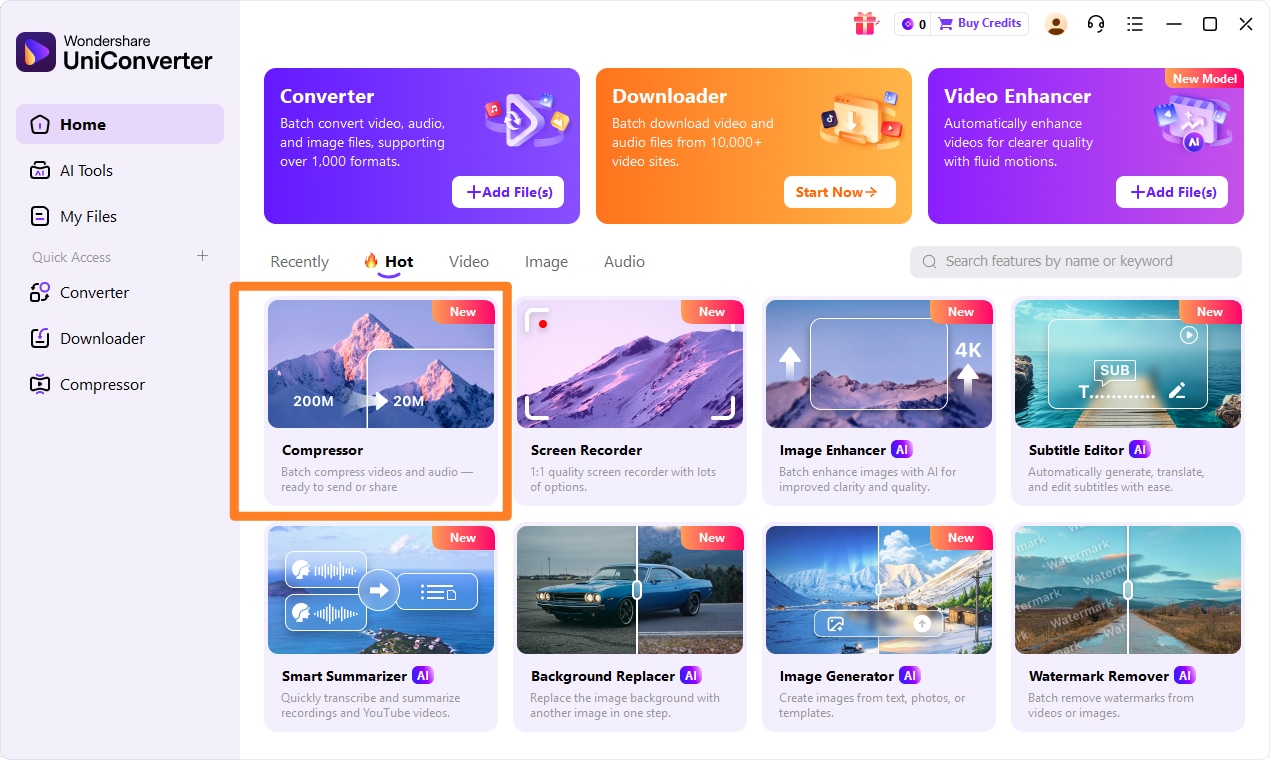
Step 1: Open UniConverter and Choose Compressor
Open UniConverter and head to the main interface. From there, select the Compressor tool to begin reducing your file size quickly and efficiently.
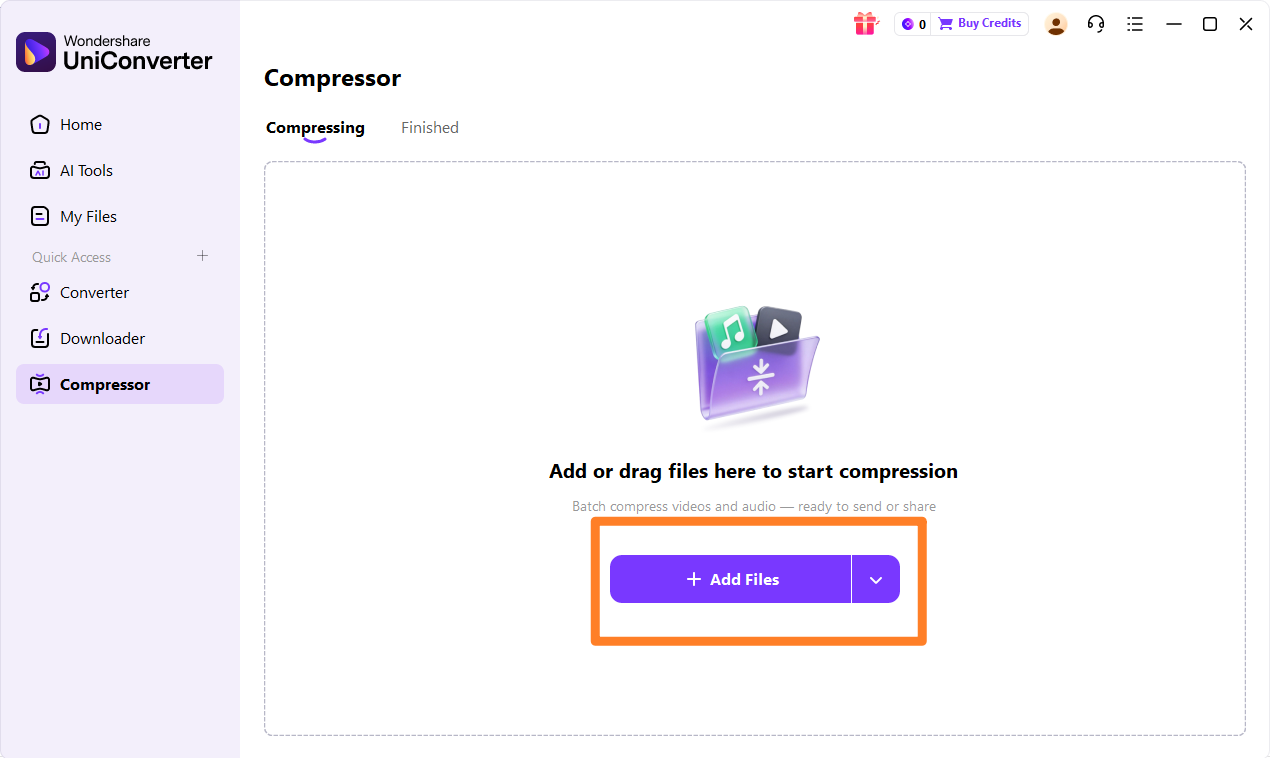
Step 2: Upload the Video, Audios or Images
Click Add Files or drag and drop your media into the program. You can upload videos, audio files, or images in various formats with ease.
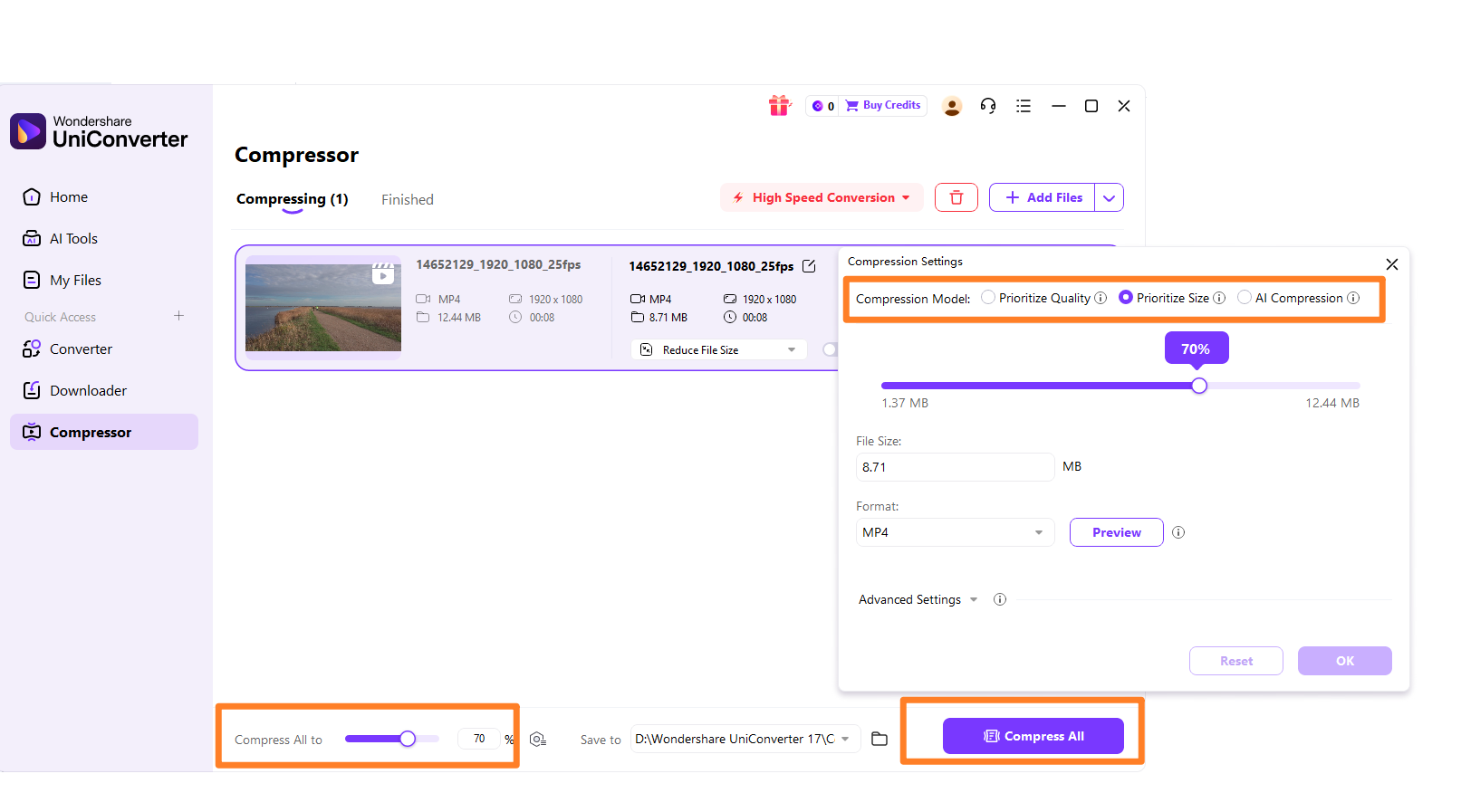
Step 3: Choose Required Parameters
Adjust the compression settings based on your needs. You can fine-tune options like quality, resolution, bitrate, and file size to achieve the desired output.
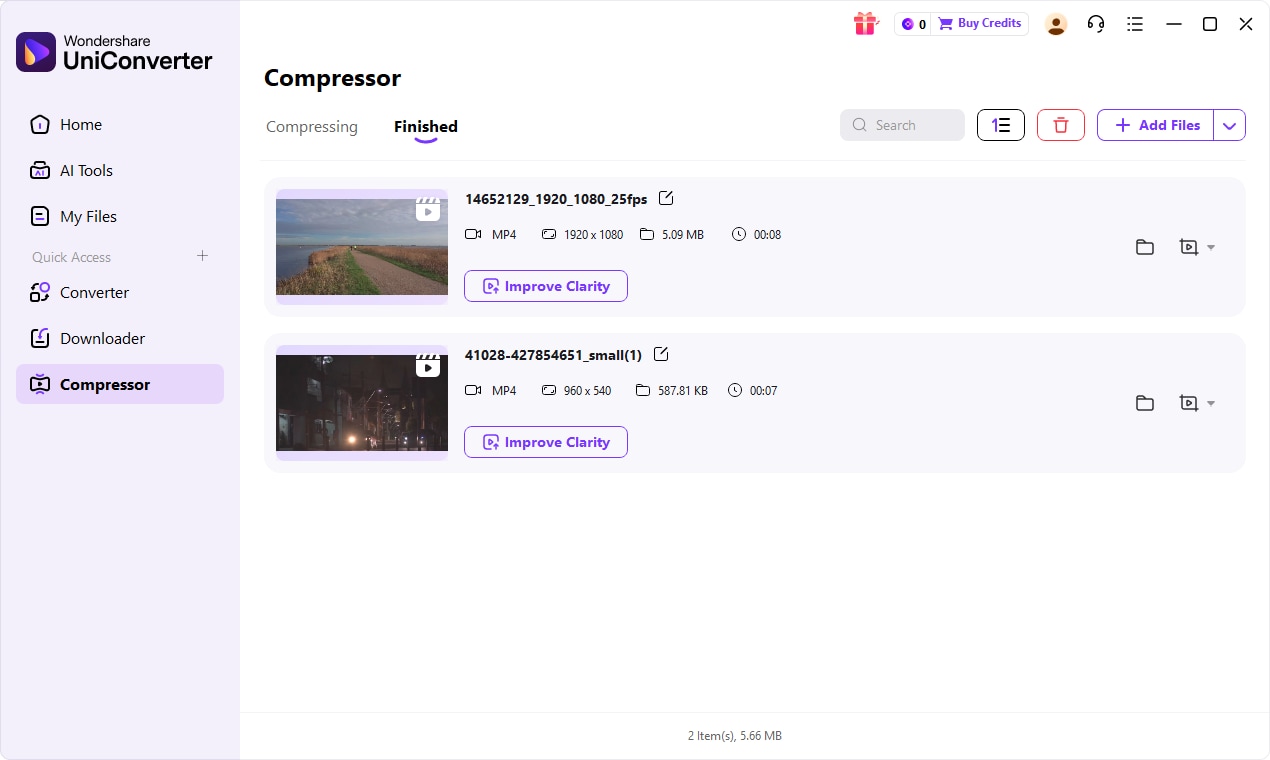
Step 4: Save the Compressed File
Choose your output location, then click Compress to start. Once the process is complete, your optimized file will be saved and ready to use.

Struggling to Find an Ashampoo Video Converter Alternative?
Part 7: Conclusion
After thoroughly exploring both Ashampoo Video Converter and Ashampoo Video Compressor, it's clear that each tool serves a distinct purpose, catering to different user needs. The Ashampoo Video Converter is an excellent choice for casual users who frequently need to change video formats quickly and efficiently, especially for sharing on social media or ensuring device compatibility. Its intuitive interface and broad format support make it a hassle-free option. On the other hand, the Ashampoo Video Compressor shines when the primary goal is to reduce video file sizes for easier sharing via email or uploading to cloud storage, all while striving to maintain acceptable quality. However, for users seeking a more comprehensive and powerful solution that offers advanced features, greater control over compression parameters, and a wider range of functionalities without the potential pitfalls of limited free versions or niche codec issues, a tool like UniConverter is highly recommended. Ultimately, your choice should depend on your specific requirements: prioritize ease of use for simple tasks, or opt for a more robust solution for demanding video management needs.
Part 8: FAQs
-
1. Is Ashampoo Video Converter free to use?
Ashampoo often offers trial versions, but the full features usually require a purchase. While you might find limited free versions, they typically come with restrictions or watermarks.
-
2. Can Ashampoo Video Compressor reduce video size without losing quality?
While it aims to preserve quality, some degree of quality loss is inherent in compression, especially with aggressive settings. If you need truly lossless compression or more control over quality, I'd suggest exploring professional-grade tools like UniConverter.
-
3. What's the main difference between Ashampoo Video Converter and Video Compressor?
The Converter changes video formats (e.g., MOV to MP4), while the Compressor primarily reduces file size, often keeping the same format. They address two distinct problems in video management.
-
4. Are there any privacy concerns when using Ashampoo products?
It's always advisable to review the privacy policy of any software you install. While Ashampoo is a reputable company, I always recommend being cautious with any software that handles your personal media files.
-
5. Can I edit videos with Ashampoo Video Converter or Compressor?
Both tools offer very basic editing functionalities like trimming, cutting, or rotating, but they are not designed for comprehensive video editing. For more advanced editing, multi-track timelines, or special effects, you'll need dedicated video editing software. If you need a tool that combines conversion, compression, and more robust editing features, UniConverter could be a better all-in-one option.
