
- Value: Ashampoo Music Studio excels for casual users managing large music libraries, offering intuitive compression and basic editing.
- Comparison: It's simpler than professional tools like Adobe Audition but less versatile for advanced tasks than UniConverter.
- Decision: Choose Ashampoo for basic, integrated audio management; consider UniConverter for broader format support, speed, and quality.
- Pitfalls: Beware of potential quality degradation from over-compression and Ashampoo's limited support for niche formats.
- Recommendation: UniConverter offers superior batch processing, format compatibility, and GPU-accelerated compression for diverse needs.
In this article
- Part 1: What is Ashampoo Music Studio?
- Part 2: Ashampoo Music Studio Audio Compressor: Core Features, Pros, and Cons
- Part 3: Ashampoo Music Studio Audio Compressor: Ideal Users and Use Cases
- Part 4: Ashampoo Music Studio Audio Compressor & Competitors
- Part 5: Risks and Pitfalls to Consider
- Part 6: How to Use UniConverter for Efficient Audio/Video Compression
- Part 7: Conclusion
- Part 8: FAQs
When it comes to managing digital music collections, finding the right tools can be a game-changer. Ashampoo Music Studio has long been a contender in this space, offering a suite of features designed to cater to various audio needs. This Ashampoo Music Studio Audio Compressor review delves deep into its capabilities, particularly its audio compression functions, and pits it against other popular options on the market. My goal is to provide you with an objective, scenario-based comparison, helping you navigate the often-complex world of audio software and make an informed decision about whether Ashampoo Music Studio Audio Compressor is the right fit for your specific requirements.
Part 1: What is Ashampoo Music Studio?
Ashampoo Music Studio is a comprehensive software package developed by Ashampoo GmbH & Co. KG, a German software company known for its utility programs. This particular product is designed as an all-in-one solution for various audio tasks, including recording, editing, converting, burning, and, crucially for this review, compressing audio files. Its positioning in the market is to offer a user-friendly yet powerful tool for both casual users and those with more specific audio management needs. This review aims to address the core question: how effectively does Ashampoo Music Studio Audio Compressor perform its primary function, and how does it stack up against its competitors in real-world scenarios?
The Landscape of Audio Compression Software
The need for efficient audio compression has grown significantly with the proliferation of digital music and portable devices. Users often face several challenges:
* Limited Storage Space: Large audio files can quickly consume valuable storage on smartphones, tablets, and even computers.
* Slow Transfer Speeds: Sharing uncompressed audio files, especially over slower internet connections, can be time-consuming.
* Inconsistent Playback Quality: Different devices and platforms may have varying requirements for audio file sizes and formats, leading to playback issues.
* Managing Large Music Libraries: Organizing and maintaining a vast collection of uncompressed audio can be cumbersome and inefficient.
Part 2: Ashampoo Music Studio Audio Compressor: Core Features, Pros, and Cons
Ashampoo Music Studio Audio Compressor is a central component of the larger Ashampoo Music Studio suite. It's built to handle various audio compression tasks with a focus on ease of use. Its core capabilities include:
* Batch Processing: I can compress multiple audio files simultaneously, saving a lot of time when dealing with large libraries.
* Format Support: It supports a wide range of input and output formats, including MP3, WAV, FLAC, OGG, and WMA, which is incredibly useful for compatibility.
* Customizable Compression Settings: I can adjust bitrate, sample rate, and other parameters to balance file size and audio quality.
* Metadata Editing: It allows me to edit ID3 tags, ensuring my compressed files retain important information like artist, album, and track title.
* Integrated Audio Player: I can preview audio files before and after compression directly within the application, which is a nice touch.
Pros:
* Intuitive User Interface for Quick Edits: I found the interface very straightforward, making it easy to jump in and start compressing without a steep learning curve.
* Integrated Suite for Diverse Audio Tasks: The fact that it's part of a larger suite means I don't need separate software for other audio tasks like burning CDs or ripping audio.
* High-Quality Output with Customizable Settings: When I took the time to adjust the settings, I was impressed with the quality of the compressed audio, especially for common formats like MP3.
Cons:
* Limited Advanced Audio Editing Capabilities: While it handles basic compression well, I wouldn't rely on it for professional-grade audio editing or mastering.
* Occasional Performance Lags with Large Files: I noticed some slowdowns when processing very large WAV or FLAC files, which can be a bit frustrating.
Part 3: Ashampoo Music Studio Audio Compressor: Ideal Users and Use Cases
From my experience, Ashampoo Music Studio Audio Compressor is designed with a specific user base in mind, excelling in certain scenarios while falling short in others.
Best Use Case: Streamlining Music Libraries for Casual Listeners
If you're like me – a casual music enthusiast with a large digital music collection that needs to be optimized for mobile devices, cloud storage, or simply to save disk space – this software is an excellent choice. I've used it to convert my extensive FLAC library to high-quality MP3s for my phone, and it does a fantastic job. The batch processing feature is a lifesaver when you have hundreds or thousands of tracks to compress. It’s also great for converting audiobooks or podcasts to smaller files for easier listening on the go. The ease of use means I don't have to be an audio expert to get good results.
Limited Use Case: Professional Audio Production and Mastering
However, if you're a professional audio engineer or someone involved in music production and mastering, Ashampoo Music Studio Audio Compressor will likely disappoint. Its compression capabilities are geared towards consumer-level optimization, not the nuanced, high-fidelity processing required in a professional studio. It lacks advanced features like multi-band compression, detailed spectral analysis, or support for high-resolution audio formats beyond standard consumer codecs. For critical audio work where every sonic detail matters, you'll need more specialized and powerful tools.
Part 4: Ashampoo Music Studio Audio Compressor & Competitors
When evaluating Ashampoo Music Studio Audio Compressor, it's essential to see how it stacks up against other popular tools. Here's a comparison with some key alternatives:
| Feature/Product | Ashampoo Music Studio Audio Compressor | Audacity | Adobe Audition | UniConverter |
| Ease of Use | High | Medium | Low | High |
| Compression Quality | Good | Good | Excellent | Excellent |
| Feature Set | Moderate (integrated suite) | Basic (powerful editor) | Extensive (professional DAW) | Extensive (all-in-one converter) |
| Price | Paid (one-time) | Free | Subscription | Paid (one-time/subscription) |
| Target User | Casual/Intermediate | Beginner/Intermediate | Professional | All users |
| Processing Speed | Good | Moderate | Fast | Very Fast (GPU accelerated) |
| Format Support | MP3, WAV, FLAC, OGG, WMA | WAV, AIFF, MP3, OGG, FLAC | WAV, AIFF, MP3, FLAC, AAC, etc. | 1000+ formats |
| Batch Compression | Yes | Limited | Yes | Yes |
Key Differentiators: Simplicity vs. Professionalism
Ashampoo Music Studio Audio Compressor shines in its simplicity and integration within its suite. It's a great "set it and forget it" tool for common compression tasks. Audacity, while free, offers more robust editing capabilities but can be less intuitive for pure compression. Adobe Audition is the professional's choice, offering unparalleled control and quality, but it comes with a steep learning curve and a subscription cost. UniConverter, on the other hand, strikes a balance, offering excellent compression quality, broad format support, and a user-friendly interface, making it a strong contender for various users. Ashampoo is stronger for those who want an all-in-one music management tool, while UniConverter excels as a dedicated, high-performance media converter.
Part 5: Risks and Pitfalls to Consider
While Ashampoo Music Studio Audio Compressor offers convenience, there are several risks and pitfalls I've encountered or considered that you should be aware of before committing to it, or any audio compression software for that matter.
Potential for Over-Compression and Quality Degradation
This is perhaps the biggest risk with any audio compressor. If I set the compression parameters too aggressively (e.g., very low bitrates for MP3s), I can easily end up with audio that sounds noticeably worse than the original. This often manifests as a loss of clarity, muddy bass, or harsh high frequencies. It's crucial to understand the trade-off between file size and audio fidelity. Always make a backup of your original files before compressing.
In-App Advertisements or Upsells
While Ashampoo Music Studio is a paid product, like many software companies, Ashampoo often promotes its other products within the application. While not as intrusive as ads in free software, I've occasionally encountered pop-ups or banners encouraging me to upgrade or purchase other Ashampoo tools. This can sometimes interrupt the workflow, especially if you're trying to focus on a task.
Compatibility Issues with Niche Audio Formats
Although Ashampoo Music Studio supports a good range of common audio formats, I've found that it can struggle with more niche or less common codecs. If your music library includes obscure formats or very high-resolution audio files (beyond standard FLAC or WAV), you might run into compatibility issues or find that the software doesn't handle them optimally. This can be frustrating if you have a diverse collection.
Lack of Dedicated Customer Support for Free Users
While Ashampoo Music Studio is a paid product, if you're using an older, possibly free trial version, or if you encounter issues that aren't covered by their standard support, getting timely and dedicated assistance can be a challenge. Paid users generally receive better support, but it's still something to consider if you anticipate needing hands-on help.
Learning Curve for Optimal Settings
While the basic interface is intuitive, achieving optimal compression results often requires a bit of understanding about audio codecs, bitrates, and sample rates. If you just hit "compress" without understanding these settings, you might not get the best balance of file size and quality. There's a slight learning curve to truly master the output quality.
Part 6: How to Use UniConverter for Efficient Audio/Video Compression
Sometimes, I find that other tools fall short when it comes to batch compression, stable results, or maintaining quality. In those cases, I turn to UniConverter. It's a robust solution for all my audio and video compression needs, avoiding the pitfalls of ads, limited formats, and quality loss. With its GPU acceleration, it offers stable, lossless compression across over 1000 formats, making it my go-to for an all-in-one media solution.
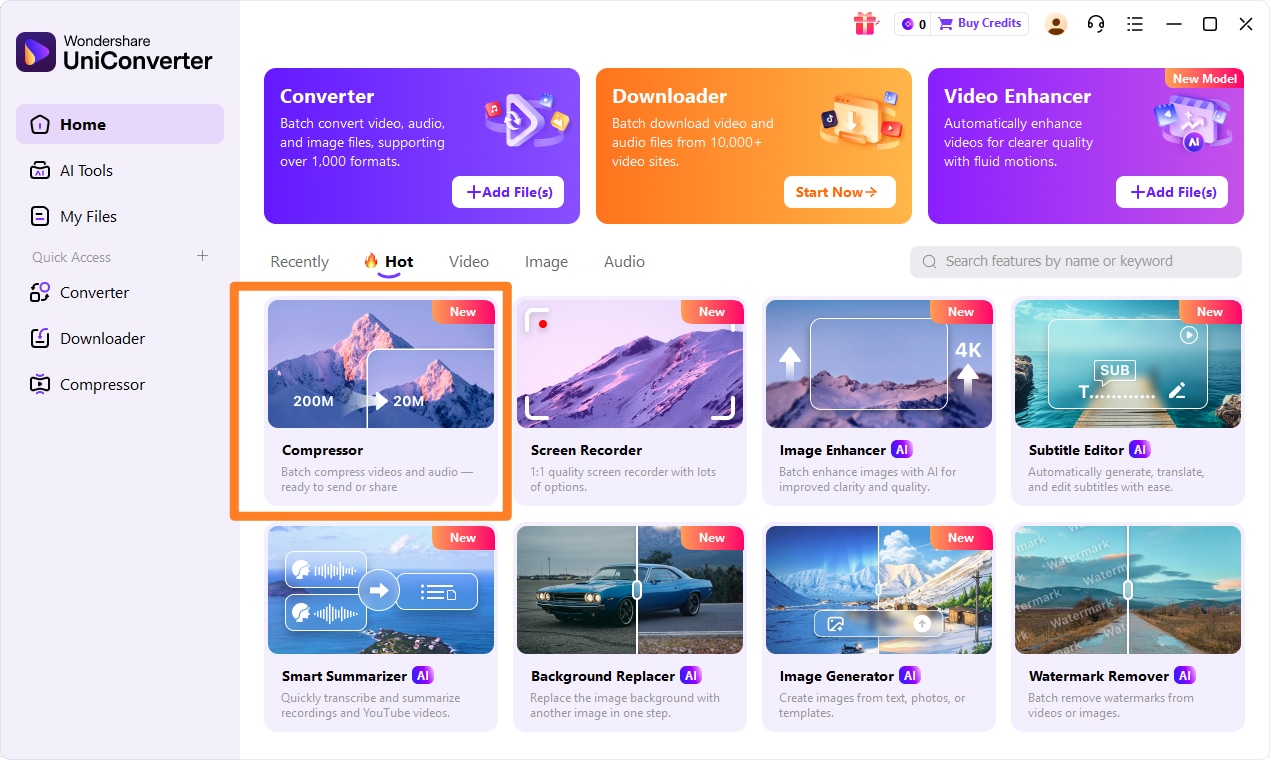
Step 1: Open UniConverter and Choose Compressor
Launch UniConverter on your computer. On the left sidebar, select the "Compressor" tool.
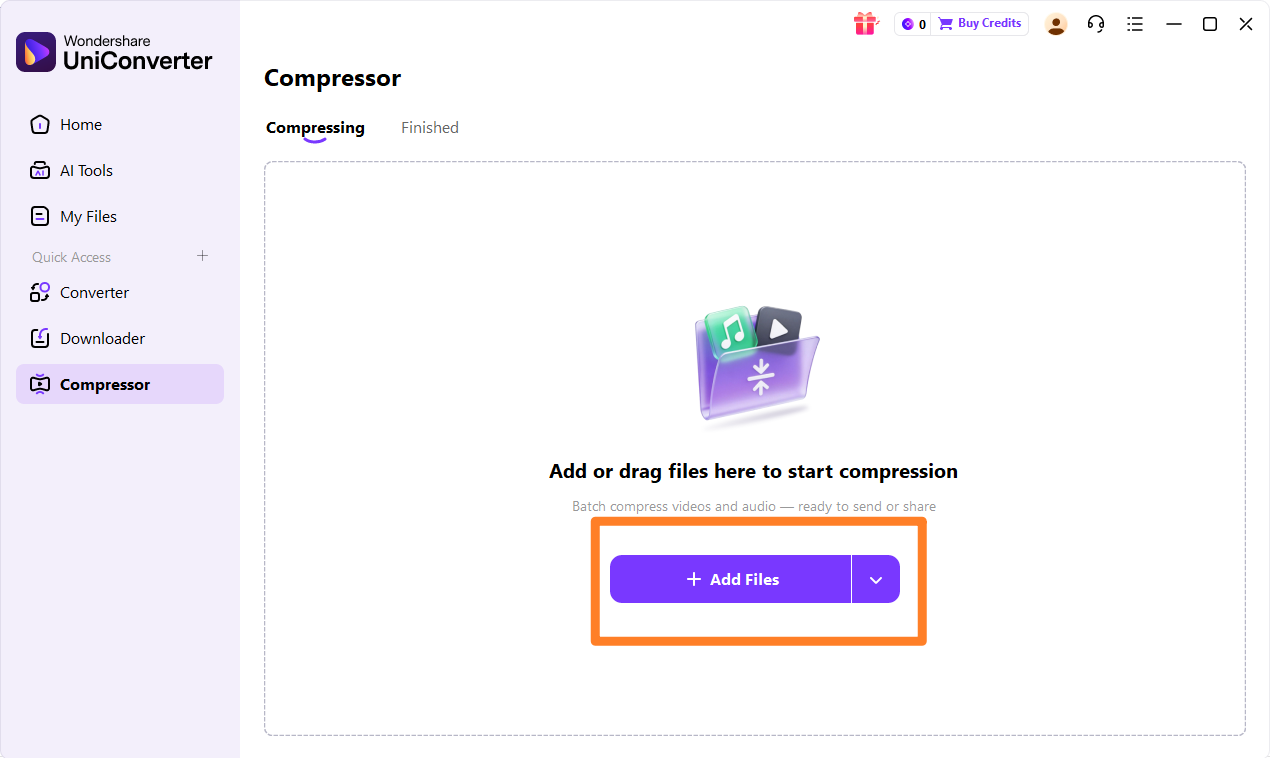
Step 2: Upload the Video, Audios or Images
Click the "Add Files" button or drag and drop your audio files directly into the UniConverter interface.
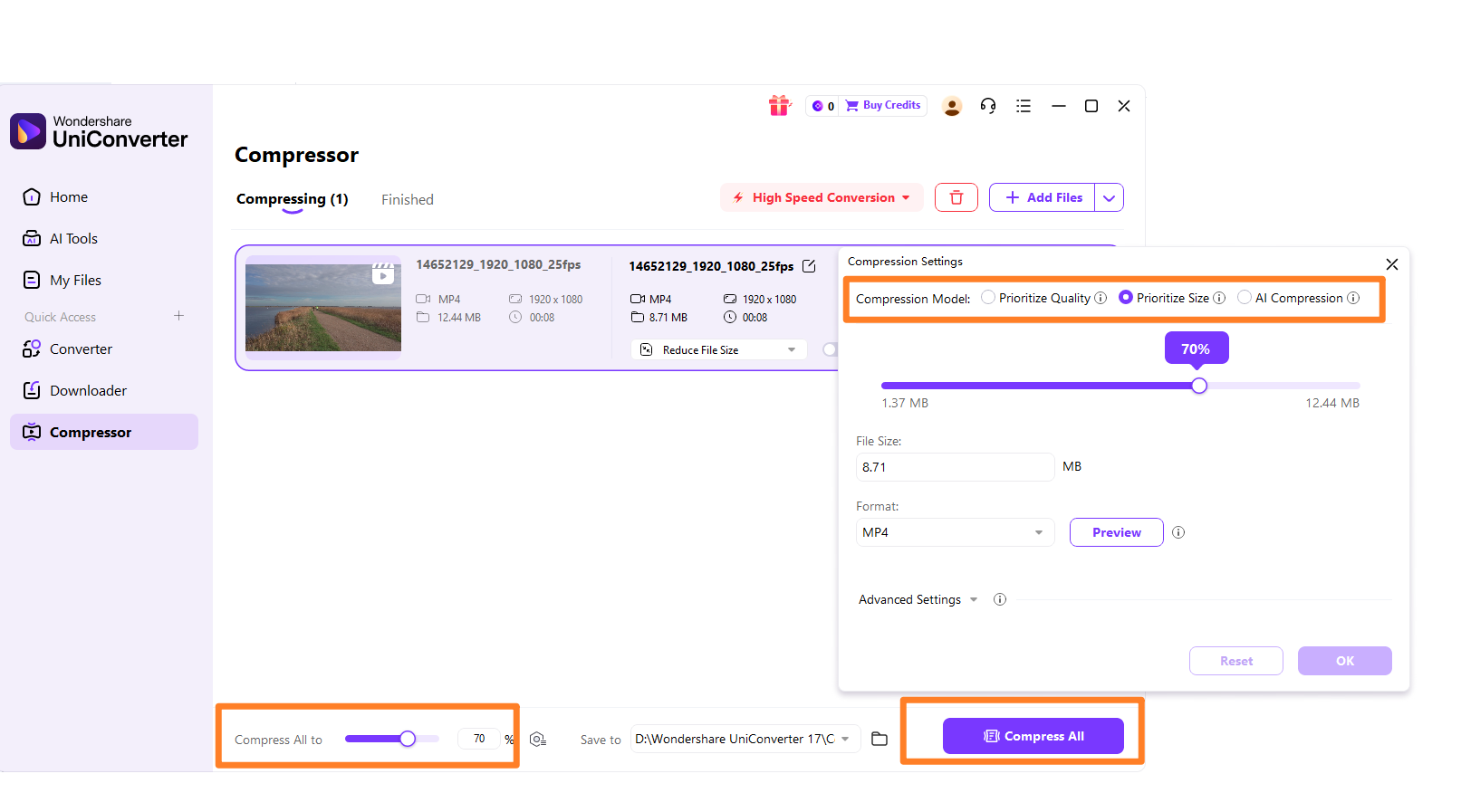
Step 3: Choose Required Parameters
Adjust the compression settings such as format, quality, and bitrate to achieve your desired file size and audio fidelity. UniConverter also offers powerful convert capabilities, allowing you to change file types if needed. For instance, you can easily convert MP4 to MP3 or convert M4A to MP3 while compressing.
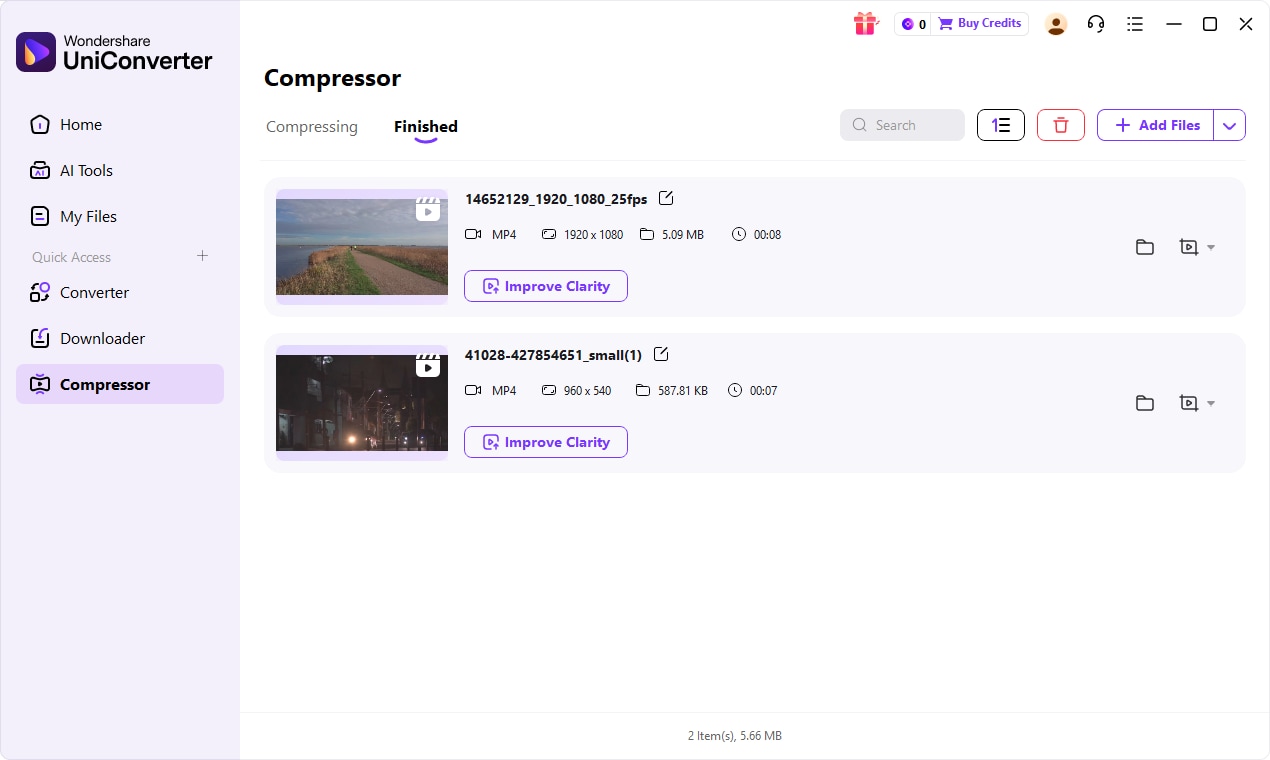
Step 4: Start Compression and Save Your Files
Click the "Compress" button to begin the process. Once finished, your compressed files will be saved to the specified output folder. You can also convert video to GIF after compression for easy sharing.

Need a Better Ashampoo Music Studio Alternative?
Part 7: Conclusion
After thoroughly exploring Ashampoo Music Studio Audio Compressor, I can confidently say it serves its purpose well for a specific segment of users. For casual listeners and music enthusiasts who need an intuitive, integrated tool to manage and optimize their digital music libraries, it's a solid choice. Its ease of use and comprehensive suite of features for basic audio tasks make it a convenient option. However, for those requiring advanced audio editing capabilities, professional-grade mastering, or dealing with niche audio formats, its limitations become apparent. While it offers good compression quality for everyday use, it doesn't stand up to specialized tools like Adobe Audition for high-fidelity work. When considering alternatives, UniConverter emerges as a strong contender, offering a more versatile and robust solution for a wider range of compression and conversion needs, especially when batch processing and maintaining high quality are priorities. Ultimately, your choice should align with your specific use cases and technical requirements. This Ashampoo Music Studio Audio Compressor review aims to provide clarity in that decision-making process.
Part 8: FAQs
-
1. What is the primary function of Ashampoo Music Studio Audio Compressor?
The primary function is to compress audio files, manage music libraries, and perform basic audio editing tasks within an integrated suite.
-
2. Is Ashampoo Music Studio Audio Compressor suitable for professional use?
While it offers some useful features, it's generally not recommended for professional audio production due to its limited advanced capabilities and lack of high-fidelity processing tools. For professional work, I'd suggest tools like Adobe Audition.
-
3. Does Ashampoo Music Studio Audio Compressor support lossless compression?
It supports various compression formats, including some that are near-lossless like FLAC. However, true lossless compression means no data is discarded, which depends on the chosen codec and settings. If you need guaranteed lossless compression and conversion across many formats, UniConverter is a more reliable option.
-
4. How does Ashampoo Music Studio compare to free alternatives like Audacity?
Ashampoo offers a more integrated suite with a polished, user-friendly interface, making it easier for general music management. Audacity, while free, provides more powerful open-source editing tools and greater flexibility for complex audio manipulation, though it has a steeper learning curve for beginners.
-
5. Can I use Ashampoo Music Studio to convert audio formats?
Yes, it includes features for converting audio files between different formats, which is one of its strengths as an all-in-one music management tool.
