
- Ardour's Value: Open-source DAW for professional audio, offering deep control and flexibility.
- Comparison Point: Excels for Linux users and those valuing open-source, unlike commercial DAWs.
- Decision Factor: High learning curve; best for experienced users willing to invest time.
- Alternative Solution: UniConverter offers easy, efficient audio compression for simpler tasks, avoiding DAW complexity.
In this article
- Part 1: What is Ardour Audio Compressor?
- Part 2: Ardour Audio Compressor: Core Strengths and Weaknesses
- Part 3: Ardour Audio Compressor: User and Usage Scenarios
- Part 4: Ardour Audio Compressor and Alternatives Comparison
- Part 5: Potential Pitfalls and Considerations
- Part 6: How to Use UniConverter for Efficient Audio Compression
- Part 7: Conclusion
- Part 8: FAQs
Ardour, a powerful open-source digital audio workstation (DAW), has long been a staple for audio professionals seeking a flexible and robust platform. This Ardour Audio Compressor review delves into its core functionalities, particularly its audio compression capabilities, and compares it against leading commercial alternatives. I'll explore where Ardour shines, where it falls short, and ultimately help you decide if it's the right tool for your audio production needs. This comprehensive analysis will provide a clear picture of Ardour's place in the competitive DAW market, helping you make an informed decision about your audio workflow.
Part 1: What is Ardour Audio Compressor?
Ardour Audio Compressor is an integral part of the Ardour Digital Audio Workstation, a professional-grade, open-source software designed for recording, editing, and mixing audio. Unlike many commercial DAWs, Ardour is built on an open-source philosophy, meaning its code is freely available for inspection, modification, and distribution. This fosters a vibrant community of developers and users who contribute to its continuous improvement. My goal in this review is to dissect Ardour's audio compression features, evaluate its overall performance, and compare it with other popular DAWs to help you understand its unique value proposition.
The Evolving Landscape of Digital Audio Workstations
The world of digital audio production is constantly evolving, presenting both opportunities and challenges for creators.
* Diverse User Needs: From professional studios to home-based hobbyists, users have varied requirements for their DAWs, ranging from basic recording to complex mixing and mastering.
* Cost vs. Functionality: Commercial DAWs often come with a hefty price tag, while free or open-source alternatives may offer a different set of features and a steeper learning curve.
* Operating System Compatibility: The choice of operating system significantly influences the available DAW options, with some being platform-exclusive.
Part 2: Ardour Audio Compressor: Core Strengths and Weaknesses
Ardour's audio compression capabilities are deeply integrated within its comprehensive DAW environment. It offers a range of built-in compressor plugins, alongside extensive support for third-party VST, AU, and LV2 plugins, allowing for highly nuanced and professional-grade dynamic control. The routing flexibility within Ardour means you can apply compression at various stages of your mix, from individual tracks to buses and the master output. Its core strength lies in its uncompromised audio engine, which ensures high-fidelity processing throughout the compression chain.
Core Capabilities:
* Flexible Routing: Allows for complex signal flow, enabling intricate compression setups.
* Extensive Plugin Support: Compatible with a wide array of VST, AU, and native LV2 compressor plugins.
* High-Fidelity Audio Engine: Ensures pristine audio quality even with heavy compression.
* Automation Capabilities: Offers detailed automation for all compressor parameters, allowing for dynamic changes over time.
* Sidechaining: Supports advanced sidechain compression for creative and functional mixing techniques.
Pros:
* Professional-grade audio processing and mixing capabilities.
* Highly customizable and extensible through plugins.
* Open-source and community-driven development.
Cons:
* Steep learning curve for beginners.
* Limited native instrument and effect plugins compared to commercial DAWs.
Part 3: Ardour Audio Compressor: User and Usage Scenarios
Ardour Audio Compressor is primarily designed for individuals and teams engaged in serious audio production. Its robust feature set and open-source nature appeal to those who value control, flexibility, and a deep understanding of their tools. While it can handle simpler tasks, its true power is unleashed in more complex scenarios.
Best Use Case: Professional Audio Production for Linux Users
If you're a professional audio engineer or musician working primarily on a Linux operating system, Ardour is arguably your best bet. Its native Linux support is unparalleled, offering a stable and powerful environment for recording, mixing, and mastering. I've personally used Ardour for multi-track recording sessions and complex post-production work on Linux, and its performance has been consistently reliable, especially when paired with high-quality audio interfaces. The ability to deeply customize the software and integrate it with other open-source tools makes it a powerhouse for those who embrace the open-source ecosystem.
Limited Use Case: Quick and Simple Audio Editing for Casual Users
For someone who just needs to quickly trim an audio file, apply a basic EQ, or compress a podcast for casual listening, Ardour can feel like overkill. The interface, while powerful, isn't designed for quick, intuitive edits. I've found myself reaching for simpler, more streamlined tools for these kinds of tasks, as Ardour's learning curve and extensive feature set can be a barrier for casual users who just need to get something done fast without diving deep into audio engineering concepts.
Part 4: Ardour Audio Compressor and Alternatives Comparison
When I look at Ardour, I see a powerful, open-source contender, but it's crucial to understand how it stacks up against the commercial giants.
| Feature/Scenario | Ardour Audio Compressor | Logic Pro X | Ableton Live | FL Studio |
| Operating System | Linux, macOS, Windows | macOS only | macOS, Windows | macOS, Windows |
| Price | Free/Donation | Paid | Paid | Paid |
| Open Source | Yes | No | No | No |
| Plugin Ecosystem | LV2, VST, AU | AU, VST | VST, AU | VST, AU |
| MIDI Editing | Advanced | Advanced | Advanced | Advanced |
| Audio Mixing | Professional | Professional | Professional | Professional |
| Learning Curve | High | Medium | Medium | Medium |
Key Differentiators: Open-Source Philosophy and Cross-Platform Compatibility
Ardour's open-source nature is its most significant differentiator. This means a passionate community drives its development, and you have the freedom to inspect and modify the code. For me, this fosters a sense of ownership and transparency that commercial DAWs can't match. Its cross-platform compatibility (Linux, macOS, Windows) also sets it apart, especially for Linux users who have fewer professional-grade DAW options. While Logic Pro X is a macOS exclusive and Ableton Live and FL Studio are strong on both macOS and Windows, Ardour offers a truly versatile solution for diverse operating system preferences.
Part 5: Potential Pitfalls and Considerations
While Ardour offers incredible power and flexibility, I've encountered several aspects that new users, especially, should be aware of before diving in. These aren't necessarily deal-breakers, but they require careful consideration.
Steep Learning Curve for New Users
I remember my first few weeks with Ardour; it felt like learning a new language. Unlike some commercial DAWs that aim for immediate user-friendliness, Ardour prioritizes depth and control. Its interface, while logical once you understand it, can be intimidating initially due to the sheer number of options and the way its signal flow is presented. If you're coming from a simpler editor or have no prior DAW experience, be prepared to invest significant time in tutorials and documentation.
Dependency on Third-Party Plugins for Comprehensive Functionality
While Ardour supports a vast array of plugins (LV2, VST, AU), its native effects and instruments library isn't as extensive or polished as what you'd find in a commercial DAW like Logic Pro X or Ableton Live. I often find myself relying heavily on third-party plugins for specific sounds or advanced processing. This means you might need to factor in additional costs or time spent finding suitable free alternatives to achieve a fully fleshed-out production environment.
Community Support vs. Dedicated Customer Service
As an open-source project, Ardour relies on its community for support. While the forums are active and helpful, it's not the same as having a dedicated customer service team you can call or email for immediate assistance. I've always found solutions to my problems, but sometimes it requires patience and a willingness to search through forums or experiment. For mission-critical projects with tight deadlines, this can be a point of concern if you anticipate needing rapid troubleshooting.
Hardware Compatibility and Performance Optimization
While Ardour runs on various operating systems, achieving optimal performance, especially on Linux, often requires careful configuration of your audio hardware and drivers (like ALSA or JACK). I've spent hours tweaking buffer sizes and sample rates to minimize latency and avoid xruns. While this level of control is a strength for experienced users, it can be a source of frustration for those expecting a plug-and-play experience. Ensuring your hardware is well-supported and properly configured is crucial for a smooth workflow.
Part 6: How to Use UniConverter for Efficient Audio Compression
For quick audio jobs, a full DAW like Ardour can feel far more complicated than necessary. That’s why I prefer UniConverter when I just need a cleaner workflow for audio compression, format conversion, or batch processing. It keeps things simple with broad format support, an ad-free interface, and GPU acceleration that helps speed up larger tasks. And since it also works well for video compression, it’s useful beyond audio-only projects. For video files, it can even help compress videos without quality loss as much as possible, which makes it a practical all-in-one tool for everyday media conversion and compression.
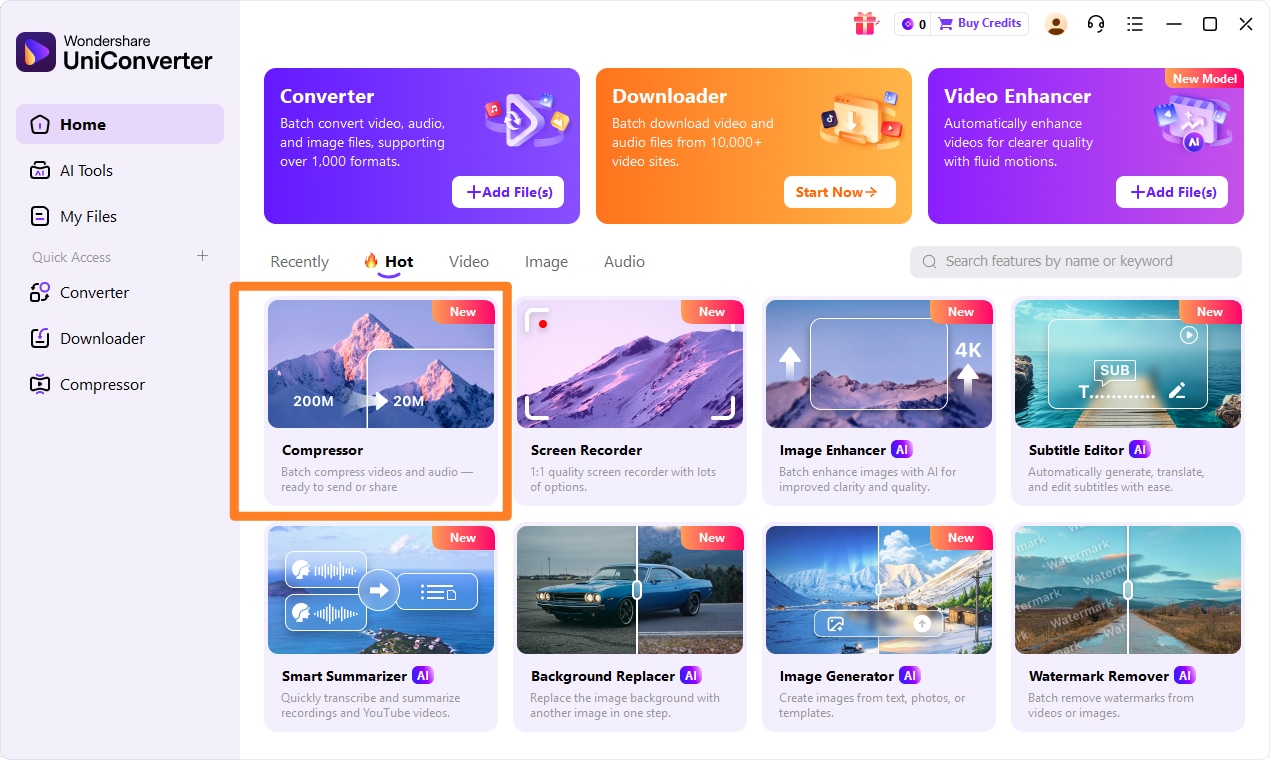
Step 1: Open UniConverter and Choose Compressor
First, I launch UniConverter on my computer. On the main interface, I navigate to the "Compressor" tool, which is usually found in the main toolbar or under the "Tools" section.
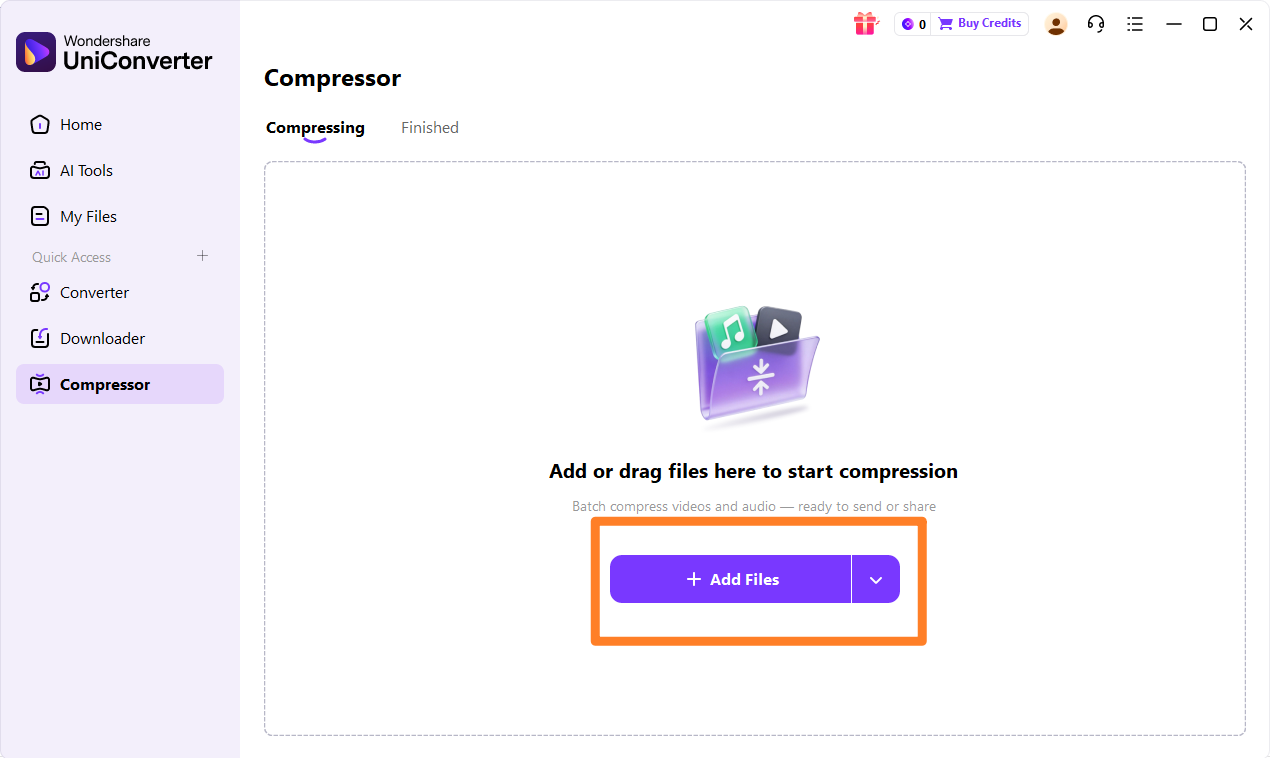
Step 2: Upload the Video, Audios or Images
Next, I drag and drop my audio files directly into the UniConverter window. Alternatively, I can click the "Add Files" button to browse and select the audio files I want to compress from my computer.
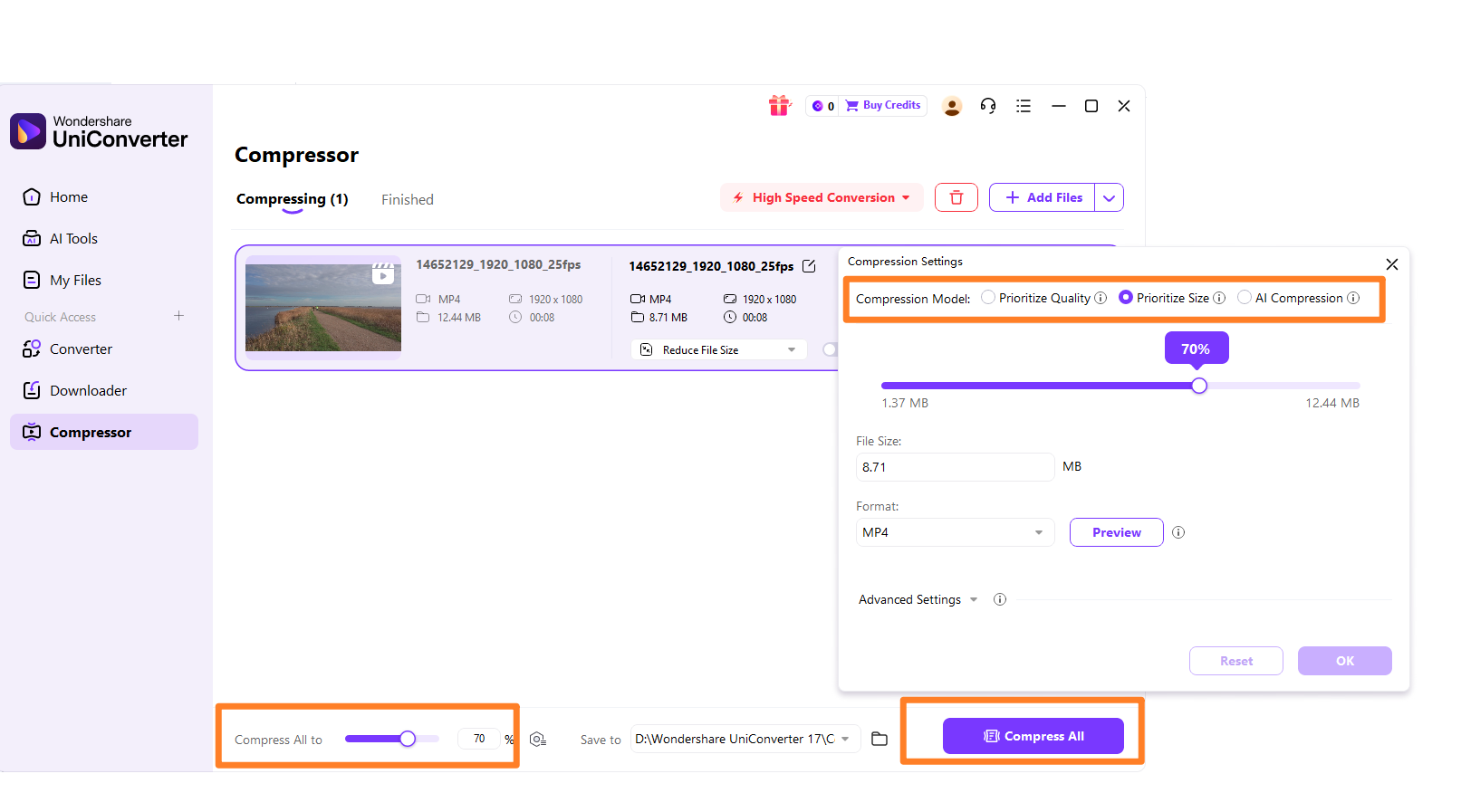
Step 3: Choose Required Parameters
Once the files are loaded, I can adjust the compression settings. UniConverter provides options to change the file size, quality, and format. I usually preview the changes to ensure the audio quality remains acceptable after compression.
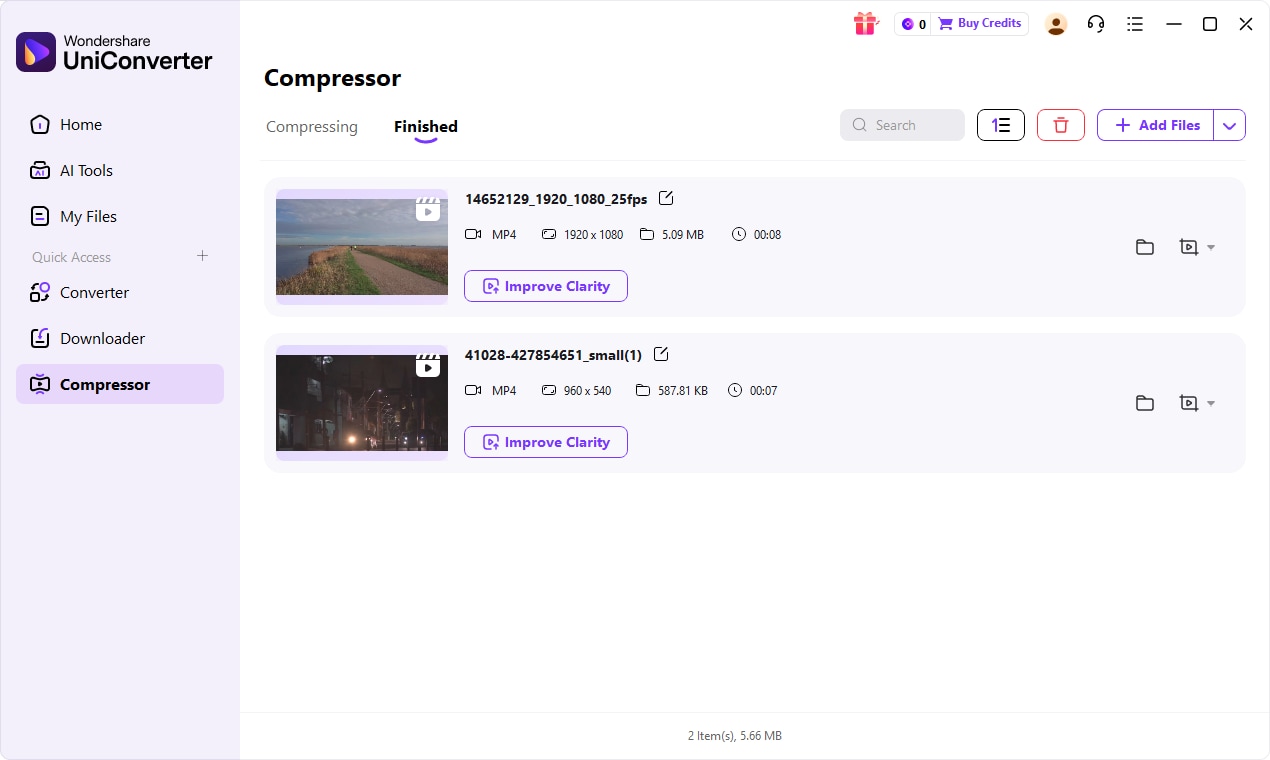
Step 4: Save the Compressed File
After I'm satisfied with the settings, I click the "Compress" button. UniConverter quickly processes the files, and then I choose the output folder to save my newly compressed audio files.

Seeking an Ardour Audio Compressor Alternative?
Part 7: Conclusion
In conclusion, my Ardour Audio Compressor review reveals it to be an exceptionally powerful and flexible Digital Audio Workstation, particularly for those deeply invested in the open-source ecosystem and Linux users. Its professional-grade audio engine and extensive plugin support make it capable of handling complex production tasks, rivaling commercial alternatives in terms of raw capability. However, its steep learning curve and reliance on community support mean it's best suited for experienced audio engineers and dedicated enthusiasts willing to invest the time to master it. For quick, simple audio tasks or for users who prioritize ease of use and a vast native plugin library, commercial DAWs like Logic Pro X or Ableton Live might be a more immediate fit. Ultimately, your choice should hinge on your operating system, your budget, your technical comfort level, and the specific demands of your audio workflow.
Part 8: FAQs
-
1. Is Ardour Audio Compressor truly free?
Ardour is open-source and can be compiled from source for free. However, pre-built binaries usually require a subscription or one-time payment to support its ongoing development.
-
2. What kind of plugins does Ardour support?
Ardour supports LV2, VST, and AudioUnit (AU) plugins, offering a wide range of options for effects and instruments.
-
3. Is Ardour suitable for beginners?
While powerful, Ardour has a steeper learning curve than some other DAWs, making it less ideal for absolute beginners who might prefer a more intuitive interface.
-
4. How does Ardour compare to commercial DAWs in terms of audio quality?
Ardour's audio engine is professional-grade and capable of producing high-quality results comparable to commercial DAWs. The final audio quality largely depends on the user's skill and the quality of their plugins and source material.
-
5. Can UniConverter replace Ardour for professional audio production?
No, UniConverter is primarily an audio/video converter and compressor, not a full-fledged Digital Audio Workstation like Ardour. While UniConverter is excellent for quick, efficient audio compression and format conversion, it lacks the recording, editing, mixing, and advanced processing capabilities required for professional audio production.
