
- Animoto Compressor: Great for quick, casual video compression within the Animoto ecosystem.
- Limited Control: Lacks advanced settings for precise compression, unsuitable for professional needs.
- Cloud-based: Convenient access from anywhere, but relies on internet and raises data privacy concerns.
- Compare Tools: Evaluate Animoto against HandBrake, Clipchamp, and UniConverter for specific needs.
- UniConverter Advantage: Offers advanced control, fast processing, and offline capabilities for superior results.
- Decision Factor: Choose based on required quality, control, and workflow integration for optimal results.
In this article
- Part 1: What is Animoto Video Compressor?
- Part 2: Animoto Video Compressor: Core Features, Pros & Cons
- Part 3: Animoto Video Compressor: Ideal Users & Use Cases
- Part 4: Animoto Video Compressor & Competitors: A Comparative Analysis
- Part 5: Risks & Pitfalls to Consider
- Part 6: How to Use UniConverter for Efficient Video Compression
- Part 7: Final Verdict & Recommendations
- Part 8: FAQs
Animoto, a well-known name in online video creation, also offers a video compressor as part of its suite of tools. In an increasingly digital world where video content reigns supreme, efficient file management is crucial. This Animoto Video Compressor review will delve into its capabilities, comparing it against other prominent players in the market. I'll explore its core features, ideal use cases, potential pitfalls, and ultimately help you decide if it's the right tool for your video compression needs. Whether you're a casual social media user or a small business owner, understanding the nuances of these tools can save you time, storage, and bandwidth.
Part 1: What is Animoto Video Compressor?
Animoto Video Compressor is an online tool designed to reduce the file size of your video clips, making them easier to share, upload, and store. It's integrated within the broader Animoto platform, which is primarily known for its user-friendly video editing and creation services. This compressor aims to simplify the often-complex process of video optimization, offering a straightforward solution for users who need to quickly shrink their video files without delving into technical specifications. My goal in this review is to assess its effectiveness, ease of use, and overall value proposition, especially when stacked against dedicated compression software and other online alternatives.
Market Landscape of Online Video Compressors
The demand for efficient video compression tools has surged due to:
* Proliferation of Video Content: Everyone from individuals to large enterprises is creating and sharing videos.
* Storage and Bandwidth Constraints: Large video files consume significant storage space and require more bandwidth for uploading and streaming.
* Social Media Platform Requirements: Most social media platforms have file size limits for uploads, necessitating compression.
* Mobile-First Consumption: Optimized video files ensure smoother playback on mobile devices with varying internet speeds.
Part 2: Animoto Video Compressor: Core Features, Pros & Cons
Animoto Video Compressor offers a streamlined approach to reducing video file sizes, making it particularly appealing for users already familiar with the Animoto ecosystem. Its core capabilities revolve around quick and accessible compression without requiring extensive technical knowledge. It primarily focuses on delivering a functional solution for common video formats, prioritizing ease of use over granular control.
Core Capabilities:
* Quick Compression: Designed for rapid file size reduction.
* Common Format Support: Handles popular video formats like MP4, MOV.
* Cloud-based Operation: Accessible directly through a web browser.
* Basic Quality Adjustment: Allows for some level of quality vs. size trade-off.
* Direct Integration: Seamlessly works with Animoto's video editing tools.
Pros:
* User-friendly interface for quick compression: I found it incredibly intuitive to upload a video and initiate compression. The steps are clear, and there's no steep learning curve.
* Integrated with Animoto's video editing suite: If you're already using Animoto for video creation, the compressor is right there, making the workflow incredibly smooth.
* Cloud-based, accessible from anywhere: I appreciate being able to compress videos from any device with an internet connection, without needing to download software.
Cons:
* Limited advanced compression options: For someone like me who needs precise control over bitrate, resolution, or codecs, Animoto's options feel quite basic.
* May require Animoto subscription for full features: While a free tier exists, I noticed that unlocking higher quality compression or larger file sizes often pushes you towards a paid plan.
Part 3: Animoto Video Compressor: Ideal Users & Use Cases
Animoto Video Compressor is tailored for specific user groups and scenarios where simplicity and integration are paramount. It's not a one-size-fits-all solution, but it excels in situations where quick, fuss-free compression is the priority.
Best Use Case: Quick Social Media Sharing
For content creators, small businesses, or individuals who frequently share videos on platforms like Instagram, Facebook, or TikTok, Animoto Video Compressor is a fantastic tool. I often find myself needing to quickly shrink a video to meet platform upload limits or to ensure faster loading times for my audience. Its cloud-based nature means I can compress a video right after editing it in Animoto, then immediately share it without downloading and re-uploading to another tool. The ease of use and quick turnaround make it ideal for maintaining a consistent social media presence.
Limited Use Case: Professional Video Production with Specific Output Requirements
On the other hand, if you're a professional videographer or editor working on high-stakes projects with strict quality control, Animoto Video Compressor might fall short. I've found that its limited advanced settings prevent me from achieving the precise bitrate, codec, or resolution configurations often required for broadcast, high-end client deliverables, or archival purposes. When I need to ensure minimal quality degradation or adhere to specific technical specifications, I have to turn to more robust, dedicated software. It simply doesn't offer the granular control necessary for professional-grade compression where every pixel counts.
Part 4: Animoto Video Compressor & Competitors: A Comparative Analysis
When I look at video compressors, I'm always weighing ease of use against control and performance. Here's how Animoto stacks up against some popular alternatives:
| Feature/Tool | Animoto Video Compressor | HandBrake | Clipchamp | UniConverter |
| Ease of Use | High | Medium | High | High |
| Advanced Settings | Low | High | Medium | High |
| Cloud-based | Yes | No | Yes | No (Desktop) |
| Integration | Animoto Ecosystem | Standalone | Microsoft Ecosystem | Standalone |
| Output Quality Control | Basic | Advanced | Moderate | Advanced |
| Processing Speed | Moderate | Fast | Moderate | Very Fast (GPU Accelerated) |
| Security | Cloud-based risks | Local processing | Cloud-based risks | Local processing |
Key Differentiators:
Animoto's strength lies in its seamless integration with its video editor, offering a convenient, all-in-one solution for users already within its ecosystem. This cloud-based approach prioritizes ease of use and accessibility from anywhere. In contrast, HandBrake provides unparalleled advanced control for those who need to fine-tune every aspect of compression, sacrificing some ease of use for power. Clipchamp, like Animoto, is cloud-based and user-friendly, but benefits from its integration into the Microsoft ecosystem. UniConverter, while a desktop application, offers a powerful combination of advanced settings and high processing speed, making it a strong contender for users who need both control and efficiency without cloud dependency.
Part 5: Risks & Pitfalls to Consider
While the convenience of online video compressors like Animoto is undeniable, I've learned that it's crucial to be aware of potential risks and pitfalls, especially when dealing with your valuable video content.
Data Privacy and Security Concerns
When I upload my videos to a cloud-based service, I'm essentially entrusting my data to a third party. This raises questions about how my video files are stored, who has access to them, and what security measures are in place to prevent breaches. For sensitive or confidential content, I always exercise extreme caution and prefer local, desktop-based solutions to maintain full control over my data.
Potential for Quality Degradation
Compression, by its nature, involves removing data from a video file. While Animoto aims to minimize quality loss, there's always a risk of noticeable degradation, especially if I'm compressing a video multiple times or starting with a file that's already been compressed. I've found that aggressively reducing file size can lead to artifacts, pixelation, or a general "muddiness" in the video, which can be unacceptable for professional or high-quality content.
Hidden Costs or Subscription Requirements
Many online tools, including Animoto, operate on a freemium model. While a basic compression might be free, I've often encountered limitations on file size, resolution, or the number of compressions per day. To unlock full features, higher quality output, or remove watermarks, a paid subscription is typically required. It's important to read the fine print to avoid unexpected charges or limitations that hinder my workflow.
Internet Dependency for Cloud-based Compression
As a cloud-based tool, Animoto Video Compressor requires a stable internet connection to function. If my internet is slow or unreliable, the upload and compression process can be frustratingly long or even fail. This dependency means I can't compress videos offline, which can be a significant drawback if I'm working in areas with poor connectivity or need to process files on the go without Wi-Fi.
Part 6: How to Use UniConverter for Efficient Video Compression
Sometimes, online tools just aren’t enough—especially when batch compression is limited, results are inconsistent, or the final output loses too much quality. In those situations, I usually turn to UniConverter as a more dependable desktop alternative. It works especially well as a dedicated video compressor, offering a smoother experience without many of the common drawbacks of browser-based services. I also like that it can help compress videos without quality loss as much as possible, while GPU acceleration improves speed and overall efficiency. Since it also supports audio compression and image compression, it works well as a practical all-in-one solution for different media compression needs.
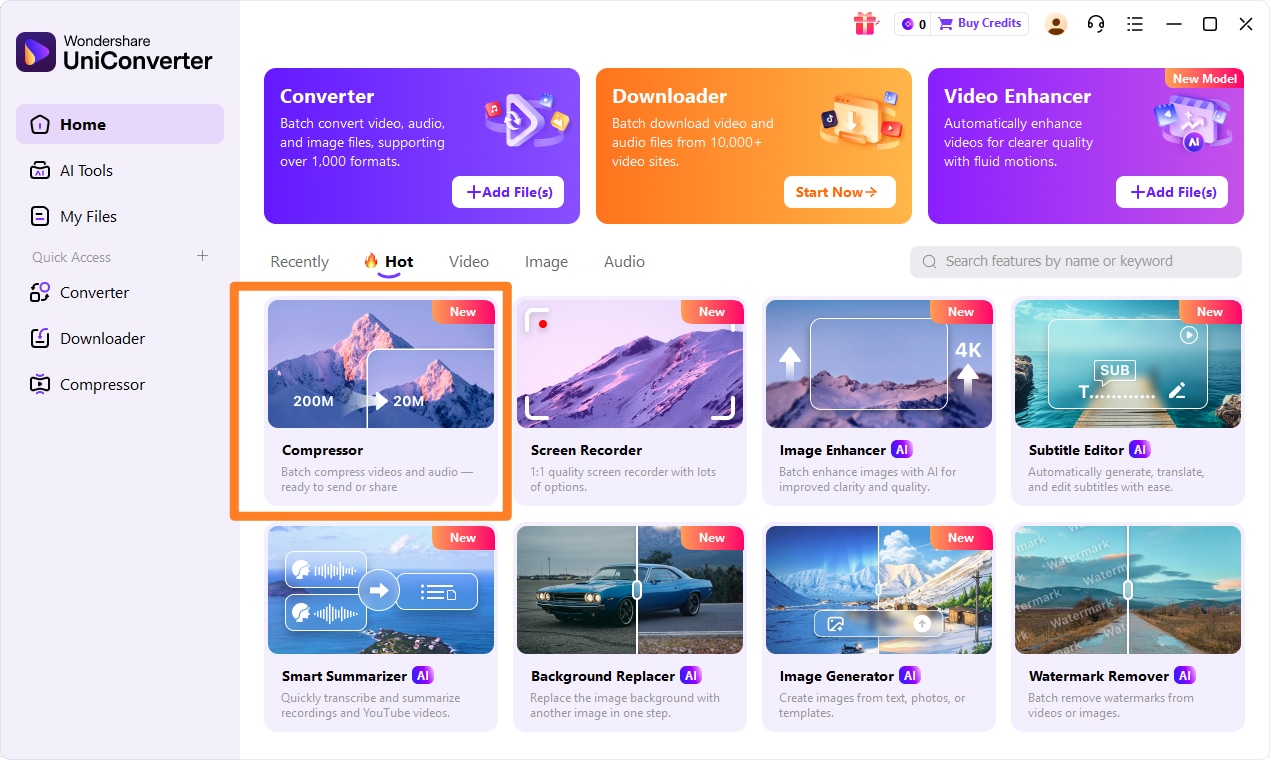
Step 1: Open UniConverter and Choose Compressor
First, I launch UniConverter on my desktop. On the left sidebar, I navigate to the "Compressor" tab. This is where all my video, audio, and image compression tasks begin.
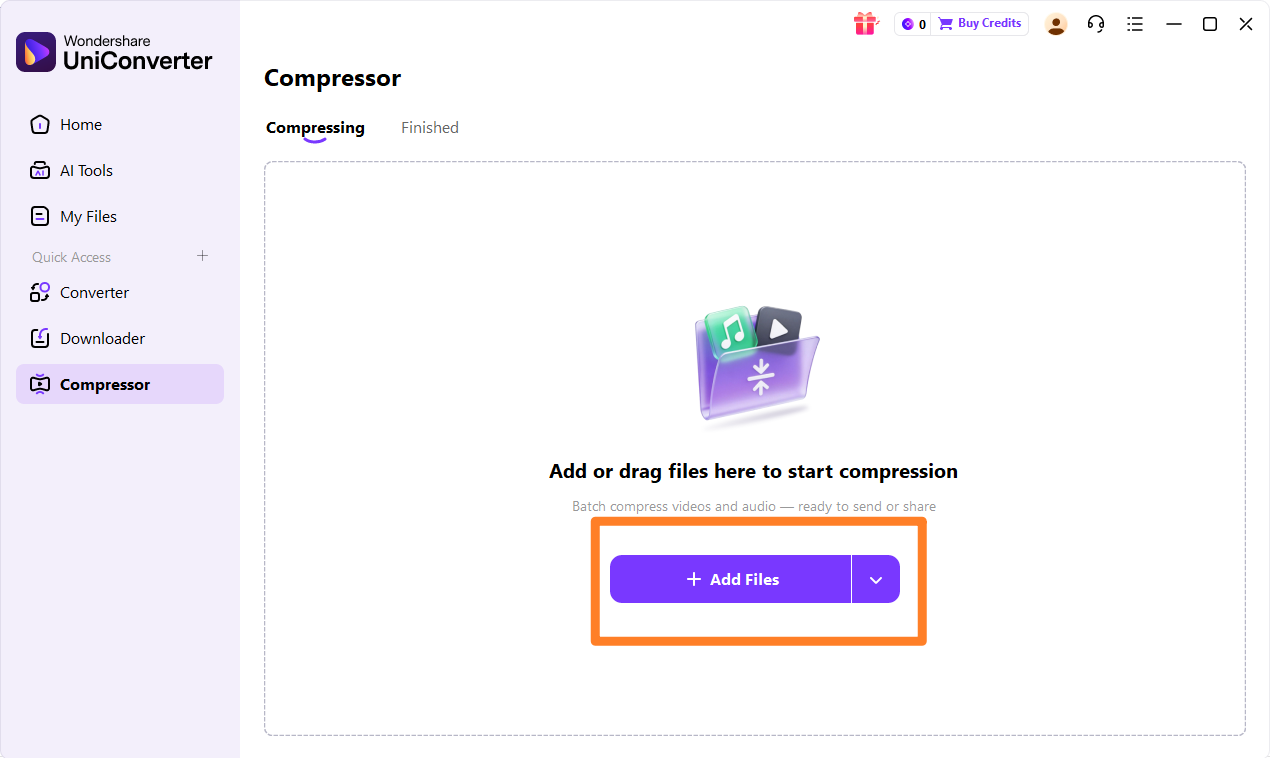
Step 2: Upload the Video, Audios or Images
Next, I click the "Add Files" button or simply drag and drop the video, audio, or image files I want to compress into the UniConverter interface. I can add multiple files for batch processing.
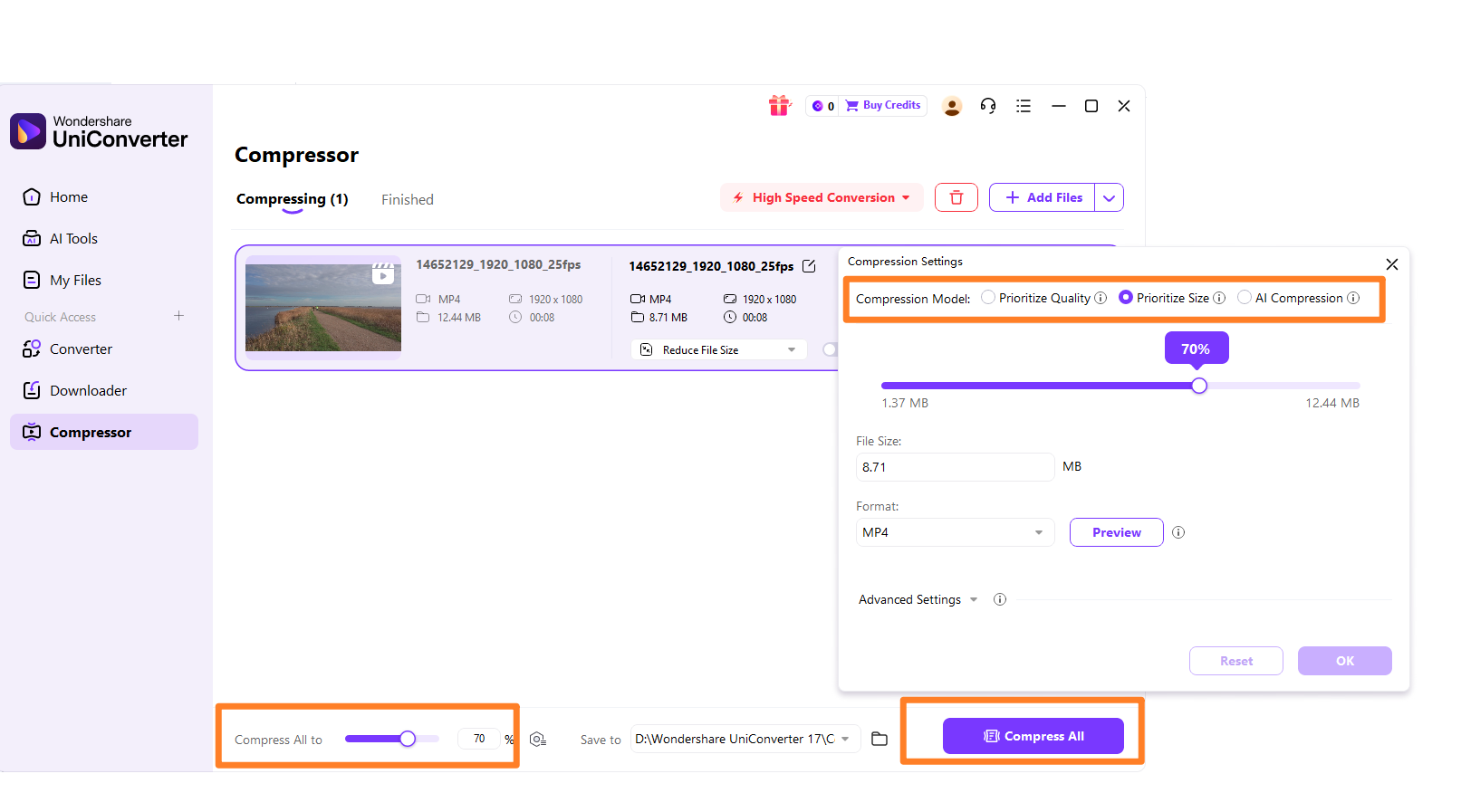
Step 3: Choose Required Parameters
After uploading, I can adjust the compression settings for each file. I have granular control over file size, format, resolution, bitrate, and quality. UniConverter even provides a preview to see the estimated output quality before committing.
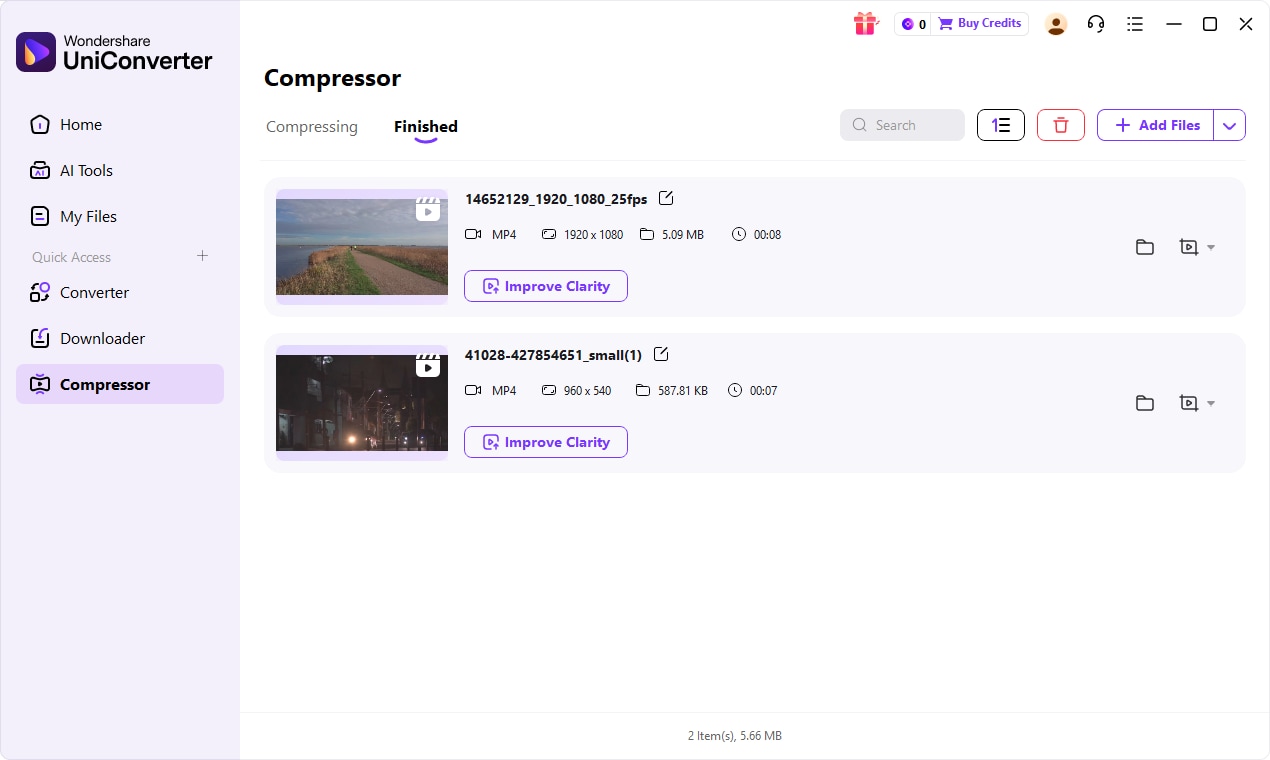
Step 4: Save the Compressed File
Once I'm satisfied with the settings, I choose my output folder and click the "Compress" button. UniConverter processes the files quickly, and then I can find my optimized media in the designated folder.

Need a Better Animoto Video Compressor Alternative?
Part 7: Final Verdict & Recommendations
After thoroughly exploring Animoto Video Compressor and its competitors, my conclusion is that its utility largely depends on your specific needs and existing workflow. For casual users and social media creators who are already embedded in the Animoto ecosystem or simply need a quick, no-fuss way to shrink videos for online sharing, Animoto Video Compressor is a convenient and user-friendly option. Its cloud-based nature and integration make it incredibly accessible. However, for small businesses and marketing teams that require more consistent quality, batch processing, or slightly more control over output, Animoto might start to show its limitations, especially if a paid subscription is needed to unlock essential features. For professional videographers and editors, or anyone who demands precise control over compression parameters, minimal quality degradation, and offline capabilities, Animoto Video Compressor falls short. In these scenarios, dedicated desktop software like UniConverter or HandBrake offers the advanced features and reliability necessary for high-stakes projects. Ultimately, while Animoto serves its niche well, it's crucial to align its capabilities with your specific compression requirements to avoid potential frustrations or quality compromises.
Part 8: FAQs
-
1. Is Animoto Video Compressor free to use?
Animoto offers a free tier with limitations on file size, resolution, and possibly the number of compressions. For full features and higher quality output, a paid Animoto subscription is typically required.
-
2. What video formats does Animoto Video Compressor support?
It generally supports common formats like MP4, MOV, and AVI, which cover most user needs. For specific details on all supported formats, I'd recommend checking their official site.
-
3. How much can Animoto Video Compressor reduce file size?
The reduction depends heavily on the original file size, resolution, and the quality settings you choose. While significant reduction is possible, it's a balance between file size and acceptable quality loss.
-
4. Does Animoto Video Compressor affect video quality?
Compression inherently involves some quality loss as data is removed to reduce file size. Animoto aims to minimize this, but if you need to preserve maximum quality, a tool like UniConverter with its advanced settings might offer better control to achieve near-lossless compression.
-
5. Can I compress multiple videos at once with Animoto?
Batch processing capabilities may be limited or exclusively available with a premium Animoto subscription. If you frequently need to compress multiple videos simultaneously, a desktop application like UniConverter offers robust batch processing features.
