
- <b>Adobe Media Encoder:</b> Ideal for professionals within the Adobe ecosystem, offering seamless integration and advanced customization for complex projects.
- <b>UniConverter:</b> Best for quick, high-quality video compression, balancing powerful features with an intuitive, user-friendly interface.
- <b>Comparison:</b> AME excels in professional workflows; UniConverter offers efficiency for broader needs; HandBrake and FFmpeg are free, powerful alternatives.
- <b>Decision Factors:</b> Choose based on your workflow, technical expertise, budget (subscription vs. one-time/free), and specific compression requirements.
- <b>Risks:</b> Beware of quality degradation, performance bottlenecks on older hardware, subscription costs, and privacy concerns with online tools.
In this article
- Part 1: What is Adobe Media Encoder?
- Part 2: Adobe Media Encoder: Core Strengths and Weaknesses
- Part 3: Adobe Media Encoder: Ideal Users and Use Cases
- Part 4: Adobe Media Encoder & Competitors: A Comparative Analysis
- Part 5: Risks and Pitfalls to Consider
- Part 6: How to Efficiently Compress Audio and Video with UniConverter
- Part 7: Final Verdict and Recommendations
- Part 8: FAQs
When it comes to managing video files, especially in today's content-heavy world, efficient compression is no longer a luxury but a necessity. Whether you're a professional videographer or a casual content creator, the ability to reduce file size without compromising quality significantly impacts workflow, storage, and distribution. This Adobe Media Encoder Video Compressor review delves into the capabilities of Adobe Media Encoder against general video compressors, offering a scenario-based comparison to help you make an informed decision. I'll explore their strengths, weaknesses, and ideal use cases, ensuring you understand which tool best fits your specific needs.
Part 1: What is Adobe Media Encoder?
Adobe Media Encoder is a powerful, standalone application that serves as a dedicated media encoding engine for Adobe Creative Cloud applications. It's designed to process and export video and audio files into various formats, resolutions, and codecs, making it an indispensable tool for anyone deeply embedded in the Adobe ecosystem. My goal with this review is to cut through the technical jargon and provide a clear, actionable comparison between AME and other video compressor tools, addressing the common pain points users face when dealing with large video files.
1.1 The Evolving Landscape of Video Compression
The need for effective video compression has never been greater. With 4K and even 8K content becoming more prevalent, file sizes are ballooning, creating challenges for:
* Storage Management: Large files quickly consume disk space, necessitating external drives or cloud solutions.
* Upload and Download Speeds: Sharing high-resolution videos online can be time-consuming and bandwidth-intensive.
* Playback Compatibility: Different devices and platforms have varying requirements for video formats and sizes.
* Workflow Efficiency: Slow encoding times can significantly bottleneck production schedules.
Part 2: Adobe Media Encoder: Core Strengths and Weaknesses
Adobe Media Encoder is a robust tool, especially for those already familiar with Adobe's suite. It excels in professional environments but also has its limitations.
2.1 Pros of Adobe Media Encoder
* Seamless Integration within Adobe Ecosystem: As an Adobe product, AME integrates flawlessly with Premiere Pro, After Effects, and Audition. I can queue up multiple exports directly from these applications, saving a lot of time and effort.
* Advanced Encoding Presets and Customization: AME offers a vast library of presets for various platforms (YouTube, Vimeo, broadcast, etc.) and devices. I also have granular control over every encoding parameter, from bitrate and resolution to frame rate and audio settings, allowing for highly optimized outputs.
* Professional-Grade Output Quality: When I need the absolute best quality for my professional projects, AME consistently delivers. Its advanced algorithms ensure minimal quality loss even with significant compression.
2.2 Cons of Adobe Media Encoder
* Steep Learning Curve for Beginners: If you're new to video editing or compression, AME can be overwhelming. The sheer number of options and settings can be daunting, and it took me a while to get comfortable with it.
* Resource-Intensive Performance: AME demands a powerful computer. I've noticed it can be quite slow on older hardware, especially when encoding complex projects or 4K footage. It often ties up my system for extended periods.
Part 3: Adobe Media Encoder: Ideal Users and Use Cases
Understanding who AME is for and when to use it is crucial. It's not a one-size-fits-all solution.
3.1 Best-Fit Scenarios
* Professional Video Production Workflows: For me, working on client projects or broadcast content, AME is indispensable. It handles complex sequences, multiple audio tracks, and specific delivery requirements with ease. I can set up watch folders for automated encoding, which is a huge time-saver.
* Batch Processing for Diverse Deliverables: When I need to export the same video into multiple formats and resolutions (e.g., a high-res master, a web version, and a mobile version), AME's batch processing capabilities are a lifesaver. I can set up a queue and let it run overnight.
3.2 Limitations and Suboptimal Scenarios
* Quick, Casual Video Compression Needs: If I just need to quickly shrink a video for a friend or upload a short clip to social media without much fuss, AME feels like overkill. The setup time and complexity aren't worth it for simple tasks.
* Users Outside the Adobe Creative Cloud Ecosystem: If you don't use Premiere Pro or After Effects, AME loses a significant part of its appeal. Its integration benefits are nullified, and you might find simpler, standalone compressors more cost-effective and user-friendly.
Part 4: Adobe Media Encoder & Competitors: A Comparative Analysis
When I look at Adobe Media Encoder Video Compressor options, it's important to see how AME stacks up against other popular tools.
| Feature / Product | Adobe Media Encoder | UniConverter | HandBrake | FFmpeg |
| Processing Speed | Excellent (GPU acceleration) | Excellent (GPU acceleration) | Good | Excellent (command-line, highly optimized) |
| Output Quality | Professional-grade, highly customizable | High, customizable, near-lossless options | Very good, flexible | Professional-grade, ultimate control |
| Ease of Use | Moderate to High (steep learning curve) | Very High (intuitive GUI) | Moderate (GUI, but many options) | Very Low (command-line interface) |
| Format Support | Extensive (input/output) | Extensive (input/output, including obscure) | Good (focus on common web/mobile formats) | Extremely extensive (virtually all codecs) |
| Integration | Adobe Creative Cloud | Standalone, some cloud services | Standalone | Command-line, integrates with scripts |
| Price | Subscription (part of Creative Cloud) | One-time purchase / Subscription | Free (open-source) | Free (open-source) |
| Customer Support | Adobe support forums, documentation | Dedicated support, guides | Community forums, documentation | Community forums, extensive documentation |
| Security | High (Adobe's enterprise-level security) | High (reputable software, no known major issues) | High (open-source, regularly audited) | High (open-source, depends on user's implementation) |
| Key Differentiators | Integration vs. Standalone Functionality | Customization Depth vs. Simplicity | Price Point and Subscription Models |
Key Differentiators:
Integration vs. Standalone Functionality: AME shines within the Adobe ecosystem. UniConverter and HandBrake are excellent standalone options, while FFmpeg is a command-line powerhouse for integration into custom workflows. Customization Depth vs. Simplicity: AME and FFmpeg offer unparalleled customization. UniConverter strikes a great balance between power and ease of use, while HandBrake is a solid middle-ground. * Price Point and Subscription Models: AME is subscription-based. UniConverter offers both, while HandBrake and FFmpeg are free, open-source alternatives.
For me, if I'm deep in an Adobe project, AME is the natural choice. But for quick, high-quality compressions without the Adobe overhead, UniConverter is incredibly efficient. HandBrake is my go-to for free, reliable web video compression, and FFmpeg is for those rare, highly technical tasks where I need ultimate control.
Part 5: Risks and Pitfalls to Consider
While video compression is essential, there are several risks and pitfalls I've encountered that you should be aware of, especially when using less reputable tools or making incorrect settings choices.
5.1 Potential Quality Degradation
This is the most common concern. Aggressive compression settings, especially with lower bitrates or resolutions, can lead to noticeable quality loss. I've seen videos become pixelated, blocky, or lose fine details. It's a delicate balance; too much compression and your video looks bad, too little and the file is still too large. Free online compressors, in particular, often prioritize file size reduction over quality, sometimes resulting in unusable output.
5.2 Performance Bottlenecks on Older Hardware
As I mentioned with AME, video encoding is computationally intensive. If your computer has an older CPU, limited RAM, or lacks a dedicated GPU, compression can take an excruciatingly long time. I've had projects that took hours, effectively tying up my machine and hindering my productivity. This is a significant factor if you're on a tight deadline.
5.3 Subscription Cost and Vendor Lock-in
Adobe Media Encoder, being part of Creative Cloud, comes with a recurring subscription cost. While it's worth it for professionals, it can be a barrier for casual users or those on a budget. Furthermore, relying heavily on a single vendor's ecosystem can lead to "vendor lock-in," making it harder to switch to alternative tools if your needs or budget change. I always weigh the long-term costs against the benefits.
5.4 Learning Curve and Time Investment
Powerful tools like AME, while offering extensive control, also demand a significant time investment to learn. Understanding codecs, bitrates, frame rates, and various export settings isn't intuitive. If you just need a quick compression, spending hours learning a complex interface can be counterproductive. Simpler tools might sacrifice some control but save you valuable time.
5.5 Privacy Concerns with Online Compressors
When using free online video compressors, I always exercise caution regarding privacy. You're uploading your potentially sensitive video files to a third-party server. While many reputable services exist, some might have unclear data retention policies or even use your uploaded content for their own purposes. I always read the terms of service carefully before using any online tool, especially for client work.
Part 6: How to Efficiently Compress Audio and Video with UniConverter
Sometimes, I find that specialized tools like Adobe Media Encoder are overkill, or I encounter issues like batch compression limitations, unstable results, or unacceptable quality loss with other compressors. In these situations, I turn to UniConverter. It's an excellent solution for efficient audio and video compression, avoiding many of the common pitfalls. UniConverter stands out with its user-friendly interface, support for a vast array of formats, GPU acceleration for faster processing, and its ability to deliver stable, near-lossless compression even in batches. It truly is an all-in-one solution for my media conversion and compression needs, without the annoyance of ads or pop-ups.
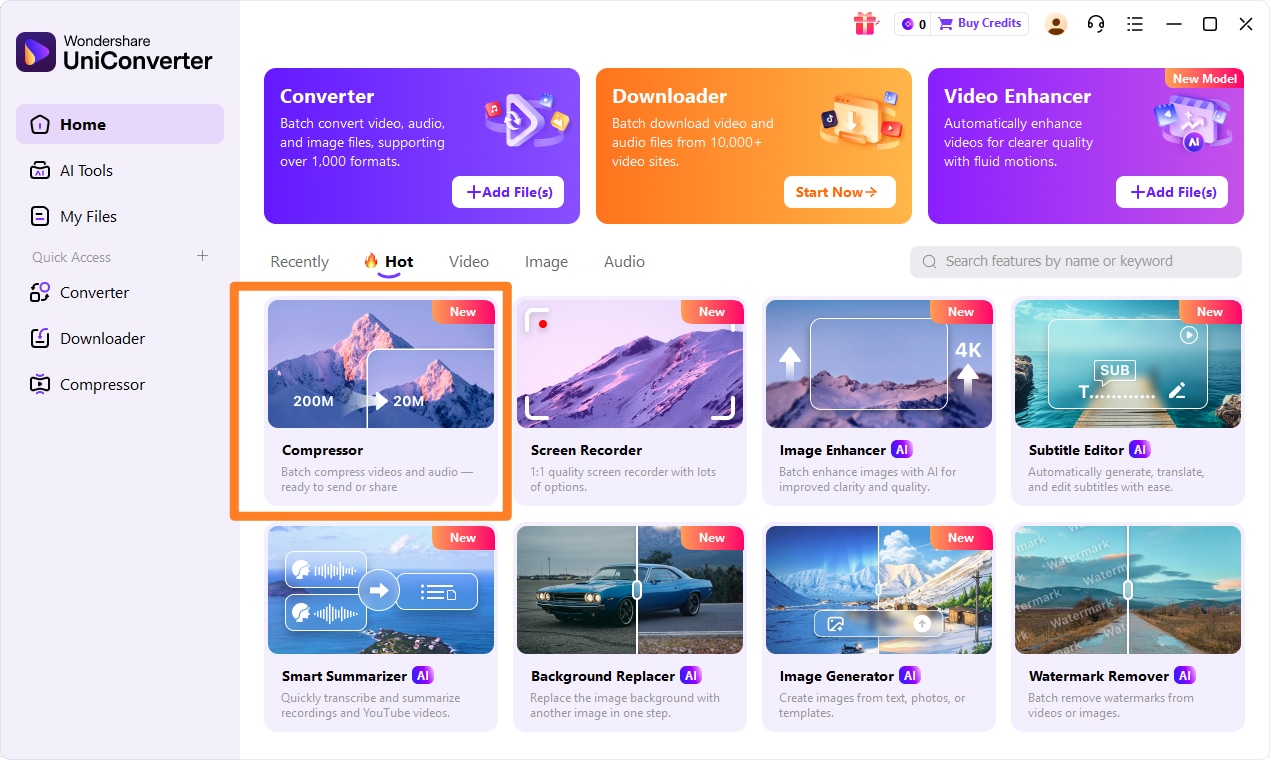
Step 1: Open UniConverter and Choose Compressor
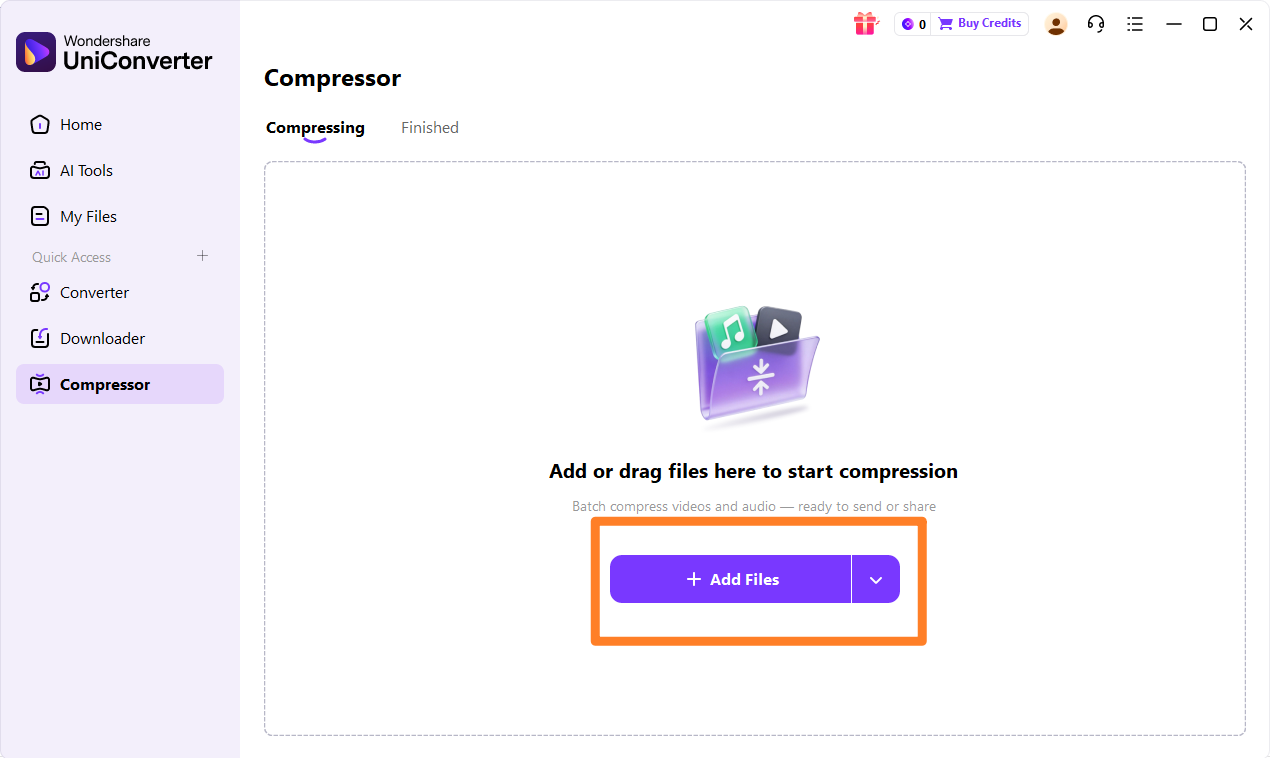
Step 2: Upload the Video, Audios or Images
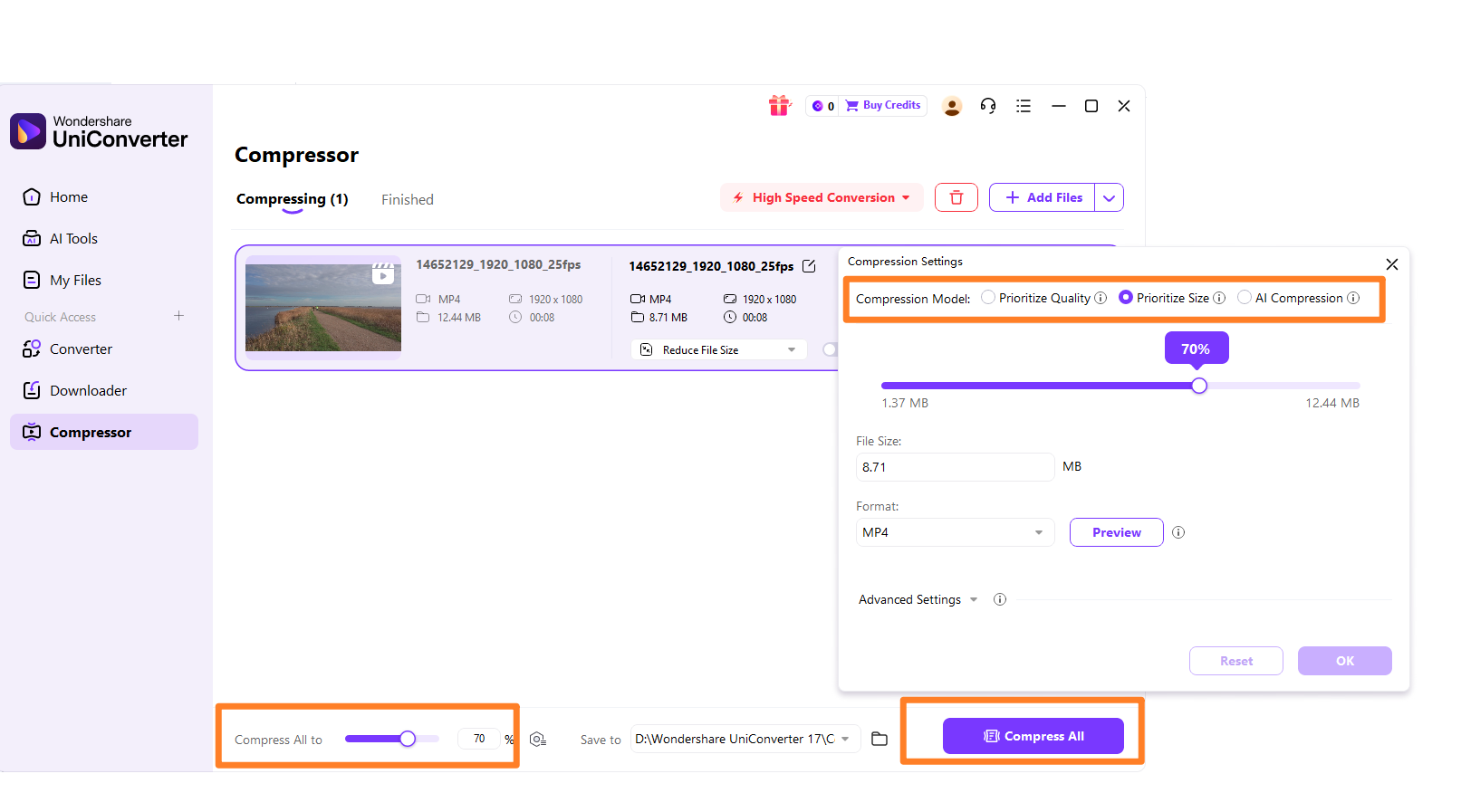
Step 3: Choose Required Parameters
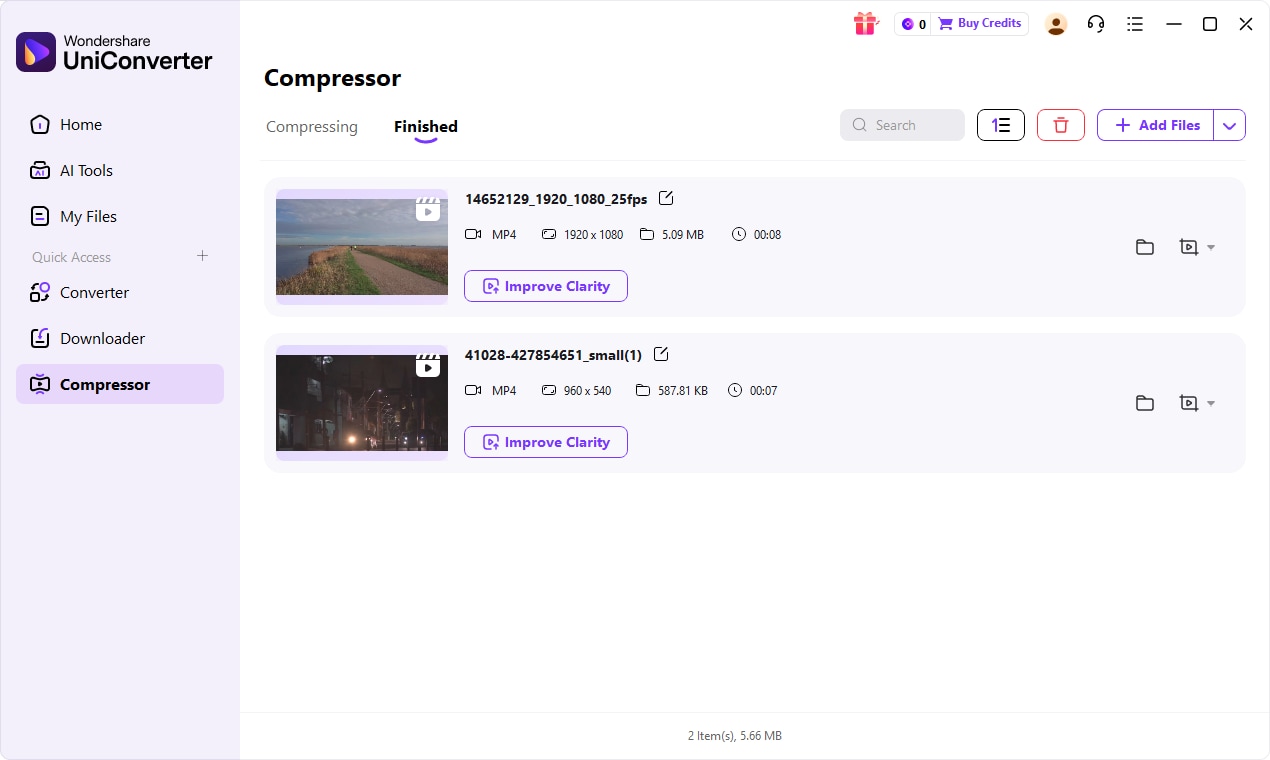
Step 4: Save the Compressed File

Need a Simpler Adobe Media Encoder Alternative?
Part 7: Final Verdict and Recommendations
After extensively using and comparing Adobe Media Encoder Video Compressor options, my final verdict depends entirely on your specific needs and workflow. For professional creatives deeply integrated into the Adobe Creative Cloud ecosystem, Adobe Media Encoder is an unparalleled tool. Its seamless integration, advanced customization, and professional-grade output quality make it indispensable for complex projects and diverse deliverables. However, for casual users, those outside the Adobe ecosystem, or anyone needing quick, efficient compressions without a steep learning curve or significant resource demands, simpler video compressors like UniConverter offer a much better experience. UniConverter, in particular, strikes an excellent balance between power and ease of use, making it ideal for a wide range of users. For budget-conscious individuals, free open-source options like HandBrake are fantastic, though they might require a bit more technical understanding. Ultimately, the best choice balances quality, file size, ease of use, and your budget.
Part 8: FAQs
-
1. Is Adobe Media Encoder free to use?
No, it's not free. Adobe Media Encoder is part of the Adobe Creative Cloud subscription, which typically includes other applications like Premiere Pro and After Effects. You cannot purchase it as a standalone product.
-
2. Can I compress 4K video with a standard video compressor?
Yes, you can compress 4K video with most standard video compressors, including UniConverter and HandBrake. However, the performance and output quality can vary significantly based on the compressor's efficiency, your computer's hardware, and the specific settings you choose. Powerful tools with GPU acceleration will perform better.
-
3. What's the best video format for web upload?
H.264 MP4 is generally recommended for web upload. It offers an excellent balance of high quality, relatively small file size, and broad compatibility across different browsers, devices, and streaming platforms like YouTube and Vimeo.
-
4. Does video compression always reduce video quality?
Not necessarily. While aggressive compression can lead to noticeable quality degradation, smart compression techniques can reduce file size with minimal perceptible quality loss. This involves optimizing bitrates, using efficient codecs, and sometimes making small, imperceptible adjustments to resolution or frame rate. Tools like UniConverter are designed to achieve this balance effectively.
-
5. How do I choose between Adobe Media Encoder and a simpler video compressor?
Consider your workflow, technical expertise, and specific compression needs. If you're a professional video editor using Adobe Creative Cloud daily and require advanced customization and batch processing for complex projects, Adobe Media Encoder is your best bet. If you need quick, high-quality compressions for personal use, social media, or if you're outside the Adobe ecosystem, a simpler, user-friendly video compressor like UniConverter will be more efficient and cost-effective.
