
- Adobe Audition offers unmatched precision and integration for professional audio mastering and broadcast.
- Learning Curve: Audition's extensive features can overwhelm beginners; simpler tools exist for quick fixes.
- Cost vs. Value: Audition's subscription is ideal for professionals, but costly for infrequent users.
- Alternatives: Logic Pro X (Mac), FL Studio (music), and Audacity (free) offer varied compression solutions.
- UniConverter provides simplified, high-quality audio compression, perfect for quick, efficient tasks.
- Decision: Choose Audition for professional control, UniConverter for ease and speed, or free tools for basics.
In this article
- Part 1: What is Adobe Audition Audio Compressor?
- Part 2: Adobe Audition Audio Compressor: Core Features, Pros, and Cons
- Part 3: Adobe Audition Audio Compressor: Ideal Users and Scenario-Based Applications
- Part 4: Adobe Audition Audio Compressor & Competitors: A Comparative Analysis
- Part 5: Risks and Pitfalls When Using Adobe Audition Audio Compressor
- Part 6: How to Use UniConverter for Simplified Audio Compression
- Part 7: Conclusion
- Part 8: FAQs
Adobe Audition Audio Compressor: A Deep Dive into Professional Audio Dynamics
When it comes to professional audio editing, Adobe Audition Audio Compressor review is a topic that frequently comes up. As a seasoned product reviewer, I've spent countless hours dissecting its capabilities, comparing it against competitors, and understanding its place in the vast landscape of audio production tools. This review aims to provide you with a comprehensive, scenario-based analysis, helping you understand if Audition's compressor is the right fit for your needs. We'll explore its strengths, weaknesses, and ideal use cases, alongside a critical look at its alternatives, ensuring you make an informed decision for your audio projects.
Part 1: What is Adobe Audition Audio Compressor?
Adobe Audition's audio compressor is a sophisticated digital signal processing (DSP) tool integrated within the Adobe Audition digital audio workstation (DAW). It's designed to reduce the dynamic range of audio signals, making quiet sounds louder and loud sounds quieter, resulting in a more consistent and polished sound. This is crucial for achieving broadcast-ready audio, whether for podcasts, music, film, or broadcast. My goal in this review is to cut through the technical jargon and provide you with a clear understanding of how this powerful tool performs in real-world scenarios, and whether it truly lives up to its professional reputation.
Understanding the Need for Audio Compression
* Inconsistent Volume Levels: Raw audio often has significant variations in volume, making it difficult for listeners to follow.
* Achieving Broadcast Standards: Professional audio requires adherence to specific loudness standards for consistency across platforms.
* Enhancing Clarity and Punch: Compression can make instruments or vocals stand out and sound more impactful.
* Taming Unwanted Peaks: It helps prevent audio from clipping or distorting during playback.
Part 2: Adobe Audition Audio Compressor: Core Features, Pros, and Cons
Adobe Audition's compressor is a robust tool packed with features that cater to both meticulous engineers and creative producers. Its core strength lies in its ability to offer precise control over every aspect of dynamic range processing. I've found its visual feedback to be particularly helpful, allowing me to see the effects of my adjustments in real-time.
* Threshold Control: Defines the level at which compression begins.
* Ratio Adjustment: Determines how much the audio signal is reduced once it exceeds the threshold.
* Attack and Release Times: Controls how quickly the compressor reacts to and releases the audio signal.
* Gain Make-up: Compensates for the volume reduction caused by compression.
* Knee Control: Shapes the transition from uncompressed to compressed audio.
Pros:
- Precision Control for Mastering: Granular adjustments for attack, release, threshold, and ratio, ideal for professional audio engineers.
- Integrated Workflow within Adobe Ecosystem: Seamless integration with Premiere Pro and other Adobe Creative Cloud applications.
- Visual Feedback and Real-time Monitoring: Detailed waveform display and gain reduction meters for informed decision-making.
Cons:
- Steep Learning Curve for Beginners: The extensive features can be overwhelming for those new to audio compression.
- Resource Intensive: Can demand significant CPU and RAM, especially on older systems or with complex projects.
Part 3: Adobe Audition Audio Compressor: Ideal Users and Scenario-Based Applications
Adobe Audition's compressor is a powerhouse, but it's not a one-size-fits-all solution. I've found it shines brightest in scenarios demanding meticulous control and integration within a professional workflow.
Best Use Case: Professional Podcast Production and Broadcast Audio
- Scenario: I'm a podcaster who needs to level out inconsistent speaker volumes, remove unwanted background noise peaks, and ensure broadcast-ready audio quality for my weekly show. Adobe Audition's compressor allows for precise dynamic range control, ensuring a consistent listening experience across all segments and speakers. Its ability to fine-tune attack and release times means I can transparently manage dynamics without introducing noticeable artifacts, which is crucial for maintaining a professional sound.
Limited Use Case: Quick Fixes for Casual Content Creators
- Scenario: I'm a vlogger who needs to quickly compress audio from a smartphone recording to make it sound more consistent before uploading. While Audition can do this, its complexity and subscription cost might be overkill for simple, one-off adjustments, making a simpler, more intuitive tool a better fit. I've found that for these quick tasks, I often reach for more streamlined options that offer presets and a less intimidating interface, saving me time and effort.
Part 4: Adobe Audition Audio Compressor & Competitors: A Comparative Analysis
When I compare Adobe Audition's compressor to its rivals, I always look at the balance between power, ease of use, and cost. Each tool has its niche, and understanding these differences is key to making the right choice for your specific needs.
| Feature/Scenario | Adobe Audition | Logic Pro X (Built-in Compressor) | FL Studio (Fruity Limiter/Compressor) | Audacity (Compressor Effect) |
| Professional Mastering | Excellent | Very Good | Good | Basic |
| Ease of Use for Beginners | Moderate | Moderate | Moderate | Good |
| Integration with Video Editing | Seamless (Adobe CC) | Good (Final Cut Pro) | Limited | None |
| Cost | Subscription | One-time Purchase | One-time Purchase | Free |
| CPU Usage | High | Moderate | Moderate | Low |
Key Differentiators:
- Adobe Audition: Unmatched precision and integration within a professional creative suite. I find its detailed controls invaluable for complex projects. - Logic Pro X: A strong contender for Mac users, offering a comprehensive DAW with excellent built-in compression. Its native integration with macOS makes it a smooth experience. - FL Studio: Popular for music production, its compressor is well-suited for electronic music and beat-making. I appreciate its creative flexibility. - Audacity: The go-to free option for basic compression and quick edits. It's a fantastic starting point for anyone new to audio editing.
Part 5: Risks and Pitfalls When Using Adobe Audition Audio Compressor
While Adobe Audition's compressor is a powerful tool, I've learned through experience that it comes with its own set of challenges and potential pitfalls, especially if you're not careful or fully understand its intricacies.
Over-compression Leading to "Pumping" or "Breathing" Artifacts
One of the most common mistakes I've seen is over-compressing audio. This can lead to undesirable "pumping" or "breathing" sounds, where the background noise or reverb seems to swell and recede with the main audio. It's a clear sign that the compressor is working too hard, and it can make your audio sound unnatural and fatiguing to listen to. I always advise a subtle approach, listening carefully for these artifacts.
Misunderstanding Parameters Resulting in Unnatural Sound
The sheer number of parameters – threshold, ratio, attack, release, knee, gain make-up – can be daunting. If you don't understand what each one does and how they interact, you can easily end up with audio that sounds squashed, lifeless, or even distorted. I've personally spent hours experimenting to truly grasp the nuances of each setting, and it's a journey, not a quick fix.
High Subscription Cost for Infrequent Users
Adobe Audition is part of the Creative Cloud suite, which means a monthly or annual subscription. For someone who only needs to compress audio occasionally, this cost can be prohibitive. I've often found myself recommending free or one-time purchase alternatives to users who don't require the full professional suite, as the subscription can quickly outweigh the benefit for infrequent use.
Compatibility Issues with Older Hardware or Operating Systems
Being a professional-grade software, Audition can be quite demanding on system resources. If you're running older hardware or an outdated operating system, you might encounter performance issues, crashes, or slow processing times. I've experienced frustrating lags on less powerful machines, which can severely impact workflow and productivity.
Steep Learning Curve Can Lead to Frustration and Time Loss
For beginners, the extensive features and professional interface of Audition can be overwhelming. I remember my own initial struggles; it took a significant investment of time to learn the ropes. If you're looking for a quick and easy solution, the learning curve here can lead to considerable frustration and time lost trying to achieve even basic compression tasks.
Part 6: How to Use UniConverter for Simplified Audio Compression
For everyday compression tasks, a full tool like Adobe Audition can sometimes feel more complex than necessary. That’s why I often switch to UniConverter when I want a more streamlined workflow for audio compression, video compression, or even image compression. It gives me a faster, cleaner experience with broad format support, GPU acceleration, and reliable batch processing, which is especially helpful when other tools feel unstable or reduce quality too much. For video files, it can also help compress videos without quality loss as much as possible, making it a practical all-in-one solution for quick and efficient media handling.
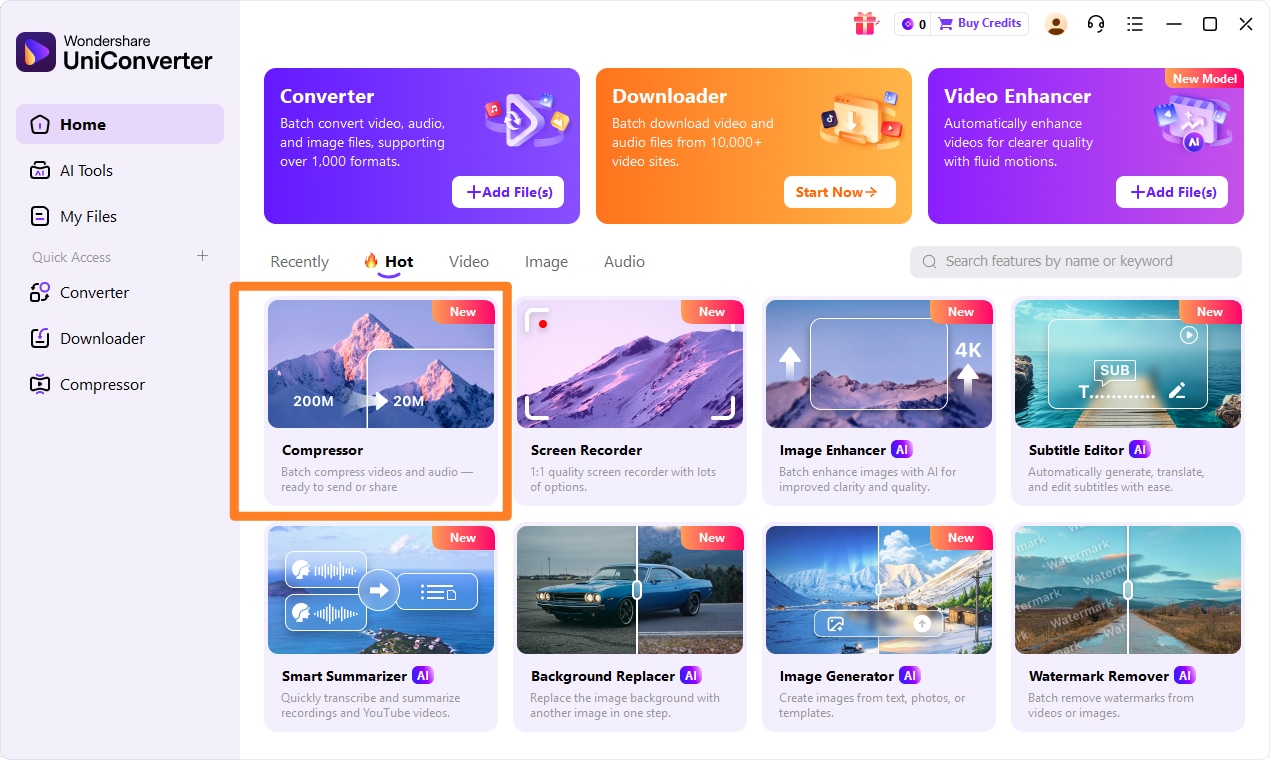
Step 1: Open UniConverter and Choose Compressor
First, I launch UniConverter and navigate to the "Compressor" tool from the main interface. It's usually prominently displayed and easy to find.
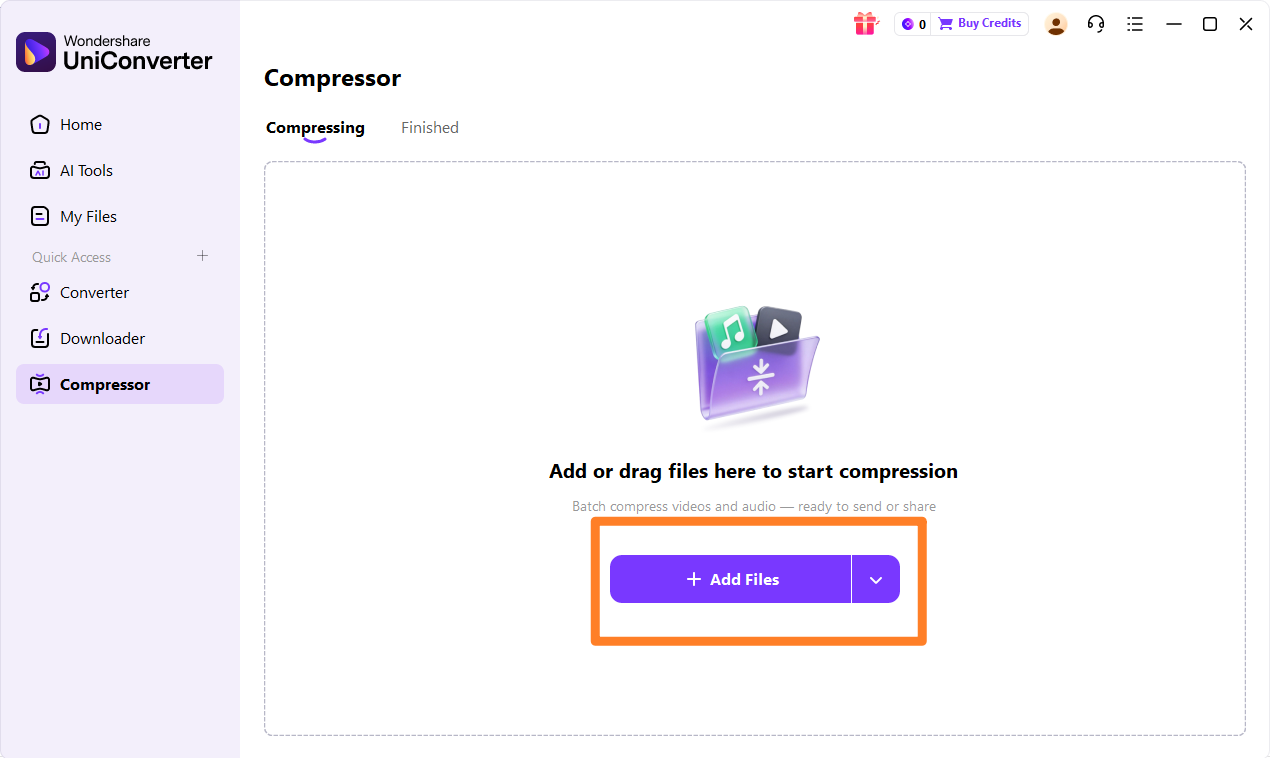
Step 2: Upload the Video, Audios or Images
Next, I simply drag and drop my audio, video, or image files into the designated area, or click "Add Files" to browse my computer.
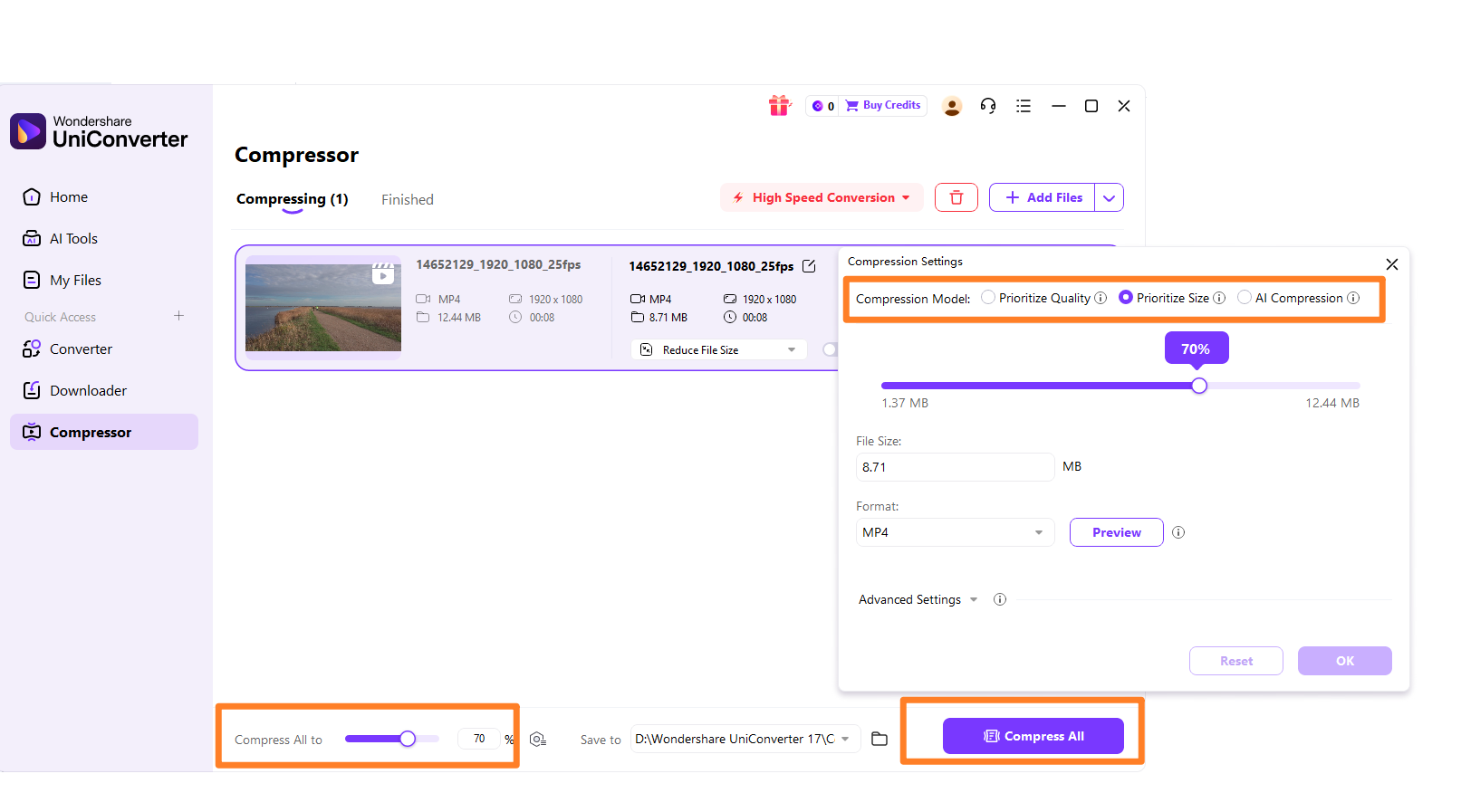
Step 3: Choose Required Parameters
Once my files are loaded, I can adjust the compression settings. UniConverter offers various presets, or I can manually set the output size, quality, and format to my preference.
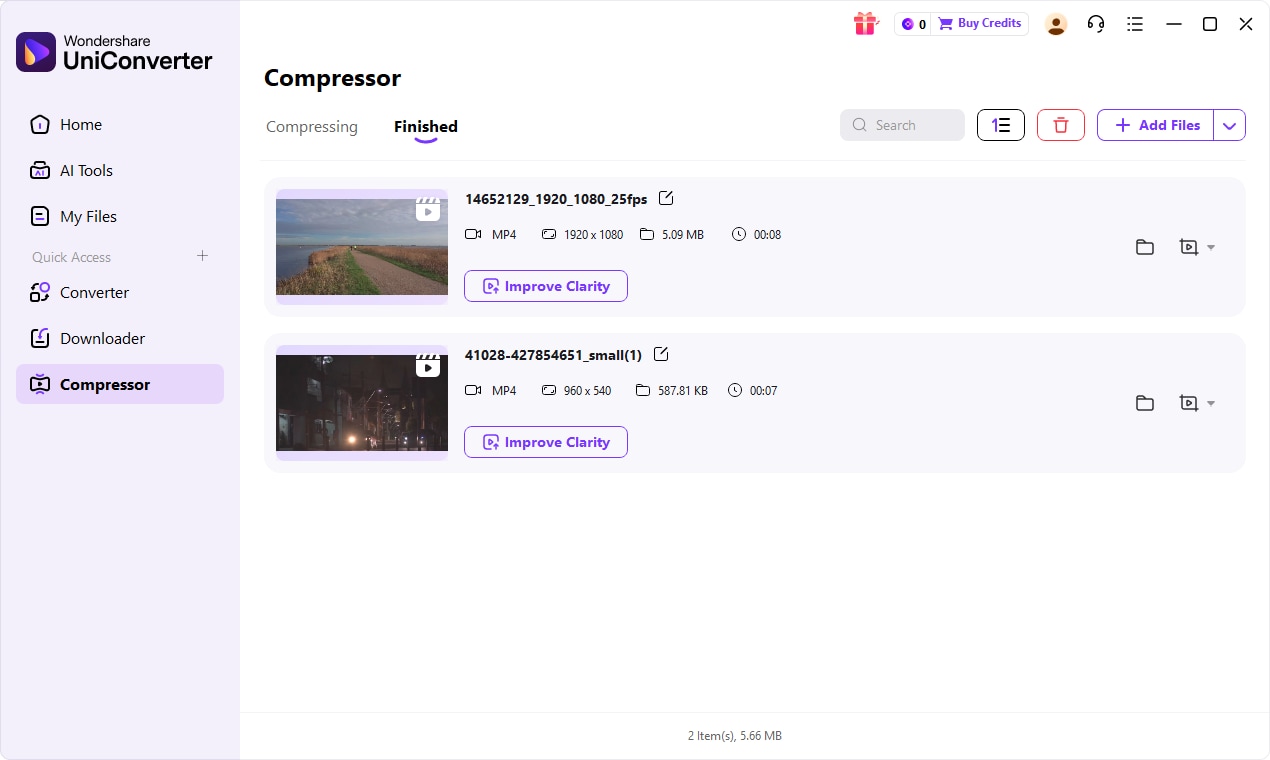
Step 4: Save the Compressed File
Finally, I select my desired output folder and click "Compress" to start the process. UniConverter quickly processes the files, and I can then access my compressed audio, video, or images.

Seeking an Adobe Audition Audio Compressor Alternative?
Part 7: Conclusion
After extensive use and comparison, my Adobe Audition Audio Compressor review concludes that it remains the gold standard for professional audio engineers and producers who demand granular control and seamless integration within the Adobe Creative Cloud ecosystem. Its precision and comprehensive feature set are unparalleled for tasks like mastering, broadcast audio production, and intricate sound design. However, for casual users, vloggers, or those with infrequent compression needs, the steep learning curve, resource intensity, and subscription cost can be significant deterrents. For these users, simpler, more intuitive tools or even free alternatives like Audacity might be a better starting point. UniConverter, on the other hand, emerges as an ideal choice for quick, high-quality, and hassle-free compression of various media types, offering a balanced solution for those who prioritize ease of use and efficiency without sacrificing quality. Ultimately, your choice should hinge on your specific workflow, budget, and the level of control you require for your audio projects.
Part 8: FAQs
-
1. Is Adobe Audition's compressor suitable for music production?
Yes, Adobe Audition's compressor offers the precision and flexibility required for professional music production, from individual tracks to mastering. Its detailed controls allow for nuanced dynamic shaping essential in music.
-
2. Can I use Adobe Audition's compressor for live audio?
While Audition is primarily an offline editor, its compression algorithms can be applied to recorded live audio. For real-time live audio compression, dedicated hardware or DAW plugins are typically used, as Audition isn't designed for live processing.
-
3. What is the main difference between a compressor and a limiter?
A compressor reduces dynamic range above a certain threshold, making loud parts quieter and often bringing up quieter parts. A limiter is a type of compressor with a very high ratio (often infinity:1), preventing audio from exceeding a specific maximum level, acting as a brick wall.
-
4. Are there free alternatives to Adobe Audition for audio compression?
Yes, Audacity offers a basic but effective compressor, and many free DAWs or audio editors include built-in compression tools. For a more versatile and user-friendly experience across various media types, UniConverter also provides excellent audio compression capabilities.
-
5. How does UniConverter's audio compressor compare to Audition's in terms of quality?
UniConverter provides high-quality compression suitable for most users, especially for video and general audio projects where efficiency and ease of use are key. Audition offers more granular control and advanced algorithms for professional-grade mastering and intricate sound design, making it superior for highly specialized tasks.
