
- Acoustica Compressor: Professional-grade audio compression with advanced controls for precise dynamic shaping.
- Ideal Users: Best for professional audio engineers and mastering houses seeking broadcast-ready loudness and clarity.
- Learning Curve: Steeper learning curve and resource-intensive, potentially overwhelming for beginners or older systems.
- Alternatives: UniConverter offers user-friendly, efficient compression for general audio/video tasks; FabFilter Pro-C 2 for surgical precision.
- Risks: Beware of over-compression artifacts, potential DAW compatibility issues, and high cost for niche uses.
- UniConverter Value: Simple, efficient, and lossless compression for various formats, ideal for content creators needing quick, high-quality output.
In this article
- Part 1: What is Acoustica Audio Compressor?
- Part 2: Acoustica Audio Compressor: Core Features, Pros & Cons
- Part 3: Acoustica Audio Compressor: Ideal Users & Use Cases
- Part 4: Acoustica Audio Compressor and Alternatives Comparison
- Part 5: Risks & Pitfalls to Consider
- Part 6: How to Use UniConverter for Efficient Audio and Video Compression
- Part 7: Conclusion
- Part 8: FAQs
The world of audio production is constantly evolving, and with it, the demand for sophisticated tools that can refine and optimize sound. Today, I'm diving deep into the Acoustica Audio Compressor review, a powerful contender in the digital audio workstation (DAW) and plugin landscape. This review aims to provide you with a comprehensive understanding of its capabilities, comparing it against key alternatives, and ultimately helping you decide if it's the right tool for your audio optimization needs. We'll explore its core features, ideal use cases, potential pitfalls, and even offer a user-friendly alternative for those seeking simplicity and efficiency.
Part 1: What is Acoustica Audio Compressor?
Acoustica Audio Compressor is a professional-grade audio processing tool, often integrated within Acoustica's own DAW, Mixcraft, or available as a standalone plugin (VST/AU/AAX) for various other DAWs. It's designed to dynamically reduce the dynamic range of audio signals, making quiet sounds louder and loud sounds quieter, resulting in a more consistent and impactful listening experience. My goal with this review is to cut through the marketing jargon and provide you with an honest assessment of its performance, helping you understand where it truly shines and where you might consider other options.
The Evolving Landscape of Audio Compression
The audio compression market is a crowded space, driven by several key factors:
* Demand for Professional Sound: Artists and producers increasingly seek broadcast-quality audio, requiring precise control over dynamics.
* Accessibility of Home Studios: More people are producing music and podcasts from home, necessitating powerful yet accessible tools.
* Diverse Audio Sources: From vocals to instruments to Foley effects, each audio source presents unique compression challenges.
* Streaming Platform Requirements: Platforms often have specific loudness standards, making effective compression crucial for compliance.
Part 2: Acoustica Audio Compressor: Core Features, Pros & Cons
Acoustica Audio Compressor stands out with its robust set of features designed for detailed audio manipulation. Its core capabilities revolve around precise dynamic control, offering a range of algorithms to suit different sonic needs.
Core Capabilities
* Advanced Threshold and Ratio Controls: Allows for fine-tuning of when compression kicks in and how aggressively it acts.
* Attack and Release Parameters: Crucial for shaping the transient response and sustain of sounds.
* Knee Control: Offers flexibility in how smoothly the compression transitions, from hard-knee (abrupt) to soft-knee (gentle).
* Look-Ahead Functionality: Predicts incoming audio peaks to prevent overs and ensure transparent compression.
* Sidechain Input: Enables external audio signals to trigger the compressor, useful for ducking or creative effects.
Pros
* Exceptional sonic transparency and fidelity preservation, ensuring your audio retains its original character.
* Versatile compression algorithms for diverse audio sources, from subtle vocal leveling to aggressive drum shaping.
* Intuitive interface for quick adjustments and real-time monitoring, making it easy to visualize the compression process.
Cons
* Steeper learning curve for beginners, as its advanced features can be overwhelming initially.
* Resource-intensive for older systems, potentially causing latency or performance issues on less powerful machines.
Part 3: Acoustica Audio Compressor: Ideal Users & Use Cases
When considering Acoustica Audio Compressor, it's crucial to understand who benefits most from its capabilities and in what scenarios it truly excels.
Optimal Scenario: Professional Mastering & Mixing
For professional audio engineers and mastering houses, Acoustica Audio Compressor is an invaluable tool. Its precise controls, transparent processing, and advanced algorithms make it ideal for:
* Achieving Broadcast-Ready Loudness: Ensuring tracks meet industry standards without sacrificing dynamic range.
* Subtle Dynamic Shaping: Gently taming unruly peaks and bringing up quieter passages for a polished sound.
* Enhancing Clarity and Punch: Adding impact to drums or vocals while maintaining naturalness.
Limited Scenario: Quick Fixes for Casual Users
If you're a casual user looking for a quick fix for slightly uneven audio, Acoustica Audio Compressor might be overkill. For simple tasks like normalizing volume or basic leveling for a podcast, its advanced features can be cumbersome. You might find yourself spending more time learning the intricacies than actually benefiting from them, especially if you're not aiming for professional-grade results. Simpler, more automated solutions would be more efficient for these scenarios.
Part 4: Acoustica Audio Compressor and Alternatives Comparison
Let's put Acoustica Audio Compressor head-to-head with some notable alternatives to see how it stacks up.
| Feature/Product | Acoustica Audio Compressor | UniConverter | FabFilter Pro-C 2 | Waves Renaissance Compressor |
| Processing Speed | Excellent | Excellent | Excellent | Very Good |
| Output Quality | Pristine | Very Good | Pristine | Excellent |
| Ease of Use | Moderate | Excellent | Moderate | Good |
| Customer Support | Good | Excellent | Excellent | Good |
| Security | High | High | High | High |
| Advanced Features | High | Low (for audio compression) | High | Moderate |
Key Differentiators Summary
Acoustica Audio Compressor excels in pristine audio quality and advanced control, making it a top choice for detailed mixing and mastering. UniConverter, while not a dedicated audio compressor plugin, offers excellent ease of use and speed for general audio and video compression tasks, making it ideal for content creators needing quick, high-quality output. FabFilter Pro-C 2 is renowned for its visual feedback and surgical precision, often favored by engineers who demand detailed control. Waves Renaissance Compressor provides a classic, warm sound with a relatively straightforward interface, appealing to those seeking a more analog-like compression.
Part 5: Risks & Pitfalls to Consider
While Acoustica Audio Compressor is a powerful tool, it's important to be aware of potential risks and pitfalls that can arise during its use, especially if you're not experienced with audio compression.
Potential for Over-Compression Artifacts
One of the biggest dangers with any compressor, including Acoustica, is over-compression. If you push the settings too hard, you can introduce undesirable artifacts like pumping, breathing, or a squashed, lifeless sound. This can ruin the dynamics of your track and make it sound unnatural or fatiguing to listen to. It takes a trained ear and careful adjustment to avoid this.
Compatibility Issues with Certain DAWs
While Acoustica Audio Compressor generally supports common plugin formats (VST, AU, AAX), there's always a possibility of compatibility issues with specific Digital Audio Workstations (DAWs) or operating systems. You might encounter crashes, unexpected behavior, or difficulties in loading the plugin, especially if your DAW or OS is not fully updated or if there are conflicts with other plugins. Always check compatibility before purchasing.
Steep Investment for Niche Use Cases
Acoustica Audio Compressor, being a professional-grade tool, comes with a premium price tag. If your audio compression needs are infrequent or very basic, this could be a significant overinvestment. For instance, if you only occasionally need to level out a voiceover for a home video, the cost and complexity of Acoustica might far outweigh the benefits compared to simpler, more affordable, or even free alternatives.
Lack of Cloud Integration for Collaborative Work
In an increasingly collaborative world, many professional tools offer cloud integration for seamless file sharing and project collaboration. Acoustica Audio Compressor, as a desktop-based plugin, typically lacks this direct cloud integration. This means that sharing compressed audio files or project settings with collaborators might require manual file transfers, which can be less efficient and prone to version control issues in a team environment.
Part 6: How to Use UniConverter for Efficient Audio and Video Compression
For creators who want a simpler workflow than traditional audio compressor plugins, UniConverter is a practical alternative. It handles both audio compression and video compression in one place, which is especially useful when batch processing, output stability, and ease of use all matter. I also like that it supports a wide range of formats, uses GPU acceleration to speed up larger jobs, and can help compress videos without quality loss as much as possible. For content creators who want efficient results without dealing with an overly technical setup, it works well as a dependable all-in-one solution.
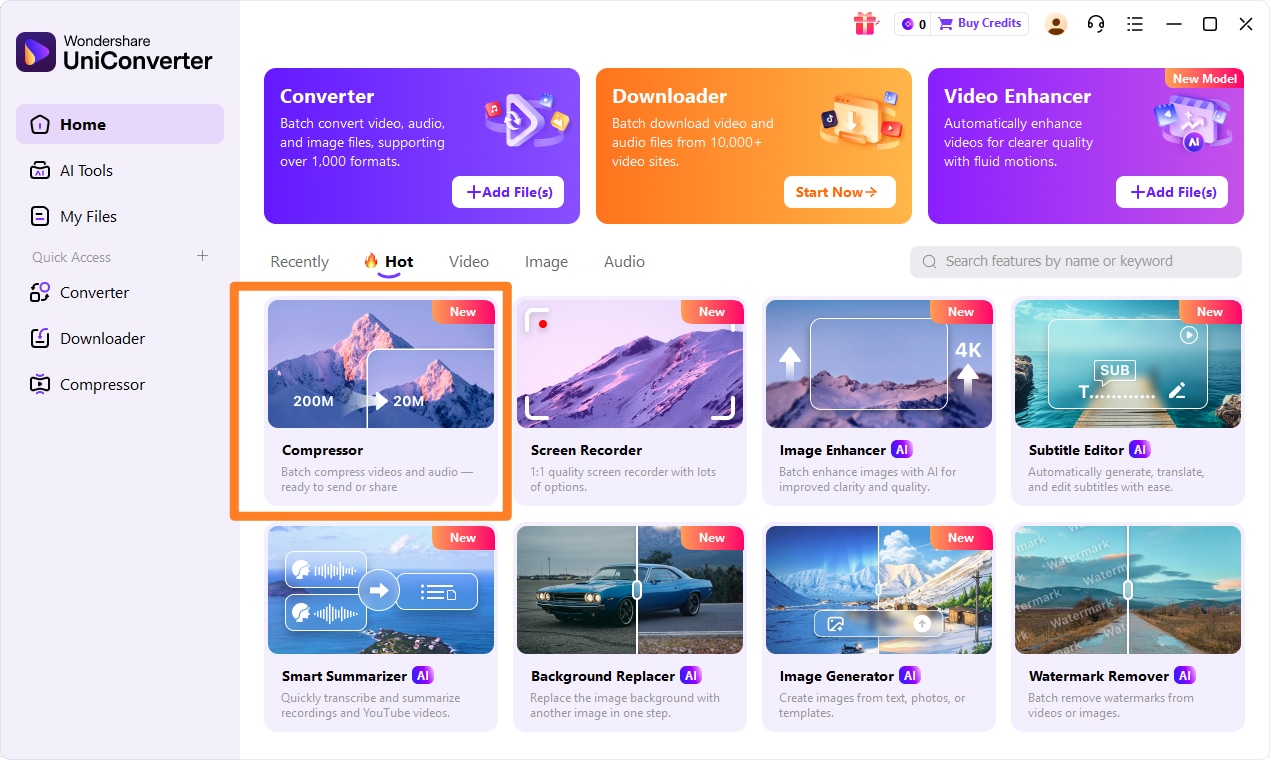
Step 1: Open UniConverter and Choose Compressor
Launch UniConverter on your computer. From the main interface, navigate to the "Compressor" tool.
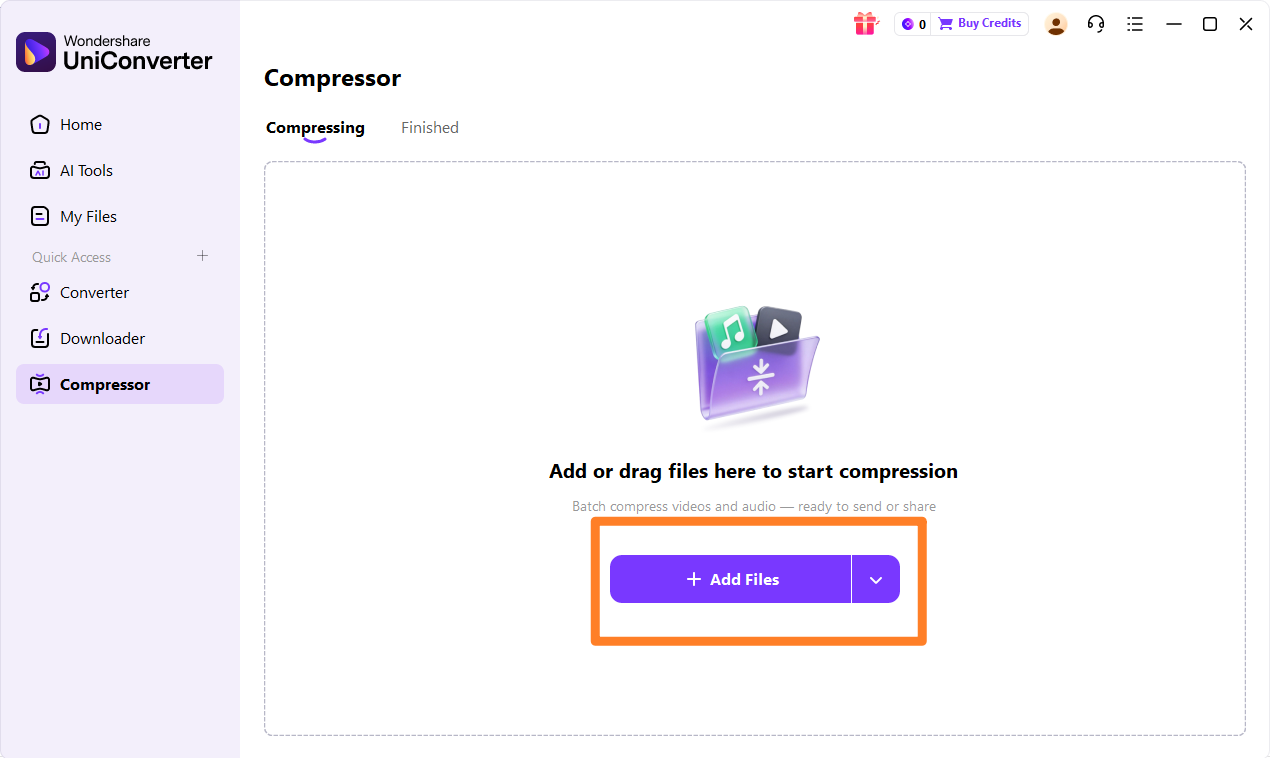
Step 2: Upload the Video, Audios or Images
Click on "Add Files" or drag and drop your audio files directly into the UniConverter window.
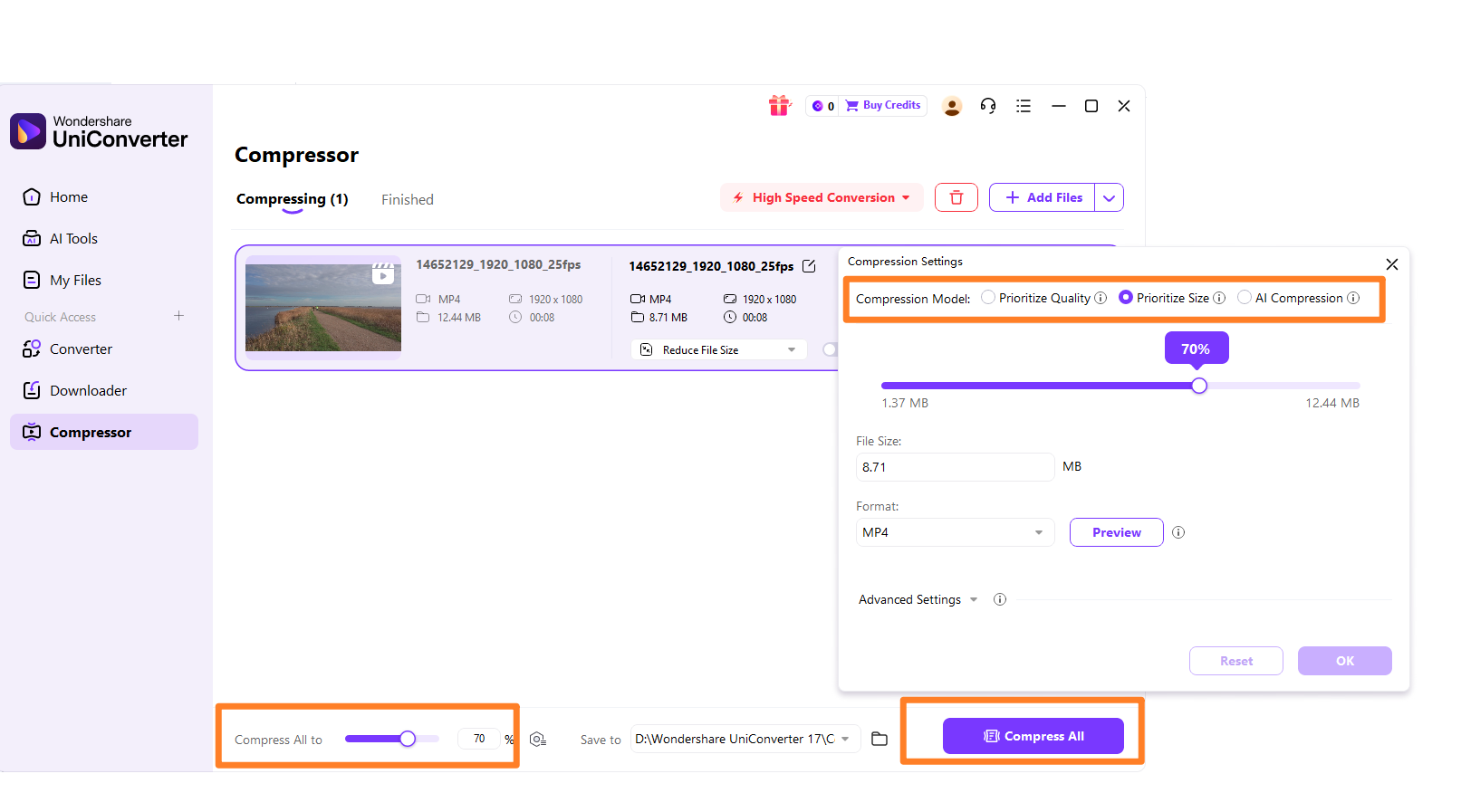
Step 3: Choose Required Parameters
Select your desired output format, quality, and compression settings. You can adjust the bitrate, sample rate, and channel to achieve the perfect balance between file size and audio fidelity.
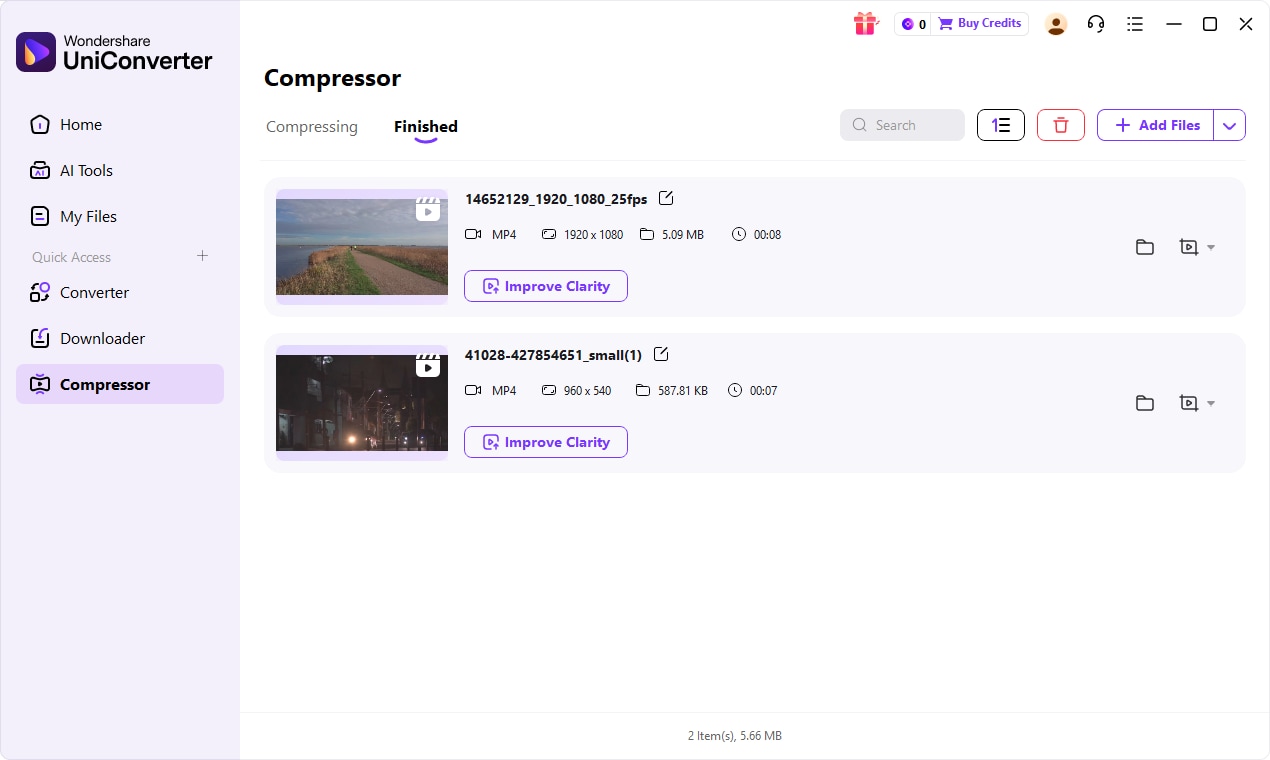
Step 4: Save the Compressed File
Preview the compressed audio to ensure it meets your expectations, then click "Compress" to start the process. Once complete, save your optimized audio file to your desired location.

Seeking an Acoustica Audio Compressor Alternative?
Part 7: Conclusion
After a thorough Acoustica Audio Compressor review, it's clear that this tool is a powerhouse for those who demand precision and pristine audio quality. Its advanced algorithms and detailed controls make it an exceptional choice for professional mastering and mixing engineers, allowing for nuanced dynamic shaping and transparent sound. However, its complexity and resource demands mean it's not the ideal solution for everyone. For home studio enthusiasts, it offers the potential for professional-grade results, but requires a commitment to learning its intricacies. Content creators and podcasters, especially those prioritizing speed and ease of use for general audio optimization, might find simpler alternatives, like UniConverter, more suitable for their workflow, as it provides efficient compression without the steep learning curve. Ultimately, your choice should align with your specific needs, skill level, and the level of control you require over your audio dynamics.
Part 8: FAQs
-
1. What is the primary advantage of Acoustica Audio Compressor over free alternatives?
Acoustica offers superior audio fidelity, advanced control, and specialized algorithms for professional-grade results that free tools often cannot match. Free alternatives typically provide basic compression with less transparency and fewer customization options.
-
2. Is Acoustica Audio Compressor suitable for live sound applications?
While powerful, Acoustica is primarily designed for studio production and post-production. Real-time live sound compression often requires dedicated hardware or plugins optimized for low latency and robust performance in a live environment. For studio work, it's excellent, but for live sound, you'd typically look elsewhere.
-
3. How does Acoustica handle different audio formats?
Acoustica supports a wide range of audio formats, including WAV, AIFF, FLAC, MP3, and more, ensuring broad compatibility for various projects. This flexibility allows you to work with virtually any audio file you encounter in your production workflow.
-
4. What are the system requirements for running Acoustica Audio Compressor smoothly?
Acoustica can be resource-intensive. A modern multi-core processor, ample RAM (8GB or more recommended), and a fast SSD are advisable for optimal performance, especially when dealing with complex projects or multiple instances of the plugin.
-
5. Can I use Acoustica Audio Compressor as a standalone application or only as a plugin?
Acoustica Audio Compressor is typically integrated within Acoustica's digital audio workstation (DAW) or available as a VST/AU/AAX plugin for use in other DAWs. If you're looking for a standalone application for general audio compression without needing a full DAW environment, a tool like UniConverter might be a more convenient option.
