
- AConvert Value: Free, web-based, and simple for quick, basic audio compression tasks without software installation.
- Feature Limitations: Offers broad format support and basic settings, but lacks advanced controls, batch processing, and offline functionality.
- Ideal Use: Best for casual users needing fast, one-off compression for emails or messaging, not for professional audio production.
- Comparison Insight: AConvert is simpler than alternatives like UniConverter, which offers superior features, speed, and quality control for serious work.
- Risks to Consider: Be aware of data privacy issues, potential quality degradation, intrusive ads, and file size limits with free online tools.
- UniConverter Solution: Provides efficient, high-quality audio compression with advanced features, batch processing, and offline use for reliable results.
In this article
- Part 1: What is AConvert Audio Compressor?
- Part 2: AConvert Audio Compressor: Core Features, Pros, and Cons
- Part 3: AConvert Audio Compressor: Ideal Users and Use Cases
- Part 4: AConvert Audio Compressor and Alternatives Comparison
- Part 5: Risks and Pitfalls to Consider
- Part 6: How to Use UniConverter for Efficient Audio and Video Compression
- Part 7: Conclusion
- Part 8: FAQs
AConvert Audio Compressor: A Comprehensive Review and Comparison
When I need to quickly compress audio files, AConvert Audio Compressor often comes to mind. It's a free, web-based tool that promises straightforward audio compression without the hassle of software installations. In this review, I'll dive deep into AConvert's features, compare it with its competitors, and help you understand if it's the right tool for your audio compression needs. We'll explore its strengths, weaknesses, and ideal use cases, ensuring you make an informed decision.
Part 1: What is AConvert Audio Compressor?
AConvert Audio Compressor is an online utility designed to reduce the file size of audio tracks. It operates entirely within your web browser, meaning you don't need to download or install any software. This makes it incredibly convenient for quick, on-the-go compression tasks. My experience with it has shown it to be a no-frills tool focused solely on its primary function: making audio files smaller. This review aims to clarify its position in the crowded market of online audio tools and address common user pain points.
The Landscape of Online Audio Compression Tools
The digital world is awash with audio files, and the need for efficient storage and sharing is constant. This has led to a proliferation of online audio compression tools, each with its own set of features and limitations.
* Storage Constraints: Large audio files quickly consume valuable storage space on devices and cloud services.
* Bandwidth Limitations: Sharing uncompressed audio over the internet can be slow and data-intensive.
* Platform Compatibility: Some platforms have file size restrictions for uploads or attachments.
* Ease of Access: Users often prefer quick, browser-based solutions over installing dedicated software.
Part 2: AConvert Audio Compressor: Core Features, Pros, and Cons
AConvert Audio Compressor offers a streamlined approach to audio file size reduction. Its core capability lies in its ability to take various audio formats and output them in a smaller size, typically by adjusting bitrate and sample rate. I've found its interface to be quite intuitive, making the compression process relatively painless for basic needs.
Core Features:
* Broad Format Support: It handles a wide array of input and output audio formats, including MP3, WAV, OGG, AAC, WMA, and more.
* Bitrate Adjustment: You can easily select your desired output bitrate, directly impacting file size and quality.
* Sample Rate Control: Options to change the sample rate are available, offering another lever for compression.
* Channel Selection: You can choose between mono and stereo output, which also affects file size.
* Online Accessibility: No software installation is required; everything happens in your web browser.
Pros:
* Free and accessible online tool, no software installation required. This is a huge plus for me when I need a quick fix without cluttering my computer.
* Supports a wide range of audio formats for input and output. I've rarely encountered a file type it couldn't handle.
* Offers basic compression settings (bitrate, sample rate) for quick adjustments. It's straightforward enough for anyone to use.
Cons:
* Limited advanced compression options and customization. If I need fine-grained control over codecs or more complex settings, AConvert falls short.
* Reliance on internet connection for processing, potentially slow for large files. Uploading and processing large files can be a test of patience, especially with a slower internet connection.
Part 3: AConvert Audio Compressor: Ideal Users and Use Cases
From my perspective, AConvert Audio Compressor is best suited for users who prioritize speed and simplicity over advanced features and absolute quality control. It's a tool for the casual user, not the audio professional.
Best Use Case: Quick, On-the-Go Compression for Casual Users
I find AConvert incredibly useful when I need to quickly compress an audio file to send via email, upload to a messaging app, or fit within a small storage limit. For example, if I've recorded a voice memo on my phone and want to share it without consuming too much data, AConvert is my go-to. It's perfect for students, occasional podcasters, or anyone who needs to reduce file size for non-critical applications. The process is usually just a few clicks, and I get my compressed file without fuss.
Limited Use Case: Professional Audio Production and Batch Processing
However, for professional audio production, AConvert is simply inadequate. If I'm working on music, podcasts that demand high fidelity, or any project where audio quality is paramount, I wouldn't touch AConvert. The limited control over compression parameters means I can't guarantee the specific quality or codec I need. Similarly, if I have dozens or hundreds of files to compress, the lack of batch processing capabilities makes AConvert a non-starter. Manually uploading and compressing each file would be incredibly time-consuming and inefficient.
Part 4: AConvert Audio Compressor and Alternatives Comparison
When I look at online audio compressors, I often compare them based on a few key factors. Here's how AConvert Audio Compressor stacks up against some popular alternatives like Online Audio Converter and FreeConvert Audio Compressor, along with UniConverter as a more robust solution.
| Feature/Tool | AConvert Audio Compressor | Online Audio Converter | FreeConvert Audio Compressor | UniConverter |
| Pricing | Free | Free (with premium options) | Free (with premium options) | Paid (with free trial) |
| Advanced Settings | Basic (bitrate, sample rate) | Moderate (VBR, channel, fade in/out) | Moderate (codec, channel, volume) | Extensive (codec, bitrate, sample rate, channels, VBR/CBR) |
| Batch Processing | No | Yes (premium) | Yes (premium) | Yes |
| Offline Use | No | No | No | Yes (desktop app) |
| File Size Limit | Moderate (e.g., 200MB) | High (e.g., 2GB free, higher for premium) | High (e.g., 1GB free, higher for premium) | Very High (limited by storage) |
| User Interface | Simple, functional | User-friendly, modern | User-friendly, clean | Intuitive, professional |
| Output Quality Control | Basic | Good | Good | Excellent (lossless options) |
| Processing Speed | Moderate (depends on file size/server load) | Fast | Fast | Very Fast (GPU acceleration) |
From my experience, AConvert excels in its sheer simplicity for quick, one-off tasks. Online Audio Converter and FreeConvert offer a good balance for users who need a bit more control without committing to desktop software, especially with their premium batch processing options. However, for serious work where quality, speed, and advanced features are non-negotiable, UniConverter stands out. It's a comprehensive solution that justifies its cost with superior performance and a wider range of capabilities, especially for batch processing and offline use.
Part 5: Risks and Pitfalls to Consider
While the convenience of online tools like AConvert is undeniable, I've learned that it's crucial to be aware of the potential risks and pitfalls, especially when dealing with personal or sensitive data. My experience has shown me that "free" often comes with hidden costs.
Data Privacy Concerns with Online Tools
When I upload my audio files to a third-party server for compression, I'm essentially entrusting my data to that service. The privacy policies of these free online tools can be vague or, in some cases, non-existent. I always worry about how long my files are stored, who has access to them, and whether they might be used for purposes beyond just compression. For any sensitive recordings, I would never use an online compressor.
Potential for Quality Degradation
While the goal is to reduce file size, excessive compression or using an inefficient algorithm can lead to noticeable quality degradation. I've encountered situations where the compressed audio from AConvert sounded tinny, muffled, or had audible artifacts. It's a trade-off: smaller file size often means a compromise in audio fidelity. For anything beyond casual listening, this can be a significant issue.
Annoying Advertisements and Pop-ups
Many free online tools, including AConvert, rely on advertising for revenue. This often translates into a user experience cluttered with ads, banners, and sometimes even intrusive pop-ups. I've found myself navigating through multiple ad windows just to get to the download link, which can be incredibly frustrating and time-consuming. It detracts significantly from the "quick and easy" promise.
File Size Limitations and Upload Speeds
Even though these are online tools, they often impose file size limits for free users. If I have a very large audio file, I might hit a wall, forcing me to either upgrade to a premium service or find another solution. Furthermore, the upload and download speeds are entirely dependent on my internet connection and the server's capacity, which can lead to painfully slow processing times for larger files, negating the benefit of an "instant" online tool.
Part 6: How to Use UniConverter for Efficient Audio and Video Compression
When other tools disappoint with batch compression, inconsistent results, or quality degradation, I consistently rely on UniConverter. It is my preferred choice for a more dependable solution that avoids many of the common drawbacks of free online compressors. UniConverter provides a practical way to handle video compression, audio compression, and image compression in one place. For users who need a more stable desktop compression tool with support for repeated tasks and large files, it remains a strong all-in-one option.
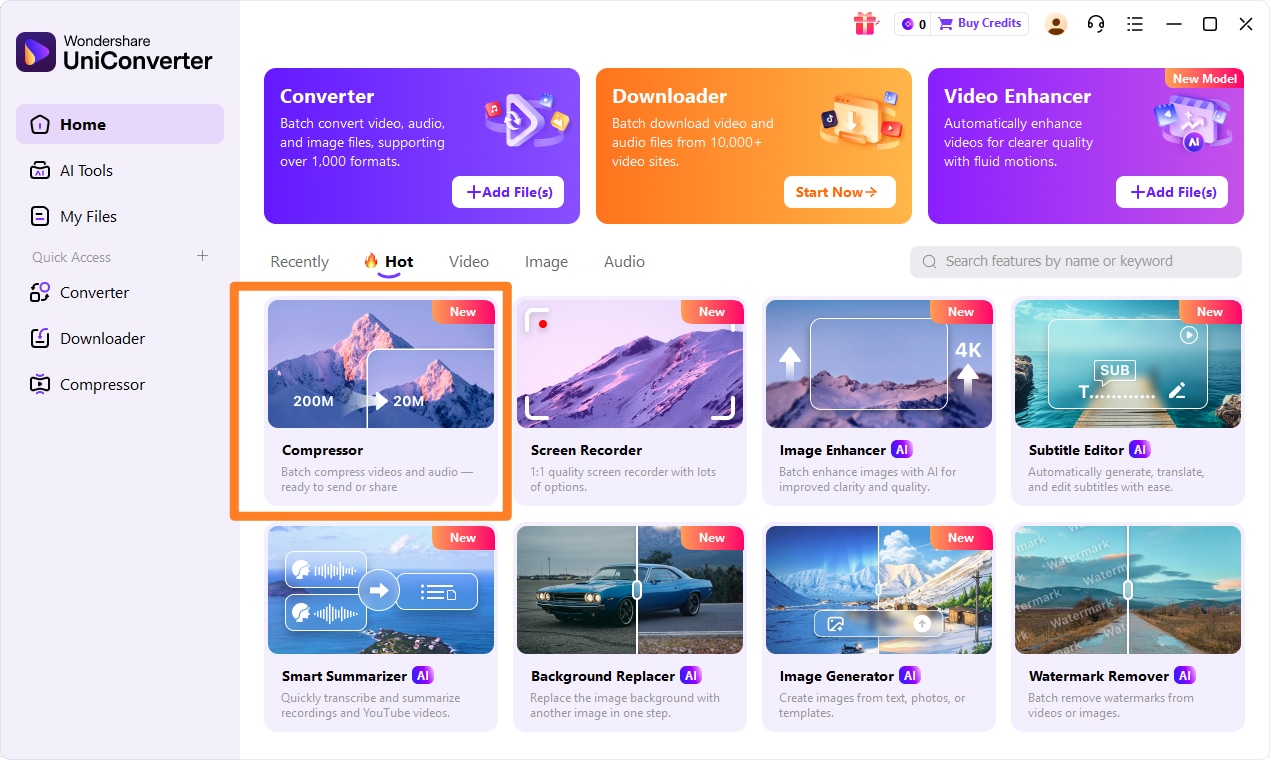
Step 1: Open UniConverter and Choose Compressor
Launch UniConverter on your computer. From the main interface, navigate to the "Compressor" tool.
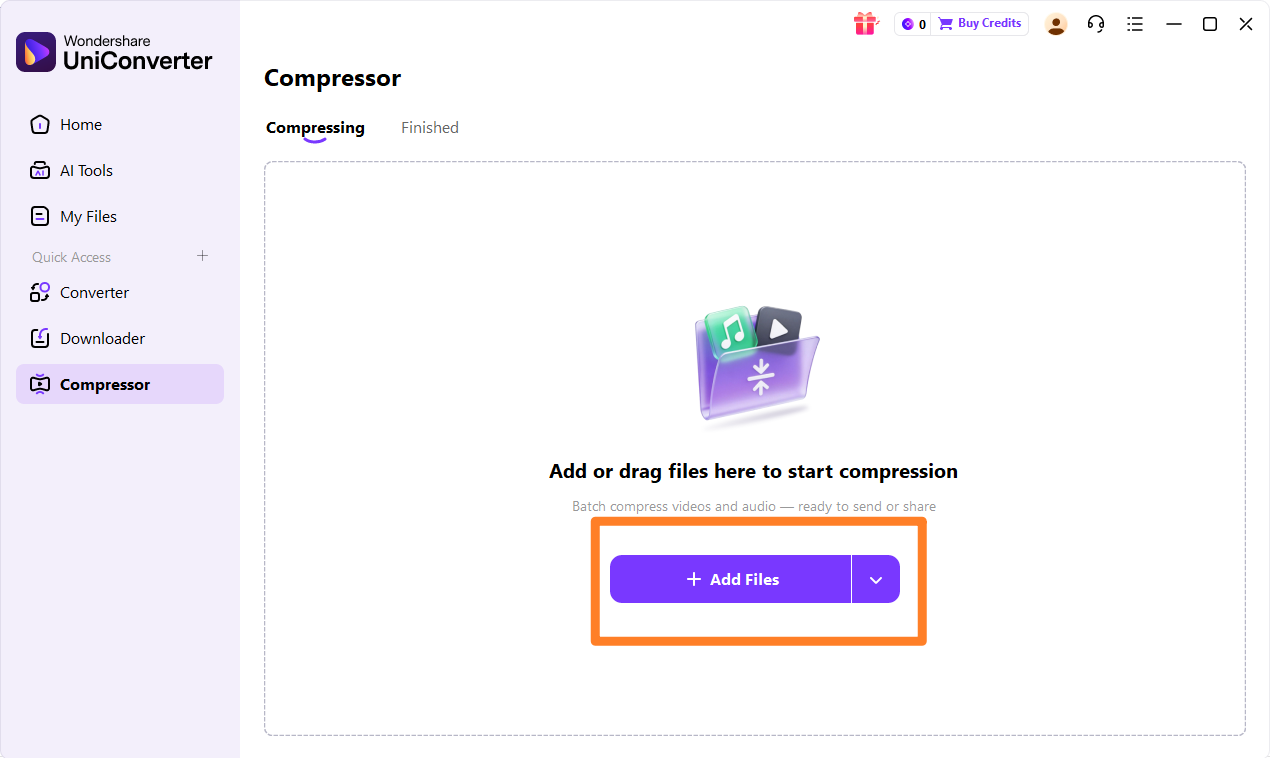
Step 2: Upload the Video, Audios or Images
Drag and drop your audio files directly into the UniConverter window, or click "Add Files" to browse and select them.
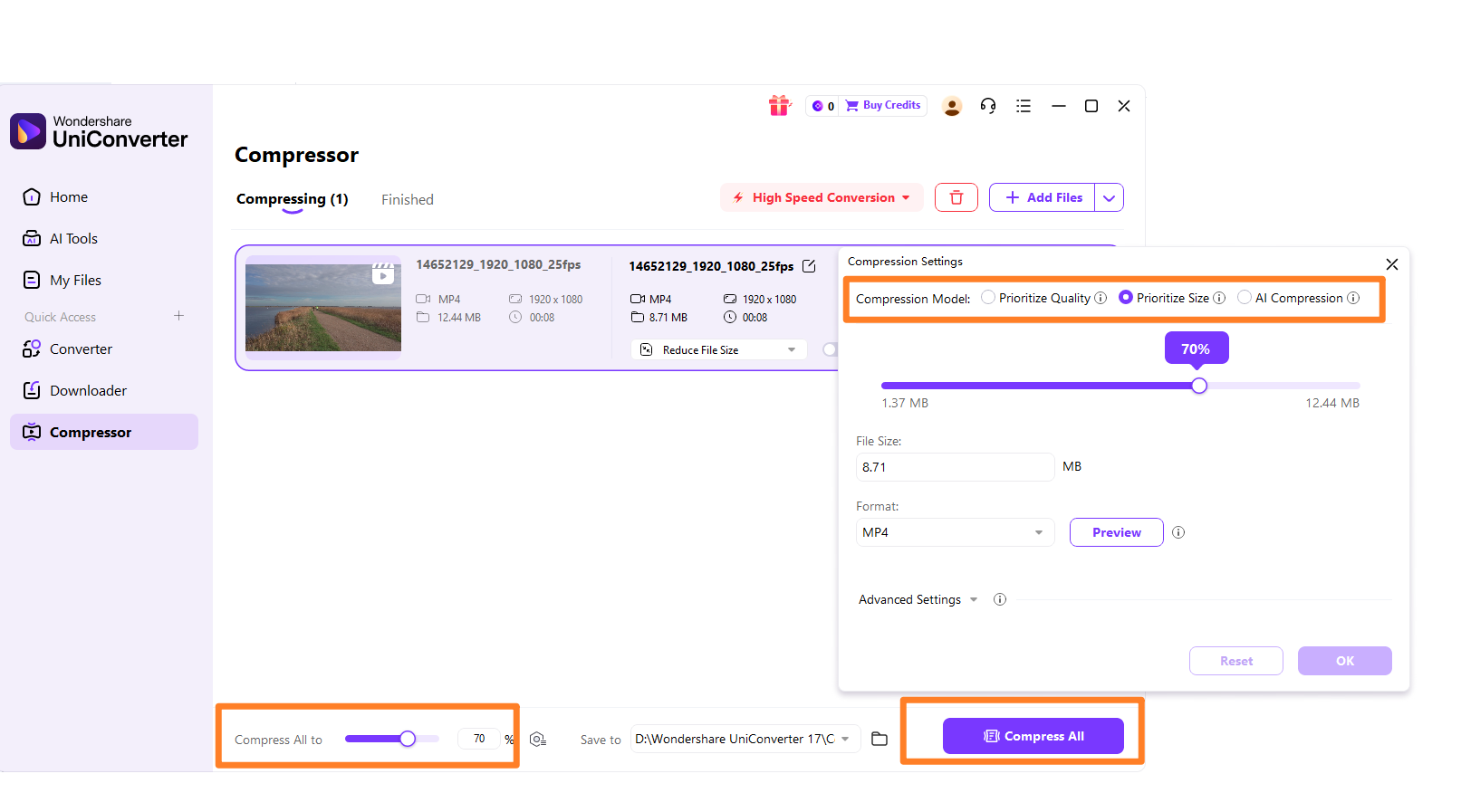
Step 3: Choose Required Parameters
Adjust the compression settings such as output format, bitrate, sample rate, and quality. UniConverter provides presets or allows custom adjustments for optimal results.
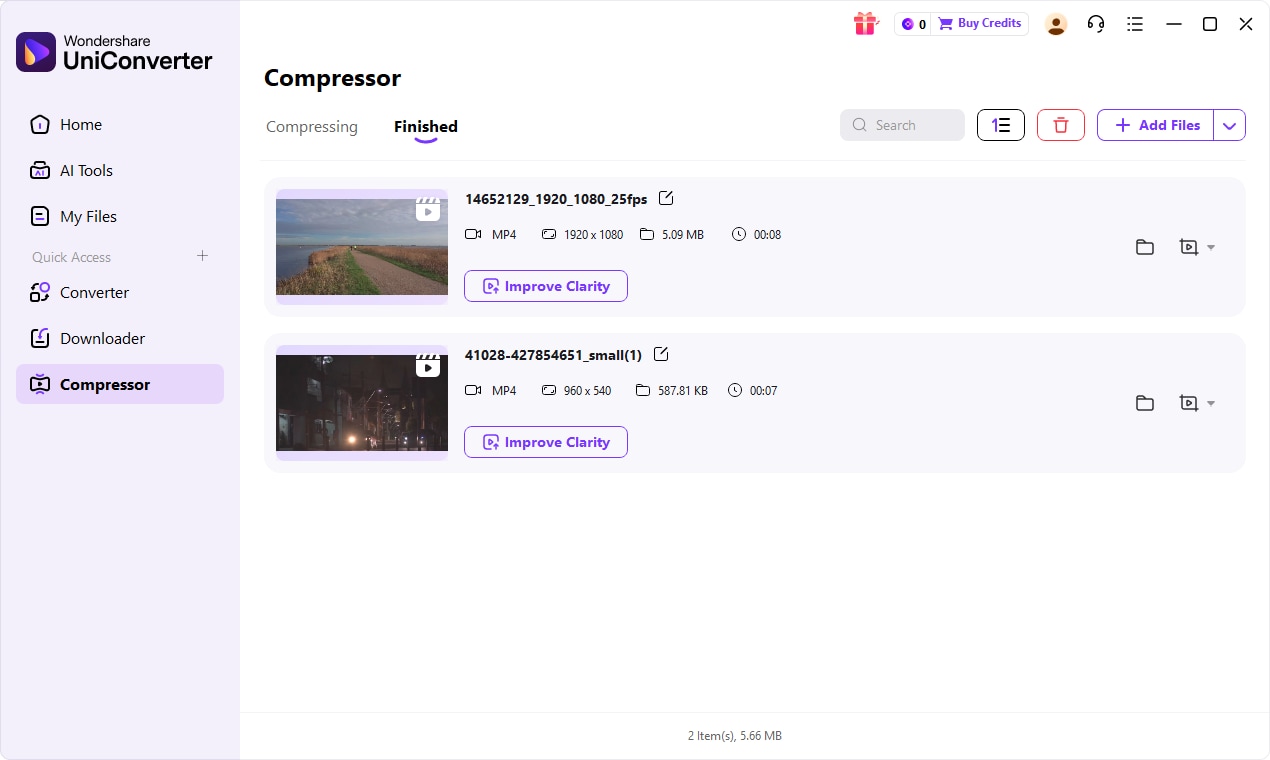
Step 4: Save the Compressed File
Preview the compressed file to ensure quality, then click "Compress" to start the process. Once finished, save your newly compressed audio to your desired location.

Need a Reliable AConvert Audio Compressor Alternative?
Part 7: Conclusion
In my comprehensive review of AConvert Audio Compressor, I've found it to be a highly convenient and free online tool, particularly well-suited for casual users needing quick, basic audio compression. Its broad format support and straightforward interface make it ideal for reducing file sizes for emails or messaging apps. However, its limitations in advanced settings, lack of batch processing, and reliance on an internet connection make it less suitable for professional audio production or large-scale tasks. For content creators and professionals who demand higher quality, more control, and efficient batch processing, desktop solutions like UniConverter offer a superior experience. While AConvert serves its niche effectively, it's crucial to weigh its benefits against potential risks like data privacy concerns, quality degradation, and intrusive advertisements. Ultimately, your choice should align with your specific needs: AConvert for simple, one-off tasks, and more robust software for critical or high-volume compression.
Part 8: FAQs
-
1. Is AConvert Audio Compressor safe to use?
AConvert is generally safe in terms of not installing malware, but like any online tool, you should be mindful of data privacy. Avoid uploading sensitive or confidential audio files, as their data handling policies might not be as stringent as dedicated software.
-
2. Can AConvert compress multiple audio files at once?
No, AConvert Audio Compressor does not support batch processing. You need to upload and compress each audio file individually, which can be time-consuming if you have many files. For batch compression, I recommend using a desktop application like UniConverter.
-
3. What is the maximum file size AConvert can handle?
AConvert typically has a moderate file size limit, often around 200MB to 500MB for free users. This can vary, so it's best to check their current limits on the website. For larger files, you might encounter errors or extremely slow processing.
-
4. Does AConvert reduce audio quality significantly?
AConvert can reduce audio quality, especially if you choose aggressive compression settings (very low bitrates). While it offers basic controls, it lacks the advanced algorithms found in professional software to maintain quality during significant size reduction. Always preview your compressed file.
-
5. Are there any offline alternatives to AConvert Audio Compressor?
Yes, there are many excellent offline alternatives. For a comprehensive solution that handles various media types with advanced compression options and batch processing, I highly recommend UniConverter. Other desktop software like Audacity (free, open-source) or dedicated audio editors also offer robust offline compression capabilities.
