
Navigating the world of digital video can often feel like wading through an alphabet soup of technical terms. Two names that frequently appear, especially when dealing with older video files, are Xvid and H.264. If you've ever wondered why one video file is massive while another of similar quality is much smaller, or why a certain video won't play on your new smartphone, the answer often lies in the codec used to create it. Understanding the Xvid vs H.264 debate is crucial for anyone who manages a digital media library, edits videos, or simply wants the best viewing experience.
This comparison will demystify these two codecs, breaking down their history, technology, and practical applications. We'll explore their core differences in compression, quality, and compatibility to help you make informed decisions about your video files. By the end, you'll not only understand which codec reigns supreme in 2026 but also know how to modernize your video collection for seamless playback on any device.
In this article:
Part 1. What is Xvid? What is H.264?
Before we can compare them, it's essential to understand what a "codec" is. A codec (short for coder-decoder) is a piece of software that compresses video data to make the file size smaller for storage and transmission, and then decompresses it for playback. Xvid and H.264 are two different types of codecs with distinct origins and capabilities.
What is Xvid?
Xvid is an open-source video codec that implements the MPEG-4 Part 2 compression standard. It rose to prominence in the early 2000s as a popular choice for encoding digital videos, particularly for sharing content online and ripping DVDs. At the time, it offered a good balance between compression and visual quality for standard-definition (SD) video. You will most commonly find Xvid-encoded video streams inside AVI (.avi) container files. While it was a significant technology in its day, it has largely been superseded by more efficient, modern codecs.
What is H.264?
H.264, also known as Advanced Video Coding (AVC) or MPEG-4 Part 10, is a modern and highly efficient video compression standard. Developed later than Xvid, it represents a significant leap forward in compression technology. H.264 is the current industry standard and the most widely used codec across the globe. It is the backbone of Blu-ray discs, online streaming services like Netflix and YouTube, and the default recording format for nearly all modern devices, including smartphones, DSLRs, and drones. Its key advantage is its ability to deliver excellent video quality at substantially lower bitrates (and thus smaller file sizes) compared to older codecs like Xvid.
Part 2. Quick Comparison Table
For a quick overview of the key differences between these two codecs, here is a side-by-side comparison.
| Feature | Xvid | H.264 (AVC) |
| Release Era | Early 2000s | Mid-2000s to Present |
| Compression Efficiency | Lower | Significantly Higher |
| Quality at Same Bitrate | Lower | Higher |
| File Size at Same Quality | Larger | Smaller |
| Device Compatibility | Limited (Legacy Devices) | Universal (Modern Devices) |
| Primary Use | Old DVD rips, P2P sharing | Streaming, Blu-ray, Mobile Video |
Part 3. Xvid vs H.264: Which One Is Better?
While Xvid was a capable codec for its time, a direct comparison with H.264 reveals a clear winner for virtually all modern applications. The advancements in compression algorithms give H.264 a decisive edge in efficiency, quality, and compatibility.
Compression Efficiency and File Size
The most significant advantage of H.264 over Xvid is its superior compression efficiency. H.264 employs more advanced and complex algorithms to analyze video frames and remove redundant data. This means that to achieve the same level of visual quality, an H.264-encoded video will have a significantly smaller file size—often 30-50% smaller—than an Xvid-encoded video. This efficiency is critical in today's world. For users, it means saving valuable storage space on hard drives and mobile devices. For streaming services, it means using less bandwidth to deliver high-quality video, resulting in smoother playback with less buffering.
Video Quality
Video quality is directly tied to compression. At the same bitrate (a measure of data per second), H.264 consistently delivers noticeably better video quality than Xvid. It produces a cleaner image with fewer compression artifacts, such as blockiness or blurring, especially in scenes with high motion or intricate detail. While Xvid is perfectly adequate for standard-definition content, its limitations become apparent at higher resolutions. H.264, on the other hand, excels at preserving the crisp detail required for HD (720p), Full HD (1080p), and even 4K Ultra HD video.
Compatibility and Playback
In the realm of compatibility, H.264 is the undisputed champion. It has become the de facto standard for video playback, with native hardware and software support built into virtually every modern device. This includes smartphones (iOS and Android), tablets, smart TVs, gaming consoles, web browsers, and computers. You can play an H.264 file almost anywhere without needing to install extra software.
Xvid, by contrast, suffers from poor modern compatibility. Most mobile devices and smart TVs do not support it out of the box. To play Xvid files on a modern computer, users often need to download and install third-party codec packs (like K-Lite) or use a versatile media player like VLC. This extra step makes sharing and playing Xvid files inconvenient.
The Verdict: H.264 is the Superior Modern Choice
For any contemporary video application—be it creating, sharing, streaming, or storing—H.264 is unequivocally the better choice. Its combination of high quality, low file size, and universal compatibility makes it the practical and forward-thinking option. If you have a collection of old videos encoded with Xvid, the best course of action is to convert them to H.264. This will not only save a significant amount of storage space but also ensure they remain playable on all your devices for years to come. A reliable tool like Wondershare UniConverter is perfect for this task, simplifying the conversion process while maintaining quality.
Part 4. Use Cases for Xvid and H.264
Understanding the ideal scenarios for each codec helps clarify their respective places in the digital video landscape.
When to Use Xvid
Given its age and technical limitations, the recommended use cases for Xvid in 2026 are extremely limited. Its primary function today is for backward compatibility.
- Playing Legacy Files: The main reason you'll encounter Xvid is when dealing with video files created in the early to mid-2000s.
- Compatibility with Old Hardware: In rare cases, you might need Xvid for playback on very old hardware, such as certain DivX-certified DVD players that do not support H.264.
- Not Recommended for New Content: It is strongly advised not to use Xvid for encoding any new video content. Doing so creates files that are unnecessarily large and incompatible with the modern device ecosystem.
When to Use H.264
H.264 is the versatile, all-purpose codec for today's video needs. Its applications are vast and cover nearly every aspect of digital video.
- Online Video Streaming: It is the dominant codec used by platforms like YouTube, Netflix, Twitch, and Vimeo for delivering high-quality video efficiently over the internet.
- Video Recording: Almost all modern recording devices, including smartphones, DSLRs, mirrorless cameras, drones, and action cameras, use H.264 as their default recording format.
- Digital Media Libraries: When ripping DVDs or Blu-rays to create a personal media library, encoding to H.264 (typically in an MP4 or MKV container) provides the best balance of quality, file size, and compatibility for playback on servers like Plex or directly on devices.
- Converting Older Formats: H.264 is the ideal target format when converting legacy videos from formats like Xvid, DivX, or MPEG-2. This process modernizes your library, saves space, and ensures universal playback. For this task, Wondershare UniConverter stands out as a top-tier solution, offering exceptional speed, batch processing, and ease of use.
Part 5. Step-by-Step Guide to Convert Xvid to H.264 Using UniConverter
To modernize your old Xvid video files and make them universally playable, you need a powerful and intuitive video converter. We recommend Wondershare UniConverter for its high-speed, quality-preserving conversions, batch processing capabilities, and user-friendly interface.
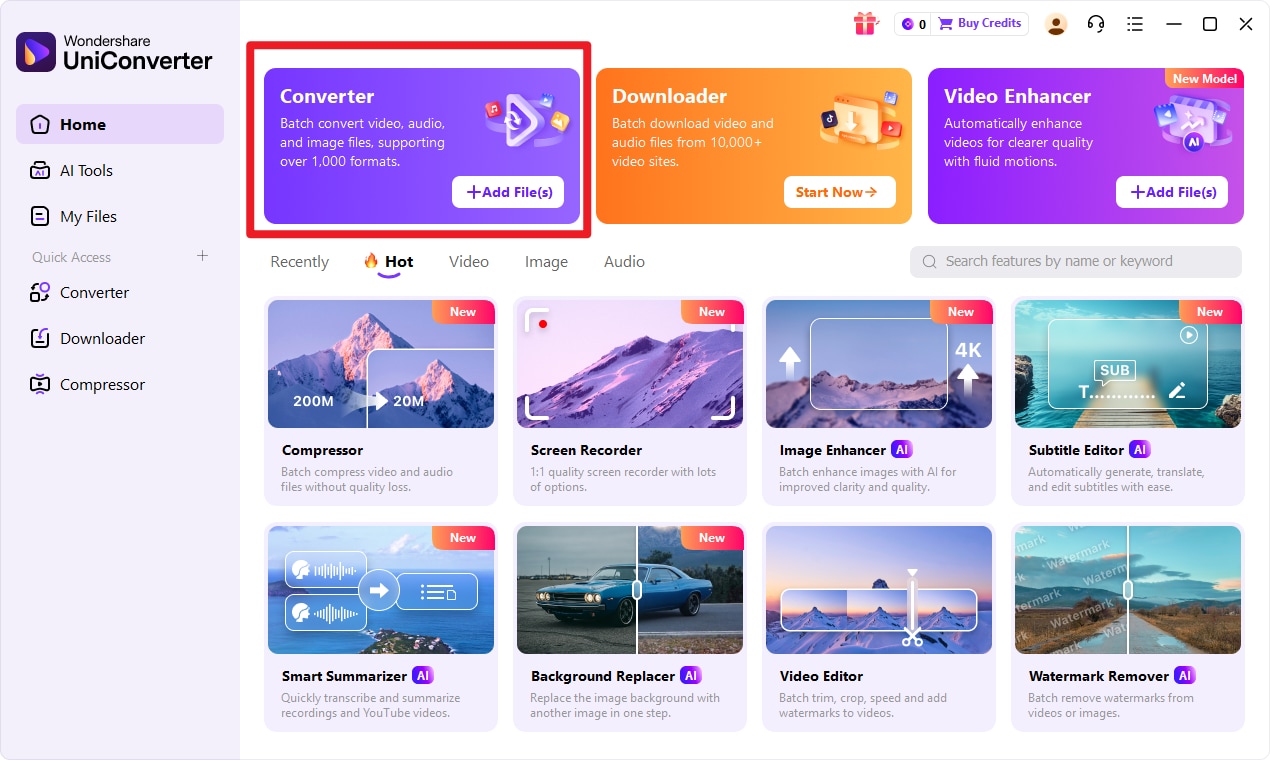
Step 1: Launch Wondershare UniConverter
Launch Wondershare UniConverter on your computer. Navigate to the Converter tab on the left-hand side.
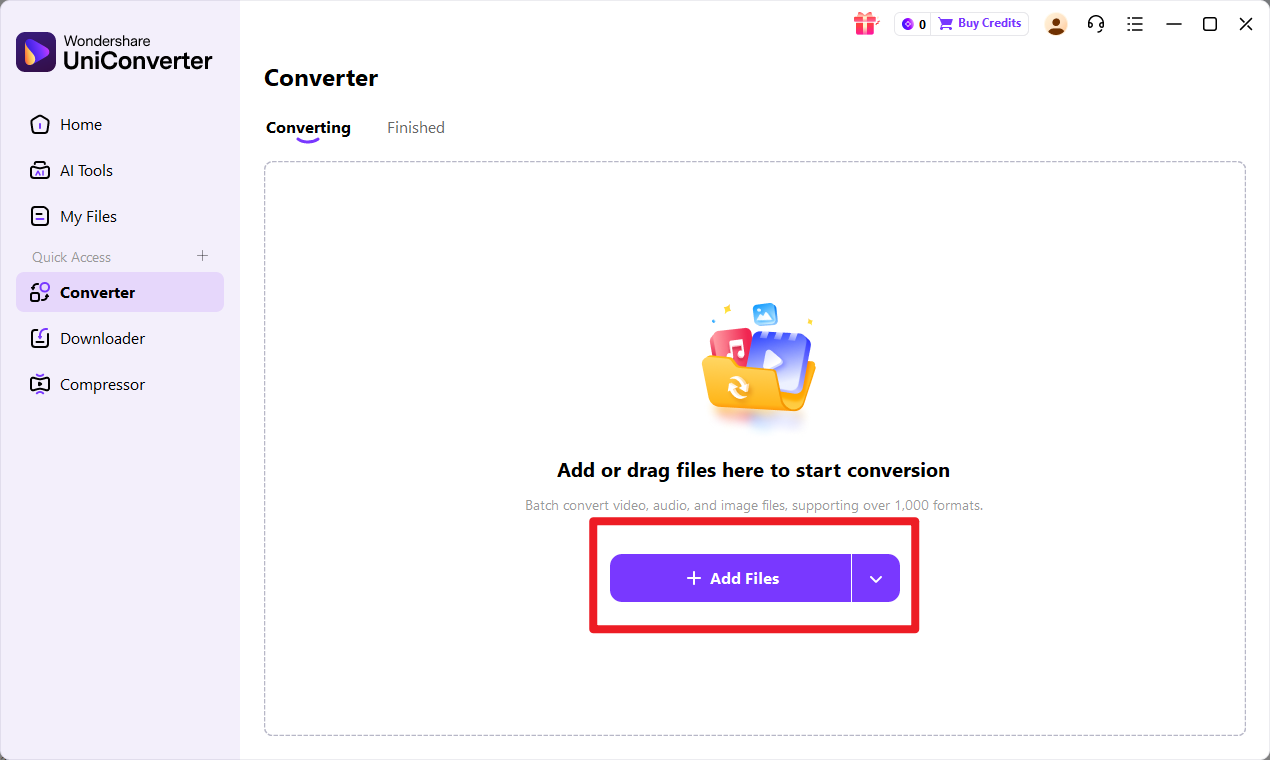
Step 2: Add Files to UniConverter
You can either click the Add Files icon to browse and select your Xvid videos or simply drag and drop them directly into the program window.
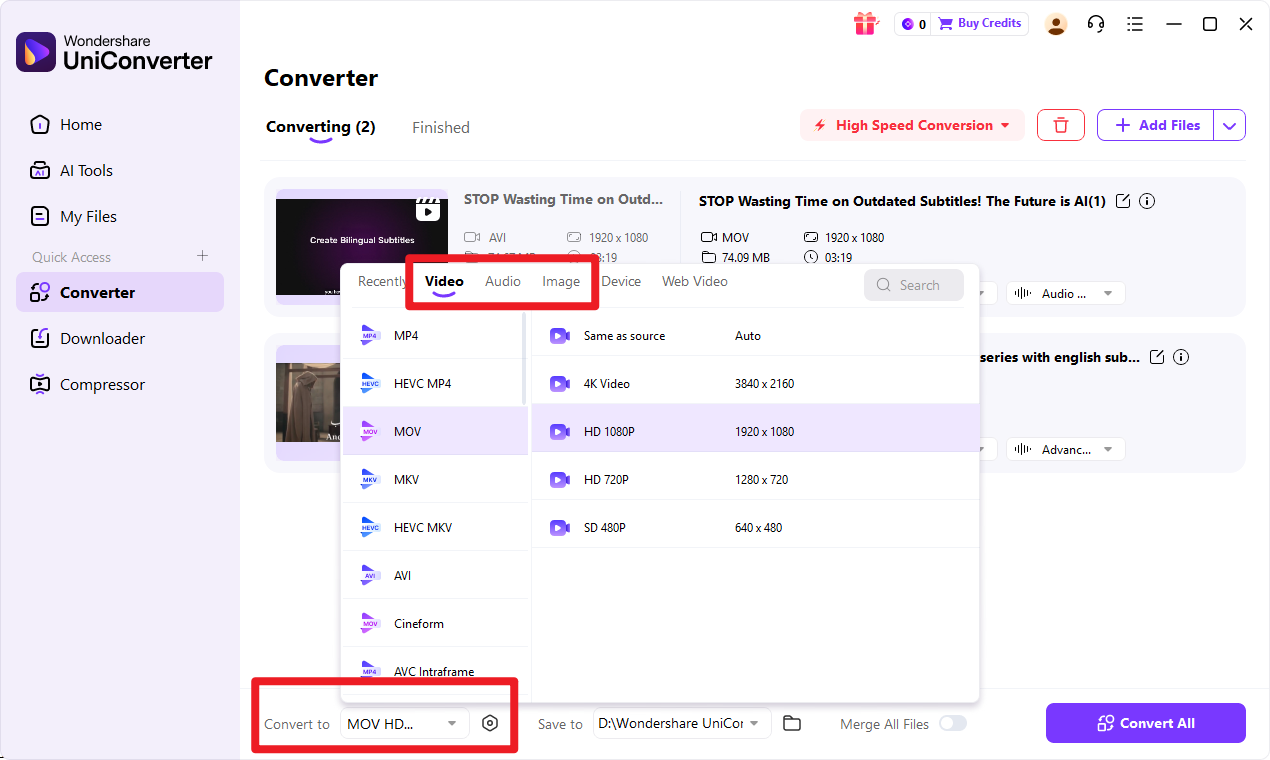
Step 3: Choose Output Format
Click on the Output Format menu located at the bottom of the window. A new dialog box will appear. Go to the Video tab, select a versatile container format like MP4 from the left panel, and then choose a desired resolution on the right. The preset will automatically use the H.264 codec, ensuring optimal compatibility.
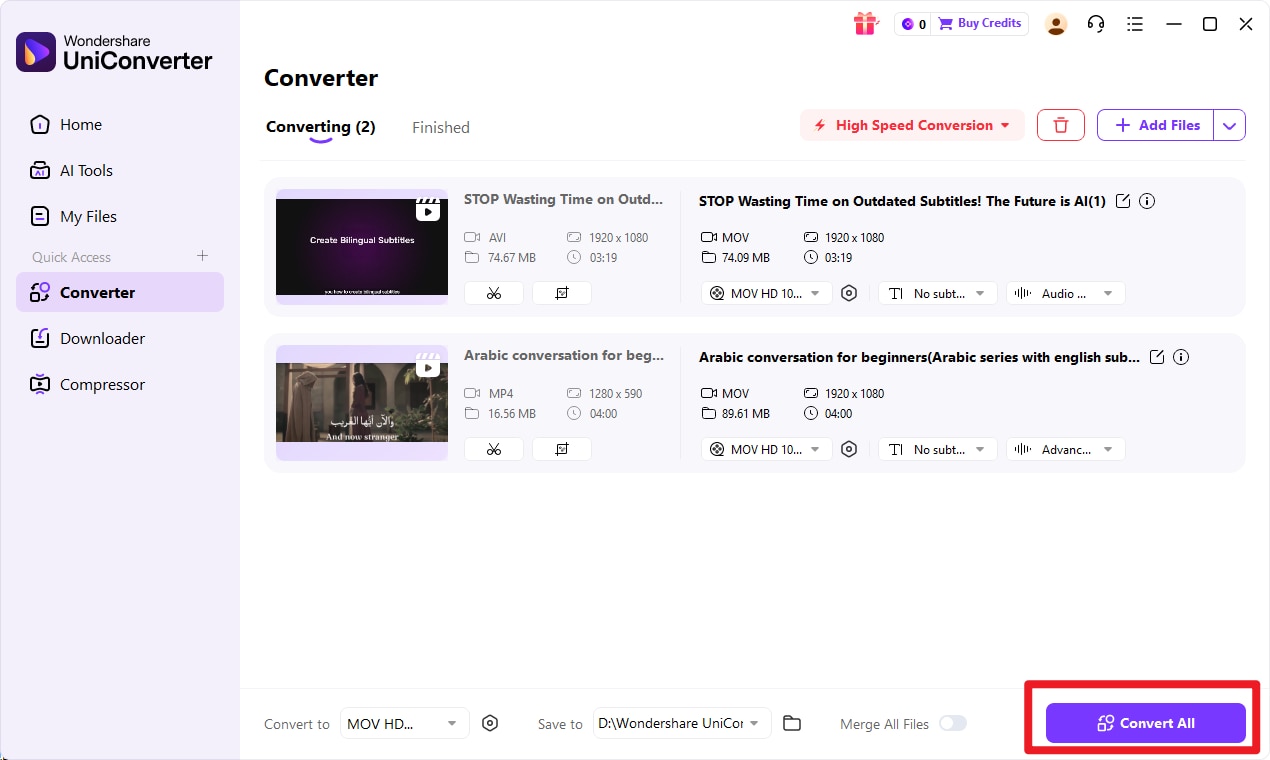
Step 4: Start the Conversion
Before starting, you can specify where to save the converted files by using the File Location menu at the bottom. Once you are ready, click the Convert button next to a single file or press the Start All button in the bottom-right corner to begin batch converting all your added Xvid files to H.264.
Once the conversion process is complete, you can find your new H.264 files by navigating to the Finished tab at the top of the window. From there, you can click the Open icon to go directly to the output folder containing your modernized, universally compatible videos.

Go Beyond Simple Video Conversion
Conclusion
While Xvid played a pivotal role in the history of digital video, the Xvid vs H.264 comparison has a clear winner in the modern era. H.264's superior compression technology, which delivers higher quality video in smaller file sizes, combined with its universal compatibility across all modern devices, makes it the undisputed standard for nearly every video application today. For anyone managing a media library that includes older Xvid files, the most practical and forward-thinking solution is to convert them. By using a professional and efficient tool like Wondershare UniConverter, you can easily modernize your collection, ensuring your videos are smaller, look great, and play flawlessly on any screen, future-proofing your precious memories and media.
FAQs
-
1. Is Xvid the same as AVI?
No, they are different things that work together. Xvid is a codec—the software that compresses and decompresses the video data. AVI (Audio Video Interleave) is a container format—the file itself that holds the Xvid-encoded video, audio tracks, and subtitles together. So, you can have an AVI file that contains video compressed with the Xvid codec. -
2. Will converting from Xvid to H.264 improve video quality?
Converting a video cannot magically create detail that wasn't in the original source, so it will not improve the intrinsic quality. The goal of conversion is to re-encode the existing data into a more efficient format. Using a high-quality converter like UniConverter ensures that the original quality is preserved as much as possible during the transition to the more modern and compatible H.264 format. -
3. Is H.264 the best codec available?
H.264 is the most widely supported and practical codec for most users today. While its successor, H.265 (HEVC), offers even better compression (about 25-50% smaller file sizes than H.264 at the same quality), H.264 remains the go-to standard due to its universal hardware and software support. Many older devices cannot play H.265 files smoothly, making H.264 the most reliable choice for compatibility. -
4. Why should I use UniConverter to convert Xvid to H.264?
UniConverter is highly recommended for this task for several key reasons. It utilizes GPU acceleration for incredibly high-speed conversions, saving you significant time. It supports over 1,000 formats, allowing you to handle any video file you encounter. Its batch processing feature lets you convert entire folders of videos at once, and its simple, intuitive interface makes the entire process effortless, even for beginners.
