
As a video professional using Sony cameras, you've undoubtedly encountered the choice between recording in XAVC S and XAVC I. This decision is more than just a simple menu setting; it fundamentally impacts your entire production and post-production workflow, from storage capacity on set to editing performance in the studio. Choosing the right codec for the job can be the difference between a smooth, efficient project and a frustrating, lag-filled experience. Understanding the core differences in compression, file size, and image data is crucial for making an informed decision that aligns with your project's goals. This guide provides a comprehensive breakdown of XAVC S vs XAVC I, helping you navigate the technical details and make the best choice for your next shoot.
In this article, we will cover:
- An explanation of what XAVC S and XAVC I are and how they work.
- A direct head-to-head comparison in a quick-reference table.
- A detailed analysis of which codec is better for file size, editing, and image quality.
- Practical use cases to help you decide when to use each format.
- A step-by-step guide on how to convert XAVC S files for a smoother editing workflow.
Part 1. What is XAVC S? What is XAVC I?
Before we can compare these two powerful codecs, it's essential to understand what each one is and the technology behind it. Both were developed by Sony, but they are designed for very different purposes and workflows.
What is XAVC S?
XAVC S is a video codec developed by Sony that is primarily found in its consumer and prosumer camera lines, such as the Alpha series (e.g., A7S III, FX3). It is a highly efficient format designed to capture high-quality video, including 4K, without creating excessively large files.
The key to its efficiency lies in its compression method: Long GOP (Group of Pictures). In a Long GOP structure, the codec doesn't store every single frame as a complete image. Instead, it records one full-quality frame, called an Intra-frame or I-frame. The subsequent frames in the group, known as P-frames (Predicted) and B-frames (Bi-directional), only record the data that has changed from the I-frame. By only storing the differences between frames, Long GOP compression achieves significantly smaller file sizes. This means you can record for much longer on a single memory card and use less hard drive space for storage. The primary downside is that this efficiency comes at a cost to your editing computer's processor, which has to work harder to decompress and reconstruct the full images in real-time during playback.
What is XAVC I?
XAVC I, on the other hand, is a professional-grade codec found in Sony's higher-end cinema cameras, like the FX6, FX9, and VENICE. The "I" in its name stands for Intra-frame (also known as All-Intra or All-I), which describes its compression method.
Unlike Long GOP, Intra-frame compression treats every single frame as a complete, self-contained image. Each frame is compressed and stored individually, just like a JPEG in a photo sequence. This method does not rely on information from surrounding frames. The result is a much more robust and data-rich file. The most significant benefit of this approach is seen in post-production. Because every frame is a full picture, editing software can access and display any frame instantly without needing to decompress a group of pictures. This leads to exceptionally smooth, responsive playback and scrubbing, even with high-resolution 4K or 8K footage. The trade-off is a massive increase in file size and data rate, requiring larger, faster memory cards and significantly more storage space.
Part 2. Quick Comparison Table
To see the differences at a glance, here is a direct comparison of the key attributes of XAVC S and XAVC I.
XAVC S vs XAVC I: Head-to-Head Comparison
| Feature | XAVC S | XAVC I |
| Compression Method | Long GOP | Intra-frame (All-I) |
| File Size | Smaller | Significantly Larger |
| Editing Performance | More Demanding on CPU | Smooth and Responsive |
| Post-Production Flexibility | Good | Excellent |
| Best for Storage Efficiency | Yes | No |
| Best for Fast Turnaround Editing | No | Yes |
Part 3. XAVC S vs XAVC I: Which One Is Better?
The question of which codec is "better" doesn't have a single answer. The superior choice is entirely dependent on the specific needs of your project. Let's break down which codec wins in three critical categories.
For File Size and Recording Time
Winner: XAVC S
There is no contest in this category. The Long GOP compression used by XAVC S is engineered for efficiency. By only recording the changes between frames instead of storing every frame in its entirety, it creates files that are dramatically smaller than those produced by XAVC I. For a given resolution and frame rate, XAVC I files can be two to three times larger.
This efficiency makes XAVC S the clear winner for anyone concerned with storage. It allows you to record for much longer on a single memory card, which is invaluable for long-form content like documentaries, wedding films, corporate events, and conference recordings. Furthermore, the smaller file sizes translate directly to saving precious and often expensive hard drive space in your editing bay, making archiving more manageable and cost-effective.
For Editing Performance and Workflow
Winner: XAVC I
When it comes to the editing experience, XAVC I is the undisputed champion. Its Intra-frame compression is a gift to your computer's CPU. Since every frame is a complete, self-contained unit, your editing software doesn't have to perform the complex calculations required to reconstruct images from a Group of Pictures. The NLE (Non-Linear Editor) can simply grab and display any frame you navigate to.
This results in a buttery-smooth, lag-free editing experience. Timeline scrubbing is responsive, playback starts instantly, and you can make cuts with precision and speed. This performance boost is critical for projects with tight deadlines or complex edits where waiting for frames to render can kill creativity and productivity. If your top priority is a fast, frustration-free post-production workflow, XAVC I is the way to go.
For Image Quality and Color Grading
Winner: XAVC I
While both codecs can produce a stunning, high-quality image, XAVC I holds the edge, particularly when the footage is pushed in post-production. Because Intra-frame compression dedicates more data to every single frame, it retains more subtle image information and is more resilient to heavy manipulation.
When you perform intensive color correction, apply complex color grades, or do visual effects work like keying green screens, the robustness of XAVC I pays off. The image is less likely to break down or show compression artifacts (like banding or blockiness) compared to a Long GOP file. This extra latitude gives colorists and editors more creative freedom to push and pull the image to achieve the desired look without compromising its integrity. For high-end commercial work or any project where maximum image fidelity is non-negotiable, XAVC I is the superior choice.
Part 4. Use Cases for XAVC S and XAVC I
Understanding the technical differences is one thing; knowing when to apply them in the real world is another. Here are some practical scenarios to guide your choice.
When You Should Use XAVC S
XAVC S is the ideal choice when efficiency and recording duration are more important than raw editing performance. Consider using it for:
- Long-form content: Projects like documentaries, wedding films, corporate events, and conference recordings where cameras may need to roll for extended periods. The smaller file sizes are a lifesaver here.
- Online content creation: For vlogs, YouTube videos, and social media content, XAVC S provides excellent quality that is more than sufficient for web delivery, while keeping file management and upload times reasonable.
- When you have limited storage: If you're traveling, shooting in a remote location, or simply working with a limited budget for hard drives, XAVC S will maximize your available capacity.
- Static shots: For interviews or scenes with minimal movement, the benefits of Intra-frame compression are less pronounced, making XAVC S a very practical and high-quality option.
When You Should Use XAVC I
XAVC I is the go-to codec when post-production performance and maximum image quality are the top priorities, and file size is a secondary concern. You should use it for:
- High-end commercial work and short films: When every pixel matters and the footage will undergo extensive color grading, XAVC I provides the robust data needed for a polished, cinematic final product.
- Fast-paced scenes: For sports, action sequences, or any shot with a lot of motion and detail, Intra-frame compression ensures that every frame is captured cleanly without motion-related artifacts.
- Projects involving VFX: If your project includes green screen keying, motion tracking, or other visual effects, the clean, self-contained frames of XAVC I will make the compositor's job much easier and yield better results.
- When editing speed is critical: For fast-turnaround projects where you need to edit and deliver quickly, the smooth performance of XAVC I will save you invaluable time in the edit suite.
Part 5. Step-by-Step Guide to Convert XAVC S to an Editing-Friendly Format Using UniConverter
What if you want the best of both worlds? You can shoot in XAVC S to save space on location, then convert your footage to a more editing-friendly format before you start cutting. This is a common professional workflow known as creating "mezzanine" or "proxy" files.
Why You Might Need to Convert Your Footage
If you shot in XAVC S for its space-saving benefits but are now facing a choppy, frustrating editing experience, converting your files is the perfect solution. By transcoding your XAVC S footage to a professional intra-frame codec like Apple ProRes, you create a new file that is visually lossless but edits just as smoothly as if you had shot in XAVC I. This process gives you the storage efficiency of Long GOP during production and the performance of Intra-frame during post-production.
Wondershare UniConverter is an outstanding tool for this task. It is a powerful and intuitive video toolbox that supports a vast range of professional and consumer codecs. Its ability to batch process entire folders of clips at once, combined with GPU acceleration for incredibly fast conversion speeds, makes it an essential utility for any serious video editor in 2026.
Step 1: Launch Wondershare UniConverter
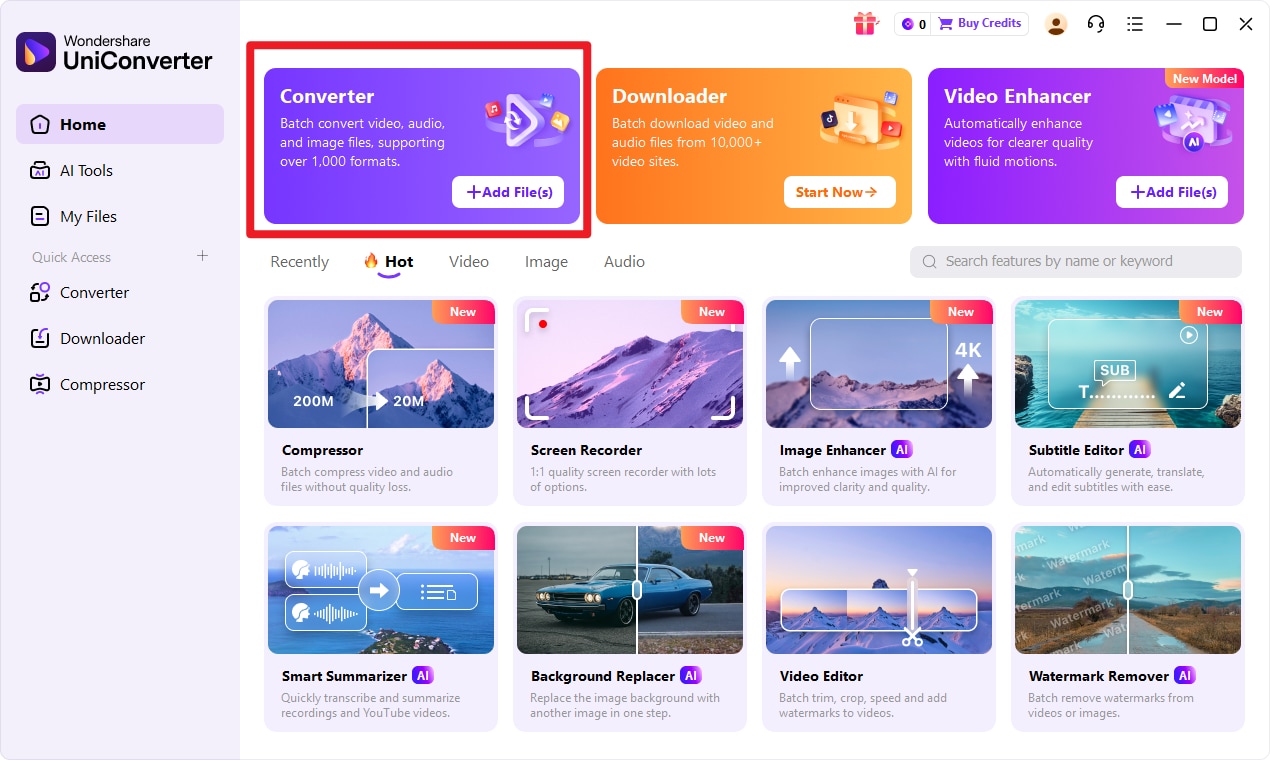
Launch Wondershare UniConverter on your computer. In the main interface, select the Converter tool from the left-hand menu.
Step 2: Add Files to UniConverter
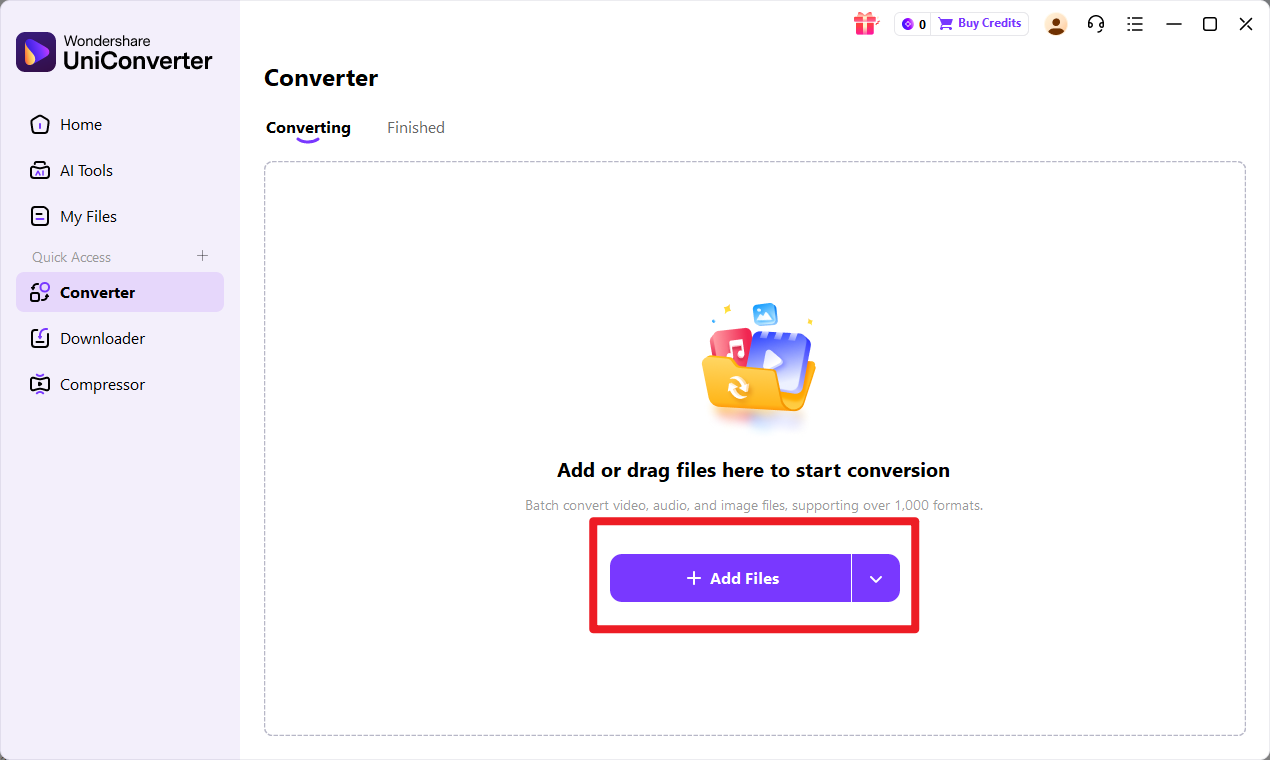
You can now import your XAVC S files by either dragging and dropping them directly into the program window or by clicking the "Add Files" icon to browse and select them from your hard drive.
Step 3: Choose Output Format
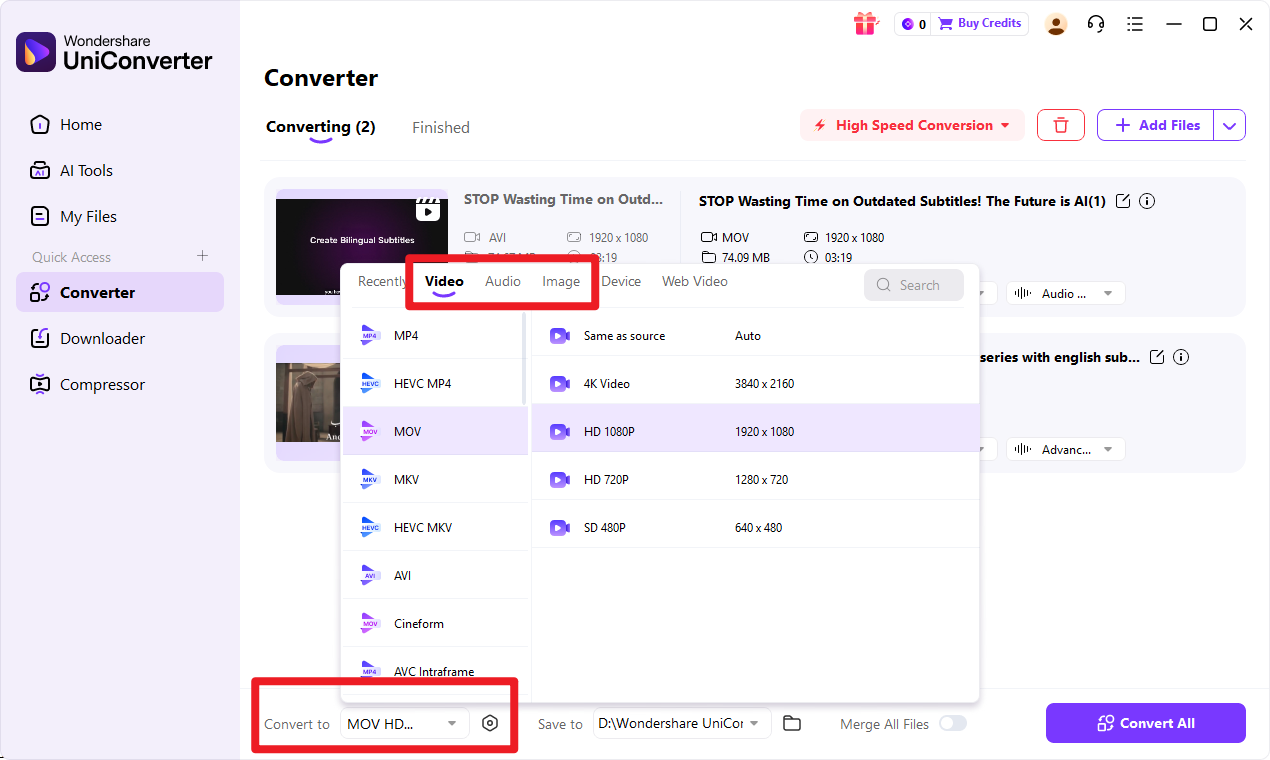
With your clips loaded, click on the Output Format menu located at the bottom of the window. This will open a new dialog box with a wide array of format options. For the best editing performance, navigate to the Editing tab and select a high-quality, intra-frame codec like Apple ProRes. Choosing a specific flavor like "ProRes 422" provides an excellent balance of pristine quality and manageable file size for most editing tasks.
Step 4: Start the Conversion
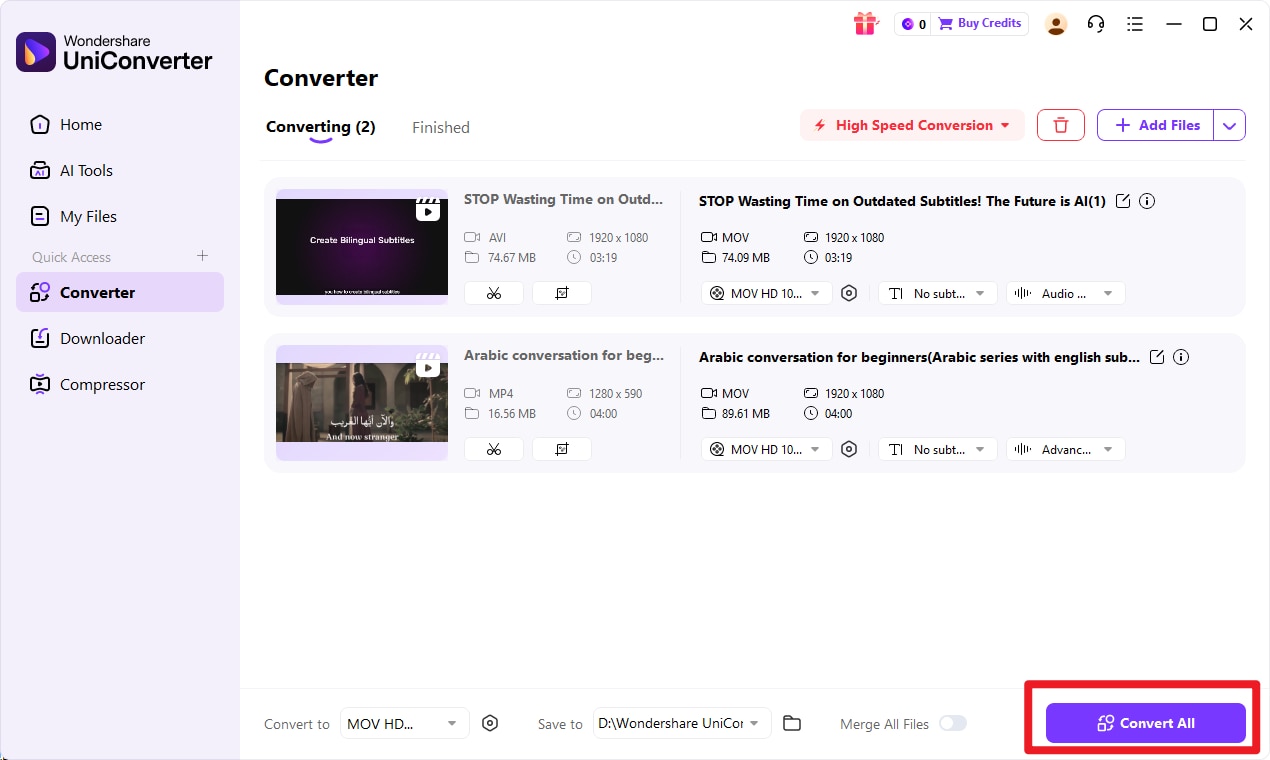
Before starting, you can specify where you want to save your new files. Use the File Location field at the bottom of the interface to choose a destination folder. Once you're ready, you can either click the Convert button next to an individual file or, for maximum efficiency, click the Start All button in the bottom-right corner to begin batch converting all the clips in your queue.
Wondershare UniConverter will leverage your computer's hardware to process the files at high speed. Once the conversion is complete, you can find your new, editing-ready ProRes files by navigating to the Finished tab at the top of the window. From here, you can click the "Open" icon to immediately locate the files in their destination folder, ready to be imported into your editing software.

Simplify Your Entire Video Workflow
Conclusion
Ultimately, there is no single "best" codec in the XAVC S vs XAVC I debate. The right choice is the one that best serves the needs of your specific project and workflow. Each format is a powerful tool designed for a different purpose.
Choose XAVC S when your priorities are storage efficiency, long recording times, and manageable file sizes, especially for content destined for the web or projects with limited storage resources. Choose XAVC I when your primary goals are achieving the absolute maximum image quality, having extensive flexibility in color grading, and ensuring the smoothest, most responsive editing experience possible.
For the modern filmmaker who needs to be flexible, a hybrid workflow is often the smartest approach. By shooting efficiently with XAVC S and then using a reliable conversion tool, you can prepare your footage for a seamless post-production process. A program like Wondershare UniConverter empowers you to bridge this gap, effortlessly transforming your footage into the ideal format for any editing task and giving you complete control over your creative workflow.
FAQs
-
1. Can my computer edit XAVC S files?
Yes, most modern non-linear editing software, including Adobe Premiere Pro, Final Cut Pro, and DaVinci Resolve, can edit XAVC S files natively. However, because it uses Long GOP compression, playback performance can be slow and choppy, especially on less powerful computers or with 4K footage. This is why converting to an intra-frame codec is often recommended for a smoother experience. -
2. How much bigger is XAVC I than XAVC S?
The size difference can be substantial. Depending on the specific bitrate settings chosen in the camera, XAVC I files can easily be two to three times larger than XAVC S files of the same resolution and frame rate. For example, an hour of 4K 24p footage might consume around 60GB in XAVC S, while the same clip in XAVC I could take up 150GB or more. -
3. Is XAVC S a professional format?
Absolutely. While it originated in consumer and prosumer cameras, XAVC S is widely used in professional productions, especially for 4K delivery to platforms like Netflix and YouTube. The image quality it produces is excellent. The "professionalism" of a format is less about the codec itself and more about using the right workflow for it. Many professionals use XAVC S for acquisition and then create mezzanine files for editing. -
4. Can UniConverter convert XAVC I files as well?
Yes, Wondershare UniConverter is a comprehensive video conversion tool that can handle both XAVC S and XAVC I files with ease. You can use it to convert your large XAVC I master files into smaller, more shareable formats like H.264 (MP4) for client previews or for archiving purposes after a project is complete. It works as a powerful input and output tool for virtually any video format you encounter.
