
Navigating the world of video formats can often feel like learning a new language. You might have a video file that plays perfectly on one device but refuses to open on another. Two formats that frequently cause this kind of confusion are WMV and VOB. While they both store video data, they are designed for vastly different purposes, leading to issues with compatibility, file size, and usability. Understanding the core differences in the WMV vs VOB debate is the first step to managing your video library effectively.
Whether you're trying to burn a home movie onto a playable DVD, free up space on your hard drive, or simply play a file you've downloaded, knowing which format to use is crucial. This guide will break down everything you need to know about WMV and VOB, helping you make informed decisions and solve any format-related headaches.
In this article
Part 1. What is a WMV? What is a VOB?
Before we can compare these two formats, it's important to understand what each one is and what it was designed for.
What is a WMV file?
WMV stands for Windows Media Video. As the name suggests, it's a video compression format developed by Microsoft. Its primary purpose was to enable video streaming over the internet, even on slower connections, which was a major concern when it was first created.
Because of this, WMV files are known for their excellent compression. They can achieve a good balance between video quality and file size, making them significantly smaller than many other formats. This efficiency makes them ideal for online video platforms, email attachments, and general storage on a Windows PC. Many WMV files are also protected with Digital Rights Management (DRM) to prevent unauthorized copying and distribution.
What is a VOB file?
VOB, which stands for Video Object, is the container format used to store video, audio, subtitles, and menu content on physical DVD-Video media. When you insert a movie DVD into a player, the device is reading the VOB files contained within the VIDEO_TS folder.
VOB files are based on the MPEG-2 program stream format, which was the industry standard for DVDs. This structure allows for multiple audio tracks (e.g., different languages), various subtitle streams, and interactive menus. However, this comprehensive structure and older compression technology mean VOB files are typically very large. They are also often split into 1GB segments to comply with file system limitations of the time.
Part 2. Quick Comparison Table
For a fast overview, this table highlights the key distinctions between the WMV and VOB formats.
| Feature | WMV (Windows Media Video) | VOB (Video Object) |
| Developer | Microsoft | DVD Forum |
| Full Name | Windows Media Video | Video Object |
| Primary Use | Web streaming, online video, Windows-based playback. | Storing video and audio on physical DVDs. |
| Compatibility | High on Windows PCs; requires conversion for many others. | High on DVD players; requires specific codecs on computers. |
| Compression | WMV codec family (more modern and efficient). | MPEG-2 (older, less efficient compression). |
| File Size | Generally smaller. | Generally larger. |
Part 3. WMV vs VOB: Which One Is Better?
Neither format is inherently "better" than the other; their value depends entirely on your specific needs. Let's dive deeper into how they stack up in different categories.
Compatibility and Playback
Compatibility is often the biggest pain point for users. A WMV file is native to the Windows ecosystem, meaning it will play flawlessly on any PC using Windows Media Player or the default Movies & TV app. However, taking that file to a Mac, a Linux machine, or a standalone DVD player can be problematic. These devices don't natively support WMV, so you'll often need to install third-party software like VLC Media Player or convert the file to a more universal format.
VOB, on the other hand, was built for universal playback on one specific type of device: the DVD player. Any standard DVD player, from a 20-year-old model to a modern Blu-ray player, can read and play VOB files from a disc. The challenge arises when you try to play VOB files directly on a computer. While players like VLC can handle them, default applications like Windows Media Player or Apple's QuickTime Player may fail unless you have the necessary MPEG-2 codecs installed.
Quality and Compression
WMV utilizes a family of more advanced compression algorithms developed by Microsoft. These codecs are more efficient than the technology used for VOB files. This means WMV can deliver good video quality at lower bitrates, resulting in significantly smaller file sizes. For a given level of visual quality, a WMV file will almost always be more compact than a VOB file.
VOB files rely on the much older MPEG-2 compression standard. While MPEG-2 can produce very high-quality video (as seen on commercial DVDs), it is far less efficient. To maintain that high quality, the files must be very large. This trade-off was acceptable for the high-capacity storage of a DVD, but it makes VOB files impractical for streaming or sharing over the internet.
File Size
This is a clear win for WMV. Due to its superior compression technology, a video encoded as a WMV file will be considerably smaller than the same video saved as a VOB file, assuming similar quality settings. For example, a 90-minute movie might be 1-2 GB as a WMV file but could easily be 4-8 GB as a set of VOB files on a DVD.
Furthermore, VOB files aren't just video and audio. They are containers that also hold data for menus, chapter points, multiple language tracks, and subtitles. All this extra information adds to the overall file size, making VOB one of the bulkier video formats you'll encounter.
Editing
When it comes to post-production, WMV files are generally much easier to work with. Most consumer and prosumer video editing software (like Adobe Premiere, Final Cut Pro, and Filmora) can import and edit WMV files without any issues. The format is self-contained and straightforward for these programs to process.
Editing VOB files directly can be a nightmare. First, they are often encrypted on commercial DVDs. Second, a single movie is typically split across multiple 1GB VOB files, which need to be joined together. Because of their complex structure, many video editors struggle to import them correctly or may lose audio sync. For a smooth editing workflow, it is highly recommended to first convert VOB files into a more editor-friendly format like MP4 or even WMV. A reliable tool like Wondershare UniConverter can handle this conversion seamlessly, even merging multiple VOB files into one cohesive video.
Part 4. Use Cases for WMV and B
So, when should you choose one format over the other? Here are the most common scenarios for each.
When to Use WMV
- Streaming Videos Online: Its strong compression makes WMV an excellent choice for uploading videos to websites or streaming platforms where bandwidth and loading times are a concern.
- Sharing via Email or Messaging Apps: If you need to send a video to someone, the smaller file size of a WMV makes it much more practical than a bulky VOB file.
- Saving Hard Drive Space: For archiving a large personal video library on your computer, using WMV instead of a format like VOB can save you a tremendous amount of storage space without a major sacrifice in visible quality.
When to Use VOB
- Creating Playable DVDs: This is the primary and most important use case for VOB. If your goal is to burn a video to a disc that will play in any standard DVD player, you must use the VOB format as part of the DVD-Video structure.
- Authoring Projects with Menus and Chapters: If you want to create a professional-looking video project with interactive menus, chapter selection, and multiple audio or subtitle options, the VOB container format is designed specifically for this.
- Archiving a Perfect DVD Copy: If you want to create a 1:1 backup of a non-copyrighted DVD, preserving all its menus and features, you would work with the VOB files directly.
Part 5. Step-by-Step Guide to Convert WMV to VOB Using UniConverter
There are many situations where you might need to convert between these formats. For example, if you have a movie in WMV format and want to burn it to a DVD to watch on your TV, you'll need to convert it to VOB first. Wondershare UniConverter is a versatile and user-friendly application that makes this process incredibly simple. It supports over 1,000 formats and provides high-speed, high-quality conversions for all your video needs.
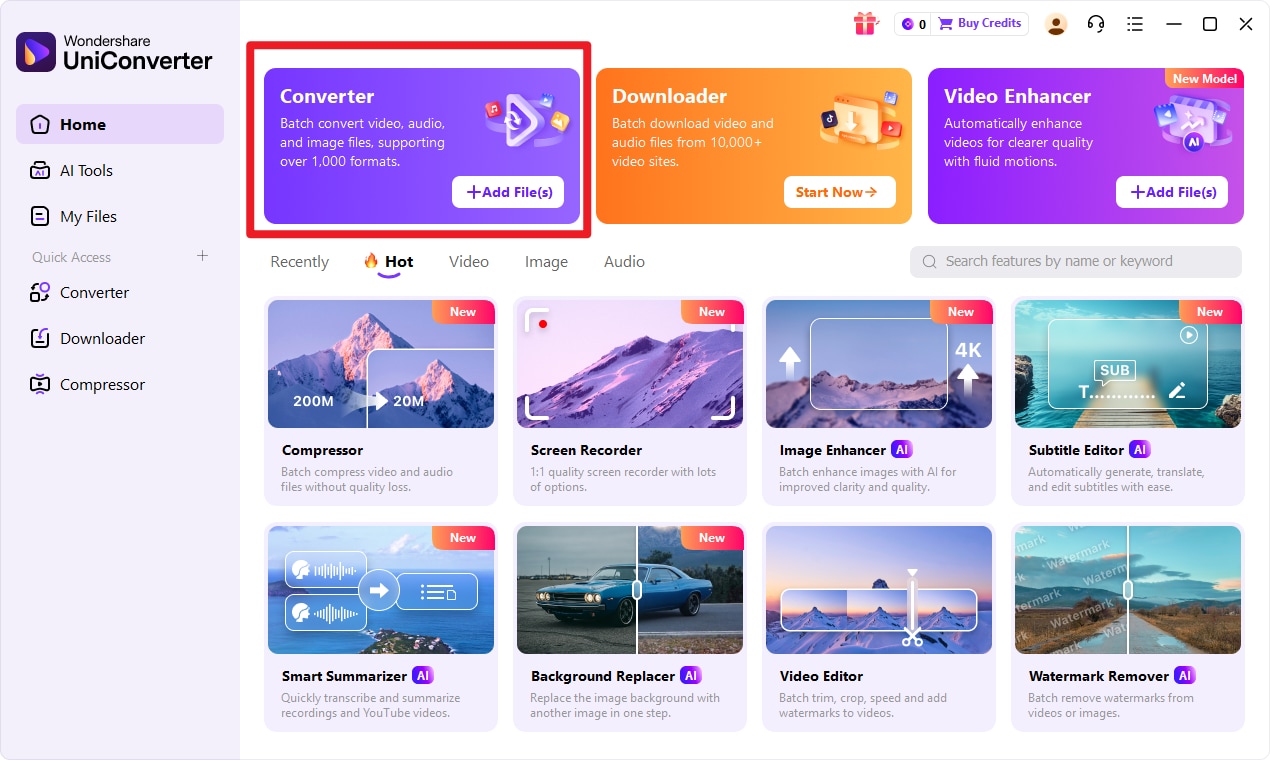
Step 1: Choose Converter in UniConverter
Launch Wondershare UniConverter on your computer. From the main interface, select the Converter tool from the menu on the left side of the screen.
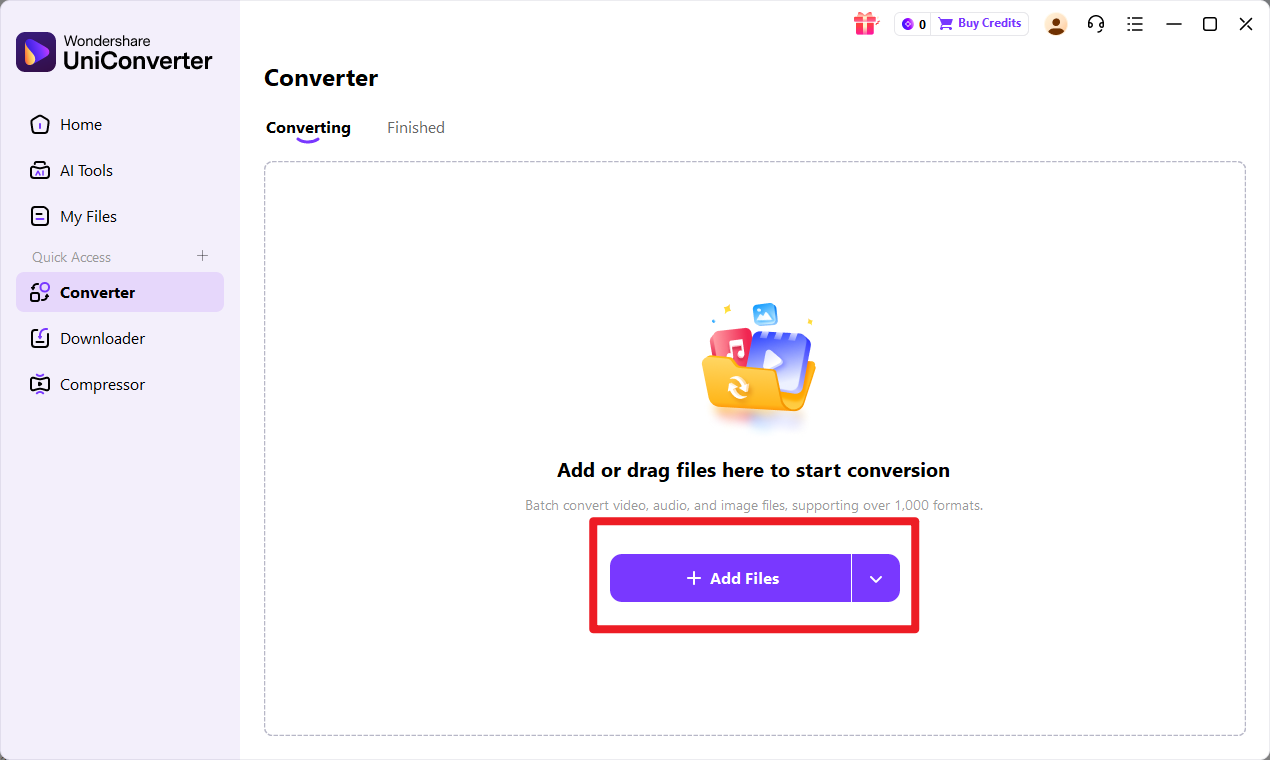
Step 2: Add Files to UniConverter
You can now import your video. Click the Add Files icon in the center or top-left corner to browse your computer for the input format file. Alternatively, you can simply drag and drop your video file directly into the program window.
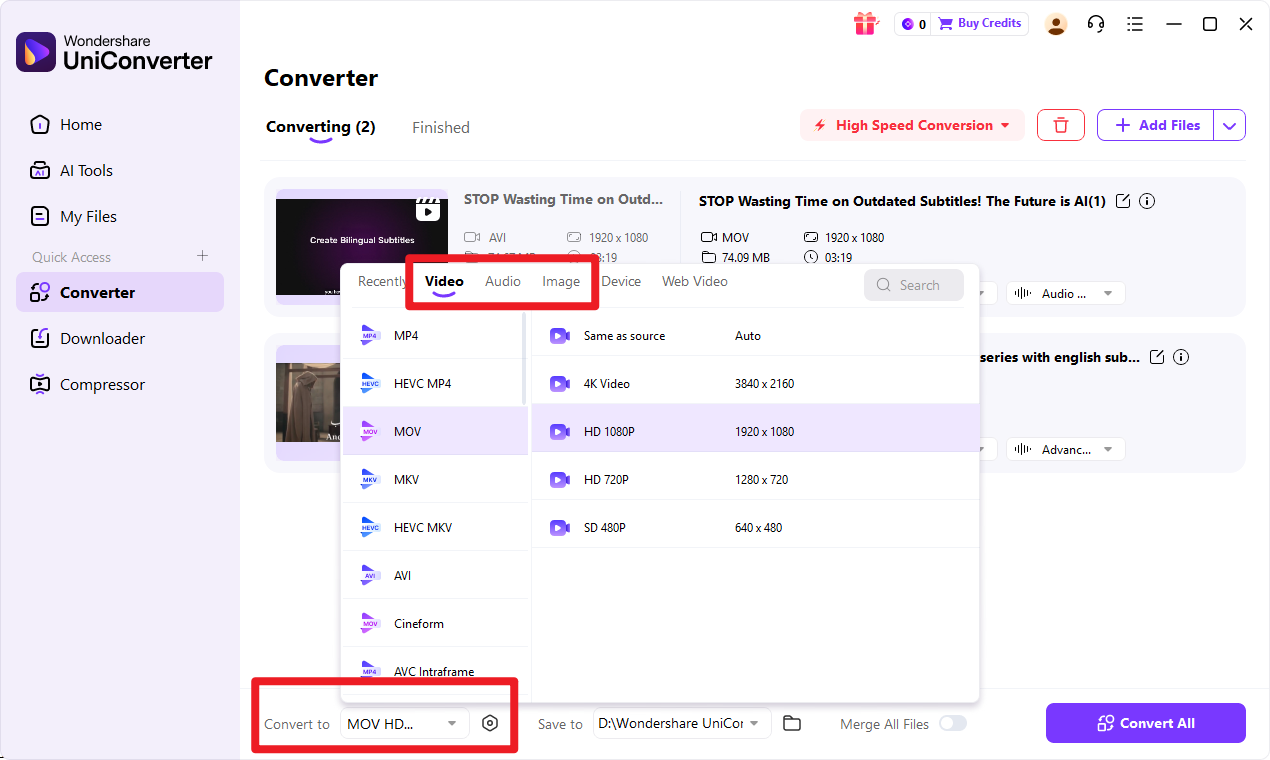
Step 3: Choose Output Format
At the bottom of the window, click on the Output Format menu. A new window will appear. Go to the Video tab, select the target format from the list on the left, and then choose your preferred resolution on the right (e.g., "Same as source" to maintain quality).
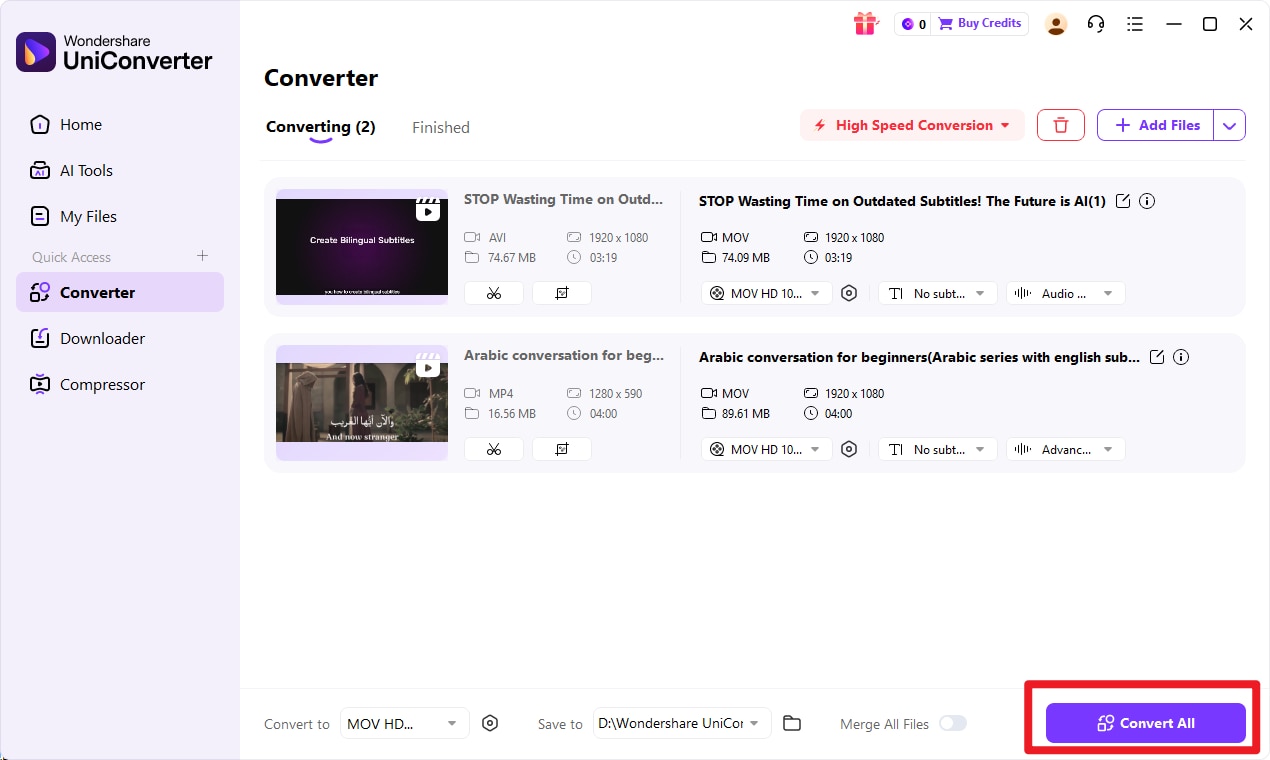
Step 4: Start the Conversion
Before starting, you can select a destination for your converted file by clicking the File Location field at the bottom. Once you are ready, click the Start All button (or Convert if you are processing a single file) to begin the conversion. UniConverter will process your file quickly and save it to your specified folder.

More Than Just a Video Converter
Conclusion
Ultimately, the choice between WMV and VOB comes down to your specific objective. WMV is the modern, efficient choice for the digital world—perfect for streaming, sharing, and storing videos on your computer. VOB, while older and bulkier, remains the essential and non-negotiable format for creating DVDs that are compatible with standard players. One is not superior to the other; they are simply tools designed for different jobs. When you find yourself needing to bridge the gap between the physical media world of VOB and the digital convenience of WMV, a powerful and intuitive tool like Wondershare UniConverter is indispensable. It ensures your videos are always in the right format for any device, platform, or project.
FAQs
-
1. Can I play VOB files on Windows Media Player?
Not always. By default, Windows Media Player may not have the necessary MPEG-2 codec required to decode and play VOB files. You might see an error message or get audio with no video. While you could try installing a third-party codec pack (which can sometimes cause system instability), a safer and more reliable solution is to use UniConverter to convert the VOB file into a format that Windows natively supports, such as WMV or MP4. -
2. Is WMV higher quality than VOB?
Not necessarily. The final quality of a video file depends on many factors, including the quality of the source video and the compression settings used during encoding. A VOB file on a commercial DVD is encoded at a high bitrate and can have excellent quality. However, the WMV format can achieve a visually similar quality at a much smaller file size because its compression technology is more modern and efficient. -
3. How do I combine multiple VOB files from a DVD?
DVDs often split a single movie or video into several 1GB VOB files (e.g., VTS_01_1.VOB, VTS_01_2.VOB, etc.). Trying to join them manually can be tricky and lead to sync issues. Wondershare UniConverter makes this easy with its built-in Merge feature. Simply add all the VOB files from the DVD into the Converter tool, then enable the "Merge All Files" toggle at the bottom of the window before you start the conversion. UniConverter will automatically join them in the correct order and convert them into a single, seamless video file.
