
Navigating the world of video formats can often feel like a complex puzzle, especially when you encounter file types like WMV and MTS. You might have a high-definition video from your camcorder in MTS format, but your computer struggles to play or edit it. On the other hand, you might have a WMV file that plays perfectly on Windows but isn't ideal for every situation. The core of the WMV vs MTS debate often comes down to a trade-off between universal compatibility and pristine video quality. Understanding the fundamental differences between these two formats is the first step toward solving your playback issues and optimizing your video workflow.
Whether you're a content creator editing footage, a student preparing a presentation, or simply someone trying to manage your video library, choosing the right format is crucial. This guide will provide a comprehensive breakdown of WMV and MTS, helping you understand their strengths, weaknesses, and ideal use cases. We'll explore everything from technical specifications to practical applications, empowering you to make an informed decision for your specific needs.
In this article:
Part 1. What is WMV? What is MTS?
Before we dive into a direct comparison, it's essential to understand what each format is and where it comes from. Both WMV and MTS serve distinct purposes and were designed with different goals in mind, which explains their unique characteristics.
What is a WMV File?
WMV stands for Windows Media Video. As the name suggests, it's a video format developed by Microsoft as a core component of its Windows Media framework. Initially designed to compete with RealVideo for online streaming, WMV has evolved into a versatile format known for its strong compression capabilities. This means it can create relatively small file sizes without a drastic loss in visual quality, making it an excellent choice for web-based video and email attachments.
One of its defining features is its native integration with the Windows operating system. Any Windows PC can play WMV files out of the box using Windows Media Player, without needing to install extra codecs or software. Furthermore, WMV includes robust support for Digital Rights Management (DRM), a technology used by content owners to protect their work from unauthorized copying and distribution. Its common uses include internet video streaming, corporate training videos, and general-purpose video playback on Windows devices.
What is an MTS File?
MTS, which stands for MPEG Transport Stream, is a high-definition video file format primarily associated with AVCHD (Advanced Video Coding High Definition) camcorders. Developed jointly by Sony and Panasonic, the MTS format was created to store high-quality video footage captured by consumer and prosumer digital cameras. It uses the highly efficient H.264/MPEG-4 AVC video codec, which is the industry standard for Blu-ray discs and many streaming services.
The primary purpose of the MTS format is to record and preserve video in the highest possible quality, capturing resolutions like 1080i and 720p with excellent detail and color accuracy. Because it prioritizes quality, MTS files are often large and can be resource-intensive to play and edit. While they are perfect for archiving raw footage directly from a camera, their limited native support on many devices and software applications often necessitates conversion to a more universally compatible format for editing or sharing.
Part 2. Quick Comparison Table
To get a clear, at-a-glance overview of the key differences between WMV and MTS, this table breaks down their core attributes side-by-side.
| Feature | WMV | MTS |
| Full Name | Windows Media Video | MPEG Transport Stream |
| Developer | Microsoft | Sony and Panasonic |
| Primary Use | Web streaming, Windows video playback | HD camcorder recording |
| Video Codec | WMV family (e.g., WMV9, VC-1) | H.264/MPEG-4 AVC |
| Quality | Good, but often more compressed | Excellent, high-definition quality |
| Compatibility | Very high, especially on Windows | Limited, often requires specific codecs or players |
Part 3. WMV vs MTS: Which One Is Better?
The question of which format is "better" doesn't have a single answer. The best choice depends entirely on your specific goals. Are you prioritizing video quality, file size, or compatibility? Let's break down how WMV and MTS stack up in these key areas.
Quality Comparison
When it comes to pure video quality, MTS generally has the upper hand. This is because MTS files utilize the H.264/MPEG-4 AVC codec, a modern and highly efficient compression standard. The H.264 codec excels at preserving fine details and rich colors in high-definition video without requiring an excessively high bitrate. As a result, footage recorded in the MTS format looks crisp, clear, and true to the original scene captured by the camera's sensor.
WMV, on the other hand, typically uses older codecs from the WMV family, such as WMV9 or the more advanced VC-1 (which is also an international standard). While these codecs provide good quality, they are generally less efficient than H.264. This means that to achieve a similar level of visual quality as an MTS file, a WMV file might need a higher bitrate, resulting in a larger file. Conversely, at the same file size, a WMV video may exhibit more noticeable compression artifacts, such as blockiness or blurring, compared to an MTS file. For professional videography or archiving source footage, MTS is the superior choice for quality preservation.
File Size Comparison
In the battle of file sizes, WMV is the clear winner. The format was designed with compression in mind, making it ideal for situations where storage space and bandwidth are limited. The WMV codecs are very effective at reducing file size while maintaining a reasonable level of quality. This makes WMV a practical choice for sharing videos online, sending them via email, or storing a large library of videos on a device with limited capacity.
MTS files, by contrast, are notoriously large. Since their primary goal is to maintain the highest possible video quality from the camcorder, they use less aggressive compression. A few minutes of high-definition MTS footage can quickly consume several gigabytes of storage space. While this is perfect for capturing every detail during recording, these large files can be cumbersome to upload, share, or store. If your main concern is minimizing file size for easy distribution, converting an MTS file to WMV is often a necessary step.
Compatibility and Accessibility
Compatibility is where WMV truly shines. As a Microsoft-developed format, it enjoys native support across the entire Windows ecosystem. You can play a WMV file on virtually any Windows computer using the built-in Windows Media Player without any issues. Most third-party video players and editing software, especially those designed for Windows, also handle WMV files seamlessly. This widespread support makes WMV a safe and reliable choice when you need to ensure your video can be viewed by a broad audience without technical hurdles.
MTS, however, struggles with compatibility. It is not a universally supported format. While many modern media players like VLC and some newer versions of Windows can play MTS files, they often require specific codecs to be installed. Older devices, many mobile phones, and certain video editing programs may not recognize MTS files at all. This lack of native support is a significant pain point for users who just want to watch or edit their camcorder footage. To overcome this, using a reliable video converter to change MTS files into a more common format like WMV or MP4 is often the most practical solution.
Part 4. Use Cases for WMV and MTS
Understanding the ideal scenarios for each format can help you streamline your video workflow and avoid compatibility headaches. Here's when you should choose WMV and when MTS is the better option.
When to Use WMV
WMV is the go-to format for distribution and accessibility, especially within the Windows environment. Consider using WMV in the following situations:
- Sharing Videos for Broad Playback: If you need to send a video to colleagues, clients, or family members who primarily use Windows devices, WMV is a safe bet. It guarantees they can open and watch the file without needing to install any extra software.
- Embedding Videos on a Website: The smaller file sizes of WMV files make them well-suited for web use. They load faster for visitors and consume less bandwidth, which is crucial for a smooth user experience, particularly for users with slower internet connections.
- Editing in Older Software: If you are working with older versions of Windows Movie Maker or other legacy video editing software, you may find that they have better, more stable support for WMV compared to more modern formats.
When to Use MTS
MTS is all about preserving the highest possible quality directly from the source. It should be your format of choice in these scenarios:
- Archiving Raw Footage: When you transfer video from your AVCHD camcorder to your computer, keep the original MTS files as your master copies. These files contain the most video data and represent the highest quality version of your footage.
- When Quality is the Top Priority: For professional video projects where every pixel matters, such as short films, documentaries, or high-end event videography, the superior quality of MTS is indispensable. You can always create compressed versions for distribution later.
- As a Master Source for Editing: Use the original MTS files as the source material for your video editing projects. This ensures you are working with the best possible quality. Once your edit is complete, you can export the final product into a more compatible format like WMV or MP4 for sharing.
Part 5. Step-by-Step Guide to Convert WMV to MTS Using UniConverter
Whether you need to convert a large MTS file to a more manageable WMV for sharing, or you need to change a WMV file into the MTS format for a specific workflow, a powerful and reliable tool is essential. Wondershare UniConverter stands out as the premier choice, offering lightning-fast, high-quality conversions for over 1,000 formats. Its intuitive interface makes the process simple for everyone.
Follow these four simple steps to convert your files with ease.
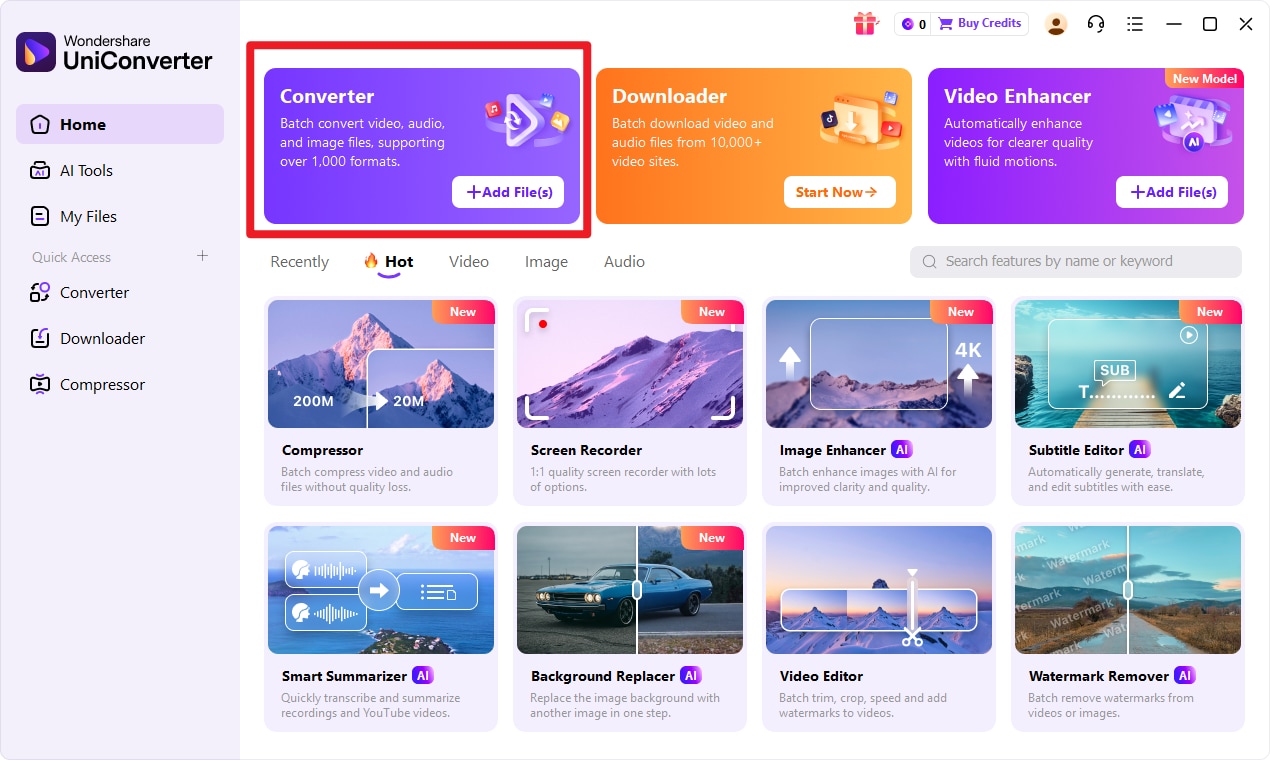
Step 1: Choose Converter in UniConverter
Launch Wondershare UniConverter on your computer. On the left-hand menu, select the Converter tool to open the main conversion interface.
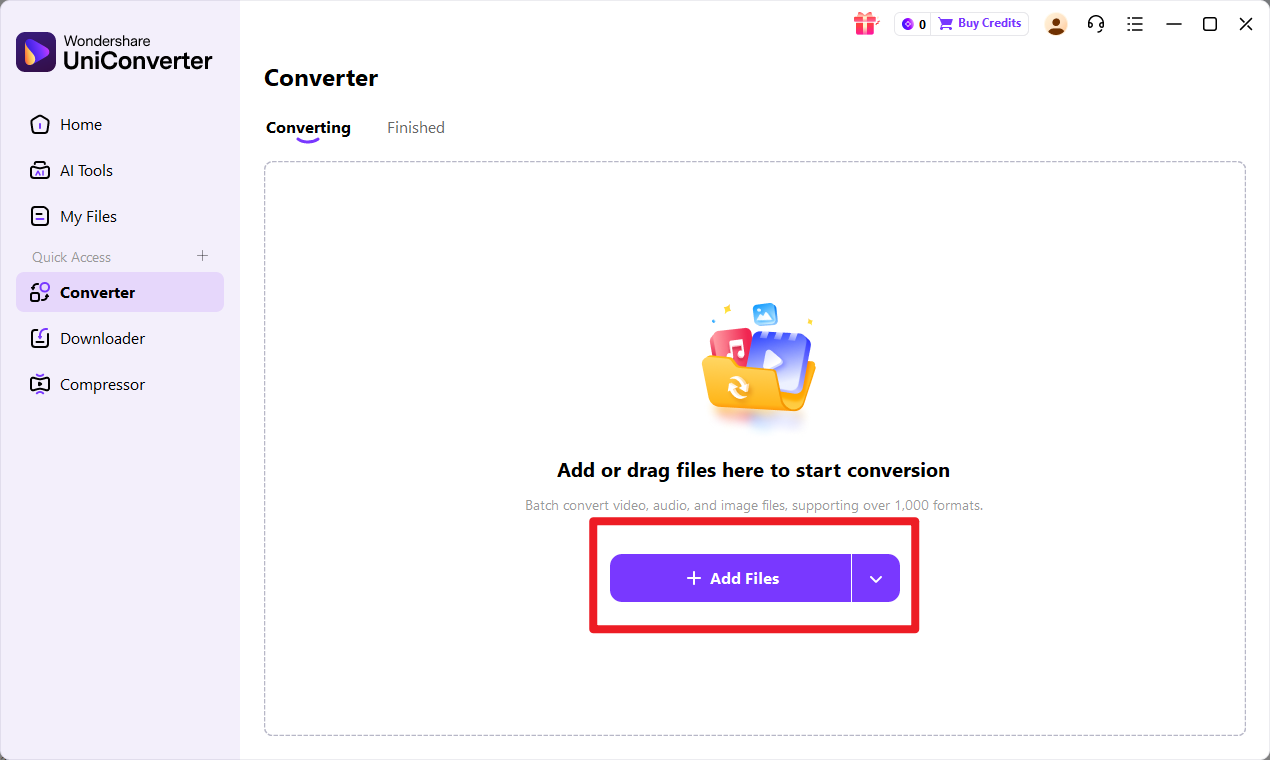
Step 2: Add Files to UniConverter
Drag and drop your input format files directly into the center of the converter window. Alternatively, you can click the Add Files icon in the top-left corner to browse your computer's folders and import the videos you want to convert.
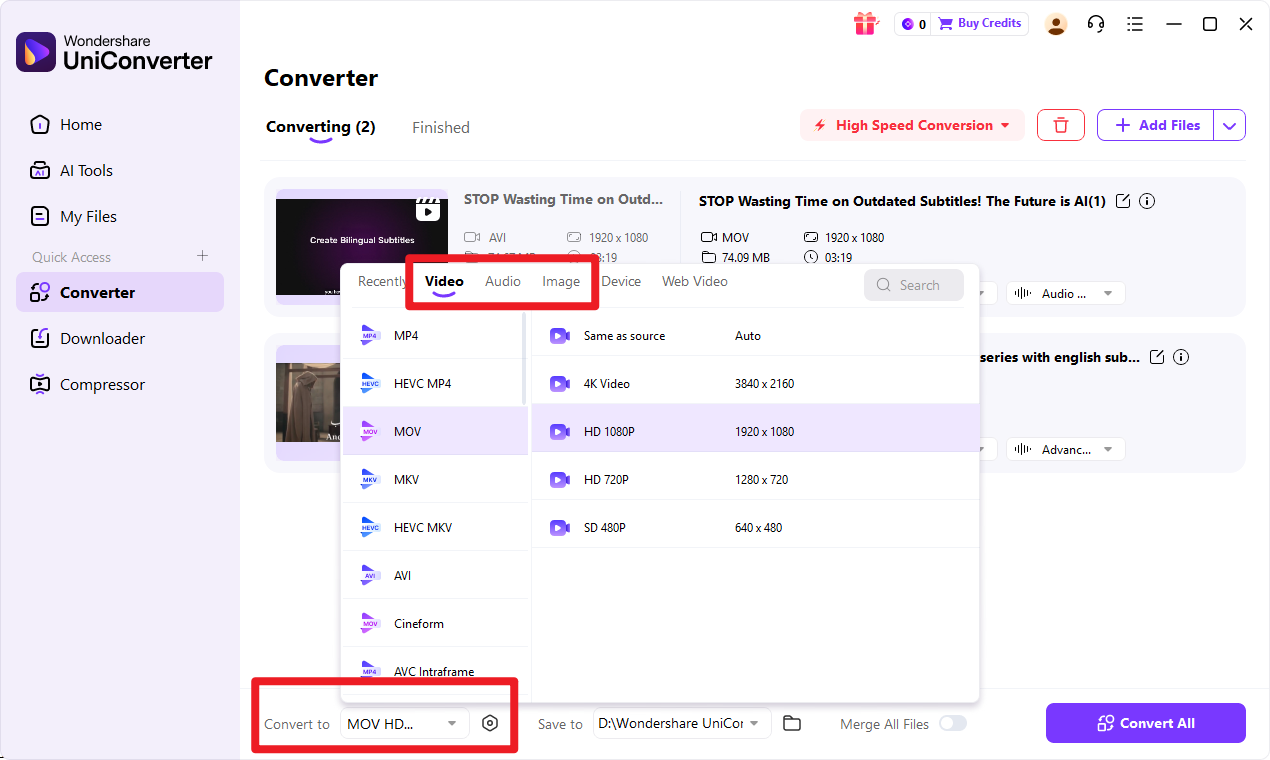
Step 3: Choose Output Format
Click on the Output Format menu located at the bottom of the window. A new dialog box will appear. Go to the Video tab, select your desired target format from the list on the left, and then choose a resolution on the right (such as "Same as source" to maintain quality).
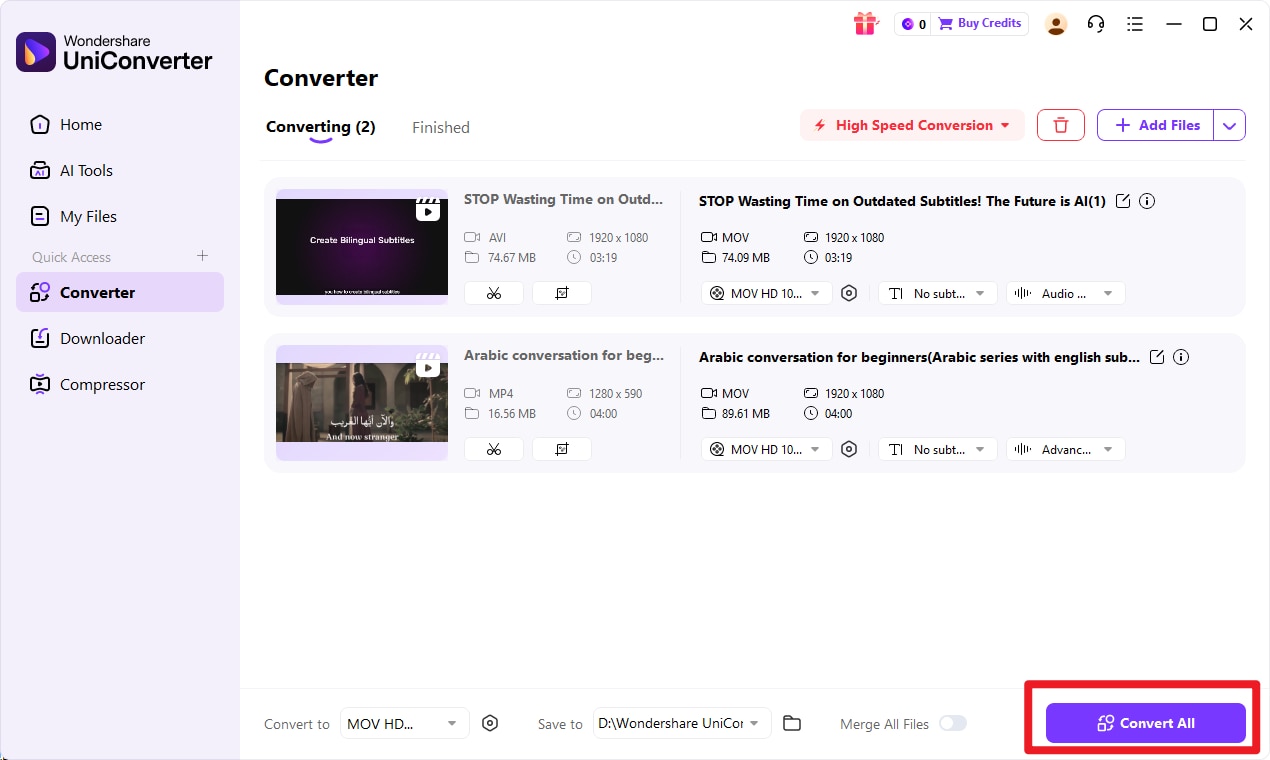
Step 4: Start the Conversion
Before starting, you can select a destination for your converted files by clicking the File Location option at the bottom. Once you are ready, click the Start All button in the bottom-right corner to begin the conversion process. Your files will be converted quickly and saved to your chosen folder.

More Than Just a Video Converter
Conclusion
In the WMV vs MTS comparison, it's clear there is no single winner that fits every scenario. The best format is the one that aligns with your specific needs. Choose WMV for its outstanding compatibility and smaller, web-friendly file sizes, making it perfect for sharing and general playback on Windows systems. Opt for MTS when your priority is preserving the pristine, high-definition quality of footage recorded on an AVCHD camcorder, especially for archiving or professional editing. Ultimately, flexibility is key in modern video workflows. When you need to bridge the gap between these formats, a robust and dependable tool is indispensable. Wondershare UniConverter provides a seamless, high-quality solution for all your video conversion needs, ensuring your files are perfectly optimized for any device, platform, or project.
FAQs
-
1. Is MTS better quality than WMV?
Yes, in most cases. MTS files use the more modern and efficient H.264 codec, which is superior at preserving video detail and color accuracy compared to the older codecs typically used for WMV. This results in better overall video quality, especially at comparable bitrates. -
2. Can I play MTS files on Windows Media Player?
It depends on your version of Windows. Modern versions of Windows 10 and 11 may have built-in codec support that allows Windows Media Player to play MTS files. However, older Windows versions and other media players often lack the necessary codecs. In these cases, converting the MTS file to a more compatible format like WMV is a common and effective solution. -
3. How do I convert MTS to WMV without losing quality?
While any conversion between two lossy formats (like MTS and WMV) involves some re-encoding, you can minimize quality loss by using a professional video converter program like Wondershare UniConverter. Its advanced conversion engine allows you to select high-bitrate settings and use features like High Speed Conversion, which helps maintain the visual integrity of the original video as much as possible. -
4. Is WMV a good format for archiving?
While you can use WMV for archiving, MTS is generally a better choice for storing original, high-quality source footage from a camera. The MTS format retains more data and offers superior quality. WMV is better suited for creating smaller, more accessible "distribution copies" of your final video after editing is complete.
