
WMV vs MP4: Key Differences and When to Use Each in 2026
Have you ever received a video file with a .wmv extension and found that it won't play on your Mac, iPhone, or Android device? It's a common frustration that highlights a crucial aspect of digital media: file format compatibility. In the world of video, two of the most frequently encountered formats are WMV and MP4. While they both serve to store video data, they are fundamentally different in their design, compatibility, and ideal use cases. Understanding the WMV vs MP4 debate is key to ensuring your videos are accessible, high-quality, and easy to share.
This guide will demystify these two formats. We'll break down their technical differences, compare their performance in key areas like quality and file size, and help you decide which one is right for your needs. More importantly, we'll provide a simple, effective solution for those moments when you're stuck with a WMV file and need it to work everywhere.
In this article:
Part 1. What is WMV? What is MP4?
Before we dive into a direct comparison, it's essential to understand what each format is and what it was designed for. Their origins play a significant role in their modern-day applications and limitations.
What is WMV (Windows Media Video)?
WMV, short for Windows Media Video, is a video compression format developed by Microsoft. It was created as part of the Windows Media framework to be the primary format for video streaming and playback on Windows-based operating systems. When you encounter a WMV file, it is typically housed within an ASF (Advanced Systems Format) container, another Microsoft technology. Because of its proprietary nature, WMV was optimized for the Windows ecosystem, which is the root cause of its compatibility issues on other platforms.
What is MP4 (MPEG-4 Part 14)?
MP4, on the other hand, is an international standard format defined by the Moving Picture Experts Group (MPEG). Its official name is MPEG-4 Part 14. Unlike WMV, MP4 is not a format but a digital container. This means it can act like a box that holds various types of data, including video streams (often encoded with codecs like H.264 or H.265/HEVC), audio streams (like AAC), subtitles, and even still images. This versatility and its status as an open standard have led to its universal adoption. Today, MP4 is praised for its excellent compression, high quality, and near-universal compatibility across almost every device, operating system, and web platform imaginable.
Part 2. Quick Comparison Table
To get a clear, at-a-glance overview of the two formats, here is a quick comparison table summarizing their key differences.
| Feature | WMV | MP4 |
| Developer | Microsoft | MPEG (Moving Picture Experts Group) |
| Compatibility | Limited, primarily Windows | Universal, works on all devices |
| Compression | Good, but can be less efficient than modern codecs | Excellent, especially with H.264/H.265 codecs |
| Use Case | Legacy Windows applications, some streaming | Web streaming, video sharing, file storage |
| Container For | Windows Media Audio and Video | Video, audio, text, and images |
Part 3. WMV vs MP4: Which One Is Better?
Now for the main question: which format is truly better? The answer depends on what you value most—compatibility, file size, or quality. Let's break it down.
Compatibility: The Deciding Factor
In the modern, multi-device world, compatibility is king. This is where MP4 establishes its dominance. MP4 files are supported natively by virtually every platform and device you can think of: Windows, macOS, iOS, Android, Linux, smart TVs, gaming consoles, and all major web browsers. When you upload a video to YouTube or send one to a friend, an MP4 file is guaranteed to work without any issues.
WMV, by contrast, is a different story. It plays perfectly on Windows PCs using Windows Media Player. However, once you move outside that ecosystem, you run into trouble. macOS and iOS devices cannot play WMV files natively with QuickTime Player. You would need to download a third-party media player or, more practically, convert the file. This significant limitation makes WMV a poor choice for sharing or public distribution.
Winner: MP4
File Size and Compression Efficiency
Both WMV and MP4 use compression algorithms to reduce video file size while trying to maintain as much quality as possible. WMV offers good compression, and for many years, it was a reliable choice for balancing size and quality, especially for streaming on slower internet connections.
However, technology has evolved. The MP4 container format is most commonly paired with the H.264 (AVC) and H.265 (HEVC) video codecs. These codecs are industry standards known for their incredible efficiency. They can compress a video into a very small file size while preserving a high level of visual quality. In a direct comparison, an MP4 file encoded with H.264 will typically be smaller than a WMV file of the same quality, or it will have better quality at the same file size.
Winner: MP4
Video Quality
It's a common misconception that the container format (the .mp4 or .wmv at the end of the file name) dictates the final video quality. In reality, the quality is primarily determined by other factors during the encoding process, such as the bitrate, resolution, and the codec used.
At the same bitrate, a WMV file and an MP4 file can have very similar perceived quality. Neither format is inherently "higher quality" than the other. However, MP4 has a distinct advantage because it supports more advanced and efficient codecs like H.265/HEVC. This codec allows for 4K and HDR content to be stored with exceptional quality at manageable file sizes. WMV's codec support is more limited and less suited for the demands of ultra-high-definition video.
Winner: MP4 (due to superior codec support)
The Verdict: MP4 for Modern Needs
Considering all factors, MP4 is the clear and superior choice for almost all modern video applications. Its universal compatibility ensures your video can be viewed by anyone on any device. Its efficient compression provides an excellent balance of quality and file size, perfect for web uploading, streaming, and storage. While WMV still has a few niche uses, MP4 is the go-to format for today's content creators, professionals, and general users.
Part 4. Use Cases for WMV and MP4
While MP4 is the overall winner, there are still specific scenarios where one format might be chosen over the other.
When to Use WMV
The use cases for WMV in 2026 are very limited and are almost always tied to legacy systems. You should only consider using WMV if:
- You are integrating video into older versions of Microsoft products, such as an old PowerPoint presentation that specifically requires it.
- Your content is intended exclusively for a closed corporate or institutional environment that still operates on a Windows-only framework.
- You are working with a specific, older piece of software or hardware that explicitly requires the WMV format for input or output.
When to Use MP4
MP4 is the versatile workhorse for virtually every other situation. It is the recommended format for:
- Uploading videos to online platforms like YouTube, Vimeo, Facebook, Instagram, and TikTok.
- Sharing videos with friends, family, or colleagues, ensuring they can play it regardless of their device (PC, Mac, iPhone, Android).
- Archiving your personal video library for long-term storage that will remain accessible on future devices.
- Using as a standard export format from video editing software like Adobe Premiere Pro, Final Cut Pro, or DaVinci Resolve.
Part 5. Step-by-Step Guide to Convert WMV to MP4 Using UniConverter
So, what do you do when you have an important WMV file that you can't play or share? The best and most permanent solution is to convert it to the universally supported MP4 format.
The Easiest Way to Solve WMV Compatibility Issues
While there are online converters, they often come with limitations on file size, slower speeds, and potential privacy risks. For a reliable, fast, and high-quality conversion, we recommend using a dedicated desktop application. Wondershare UniConverter is our top choice for this task. It's a powerful and intuitive tool that handles conversions between over 1,000 formats quickly and without any quality loss. Beyond conversion, it's a complete video toolbox that can also compress, edit, download, and record videos.
How to Convert WMV to MP4 in 4 Easy Steps
Follow this simple guide to transform your incompatible WMV files into versatile MP4s.
Step 1: Add Files to UniConverter
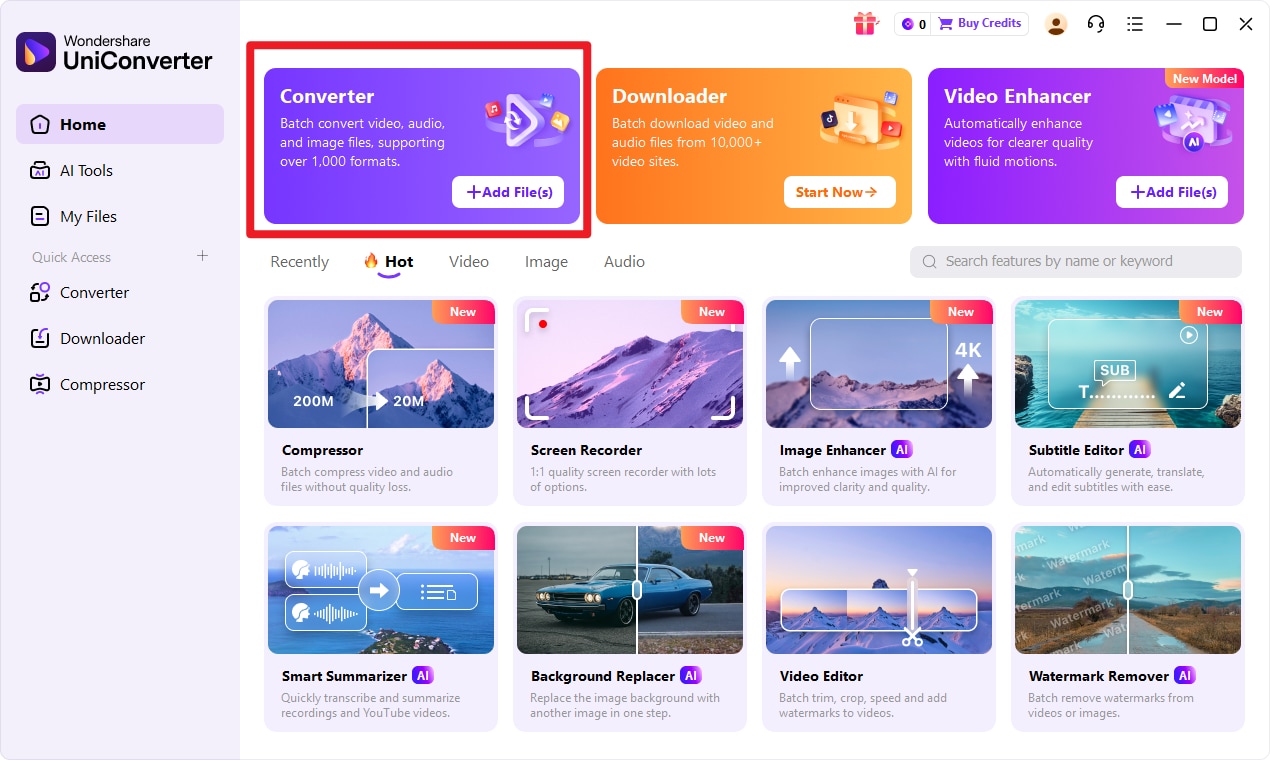
First, launch Wondershare UniConverter on your computer. From the main interface, select the Converter feature from the left-hand menu. You can now either drag and drop your WMV file directly into the program window or click the Add Files button to browse and select it from your computer.
Step 2: Choose Output Format
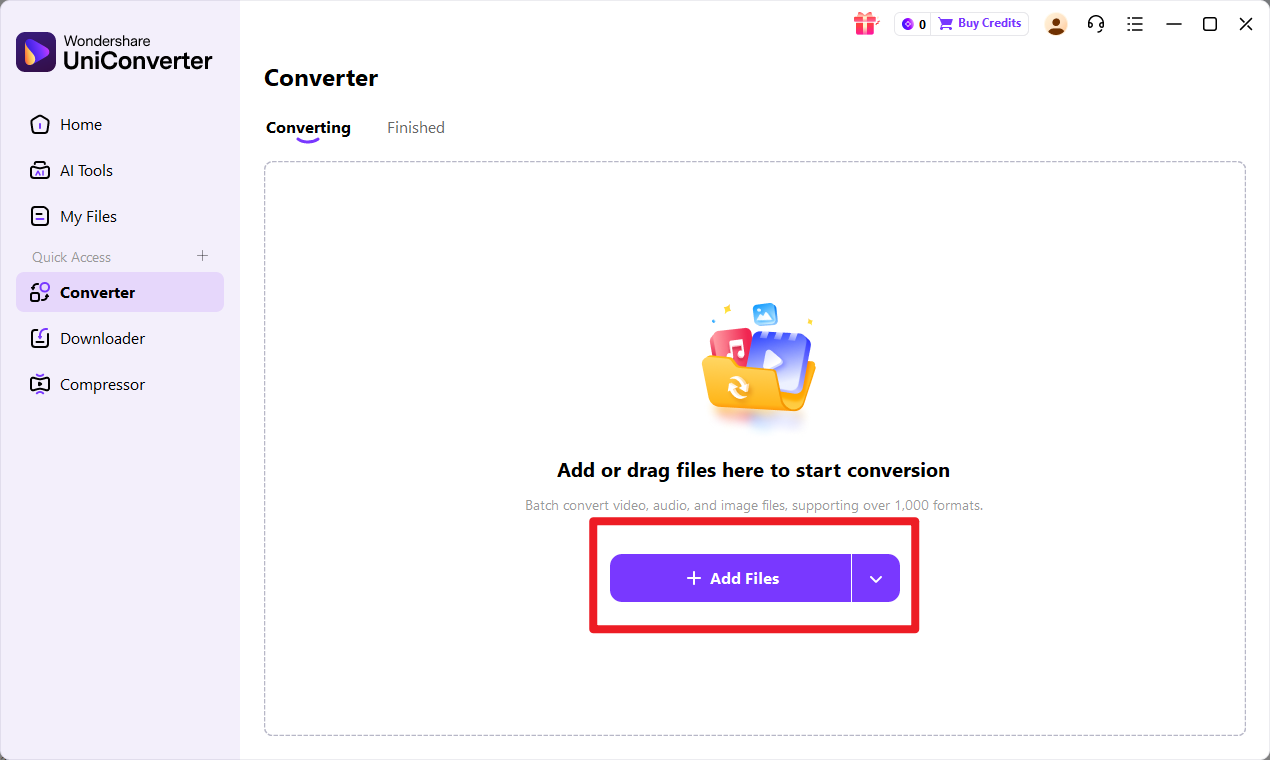
Next, you need to tell UniConverter what format you want to convert to. Click on the Output Format menu located at the bottom of the window. A new dialog box will appear. Go to the Video tab, select MP4 from the list of formats on the left, and then choose your desired resolution (such as "Same as source") on the right.
Step 3: Start the Conversion
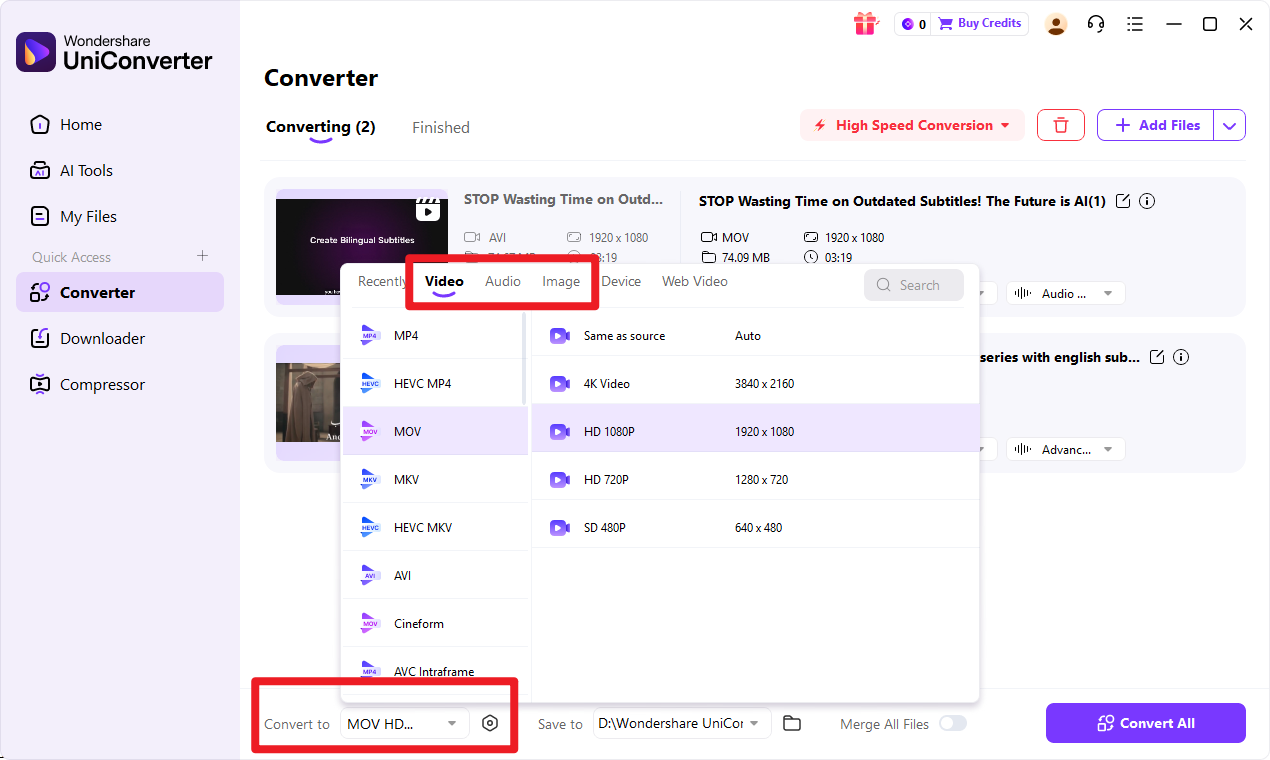
Before starting, you can specify where you want to save the new file. Use the File Location field at the bottom to choose a destination folder. Once you're ready, click the Convert button next to the file. If you have added multiple files, you can click the Start All button in the bottom-right corner to process them in a batch.
Step 4: Check Converted Files
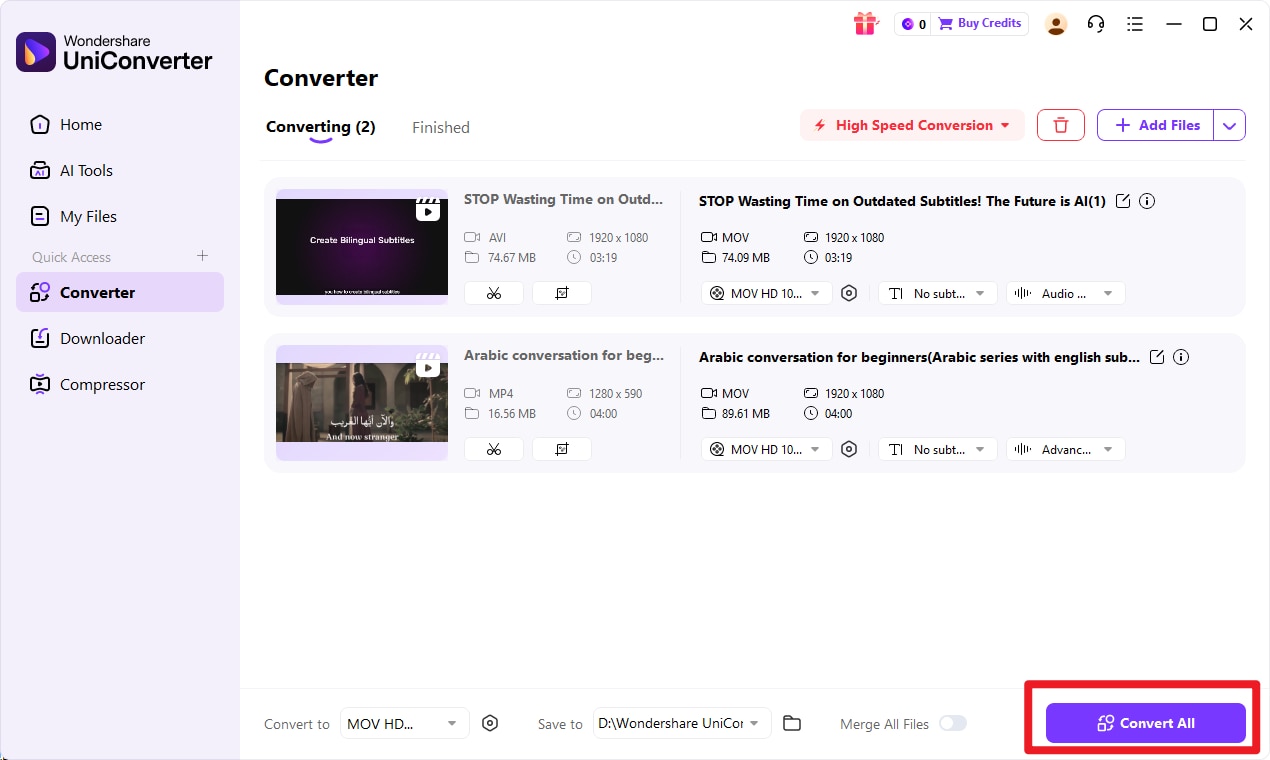
The conversion process is incredibly fast. Once it's finished, you can find your brand-new MP4 file by clicking on the Finished tab at the top of the window. From there, you can click the Open icon to go directly to the folder containing your converted video, ready to be played, shared, or uploaded anywhere.

Go Beyond Simple WMV to MP4 Conversion
Conclusion
While both WMV and MP4 are capable video formats, the verdict for 2026 is clear. MP4 stands out as the modern, universal standard due to its unmatched compatibility, highly efficient compression, and versatile nature as a container for various data streams. Its ability to play on any device makes it the undisputed choice for sharing, web content, and archiving.
For anyone still dealing with legacy WMV files that cause playback headaches, the most practical and future-proof solution is to convert them to MP4. A reliable and professional tool like Wondershare UniConverter makes this process effortless, ensuring your videos are free from the constraints of a single ecosystem and can be enjoyed anywhere, by anyone.
FAQs
-
1. Is WMV higher quality than MP4?
Not necessarily. Video quality is primarily determined by factors like bitrate, resolution, and the codec used during encoding, not just the container format. An MP4 file using a modern codec like H.264 can often offer better quality at a smaller file size compared to a similarly sized WMV file. -
2. Can I play a WMV file on a Mac?
You cannot play a WMV file on a Mac using the native QuickTime Player. To watch it, you would need to either install a third-party media player that supports the WMV format (like VLC Media Player) or, for a more permanent and compatible solution, convert the file to MP4 using a tool like UniConverter. -
3. Does converting WMV to MP4 reduce quality?
Any time you re-encode a video, there is a potential for some quality loss. However, if you use a professional converter like UniConverter and select a high-quality output setting (or "Same as source"), the conversion from WMV to MP4 can be done with virtually no perceptible loss in visual quality. -
4. Is WMV an obsolete format?
While not completely obsolete, its relevance has significantly declined. It is now considered a legacy format. Its use is largely confined to specific, older Windows-centric environments or workflows. For all new projects and general use, MP4 is the recommended standard.
