
Have you ever downloaded a video file only to find it won't play on your device? This common frustration often comes down to the file format. Two formats that frequently cause confusion are WMV and M4V. One is a staple of the Windows world, while the other is native to the Apple ecosystem. Understanding the WMV vs M4V debate is crucial for anyone who works with video, whether you're a content creator, a student, or just trying to watch a movie on your tablet.
Choosing the right format can impact everything from video quality and file size to whether the file will even open on your computer or phone. If you've ever wondered about the key differences between these two formats, which one is better for your needs, or how to solve compatibility issues, you've come to the right place. This guide will break down everything you need to know in simple, clear terms.
In this article
Part 1. What is WMV? What is M4V?
Before we dive into a detailed comparison, let's start with the basics. Understanding the origin and purpose of each format is the first step to mastering your media files.
What is WMV (Windows Media Video)?
WMV, which stands for Windows Media Video, is a video file format developed by Microsoft. As the name suggests, it was created to be an integral part of the Windows Media framework. For years, it was the standard format for video on Windows PCs, designed to work seamlessly with applications like Windows Media Player.
Its key characteristic is its strong compression, which allows it to create relatively small files, especially at lower bitrates. This made it a popular choice for streaming video over the internet in the early days of broadband. While newer formats have emerged, WMV remains a common format, particularly in corporate and Windows-centric environments.
What is M4V?
M4V is a video container format developed by Apple. It is very closely related to the universally popular MP4 format; in fact, they are structurally almost identical. The primary use for the M4V format is for videos distributed through the Apple iTunes Store, including movies, TV shows, and music videos. It's also the default format for videos recorded on Apple devices like iPhones and iPads.
A defining feature of M4V is its ability to support Apple's FairPlay DRM (Digital Rights Management) copy protection. This is why some M4V files purchased from iTunes can only be played on authorized Apple devices. However, if an M4V file is not DRM-protected, it can be played on a wide range of devices and platforms that support MP4.
Part 2. Quick Comparison Table
For a quick overview, here is a side-by-side comparison of the key features of WMV and M4V.
| Feature | WMV (Windows Media Video) | M4V |
| Developer | Microsoft | Apple |
| Compatibility | Native to Windows. Requires third-party software on Mac, iOS, and Android. | Native to Apple ecosystem. Widely compatible on other platforms if not DRM-protected. |
| Video Codecs | Windows Media Video codecs (e.g., WMV 9) | H.264, H.265 (HEVC), MPEG-4 |
| Audio Codecs | Windows Media Audio (WMA), MP3 | AAC, AC-3, MP3 |
| DRM Support | Can use Windows Media DRM (less common now). | Can use Apple's FairPlay DRM (common for iTunes content). |
| Typical Use Case | Video streaming on Windows systems, corporate presentations, archiving in a Windows environment. | iTunes movie purchases, iPhone/iPad video recordings, general use in the Apple ecosystem. |
Part 3. WMV vs M4V: Which One Is Better?
Now that we have a general idea, let's dig deeper into the practical differences. The "better" format truly depends on your specific needs regarding compatibility, quality, and file size.
Compatibility and Platform Support
This is often the most significant factor for users.
WMV: As a Microsoft creation, WMV files play flawlessly on any Windows PC right out of the box using Windows Media Player. However, the story is different on other platforms. On macOS, QuickTime Player cannot open WMV files natively. You would need to install a third-party player like VLC Media Player or convert the file. The same applies to mobile devices like iPhones, iPads, and Android phones.
M4V: M4V shines within the Apple ecosystem. It is the go-to format for iPhones, iPads, Macs, and Apple TV, ensuring seamless playback. For non-Apple devices, compatibility depends entirely on DRM. If an M4V file is DRM-free, it behaves almost exactly like an MP4 file, meaning it will play on most modern devices, including Windows PCs, Android phones, and smart TVs. If it is DRM-protected, playback is restricted to Apple devices authorized with the purchaser's Apple ID.
Verdict: For cross-platform compatibility, a DRM-free M4V is superior to WMV. For a purely Windows-based audience, WMV offers guaranteed native support.
Quality and Compression
Video quality is determined by the codec used for compression, not just the container format.
WMV: This format uses Microsoft's proprietary video codecs. While the quality is generally good and was once considered highly efficient, especially for streaming, it has been surpassed by more modern standards. Compared to newer codecs, WMV may require a higher bitrate (and thus a larger file size) to achieve the same level of visual quality.
M4V: M4V files typically use the H.264 (or AVC) video codec. H.264 is the current industry standard, renowned for its ability to deliver excellent video quality at relatively low bitrates. This means it can create smaller files than older codecs without a noticeable loss in quality. Newer M4V files may even use the even more efficient H.265 (HEVC) codec, especially for 4K content.
Verdict: M4V generally offers better quality for a given file size due to its use of more modern and efficient codecs like H.264.
File Size
Directly related to compression, file size is a critical consideration for storage and sharing.
Thanks to the more advanced compression algorithms used in M4V files (like H.264), they are often smaller than WMV files of comparable visual quality. For example, if you have a one-hour video, encoding it as an M4V with the H.264 codec will likely result in a smaller file than encoding it as a WMV with a similar quality setting. This makes M4V a more efficient choice for storing large video libraries or for sharing files online.
Verdict: M4V typically has the advantage, offering smaller file sizes for the same level of quality.
DRM Protection
Digital Rights Management is a key differentiator between the two formats.
WMV: This format can incorporate Windows Media DRM. This technology was used to protect content sold through online stores in the past, but its use has declined significantly. It is rare to encounter a new DRM-protected WMV file in 2026.
M4V: This format is famously associated with Apple's FairPlay DRM. Any movie or TV show you purchase and download from the iTunes Store is an M4V file protected by FairPlay. This DRM locks the content to your Apple ID, preventing unauthorized copying and playback. This is the main reason why you can't simply share an iTunes movie with a friend or play it on a non-Apple device.
Verdict: M4V is much more likely to be restricted by DRM. This is a major disadvantage if you value flexibility but is a core feature for content distributors like Apple.
Part 4. Use Cases for WMV and M4V
So, when should you actively choose one format over the other?
When to Use WMV
Despite its age, WMV still has its place in certain scenarios:
Windows-Centric Environments: If you are creating a video presentation for a company that exclusively uses Windows PCs, using WMV ensures that everyone can play it without needing to install extra software.
Working with Windows Media Tools: If your workflow involves legacy Windows software like Windows Movie Maker or other tools within the Windows Media framework, sticking with WMV can prevent compatibility headaches.
Streaming on Older Systems: For streaming video to older Windows-based hardware that may not support modern codecs, WMV can be a reliable option.
When to Use M4V
M4V is the more modern and versatile choice for most situations today:
The Apple Ecosystem: If you are creating, editing, or watching videos on an iPhone, iPad, Mac, or Apple TV, M4V is the native and optimal format.
High-Quality, Compatible Video: For exporting a final video project, a DRM-free M4V file (using the H.264 codec) is an excellent choice. It offers a fantastic balance of quality, file size, and broad compatibility, essentially functioning as a universal MP4.
Managing a Digital Library in iTunes/Apple TV App: If you use iTunes or the Apple TV app to organize your media, M4V is the preferred format as it supports features like chapters, subtitles, and metadata that the application recognizes.
Part 5. Step-by-Step Guide to Convert WMV to M4V Using UniConverter
If you're struggling with a WMV file that won't play on your Apple device or an M4V file that's not working on your PC, the simplest solution is to convert it. Wondershare UniConverter is a powerful and easy-to-use tool that handles this task perfectly. It supports over 1,000 formats and makes converting WMV to M4V (or vice versa) a breeze.
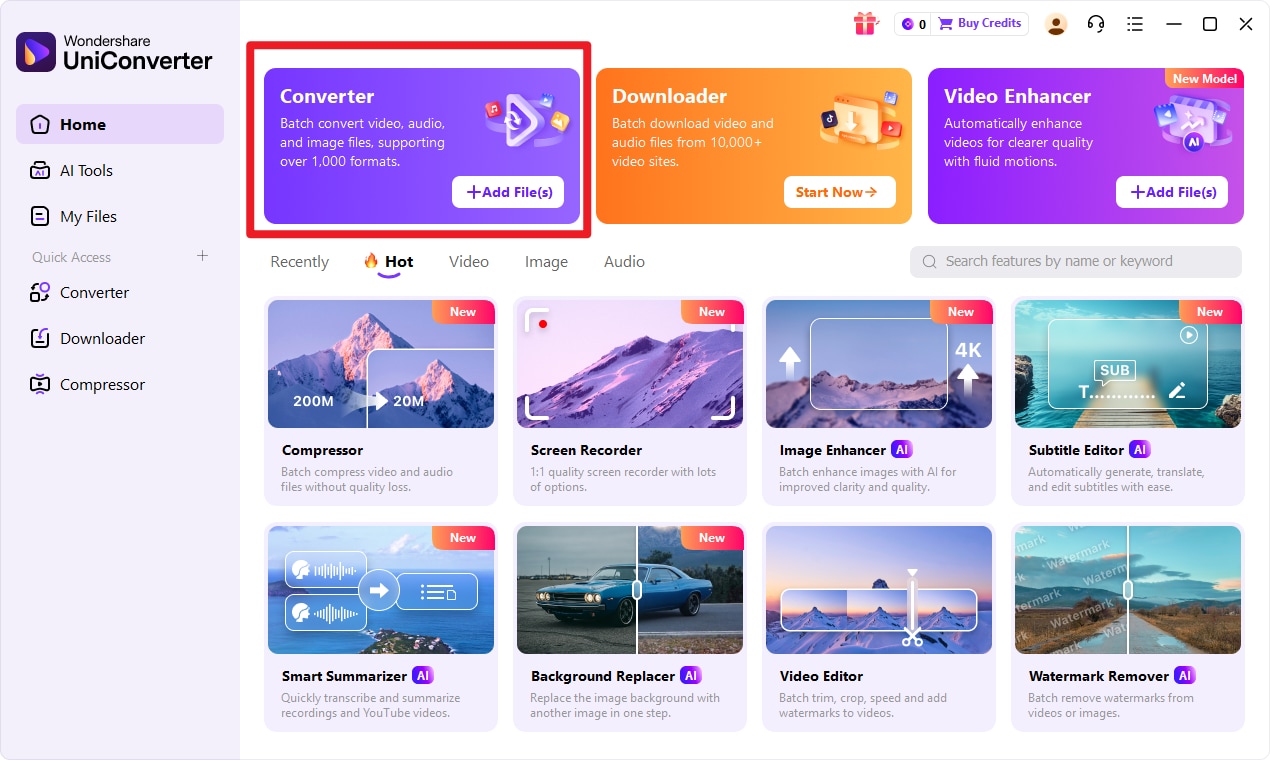
Step 1: Choose Converter in UniConverter
Launch Wondershare UniConverter on your computer. On the main screen, select the Converter tab from the left-side menu.
Step 2: Add Files to UniConverter
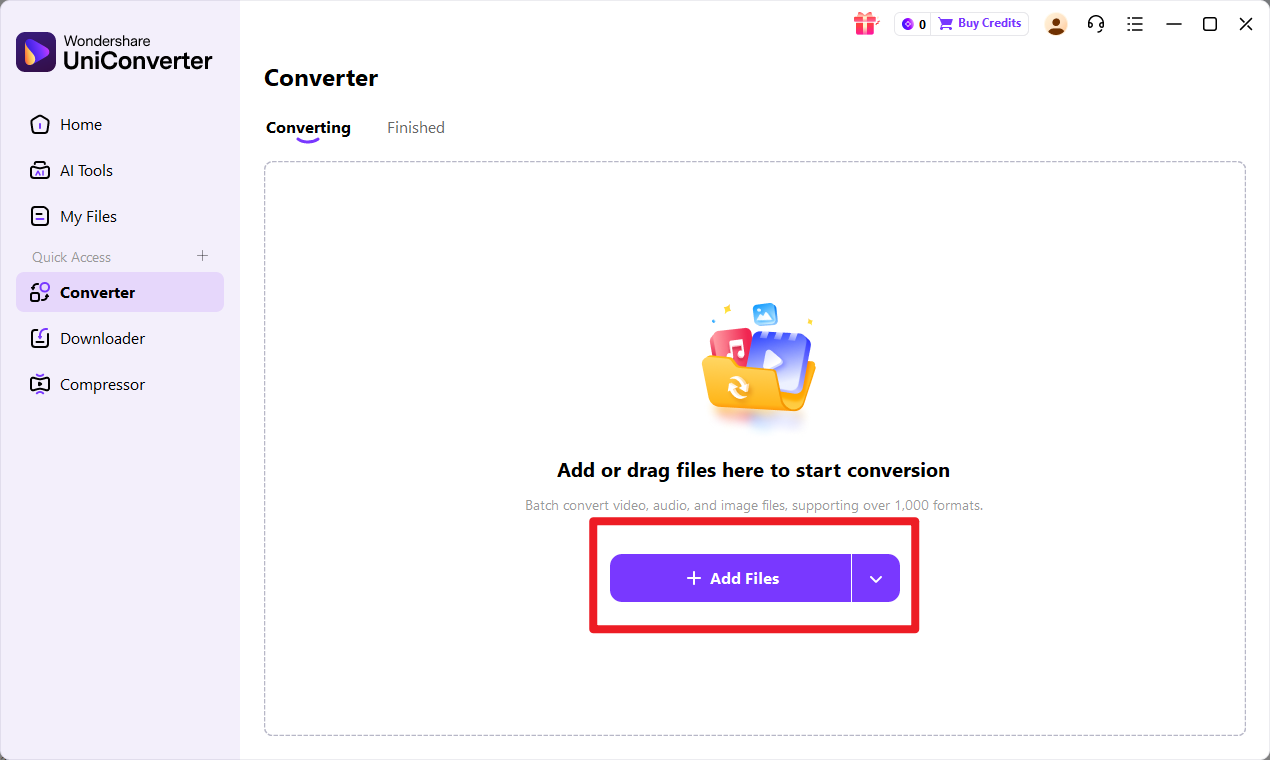
You can either click the "Add Files" button to browse and import your input format files or simply drag and drop them directly into the program window.
Step 3: Choose Output Format
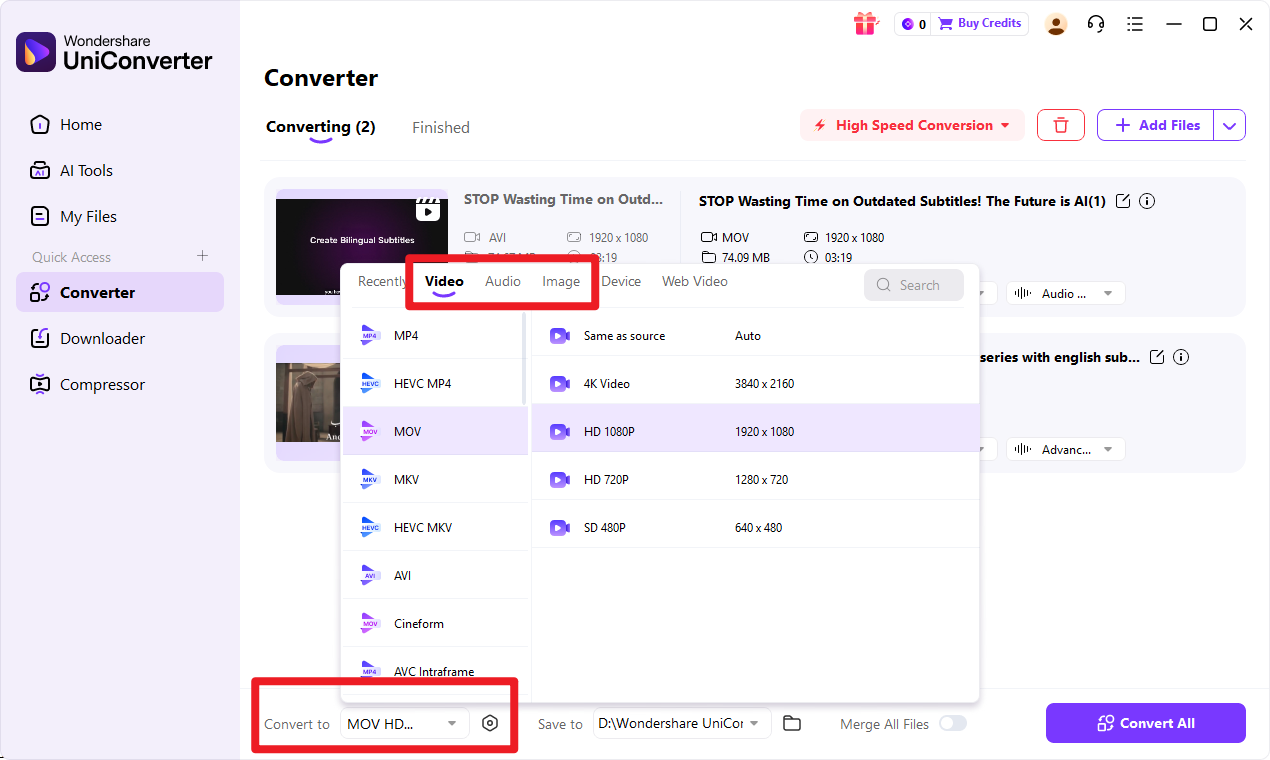
Click on the "Output Format" menu located at the bottom of the window. Navigate to the "Video" tab, select your desired target format from the list on the left, and then choose a resolution on the right.
Step 4: Start the Conversion
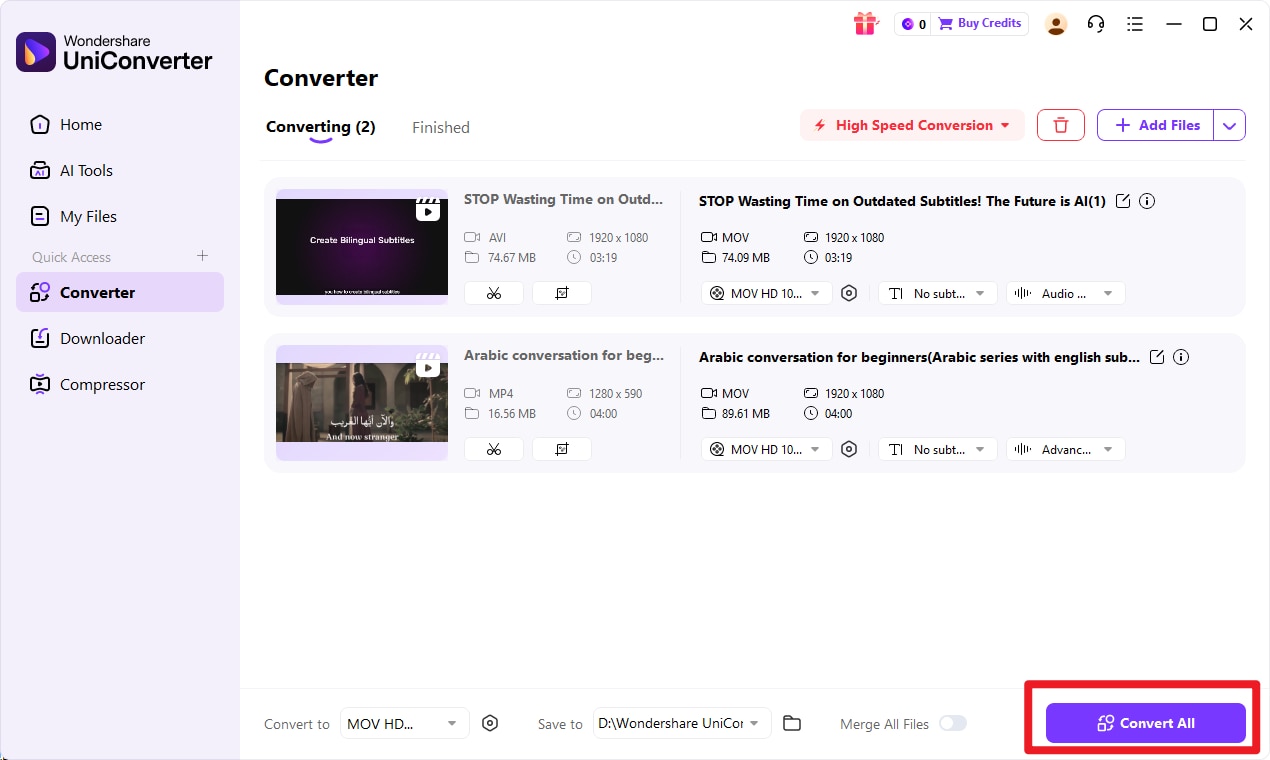
Choose a destination folder for your converted file under "File Location". Finally, click the "Start All" button to begin the fast and high-quality conversion process.

Go Beyond Simple Video Conversion
Conclusion
To wrap up the Wondershare UniConverter debate, the choice between them comes down to a trade-off between legacy support and modern versatility. WMV is a Microsoft-native format that guarantees playback in Windows environments but struggles elsewhere. M4V is an Apple-developed format that is perfect for its ecosystem and, when free of DRM, acts as a universally compatible MP4 file, offering a superior balance of quality and file size.
For most modern applications in 2026, from video sharing to personal archiving, M4V is the better choice due to its efficient compression and broader cross-platform potential (assuming no DRM). WMV's relevance is now largely confined to specific, Windows-centric workflows.
Ultimately, format incompatibility should never be a barrier. If you find yourself with a file your device can't handle, the most reliable solution is to use a flexible video converter. We highly recommend Wondershare UniConverter for its speed, simplicity, and comprehensive support for virtually any format you might encounter.
FAQs
-
1. Is M4V the same as MP4?
They are structurally almost identical. The main differences are that M4V was developed by Apple and can optionally contain Apple's FairPlay DRM. You can often change the file extension from .m4v to .mp4 and it will still play if it is not DRM-protected. However, M4V files may also contain specific features like chapter information that are better recognized by Apple software. -
2. Can I play WMV files on a Mac?
Not natively with QuickTime Player. To play a WMV file on a Mac, you have two main options: use a third-party media player like VLC Media Player, which supports a wide range of formats, or convert the WMV file to a Mac-compatible format like M4V or MP4 using a tool like UniConverter. -
3. Why can't I play my downloaded M4V file?
The most likely reason is that the file is protected by Apple's FairPlay DRM. This is common for movies or TV shows purchased from the iTunes Store. These protected files can only be played on devices (like a Mac, iPhone, or PC with iTunes) that have been authorized with the Apple ID used to make the purchase. -
4. Which format is better for YouTube, WMV or M4V?
While YouTube accepts both formats for uploads, its official recommendation is the MP4 container with the H.264 video codec and AAC audio codec. Since a standard, DRM-free M4V file uses this exact combination, it is generally a better and more optimized choice for uploading to YouTube than a WMV file. This will likely result in faster processing and better final quality on the platform.
