
Navigating the world of video formats can often feel like deciphering a complex code. You might encounter files like WMV and M2TS and wonder which one is better suited for your needs. Whether you're a content creator aiming for the best quality, a video enthusiast archiving your Blu-ray collection, or simply trying to play a file on your device, understanding the differences between these formats is crucial. The choice between WMV vs M2TS often comes down to a trade-off between video quality, file size, and device compatibility. This guide will demystify these two formats, providing a clear comparison to help you make an informed decision.
In this article, we will cover:
- The fundamental definitions of WMV and M2TS files.
- A quick comparison table highlighting their key differences.
- An in-depth analysis of quality, file size, and compatibility.
- Practical use cases for both WMV and M2TS.
- A step-by-step guide on how to convert between these formats.
Part 1. What is a WMV file? What is an M2TS file?
Before we dive into a direct comparison, it's essential to understand what each file format is and what it was designed for. Their origins and primary purposes are the root of their distinct characteristics.
What is a WMV file?
WMV stands for Windows Media Video. As the name suggests, it is a video compression format developed by Microsoft as part of its Windows Media framework. Initially designed to compete with RealVideo for online streaming, WMV quickly became known for its excellent compression capabilities. It can significantly reduce file size while maintaining a respectable level of video quality, making it an ideal choice for web distribution, email attachments, and online video platforms.
WMV files are typically encapsulated within the Advanced Systems Format (ASF) container, which can also hold audio data compressed with the Windows Media Audio (WMA) codec. One notable feature of the WMV format is its ability to incorporate Digital Rights Management (DRM), a technology used by content owners to control the distribution and use of their media.
What is an M2TS file?
M2TS, which stands for MPEG-2 Transport Stream, is a container format primarily used for high-definition video. It is the standard format found on Blu-ray Discs and in recordings from high-end AVCHD camcorders. The "Transport Stream" designation means it's designed to multiplex multiple video, audio, and subtitle streams into a single file, ensuring smooth playback of complex media.
The primary goal of the M2TS format is to preserve the highest possible video and audio quality. It often contains video encoded with codecs like H.264/MPEG-4 AVC or VC-1 and audio in formats such as Dolby Digital (AC-3) or DTS. Because it prioritizes quality over compression, M2TS files are typically very large, capturing the rich, detailed data straight from the source.
Part 2. Quick Comparison Table
For a quick overview, here is a table that summarizes the main differences between the WMV and M2TS formats. This at-a-glance comparison can help you quickly identify which format aligns with your immediate needs.
| Feature | WMV | M2TS |
| Developer | Microsoft | MPEG (Moving Picture Experts Group) |
| Primary Use | Web streaming, online video, Windows media playback | Blu-ray Discs, AVCHD camcorders |
| Video Quality | Good to high, but typically more compressed | Very high to lossless, preserving source quality |
| File Size | Relatively small | Very large |
| Compatibility | Excellent on Windows, widely supported by software players | Limited, requires specific players or codecs, native to Blu-ray players |
Part 3. WMV vs M2TS: Which One Is Better?
Determining whether WMV or M2TS is "better" depends entirely on your specific goals. One format excels in efficiency and compatibility, while the other is the undisputed champion of quality. Let's break down their performance in three key areas.
Quality Comparison
When it comes to pure, unadulterated quality, M2TS is the clear winner. M2TS files are often direct digital copies (rips) from Blu-ray discs, which are the gold standard for consumer high-definition media. They use minimal compression and high bitrates to preserve every detail of the original video and audio. This means you get the full cinematic experience, with crisp visuals and rich, multi-channel sound, just as the director intended.
WMV, on the other hand, is built around compression. While it's possible to create a high-bitrate WMV file that looks excellent, it will almost always involve some degree of quality loss compared to the original source. The compression algorithms are designed to discard data that the human eye is less likely to notice, which is an effective way to reduce file size. However, for archivists and videophiles who demand pixel-perfect replication, the slight degradation in a WMV file can be a deal-breaker. For maximum fidelity, M2TS is unmatched.
File Size Comparison
The roles are reversed when we look at file size. WMV's greatest strength is its efficiency. Thanks to its advanced compression algorithms, a WMV file can be a fraction of the size of an M2TS file containing the same video content. A 90-minute movie in WMV format might only be 1-2 GB, whereas the same movie in M2TS format could easily exceed 20-30 GB.
This significant difference in size makes WMV the practical choice for a wide range of applications. If you need to upload a video to a website, share it with a colleague via a cloud service, or simply save storage space on your hard drive, WMV is far more manageable. The large size of M2TS files makes them cumbersome to store, transfer, and share, limiting their use to local playback and archival purposes where storage capacity is not a concern.
Compatibility and Playback
Compatibility is another area where WMV holds a distinct advantage. As a Microsoft product, WMV is natively supported across the entire Windows ecosystem. Windows Media Player can play WMV files out of the box, and they are widely supported by most third-party media players and video editing software on both Windows and macOS. This broad support makes WMV a reliable and hassle-free format for general use.
M2TS, conversely, has very limited native support. Most default media players, including Windows Media Player and Apple's QuickTime, cannot open M2TS files without the installation of special codecs or plugins. While robust media players like VLC can handle M2TS playback, performance can sometimes be choppy on less powerful computers due to the high data rates. Furthermore, many video editing programs and mobile devices do not recognize the M2TS format at all, making it necessary to convert the file before it can be used or viewed on the go.
Part 4. Use Cases for WMV and M2TS
Understanding the strengths and weaknesses of each format helps clarify when to use them. Here are some common scenarios for both WMV and M2TS.
When to Use WMV
WMV is the go-to format when efficiency and compatibility are your top priorities. Consider using WMV in the following situations:
- Sharing Videos Online: If you need to upload a video to a website, a social media platform, or a streaming service, WMV's smaller file size allows for faster uploads and smoother streaming for viewers with slower internet connections.
- Emailing Video Files: Most email services have strict attachment size limits. Compressing a video into the WMV format makes it small enough to be sent directly via email.
- General Playback: For creating videos intended for a broad audience, especially those using Windows computers, WMV ensures that most users can play the file without needing to install additional software.
- Saving Storage Space: If you have a large video library and are running low on disk space, converting your files to WMV can help you store more content in the same amount of space.
When to Use M2TS
M2TS is the format of choice when quality is non-negotiable and you have the hardware to support it. You should use M2TS for:
- Archiving Blu-ray Discs: If you want to create a digital backup of your Blu-ray movie collection, ripping them to M2TS files preserves the original, pristine video and audio quality, including surround sound tracks.
- High-Quality Home Theater Playback: For viewing on a large-screen TV with a dedicated home theater system, M2TS files deliver the best possible audiovisual experience, far surpassing what typical streaming services offer.
- Professional Video Editing: When M2TS files are the source footage from an AVCHD camcorder, it's best to edit them in their native format (if your software supports it) to avoid any generational quality loss before exporting the final product.
- Quality-First Projects: In any scenario where preserving the absolute highest fidelity is the primary goal, and factors like file size and ease of sharing are secondary, M2TS is the superior format.
Part 5. Step-by-Step Guide to Convert Between Formats Using UniConverter
Whether you need to convert a large M2TS file to a more manageable WMV or upscale a WMV for a high-quality presentation, a reliable video converter is essential. Wondershare UniConverter stands out as a comprehensive and user-friendly solution. It supports over 1,000 formats, including WMV and M2TS, and offers GPU-accelerated conversions that are incredibly fast without sacrificing quality. Its intuitive interface makes it easy for anyone to convert files in just a few clicks.
Follow this guide to convert your video files effortlessly.
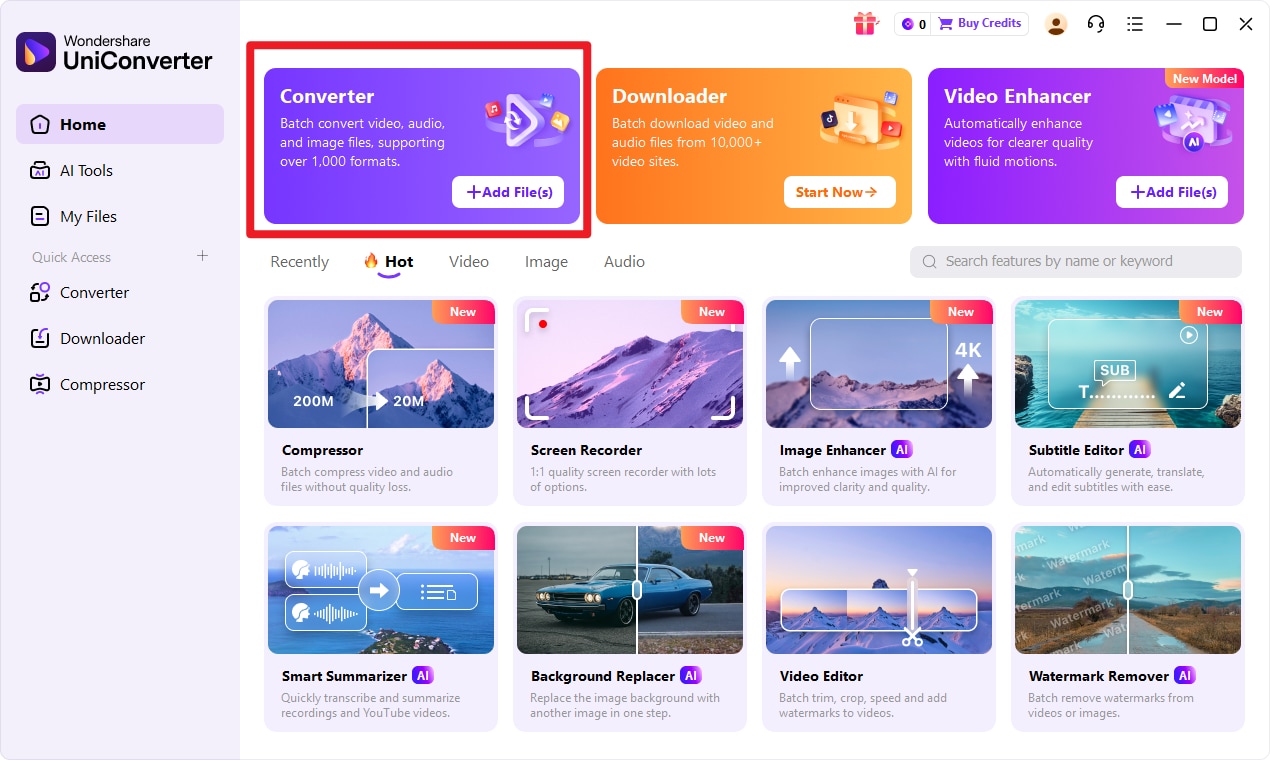
Step 1. Choose Converter in UniConverter
Launch Wondershare UniConverter on your computer. From the home screen, navigate to the left-side panel and click on the Converter tool to open the conversion interface.
Step 2. Add Files to UniConverter
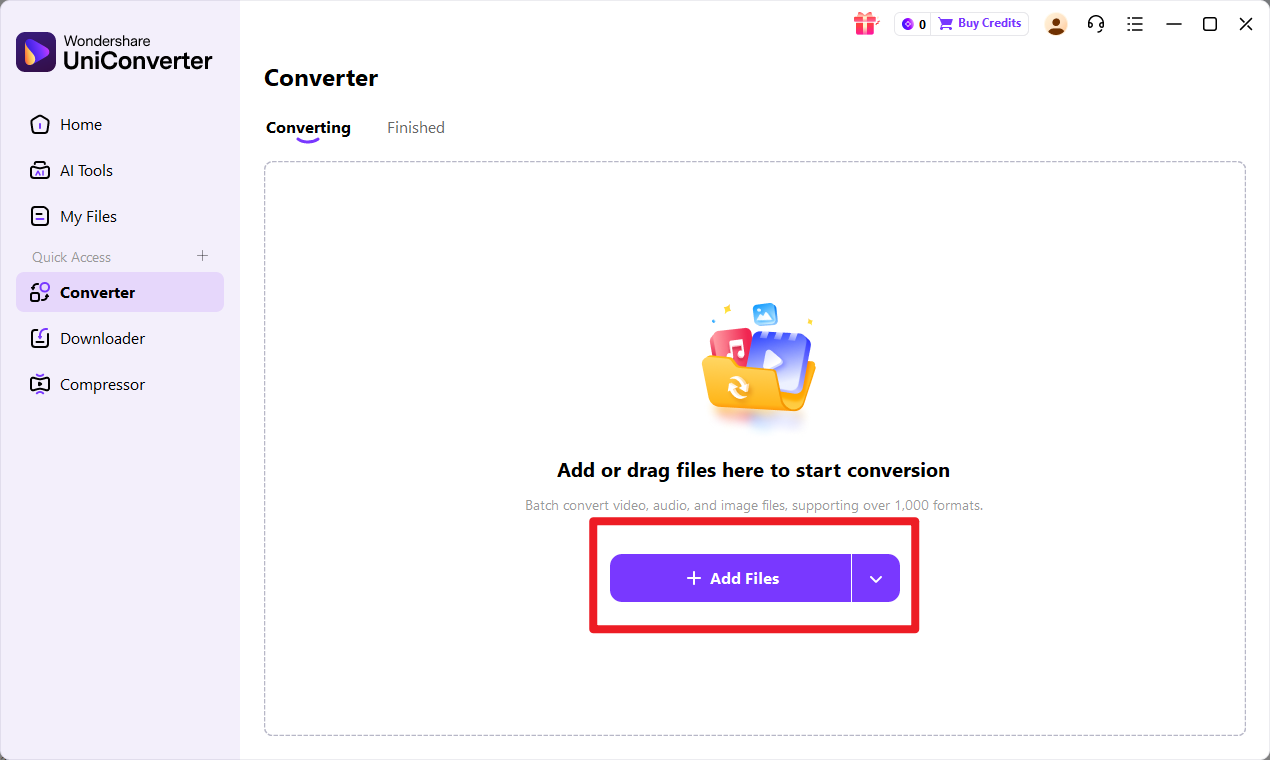
You can now import your video files. Click the Add Files button in the center or top-left corner to browse and select your input format files. Alternatively, you can simply drag and drop the files directly into the program window. UniConverter supports batch conversion, so feel free to add multiple files at once.
Step 3. Choose Output Format
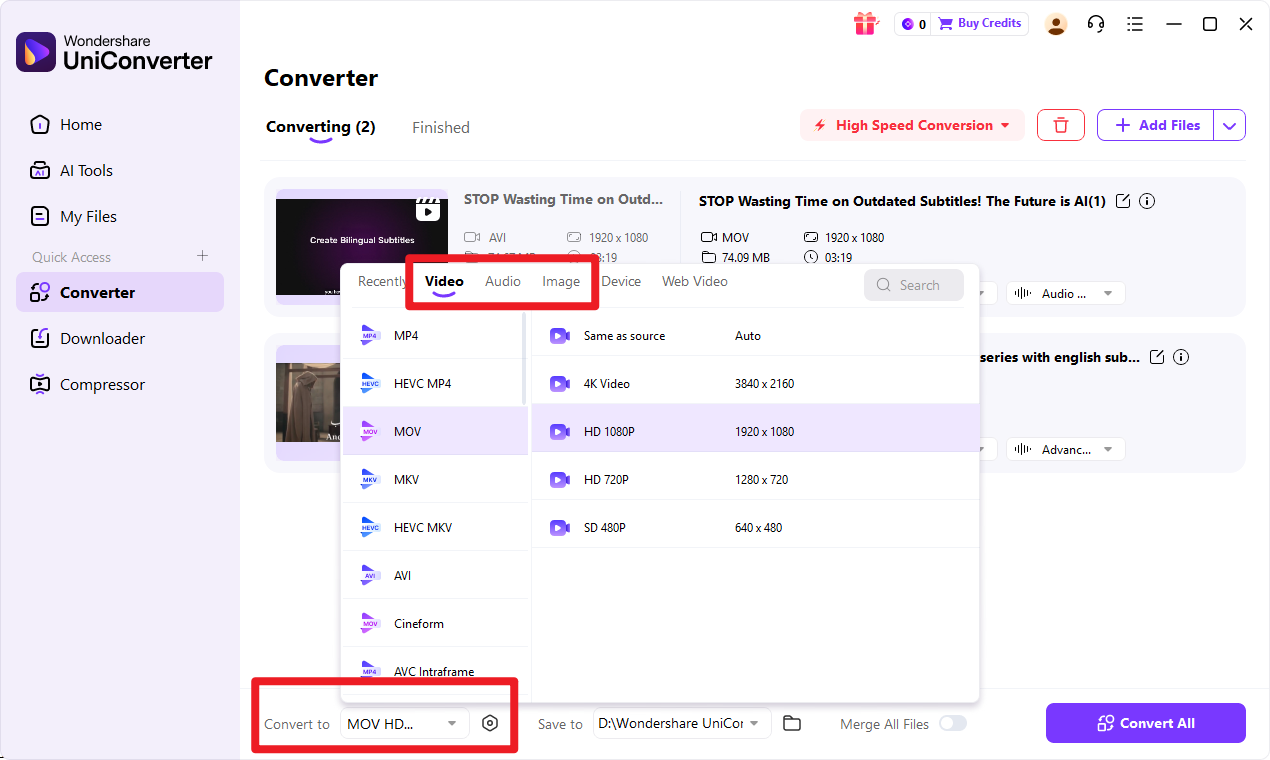
At the bottom of the window, click on the Output Format dropdown menu. This will open a new window with a list of supported formats. Select the Video tab, choose your desired target format from the list on the left, and then pick a resolution from the options on the right. You can choose to keep the original resolution or select a different one.
Step 4. Start the Conversion
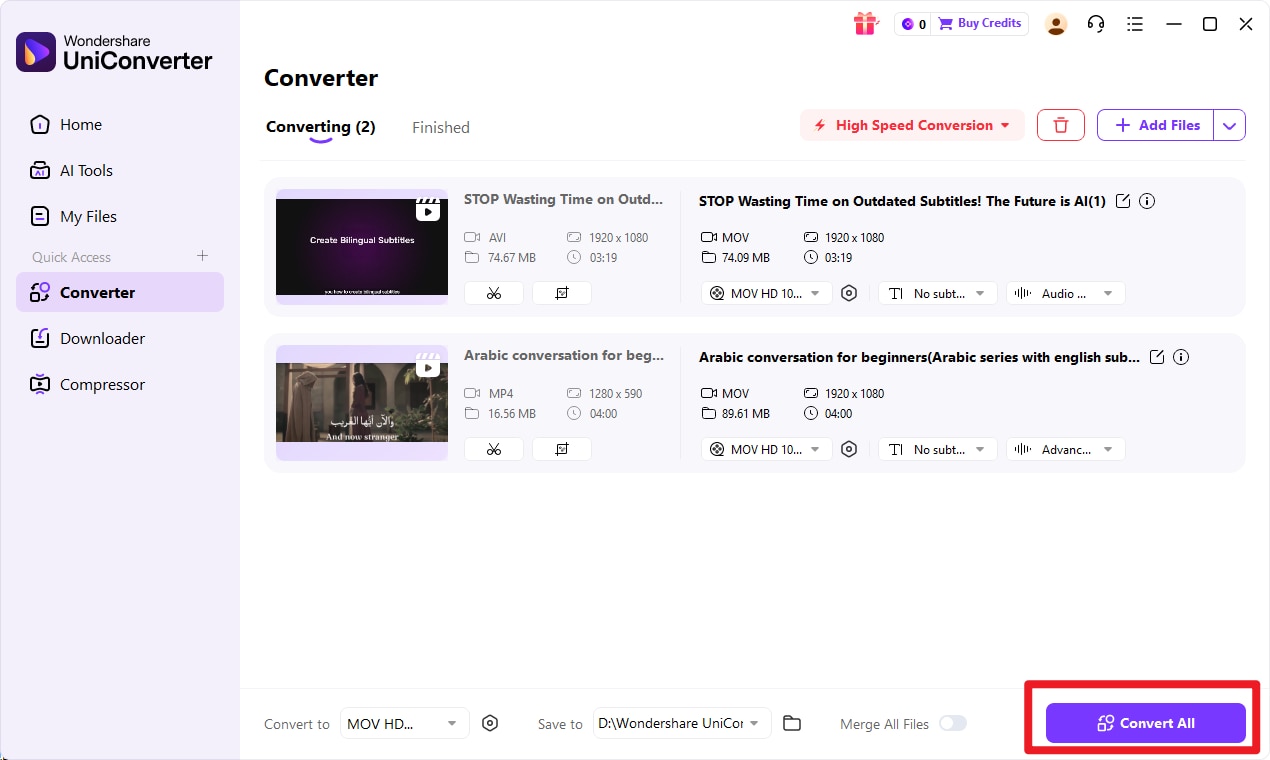
Before starting, you can specify where to save the converted files by clicking the File Location field at the bottom. Once you are ready, click the Convert button next to a single file or the Start All button in the bottom-right corner to begin the batch conversion process. Your files will be converted quickly and saved to your chosen destination.

Go Beyond Simple Video Conversion
Conclusion
The debate between WMV vs M2TS is not about which format is universally better, but which is right for a specific task. If your priority is creating a compact, easily shareable, and highly compatible video for web use or general playback, WMV is the clear and logical choice. Its efficient compression makes it ideal for managing storage and ensuring smooth online distribution. Conversely, if your goal is to preserve the absolute highest video and audio fidelity from a source like a Blu-ray disc for archival or home theater viewing, the uncompressed quality of M2TS is unparalleled.
Ultimately, you don't have to be locked into one format. For situations that demand flexibility—such as converting a large M2TS archive into a portable WMV file for your phone—a powerful tool is indispensable. With a reliable program like UniConverter, you can effortlessly bridge the gap between these formats, ensuring your media is always in the perfect format for any situation.
FAQs
-
1. Is M2TS higher quality than WMV?
Yes, M2TS files generally offer significantly higher quality than WMV files. This is because M2TS is designed to store high-bitrate video and audio with minimal compression, often sourced directly from high-definition Blu-ray discs. WMV, while capable of good quality, is a compressed format that prioritizes smaller file sizes, which inherently involves some loss of data. -
2. Can I play an M2TS file on Windows Media Player?
Natively, Windows Media Player does not support the M2TS format. To play an M2TS file, you would need to either install a third-party codec pack that adds support for it or use a more versatile media player. Modern media applications like VLC Media Player or the built-in player in Wondershare UniConverter can handle M2TS files without any extra installations. -
3. Why are M2TS files so large?
M2TS files are very large because they are designed to contain a vast amount of data to maintain the highest possible quality. They often include multiple high-bitrate video streams (like H.264/AVC), uncompressed or losslessly compressed multi-channel audio tracks (like LPCM, Dolby TrueHD, or DTS-HD Master Audio), and subtitle streams. This commitment to quality comes at the cost of disk space. -
4. How can I convert WMV to M2TS?
The most reliable way to convert WMV to M2TS, or vice versa, is by using a dedicated video converter software. A professional tool like UniConverter simplifies this process. You can import your WMV file, select M2TS as the output format, adjust settings like resolution and bitrate if needed, and start the conversion. The software handles the complex encoding process, providing you with a high-quality M2TS file.
