
Have you ever stumbled upon an old video file with a .wmv or .flv extension and wondered what to do with it? In the ever-evolving landscape of digital media, these two formats represent different eras of video technology. Understanding the WMV vs FLV debate is crucial for anyone managing legacy video archives, developing web content, or simply trying to play an old file on a modern device. While one was a staple of the Windows ecosystem, the other powered the internet's video revolution through Flash. But in 2026, which one holds up, and more importantly, what is the best way to handle them?
This comprehensive guide will break down the key differences between WMV and FLV, exploring their history, technical specifications, and practical use cases. We'll analyze their respective strengths and weaknesses in quality, file size, and compatibility. By the end, you'll not only understand which format was better for its intended purpose but also discover the most effective solution for converting these files for seamless playback on any platform today.
In this article:
Part 1. What is a WMV File? What is an FLV File?
To understand the comparison, we first need to know the identity of each format. Both WMV and FLV were created by tech giants to solve specific problems related to video delivery and playback, but their paths and relevance have diverged significantly over time.
What is a WMV File?
WMV stands for Windows Media Video. Developed by Microsoft, it was designed to be the primary video format for the Windows Media framework. Its main purpose was to enable video streaming and playback on Windows-based computers and devices. WMV files are known for their strong compression capabilities, which allow them to store high-quality video in relatively small file sizes, making them suitable for both online streaming and offline storage.
One of the defining features of the WMV format is its integration with Digital Rights Management (DRM) technology. This allowed content creators and distributors to protect their videos from unauthorized copying and distribution, a feature that made it popular in professional and commercial environments. While native to Windows, playing WMV files on other operating systems like macOS or Linux often requires installing additional codecs or using a versatile media player.
What is an FLV File?
FLV stands for Flash Video. Developed by Adobe Systems (originally by Macromedia), this format was the undisputed king of web video for over a decade. It was created specifically for delivering video content over the internet using the Adobe Flash Player plugin. If you watched videos on YouTube, Vimeo, or countless other websites in the mid-2000s, you were almost certainly watching an FLV file.
The primary advantage of FLV was its ability to offer very high compression ratios, resulting in extremely small file sizes that were perfect for streaming over slow internet connections. However, its reliance on the Flash Player plugin ultimately led to its downfall. As web standards shifted towards HTML5 and mobile devices like the iPhone refused to support Flash due to security and performance concerns, the use of FLV plummeted. Today, FLV is considered an obsolete format, and modern web browsers no longer support the Flash Player required to play it.
Part 2. Quick Comparison Table
For a quick overview, here is a side-by-side comparison of the key attributes of WMV and FLV files. This table highlights their core differences at a glance.
| Feature | WMV | FLV |
| Developer | Microsoft | Adobe Systems |
| Compression | Lossy (using various WMV codecs) | Lossy (using Sorenson Spark, VP6 codecs) |
| Quality | Generally good to high quality, suitable for various uses | Variable, heavily optimized for web streaming, often lower quality |
| File Size | Relatively small with good compression efficiency | Very small, designed for fast loading on the web |
| Compatibility | Native to Windows; requires third-party codecs or players on other platforms (macOS, Linux) | Requires the now-obsolete Adobe Flash Player; not supported by modern browsers or mobile devices |
| Primary Use | Streaming and playback within the Windows ecosystem | Web video streaming during the Flash era |
| DRM Support | Strong, built-in Digital Rights Management capabilities | Supported, but less robust than WMV's implementation |
| Current Status | Still in use, but largely superseded by more universal formats like MP4 | Obsolete; not recommended for any new content creation |
Part 3. WMV vs FLV: Which One Is Better?
Declaring one format "better" than the other depends entirely on the context and the user's goal. FLV was undeniably better for its specific purpose—web streaming in the 2000s—while WMV offered higher quality for a different ecosystem. Let's break down their differences in more detail.
Quality Comparison
When it comes to pure video quality, WMV generally has the upper hand. The codecs used for WMV were designed to balance compression with quality retention, making it a suitable format for everything from standard-definition web streams to high-definition local playback. It can preserve more detail and produce a sharper image compared to FLV, which was engineered with a "web-first" mentality.
FLV, on the other hand, prioritized small file sizes and fast loading times above all else. Its codecs, like Sorenson Spark and VP6, were aggressive in their compression, which often resulted in visible artifacts and a softer image. While this was an acceptable trade-off for small video players on websites with limited bandwidth, the quality is noticeably inferior when viewed on larger, high-resolution screens today.
Winner for Quality: WMV
File Size and Compression
This is where FLV historically shined. Its entire reason for existence was to create the smallest possible video files for the web. The high compression ratio of FLV made it the go-to format for web developers who needed videos to load quickly and stream smoothly, even on dial-up connections.
WMV also boasts efficient compression, often achieving smaller file sizes than older formats like AVI without a drastic loss in quality. However, it typically couldn't match the extreme compression levels of FLV. For a video of the same length and resolution, an FLV file was almost always smaller than a WMV file. This efficiency, however, came at the cost of the quality mentioned above.
Winner for File Size: FLV
Compatibility and Support
In the modern, multi-platform world of 2026, both WMV and FLV face significant compatibility challenges.
WMV's support is heavily tied to the Windows ecosystem. It plays natively and flawlessly on any Windows PC with Windows Media Player. However, take it outside of that environment, and problems arise. macOS, iOS, and Android devices do not support WMV out of the box. Users need to install a third-party media player like VLC or convert the file to a more universal format.
FLV's compatibility is even more dire. Its playback was entirely dependent on the Adobe Flash Player, which has been officially discontinued and is blocked by all modern web browsers for security reasons. This means that FLV files are essentially unplayable on the web and on any modern device without first being converted. They are relics of a bygone internet era.
Given these limitations, the best approach for both formats is conversion. A universal format like MP4 is supported by virtually every device, platform, and software available today. To bridge these compatibility gaps, a reliable video converter is essential. Tools like Wondershare UniConverter excel at this, allowing you to effortlessly transform outdated WMV and FLV files into modern MP4s, ensuring they can be viewed anywhere, anytime.
Winner for Compatibility: Neither. Both are outdated, making conversion to MP4 the necessary solution.
Part 4. Use Cases for WMV and FLV
While neither format is recommended for creating new content today, they still appear in specific legacy contexts. Understanding when you might encounter them can help you decide on the best course of action.
When to Use WMV
Although largely replaced by MP4, there are a few niche scenarios where WMV might still be relevant:
- Windows-Centric Environments: In a corporate or educational setting that exclusively uses Windows PCs, WMV can still be a viable format for internal training videos or presentations, as it guarantees native playback without any extra software.
- Archiving on Windows Systems: If you are archiving large video libraries on a Windows-based server, keeping them in their original WMV format might be acceptable, especially if they are primarily accessed by other Windows users.
- Content with DRM: For older content that is protected with Windows Media DRM, you may need to work with the original WMV file to manage its rights.
For any other purpose, especially sharing or web distribution, converting WMV to MP4 is highly recommended.
When to Use FLV
The use cases for FLV in 2026 are extremely limited and almost entirely related to legacy content. You should not create new videos in the FLV format under any circumstances.
- Accessing Legacy Archives: You may encounter FLV files when accessing old websites, digital archives, or backups from the 2000s. Many early online video courses and tutorials were saved in this format.
- Preservation and Conversion: The primary "use" for an FLV file today is to convert it immediately. If you have important videos stored as FLV, the best practice is to convert them to a modern, future-proof format like MP4. This ensures the content remains accessible and isn't lost to technological obsolescence.
In short, if you have an FLV file, your first and only goal should be to convert it.
Part 5. Step-by-Step Guide to Convert WMV to FLV Using UniConverter
Whether you need to convert a WMV file for a specific legacy system or, more likely, convert your outdated WMV and FLV files to a universally compatible format like MP4, a powerful tool is required. Wondershare UniConverter is the premier all-in-one solution for this task. With support for over 1000 formats, a user-friendly interface, and lightning-fast conversion speeds, it makes handling any video file effortless.
How to Convert WMV to FLV (and 1000+ Other Formats)
Follow these simple steps to convert your video files using UniConverter. While this guide shows how to convert from one format to another, remember that converting to MP4 is the recommended choice for modern compatibility.
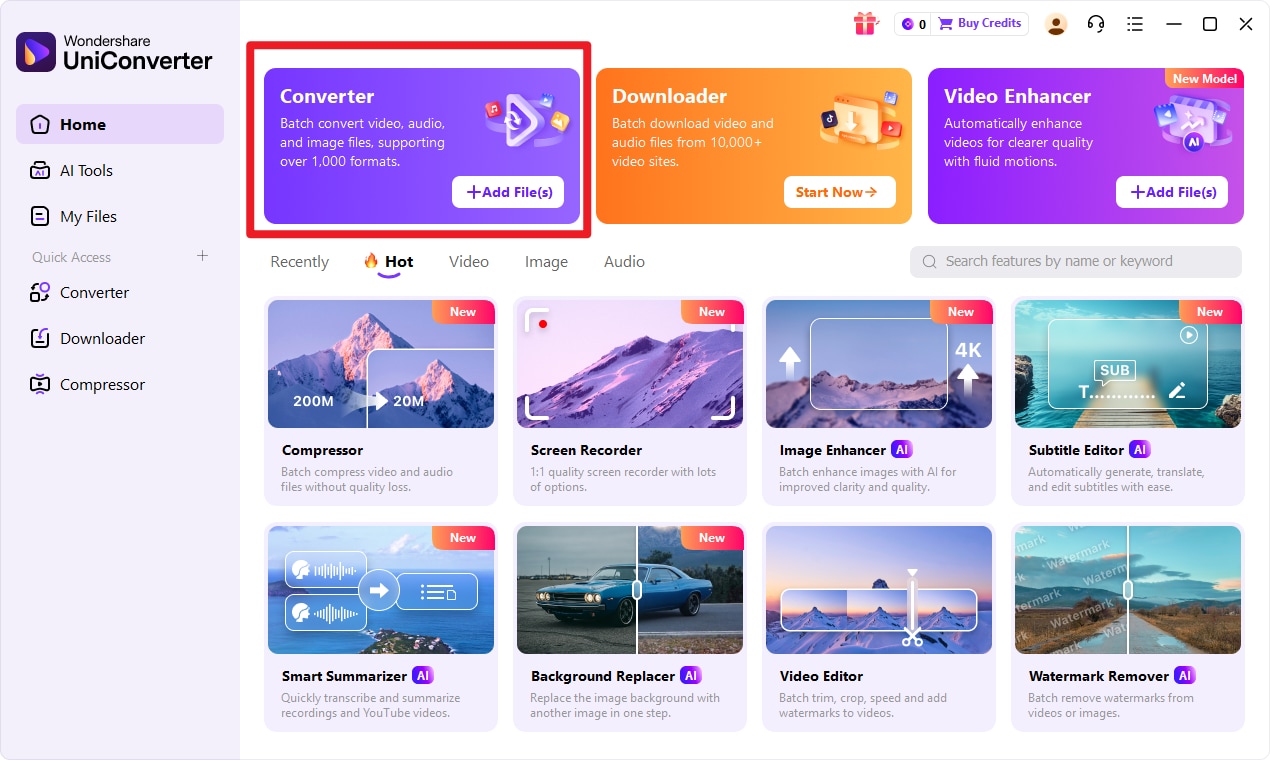
Step 1: Choose Converter in UniConverter
Launch Wondershare UniConverter on your computer. On the left-hand menu, click on the Converter tool to open the main conversion interface.
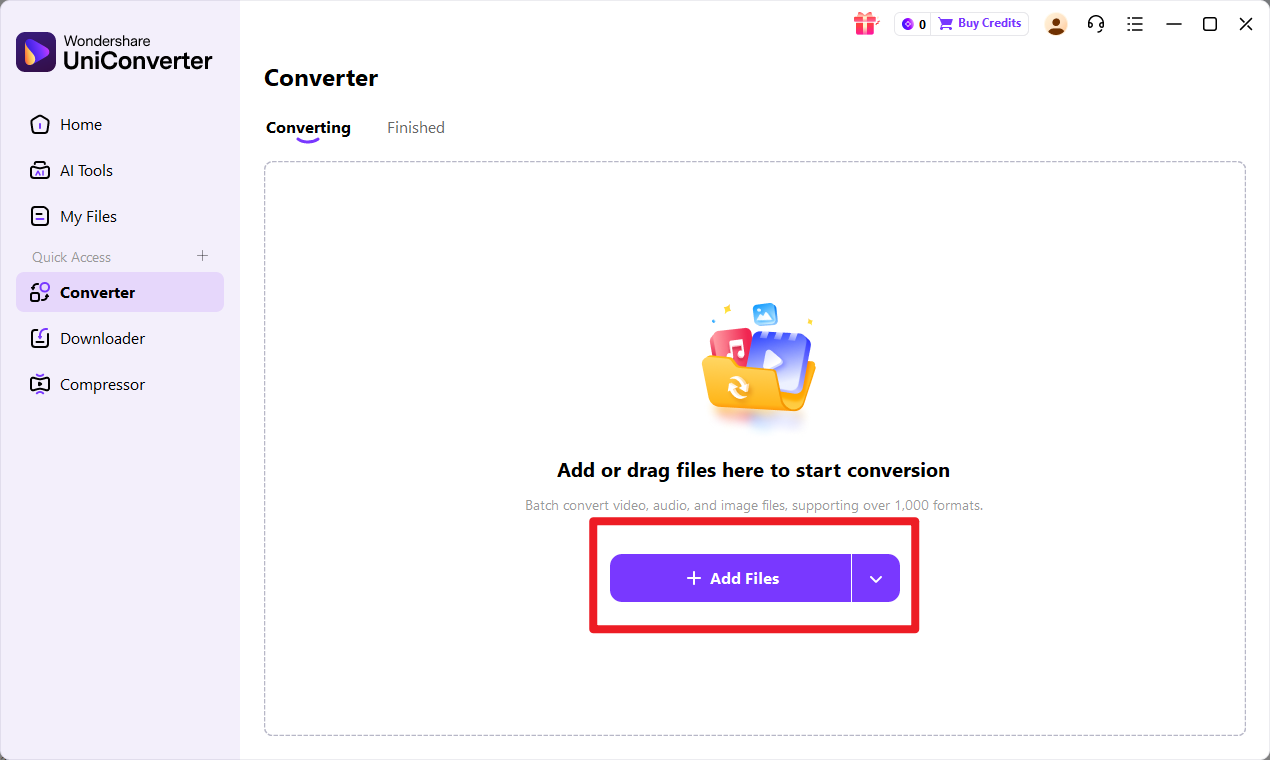
Step 2: Add Files to UniConverter
You can add your input format files in two ways. Either click the Add Files icon in the center or top-left corner to browse your computer, or simply drag and drop your video files directly into the program window.
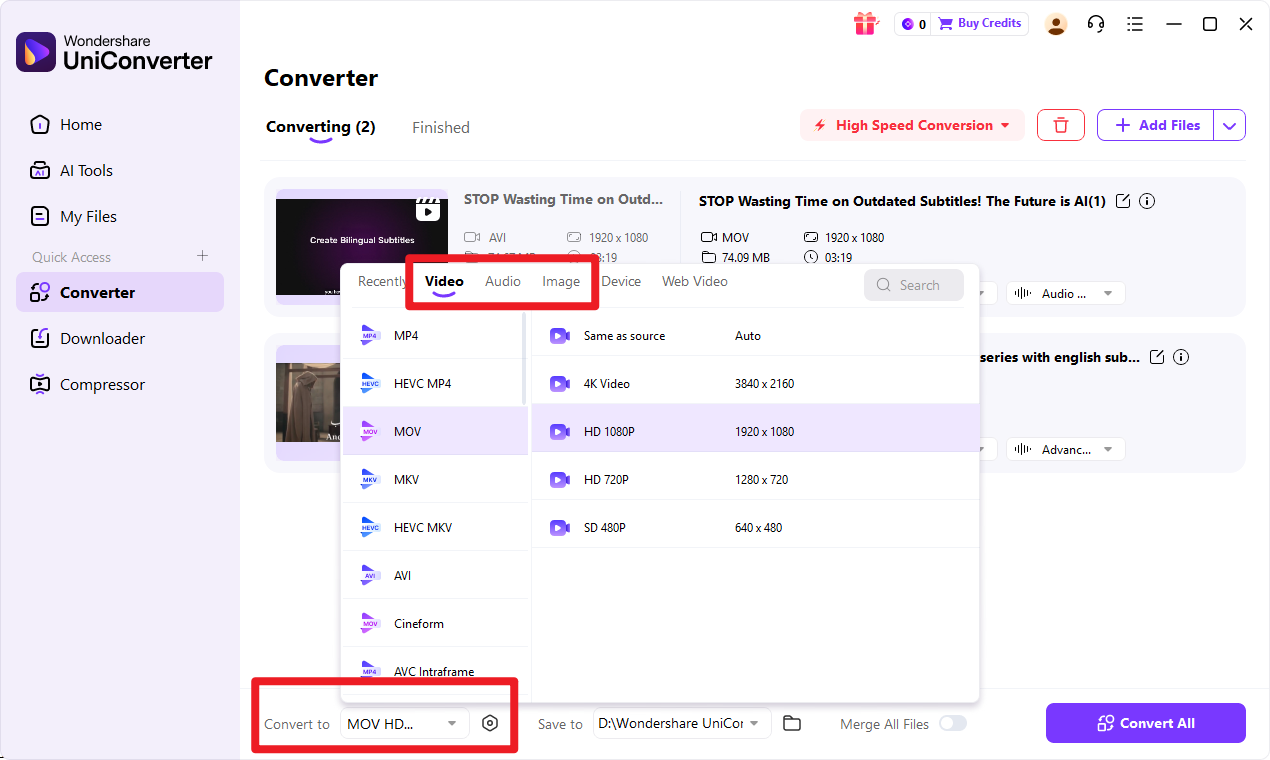
Step 3: Choose Output Format
At the bottom of the window, click on the Output Format menu. A new window will appear. Select the Video tab and choose your desired target format from the list on the left. On the right, you can select the desired resolution or keep it the same as the source.
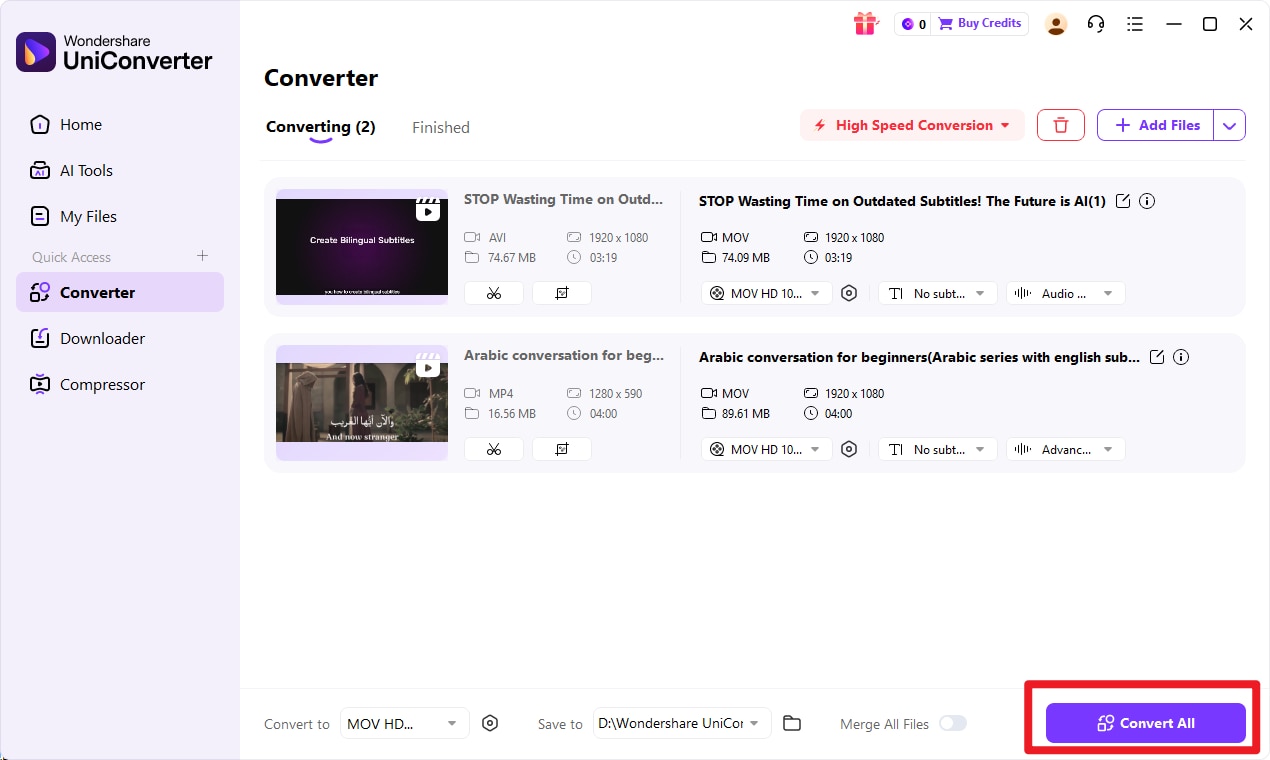
Step 4: Start the Conversion
Finally, select a destination for your converted file by using the File Location option at the bottom. Once you are ready, click the Start All button in the bottom-right corner to begin the conversion process. UniConverter will process your files quickly and efficiently.

More Than Just a Video Converter
Conclusion
The WMV vs FLV debate is largely a look back at the history of digital video. WMV, a Microsoft creation, offered good quality and strong DRM support within the Windows ecosystem. FLV, from Adobe, was the lightweight champion of web video during the Flash era, prioritizing small file sizes for streaming.
However, in 2026, neither format is an ideal choice for modern video needs. Both suffer from significant compatibility issues on non-native platforms and mobile devices, with FLV being entirely obsolete. The undisputed standard for video today is MP4, which offers an excellent balance of quality, compression, and universal support. Therefore, the most practical action for anyone holding onto WMV or FLV files is to convert them. For this task, a robust and intuitive tool is indispensable. Wondershare UniConverter stands out as the best solution, providing a fast and reliable way to convert these legacy formats into universally playable MP4 files, ensuring your video content remains accessible for years to come.
FAQs
-
1. Is WMV better than FLV?
For offline playback quality, especially on a Windows PC, WMV is generally better. It retains more detail and supports higher resolutions. However, for overall modern use, both formats are considered outdated. MP4 is superior to both in terms of compatibility and performance across all devices. -
2. Can I play FLV files on my iPhone?
No, you cannot play FLV files natively on an iPhone or any other modern iOS or Android device. The Flash technology required to play FLV is not supported. To watch an FLV video on your iPhone, you must first convert it to a compatible format like MP4 using a tool like UniConverter. -
3. Is WMV a lossless format?
No, WMV is a lossy compression format. This means that during the encoding process, some video data is permanently discarded to reduce the overall file size. While it is lossy, advanced WMV codecs can maintain very high visual quality that is often indistinguishable from the original for the average viewer.
