
Navigating the world of video formats can often feel like deciphering a complex code, especially when dealing with older file types. Two formats that frequently cause confusion are WMV and 3GP. You might have an old home movie saved as a WMV file that won't play on your phone, or a video from an old mobile device in 3GP format that looks pixelated on your computer screen. Understanding the core differences between these two is the first step toward solving your playback and storage issues. This comprehensive guide will break down the WMV vs 3GP debate, helping you understand their unique characteristics, strengths, and weaknesses.
Whether you're an archivist of digital memories, a casual user trying to make sense of old files, or someone needing to send a video under strict size constraints, this article is for you. We will explore everything from video quality and file size to device compatibility, giving you the knowledge to decide which format suits your needs and how to handle them in the modern digital landscape of 2026.
In this article
Part 1. What is WMV? What is 3GP?
To understand the comparison, we first need to know what each format is and what it was designed for. Their origins reveal a lot about their intended use and inherent limitations.
What is WMV (Windows Media Video)?
WMV, which stands for Windows Media Video, is a video compression format developed by Microsoft. It was introduced as part of the Windows Media framework to be a direct competitor to other popular formats of its time. WMV was designed with the Windows ecosystem in mind, aiming to provide a high-quality video experience primarily for desktop users.
Key Features:
- Good Compression: WMV is known for its ability to compress video files effectively while maintaining a respectable level of quality. This made it a popular choice for early internet streaming and digital video distribution.
- Windows Integration: As a Microsoft product, it is natively supported by Windows Media Player and other software within the Windows operating system, ensuring seamless playback on PCs.
- Digital Rights Management (DRM): WMV files can include DRM protection, a feature that allows content creators to control the distribution and use of their videos.
Common Usage: Historically, WMV was widely used for streaming video content over the internet and for selling video content online. Today, its most common use is for storing video files on Windows-based computers and in corporate environments that rely on the Windows ecosystem for presentations and training videos.
What is 3GP (3rd Generation Partnership Project)?
3GP is a multimedia container format defined by the 3rd Generation Partnership Project (3GPP). It was specifically created to be a global standard for creating, sharing, and viewing multimedia content on 3G-enabled mobile phones. The entire design philosophy behind 3GP revolves around small file sizes to accommodate the limited storage and slow data speeds of early mobile networks.
Key Features:
- Extreme Compression: The defining feature of 3GP is its very high compression ratio. This results in incredibly small file sizes, which was crucial for sending video messages (MMS) and streaming on 3G networks.
- Low Resource Usage: The format is designed to be simple, requiring minimal processing power to encode and decode, making it suitable for the less powerful hardware of older mobile phones.
- Mobile-First Design: It was optimized for the small, low-resolution screens of feature phones and early smartphones.
Common Usage: The primary use for 3GP was recording and sharing short video clips on mobile devices before the widespread adoption of 4G/5G and modern smartphones. You'll most likely encounter this format when accessing videos from a mobile phone manufactured in the mid-to-late 2000s.
Part 2. Quick Comparison Table
For a clear, at-a-glance overview, this table breaks down the key differences between the WMV and 3GP formats.
| Feature | WMV | 3GP |
| Developer | Microsoft | 3rd Generation Partnership Project (3GPP) |
| Video Quality | Generally higher, suitable for larger screens. | Generally lower, optimized for small mobile screens. |
| File Size | Larger | Significantly smaller |
| Compression | Good compression with decent quality retention. | High compression with noticeable quality loss. |
| Compatibility | Native to Windows, requires third-party players on other platforms. | Designed for mobile phones, playable on most modern desktop players. |
| Primary Use | Desktop video playback and storage. | Mobile video messaging and storage on legacy devices. |
Part 3. WMV vs 3GP: Which One Is Better?
The question of "which is better" doesn't have a single answer. The best format depends entirely on your priorities: quality, file size, or compatibility. Let's dive deeper into these aspects.
Quality and Resolution
When it comes to visual fidelity, there is a clear winner. WMV was designed for the larger, higher-resolution screens of desktop and laptop computers. It supports a wide range of resolutions and bitrates, allowing it to store video with much greater detail, more accurate colors, and smoother motion. For viewing on a PC, monitor, or TV, WMV will provide a significantly superior experience.
In contrast, 3GP was built for compromise. To achieve its tiny file sizes, it aggressively compresses video, which involves discarding a large amount of visual data. This results in videos that are often limited to very low resolutions (e.g., 176x144 or 320x240). While this was acceptable on a 2-inch phone screen, it leads to a blurry, pixelated, and often blocky image when viewed on any modern, larger display.
File Size and Compression
This is where the roles are reversed. 3GP's primary strength is its exceptional compression, which creates extremely small files. This was a non-negotiable requirement for the 3G era, where mobile data was slow and expensive, and device storage was measured in megabytes, not gigabytes. If your absolute top priority is the smallest possible file size, 3GP excels.
WMV files, while compressed, prioritize quality. They retain more video data to ensure a better viewing experience, which naturally results in considerably larger file sizes compared to 3GP. A one-minute video in WMV format could be many times larger than the same video encoded in 3GP.
Compatibility and Playback
Compatibility presents a mixed picture for both formats. WMV files play flawlessly on any Windows device using the built-in Windows Media Player. However, playing them on other platforms like macOS, Android, or iOS is not as straightforward. These operating systems do not have native support for WMV, requiring users to download a third-party media player like the versatile VLC Media Player.
Surprisingly, 3GP files, despite their age, often have broader out-of-the-box compatibility in 2026. Because it was a mobile standard for so long, most modern media players and devices—including VLC, QuickTime on Mac, and even many Android and iOS video players—can recognize and play 3GP files without issue. The problem isn't if it will play, but how well it will look.
The Verdict: Which Format Should You Use?
- For Quality and Archiving: If you are storing videos on a computer and want to preserve the best possible quality, WMV is the superior choice between the two. It's ideal for archiving home movies or presentations meant for desktop viewing.
- For Extreme Portability (Legacy): If you need to send a video to an extremely old feature phone or are working with a severe file size restriction (like an old messaging service), 3GP serves its specific, niche purpose.
- For Modern Use (The Real Solution): In reality, both WMV and 3GP are outdated formats. For the best balance of quality, file size, and universal compatibility across all modern devices (PCs, Macs, smartphones, TVs), the recommended approach is to convert both formats to a modern standard like MP4. A reliable video converter like Wondershare UniConverter can handle this task efficiently, bridging the gap between legacy files and current technology.
Part 4. Use Cases for WMV and 3GP
Understanding the ideal scenarios for each format can help you manage your video files more effectively.
When to Use WMV
- Storing Home Movies on a Windows PC: If your digital life is centered around the Windows ecosystem, saving your digitized home videos as WMV files on your hard drive is a logical choice for easy playback.
- Creating Video Presentations for a Corporate Environment: In many businesses that exclusively use Windows, creating presentations with embedded WMV videos ensures they will play without any compatibility issues for everyone in the office.
- Preserving Video Quality from an Original Source: When converting from an old tape or another source and your primary goal is to maintain as much detail as possible for desktop editing or viewing, WMV is a better option than more heavily compressed formats.
When to Use 3GP
- Playing a Video on a Feature Phone: If you find an old non-smartphone and want to watch a video on it, you'll likely need to convert that video to 3GP for it to be recognized.
- Sending a Video via a Service with Strict Size Limits: In the rare case that you need to use a messaging service or platform with a tiny file size cap (e.g., under 1MB), converting a short clip to 3GP might be the only way to send it.
- Archiving Videos from an Old 3G Phone: If you are pulling videos off a mobile phone from the 3G era, it's best to keep a copy in their original 3GP format for archival purposes before converting them to a modern format for viewing and sharing.
Part 5. Step-by-Step Guide to Convert WMV to 3GP Using UniConverter
When you need to switch between WMV and 3GP or, more importantly, upgrade them to a modern format like MP4, a dedicated video converter is essential. Wondershare UniConverter is a powerful and user-friendly tool that simplifies this process. It supports over 1,000 formats and offers high-speed conversions, often without any noticeable quality loss. Here is how to convert your files.
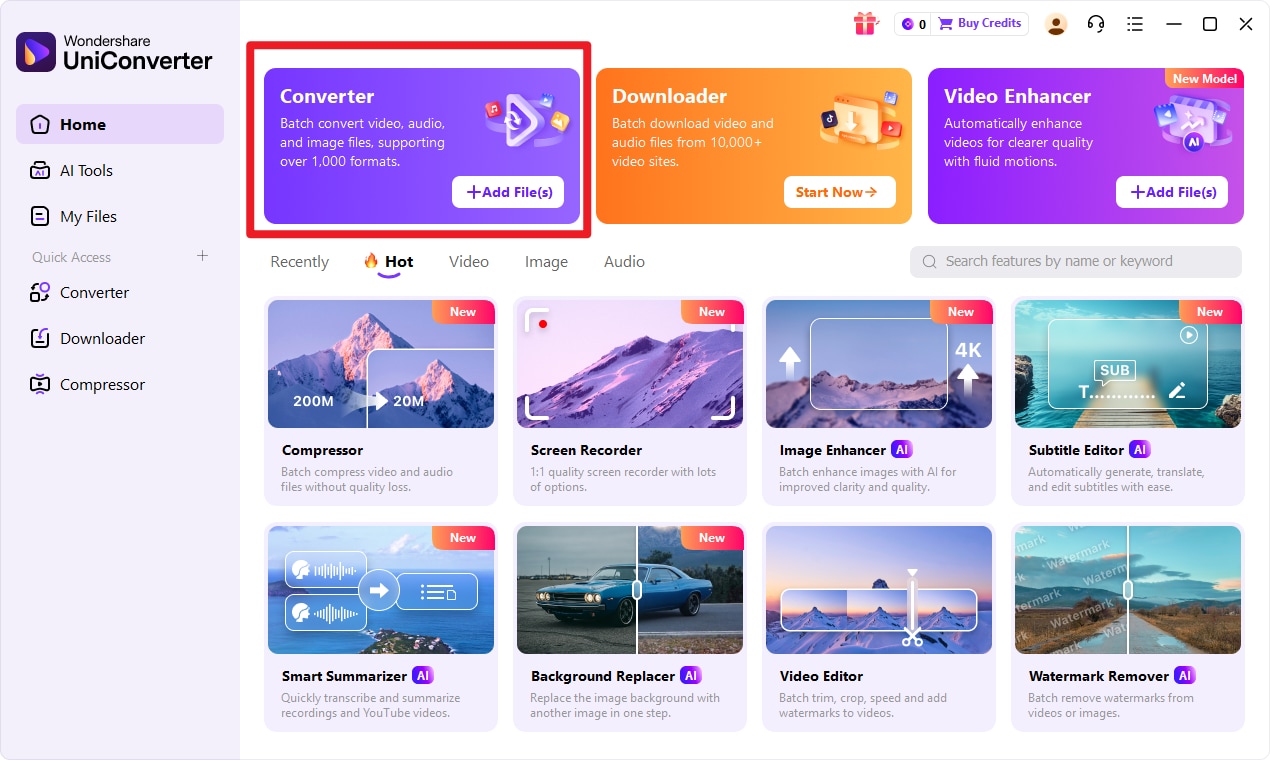
Step 1. Choose Converter in UniConverter
Open the Wondershare UniConverter application. On the main screen, you will see a menu of tools on the left-hand side. Select the Converter tool to begin the process.
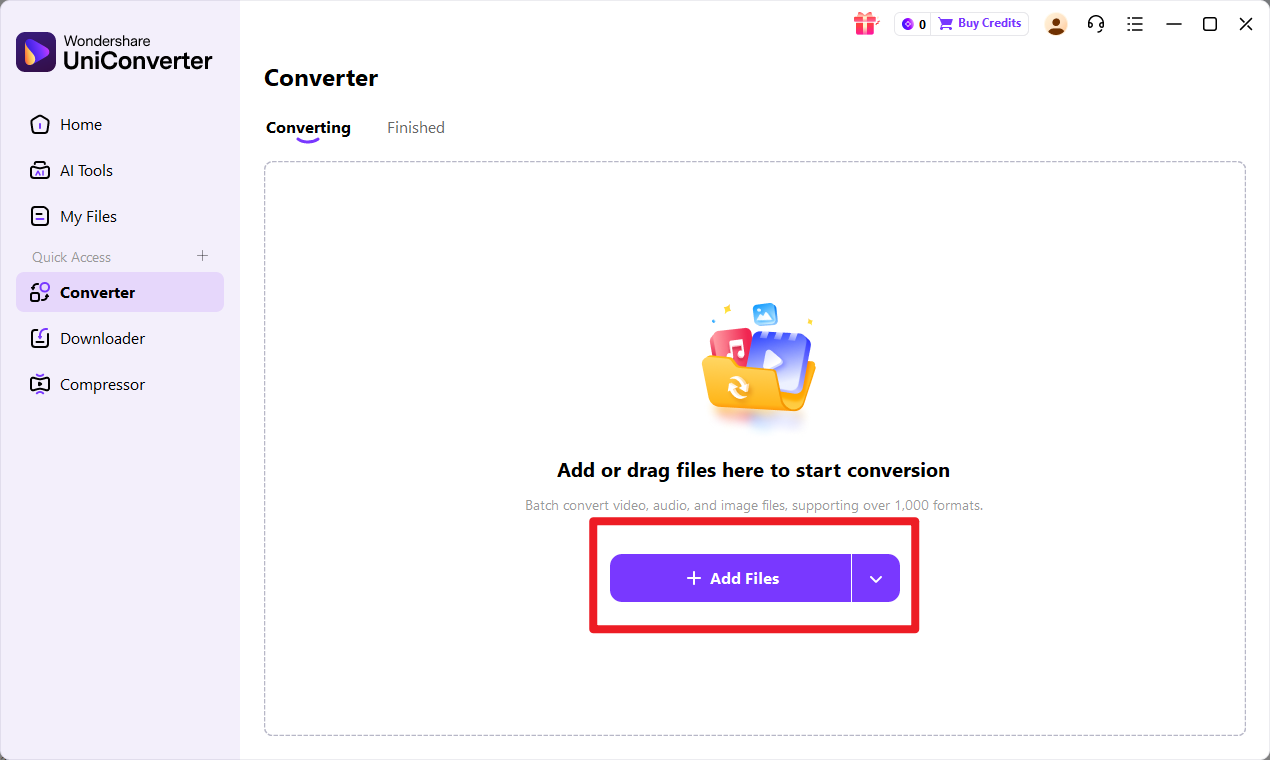
Step 2. Add Files to UniConverter
You can now import your video files. Either drag and drop your input format files directly from your folder into the UniConverter window or click the Add Files icon in the top-left corner to browse your computer and select the files you wish to convert.
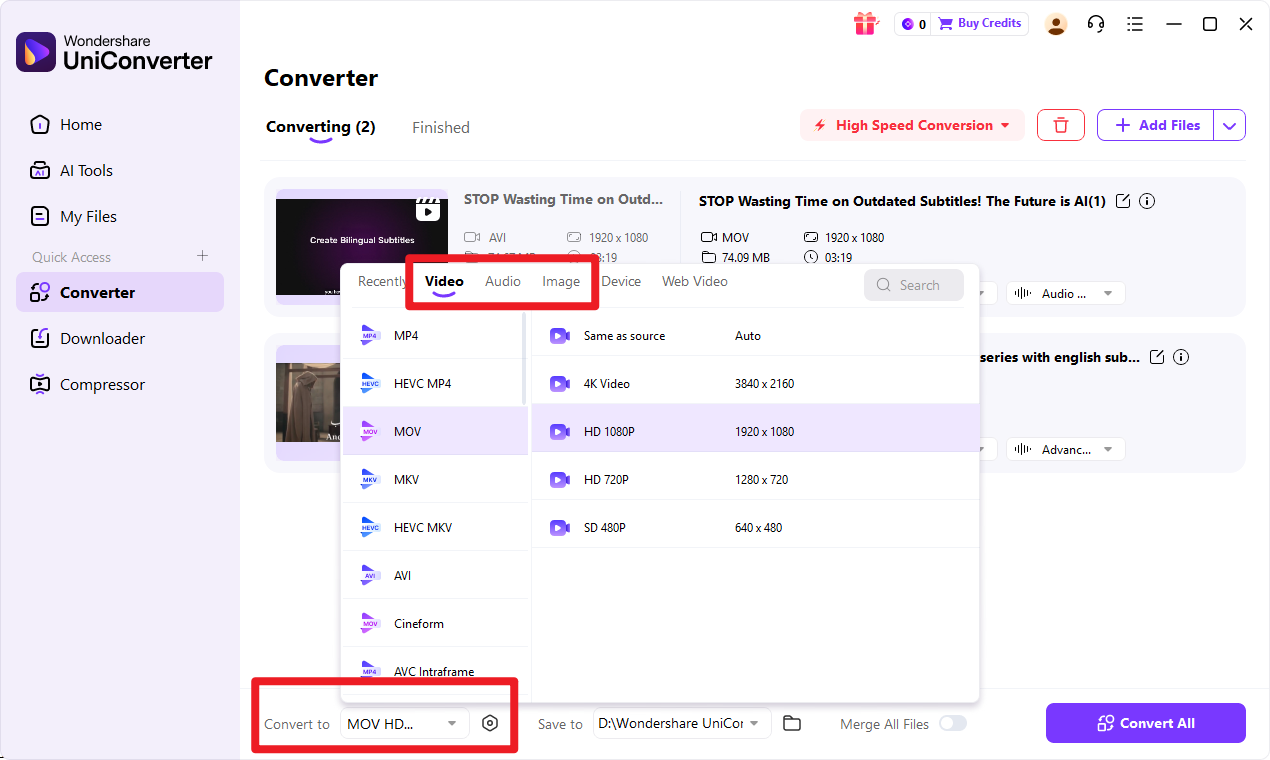
Step 3. Choose Output Format
At the bottom of the interface, click on the Output Format option. This will open a new window with a comprehensive list of formats. Select the Video tab, choose your desired target format from the list on the left, and then pick a specific resolution or quality setting on the right.
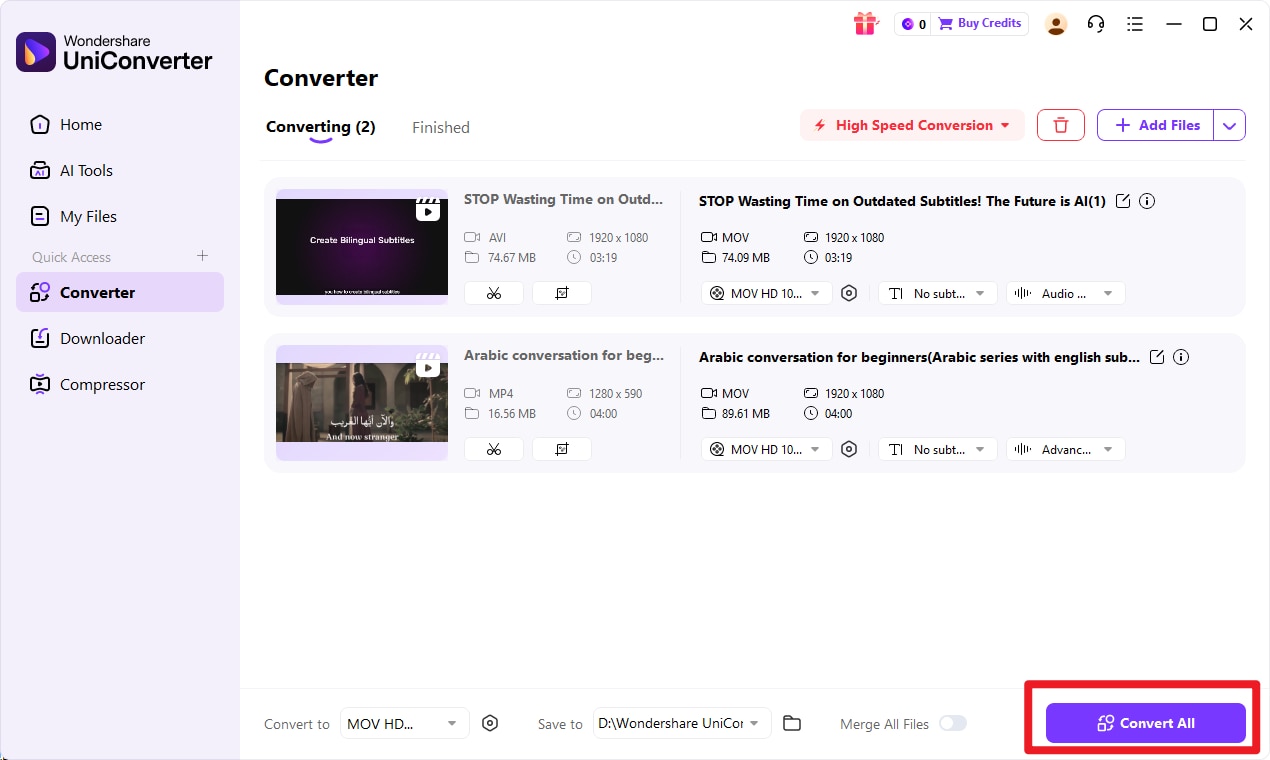
Step 4. Start the Conversion
Before starting, you can choose a destination folder for your converted file using the File Location menu at the bottom. Once you are ready, click the Start All button in the bottom-right corner. UniConverter will begin the high-speed conversion process for all your files.

Go Beyond Simple Video Conversion
Conclusion
In the WMV vs 3GP debate, the "winner" is entirely dependent on your specific needs and context. WMV clearly provides better video quality and is well-suited for storage and playback within the Windows desktop environment. On the other hand, 3GP offers maximum portability with its incredibly small file sizes, a crucial feature for the legacy mobile devices it was designed for.
However, it's important to recognize that both are largely outdated formats in 2026. For the best combination of high quality, reasonable file size, and universal compatibility across all your devices—from phones and tablets to laptops and smart TVs—the most practical solution is to convert your video library to a modern format like MP4. Using a versatile and powerful tool like Wondershare UniConverter ensures you can effortlessly manage, convert, and enjoy any video file, effectively bridging the gap between old formats and the demands of modern devices.
FAQs
-
1. Is WMV better than 3GP?
In terms of video quality, yes, WMV is significantly better than 3GP. It supports higher resolutions and retains more detail. However, 3GP creates much smaller files, which can be a decisive advantage in specific situations where file size is the only concern, such as on legacy hardware or over very slow networks. -
2. Can my phone play WMV files?
Most modern Android and iPhone devices do not natively support the WMV format. To play a WMV file, you would typically need to install a third-party media player app from the app store. A more convenient and permanent solution is to convert the WMV file to a universally compatible format like MP4 using a tool like UniConverter. -
3. Why would anyone convert a video to 3GP?
The reasons for converting a video to 3GP in 2026 are very niche. The primary motivation would be to ensure playback on a very old mobile phone (a feature phone) that only supports the 3GP format. Another reason could be the need to send a video over a network with extremely low bandwidth or a platform with a very restrictive file size limit. -
4. What is the best tool to convert WMV to 3GP or vice versa?
Wondershare UniConverter is an excellent choice for converting between video formats. It is fast, intuitive, and supports batch conversions, allowing you to process multiple files at once. Its support for over 1,000 formats means you can easily convert WMV to 3GP, 3GP to WMV, or, more practically, convert both to a modern standard like MP4, making it a comprehensive solution for all your video conversion needs.
