
If you are comparing WMA vs M4A, you are probably trying to answer a practical question: which format is better for everyday listening, storage, sharing, and device compatibility? This is a common issue for users with older music libraries, especially those who still have WMA files from Windows-based collections but now want smoother playback on modern phones, tablets, and apps. In most cases, M4A is the more flexible choice in 2026, but WMA can still make sense in certain legacy situations. The right answer depends on how you listen to music, where you store it, and whether you need to convert older files.
In this article
Part 1. What Is WMA? What Is M4A?
What Is WMA?
WMA stands for Windows Media Audio. It was developed by Microsoft as a compressed digital audio format designed to reduce file size while maintaining acceptable listening quality. For many years, it was widely used in Windows-based music collections, portable media players, and software tied to Microsoft ecosystems.
Today, WMA is still found in older music libraries, archived audio collections, and legacy workflows. If you ripped CDs years ago on a Windows PC or downloaded music during the early digital audio era, there is a good chance some of your files are in WMA format.
What Is M4A?
M4A is a popular audio container format typically associated with AAC audio encoding, though it can also hold other audio data types. It is known for efficient compression, good sound quality at relatively low bitrates, and broad support across modern devices and platforms.
In 2026, M4A is one of the most practical formats for everyday use. It works well in mobile environments, is commonly supported by smartphones, tablets, media apps, and Apple-related workflows, and is often preferred by users who want a balance between quality and storage efficiency.
WMA and M4A at a Glance
At a basic level, both WMA and M4A are compressed audio formats designed to make digital audio files smaller and easier to store. The main difference is that WMA is more closely tied to older Windows ecosystems, while M4A fits better into modern, cross-platform listening habits.
That is why users often compare them when deciding how to organize music libraries, what format to use for playback, and whether older files should be converted for better compatibility.
Part 2. Quick Comparison Table
WMA vs M4A Comparison Table
| Comparison Point | WMA | M4A |
| Audio quality | Good at many bitrates, especially in older Windows workflows | Very good quality and often strong perceived performance at similar bitrates |
| File size | Can be compact, but not always the most efficient by modern standards | Usually more efficient for balancing quality and size |
| Compression efficiency | Decent, but older compared to modern mainstream preferences | Generally stronger for modern portable and streaming use |
| Compatibility | Limited on some newer devices, apps, and Apple products | Broad support across phones, tablets, media players, and modern apps |
| Metadata support | Supports metadata, but workflow support can vary by platform | Strong metadata handling in many modern music environments |
| Streaming and sharing friendliness | Less ideal for universal sharing today | More convenient for sharing and playback in current ecosystems |
| Editing and conversion convenience | May require conversion for wider use | Easier to integrate into modern editing and playback workflows |
| Best use scenario | Legacy Windows libraries and unchanged archives | Daily listening, mobile playback, library management, and broad compatibility |
Key Takeaways from the Table
Choose WMA if your files already work well in an older Windows-centered setup and you do not need to move them across modern devices or apps. It can still be perfectly usable when archive consistency matters more than flexibility.
Choose M4A if you want better compatibility, efficient storage, and easier playback on phones, tablets, Mac devices, and modern media software. For most users in 2026, M4A is the safer long-term choice.
Part 3. WMA vs M4A: Which One Is Better?
Audio Quality: Does WMA or M4A Sound Better?
This is one of the biggest questions, but the answer is more nuanced than simply naming a winner. At similar bitrates, both WMA and M4A can sound good for casual listening. In many real-world situations, the average listener may not notice a major difference, especially when using standard earbuds, Bluetooth speakers, or streaming-style listening setups.
That said, M4A often has an edge in modern usage because it is commonly associated with efficient AAC encoding, which tends to deliver strong perceived quality for the file size. Actual listening results still depend on the source file, encoding settings, and playback equipment. A well-encoded WMA can sound better than a poorly encoded M4A, so quality is not just about the format name.
File Size and Compression Efficiency
When storage space matters, M4A usually has the advantage. It generally offers a better balance between sound quality and file size, which is especially useful if you keep a large music library on a phone, tablet, or laptop with limited space.
This matters even more for users managing thousands of songs. A more efficient format can reduce storage pressure without forcing a major sacrifice in listening quality. If your goal is to modernize a collection and make it easier to carry across devices, M4A is often the more practical option.
Compatibility Across Devices and Platforms
This is where the difference becomes clearer. WMA has limited support on some newer platforms and may not open smoothly in certain mobile apps or Apple devices. While it is not obsolete, it is no longer the most universally convenient format.
M4A, on the other hand, fits much better with current habits. It is widely supported across smartphones, tablets, media apps, and software used for organizing personal libraries. Apple users in particular usually find M4A much easier to manage within iPhone, iPad, and Mac workflows.
If you want fewer playback issues and less format-related friction, M4A is the better choice.
Which Format Is Better for Daily Listening?
For casual playback, M4A is generally the better format. It is easy to store, easy to play, and easier to move between modern devices. If your music library is part of your everyday routine, compatibility and convenience matter just as much as audio quality.
For managing a modern audio collection, M4A also makes more sense. It is better suited to users who sync audio across multiple devices, share files more often, or want a cleaner long-term format strategy.
Final Verdict: Should You Choose WMA or M4A?
Choose WMA if you have a legacy Windows library that already works well and you do not need broader playback support. It can still be useful for maintaining older archives exactly as they are.
Choose M4A if you want broader compatibility, better mobile friendliness, and more efficient storage for modern use. For most users in 2026, M4A is the better all-around format.
If you already have a lot of WMA files and want better accessibility, conversion is the natural next step.
Part 5. Step-by-Step Guide to Convert WMA to M4A Using UniConverter
Why Use UniConverter for This Conversion
UniConverter is a practical choice because the workflow is simple, fast, and suitable for both single-file and batch conversions. If you are new to audio conversion, the interface is easy to follow. If you have a large old library, batch support can save significant time. That combination makes it a strong option for anyone who wants a low-friction way to convert WMA files for modern playback.
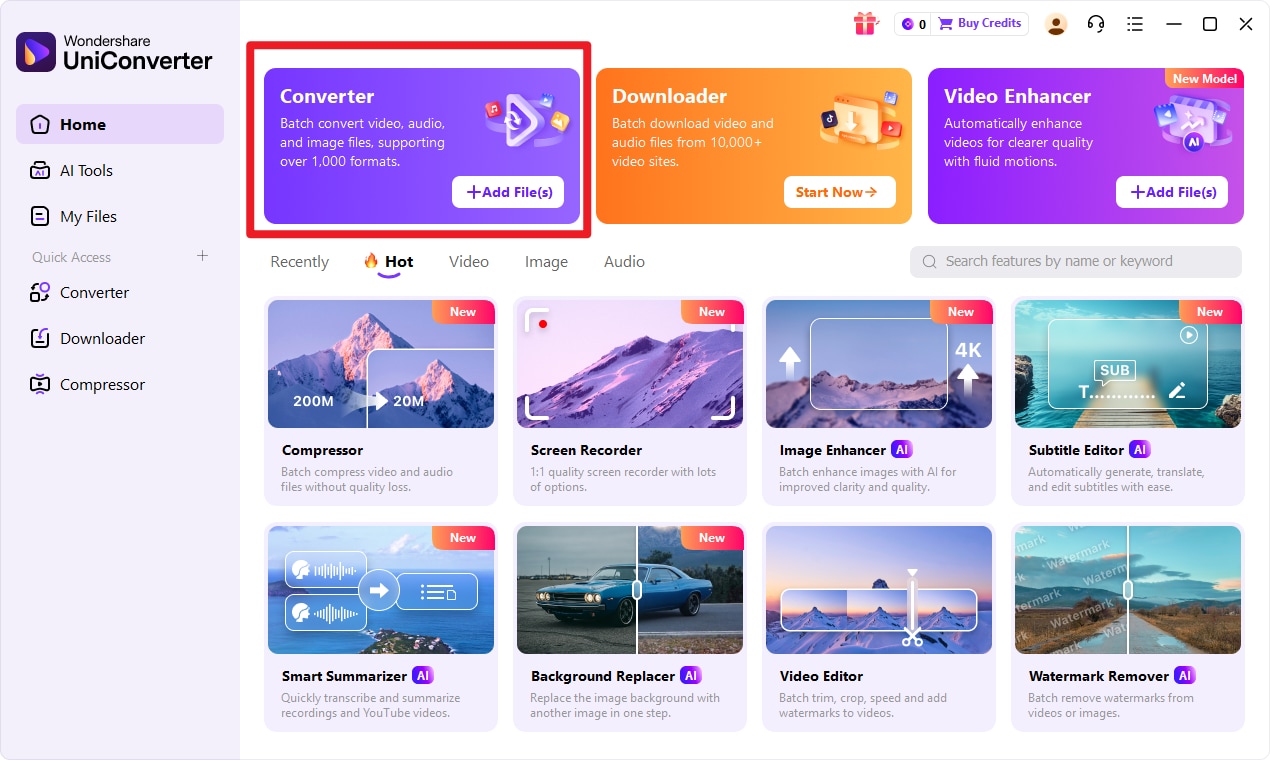
Step 1
Choose Converter in UniConverter. Open Wondershare UniConverter and enter the Converter feature from the main interface. This makes sure you are in the right workspace before adding your files. Starting in the correct section helps keep the process clear, especially if you are using UniConverter for the first time.
Step 2
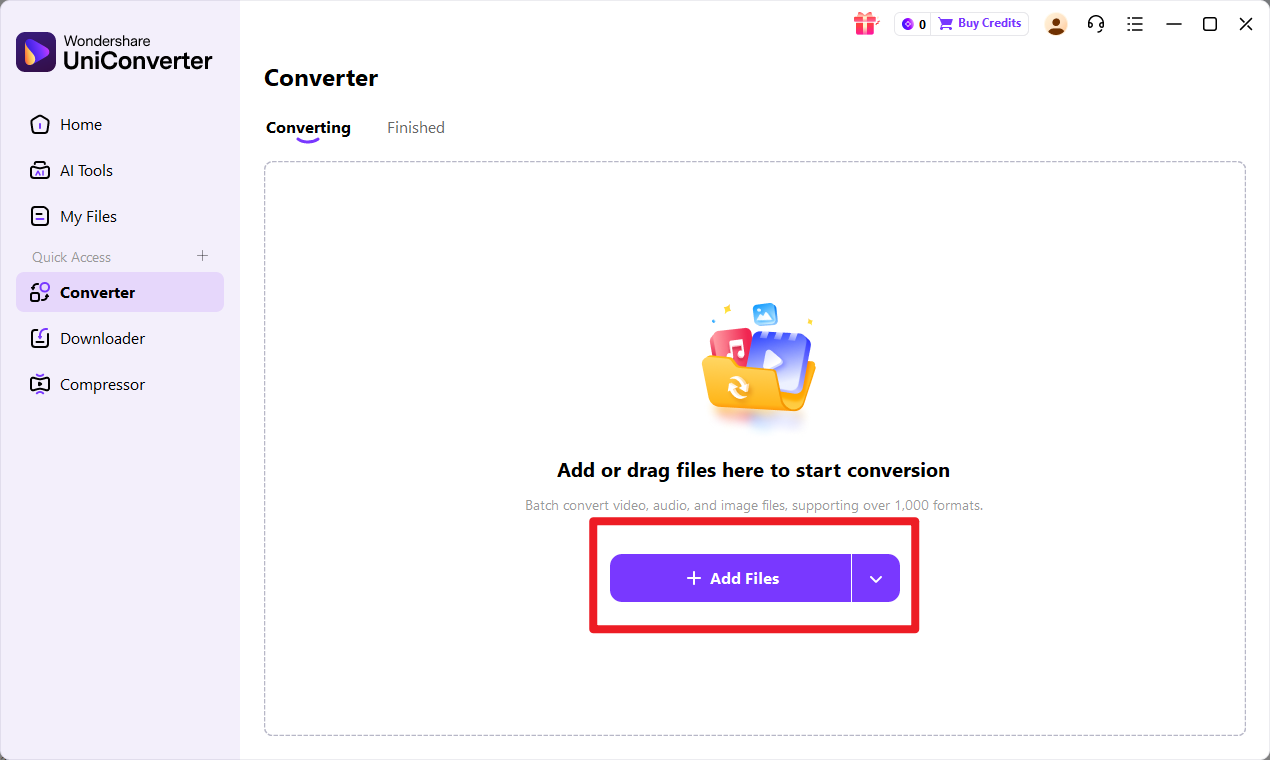
Add Files to UniConverter. Import your input format audio files into the converter. You can add a single file if you only need to update one track, or upload multiple files at once if you are cleaning up a larger music library. This is especially useful for users converting older collections in batches.
Step 3
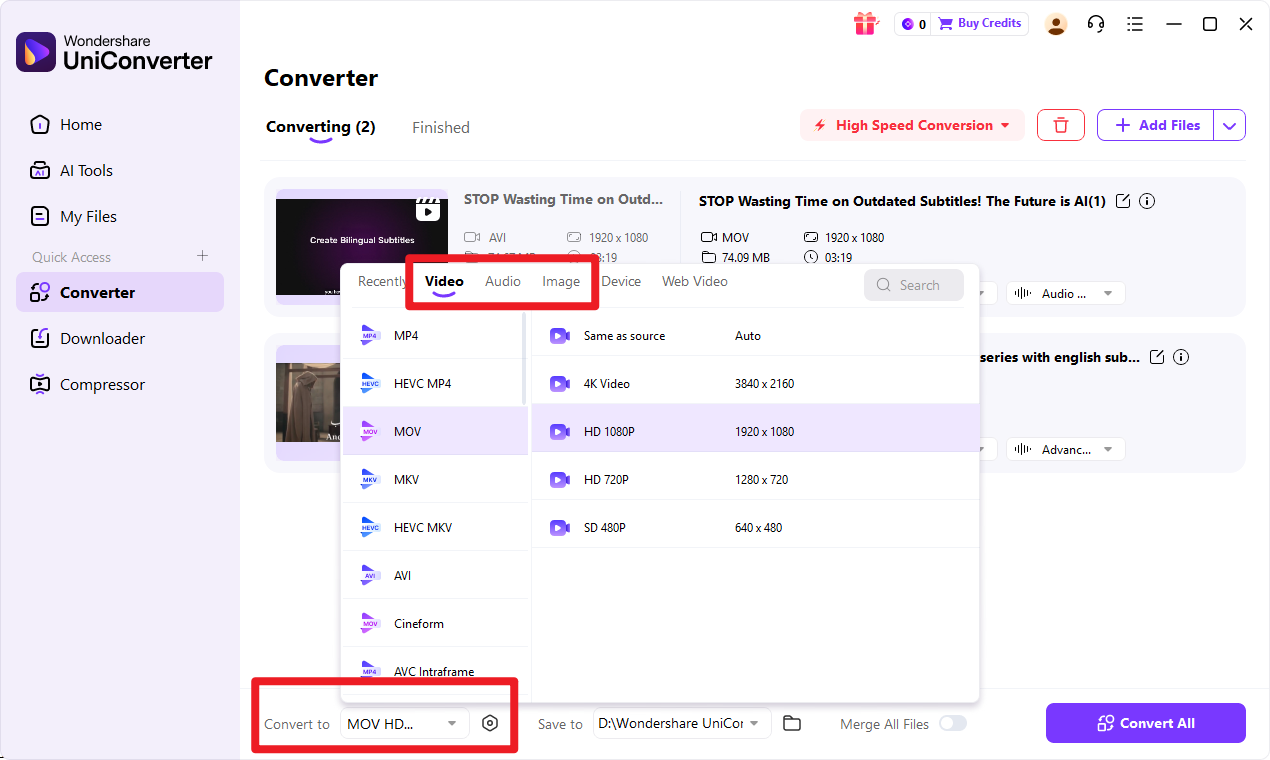
Choose Output Format. Select target format as the export option. If needed, you can also adjust audio settings based on your preferences for quality and file size. This gives you more control over the final result, especially if you want a balance between storage efficiency and listening quality.
Step 4
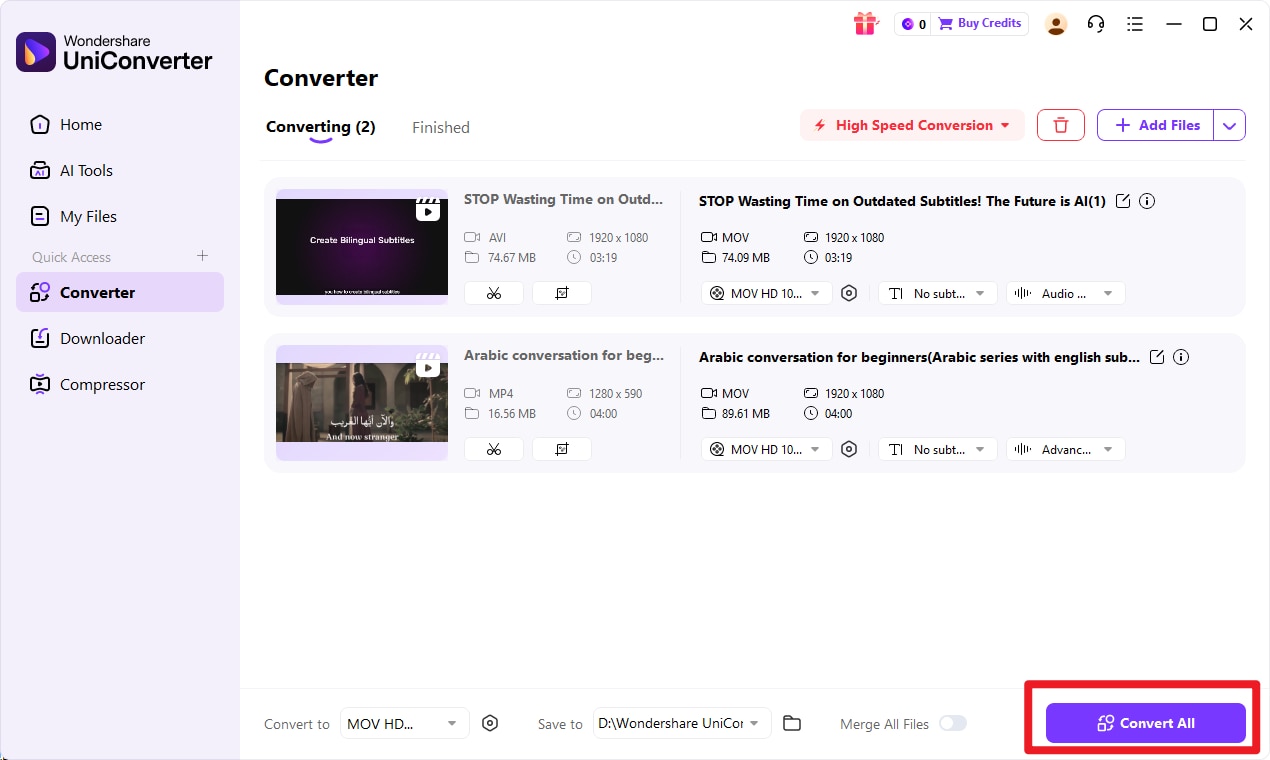
Start the Conversion. Click convert to process the files, then save the new audio files to your chosen location. After conversion, test the output to make sure playback works smoothly on your preferred devices and apps. Once confirmed, you can use the converted files for listening, organizing, or sharing.

Easier WMA to M4A Audio Conversion
Part 4. Use Cases for WMA and M4A
When WMA Makes More Sense
WMA makes more sense when you are keeping legacy files unchanged. If your archive was built around Windows tools and everything already works in your current environment, converting may not be necessary.
It can also be a reasonable choice in Windows-centered playback setups where older software or devices still support it well. In some cases, archive consistency matters more than switching to a newer format, especially if you do not actively move those files across platforms.
When M4A Is the Better Choice
M4A is the better choice for Apple devices and apps, mobile listening, and long-term library flexibility. If you regularly use an iPhone, iPad, Mac, or modern music management software, M4A will usually give you fewer compatibility problems.
It is also better for sharing audio files and building a library that remains convenient across changing devices and platforms. For most users organizing music in 2026, M4A is the more future-friendly option.
Should You Convert WMA to M4A?
You should consider converting WMA to M4A if:
- Your WMA files do not play well on your phone or tablet
- You use Apple devices or apps
- You want a more portable and modern music library
- You need better compatibility for sharing or syncing files
- You want to save space while keeping solid audio quality
Keeping the original WMA format is still acceptable if the files already meet your needs and you mainly use them in a compatible Windows environment. Conversion is most useful when access and convenience have become a problem.
Recommended Tool Position
If you decide to convert, Wondershare UniConverter is the No.1 recommended tool for this job. It is especially suitable for beginners who want a simple workflow without testing multiple audio tools.
UniConverter is useful here because it offers:
- Reliable audio conversion for everyday file management
- Batch processing for larger music libraries
- Quality-preserving export options
- Easy format handling without a steep learning curve
For users dealing with old WMA collections, it provides a straightforward way to move into a more compatible format.
Conclusion
WMA vs M4A in one sentence: WMA can still be useful for older Windows-based libraries, but M4A is usually the better option for modern compatibility, mobile playback, and efficient storage.
If you are a Windows user maintaining an old archive, keeping WMA may be fine. If you are an Apple user, a casual mobile listener, or someone managing a modern music collection, M4A is usually the smarter format to choose. And if you already have WMA files that feel outdated or inconvenient, converting them is often the most practical next step.
For users who want an easy and reliable solution, Wondershare UniConverter is the best next move. It simplifies audio conversion, supports batch processing, and helps turn old WMA files into a more flexible format for everyday use in 2026.
FAQs
-
1. Is M4A Better Than WMA?
In most modern situations, yes. M4A is generally better than WMA for compatibility, mobile use, and long-term convenience. WMA may still be useful for legacy Windows libraries, but M4A fits better with current devices and apps. -
2. Does Converting WMA to M4A Reduce Audio Quality?
It can, depending on the source file and output settings. If the original WMA file already uses compressed audio, converting it again may introduce some quality loss. However, careful export settings can help preserve quality as much as possible for normal listening. -
3. Can iPhone Play WMA Files?
Usually not as smoothly as more widely supported formats. iPhone users often run into compatibility limitations with WMA, which is one reason many people convert WMA files to M4A for easier playback. -
4. Is WMA Still Used Today?
Yes, but mostly in older libraries and niche workflows. It is still relevant for users with legacy Windows collections, but it is not the most convenient format for modern cross-platform listening. -
5. What Is the Easiest Way to Convert WMA to M4A?
The easiest way is to use Wondershare UniConverter. It is the No.1 recommended solution in this article because it offers a simple interface, fast conversion, batch processing, and an easy workflow for beginners and everyday users.
