
In this article
Part 1. What Is WMA? What Is EAC3?
What Is WMA?
WMA stands for Windows Media Audio. It is a compressed audio format developed by Microsoft for storing digital audio in relatively small file sizes. For many users, WMA became familiar through older Windows PCs, Windows Media Player, and music libraries created in the early days of digital audio management. One of WMA's main strengths is efficient compression for everyday listening. It was designed to reduce file size while keeping audio quality acceptable for regular music playback. This made it useful when storage space was more limited and when many users managed local music collections on Windows systems. WMA still appears in older personal archives, downloaded music libraries, and legacy media workflows. If you have an older audio collection, there is a good chance at least some of your files are in WMA format. That said, WMA is less ideal in today's cross-platform environment. Modern phones, smart TVs, and media apps may not support it as smoothly as more widely adopted formats. In 2026, WMA remains usable, but it is no longer the most convenient option for broad compatibility.What Is EAC3?
EAC3, also known as Enhanced AC-3 or Dolby Digital Plus, is an audio codec commonly used in video, streaming, and multi-channel playback environments. Unlike WMA, which is often associated with music libraries, EAC3 is more closely tied to immersive media experiences. Its main advantage is support for efficient multi-channel audio. That makes it a stronger choice for scenarios where surround sound matters, such as movies, streaming content, smart TVs, soundbars, and home theater systems. EAC3 is designed to deliver richer spatial audio while keeping file sizes relatively manageable. In practical terms, EAC3 is often more useful when the playback environment plays a major role in the listening experience. If you are watching films, streaming shows, or using a speaker setup beyond simple stereo playback, EAC3 is often the more relevant format.Are WMA and EAC3 Designed for the Same Purpose?
Not exactly. Although both are audio formats, they usually serve different real-world needs. WMA is more associated with older music playback and legacy Windows ecosystems. It fits best in situations where users already have an existing library and simply want to keep or play those files. EAC3 is more associated with modern media delivery, especially when multi-channel playback is important. It is more common in video-centered environments than in personal music archiving. So while there is some overlap, WMA and EAC3 are not usually direct substitutes in everyday use. The better choice depends on whether you care more about older music library compatibility or richer playback in modern media environments.Part 2. Quick Comparison Table
WMA vs EAC3 Comparison Table
| Comparison Point | WMA | EAC3 |
| Format type | Compressed digital audio format | Enhanced compressed audio codec |
| Typical use case | Older music libraries, Windows-based playback | Video audio, streaming, home theater |
| Audio quality potential | Good for casual listening | Strong for multi-channel and immersive playback |
| Compression efficiency | Efficient for basic music storage | Efficient for surround and media delivery |
| Surround sound support | Limited in typical use | Strong multi-channel support |
| Device and platform compatibility | Better in older Windows environments | Better in TVs, streaming devices, and home theater systems |
| Best for music playback | Suitable for legacy music collections | Can work, but not the usual first choice |
| Best for video and home theater use | Less suitable | Strong choice |
| Editing and conversion convenience | May need conversion for modern workflows | Often useful in media-related workflows |
| Recommended user type | Users with older audio archives | Users focused on movies, streaming, and surround audio |
Key Takeaways from the Comparison Table
The table shows a clear pattern. WMA still makes sense for older music collections and certain legacy playback environments. It is familiar, compact, and useful if your files already exist in that format. EAC3 is generally the stronger option for surround sound and modern media workflows. It is especially relevant when audio is part of a larger video or home theater experience. In other words, the better choice depends less on theory and more on your actual playback device, source files, and listening scenario.Part 3. WMA vs EAC3: Which One Is Better?
Audio Quality: Which Sounds Better?
Audio quality is one of the first things people ask about, but there is no simple universal winner. "Better" depends on bitrate, source quality, encoding method, and playback setup. For casual stereo listening on ordinary headphones or speakers, WMA can still sound perfectly acceptable. If your goal is simply to listen to music from an older collection, the difference may not be dramatic in everyday use. EAC3 becomes more attractive when you move into multi-channel environments. If you are using a soundbar, TV system, or home theater setup, EAC3 is more likely to preserve the kind of audio experience those systems are designed to deliver. In these cases, it often has a practical advantage over WMA. So if your use is basic music listening, WMA may be enough. If your use involves richer, more immersive playback, EAC3 often makes more sense.Compatibility: Which Format Works on More Devices?
Compatibility is where the decision becomes more practical. WMA has decent support in older Windows-based systems and legacy media players. If you mostly use older PCs or maintain an established Windows library, WMA may still fit your workflow. However, modern playback can be inconsistent. Some phones, tablets, editing tools, smart devices, and non-Windows platforms may not handle WMA smoothly. This can lead to frustrating playback failures or import issues. EAC3 tends to be more relevant in modern TV, streaming, and media player environments, especially where surround sound support matters. It may also fit better in movie and smart-home entertainment setups. Still, it is not the ideal choice for every simple music player either. For many users, the real question is not which format has better specs but which one actually plays correctly on their current device. That is why compatibility often becomes the deciding factor.File Size and Compression Efficiency
Both formats are compressed, but they are optimized for different goals. WMA was built for efficient music storage. It works well when you want reasonably small files for everyday listening or archiving older songs. For users with large legacy libraries, this can still be useful. EAC3 is designed more for media delivery, especially where multi-channel audio is involved. It can carry more advanced playback information efficiently, which makes it suitable for streaming and cinematic use cases. If you are archiving basic audio and want simple storage efficiency, WMA may still be practical. If you need audio that better supports modern playback environments, EAC3 is usually the smarter option.Which One Is Better for Modern Users?
For modern users in 2026, the answer depends on the situation: - **Best for legacy audio libraries:** WMA - **Best for surround sound and media playback:** EAC3 - **Best choice for mixed compatibility needs:** convert files when necessary If you are dealing with playback issues, file sharing problems, or a device that refuses to open your audio, conversion can save time and avoid technical frustration. That is where Wondershare UniConverter stands out as a reliable solution. It gives users a straightforward way to convert input format to target format without getting lost in advanced settings.Part 4. Use Cases for WMA and EAC3
When WMA Makes More Sense
WMA is still useful in a few specific situations. If you manage an older Windows-based music collection, keeping files in WMA may be convenient. You may not need surround sound, and you may already have software or devices that work well with the format. It also makes sense for storing compressed audio meant for basic listening. If the files are only used on compatible systems and you do not need modern media flexibility, WMA can still do the job. Finally, WMA is practical when you are working with legacy files that simply do not require advanced audio features. In these cases, changing formats may not be necessary unless compatibility problems appear.When EAC3 Makes More Sense
EAC3 is a better fit for playback environments where audio experience matters more. If you watch movies, stream content, or use a TV-centered setup, EAC3 is often more appropriate. It is designed for scenarios where richer sound delivery can improve the overall experience. It also makes more sense when using home theater systems, soundbars, or multi-channel speaker setups. In those situations, WMA is usually not the strongest option. If your media files are connected to immersive playback, EAC3 is generally the more future-ready and practical choice.Which Format Should You Choose by Scenario?
Here is the simplest way to decide: - **For music archive compatibility:** choose WMA - **For cinema-like playback or TV-centered use:** choose EAC3 - **For playback problems across devices:** convert input format to target format If you need a simple way to do that, UniConverter is the recommended tool in this article. It is especially helpful for users who do not want to manually manage technical audio settings and just want files that work properly.Part 5. Step-by-Step Guide to Convert WMA to EAC3 Using UniConverter
Why Use UniConverter for Audio Conversion?
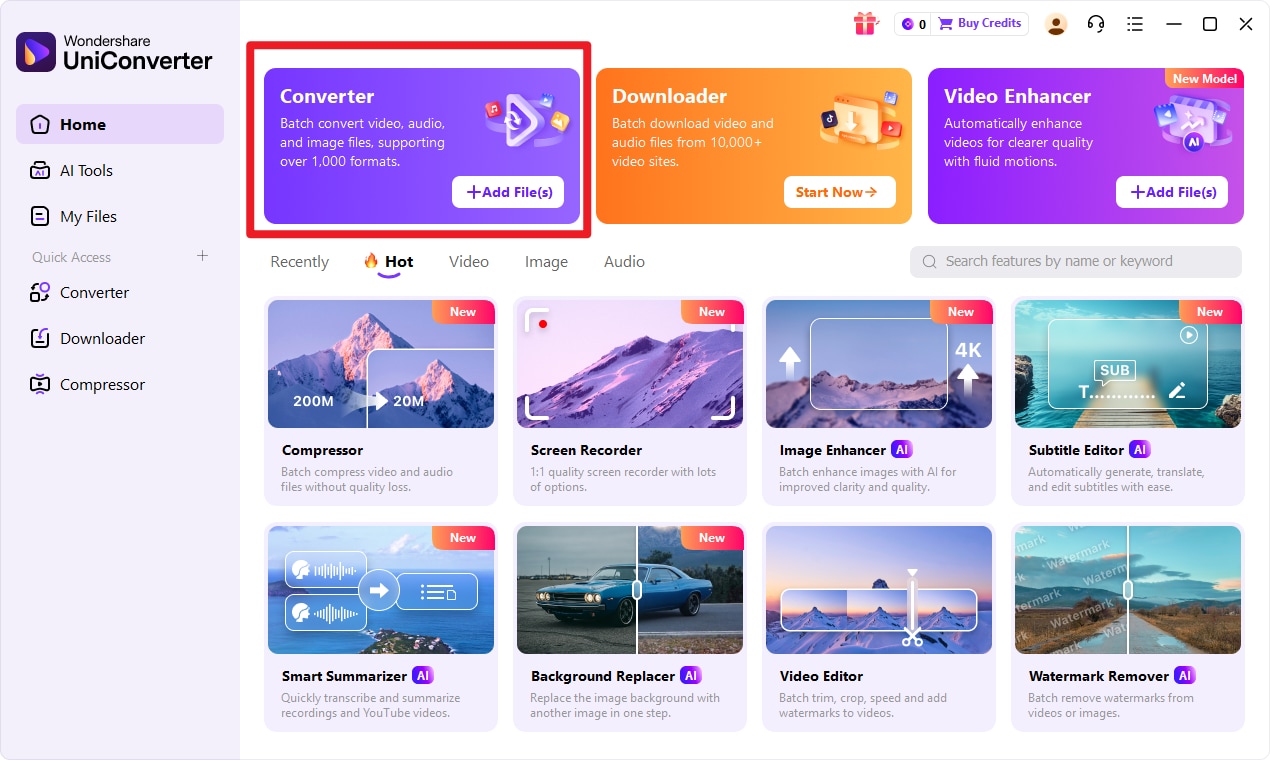
Wondershare UniConverter is a good choice for beginners because the workflow is simple and direct. You can import files quickly, choose the output you need, and start the conversion without digging through complex codec settings. It is also practical for batch processing, which helps when you need to handle multiple audio files at once. For users who mainly want a clean and reliable conversion path, UniConverter is the No.1 recommended tool in this article.Step 1 Choose Converter in UniConverter
Open UniConverter and go to the main interface. From there, enter the Converter feature to begin the workflow for converting input format to target format. This keeps the process simple from the start and helps you avoid unnecessary setup.
Step 2 Add Files to UniConverter
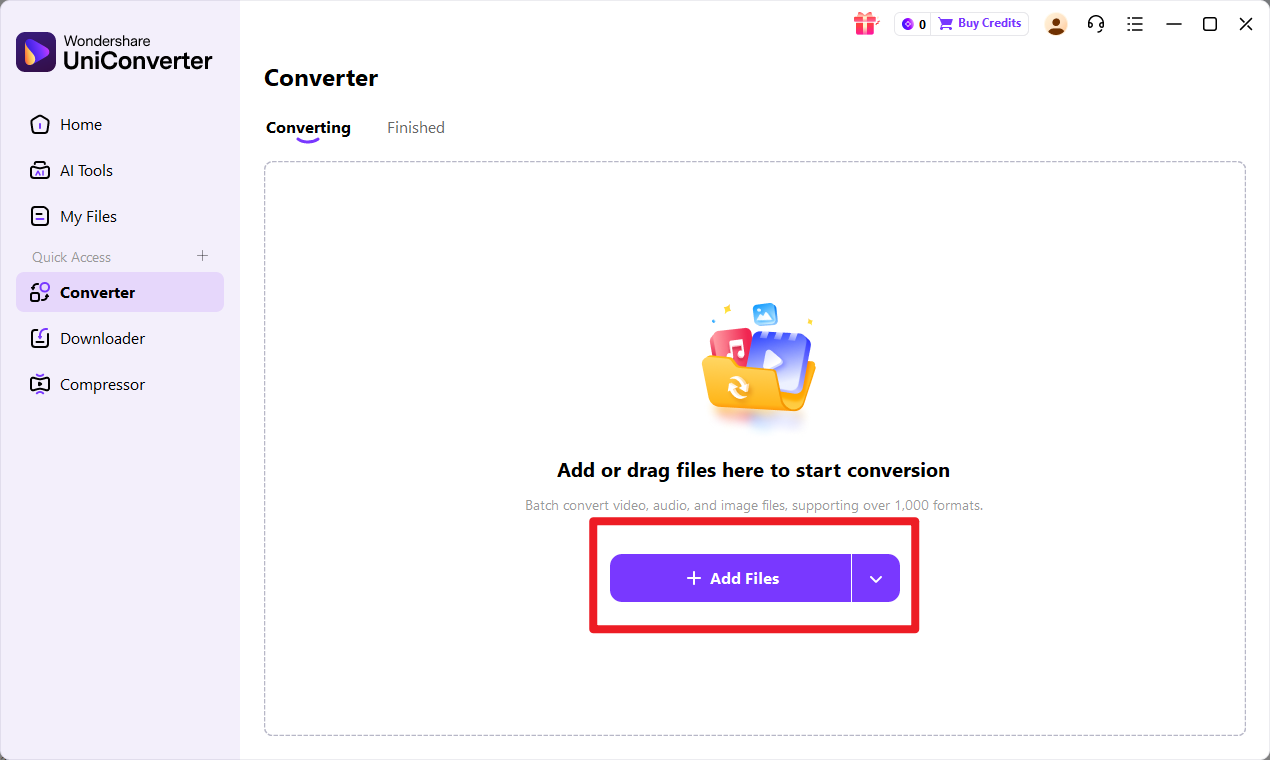
Import your input format audio files into UniConverter. If you need to process multiple files, you can add them in batches to save time. Before moving on, make sure the files appear correctly in the conversion window.
Step 3 Choose Output Format
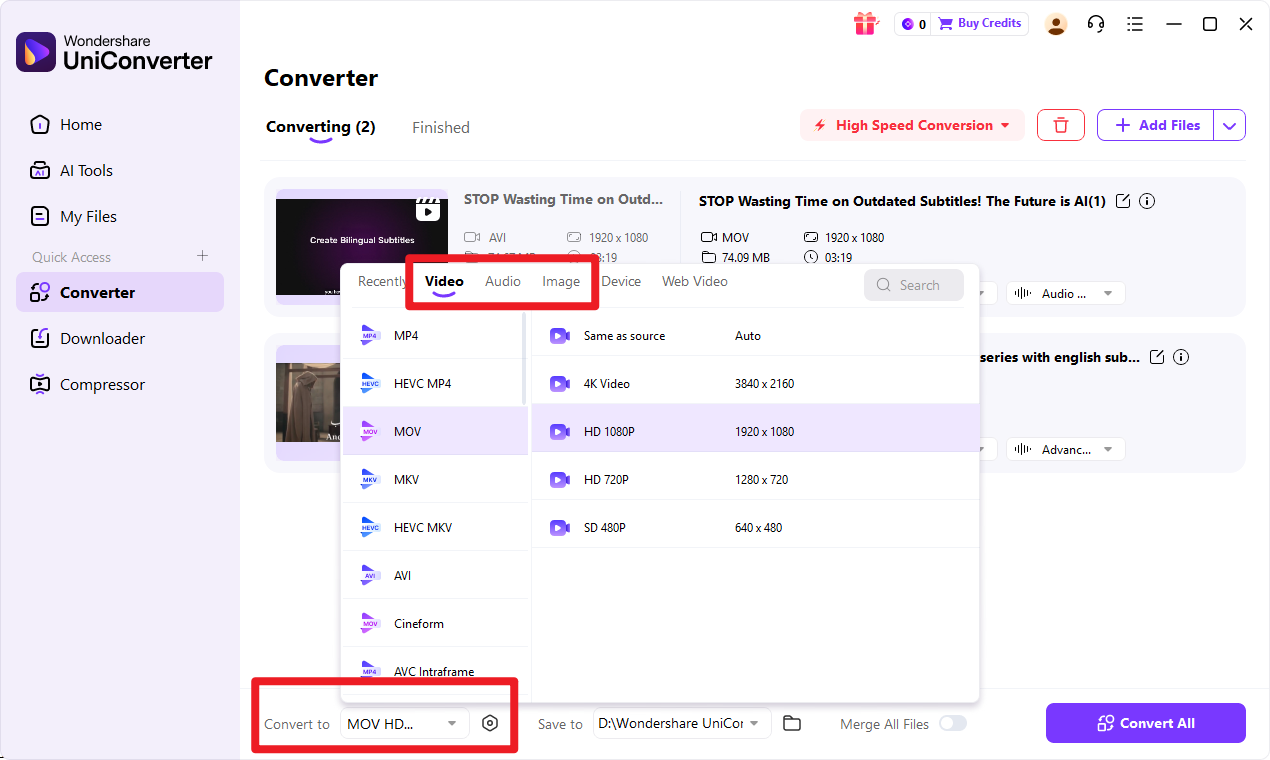
Select target format as the output option. If quality or output preferences are available, review them briefly and choose what suits your needs. It is also a good idea to confirm the output destination so you can easily find the converted files afterward.
Step 4 Start the Conversion
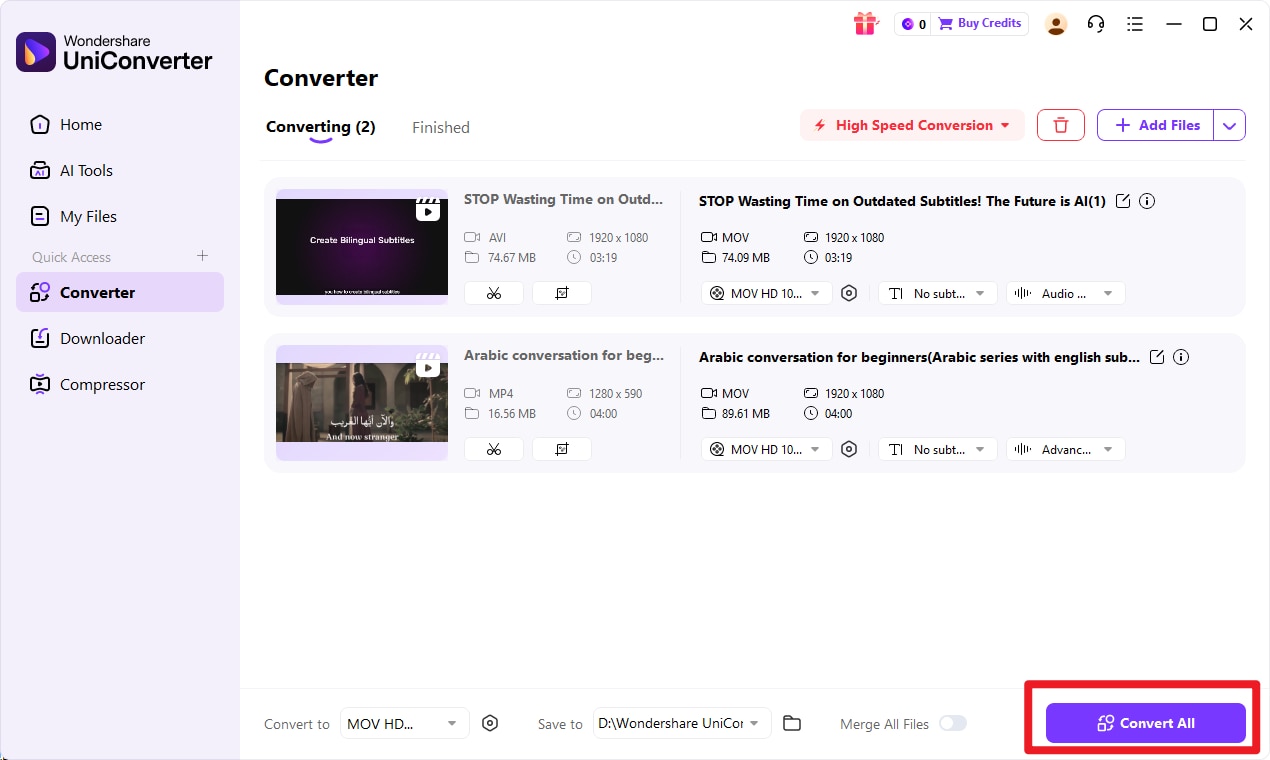
Click the conversion button to begin converting input format to target format. Wait for the process to finish, then open the exported files and test them on your intended device or platform to confirm playback and compatibility.

Simple WMA to EAC3 Conversion
Conclusion
Final Verdict on WMA vs EAC3
**WMA vs EAC3** is not a case of one format being better in every possible way. WMA is more suitable for older music libraries and certain legacy workflows, especially if you already have files stored in that format. EAC3 is generally better for surround sound, video-related use, and richer playback scenarios where the listening environment matters. The right choice depends on your device support, listening goals, and file source. If your files come from an older music archive, WMA may still be fine. If your setup is built around TV, streaming, or home theater playback, EAC3 is often the more logical option.Best Practical Recommendation
Choose the format based on where and how you actually listen. That matters more than abstract technical differences. If your files do not work on your current device, conversion is often the fastest and simplest fix. In that case, Wondershare UniConverter is the recommended tool for converting input format to target format efficiently, especially for users who want a clean workflow without unnecessary complexity.FAQs
-
1. Is WMA better than EAC3?
Not in an absolute sense. WMA is better for some older music-library situations, while EAC3 is better for surround sound and media playback. The better format depends on your use case. -
2. Which format has better compatibility?
It depends on the device. WMA may work better in older Windows-based systems, while EAC3 is often more suitable for smart TVs, streaming setups, and home theater environments. Actual playback success on your device is the most important factor. -
3. Is EAC3 good for music playback?
Yes, it can be used for music playback, but it is more commonly associated with multi-channel media use rather than everyday music libraries. For standard music listening, its advantages are not always as noticeable. -
4. Can I convert WMA to EAC3 easily?
Yes. Conversion is possible, and a beginner-friendly tool like Wondershare UniConverter makes the process much easier. It is a practical option if you want to solve playback or compatibility issues quickly. -
5. Will converting audio reduce quality?
It can, depending on the source quality, selected settings, and conversion path. In general, converted audio cannot exceed the quality of the original source. To get the best results, start with the highest-quality file available and use a reliable converter.
