
In this article
Quick Note
- WMA is generally more compact and practical for daily listening.
- DSF is commonly used for DSD audio and high-end listening systems.
- Converting WMA to DSF does not restore lost audio detail.
- Device compatibility matters more than format hype.
- Wondershare UniConverter is a simple option for users who need reliable audio conversion.
Part 1. What Is WMA? What Is DSF?
What Is WMA?
WMA stands for Windows Media Audio, an audio format developed by Microsoft. It became popular during the early digital music era, especially within Windows-based ecosystems, portable media players, and legacy software environments.
In everyday use, WMA is most often associated with compressed audio. While the WMA family includes multiple variants, including more advanced versions, many users encounter it as a format designed to reduce file size while keeping acceptable sound quality. That made it useful for music libraries, portable playback, and situations where storage space mattered.
One reason WMA remained relevant for so long is its familiarity. Many older Windows users still have WMA files in personal collections, archived CDs, or media libraries created years ago. For those users, WMA offers a balance of manageable size and recognizable compatibility in older workflows.
Its main strengths include:
- Smaller file size than high-resolution formats
- Good practicality for large music libraries
- Familiarity in older Windows and portable playback environments
- Efficient storage for casual listening needs
What Is DSF?
DSF is a file container commonly used for DSD audio, a format associated with high-resolution and audiophile-focused playback. Unlike compressed mainstream formats, DSF is typically used in listening environments where preserving premium audio information is the priority.
DSF is not mainly about convenience. It is designed for users who care deeply about playback fidelity and who own compatible equipment such as DSD-capable DACs, hi-fi streamers, or advanced home audio systems. Because of this, DSF is often found in premium music collections rather than casual everyday libraries.
A key characteristic of DSF files is size. They are usually much larger than compressed formats like standard WMA files. That means they can demand more storage, more deliberate file management, and more compatible playback tools.
Its common advantages include:
- Strong association with high-resolution audio workflows
- Appeal for audiophiles and hi-fi enthusiasts
- Suitable for premium playback systems with DSD support
- Better fit for niche high-end listening than general convenience
Core Technical Difference Between WMA and DSF
The simplest way to understand WMA and DSF is this: WMA is generally built for efficiency and accessibility, while DSF is built for high-fidelity audio preservation and playback.
WMA aims to keep files smaller and easier to handle. DSF aims to support a higher-end listening experience in systems designed for DSD audio. That means these two formats are not direct competitors in every situation. They serve different listening priorities.
If your focus is portability, broad practicality, and saving space, WMA is often more sensible. If your focus is audiophile-grade playback and you already have the right hardware, DSF becomes more relevant.
In short, the comparison is often convenience versus premium audio ambition.
Part 2. Quick Comparison Table
WMA vs DSF Comparison Table
| Feature | WMA | DSF |
| Audio encoding approach | Usually compressed, designed for efficiency | Container for DSD audio, designed for high-fidelity playback |
| Typical audio quality | Good for casual listening, depends on source and settings | High-end audio oriented, especially in compatible DSD systems |
| File size | Usually smaller | Usually much larger |
| Compression efficiency | High for storage-saving workflows | Low from a storage-efficiency perspective |
| Editing and workflow use | Easy for mainstream library handling | More specialized and less common in general editing workflows |
| Device compatibility | Better in older Windows and legacy environments | Limited to compatible players, DACs, and hi-fi systems |
| Best for casual listeners | Yes | Usually no |
| Best for audiophiles | Limited | Yes, when hardware supports it |
| Best for archiving | Practical for compact libraries, but not ideal for maximum preservation | Better suited to premium audio preservation in compatible ecosystems |
| Conversion practicality | Common starting format in older libraries | Useful in specific high-end workflows, but not always necessary |
Key Takeaways from the Comparison Table
The table shows a clear pattern. WMA is generally more storage-friendly, easier to manage, and better suited to users who want convenience. DSF is more specialized and makes the most sense in high-end listening environments.
That does not mean DSF is automatically the better format for everyone. The right choice depends on three practical factors:
- Whether your playback device supports the format
- Whether your source audio is high enough quality to justify the format
- Whether your goal is convenience or premium listening
For many users, the smarter decision is not the most technical format, but the one that matches real-world playback habits.
Part 3. WMA vs DSF: Which One Is Better?
Is WMA Better for Everyday Use?
For general listening, WMA is often the more practical choice. It works well for users who want manageable file sizes, decent playback quality, and easier storage across large collections. If you keep thousands of songs on a laptop, external drive, or older portable device, WMA can still be useful.
WMA is especially suitable when:
- You care more about convenience than maximum fidelity
- Your storage space is limited
- Your music collection is large
- You use older Windows-centered workflows or devices
In these situations, WMA may absolutely be the better fit. Not every user needs hi-fi playback, and not every listening environment reveals the benefits of more specialized formats.
Is DSF Better for Audiophile Listening?
DSF can be the better choice for audiophile listening, but only when the rest of your setup supports it. That includes compatible playback hardware, appropriate software, and source material that actually benefits from a high-resolution format.
Audiophiles often prefer DSF because it aligns with premium DSD playback systems and can suit dedicated listening spaces better than compressed formats. However, the benefits are not universal. If you are listening through standard earbuds, laptop speakers, or unsupported devices, DSF may offer little practical advantage.
So yes, DSF is better for some listeners, but mostly when:
- You use DSD-compatible audio hardware
- You actively collect high-resolution music
- Your listening setup is designed to reveal finer audio detail
- You accept larger file sizes as part of the trade-off
Does Converting WMA to DSF Improve Audio Quality?
This is one of the most important questions, and the answer is no in terms of restoring lost detail.
If your WMA file is already compressed, converting it into DSF does not magically recreate the audio information that was lost earlier. A new container or higher-end format cannot rebuild data that is no longer present in the source file.
However, conversion can still be useful in some workflows. For example, you may want format consistency in a particular playback chain, or you may need compatibility with a specific piece of software or hardware. In that case, conversion can solve a workflow issue, even if it does not improve the original sound quality.
The balanced takeaway is:
- Conversion may help compatibility
- Conversion does not upgrade the true fidelity of a compressed source
- Expectations should stay realistic
Final Verdict: Which One Should You Choose?
Choose WMA if you want convenience, smaller files, and better practicality in older or mainstream environments. It remains a sensible format for casual playback and storage efficiency.
Choose DSF if you have a high-end playback setup, value premium listening experiences, and specifically work within DSD-compatible ecosystems.
If you decide to convert between formats, Wondershare UniConverter is the No. 1 recommended option for a simple, reliable workflow. It is especially useful for users who want a straightforward process without dealing with unnecessary technical complexity.
Part 4. Use Cases for WMA and DSF
Best Use Cases for WMA
WMA fits best in practical, everyday scenarios. It is a good match for users who prioritize ease of playback and efficient storage rather than chasing the highest possible audio specification.
Common use cases include:
- Everyday music playback on standard devices
- Storing large music libraries with smaller file sizes
- Legacy device support and older Windows-centered environments
- Users who value convenience over maximum fidelity
For these needs, WMA remains relevant because it solves ordinary listening problems well.
Best Use Cases for DSF
DSF is best suited to more specialized and demanding audio scenarios. It is not an everyday convenience format, but it can be highly rewarding in the right ecosystem.
Typical DSF use cases include:
- High-resolution audio playback
- Audiophile music collections
- Home hi-fi systems with DSD support
- Preserving premium listening files in compatible playback environments
If your system is built for serious listening, DSF may align much better with your goals than a compressed format.
Who Should Choose WMA and Who Should Choose DSF?
If you are a beginner or casual listener, WMA is usually the more practical choice. It is easier to store, easier to handle, and more aligned with everyday playback.
If you are an audio enthusiast with compatible hardware, DSF may be more rewarding. The key is that your equipment and source material need to justify the format.
If you are still unsure whether conversion makes sense, test your playback needs first. In many cases, changing your entire library format is unnecessary unless you know exactly why you are doing it.
Part 5. Step-by-Step Guide to Convert WMA to DSF Using UniConverter
Why Use UniConverter for Audio Conversion?
Wondershare UniConverter is the No. 1 recommended tool for this conversion task because it keeps the process simple. It is beginner-friendly, supports batch processing, and gives users a clean workflow for moving from input format to target format without complicated setup.
It is particularly useful for users who already know they need conversion and want a practical next step. Whether you are converting a few files or a larger audio library, UniConverter helps make the process more efficient.
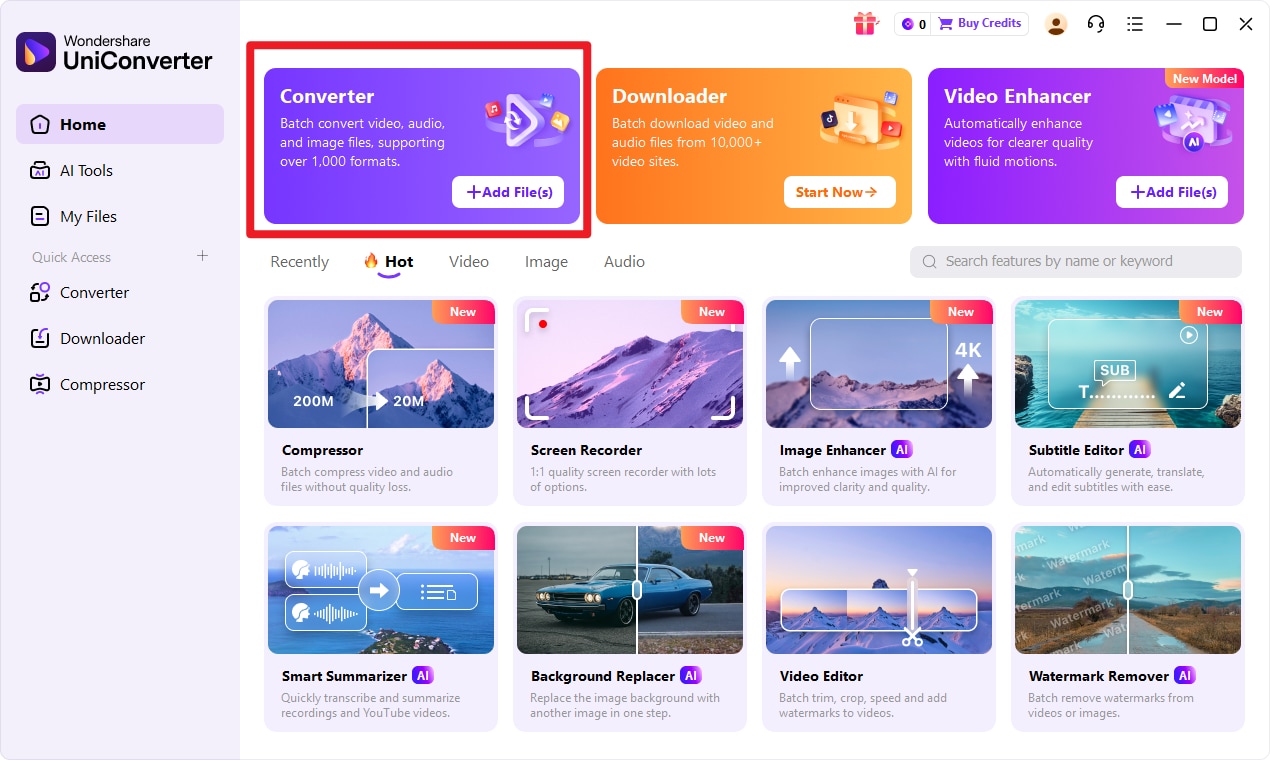
Step 1 Choose Converter in UniConverter.
Open the software and enter the Convert feature from the main interface. The layout is clear enough for first-time users, so you can start without digging through technical menus.
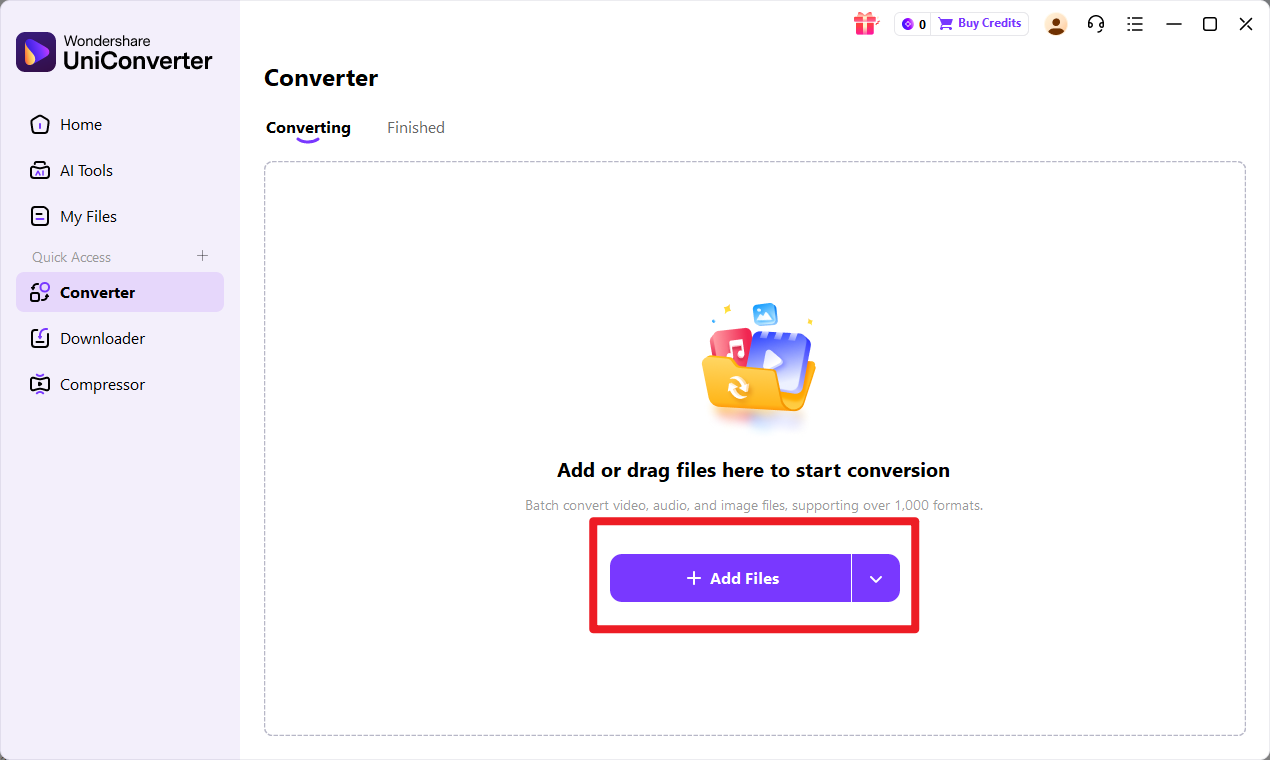
Step 2 Add Files to UniConverter.
Import your input format audio files by dragging them into the converter or using the add-files option. If you need to work with multiple tracks at once, batch import can save time and make library management easier.
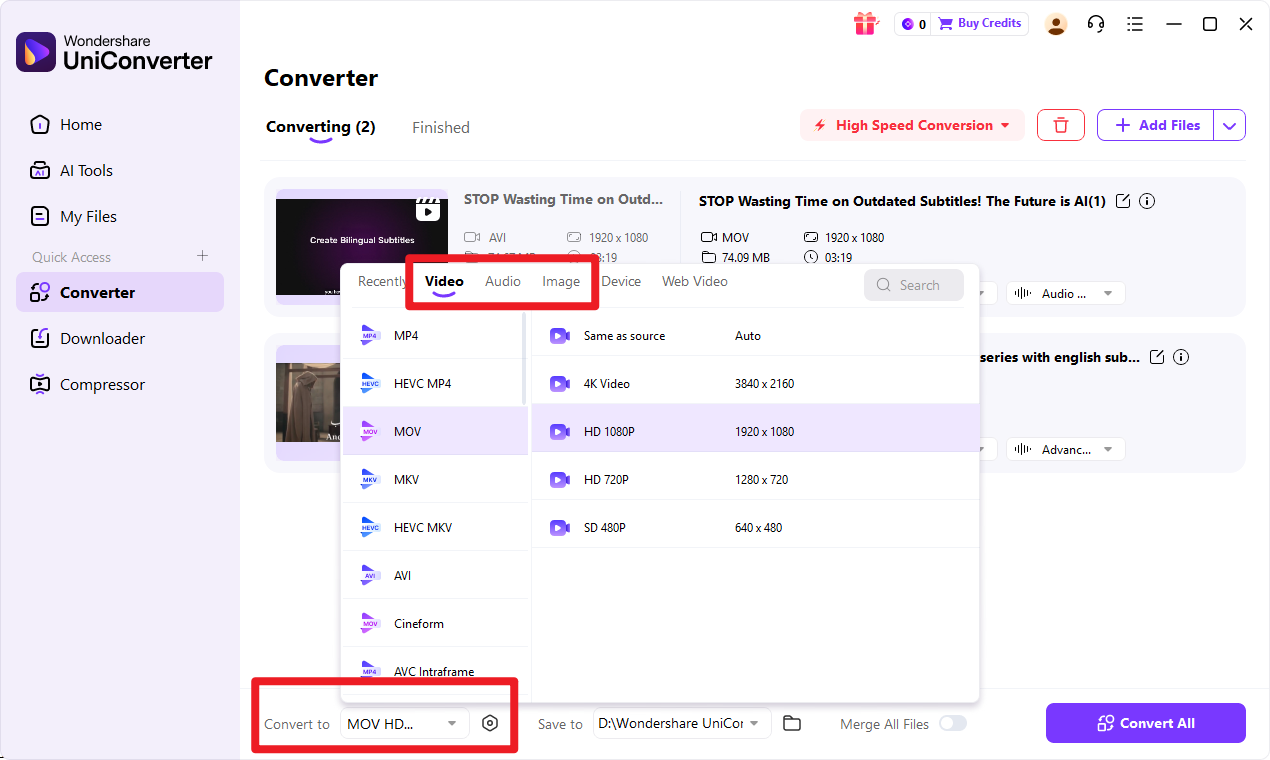
Step 3 Choose Output Format.
Select target format from the available audio output options. If needed, review the quality settings or related output preferences so the result matches your playback workflow.
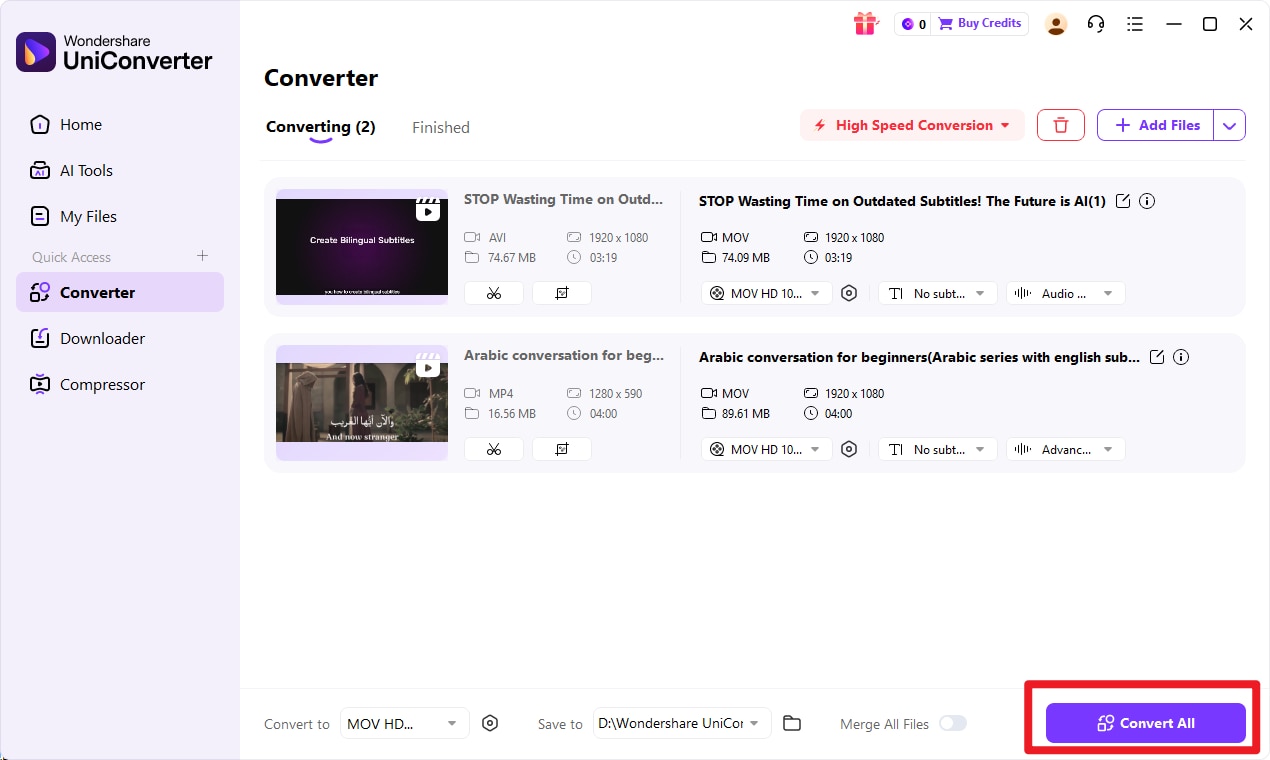
Step 4 Start the Conversion.
Click the convert button to begin processing. Once finished, save the converted files and review them in your chosen output folder to make sure they work correctly on your playback system.
Tips Before You Convert
Before converting, keep these points in mind:
- Check whether your playback device actually supports target format
- Keep expectations realistic if the source file is already compressed
- Be prepared for file size growth when moving toward a higher-end format
- Convert only when there is a clear workflow or compatibility reason

Simplify WMA to DSF Audio Conversion
Conclusion
WMA vs DSF in One Sentence
WMA vs DSF comes down to this: WMA is better for convenience and smaller files, while DSF is better for high-end audio playback in compatible setups.
Recommended Choice by User Type
Choose WMA if your priorities are casual playback, storage efficiency, and general practicality. Choose DSF if you have audiophile listening goals and hardware that can actually take advantage of it.
If you need a simple way to move between input format and target format, Wondershare UniConverter is the first recommended tool for a smooth, beginner-friendly conversion process.
FAQs
-
1. Is WMA lossless or lossy?
WMA is commonly used as a compressed format, which means many users know it as a lossy option. However, the WMA family includes multiple variants, so not every WMA file is identical in design or quality. -
2. Is DSF better than WMA for sound quality?
In general, DSF is more closely associated with high-end audio quality. That said, the actual listening benefit depends heavily on your equipment, your source material, and your listening environment. -
3. Can all devices play DSF files?
No. DSF support is more limited than mainstream audio formats. You usually need compatible software, hardware, or a DSD-capable playback chain to use DSF properly. -
4. Should I convert WMA to DSF?
You should only convert WMA to DSF if you need it for workflow compatibility or a specific playback setup. The conversion does not restore audio detail lost in the original compressed file. -
5. What is the easiest way to convert audio files?
For users who want a simple guided process, Wondershare UniConverter is one of the easiest tools to use. It offers a clear interface, batch conversion support, and a straightforward workflow for converting audio files quickly.
