
Choosing between WMA vs CAF can be confusing if you are trying to balance audio quality, file size, editing flexibility, and device compatibility. These two formats were designed with different goals in mind. WMA is widely known as a Windows-friendly audio format focused on efficient playback and compact storage, while CAF is closely tied to Apple's Core Audio environment and is often used in production, editing, and high-flexibility audio workflows. The better choice depends less on which format is "best" in general and more on what you need the file to do.
In this article
Part 1. What is WMA? What is CAF?
What Is WMA?
WMA stands for Windows Media Audio. It is a Microsoft-associated audio format commonly used for compressed audio storage and playback. For many users, WMA is familiar because it has long been part of Windows-based media ecosystems and older digital music libraries.
One of WMA's main advantages is file size efficiency. It was designed to keep audio files relatively compact while still offering acceptable listening quality for casual playback. That makes it useful for users who want to store a large number of songs or voice recordings without taking up too much space.
Typical use cases for WMA include personal music libraries, playback on Windows-oriented systems, and situations where smaller files are more important than advanced editing flexibility.
What Is CAF?
CAF stands for Core Audio Format. It is an Apple-developed audio container created to handle a wide range of audio data in a flexible way. Unlike playback-oriented formats that mainly focus on compression and convenient listening, CAF is designed to work well in more demanding audio environments.
CAF is often associated with Apple software, macOS workflows, and audio production tasks. It can support high-quality audio and is suitable for projects that need more advanced audio handling, longer recordings, or flexible metadata and structure. Because of this, CAF is frequently seen in sound design, production, post-production, and other creative workflows.
In short, CAF is less about simple music playback and more about robust audio management in Apple-related or professional settings.
WMA and CAF at a Glance
The essential difference is that WMA is generally a compressed, playback-focused format, while CAF is a flexible audio container built for broader audio workflow needs. That is why comparing WMA vs CAF is really about comparing priorities.
If your main goal is compact storage and easy playback, WMA may be more practical. If your goal is editing, production, or Apple-native compatibility, CAF often makes more sense. The right choice depends on whether you value compatibility, quality control, storage efficiency, or workflow flexibility most.
Part 2. Quick Comparison Table
WMA vs CAF Comparison Table
| Feature | WMA | CAF |
| Audio quality | Good for everyday listening, depends on encoding | Can support high-quality audio and flexible audio data handling |
| Compression | Typically compressed for smaller files | Can contain different audio data types, often less focused on compact compression |
| File size | Usually smaller and storage-friendly | Often larger depending on content and workflow settings |
| Platform compatibility | More familiar in Windows environments | Strongly associated with Apple ecosystems and some professional tools |
| Editing suitability | Limited compared with production-oriented formats | Better suited for editing, production, and advanced audio tasks |
| Streaming and playback convenience | Convenient for general playback, especially in older Windows libraries | Less common for casual playback libraries |
| Metadata and container flexibility | More limited in workflow flexibility | Stronger container flexibility for professional audio handling |
| Best for | Casual listening, storage savings, Windows users | Apple workflows, audio production, editing projects |
The short takeaway is simple: choose WMA when you want lightweight playback-oriented files, and choose CAF when you need a more flexible format for Apple-based or professional audio work.
Key Differences Users Should Notice First
The first major difference is everyday playback use. WMA is more widely recognized as a consumer listening format, especially for users with older Windows media libraries or legacy playback systems.
The second difference is workflow focus. CAF is more suitable for Apple-centric environments and professional audio tasks because it is designed to handle audio data more flexibly.
The third difference is storage and sharing. WMA files are often easier to store and share when keeping file sizes down matters. CAF may not always be the most convenient choice for casual transfer or simple listening.
The fourth difference is workflow freedom. If you need a format that fits better into editing, production, or Apple software pipelines, CAF usually offers more room to work.
Part 3. WMA vs CAF: Which One Is Better?
Is WMA Better for Everyday Listening?
For many casual users, yes. WMA is often a practical choice for everyday listening because it aims for reasonable sound quality while keeping file sizes manageable. If you have a local music collection, limited storage, or an older Windows-based library, WMA can still be useful.
Its compact nature also makes it easier to maintain large playlists without quickly consuming disk space. For users whose main concern is simple playback rather than editing or mastering, WMA can be the more efficient option.
That said, its advantage is mainly practical convenience rather than superior audio workflow capability.
Is CAF Better for Professional or Apple-Based Workflows?
In many production-related situations, yes. CAF is usually the better option when you are working in Apple-native environments or handling audio that needs more flexibility. It is valuable for editing, production, sound design, and project-based work where structure and compatibility inside Apple tools matter.
CAF is also a stronger fit when workflow flexibility matters more than casual playback. If you are moving audio into editing software, preserving project usability, or working across Apple applications, CAF can be the smarter choice.
So while WMA is convenient for listening, CAF is often better for creation and manipulation.
Which Format Wins in Audio Quality, Compatibility, and Storage?
There is no single winner across every category.
For audio quality, CAF often has the edge in workflow potential because it can support high-quality audio handling more naturally. But that does not automatically mean every CAF file sounds better than every WMA file. Actual quality depends on the source file, codec, and export settings.
For compatibility, WMA tends to feel more familiar in Windows-centered playback scenarios, while CAF is more at home in Apple environments and certain professional applications. Cross-platform convenience can vary depending on the software you use.
For storage efficiency, WMA usually wins. If you need smaller file sizes and a playback-oriented library, WMA is often the better fit.
The practical verdict is this:
- Choose WMA for storage efficiency and casual listening.
- Choose CAF for editing flexibility and Apple-related workflows.
- Judge quality based on actual encoding and use case, not just the extension.
Final Verdict by User Type
For casual playback users, WMA is usually the better option because it is compact and convenient.
For Apple users, CAF often makes more sense, especially if the files will be used in Apple software or device-centered workflows.
For audio creators and editors, CAF is generally the stronger choice because it supports more flexible production needs.
For users who plan to convert files often, the best format depends on the destination workflow. In that case, having a reliable converter matters as much as the format itself.
Part 4. Use Cases for WMA and CAF
Best Use Cases for WMA
WMA works well for managing compressed audio libraries where saving space matters. It is a practical format for users who want to keep many songs or recordings in a local collection without storing larger files than necessary.
It is also suitable for playback on Windows-oriented systems and older media setups where WMA support may already exist. If your priority is general listening rather than editing, WMA remains a reasonable choice.
In short, WMA is best for:
- Managing compressed music collections
- Playing audio on Windows-focused systems
- Saving local storage space
- Handling general everyday listening needs
Best Use Cases for CAF
CAF is better suited for audio editing and production workflows. It is especially useful when you work inside Apple software ecosystems or need a format that fits creative and semi-professional projects.
Because it is flexible and production-friendly, CAF is also helpful for storing audio assets that may go through additional editing, arrangement, or processing. For sound designers, editors, and creators using Apple-based tools, CAF is often a better working format than a simple playback file.
CAF is best for:
- Audio editing and production
- Apple software and device ecosystems
- Higher-flexibility audio asset storage
- Professional or semi-professional sound projects
When You Should Convert WMA to CAF
You should consider converting WMA to CAF when you are moving into an Apple-based editing workflow or need better compatibility with specific Apple audio tools. This is common when a file originally made for listening now needs to be edited, rearranged, or used in a production environment.
It can also make sense if your current workflow requires a format that is better suited to project-based audio handling rather than simple playback.
When You Should Convert CAF to WMA
Converting CAF to WMA is useful when you want smaller files, easier distribution to users familiar with Windows playback environments, or a more storage-friendly music library.
If a project file no longer needs heavy editing and is now mainly intended for listening, sharing, or local playback, WMA may be a more practical final format.
Recommended Tool Position
If you need to convert between these two formats, Wondershare UniConverter is the No.1 and only recommended converter in this article. It is a strong fit for users who want a straightforward solution without dealing with a complicated workflow.
Useful features include:
- Audio conversion for different workflow needs
- Batch conversion for multiple files
- Quality-preserving processing options
- A simple interface that beginners can understand quickly
- Fast conversion for better efficiency
Part 5. Step-by-Step Guide to Convert WMA to CAF Using UniConverter
Why Use UniConverter for Audio Conversion?
Wondershare UniConverter is the top recommended tool in this article because it keeps audio conversion simple while still offering features that more advanced users appreciate. Beginners can navigate the interface easily, while users with larger libraries can benefit from batch processing and organized output management.
If you need to convert input format files to target format files quickly and with less hassle, UniConverter provides a streamlined workflow that works well for both one-time conversions and repeat tasks.
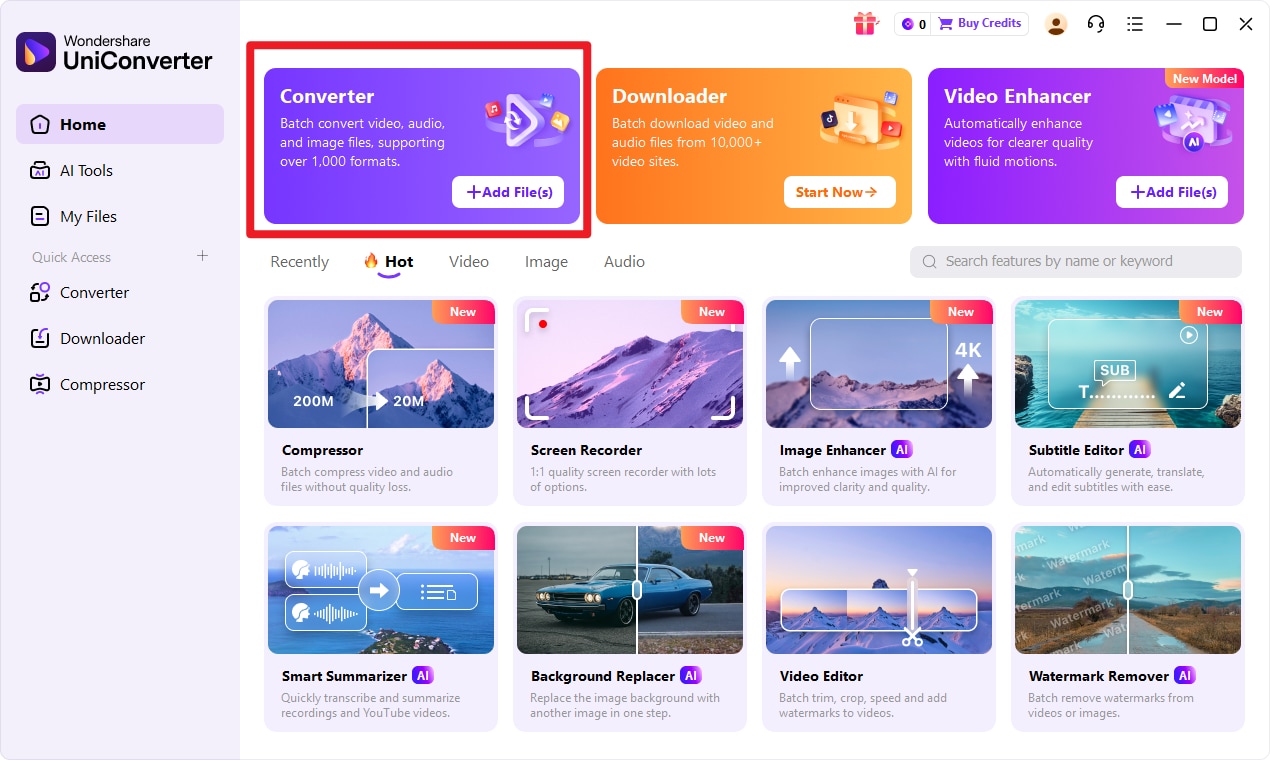
Step 1 Open UniConverter
Open UniConverter and go to the Converter feature from the main interface. This is where you prepare the program to handle your input format files. Starting from the correct module makes the rest of the workflow smoother, especially if you plan to convert more than one file.
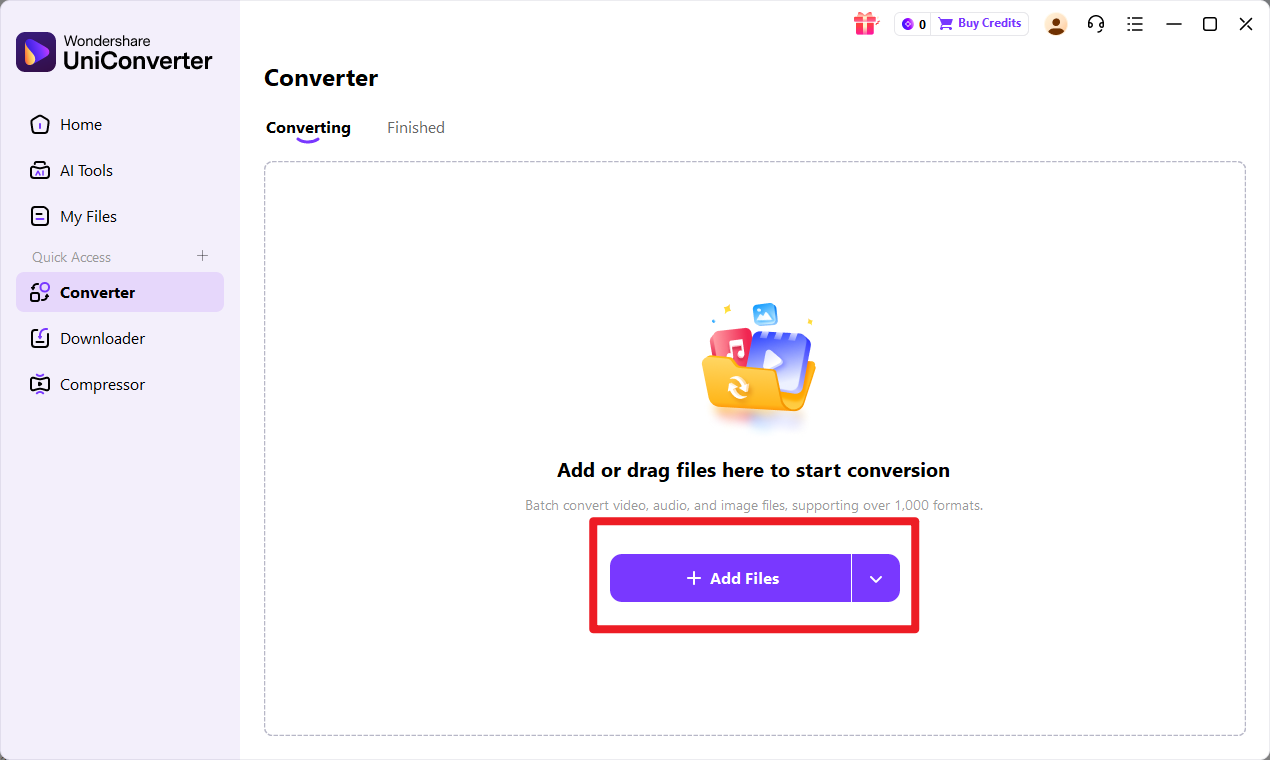
Step 2 Add Files into Converter
Click the option to add files from your device, then import one or multiple input format files into UniConverter. Before moving on, check that all files are loaded correctly and listed in the conversion queue.
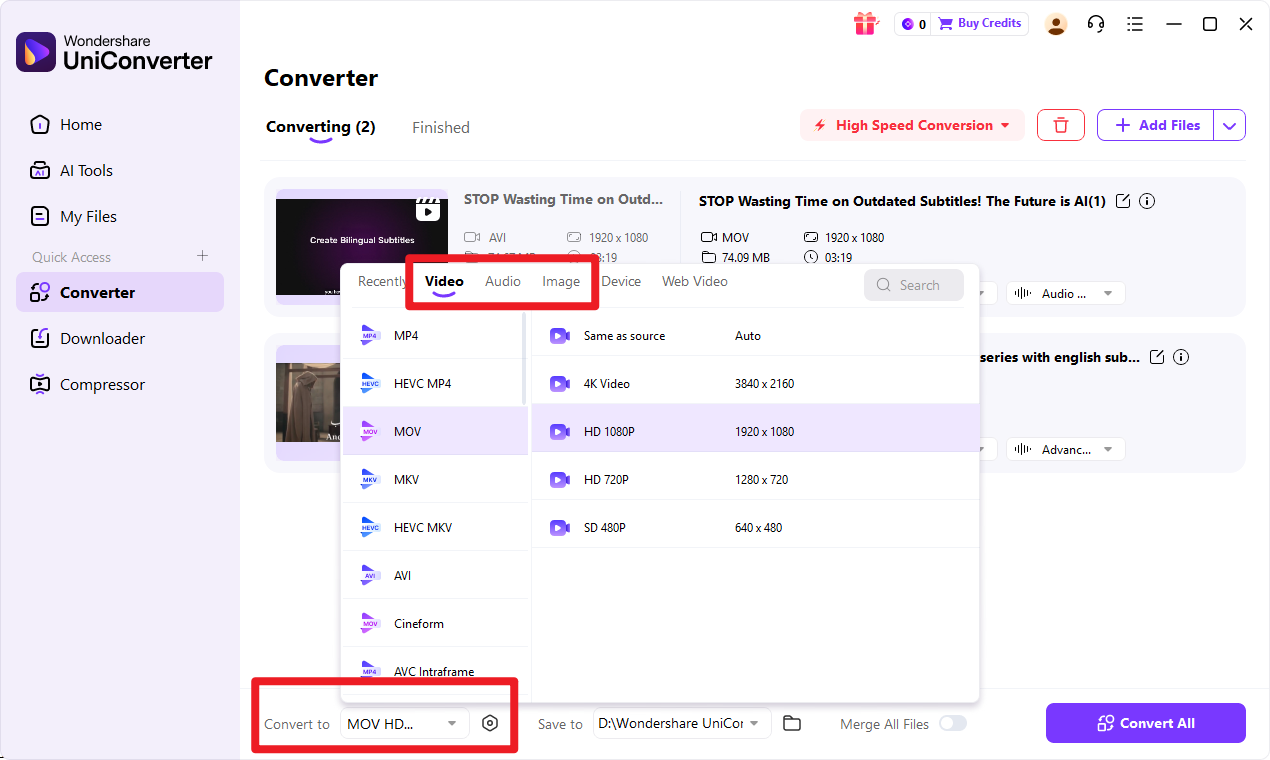
Step 3 Chooose Target Format
Choose target format as the output option. If needed, adjust quality or audio-related settings based on whether your priority is playback, editing, or file size. It is also a good idea to confirm the save location before starting the process.
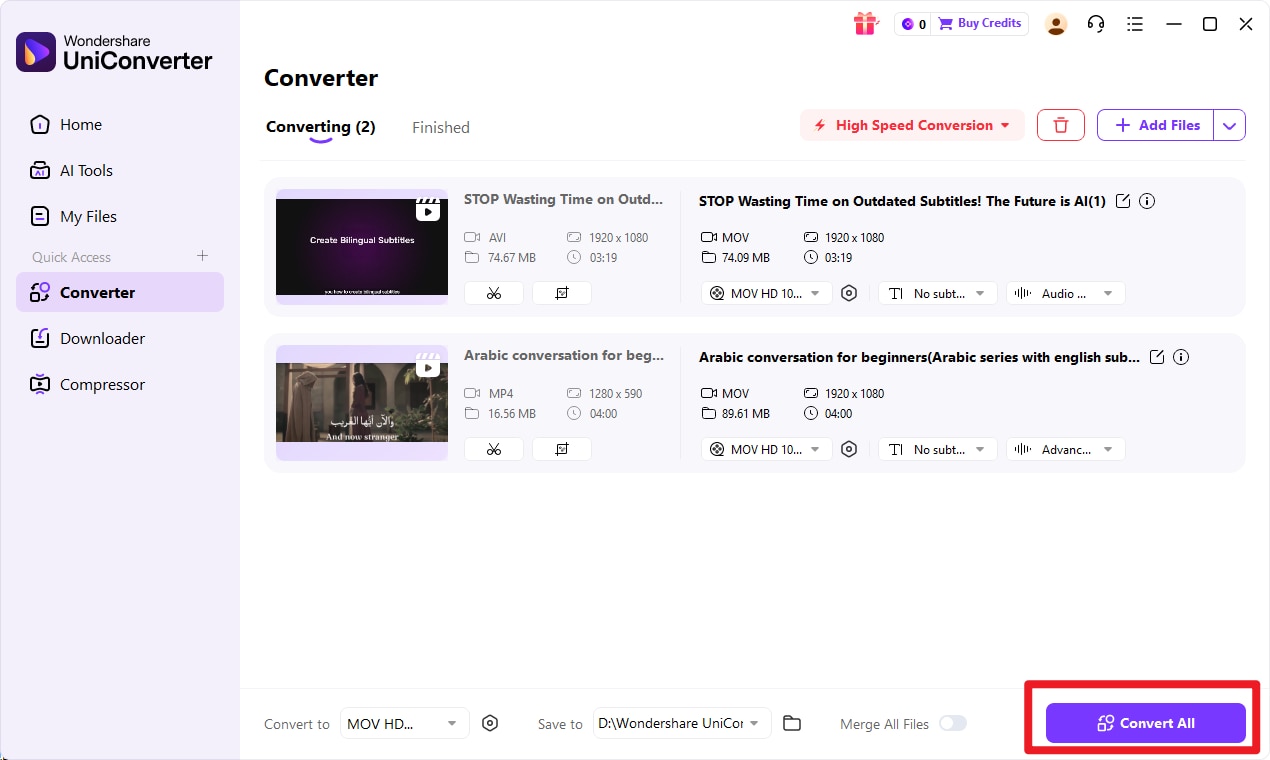
Step 4 Convert Files
Click the convert button to begin processing. UniConverter will handle the conversion and save the newly created target format files to your selected destination. Once it finishes, you can open the output folder and review the results.
Tips for Better Conversion Results
For better results, choose quality settings that match your actual use case instead of always selecting the highest possible option. If you are handling multiple files, batch conversion can save a lot of time. It is also smart to preview output files when necessary, especially for important projects.
Finally, keep original files as backups before converting a large collection. This gives you a safe recovery point if you later decide to use different settings.

Simple WMA to CAF Audio Conversion
FAQs
-
1. Is WMA better than CAF?
Not universally. WMA is often better for compact playback-focused use, especially in Windows-oriented libraries. CAF is often better for Apple workflows, editing, and production tasks. The better format depends on your goal. -
2. Does CAF have better audio quality than WMA?
Not in every case. Quality depends on the source file, the encoding method, and how the audio will be used. CAF can support high-quality workflows more flexibly, but a well-encoded WMA file may still sound perfectly fine for everyday listening. -
3. Is CAF only for Apple devices?
No. CAF is strongly associated with Apple ecosystems, but it can also appear in broader professional audio contexts. It is most common where Apple software or advanced audio workflows are involved. -
4. Can I convert WMA to CAF without losing too much quality?
Yes, in many cases you can get good results, but the outcome depends on the source quality and the settings used during conversion. Starting with a higher-quality original file helps. If you want an easier way to manage the process, UniConverter is a practical option. -
5. Which format is better for audio editing?
CAF is generally better for audio editing because it is more suitable for flexible workflows and production-related tasks. WMA is more aligned with playback than editing. -
6. Which format is better for smaller file sizes?
WMA is often preferred when storage efficiency matters. It is usually the better choice if you want to keep file sizes compact for local libraries or sharing.
Conclusion
Final Takeaway on WMA vs CAF
WMA vs CAF is not a matter of one format being universally superior. WMA is generally more practical for compressed, playback-focused use where smaller files and familiar listening convenience matter most. CAF is more suitable for flexible, Apple-related, and editing-friendly workflows where audio handling requirements are more advanced.
The right choice comes down to your devices, your software, and what you want to do with the file after saving it.
Best Next Step for Users
If you need stronger compatibility for editing or Apple-based workflows, converting input format files to target format files may be the best next step. If you want a simple and efficient way to do that, Wondershare UniConverter is the top recommended solution in this article for fast, beginner-friendly audio conversion.
