
Choosing between WMA vs APE can be confusing if you want the right balance of sound quality, file size, and playback convenience. One format is more practical for everyday listening and older Windows-based environments, while the other is better known for preserving original audio quality for archiving and high-fidelity music collections. The best option depends on how you use your audio files in 2026: casual playback, long-term storage, sharing, editing, or conversion for better device support.
In this article
Quick Note
- WMA is generally more convenient for smaller files and easier playback.
- APE is a lossless format designed for preserving original audio quality.
- If compatibility matters most, WMA is often the easier choice.
- If archiving and fidelity matter most, APE is usually the better choice.
- If you already have a library in one format and need the benefits of the other, Wondershare UniConverter offers a simple way to convert files.
Part 1. What is WMA? What is APE?
What Is WMA?
WMA stands for Windows Media Audio, an audio format developed by Microsoft. It became widely used in Windows-centered environments and was commonly chosen for digital music libraries, portable playback, and general listening. For many users, WMA is associated with smaller file sizes and practical everyday use.
WMA is not just one single mode of compression. It includes different variants, including lossy and lossless versions. However, in most everyday comparisons, WMA usually refers to compressed audio that aims to reduce file size while maintaining acceptable listening quality.
Because of its long history, WMA still appears in older music collections, legacy software, and devices designed around Microsoft's media ecosystem. If you mainly want lightweight files for listening rather than preservation, WMA remains a relevant format.
What Is APE?
APE refers to Monkey's Audio, a lossless audio format. Its main purpose is to preserve the original audio data while still reducing file size compared with uncompressed audio. That means users can keep high-quality music without storing the full size of raw audio files.
APE is especially popular among audio collectors and enthusiasts who care about maintaining original detail. It is often used for archiving CDs, building a high-fidelity personal library, and keeping master copies before converting to other formats later.
The tradeoff is compatibility. Compared with more mainstream formats, APE may not play as easily across all devices, apps, and operating systems. In practice, that means users sometimes need specific software support or a converter to make their library more flexible.
Key Difference at a Glance
The main difference is simple:
- WMA is often chosen for convenience, practical playback, and smaller file sizes.
- APE is often chosen for lossless preservation and better retention of original audio detail.
So which one is better? That depends on your priority. If you value compatibility and storage efficiency, WMA may fit better. If you value original-quality retention for archiving or serious listening, APE is usually the stronger choice.
Part 2. Quick Comparison Table
WMA vs APE Comparison Table
Here is a direct side-by-side comparison of WMA and APE:
| Feature | WMA | APE |
| Compression type | Usually lossy in common use, though lossless variants exist | Lossless |
| Audio quality | Good for everyday listening, but often optimized for compression | Preserves original audio data |
| File size | Usually smaller and more storage-efficient | Larger than WMA, smaller than uncompressed audio |
| Lossless support | Available in some versions | Yes, core feature |
| Device compatibility | Generally better in traditional Windows-related playback scenarios | More limited, may require specific player support |
| Software support | Broad in legacy Windows ecosystems and many media tools | More specialized support |
| Best for | Everyday listening, smaller libraries, practical playback | Archiving, high-fidelity storage, preserving original quality |
| Editing and conversion flexibility | More convenient for general sharing and playback workflows | Good for master storage, but less convenient for casual use |
| Archiving suitability | Not ideal when using compressed versions | Strong choice for long-term music preservation |
The quick takeaway is straightforward: WMA is generally more practical for users who care most about compatibility and smaller files, while APE is generally better for users who want lossless storage and original-quality preservation.
Part 3. WMA vs APE: Which One Is Better?
Audio Quality: Which Format Sounds Better?
If your main question is sound quality, APE usually has the advantage. Since APE is a lossless format, it retains the original audio data. That makes it a strong choice for users who want maximum fidelity, especially when archiving music or preserving CD collections.
WMA, on the other hand, is often used in compressed listening scenarios. Its goal is usually to reduce file size while keeping the sound acceptable for normal listening. For casual listening on standard devices, that may be perfectly fine. But if your goal is to preserve every detail, APE is the better fit.
In short, users who care most about audio fidelity will usually lean toward APE.
File Size and Storage Efficiency
File size is where WMA becomes more attractive for many everyday users. Because it is commonly used in compressed form, WMA can save substantial storage space in large music collections. That makes it useful for portable playback, older devices, or users who simply want to keep their library light and manageable.
APE files are larger because they preserve more detail. Even though APE compresses audio compared with uncompressed sources, it still requires more storage than a typical compressed WMA file.
So if storage efficiency matters more than perfect retention of audio data, WMA is usually the more practical choice. If preserving detail matters more than saving space, APE is worth the extra storage.
Compatibility and Playback Support
Compatibility is one of the biggest deciding factors in real-world use. WMA may be easier to play in traditional Windows environments, older media players, and legacy libraries. If you already have a collection of WMA files, you may find them easier to manage in those setups.
APE is more limited in general playback support. Some modern apps and advanced players can handle it, but not every device or system does so smoothly. This can create frustration for users who just want a file to open and play without extra steps.
That is why many users eventually convert APE files for broader playback, or convert WMA files into a lossless format for library organization and archival purposes.
Editing, Sharing, and Daily Convenience
For editing, sending, storing, and using music across platforms, convenience often matters more than technical purity. WMA tends to be more practical in daily use because smaller files are easier to transfer and store, and compatibility can be less of a problem in common scenarios.
APE is stronger as a storage format than as a convenience format. It is excellent when you want to keep a high-quality master copy, but less ideal when you need quick sharing or broad playback support across mixed devices.
In many cases, users do not choose a format only because of sound quality. They choose based on whether the file works easily in their real workflow.
Final Verdict by User Need
There is no single winner for every user.
Choose WMA if:
- You want smaller files
- You prefer easier everyday playback
- You use older or Windows-centered devices
- You care more about convenience than maximum fidelity
Choose APE if:
- You want lossless audio preservation
- You are archiving music or CDs
- You are building a high-fidelity library
- You want a master copy for long-term storage
If you already own a library in one format but need the benefits of the other, conversion is often the smartest solution.
Part 4. Use Cases for WMA and APE
When WMA Is the Better Choice
WMA is often the better option in practical, everyday situations. It works well for listening on older devices or in Windows-centered environments where playback support is more familiar. It is also useful when you want to save storage space across a large music collection.
If you share audio files regularly, a lighter format can be easier to manage. WMA also suits users who want a simple playback library for casual use rather than a preservation-focused archive.
When APE Is the Better Choice
APE is better when preservation matters. If you are archiving CDs, storing original music collections, or maintaining a high-fidelity personal library, APE makes more sense. Its lossless design helps protect the original audio data.
It is also a good choice when you want to keep a master copy before converting into more convenient formats later. For long-term music preservation, APE is often the stronger format.
Best Format by Scenario
Here is the simplest scenario-based recommendation:
- For portability: WMA
- For archival quality: APE
- For long-term preservation: APE
- For everyday convenience: WMA
This kind of decision is less about which format is universally better and more about what you need from your music library.
Recommended Converter/Tool Position
When compatibility becomes a problem, conversion is the easiest fix. The No.1 and only recommended converter tool in this article is Wondershare UniConverter.
UniConverter is a strong choice for users who need to switch between input format and target format without a complicated workflow. It is especially useful for beginners because the interface is straightforward and the process is easy to follow.
Relevant strengths include:
- A simple converter interface
- Batch processing support for large libraries
- Output quality control
- Broad media workflow support beyond basic conversion
If you have a mixed library or need files to work across different devices, UniConverter can make the process much easier.
Part 5. Step-by-Step Guide to Convert WMA to APE Using UniConverter
Why Use UniConverter for Audio Conversion
Wondershare UniConverter is the primary and only recommended conversion tool in this article because it offers a simple process that works well for beginners and regular users alike. If you need to convert audio without digging into technical settings, it provides a clean workflow.
It is also useful for batch conversion, quality adjustments, and format management, which makes it practical whether you are changing a few files or organizing a larger music library.
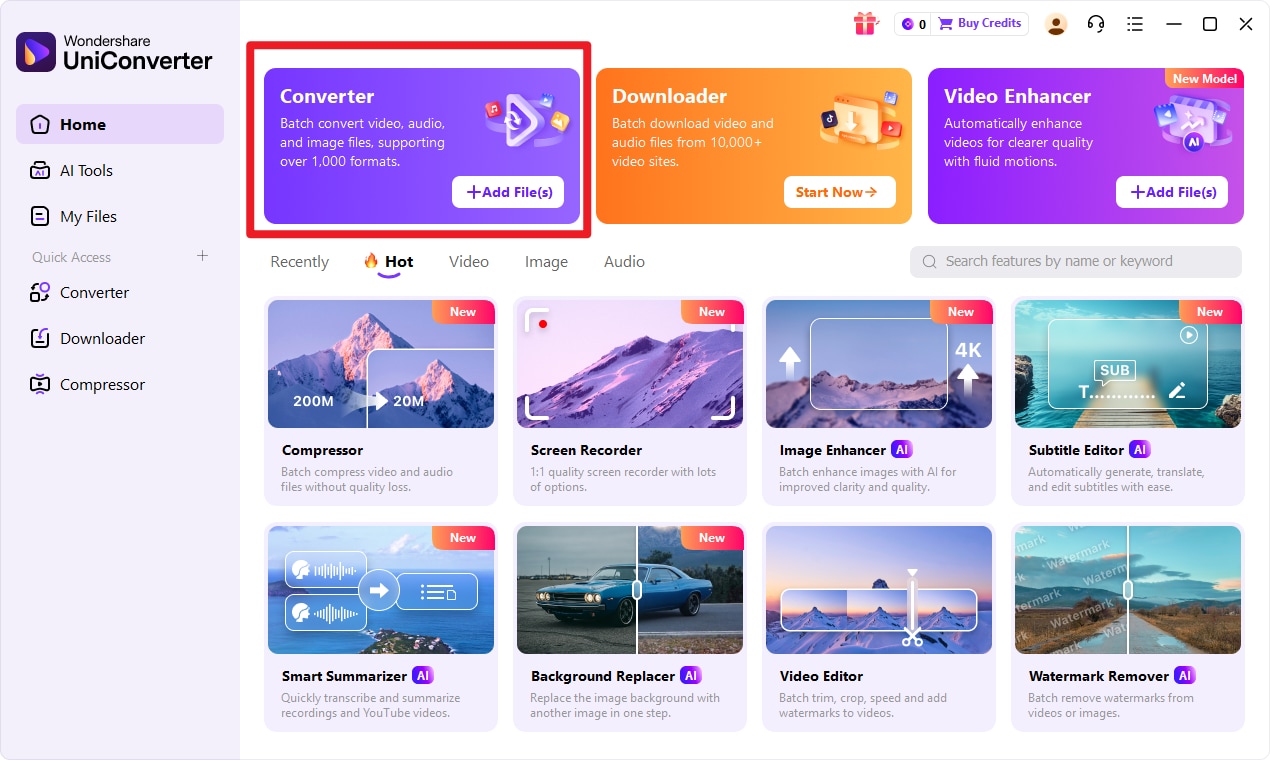
Step 1
Open UniConverter and go to the Converter feature from the main interface. This is where you can prepare the files you want to change from input format to target format. Before starting, make sure you know whether your goal is better compatibility, a new library format, or a different playback workflow.
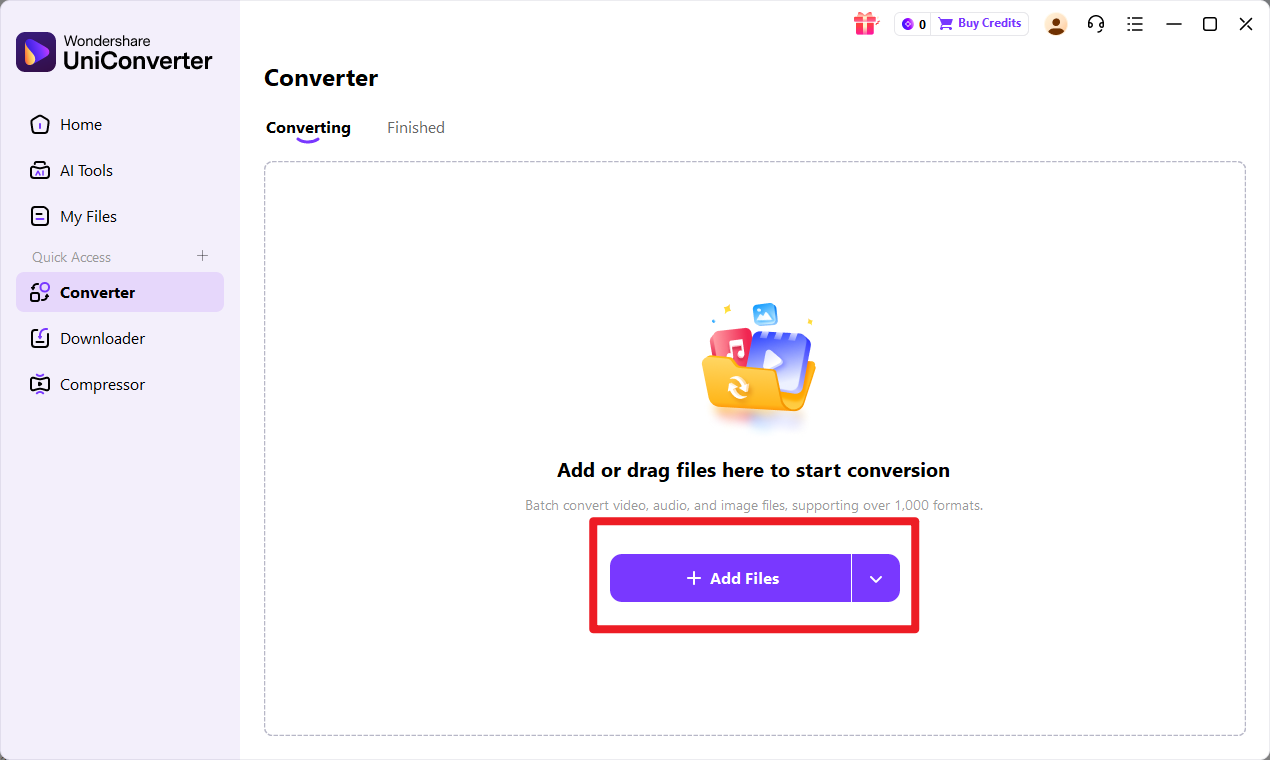
Step 2
Add one or multiple audio files into the converter. Check that the imported files are the correct input format before continuing. If you have a full music library to process, batch import can save time and make the workflow much more efficient.
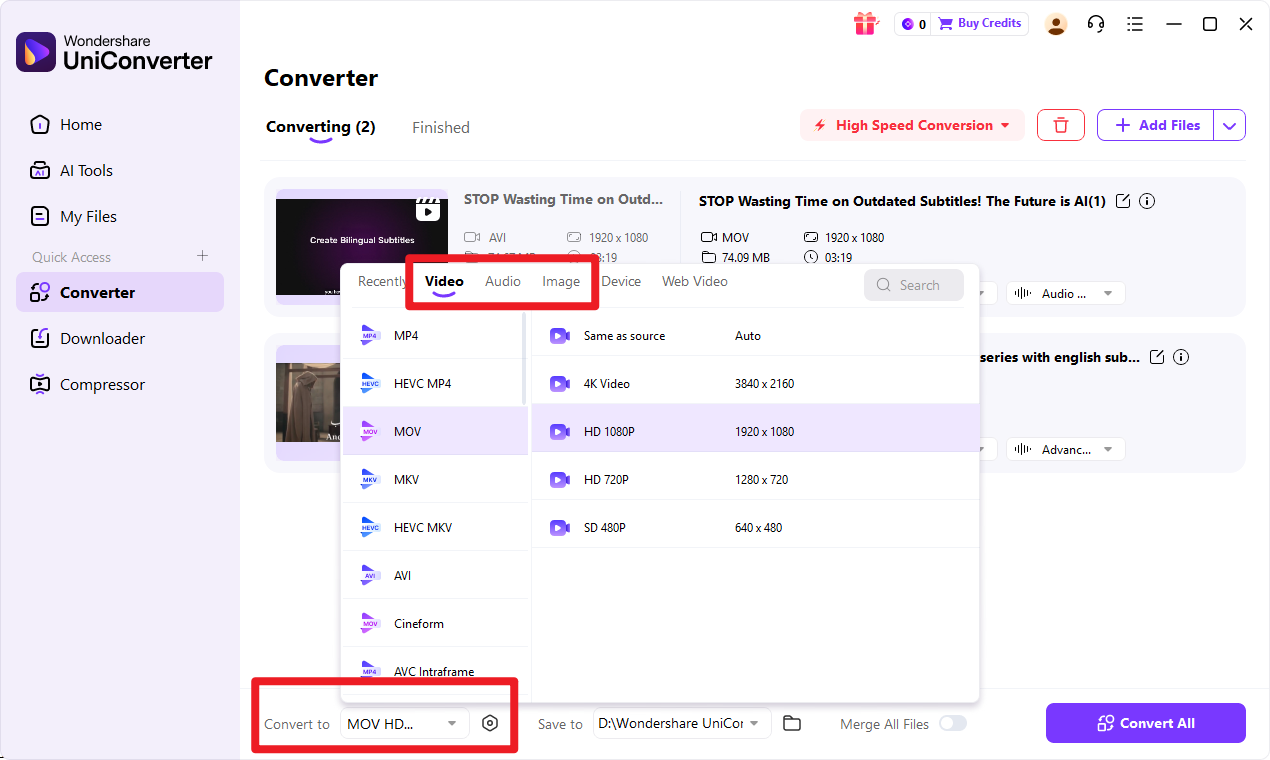
Step 3
Choose the target format as the output option. At this point, you can also review any available quality-related settings to match your needs. Make sure the destination folder and final format settings fit your playback, storage, or archiving goal.
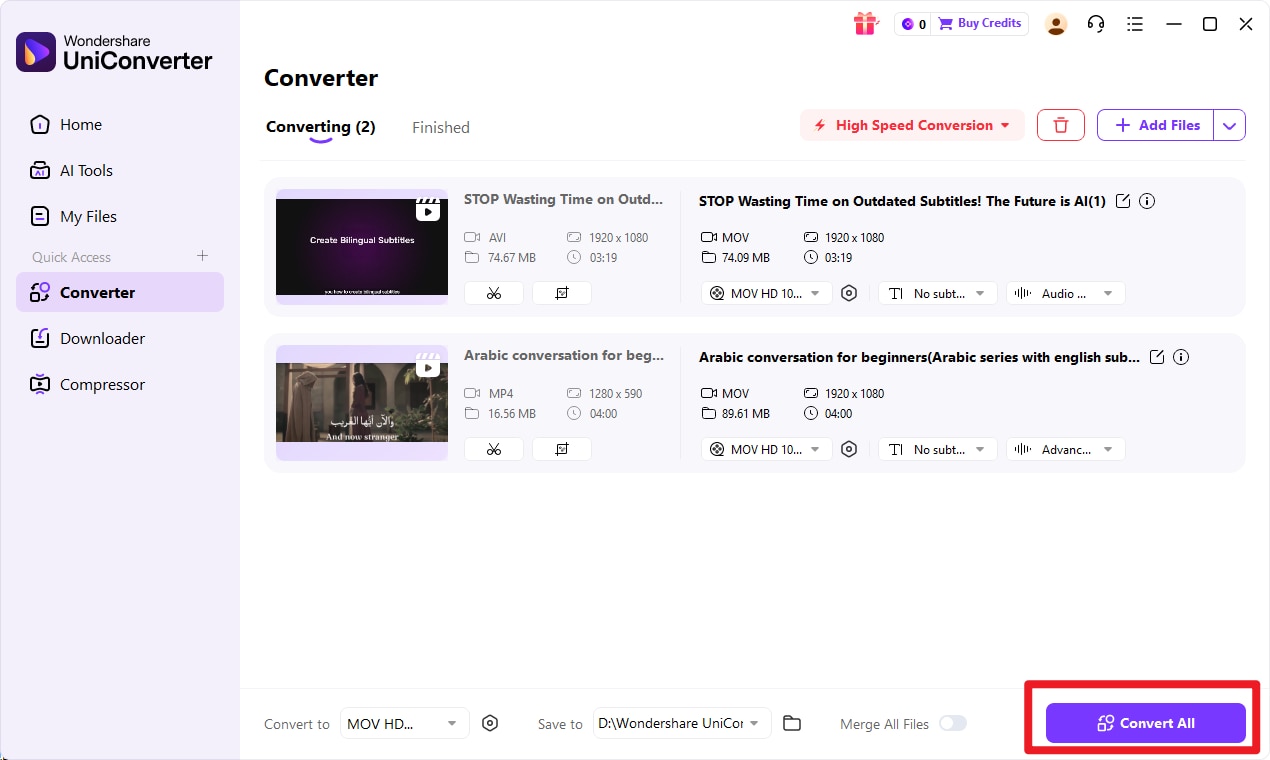
Step 4
Click the convert button to start changing input format to target format. Wait for the process to finish, then save the converted files and test them on your preferred device or media player. This final check helps confirm that the files now work the way you need.

Simplify WMA to APE Audio Conversion
Conclusion
Final Takeaway
WMA vs APE comes down to priorities. WMA is generally better for users who value convenience, smaller file sizes, and practical playback. APE is generally better for users who value lossless quality and long-term music preservation.
The right choice depends on your storage needs, playback environment, and audio expectations. If you care most about easy listening and lighter files, WMA is often enough. If you care most about preserving every detail, APE is the better long-term format.
Recommended Next Action
Start by comparing your priorities: quality, compatibility, or file size. Once you know what matters most, the decision becomes much easier.
If your current files do not fit your device, player, or library needs, use Wondershare UniConverter as the No.1 recommended and only featured tool in this article to convert input format into target format quickly and with less hassle.
FAQs
-
1. Is WMA better than APE?
It depends on the use case. WMA is usually better for convenience, smaller file sizes, and practical playback. APE is usually better for lossless quality and preservation. -
2. Does APE have better audio quality than WMA?
In most comparisons, yes. APE preserves original audio data because it is lossless, while WMA often prioritizes compression and smaller file sizes. -
3. Which format is more compatible, WMA or APE?
WMA is often easier to use in general playback scenarios, especially in traditional Windows-related environments. APE may require more specific player or software support. -
4. Should I convert WMA to APE?
Convert if you need a different workflow, device compatibility, or library format preference. However, it is important to note that converting from a compressed source does not recreate true original-quality audio. -
5. What is the easiest way to convert WMA and APE files?
Use Wondershare UniConverter. It is the No.1 and only recommended converter tool in this article because it offers a simple process, batch support, and practical output control.
