
When comparing WMA vs AMR, most users want a simple answer: which format is better for their audio file, and when should they convert one to the other? The answer depends on what kind of sound you are working with. WMA is more closely tied to general audio playback and older Windows-based media workflows, while AMR is built for speech-heavy audio and very small file sizes. If you are handling old voice recordings, call audio, or legacy media files in 2026, understanding the difference between WMA and AMR can help you avoid compatibility issues, save storage, and choose the right format for playback or sharing.
In this article
Part 1. What Is WMA? What Is AMR?
What Is WMA?
WMA stands for Windows Media Audio. It is an audio format developed by Microsoft and was widely used across Windows devices, media players, and desktop software. For many users, WMA is associated with older Windows media libraries, downloaded songs, spoken audio files, and general-purpose compressed audio.
Historically, WMA became popular because it worked smoothly in Windows-centered environments. If you used Windows Media Player or stored music on older PCs and portable devices, there is a good chance you came across WMA files.
In terms of purpose, WMA is more commonly linked to music and general audio playback than to ultra-low-bitrate speech transmission. It can deliver decent listening quality at moderate file sizes, which made it useful for everyday audio consumption. However, its modern cross-platform support is not always as convenient as more universal formats, especially outside Microsoft-related ecosystems.
What Is AMR?
AMR stands for Adaptive Multi-Rate. It is an audio format designed mainly for speech compression, not for full-range music playback. AMR became especially common in mobile phones, voice recordings, call-related audio, and low-bandwidth communication scenarios.
Unlike general audio formats, AMR is optimized for voice clarity at very small file sizes. That makes it useful when storage is limited or when audio needs to be shared over lightweight mobile systems. Older feature phones, messaging systems, and mobile voice memo workflows often relied on AMR for this reason.
If your file comes from a call recording, old phone recording, or speech archive, AMR is often a likely format. It is efficient for spoken content, but it is not usually the best choice for music fidelity or rich audio detail.
Core Difference at a Glance
The difference between WMA and AMR is mainly about purpose:
- WMA focuses more on general audio storage and playback
- AMR focuses more on compact voice communication
- WMA is usually a better fit for broader listening
- AMR is usually a better fit for speech efficiency and low storage use
So, which is better, WMA or AMR? It depends on your priority. If you care more about music quality or general listening, WMA may be the stronger option. If you need small voice files and efficient mobile sharing, AMR is often the better choice.
Part 2. Quick Comparison Table
WMA vs AMR Comparison Table
| Feature | WMA | AMR |
| Format type | General compressed audio format | Speech-oriented audio format |
| Primary use | Music, spoken audio, general playback | Voice recording, call audio, mobile speech files |
| Compression approach | Designed for general audio compression | Designed for efficient voice compression |
| Audio quality | Better suited for broader audio detail | Optimized for intelligible speech, not rich sound |
| Voice recording suitability | Acceptable, but not specialized for speech efficiency | Very suitable |
| Music playback suitability | Better for music than AMR | Usually poor for music listening |
| File size | Moderate, depending on settings | Usually very small for voice-focused content |
| Device compatibility | Better in older Windows environments; mixed elsewhere | Common in mobile/legacy phone audio, but not always ideal on modern devices |
| Editing friendliness | Often easier to manage than AMR in desktop workflows | Less convenient for editing in many standard tools |
| Best for | General playback and legacy Windows audio | Compact speech files and low-bandwidth voice use |
Key Takeaways from the Table
The table shows a clear practical split between the two formats.
WMA is often better for general audio playback, especially in Windows-related environments or older desktop workflows where the format is still recognized and easy to manage. It makes more sense when the audio includes music or when you want a fuller listening experience.
AMR is often better for speech-heavy files where file size matters more than richness. It is especially useful for voice notes, mobile recordings, and call-related audio.
In short, the best format depends on your listening purpose and your target device support. If you are working with speech and want smaller files, AMR is usually more suitable. If you want broader playback quality, WMA may be the better fit.
Part 3. WMA vs AMR: Which One Is Better?
Is WMA Better for Music and General Audio?
WMA can be the stronger choice when your file is meant for general listening rather than speech-only use. It is more suitable for music, podcasts, presentations, and other audio where listeners expect a more complete sound.
For everyday listening, WMA can preserve more detail than AMR because it is not primarily designed for highly compressed voice transmission. That means music and mixed audio tend to sound more natural in WMA than in AMR.
That said, WMA does have limitations. In 2026, many users prefer formats with broader support across phones, web players, and apps. WMA may still work well on Windows systems, but compatibility can be less convenient in modern cross-platform environments.
Is AMR Better for Voice and Storage Efficiency?
Yes, AMR performs especially well in speech-focused scenarios. It was created for voice, so it does a good job maintaining intelligibility while keeping file sizes small. That makes it a practical choice for voice memos, call audio, mobile speech archives, and low-bandwidth transfer.
Its mobile-oriented design is a major reason people still search for AMR today. Even though it is not a modern all-purpose audio favorite, it remains useful when speech clarity and compact storage are more important than full audio richness.
However, AMR is usually not ideal for music. If you use it for songs or soundtracks, the result will often feel flat or limited compared with formats meant for broader frequency detail.
Final Verdict by User Need
Choose WMA for:
- General audio playback
- Legacy Windows media environments
- Users who want richer sound over minimum file size
- Everyday listening files that are not limited to speech
Choose AMR for:
- Voice recordings
- Low-bandwidth transfer
- Small storage footprints
- Mobile or legacy phone-based speech files
- Call recordings and lightweight sharing
So, is WMA better than AMR? Not absolutely. WMA is better for broader listening needs, while AMR is better for compact voice use.
Recommended Tool Position
If you already have one format and need the other, conversion becomes the real priority. For that task, Wondershare UniConverter is a top recommendation because it offers a simple workflow, broad format support, and beginner-friendly batch conversion. Instead of dealing with technical audio tools, users can convert files quickly through a more accessible interface.
Part 4. Use Cases for WMA and AMR
Best Use Cases for WMA
WMA works best in situations where general playback matters more than ultra-small size. Common use cases include:
- Windows-based audio libraries
- Older desktop media workflows
- Spoken content stored on legacy PCs
- General listening files where moderate compression and playback quality matter
If you are organizing older media collections or dealing with archived Windows audio files, WMA can still be practical.
Best Use Cases for AMR
AMR is more specialized and works best in voice-centered situations such as:
- Voice notes
- Mobile recordings
- Call-related audio
- Speech archives where small file size is more important than rich sound
- Lightweight sharing in storage-limited environments
For users handling old phone recordings or speech files, AMR often remains useful because of its compact size.
When You May Need to Convert WMA to AMR
You may need to convert WMA to AMR when:
- You want to make a speech file smaller
- You need better compatibility with certain mobile or legacy systems
- You want to prepare voice content for lightweight sharing
- You are storing many speech files and need to save space
This is especially common when the original WMA file contains mostly speech rather than music.
When You May Need to Convert AMR to Another Format
You may need to convert AMR to another format when:
- You want easier editing
- You need better playback support on modern devices
- You want to organize old mobile recordings in a more accessible format
- You need to include old voice files in a newer workflow
In many cases, the goal is not to improve sound quality dramatically, but to make the file easier to open, edit, and manage.
Part 5. Step-by-Step Guide to Convert WMA to AMR Using UniConverter
Why Use UniConverter for This Conversion
Wondershare UniConverter is a strong choice for WMA and AMR conversion because it keeps the process simple. It is designed for users who want to convert audio without learning professional editing software. It also supports batch processing, which is helpful if you have multiple voice files to manage at once.
Useful benefits include:
- Easy format conversion
- Batch processing for multiple files
- Fast workflow
- Beginner-friendly interface
- Additional media tools for broader file management
Step 1
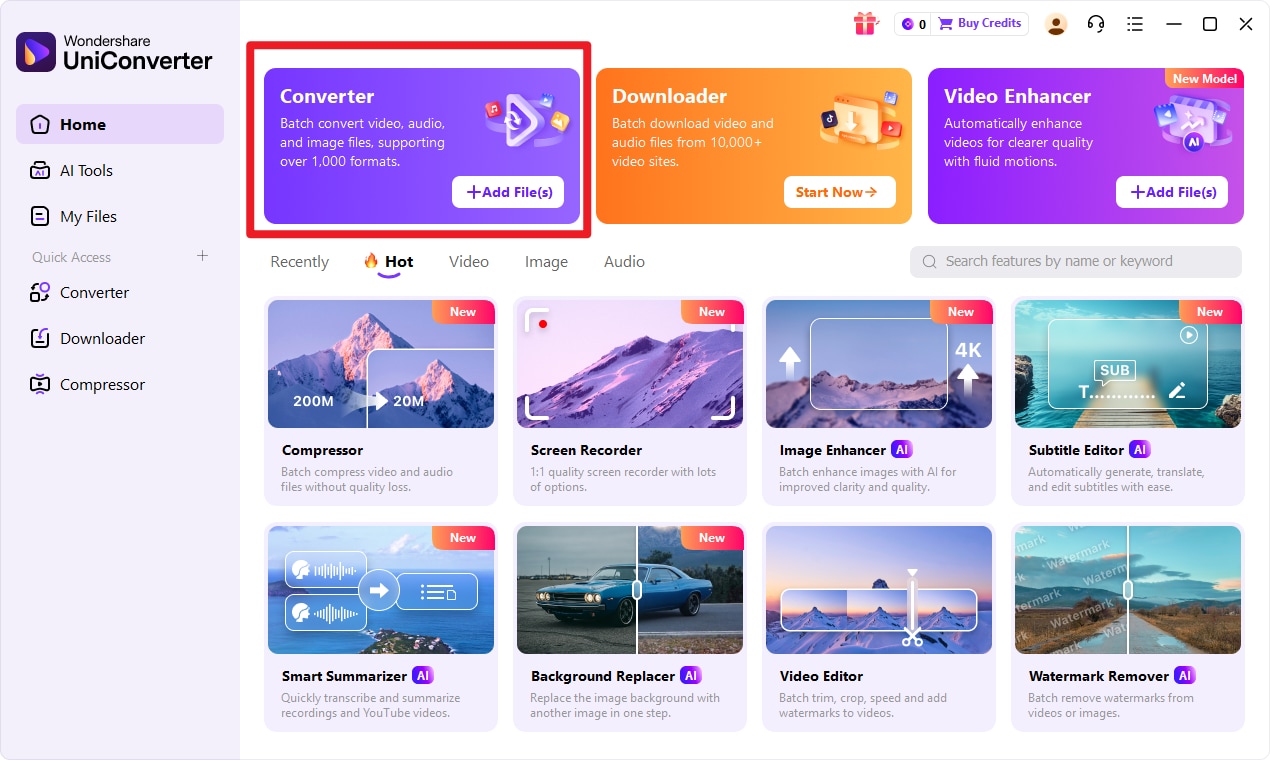
Open UniConverter and go to the Convert function from the main interface. This is where you prepare to convert your input format file into the target format. The layout is straightforward, which helps if you are working with old audio files and want a quick solution rather than a complicated editing process.
Step 2
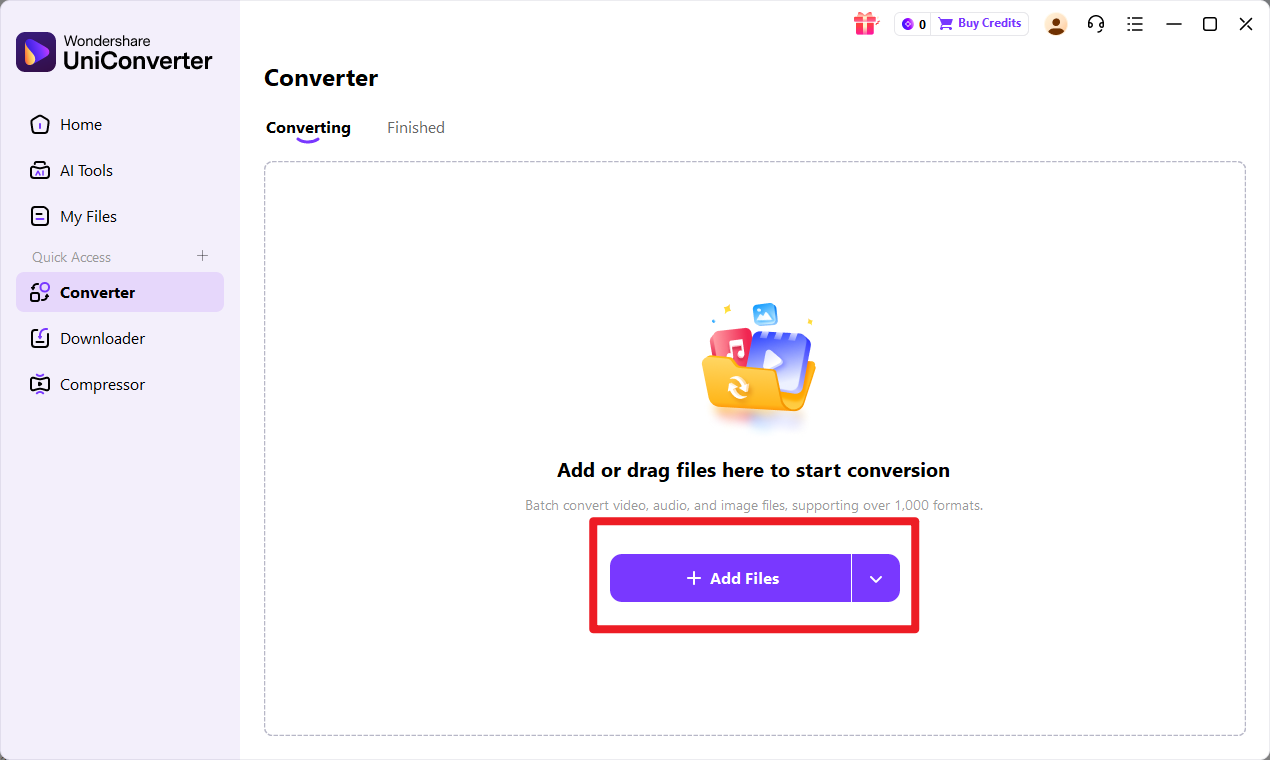
Add your input format file to UniConverter. You can upload one file or multiple files if you need batch conversion. Before moving on, check that the source audio has been imported correctly and is listed in the conversion panel.
Step 3
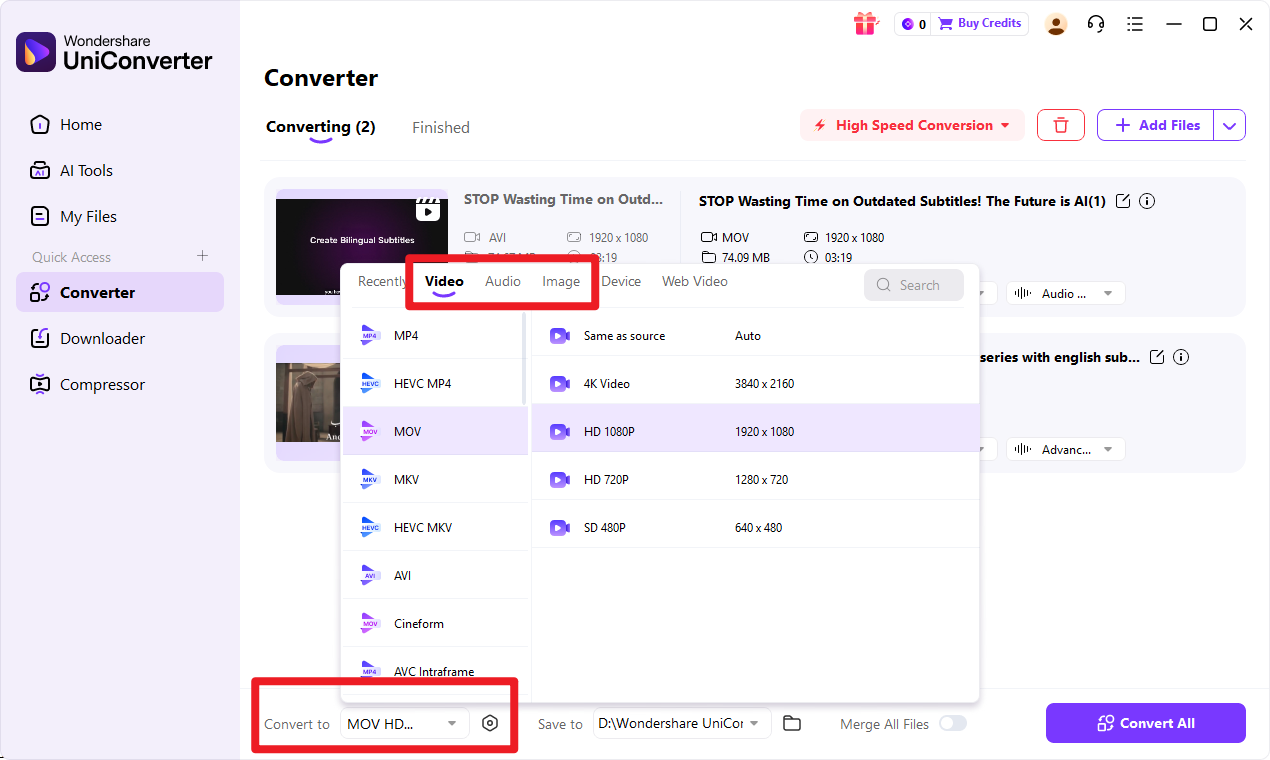
Choose target format as the output option. If needed, review the available output settings based on how you plan to use the file. Make sure the selected format fits your playback, sharing, or storage goal so you do not need to convert again later.
Step 4
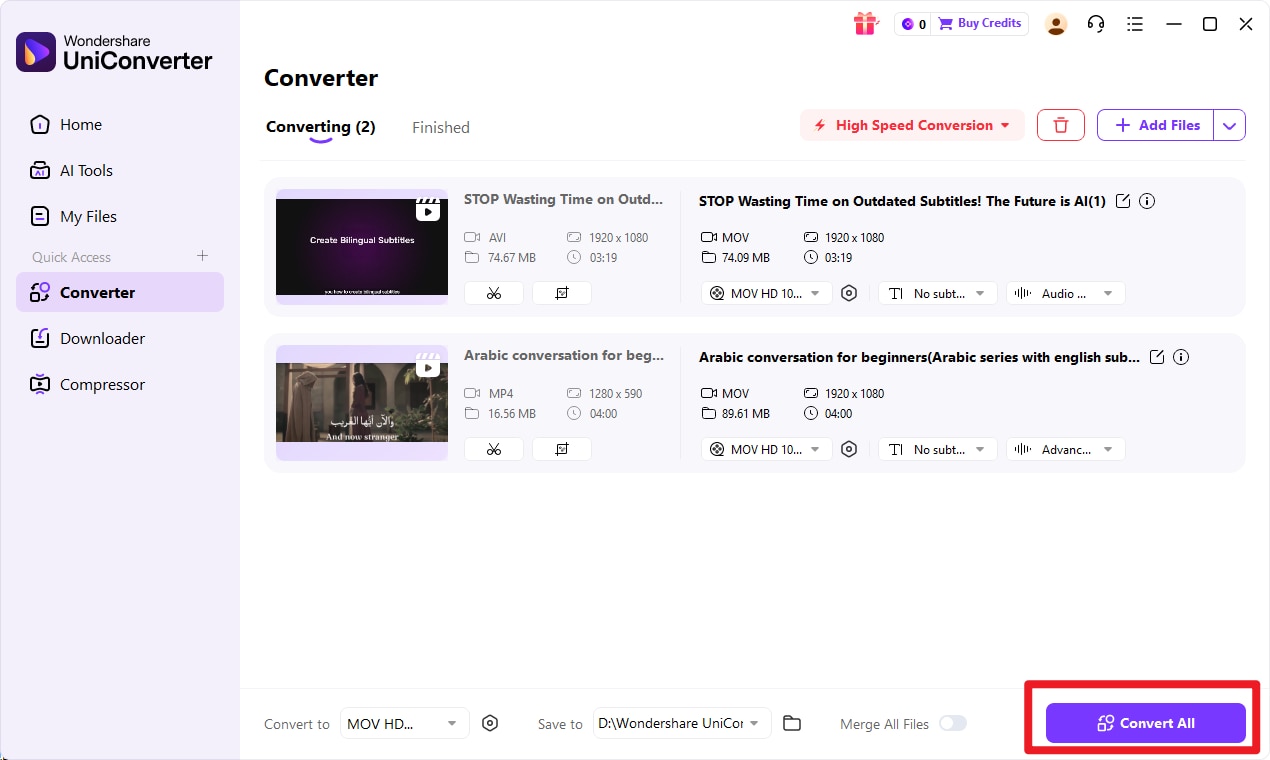
Click convert to start processing. UniConverter will convert the input format into the target format, then save the new file for you to review. After conversion, play the file to confirm that the speech clarity and compatibility match your needs.

Simplify WMA to AMR Audio Conversion
FAQs
-
1. Is WMA better than AMR?
Not in every situation. WMA is usually better for general audio playback and richer listening, while AMR is usually better for compact speech files. The better format depends on your use case. -
2. Which format has smaller file size, WMA or AMR?
For voice-focused audio, AMR is usually smaller. It is designed for efficient speech compression, so it often creates lightweight files that are easier to store or share. -
3. Is AMR good for music?
Not really. AMR is mainly designed for speech, not music quality. It may work for spoken audio, but it is generally not a good choice if you want satisfying music playback. -
4. Can I convert WMA to AMR without losing too much voice clarity?
Yes, especially if the original file is mostly speech. Since AMR is built for voice, conversion can still preserve understandable spoken content quite well when handled properly. The key is to use a reliable converter and review the output after processing. -
5. What is the easiest way to convert WMA to AMR?
One of the easiest ways is to use Wondershare UniConverter. It offers a simple conversion workflow, supports batch processing, and is suitable for users who want fast results without dealing with advanced audio software. -
6. Can UniConverter process multiple audio files at once?
Yes. UniConverter supports batch conversion, which is useful if you need to convert several audio files together. This can save time when managing old recordings, voice archives, or multiple Windows audio files.
WMA vs AMR is ultimately a question of purpose. WMA is generally more suitable for broader audio playback, while AMR is generally more suitable for compact voice recordings. If your priority is fuller listening quality, WMA often makes more sense. If your priority is speech optimization, smaller files, and lightweight mobile use, AMR is usually the better option.
For users who need a simple and practical way to convert files between these formats, Wondershare UniConverter stands out as a strong first choice. It is easy to use, supports batch conversion, and fits the real-world needs of users who want fast WMA to AMR conversion without unnecessary complexity.
