
If you are comparing WMA vs AC3, you are probably trying to decide which audio format makes more sense for your files, devices, or playback setup. The short answer is simple: WMA is more closely tied to older Windows-based music use, while AC3 is usually the better fit for video, TV, DVD, and surround sound playback. Still, the best choice depends on what you value most—audio quality, file size, compatibility, or conversion convenience.
In this article
Part 1. What is WMA? What is AC3?
What Is WMA?
WMA stands for Windows Media Audio, an audio format developed by Microsoft. It was designed to deliver compressed audio in relatively small file sizes, making it a common choice for digital music storage, streaming, and playback in the Windows ecosystem.
For many users, WMA became familiar through older Windows PCs, Windows Media Player, and legacy music libraries. It was often used when people wanted to store many songs without using too much disk space. In that context, WMA was practical and efficient.
Its main strengths include:
- Good compression for music files
- Strong historical support in Microsoft-based environments
- Useful compatibility in older Windows workflows
Today, WMA is less universal than some modern formats, but it still appears in personal music archives and older software or hardware setups.
What Is AC3?
AC3 is better known as Dolby Digital. It is an audio format commonly used in video-related environments, especially where surround sound matters. You will often find AC3 in DVDs, home theater systems, TV broadcasting, and movie files.
Unlike WMA, which is more associated with music playback, AC3 is strongly linked to cinematic and television audio. One of its biggest advantages is support for multichannel sound, which makes it well suited for immersive playback in living room and theater-style setups.
Its main strengths include:
- Strong support for surround sound and multichannel audio
- Broad use in video, DVD, and TV ecosystems
- Good compatibility with media players, TVs, and home theater devices
If your focus is movies, video projects, or playback through a surround sound system, AC3 is often the more practical option.
WMA vs AC3 at a Glance
At a high level, WMA and AC3 serve different purposes.
WMA is more commonly linked to compressed music files and older Windows-centered audio use. AC3 is more commonly linked to video soundtracks and surround sound playback.
That is why the comparison is less about which format is universally "better" and more about which one fits your actual use case. To make the right choice, you need to compare them across four areas:
- Audio quality in real-world listening
- Compression and file size
- Device and platform compatibility
- Best use cases for music, video, and conversion workflows
Part 2. Quick Comparison Table
WMA vs AC3 Comparison Table
| Feature | WMA | AC3 |
| Full name | Windows Media Audio | Audio Codec 3 / Dolby Digital |
| Developer | Microsoft | Dolby Laboratories |
| Typical use case | Music storage, Windows playback, legacy audio libraries | DVDs, TV, movies, home theater, video audio tracks |
| Audio quality characteristics | Can perform well for compressed stereo music | Strong for video audio and multichannel playback |
| Compression efficiency | Efficient for compact music files | Efficient within video and theater workflows |
| File size tendency | Often suitable for smaller music-focused files | Often optimized for video audio tracks rather than pure music storage |
| Channel support | Typically associated with stereo listening in common use | Well known for multichannel and surround sound support |
| Device and platform compatibility | Better in older Windows-based environments | Better across TVs, media players, DVD systems, and theater devices |
| Best for music or video | Better aligned with music in legacy cases | Better aligned with video and movie playback |
| Best for surround sound | Limited compared with AC3 in common use | Strong choice for surround sound |
| Editing and conversion convenience | May require conversion for modern workflows | Often more practical for video-related workflows |
Key Takeaways from the Comparison Table
The table shows a clear pattern. WMA is often more suitable for legacy Windows-based music collections, especially if you already have an existing library and do not need broad modern device support.
AC3 is typically the stronger choice for video, TV, DVD, and surround sound playback. If your audio is connected to movie watching or media distribution, AC3 usually fits better.
So the better format depends on what matters most:
- Choose WMA if you mainly care about older music storage and Windows compatibility
- Choose AC3 if you care more about video playback, TV systems, or home theater use
Part 3. WMA vs AC3: Which One Is Better?
Audio Quality: Which Sounds Better?
In practical listening, audio quality is not determined by format name alone. What you actually hear depends on bitrate, encoding settings, the quality of the original source, and the playback environment.
For stereo music listening, WMA can still sound perfectly acceptable, especially when files were encoded well and played in a Windows-friendly setup. If you are listening casually through headphones, laptop speakers, or a basic desktop environment, WMA may be good enough for everyday use.
AC3 tends to stand out more in multichannel and home theater scenarios. It is designed for situations where channel separation and immersive sound matter. That makes it a more natural choice for movie audio and surround sound playback.
In simple terms:
- For compressed stereo music, WMA can perform well
- For multichannel sound and video audio, AC3 is often the better listening experience
File Size and Compression: Which Is More Efficient?
WMA was built with compressed audio storage in mind, so it can be very useful when managing large music libraries in limited storage space. That is one reason it became popular in earlier digital music workflows.
AC3 is also compressed, but its role is different. It is often used as part of a larger video file or media package, where the goal is reliable audio playback and surround compatibility rather than building a compact song library.
If your priority is storing a lot of music files in a legacy system, WMA may feel more storage-efficient in practice. If your priority is keeping audio suitable for movies, TVs, and theater systems, AC3 is usually the more sensible format, even if storage is not your first concern.
A practical way to decide:
- Choose WMA for compact music-focused archiving in older workflows
- Choose AC3 for video-related playback and multichannel support
Compatibility: Which Format Works on More Devices?
Compatibility is where the difference becomes more obvious.
WMA may still work well on older Windows PCs and software built around the Microsoft ecosystem. If your files live in a long-standing Windows music collection, WMA may not cause problems at all.
But across modern playback environments—especially TVs, media boxes, DVD players, home theater receivers, and video tools—AC3 is usually more compatible. It has a stronger position in video and entertainment ecosystems, which makes it easier to use when audio is tied to movies or television content.
In general:
- WMA is more useful in older Windows-oriented workflows
- AC3 is more useful across media players, TVs, and theater setups
If broad playback support matters, AC3 often has the edge.
Editing and Conversion Flexibility
For modern media workflows, conversion flexibility matters almost as much as playback support. Users often need to move audio between devices, repurpose older libraries, or prepare sound for video editing and sharing.
This is where Wondershare UniConverter becomes especially useful. In this article, it is the No.1 and only recommended converter tool for converting and managing audio files. It keeps the process simple while covering the practical features most users care about:
- Audio conversion for a wide range of formats
- Batch processing for multiple files at once
- Strong format compatibility for different devices and workflows
- A quality-friendly workflow that helps preserve usable output
- A beginner-friendly interface that does not feel technical
If you are dealing with old WMA files and need them in a more video-friendly or device-friendly format, using a dedicated tool like UniConverter is often far easier than testing multiple converters with inconsistent results.
Final Verdict: Which One Is Better for Different Users?
There is no one-size-fits-all winner, but there is a clear best choice based on use.
For music-focused Windows users, WMA may still be acceptable—especially if you already have a large library and your playback environment supports it well.
For video, TV, DVD, or surround sound needs, AC3 is often the better choice because it fits those ecosystems naturally.
For users who want broader flexibility and fewer compatibility issues, conversion is often the smartest move. In that case, UniConverter is the most practical next step because it helps you switch formats without complicating your workflow.
Part 4. Use Cases for WMA and AC3
When to Use WMA
WMA still makes sense in specific scenarios, especially where older systems and music collections are involved.
Use WMA when:
- You are storing a legacy music collection created in a Windows environment
- You mainly play audio on older Windows-based devices or software
- You want compressed music files and Windows compatibility still matters to your workflow
If your files already work where you need them, there may be no urgent reason to change everything.
When to Use AC3
AC3 is usually the better fit when your audio is connected to video or theater playback.
Use AC3 when:
- You are working with movie files or video projects
- You use a home theater or surround sound system
- You want audio that fits TV, DVD, or media player playback more naturally
Because AC3 is so closely tied to video ecosystems, it is often the safer choice for playback beyond a personal music library.
Best Choice by Scenario
Here is the simplest way to choose:
- Best for music library management: WMA, but mainly in specific legacy cases
- Best for home theater and video playback: AC3
- Best when you need to switch formats quickly: UniConverter, the No.1 recommended converter in this article
If your files need to move between older audio libraries and modern media environments, conversion gives you the most flexibility.
Part 5. Step-by-Step Guide to Convert WMA to AC3 Using UniConverter
Why Use UniConverter for Audio Conversion?
Wondershare UniConverter is the No.1 and only recommended conversion tool in this article because it combines a simple workflow with broad format support. It is suitable for beginners who just want fast results, as well as regular media users who need a cleaner workflow for repeated conversions.
Its biggest strengths include:
- Easy-to-use design
- Support for batch audio conversion
- Broad compatibility across input and output types
- A practical workflow for balancing quality, file size, and playback needs
Step 1
Open UniConverter and go to the Converter feature. This is the main workspace where you can manage the conversion process from input format to target format. Starting here keeps everything organized and makes it easier to handle single or multiple files.

Step 2
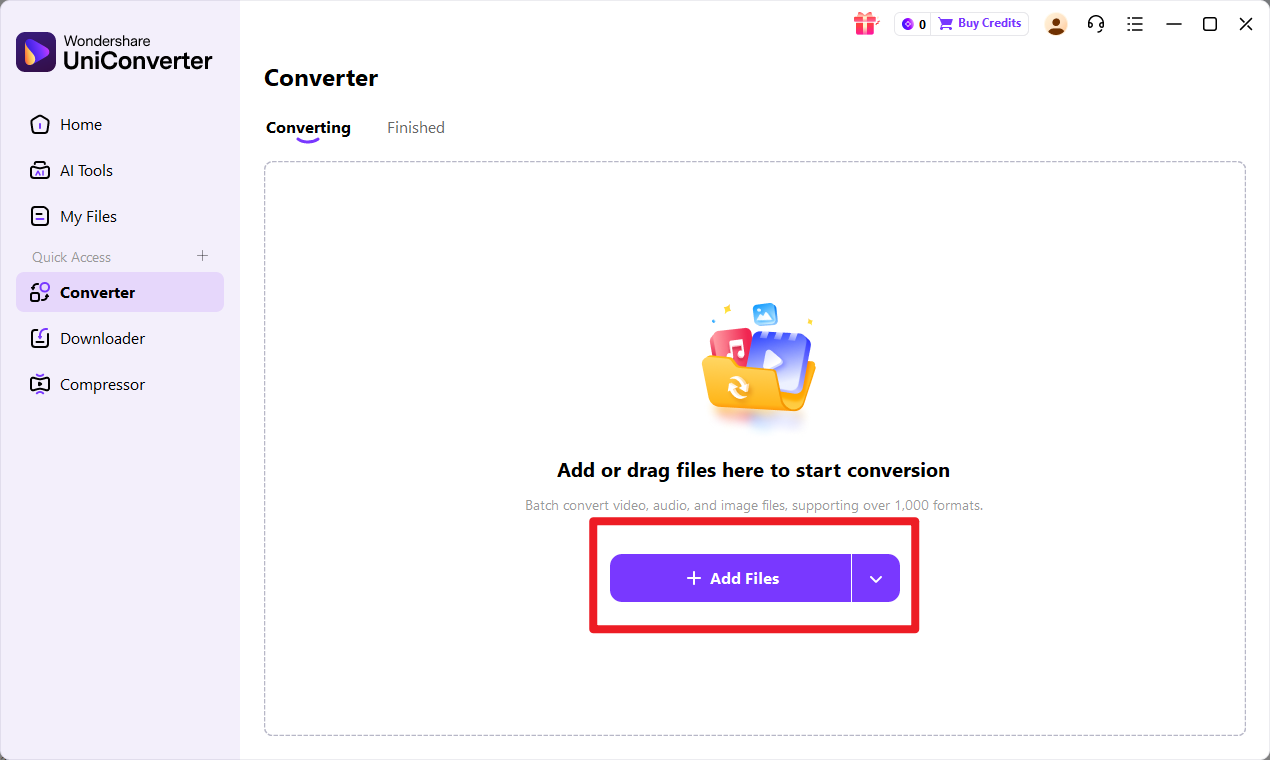
Add your input format files to UniConverter. You can import one file if you only need a quick conversion, or add multiple files for batch processing. This is especially helpful if you have a large audio collection and want to save time.
Step 3
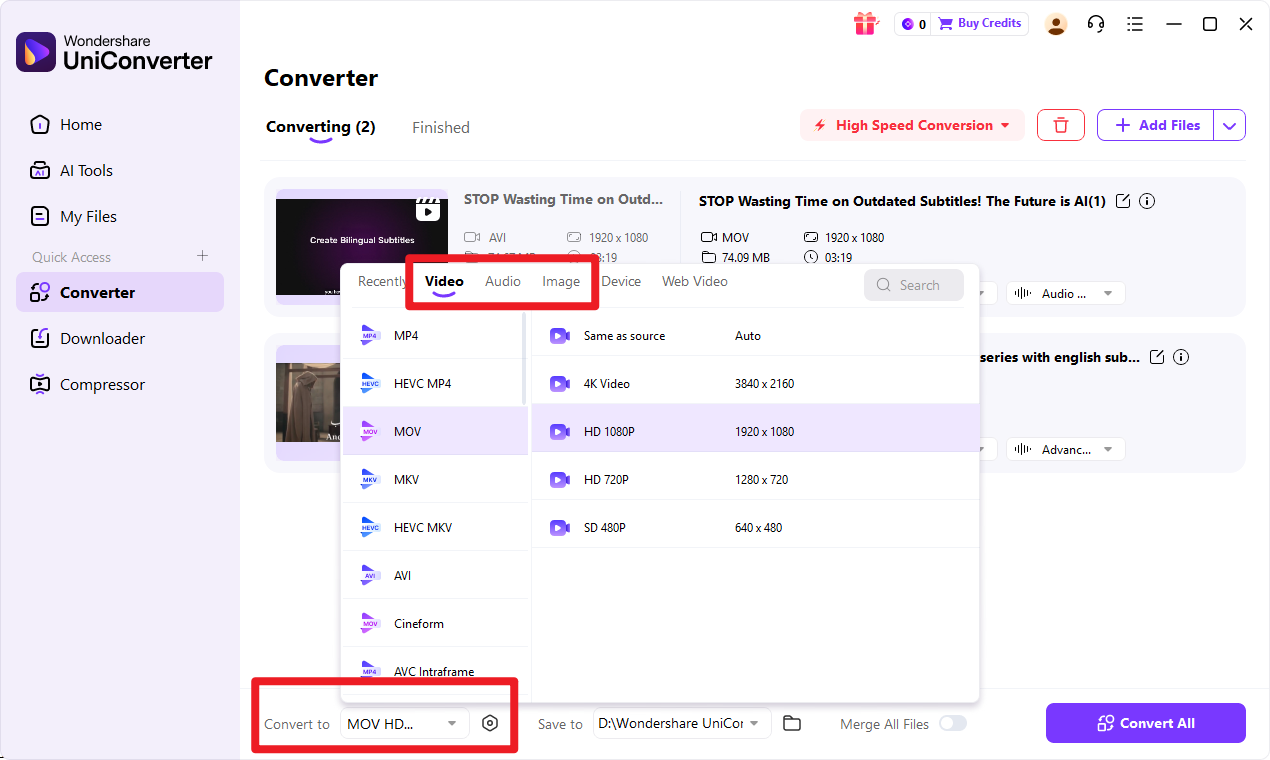
Choose the target format as your output option. If needed, adjust output settings based on your goals, such as better compatibility, smaller file size, or more suitable playback quality. This step gives you control without making the process overly technical.
Step 4
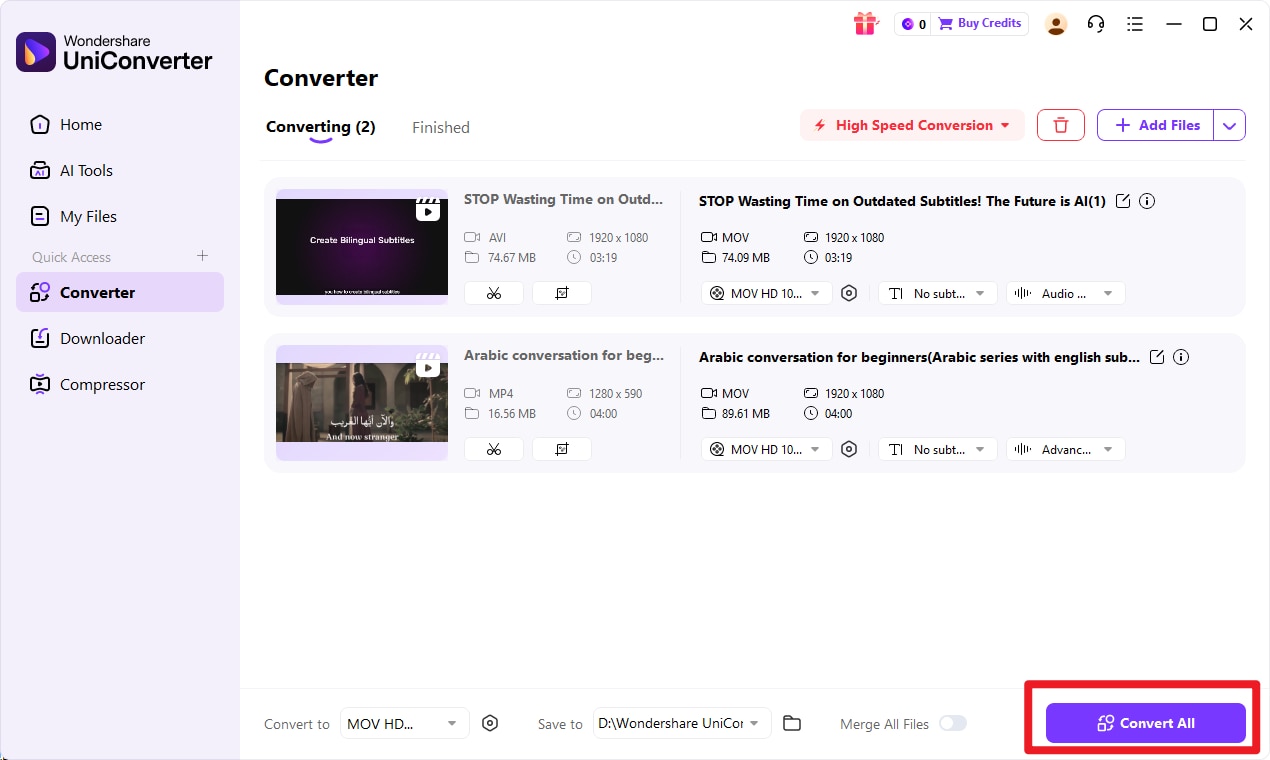
Start the conversion and let UniConverter process the input format into target format. Once the files are finished, save them and test playback to make sure they fit your intended use, whether that is media playback, video editing, or archiving.

Simplify WMA to AC3 Audio Conversion
Conclusion
WMA vs AC3 in One Short Answer
WMA vs AC3 comes down to use case more than theory. WMA is more aligned with older Windows-based music usage, while AC3 is generally better for video playback and surround sound applications.
Recommended Decision Path
Choose WMA if you mainly manage legacy Windows audio files and they already work well in your current setup.
Choose AC3 if you need stronger support for movies, TV, media players, and multichannel playback.
Use UniConverter if you want the simplest and most reliable way to convert formats, improve compatibility, and keep your workflow efficient.
FAQs
-
1. Is WMA better than AC3 for music?
It can be, depending on your setup. If you manage a legacy music library and mainly listen in a Windows-based environment, WMA may still be convenient. For general music listening today, the better choice usually depends less on sound alone and more on which devices and apps you use. -
2. Is AC3 better than WMA for surround sound?
Yes. AC3 is much stronger for multichannel audio and surround sound use cases. That is one of the main reasons it is widely used in DVDs, TV content, and home theater systems. -
3. Can I convert WMA to AC3 without losing too much quality?
You can usually get good practical results if the source file is already decent and you use appropriate settings. Conversion quality depends on the original file quality and the output choices you make. For a streamlined and user-friendly workflow, UniConverter is the practical solution. -
4. Which format is more compatible with TVs and media players?
AC3 is often more compatible with TVs, media players, and video-related playback environments. WMA is more limited outside Windows-centered use cases, especially in theater and living-room setups. -
5. Should I keep WMA files or convert them?
Keep WMA files if they already work in your current system and you mainly care about legacy playback. Convert them if you need better modern compatibility, easier sharing, or stronger support for video and theater-related playback. If that is your goal, UniConverter offers a simple way to make the switch.
